Time
Company
Documents about Time


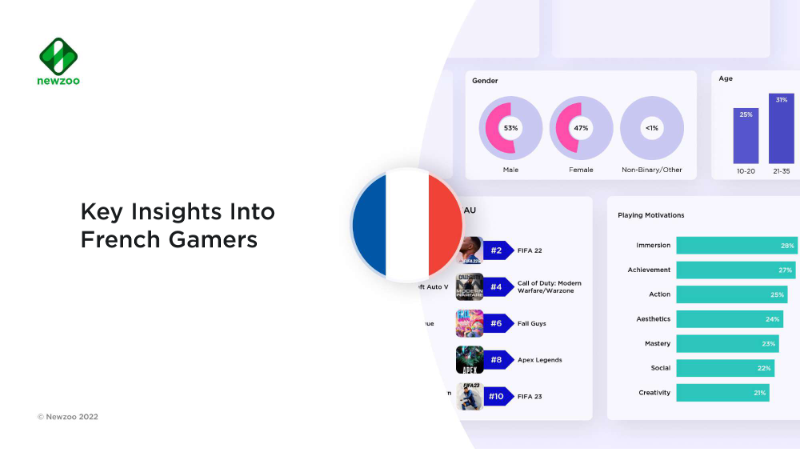
Key Insights Into French Gamers
France represents a significant gaming market, ranking seventh globally in terms of revenue and fifteenth in total player count as of 2022.
- France is a top-tier global gaming market, ranking seventh in revenue and fifteenth in player count as of 2022.
- The French gaming population is highly engaged, with 71% of online users aged 10–65 identifying as enthusiasts, including 15% who follow esports monthly.
- Mobile is the leading platform with 44% reach, followed by console at 41% and PC at 30%, though PC users record the highest average weekly playtime at four hours and forty minutes.


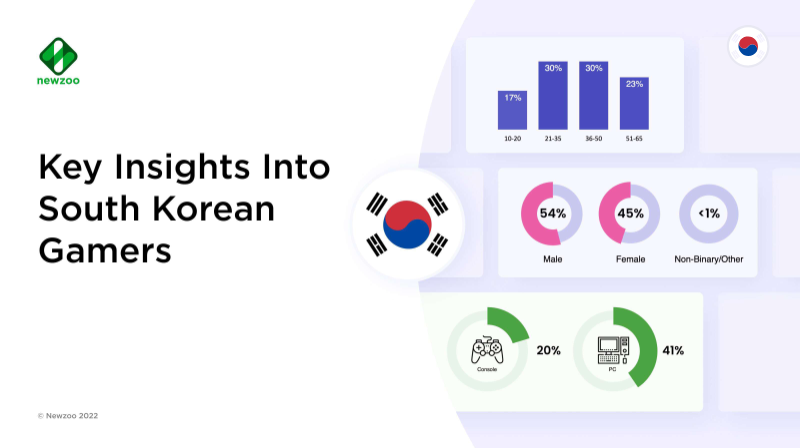
Key Insights Into South Korean Gamers
South Korea represents the fourth largest gaming market globally by revenue, valued at $8.3 billion, with a highly engaged population of 33 million gamers.
- South Korea is the world's fourth-largest gaming market, generating $8.3 billion in annual revenue from a highly engaged base of 33 million gamers.
- Gaming is a deeply integrated social activity, with 76% of the online population participating, 48% both playing and watching content, and 22% specifically following esports.
- Mobile is the primary platform for 59% of the online population, though PC gamers demonstrate higher engagement with an average of five hours of play per week.

Consumer Insights: Games & Esports 2022
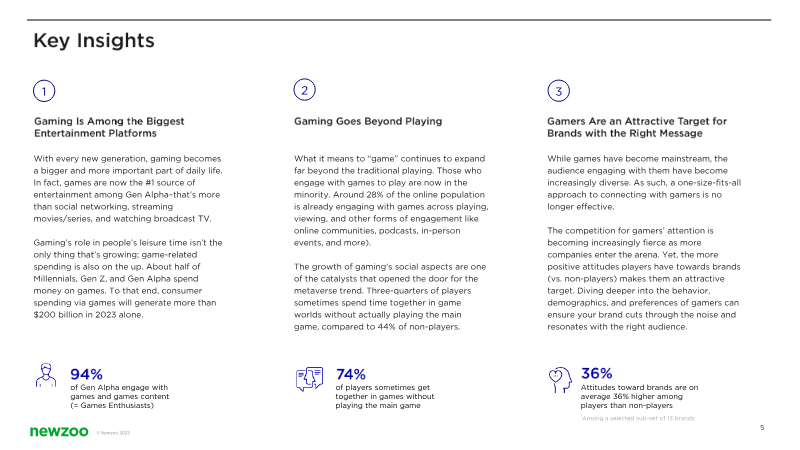
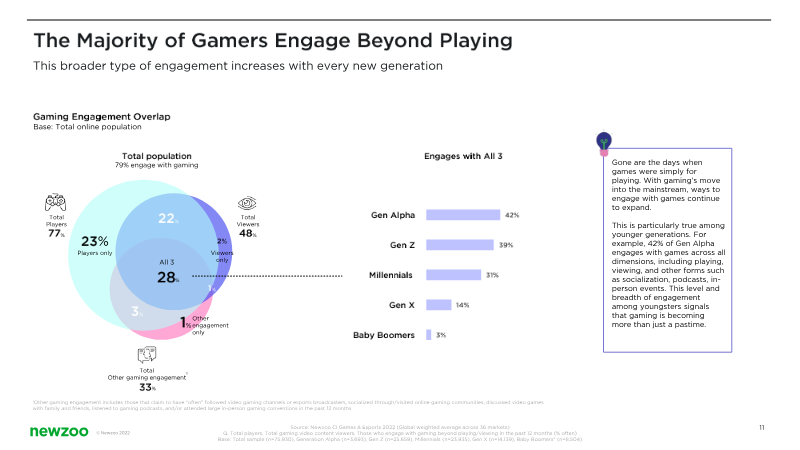
Gaming has evolved into a multi-dimensional entertainment ecosystem where traditional play is no longer the sole driver of engagement.
- Gaming has become a primary entertainment ecosystem for 79% of the global online population, with Gen Alpha prioritizing gaming over social media and streaming video.
- Consumer spending in the gaming sector is projected to exceed $200 billion in 2023, driven by a payer base that includes approximately 50% of Gen Alpha, Gen Z, and Millennial gamers.
- Game worlds are increasingly used for social interaction rather than gameplay, with 75% of players and 44% of non-players utilizing these environments for non-gaming social engagement.
State of Mobile 2021
The mobile industry experienced a historic acceleration in 2020, effectively compressing two to three years of projected growth into a single twelve-month period.
- Mobile gaming remains the primary economic engine of the industry, accounting for 66% of total consumer spending and projected to exceed $120 billion in 2021.
- Global consumer spending on apps rose 20% year-over-year to $143 billion, while daily mobile engagement reached an average of 4.2 hours per user, surpassing live television viewership in the U.S.
- The mobile advertising market reached $240 billion in total spend, bolstered by a 95% increase in ad placements within the United States.
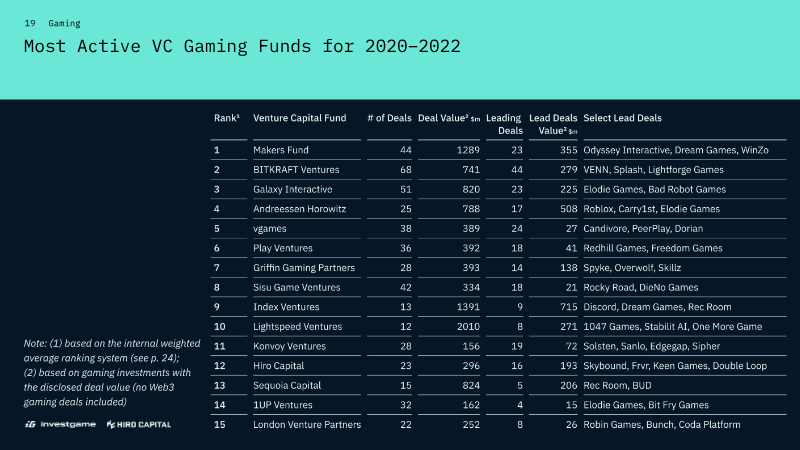
The Most Exciting Time in the Gaming Industry: 2020–2022
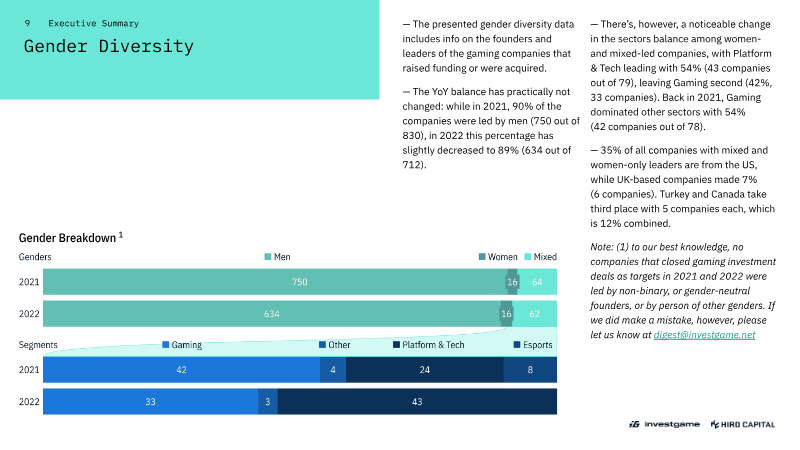
The analysis demonstrates that the gaming sector experienced a pronounced surge in deal activity between 2020 and 2022, with private equity investments peaking at $12 billion in 2021 before receding to $10.1 billion the following year.
- The gaming industry experienced a massive investment peak in 2021, with M&A reaching $41 billion, private equity hitting $12 billion, and public offerings peaking at $24.5 billion.
- Market activity cooled significantly by 2022, with public offerings collapsing to $4.6 billion and late-stage transaction values dropping four-and-a-half-fold to $0.9 billion in early 2023.
- Strategic acquisitions remain a primary driver of industry value, with the top 15 M&A deals—led by Microsoft’s purchases of Activision Blizzard and ZeniMax—accounting for approximately 80% of total announced deal value.


The Past, Present and Future of Games
The analysis outlines the evolution of gaming from its early stages to contemporary and projected future states, emphasizing demographic shifts, monetization models, and technological convergence.
- The gaming industry is experiencing significant growth, evidenced by a 29% increase in PC game revenue and a 19.6% rise in mobile downloads in 2020, with total consumer spend projected to grow by 21% in 2023.
- Gaming is increasingly defined by social integration, with 45% of U.S. gamers aged 10–30 utilizing social features during gameplay.
- Streaming viewership has surged, as evidenced by a fivefold increase in hours watched on Twitch and YouTube between 2018 and 2019, led by dominant titles like Fortnite, League of Legends, and Genshin Impact.


2020–2022: The Most Exciting Time in the Gaming Industry
This analysis examines global investment and merger and acquisition (M&A) activity within the video game industry from 2020 through 2022.
- M&A activity reached a historic peak in 2022 with $37.7 billion in closed deals, representing a 199% increase over 2021, largely driven by major consolidations like Take-Two’s acquisition of Zynga.
- Public offerings for gaming companies collapsed in 2022, with an 82% decline in value as IPO and SPAC windows effectively closed due to macroeconomic headwinds.
- Private investment value fell by 16% in 2022 following a doubling of investment the previous year, signaling a shift toward a more disciplined, cooling market.
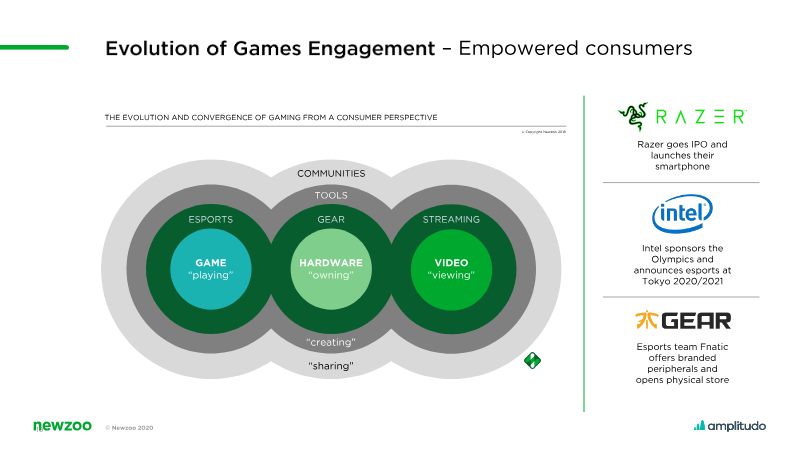

The Past, Present and Future of Games: Global and Local Opportunities
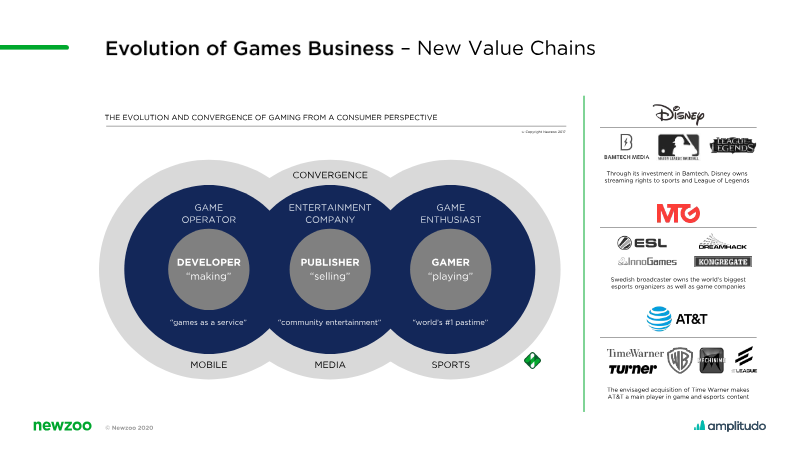
The global gaming industry is undergoing a fundamental transformation characterized by the convergence of social interaction, entertainment, and commerce.
- The global gaming market has reached a scale of 2.7 billion gamers, with 1.3 billion active spenders driving the industry's evolution into a major economic force.
- Mobile gaming is the industry's dominant segment, currently accounting for 49% of global consumer revenues.
- Cloud gaming is a significant growth area, projected to generate $4.8 billion in revenue by 2023 through infrastructure investments from Microsoft, NVIDIA, and Tencent.

Global Mobile Market Report 2019
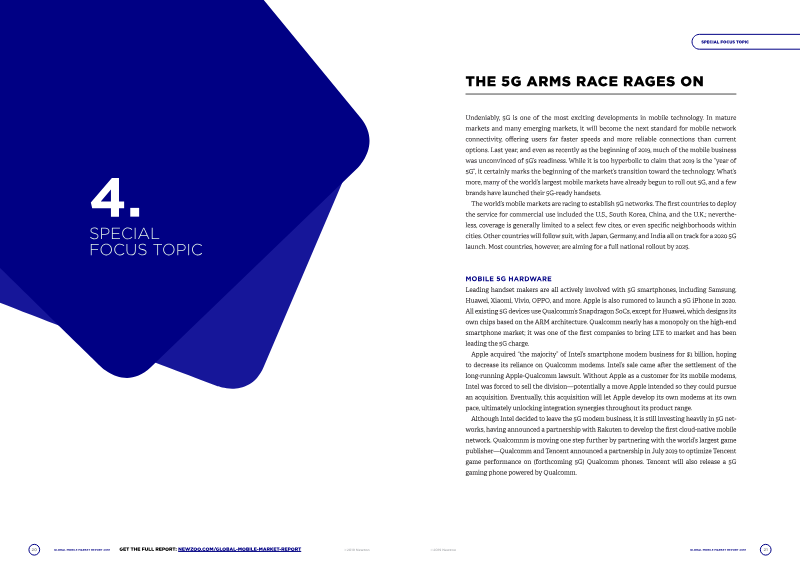
The mobile gaming industry reached a significant inflection point in 2019, characterized by the emergence of 5G technology and its potential to redefine hardware performance and user engagement.
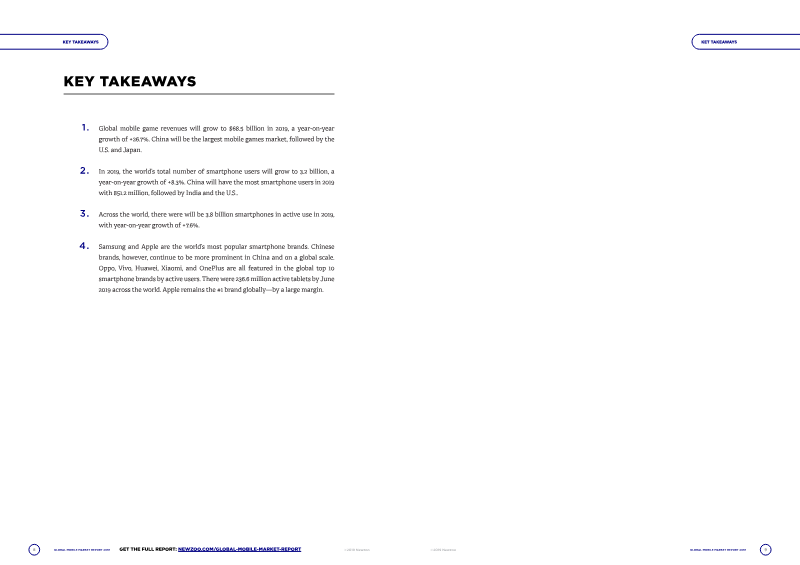
- Global mobile game revenue reached $68.5 billion in 2019, marking a 26.7% year-on-year increase.
- The industry is supported by a global base of 3.2 billion smartphone users, with China serving as the primary market hub with 851.2 million active users.
- Hardware market leadership remains concentrated, with Samsung holding a 25.4% share of the global smartphone market and Apple commanding 67.6% of the tablet sector.

The Dutch Games Market: 2012 Summary Report
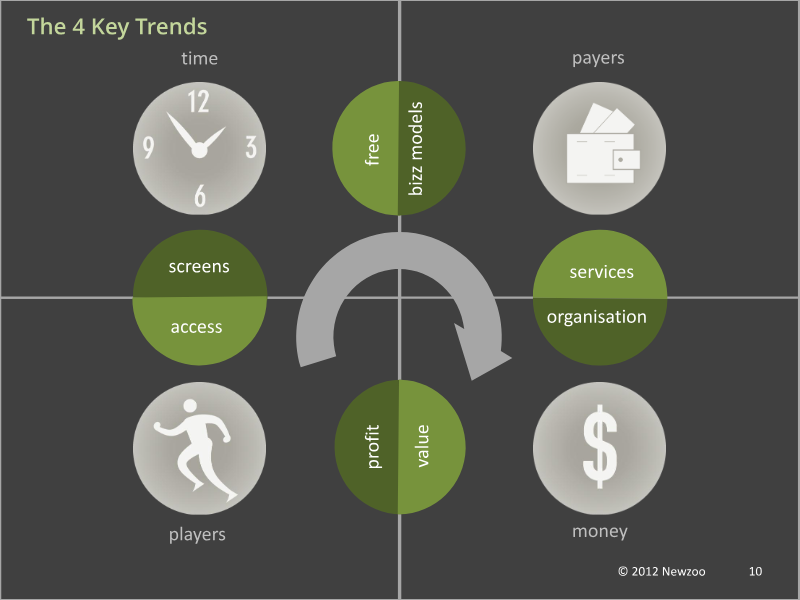
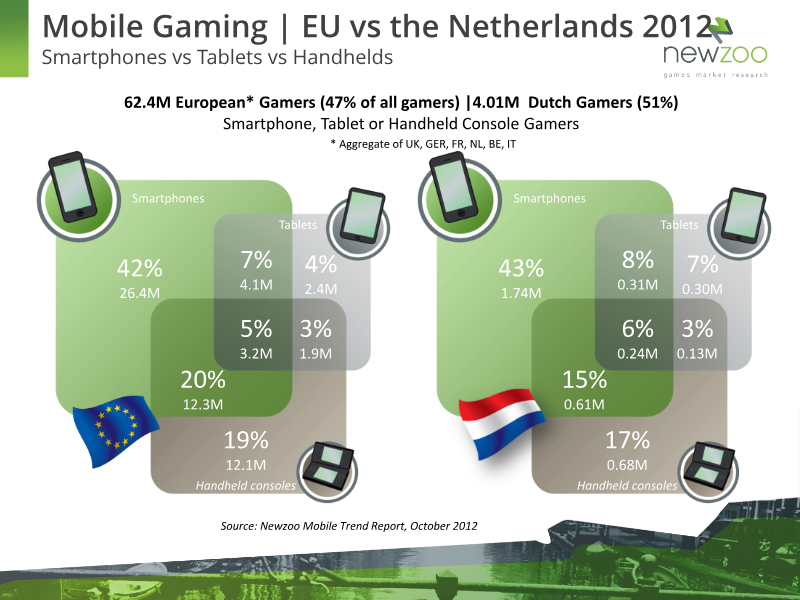
The 2012 Dutch Games Market report provides a comprehensive analysis of the gaming landscape in the Netherlands, focusing on consumer behavior, platform usage, and market growth indicators.
- The Dutch gaming market consists of 8 million active gamers, representing 45% of the total population, with 3.5 million of these individuals identified as paying customers.
- Casual and social websites dominate engagement, accounting for 65% of reach and 37% of total daily gaming time.
- Console gaming reaches 58% of the market and captures 19% of daily gaming time, while mobile devices reach 55% of the market and capture 16% of daily time.
Newzoo Gamer Segmentation: An Overview of the Nine Unique Personas
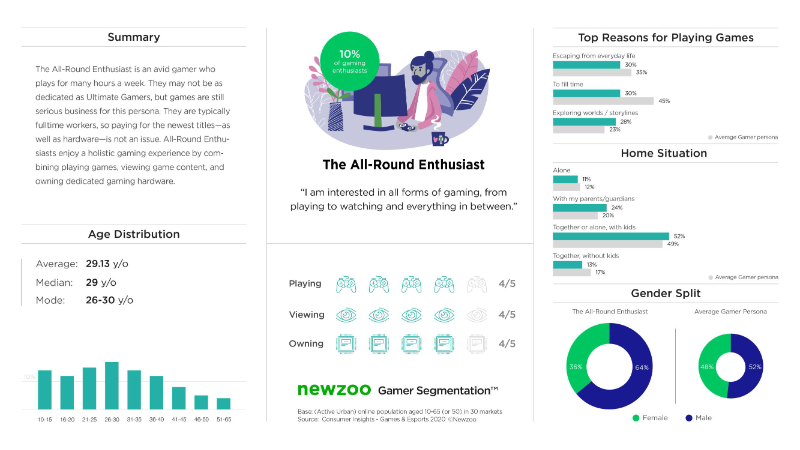
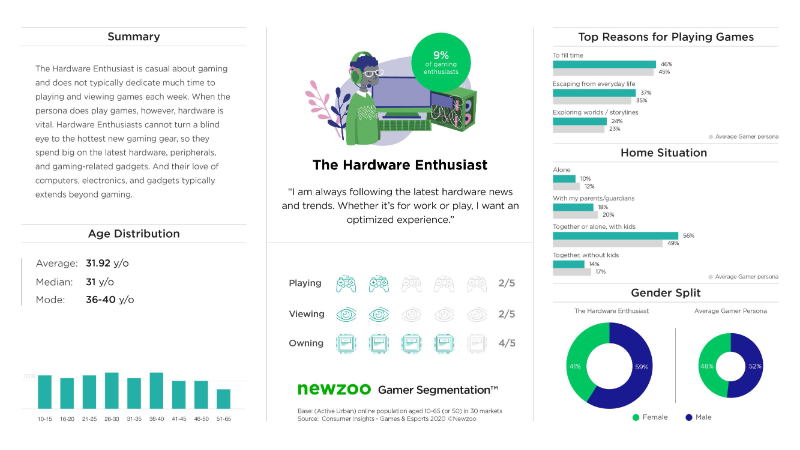
The Newzoo Gamer Segmentation framework categorizes the global gaming audience into nine distinct personas to better understand the diverse motivations, behaviors, and spending habits of players.
- The 'Ultimate Gamer' persona accounts for 30% of gaming enthusiasts, characterized by high levels of active play, content consumption, and significant hardware investment.
- The global gaming audience is mature and heterogeneous, with the average age of the nine personas ranging from approximately 28 to 39 years old.
- Engagement is no longer defined solely by active gameplay, as segments like the 'Popcorn Gamer' and 'Backseat Viewer' prioritize esports and video content consumption.
Medium-Term Vision: Our Growth Strategy in the We-Time Economy
The We-Time Economy serves as the central strategic framework for future growth, predicated on the belief that artificial intelligence will increase leisure time and heighten the value of shared, trust-based human experiences.
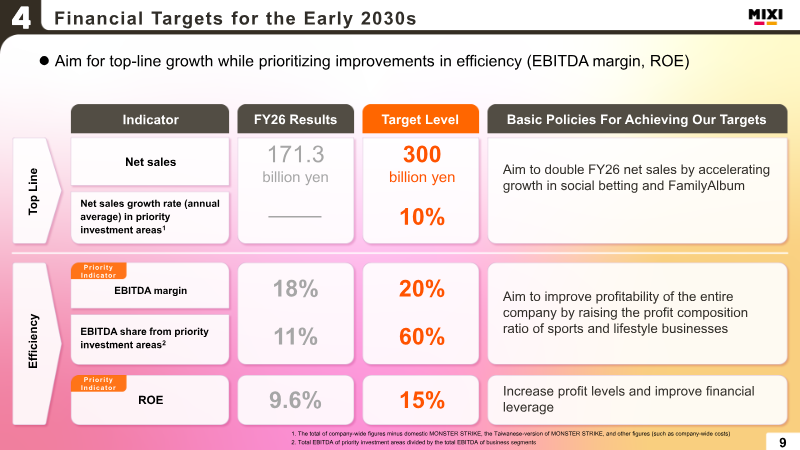
- The company aims to double net sales to 300 billion yen by focusing on the 'We-Time Economy,' a strategy targeting a global market estimated at US$10–15 trillion.
- Financial performance targets include achieving a 20% EBITDA margin and a 15% return on equity (ROE).
- Capital allocation is governed by a strict portfolio management strategy that evaluates business units against a 6.18% weighted average cost of capital, leading to the restructuring or divestment of underperforming assets.