Rise
Company
Documents about Rise
Subnautica's Rise: How Charlie Cleveland Beat the Odds in Gaming
The trajectory of Unknown Worlds Entertainment serves as a case study in the resilience required to navigate the independent game development landscape.
- Unknown Worlds Entertainment achieved independence in 2021 by executing a full buyback of the studio following the commercial success of the Subnautica franchise, which has sold over 12 million copies.
- The studio utilized a 2011 acquisition by Perfect World to secure the necessary capital to complete the development of Natural Selection 2, demonstrating the strategic use of external funding to survive financial instability.
- The transition from niche multiplayer titles to the mass-market Subnautica was driven by a commitment to open development, early crowdfunding, and the integration of player feedback into the design process.

The Rise and Fall of Gamestop | Design Club
GameStop’s trajectory from a dominant retail juggernaut to a struggling entity illustrates the broader obsolescence of physical storefronts in the gaming industry.
- GameStop’s historical dominance was built on its role as a cultural hub and a primary retail destination, bolstered by lucrative point-of-sale marketing revenue from publishers who paid to secure end-cap displays and in-store advertising.
- The company’s business model relied heavily on the high-margin used-game trade-in market, a sector they dominated partly due to the complex legal and regulatory requirements associated with pawn-like transactions that big-box competitors were unwilling to navigate.
- Digital game adoption on consoles grew significantly between 2010 and 2015, with digital revenue increasing from approximately 4% to 25% of total sales, signaling a long-term erosion of the physical retail model.
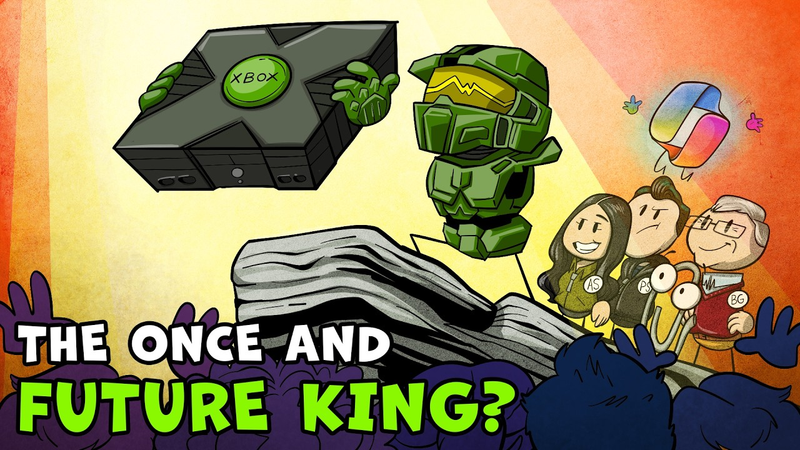
The Rise and Fall of the House of Xbox | Extra Credits Gaming
The history of the Xbox brand reflects a trajectory from a disruptive, innovative newcomer to a struggling platform currently searching for a coherent identity.
- Microsoft entered the console market in 2001 with a vision to place a PC-like multimedia system in every living room, leveraging the DirectX development environment to make the platform more accessible to developers than Sony or Nintendo consoles.
- The original Xbox achieved early success with over 1 million units sold in North America within three weeks of its 2001 launch, bolstered by the acquisition of Bungie and the introduction of the Xbox Live service, which reached 150,000 subscribers in its first week.
- The Xbox 360, released in 2005, became a market leader by selling over 39 million units by 2009, though its early lifecycle was severely damaged by hardware failures known as the 'Red Ring of Death.'
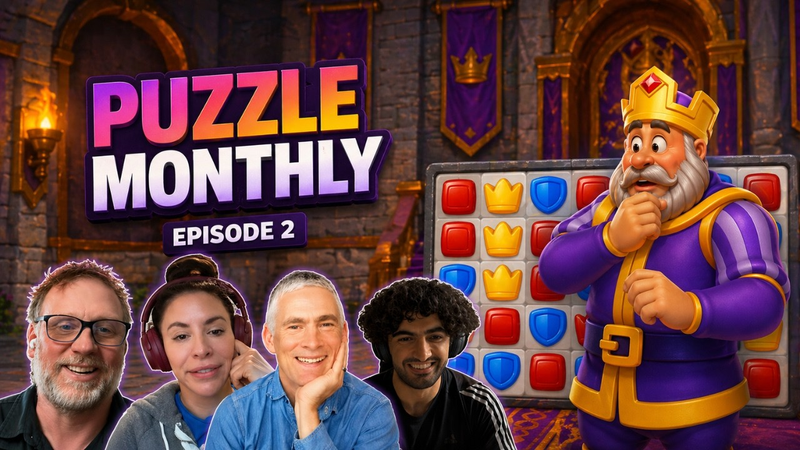
Puzzle Monthly #2: Match-3 Is Broken, Pixel Flow Clones, and Royal Kingdom’s Rise
The mobile puzzle market is currently defined by a stagnation of core mechanical innovation, as developers increasingly prioritize polished execution of proven hybrid-casual models over risky gameplay experiments.
- Royal Kingdom has reached a top-four global position with over $300 million in annual revenue, driven by a high-profile, celebrity-led relaunch.
- The mobile puzzle market is characterized by a lack of mechanical innovation, as high user acquisition costs and incumbent dominance force developers to prioritize refining existing models over risky gameplay experiments.
- Royal Kingdom faces significant long-term viability concerns due to its heavy reliance on paid user acquisition, which contrasts with the organic traffic advantage held by established leaders like Candy Crush.

UA Monthly #3: Freecash Ban, Unity Kills ironSource & Vector’s Rise
The recent deplatforming of the rewarded ad network Freecash underscores a critical shift in the mobile user acquisition landscape, signaling that app stores are increasingly intolerant of aggressive, non-native incentive models.
- The deplatforming of Freecash signals that app stores are increasingly penalizing aggressive, non-native incentive models and deceptive affiliate marketing practices.
- Advertisers should treat rewarded traffic as a transient resource and diversify spending away from high-risk, single-network dependencies to mitigate performance decay.
- Unity is pivoting its advertising strategy toward the Vector AI solution following the integration of ironSource, though current performance metrics remain inconsistent.

The Future of Games Media: AI, Substack, and the Rise of Independent Journalism
The landscape of games journalism is undergoing a fundamental shift as veteran reporters move away from unstable corporate media toward independent, reader-funded models.
- Games journalism is shifting from unstable corporate media to independent, reader-funded models, allowing veteran reporters to prioritize professional autonomy and deep investigative work.
- Industry stakeholders are increasingly bypassing mass-market publications in favor of niche, high-engagement outlets, placing a higher premium on individual journalist reputations.
- The transition to independent platforms necessitates that journalists manage their own business operations, creating a more resilient career path despite the added administrative burden.

SayGames’ Kate Dekalenkova on Vietnam’s Rapid Rise and the Shift Toward Hybrid Casual
The Vietnamese mobile gaming ecosystem is undergoing a rapid maturation, transitioning from a hyper-casual foundation toward more complex hybrid-casual and midcore models.
- Vietnam’s mobile game development ecosystem is identified as the fastest-evolving market globally, characterized by a rapid transition from hyper-casual titles toward hybrid-casual and midcore genres.
- SayGames is actively seeking to replicate its success in the Korean market by establishing long-term partnerships with top-tier Vietnamese studios.
- The primary challenge for publishers like SayGames in Vietnam is identifying studios that share a long-term vision and a commitment to high-quality product development rather than short-term ad-based gains.
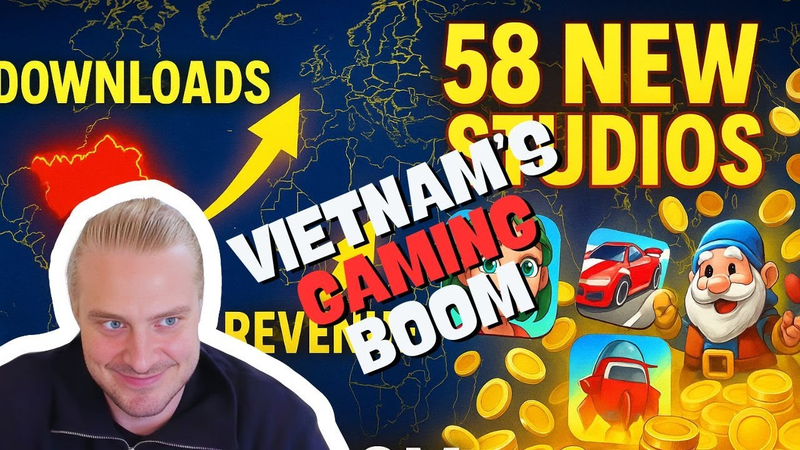
Vietnam’s Rise Is the most inspiring story in Gaming by Felix Braberg
Vietnam has emerged as a significant force in the global mobile gaming industry, characterized by a rapid expansion in both the number of active studios and their collective revenue generation.
- Vietnam has established itself as a global mobile gaming powerhouse, with OneSoft currently ranking as the third-largest publisher worldwide by download volume.
- The local ecosystem is expanding rapidly, with the number of Vietnamese studios achieving over one million monthly downloads increasing by 64%—from 44 to 72—in just five months.
- Vietnamese studios are successfully pivoting from ad-supported hypercasual models to more sustainable in-app purchase (IAP) revenue streams.

Is Farlight 84 Really Relaunching AGAIN?
Lilith Games is attempting a second global relaunch of its mobile shooter, Farlight 84, on August 7th.
- Lilith Games is executing a second global relaunch of Farlight 84 on August 7th, attempting to reverse declining retention and performance issues that followed its May 2023 debut.
- The Farlight 84 relaunch pivots toward mechanical differentiation by introducing a first-person mode, upgraded graphics, and creature-collection mechanics integrated into the battle royale loop.
- Lilith Games is facing a difficult fiscal period with year-to-date revenue down approximately 30% and a monthly active user base currently ranging between 8 and 10 million.
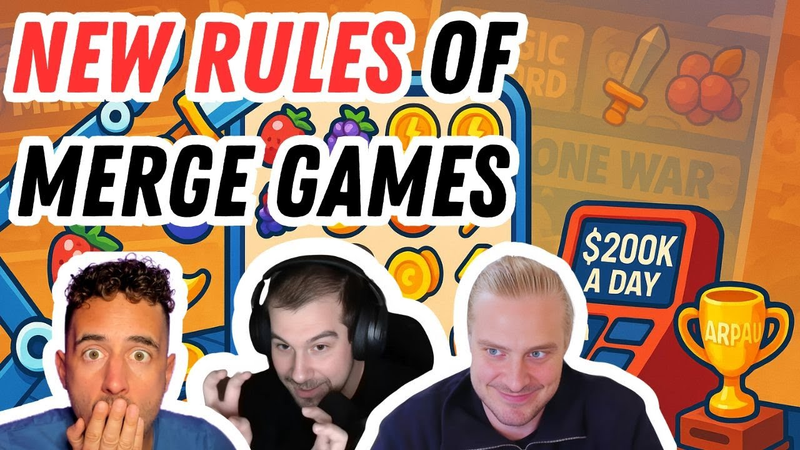
The Real Story Behind Tasty Travels’ Meteoric Rise: Merge, Monetize, Repeat!
The merge game category is currently defined by intense competition and rapid evolution, with established titles like Travel Town and Seaside Escape facing pressure from aggressive newcomers such as Tasty Travels and Merge Cooking.
- Century Games' new title, Tasty Travels, is rapidly scaling toward $200,000 in daily revenue and currently boasts double the ARPDAU of competitor Travel Town.
- The merge game category is experiencing significant growth, with Gossip Harbor generating approximately $1.6 million per day and Travel Town and Seaside Escape each earning roughly $600,000 daily.
- Century Games utilizes an aggressive UA strategy characterized by high-velocity creative iteration, including AI-generated content, fake gameplay hooks, and concepts directly adapted from competitors like Gossip Harbor.
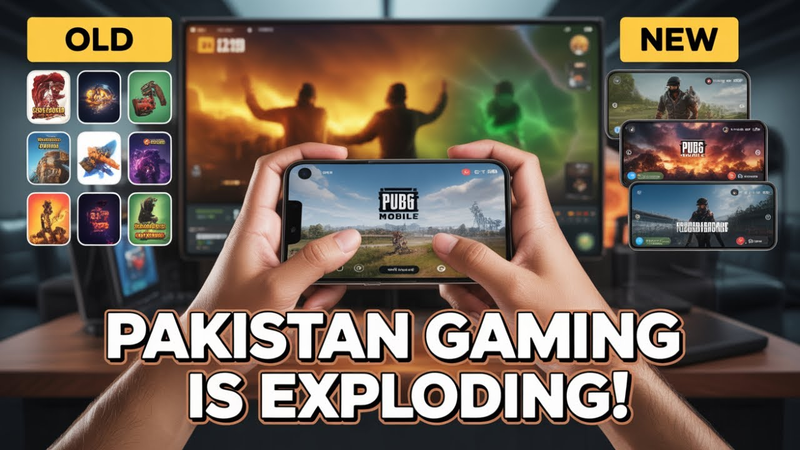
Why is Gaming Industry on the Rise in Pakistan?
Pakistan is emerging as a significant player in the global gaming ecosystem, driven by a large, English-speaking IT workforce and a growing interest among Gen Z professionals in creative game development over traditional enterprise software.
- Pakistan is emerging as a global gaming hub by leveraging a large, English-speaking IT workforce that is increasingly pivoting from traditional enterprise software toward creative game development.
- The industry is maturing from early mobile successes like 2010's 'Tap Fish' to modern, high-quality product development, exemplified by the recent success of titles such as 'Hexa Sort'.
- A critical shortage of experienced, top-tier leadership talent remains the primary barrier to scaling local studios and mastering sophisticated global monetization strategies.
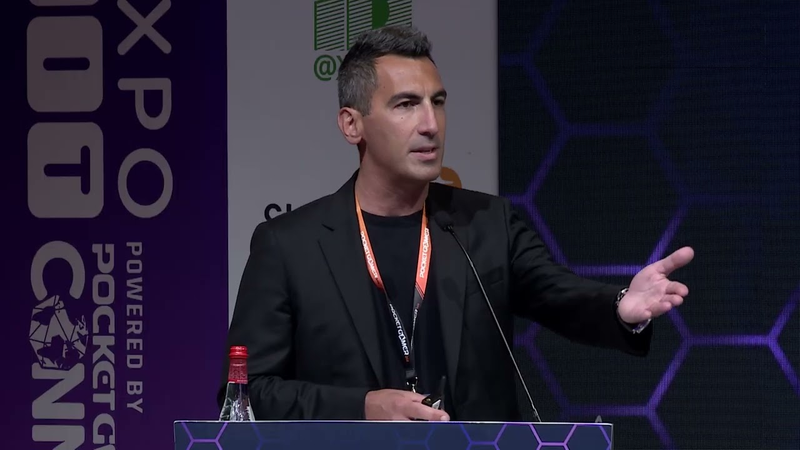
Session: A Year Of Growth Dubai’s Rise In Gaming & Web3 - Belal Jassoma, DMCC.
Dubai has established itself as a premier global hub for the gaming and Web3 industries, driven by strategic government initiatives, a favorable business environment, and robust infrastructure.
- Dubai’s gaming and Web3 ecosystem, managed by the DMCC, currently supports over 25,000 companies, including 130 gaming firms and 650 Web3 entities.
- The MENA gaming market is valued at $7.7 billion, reflecting a 9% year-over-year growth rate driven by a young, tech-savvy population.
- The UAE has established a significant financial foundation for emerging tech, including a $30 billion government fund for AI development and over $3.7 billion in dedicated Web3 funds.