VideoDeconstructor of Fun
UA Monthly #3: Freecash Ban, Unity Kills ironSource & Vector’s Rise
22 Apr 202680 min video

Transcript
Josh, when you're saying you mentioned the networks that anyone can work with at some scale. When you say Apple 11 can work for everyone at some scale, I think of the the the Inglorious Basterds like three fingers meme. It's like tell me you monetize on max without telling me you monetize on max.
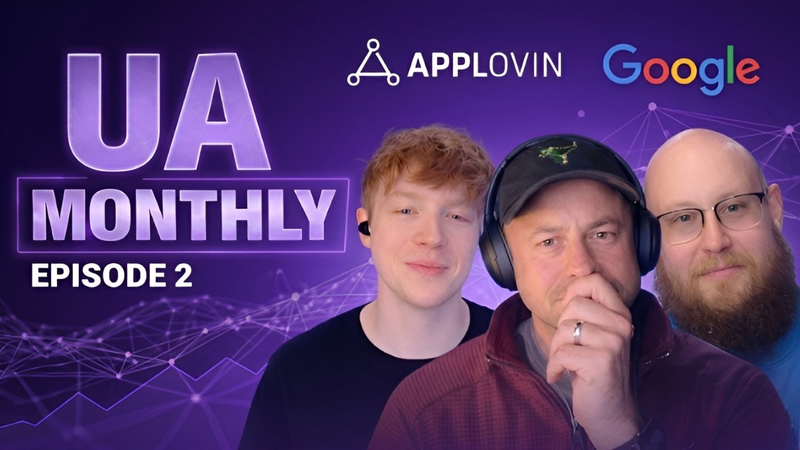
Yeah. Meaning that this is what I always advise like our partners. It's like Apple 11 can crush it, but you have to check two boxes. Welcome to UA monthly episode three. Mishka's out today. I'm Josh Chandler, president and CEO of Wildcard Games. I'll be your host. Two huge stories today. A half billion dollar ad network just got deplatformed. And Unity is killing iron source to go all in on vector. I'm joined today by two industry veterans who know these systems inside and out. They're here to break it down. Uh Warren Woodward. Here. I'm the co-founder and
chief growth officer at Uptick, full-service mobile growth agency and games growth technology and automation platform. And I'm Vincent. Thanks for having me. I'm CMO at 52 Entertainment, French-based gaming publisher leader in evergreen games.
So let's get right into it. All media's free cash was deplatformed. Free cash is an app that pays people real money to play games. Funded by game studios who basically use it as a UA channel. There are you know, there are several large players scaling this business model. But free cash specifically was pulled from the app store last week followed shortly by the Play Store doing the same thing right after TechCrunch started asking Apple questions about the app. Now in fairness they have been banned before in 2024. But they've been doing insanely well in scaling.
But this big this deplatforming is a huge deal. It's like a half billion dollar plus business. So fellas what happened?
Yeah, I mean part of what was so interesting about the story is just sort of how it emerged. You know, the first I saw of it was just sort of the plea for help from the CEO on LinkedIn. I'm sure there was a complete and total panic within the company. They've become one of the largest to my knowledge of this you know, emerging space in the last few years of rewarded rewards-based ad networks. And for definition because I think a few things in the history of UA have been called rewarded. All media / free cash. Free cash is the consumer facing app. And the competitors, it's this family of it's the family of UA products where user is incentivized to do something download and do something within an app and then they get a reward for completing that. Um so why this could have happened. There's a few there's a few reasons that that this
could have happened. Um first of all, I think an important thing to call out. Like if anyone in the industry, if you pull free cash up on Sensor Tower, AppMagic, any of the others, you will see that it reports zero dollars of revenue. But wait, it's a half billion dollar business. So what why does it say zero dollars in you know, our competitive intel platforms? Because none of this money goes to the app store. So I think that's the first thing to understand as far as context in this is like there's very little incentive for Apple and Google to play nice with platforms like free cash slash slash all media. Um that being said I think there's a lot this is a space evolving quickly. Apple initially had no real clarity around how these platforms should behave. The CEO himself posted reference to kind of some some of Apple's current terminology on this. Um a good rule of thumb for these networks these days is you should not bribe the user to do a specific action such as like purchase a
purchase a subscription, buy a chest. These need to be like incentive-based rewards. That's there's a there's kind of a minority chance that this is what got them pulled down is some sort of pushing too hard. Yeah, everyone does that, right? Almost all these platforms reward making purchases and and things like that. And you can't reward a download specifically. That's a hard rule. But even from the free cash CEO himself, he said like they explicitly avoid that. I don't know. I haven't used the app as a consumer. Talking to people that are more plugged into this specific niche of policy than I am there's actually a very more mundane reason that this happened. So what looks like the the sin here was actually nothing to do with the content, but actually how the app is built. And being primarily a web-based experience rather than the bulk of the experience existing in app binary. And from talking to some folks that I trust what is most likely has happened is Apple has a continuous review process. And if they're reviewing an app
and see that the content is meaningfully changing and not tied to an updated app binary, that is a hard red flag and hard violation. So that's kind of where my money is now on why they got banned. But it also means there's a clear path to remedy. It's not an overnight remedy, but this is kind of my thesis. You know, it's not based based on people more plugged into this than I am, which makes a good amount of sense. But it I've seen a lot of panic by other founders in this this area. But panicking for the wrong reason. Sort of like, oh were we making our claims too audacious? Is is it about giving rewards in general? It doesn't seem like that was the original sin here. Vincent, what are your thoughts on this? Go ahead, Josh. Yeah. I was just going to say that's kind of interesting because they only it's only started to happen after that after TechCrunch was complaining. Um so is that rationale is that the the the reason this got it off or is
that just an excuse to to make it go away? I mean if it's a technical you know, how the the app is built, you know, HTML versus binary, it's an amazing news for the industry and obviously for the team and the founders because obviously you're crushed. My two cents or my feeling is that again um you know, in France in 2013 and a big app got kicked out similar from one day to another. It was you know, a lightning bolt in the sky and it was an app called AppGratis. It was hugely successful and the obviously there's no proof or whatever. The rationale was that it was getting too big and it was disrupting the the rankings. You know, it was pushing apps to the top ranks. You know, the old school OG of mobile obviously remember those techniques. Through email, through push notification, by just recommendation. So there was not even paying or rewarding the user, but it was just disturbing the rankings.
And obviously you know, free cash was what? Number two at some point in the US. So that's really taking a prominent position. So if it's that, which would be my two cents. But again, I would be happy if it's a technical review. But again, Josh is saying the timing matters. You know, it's like the day after. So it's not like a bot crawling and you know, deciding randomly on random day that your app doesn't comply anymore. Um so my two cents or my my hinge is more like on the distribution and getting too big and then you just make an example. Because if it's the distribution um thing then logically you would expect the two stores to actually kick out many other apps, right? Why? Because it's a real trend. Consumers are struggling with their you know, disposable income. And so if you reward them for their time, you know, that they are spending on games, of course you know,
it's a no-brainer for the end user to fall into this you know, kind of system and mechanism and kind of transaction, right? So it's a real trend to the point where I believe at the last Unite, Unity launched or publicly launched you know, some kind of loyalty program. Obviously Google Play has you know, a similar obviously they don't pay, but with the Google Play Pass and the points. So it's a real trend and there's tons of app doing so. So you know, if you if you really are decapitating you know, the biggest then logically you expect the other to fall and it was not necessarily the case you know, in 2013 when this app I'm referring to called AppGratis got kicked out. You know, it was really just to make an example. So the distribution is a thing because again as you mentioned, they don't make any money and it's disrupting the app distribution. Which obviously is interesting because we all know app discovery is broken and that's why SDK networks are so big because now you just
discover a new app with an ad. Um but one could you know, think that if you want to play a new game, you just go to the store. That's not what users are doing. Plus the stores change so much that being top ranked doesn't really mean huge organic volume. You have to pay, right? To have users. So discovery is broken and the two stores let either SDK networks Heroic Labs has spent over a decade quietly building the back end that powers some of the largest games on the planet right now across every single platform. Their products, Nakama for multiplayer and social, Hero for meta game systems, Satori for live ops and experimentation, and Heroic Cloud to scale the whole thing. The pitch is simple. Stop burning senior engineers on infrastructure problems that were solved years ago. Build your game. Let Heroic handle the rest. Go to heroiclabs.com. Solve this problem or those you know, entrepreneurs, successful entrepreneurs and probably
have built some kind of great products, scale to the point where it's too big and you just, you know, kill at least the big one. I just want to get about this this point. So sorry, but you you you you both said this now. It's like it doesn't help Apple, it's bad for Apple. Like I don't get this. So here's my point of view. Apple makes money when people spend more time and make more purchases in mobile apps and games. Um Freecash, Misplay, these are these are like literally very much like loyalty programs for spending time on the Apple platform. This is like credit card points. Um and you can get cash back. Uh To to me, in my brain, this is almost like uh Amex getting angry because there's an Amex loyalty card point. There's like these people are being incentivized to engage with the Apple platform and to spend money into the Apple platform. Why is this bad for them?
I think you're giving too much credit to the nuance that uh Apple might use in assessing this. I think it's a little more simple of just is there a direct line to revenue, you know? Um Vincent, you brought up a really good point of uh just the visibility of the app, maybe drawing attention to it and hearing your perspective, I think it's probably some of both, right? The analogy that comes to mind is if someone is driving a flashy sports car, the cops see them and maybe watch them a little closely and notice the plates plates are expired. The crime wasn't driving the flashy sports car, but it was uh it got their attention and they started looking for something they might be doing wrong. So maybe it's a bit of both, right? So What are other ad networks staring down this same barrel? What should they do right now? If you're Okay, so for this happened to Freecash, if you're a Misplay, if you're Influence Mobile, these are big ad networks with their own loyalty programs, are you worried? I would be, for sure, and I will obviously do, you know, crisis meetings
to understand plan B. Um because the other point also to make is this precedent I'm mentioning uh with AppGratis, they survived 4 years. Obviously, they appealed and it was, you know, I guess a combat. Um they appealed and they survived 4 years because of course the app and the user base is still there, so they can still sell campaigns. And they had a huge email base as well, which probably helped them survive so long. The point being if the app, you know, if the appeal probably, you know, Al Media will do, if the appeal doesn't go through, I'm not really betting they're going to survive um without um being available in the stores to have this user base, to be able to distribute and, you know, sell their advertisers or serve their advertise. What happens to the users? I mean, they're they're Freecash is giving out over a million dollars a day in cash back to users. What happens to them? They're just going to download the second in the list, you know, in the App
Store when you type free or cash and you have another one paying you, but I guess, you know, the system probably different, but yeah. How is that a win for Apple?
Um either you just kick out all those apps in the stores uh or why are you doing it, right? Because again, it's a trend, so users going to um go somewhere else to get those rewards and there are some plenty of other, you know, offers.
Yes. Um there's tons. I mean, to to to the question of like what should other CEOs and teams in the space do? Like I think there's a few like I think we should use this as an opportunity to audit why your app might get banned. And this is a segment of the industry that has, I would say, been building more in the uh beg forgiveness rather than ask permission uh approach with Apple. And uh you know, we saw this a lot working with teams in the Web3 space back when that was relevant uh of there was like teams that would do two different approaches. Some would actually reach out to Apple, understand the policies, book meetings, and build
uh in trans transparency to that. And others would just see what they got away with. And candidly, 90% of them got away with whatever they wanted because they didn't draw enough attention to them. But I think there are some explicit things that we can call out here just doing just sort of a sanity audit on these. So if I were building in the space, I would say like refocus everything into a native app uh experience as much as you can. And then you want to build hardline rules around only kind of deeper funnel progress-based uh events for what you're rewarding. No rewarding installs, no rewarding something that's correlated one-to-one with a purchase. Uh that will most likely get you banned. And then the lowest hanging thing uh to me is just more like an ethical like this could catch up with you later, but I don't think Apple is monitoring as much is false claims in advertising. So we've seen for all of these products like uh UGC-style content. Um I've seen it both. I've seen from affiliates and and both directly from the accounts of some of these uh just advertising bad faith claims. Uh in some cases, there's like thresholds before you can get a payout and those aren't mentioned
or just uh oversimplifying how much money you can make, how simply. So I would clean up that act uh as well, too. Again, I don't think like the who is the ban coming from? It's coming from the store team at the end of the the day. Like that is not a team that is closely monitoring the actual ads driving folks to the stores. They're monitoring what's happening uh once people come into the storefront and beyond that. So those would be the three steps that I would recommend. Yeah, you get a point we didn't but I believe, you know, part of the story or what triggered was obviously some affiliates. And I believe uh Moritz, the CEO, published a blog post I believe yesterday talking about that where when you do affiliation, you don't really control uh what some affiliate companies or individuals are doing and how they show your product, right? And it's pure performance. You deliver in store, we're going to, you know, redistribute you, but then how you advertise this offer uh by the advertiser here being Al Media, Freecash, you don't control unless you give very very strict guidelines. And
you know, Moritz mentioned on his blog post that from now on they're going to give very strict guidelines. Hey, don't advertise, you know, false promises as you mentioned. Hey, win $1,000 in 7 days, you know, don't do that because that's obviously uh deceptive. And the thing is when you look at those ads from whoever, you know, as you mentioned, advertisers, agency, or affiliates, it is very aggressive. It is obviously you're talking about attracting people and the carrot is you're going to earn money. So it is super aggressive um and probably here, you know, uh it went a little bit too far, but again, we are used to that in mobile gaming because nobody's policing ads, right? Supply UA Yeah. Like hand on heart, have neither of you ever ran a deceptive ad? Well, I I Can I look elsewhere, please?
[laughter]
So so I actually got my start in the affiliate space. That was sort of my entry into performance marketing. So all hell breaks out in that segment. I mean, I will share something I did that
uh I don't know if you would say is an ethical gray area. I would run ads for like a given vertical. Like I worked in uh dating apps for a period of time. And I would just have the same ad and just have a rotator in the background of essentially any product that could be a match of it. So same ad like advertising maybe 10 different products and then would just basically AB test what was the most profitable, what which was the most efficient. That's like a very low-level offense um but it gets anything goes there. And Vincent, as you said, they should have strict published policies, but I can also say from like uh fairly deep experience in that space, uh it's not enforced. It's sort of like plausible deniability is why those policies are stated by most. Um and even in this case, uh it seems by what the CEO how how he framed it that they were aware that this was happening. Um but we're not actively, you know, doing a lot of efforts to to stop it. I I I highly doubt that their first discovery of the false claims came the day after this this ban happened. So it's sort of
a a willing uh blind eye to to these activities in the affiliate field space. But the the advertiser uh or the the company that owns the product is obviously still responsible even if there's a arm's length on who's making the ad. There's no police, but again, it's super difficult to draw the line. Where do you draw the line? Alternative gameplay, deceptive ads, fake updates. As you mentioned, for me the extreme is you advertise product A and then you click and the funnel goes to product B. And I've seen that and I actually have done that years ago, but yeah. For ringtones,
ago. I uh my business, Wildcard, uh this month we've been blocking ads from a a near peer competitor who uh was running video ads. And the video ad was literally our game's UI. Yes. And then it pops up a little box as update now. And that's the video that played. Classic for the past
Yeah, yeah, that's that's not that's not crazy. That's not uncommon.
This happen Yeah, that this happens all the time. And in Freecash, uh uh at least in a peak hour, it's probably at least potentially achievable. The um in your user onboarding, you could hit or get close to some of those claims. Maybe it Maybe this is too fatalistic, but how different is it really from things like real money where they're advertising incredibly fast rates of earnings and almost guaranteed winnings. Well, I felt I felt, you know, Apple uh decided it was too much, but again, to Warren's point, Apple is not supposed to police ads, you know, they don't really not supposed to look at that. They're looking at the store, the build, and what is in the build of the app that you're submitting. Um but yeah, maybe this time around again they dig because it was number two US store, right? Yeah, and I can just add quickly from
the real money side. We have a We have a partner that we do UA for this that's become a very large player in the real money uh mobile space. And they are kind of doing that, you know, I said you can either do this kind of uh above board or below board and they have taken the approach of like, "Hey, we're going to be a dominant player in this. We're going to do They're probably the most hardcore team I've ever worked with as far as like legal and policy and disclaimer uh 1-800 Gambler, you know, uh and there's there's a bifurcation the same that we see in this space of rewarded where there's teams that are like, "Hey, we're in this for the long haul. We're going to do things a slower, more complicated, pain in the ass way to be above board with evolving laws or there's those that are going to say, "Mhm, we'll grow fast and hope we don't get noticed and deal with it when the problem arises." So, I see both in the real money space right now. It's not like everyone is being shady stuff. I I got to ask Warren if you're going to be a choir boy and um try to follow the rules as closely as
possible are you able to measure I I'm not saying that disparagingly, but um is there a performance cost to that decision? Absolutely. Yeah, absolutely.
do Can you quantify it like roughly like order of magnitude? I mean I'll I'll just I'll give a specific example to start. It's pretty common knowledge these days for the large social media channels. You want nothing on top of your ads. You want no logos, no texts, no disclaimers. You just want stuff that looks like content. Something that looks like a person talking about your product in organic way. For these real money uh companies that are above board there's like walls of text and disclaimers and phone numbers and logos and clear branding. And we know all of that is hurting conversion, but it's the price you'd pay to be able to you know spend millions per month on these channels and not get slapped either by the channel or by the the platforms. If
you are operating a smaller scale I mean take do it at your own risk, but it's not possible to maintain large-scale growth in these in these categories of real money or rewarded at a high scale and hope you don't get noticed. The scale matters. For sure. But there's a huge cost. I would say yes, if you want to play by the book and be a choir boy for sure. And again, who is really uh I'm not talking about I'm real money and casino, but mobile gaming who is really 100% respecting the rules, but again if you upload a creative that is really out of the limits it's actually the ad network you're uploading it to uh who can reject or not, right? So, at the end of the day is also some kind of gateways. And to be fair, those fake updates we mentioned are often very often rejected, but sometime they just accepted and then they run. Um so network to be fair networks are
trying to not um deliver you know, insanely stupid ads or really out the limit. Um but maybe they don't do a a good enough job, so yeah. But we've all seen them before. Um my last question here is if you're an advertiser what are you thinking right now? What are the steps? Um what are you doing with your free cash spend? How are you diversifying? Are you moving away from the space entirely? You know, like uh where either of you spending on free cash? I mean funnily enough we launched a test a month ago and the result was actually decent {slash} promising. So um yeah. So, what do I do? Because now we we're talking about actually all strategy. We just launched with them. It was not scaling crazy, so you know, at least it's not a disaster when you lose a good chunk of your US spend. Uh but it was just super promising, so very disappointed. And obviously the campaign is going to continue running.
There's no reason why to pause, right? So, it's going to continue running uh on iOS and Android and we'll see how it goes and how long it's going to you know, deliver. And hopefully the performance going to remain. Um and to answer your question, one you don't pause your campaign. Two, I mean you continue uh even more to test other networks. Rewarded, not rewarded, right? Because as you know, it's a constant exercise um to launch new networks. I think I'm going to Yeah, I'm going to tactfully dodge the specific question and share something related as far as like a trend I'm seeing in this segment over the last couple years. So uh I think you guys have probably both been in the industry long enough to been there for like the heyday of the rewarded video networks in the emergence that you know, the 1.0 era of of AppLovin, uh ironSource, Unity, etc. Uh Vincent, obviously I know your your history with with Unity. Um what we would see as media buyers in
that era was someone was always willing to be a loss leader. There was always some emergent network with a similar product that would just essentially take less margin to get your business. You know, you're running the same ads uh plugged into a lot of the same apps, but uh the we would see kind of seasons of okay, this this company is trying to drive drive top top line revenue. Sometimes they would tell us explicitly, "We'll just push down our margin and make it work." Uh my intuition is we're seeing something similar with the rewarded app uh exper- networks. I'm not saying all media themselves do this. I have no idea to be clear. Um but what I've seen is sort of a macro trend in uh data sets that I've seen with this is there will be new players that are just wildly more profitable than the others. And my hunch is it's just people being loss leaders to enter the market. Uh so this is kind of like a macro piece of advice I would give uh for any kind of you know, media buyers just chasing highest ROAS. I can echo that uh because I don't know, it's been 2 years we
launched you know, several of those networks, rewarded networks. And obviously um um the games I'm talking about, you know, it's our Loop and Blackout. Uh we rebranded Square recently by the way. Um but it's a 99% IAA. And we've seen that you know, for for I don't know, three, four months we have great ROAS. And after three, four months it just crumble and it's just like you need to pause. And there's two assumptions. One is what you just mentioned, Warren. Obviously, you know, they're playing with their rev share uh or they're just winning market share against competition. Second is not related, but it's just like the competition with IAP who have a higher LTV, so they can pay more the user uh than we can. And then it just dies out. The point being every three months, you know, we have a new highest spender of rewarded networks, you know, as such. And then there's another one. So, it's a dance of you know, wave of players. Um and roughly, you know, it's like um 15% of our spend, so it's not going
crazy, you know, we're not spending 50%. It's like 15, it's 15, you know, 15 to 20 sometimes. But it's not really scaling crazy to the point where it becomes a huge pillar of uh our business. It's only 15% and it's ever never-ending, you know, a dance of new players. That's a good
point as well, Vincent. Another reason to probably diversify if you're in these space like the overall market share of anyone is still not super scalable. We've We've seen also um we see this like I saw something similar with when we start started going back into advertising on on X where we could like call it like spend a grand and get a grand back in in revenue day 30 or whatever. And we'd be like "Cool, this is crushing it. Let's double it." We would literally not get one incremental install at the exact same returns. And it it we just found out like, "Okay, we're hitting the ceiling. This is it and we all we can do from here on out is just pay more for the same result." And I I I have a feeling that some of these reward networks cap out in a similar way. 100%.
I have a theory. Uh Vincent uh
especially cuz you run so much of this so I want to kind of run it by you. My theory is that all of these rewarded platforms they have these pools of users. Um and their actual trickle of truly new users for you is very small. And so when you add a new rewarded platform you're you're tapping into this pool of users. But then after three, four, five, six months you start to consume all of that accumulated pool and your only net new users are coming from the new installs. And at that point it's so small you always end up dying off. And so I feel like for us on the advertiser side we're almost this may be too a little bit too much, but it it almost feels like we're going from network to network just finding pools and and then riding it until it runs out and then letting it go and refill and relaunch later. You most certainly right, but I would even go further. On SDK networks it's the same.
You're going to reach the same end user through network A, B, C. It's the same pipes. It's you know, we're all tapping into the same mediation inventory, right? So, again high level, you know, you have social network O&O you know, influences is just part of this bucket of inventory. And then you have the apps, which is you know, SDK networks and overall. And then this rewarded new type of apps O&O. Uh but at the end of the day the user are all the same, you know, and you're going to reach them through different pipes. Um I would push back on this idea a little bit. I I I think this is easily answerable, right? So any of these platforms have their B2B business. So, in the case of the one we're discussing today it's All Media. And then they They their B2C app. Free Cash in this case. The thing you really want to investigate is, "Hey, what is your Tell me more about your strategy for how you are doing user acquisition for your B2C app?" And learning more about that. And I've seen both. I've seen some that are just kind of like coasting. I've got the
I'm pulling up some data in the background for for some of these apps and some of them actually have like declining new user growth each month. But there are other ones that we see advertising very heavily and putting a lot of their profits clearly back into net new user acquisition. Is there going to be some overlap of poaching from others? Sure. But that's I I would say like learn that about these reward companies working with. How are they driving to their B2C app? And it is a Is it a clear priority that they're putting their profits back into net new user acquisition? So I think it's going to vary by network. I would agree with that. But again, yeah, they probably they're burning money if they raised. And so it's going to die out. Right? Because that's how they have these massive cold start problems. Right? Cuz you have to build a two-sided marketplace. Yeah, yeah, yeah. Cold start is is probably tough. Yeah. Yeah, I mean the demand is worthless if you don't have the supply. But then the supply is worthless if you don't have the demand. And and they have to build both at the same time. Yeah, very very challenging. 100%. And no one wants to set up an IO with a
company where they're going to be able to get like 12 users a day cuz that's all they've got. You know, people want to see that there's already It's chicken and egg. People want to already see that there's some available scale before they will sign on to do business with your network in most cases. But I think scale is key. Scale is key in this conversation. Yeah. Yeah, scale is key. And we just lost a 500 million dollar plus. Like that's like a conservative estimate, I would say, uh interest in this space. So this is this is just a a really interesting development to watch play out. Another interesting development is Unity is shutting down ironSource um and going all in on Vector. And that's our second topic. This was a surprise move to me. I've never seen a business before. Maybe I'm naive, but I've never seen a publicly traded company before release preliminary earnings um like this. Um so they announced that they are shutting down ironSource a few weeks ago in a few weeks and selling off
Supersonic, their game studio. They're they're going all in on Vector. Yeah, go ahead. I was going to say it was news to me that ironSource wasn't shut down 6 12 months ago. Really? Good one. Yeah, no, it's true. Um but despite that, you know, uh it looks like Vector is up almost 50% year over year when you look at their their financials. Um but perhaps the most interesting take and definitely the most complete coverage was from Deconstructor of Fun I think two weeks ago with great analysis from Eric Kress who said, you know, Unity's in a downward spiral, which is a thought-provoking take. Uh This is This is a a huge topic. So let's Let's talk about just the ironSource shutdown. So Unity paid, was it 4.4 billion a few years ago? Uh but to quote Kress, it was just two drunks uh holding each other up. Both eventually fall to the ground. Um he
said that then, he said that now. And now ironSource is killing the network. Vincent, you were the head of EMEA at Unity monetization at Unity when this happened. Was that the reality from your point of view? Yes, um some things uh I agree with Kress, some things I disagree. Uh I don't think they bought uh the UA network. They bought the mediation, right? Um 100%. So not a lot of You know, not many folks know, but um Unity was building a mediation. The rational was, you know, the growth is uh you know, um reaching a ceiling and we absolutely need the supply to continue growing. And so Unity started to build a mediation. I was actually part of the discussion with the product, with early, you know, beta testers, and even um part to the go-to-market. But you know, starting a mediation obviously right now uh is tough uh on
many fronts. You need to reach the uh feature parity and then perform. Obviously, you know, plug all the videos. And so it's a huge undertaking. So what do you do? You build or you buy? And the solution was buy. So I can tell you I was over the moon. Everybody was over the moon because obviously it was disguised as a merger or whatever the term, but it was Unity acquiring ironSource. That was some, you know, industry people understanding and that was kind of our understanding. Um So it was a dream. Super excited. So I believe Kress said actually that, you know, the iOS apocalypse kind of killed or put to death any both networks. And that's why, you know, they were kind of two drunken people. Unity ads was doing good on iOS. The probabilistic algorithm was delivering good results and the level of spend was actually pretty good. So I would disagree on on the fact that, you know, it's really iOS ATT that, you know, killed those two networks and they had to merge. For me, the play was level
play. Was the mediation. Um And the other thing, you know, Kress mentioned is that ironSource was the better tech. I will disagree on that. Uh a lot of things, I mean, we are now four years from from there. So I'm I'm kind of feeling free to to to talk, but um the ironSource technology, whatever supply demand, I believe was less automated, let's say. Unity, you know, it was the engineering team in Helsinki on UA. And they really built a very, very good automated uh network. Um which was not the case on like, you know, LLM. Uh I don't know if it was kind of already AI, but uh it was really uh really good. Uh but just no mediation. Um So that's what the two things I disagree with with Kress. What I agree uh with is, yeah, the engine business has very low potential and it was kind of a nightmare, you know, being, you know, um
at Unity looking at the ad business, the engine business, and the growth rate, and the revenue per client, or the revenue per head count, right? So it's a super tough business. And I'm not really qualified to talk about SaaS or, you know, an engine business. Obviously, they are super leader, so that's great. Um What I agree with is, yeah, Vector is showing great results on paper and on earning call, but I believe as Mishka mentioned that they need six quarters in a row with a super high growth rate to actually reach the level of Apple V. And that's just a fact. Is it working right now with big spenders? I don't know. I can share my experience. Right now, it's not yet It didn't hit yet my campaigns. So my campaigns are still struggling and it's IAA. So Vector started with IP. I believe now they are, you know, working hard and delivering results for hybrid. For IAA type of campaign, it's still not yet there. I am super hopeful and bullish. Um
I'm not sure actually Vector right now, which is a good news, is tapping into the level play data because level play is not shut down. You know, it's not super high growth. It's probably declining slightly.
Yeah.
the um um ironSource network and they're keeping the SSP, right? So the ironSource SDK monetization is still up and running. It's actually a big question mark. Why not merge with the Unity SDK? That makes no sense to keep ironSource on supply and kill it on UA. Funny enough, I actually launched a test in November or Q4 because Unity um disconnected commercially the ironSource ROAS product optimizer that they just killed. They disconnected it from the exclusivity from level play. Before you had to be on level play to access the product. Q4, they say, "Hey, anybody can test it." I jumped on it. You know, you have a new ad ROAS product coming into the market available A new targeting algorithm. Exactly. I was super hopeful. I launched a test. Didn't work. I don't know if
it's always already in the making in term of, you know, losing supply, losing grip or priority, but it didn't work in for my games. Um So so that's kind of my take. But yeah, I was there at the time of the merger. Everybody was super hopeful. On paper, it made a lot of sense. But as we all know, between, you know, uh uh paper and execution, there's a huge gap. And, you know, any kind of analyst can look why it failed so far. Uh but my two cents is, you know, cultural differences and organization. Uh and keeping those all those products as a spaghetti and having an organization which was fragmented was a mistake. And now they're catching up and they're showing, you know, great uh progress. And they're making tough decision by killing some products. It's a super welcome move. One question I have for you is uh who was running UA after the merger? Was it ironSource, Unity, or was it shared?
Very good question. I was laid off. Like a lot of UA people. Like like a lot of I'm so sorry. I did not know that when I asked the question. I mean, it's it's all public. It's on my LinkedIn. But yeah, we merge. And obviously, you merge, you duplicate everything. You duplicate the teams. And you duplicate the product. They killed the teams and ironSource took over. But they kept all the products duplicates, right? So um Yeah, that's your answer. All right.
period, I mean, we we were meeting with our counterparts at Unity and and ironSource on on the buying side. And a lot of them were asking the same like they still had the same questions internally that we're asking here. There there was a lot of like, Yeah, we know it's messy. We're still sorting out like who owns what.
Why do you took 4 years? There you go. Isn't it Isn't it weird though that um Vin- Vincent um you're telling us that essentially the ironSource teams are going to run the UA, but now ironSource is dead and they're scaling Unity Ads. Does that mean it was ultimately the
wrong decision? I don't know. You cannot really redo history, right? But the reality is uh as you know, it's everything is public. Uh pretty much all founders and even folks left um the company. So, there's still obviously a lot of people and you know, great skills, great people um coming from the ironSource merger, but the leadership changed, you know, obviously the CEO, but then you know, top senior executive running ads, you know, obviously changed as well. Um So, yeah. Okay, I got to ask. Um So, Chris uh called this two drunks holding the other up. You were inside the building. Was it two drunks? Or was it a bad integration? It's a great question. It was two struggling mid-size players fighting a behemoth and a great company called AppLovin, right? Uh and they needed to join forces to be able to
compete and compete is just sustaining. Then you need to grow. Um Which one was the bad apple? I don't know, you know, it's a merger. There's good things on both sides of the companies, good people, good thoughts, and good products and tech. Uh and again, the mediation was key. It's actually a very open question to the industry that I have forever is like, can you survive if you're only one side? Do you have to have UA and supply? And to have supply, you have to have a mediation. It's you know, another debate, but So, on paper, yeah, it was two great companies and they could have you know, be bigger than the sum of the parts. So, I don't know if I answer your question, but none of those two companies were bad or in a bad position per se, but they needed to join forces to continue growing and continue competing because we all know AppLovin is fast making progress, innovating. You need to compete. You need to be good, strong, aligned uh and to continue build
scale because scale matters a lot in this business. What do you think? You think one company was a uh less, you know, I don't know, um strong than the others or or or it was equal like Chris is saying, you know, they were two bad, you know, I mean, they were they were just very different companies, right? Yeah, so I mean, from from our team's perspective is you know, immediate working with these two companies on the media buying side, the merger looked beautiful on paper, right? Because these these companies have very different DNA. We have Unity, which is a development technology company trying to monetize with ads and ironSource that is an ads business. And uh I mean, Vincent, you were you were in the trenches, so you know better than me here. I'm just this is kind of like outsider's perspective. It seems like that's both what the opportunity was, but where the culture clash lied as well. So, ironSource historically extremely strong with sales, BD, account management, working with their clients to find ways to make it work, where Unity was a little more
uh historically kind of like hands-off from the UA side of just like, here's our technology, plug in. We have a couple of people helping a large amount of accounts, but you you know, kind of trust trust the algorithm. Uh so, there's a huge opportunity here, but you I mean, what Unity has, which is obviously is is the the share of market of of uh what mobile is built on and the unique data set that's so powerful. So, on paper, this is such a beautiful merger, but I think it the the culture between difference between these companies is maybe what a part of why it's taking so long to pull it together. And from a from outsider's perspective, um the it it this it's kind of damning that this didn't happen years ago. Like, why is this just happening now that they're finally becoming one ST? Like, this was this was years ago, you know? And and for years it's been like, wait, why are we still doing two different IOs, two different Slack channels, buying from the same apps from these two different streams? Uh and it was just seemed to be an indicator that they had not successfully combined these entities. And so, just one last thing I want to call out Vincent, I agree with you. I don't agree
with the iOS Chris's iOS apocalypse theory. Like, we saw the exact opposite to be blunt. Like, when people could not buy like ironSource Unity were not impacted by scan directly. They basically just kept you know, call it probabilistic, call it fingerprinting, whatever you want, but people could keep buying there in the old way and they lost their ability to spend on Meta, Google, TikTok. So, we actually saw across the board budgets moved to ironSource, moved to Unity. Uh and it actually had a an uplift effect on them in that area. Yeah, I mean, I think the one thing that I keep coming back to is I think it should have been more predictable than it was, especially for ironSource. Um at the time of the merger, ironSource had acquired uh Tapjoy, that big offer wall, and was trying to with very mixed success merge it with with the ironSource offer wall. I'm surprised that business didn't know how hard it was to merge two ad networks
considering they were having a really hard time merging two ad networks when they signed the deal. Yeah. I mean, you cannot resist uh resist um getting your hands if you're a network, getting your hands on the engine data. I mean, you think two two seconds, yeah. Uh if you're a network next to your your colleague has the engine data, you want to jump on it. Second, rebranding. You know, whatever bad reputation, we just talked about Ad Media being kicked out, you know, Supersonic and ironSource had their share of uh let's say controversy. Uh you switch very loved brand back in the days before the drama, which was Unity. You know, that's two big reason. And then obviously financial incentives and everything. So, you know, it's hard to integrate companies and it is, right? Uh there's more failure than success, but you still, you know, you cannot resist um the uh I don't know, the opportunity to merge
with Unity. You see the potential to fight, you know, your nemesis. Uh which is the number one company we are fighting against. So, the promise for like 3 4 years ago was engine data. Well, the promise for Vector is that Unity is claiming in the near future they're going to access engine data to improve their results. Um the the two counters to to this narrative are one, you've been saying this for what how long? Uh and two, no publisher would ever even share that data. Uh so, I just want to start with the second one. All right. Vincent, you're I believe your portfolio is the the largest of anyone who has spoken about this topic on DOF. Mhm. Would you share engine data with Vector for a potential increase in scale? Why or why not? Short answer, yes. Blickfeld and I, I will do it.
Blickfeld and I. Yeah, without a Blickfeld and I, yeah. I will I will just do it um and I will be hopeful and I will believe it will help me by sharing this data, this first party data.
them scale. Cuz you just said earlier you weren't seeing them scale yet on on Vector. Um so, even though you don't see the results yet, you would make that investment. I worked in the data space um you know, yes some years ago and I know for a fact, you know, what we call premium publishers uh I'm thinking about, you know, desktop, you know, like the New York Times and everything, you know, the uh desktop programmatic space, whatever you want to call it. Um is very very sensitive and protective about first party data, data leakage. Then I joined mobile and mobile gaming and I was shocked. Nobody cares. Everybody knows there is data leakage happening of your first party data. Nobody care because it's a pure performance
business. When I say nobody, let me put a caveat. I'm not of course, IP heavy, large large publishers that we all know, they do care. But the rest, you know, as soon as you have I whatever 50 50 or you're a little bit smaller without an IP, you don't care. What you want is scale and performance, so you I'm sure I would not be alone to just share my engine data to improve my Unity Ads UA and supply performance. And but Warren, you have a different perspe- a different situation, Warren, cuz you're you're advising many many clients. Uh if a client asks you whether they should opt in to sharing data with engine data with Unity for a a for potentially better Vector performance, what's your recommendation? Well, I'm going to say the same thing as Vincent in a slightly different way, which is if there was clarity that this is going to increase your revenue, increase your
margin by doing this. If if if there's no incremental gain, I think every company is going to veer on, let's keep our our data our user's data private. But as soon as there is a trade-off of hey, you know, there's half of the industry is doing this and they're making, you know, 30% incremental revenue uh through, you know, through through this, then it's like, well, that's a different conversation, right? And um to Vincent's point, I think mobile native businesses will be um very calculating in in you know, just the two sides of this equation, right? Uh there are companies out there like Epic Games come to mind where they they are very hardcore and serious about user privacy, data privacy where I don't see them taking a gamble like that. But I mean Epic owns its own engine, so bad bad example there. Um but they're also not a mobile native company. I think it's kind of in the DNA of us that built mobile first businesses to be performance focused. That that user journey from acquisition to monetization
is never complete. And there's this tension between user experience and monetization that always has to be uh played with and optimized. So I I I think the issue is that there's no proof that this is actually working yet in a tangible way. Like I I I wrote in my notes for this episode is sort of like the I have a girlfriend she just goes to a different high school. You know, it's like there's there's always talk about how Vector is crushing it and adding value for people buying on it. But I just can never meet any of them. Uh it's just always like, you know, that we operate a fairly good-sized portfolio. We operate about 100 100 million in in run rate of ad spend. So we have our portfolio, but there's also kind of 10 20x that of just teams I talk to that I'm seeing with the data. And I'm just not seeing uh in in reality what's matching the the hyperbole of the the earnings announcements and the the PR announcements. And you guys can tell me I'm wrong. You guys have purview into this as well. But um so have have you guys actually seen kind of like a a a
a switch in this kind of Vector initiative where it's like, "Aha, now it's really actually tangibly improving UA."
no, and I'm I'm super sad to confess uh or at least public, but it's publicly. But yeah, and obviously the first signal is you look at the supply. Are they taking more impression, right, from a share of wallet perspective? I don't really see it happening on my side. I understand some other publishers do see an increase of, you know, impression delivered. Not really on my games. And when I'm, you know, pushing UA and doing test, not yet. Um Josh, you want to um share your perspective on that? Well, Josh specifically on the UA side.
overlap. Yeah, I was going to say I'm speaking from like a UA standpoint. We haven't seen the UA improvement, but yeah, Josh may be pushing back on on Unity both sides of this, right? Yeah, yeah. Well, and so does the Vincent. I want to talk about the engine data first. Right. I think one thing that it that that I think about is I feel like I'm already sharing this data with them.
I'm already sharing it via an MMP, right, connection when we run UA. Um so we're not actually sharing new data for the most part. What we're sharing is data faster and at higher quality. Which is a fundamentally different framing for a request. Um
granular, right?
Yeah. Cuz the MMP is only going to be the specific, you know, dozen or 20 depending on your business. Like not every step of the user journey, yeah. But then the parallel then becomes well, Firebase. Correct. So I I don't think we're leaking the engine data today. Uh Not the not the literal engine data.
Correct. Firebase has obviously a deeper understanding, you know, of the what's going on on the UA and obviously on your app. Um And Firebase, by the way, is a a Google uh Google event tracking um SDK and analytics SDK for UA that allows um Google specifically and exclusively to get much higher quality faster data than
through an MMP.
Mhm. I'm just to bring up it's up to date. Sure. Of The point is it's owned by Google and and we're sharing data with Firebase. The only little nuance I would introduce is it's not only a UA, but also monetization. I mean, you know, you know, we do remote config. So changing the ad experience or even the user in the product ad experience remotely via Firebase. But the point is they have way more data or access to more data than Adjust or AppsFlyer or any MMP. Um but to your point, um are we already uh sharing the engine data? I don't think so. But if Unity at least they have the cool to see to ask and ask, you know, an opt-in. Because again, to my previous point, we are leaking data left and right uh at least in mobile app native. So at least they're asking, which obviously uh at least is a super nice gesture. So you can refuse and then you need to trust them to respect your your opt-out.
Uh but they're asking, which I I appreciate greatly. I have two questions for the room. Question one, um since we're all going to be in this industry since you've all been in this industry for a while, on Google Ads, I assume we've all moved from MMP to Firebase for Google Ads. When we made that move, how impactful was that for you? And second, in your MMP right now, uh what data are you sharing with ad networks? Are you sharing A, nothing? B, whenever they cause the install they get data? Or C, whenever anyone causes the install they get that data? So for Wildcard, we saw um growth when we integrated Firebase. And for the most part, we we pass back quite a lot of data to all ad networks. And we we do that to help them learn and compete with other
ad networks.
And do you want to I have some thoughts, but Warren, do you want to go first? I can start here. And our perspective is is probably a little different because we we don't own the games ourselves. We, you know, we are the UA arm for the studios that we support. So our goal is to talk them through the pros and cons and advise and make recommendations here. So at any given point I we kind of have it across the spectrum. Uh what I would say is absolutely I think just about any case that we've gotten our partners to do the technical implementation to send fire send data from Firebase, it has improved performance. And conversely, anytime we've had like we've had cases where we had to fall back uh on on MMP and it it it decreased performance. So this is, you know, this is this is a a bull case for what Unity can do if they if they reach this for sure. The second question was just what what is optimal as far as what to share. Uh Josh, I agree with your stance actually. If you are, you know, mobile first business optimizing for performance,
if it were my app in most cases and I trusted my MMP, I would and I trusted my ad network partners, I would share everything with everyone. It does tend to get better results. What are they doing with that data at any given network? This is a risk you're introducing to your business. So some of our larger partners for good reason, they do not want to expose that risk and they only share the networks own data with them. But if you're smaller and want to grow, like yeah. And you should always consider that who it is you're working with when you're thinking about who you're passing back the data with. But sorry, Vincent. No, I mean again, being super performance, like, you know, everybody is in mobile gaming, we share sharing as much as possible. And then there are some nuances. And we're happy to share, you know, to give maximum chances chances, sorry, to a network to perform. Right, because now we are we live in an era of ad ROAS or IP ROAS where the network needs to understand the quality of the users you you know, they're sending to you. So you have by definition to share this
quality. What is a good user? What is a bad user? In term of ad ROAS is the revenue generated. So they can, you know, respect and deliver on your ROAS target. Um and so we're happy to share um as much as possible in term of the quality of the users back to the network so they can optimize. And then there are some nuances, right? So obviously Google Ads um um you have to go through their pipes and through Firebase, I believe, if I'm not mistaken. And it's working great. And then it's between the mediation and the network. Some mediation prefer to share this data directly with their own network. Right? So if you are on on AdMob mediation, and this is hypothetical, you're going to share it with your, you know, Google owned network. And it's the same for AppLovin. Um But yeah, there are some limitation and obviously there are some, you know, devil's in the details there. And some networks, you know, prevent you to share or not share everything. Um You know, just as a policy.
Um But that's yeah, that can be a that can be a problem. But as a publisher, you have to share what is a good user to your partners so they can send you more of those. Fair enough. So back to Vector. Uh I don't think Vector has engine data in there yet. Um question becomes can Vector grow without it? Um the pushback that I hear constantly is some combination of Vector won't scale or Vector can't scale for us now. Um so both of you What are you seeing across your clients or your apps? Is Vector showing up? Is it growing? It sounds like what I heard earlier was was no, but I want to confirm that.
on the UA side, since I'm really only operating on one side of the equation, unfortunately it's no. But that being said, I don't want to be too bearish on Unity here because they are still uniquely positioned to unlock something powerful. So the gap is just on execution.
Uh I would say that there's kind of a more controversial question, which is like does does Vector exist? You know, like I what is Vector?
Yeah. So like Are the financials fake? Is that what you're saying? Or like is is it actually a change or a rebrand? What what is what is the question?
I I love your you guys both of your opinion as well is like you know, they've been talking about the existence of Vector and Vector improving things, but to date, I would not attribute Vector to any specific tangible uh thing yet. It's at My generous assessment would be Vector is more an initiative than a a product. And that like there's steps of this initiative that have been completed or in progress. I don't think it's necessarily vaporware, just more that like there's nothing been tangible for us at least on the buying side that indicates that Vector materially exists other than a branding campaign. You're going to find out eventually, but yeah.
You know more than me here, Vincent. Yeah. So, I would Yeah, I would argue there and I would disagree. No, it is a product. It's not like a ghost or it
does exist. Um my take is is just great marketing. Because again, AppLovin was the first to name its algorithm. You name a robot. You name a machine. You put it you you know, you give it a name. So, it's good to for the market to understand. Of course, it's a product, but it's an AI, you know, algorithm and you you give it a name. You know, Claude We talk We keep talking about Claude. Claude is a you know, is a first name person. And so, we all
Genius. you know, exactly. Genius. Um and so, AppLovin Um Unity did the same and they gave it a name. And now we keep talking about it in earning calls or obviously in our industry. We're naming it. That is That is good marketing. Um
So, it's not a a a We're not saying it's just an initiative, a project. I think it's a product. It's it's working for some clients. But then there are a lot of questions of what about me, what about my type of products, and how far they can take it. Uh between so, you question, Josh. I would be I'm still hopeful it will deliver on on my games,
even on my type of games. You know, it's just a game. It's nothing different. At some point the algorithm going to tailor to every type of games. Um the question is the ceiling and how it's going to be proposed uh or propelled by the engine data. And we might have a great surprise because again, right now they're showing great growth rates without even as my understanding, without even the Level Play data and we even without the engine data. So, can you imagine what it can deliver? So, I I would
so neither of you are seeing much uplift year-over-year. Yeah. Correct. Yeah. That's enough. Isn't that weird? Uh you know, so we we hear Eric Seufert uh he he he gave this incredibly strong data point. He said he knows for a fact that big companies like Scopely and Zynga aren't using Vector cuz it's too small to matter. But and and I mean this in the the most loving way possible. Nobody in this call is at
Scopely scale. Yet. Um but we aren't seeing it, either. So, how has Unity Vector grown 50% year-over-year almost? Like just quarter-over-quarter is up 15%. How is it growing this fast if if none of us have seen it? We're not using it. I think Vincent really nailed this, which is they're doing badass marketing for it. And historically, I would say that's been a weaker point of of Unity as an org. IronSource was a little stronger here historically. They have I mean, even now, as not seeing tangibly better results, I'm still bullish on Unity. I Disclaimer, I own Unity stock even though I'm saying these negative things because I believe in the vision of what they're building here. Um and I think they're Every time they tell us, "Hey, actually this new version of Vector, it's it's it's it's actually better now. Like you're going to see better results." We're like, "Okay, sure. Yeah, we'll try it again." But we keep seeing the same thing. I do think they'll get there eventually. I
think they've just been marketing ahead of where the product is, which is what every tech company does.
What you're saying is make me think actually of two other players trying and keep you know, they keep trying on iOS. You know, "Hey, we developed something revenue features and we can try again." And it's still a fail. Uh that's another topic, right? Then we're talking about two big guys. Um Yeah. All right.
But on Vector on Vector quickly, anyone wants to go deeper, I would highly recommend listening to their recent interview um the on the Mobile Dev Demo with Eric Seufert of Felix The who really got deeps into what they built and what's the future and and even the engine data. You know, they really freely speak about that and it's super interesting. Yeah, I I actually agree. I loved that podcast. I think like Felix The is I think he's been executing personally, but I also think to just like the the that podcast was just fascinating to listen to. He's a really smart guy. Yeah, I work with him and I can vouch and I really like him. Kudos. Hi uh Felix, we say hello. Yeah, hey Felix. Uh
okay, here's my take. Here's my take on engine data or on on Vector scaling. At a high level, uh advertisers, everyone is going to have success at some level of scale on Meta, AppLovin, and Google. Almost always. Not every single game, but like most of the games. When you get to Mintegral, Unity, rewarded platforms, it becomes much more hit or miss. Um and so, in in my opinion, if you if you want to say Vector works, you can find a ton of businesses where it's having a big impact. If you want to say Vector is vaporware or you're you're throwing money into the vortex by investing in vapor in Vector, uh you can find a ton of businesses where where Vector can't even survive the initial the initial training test.
Um I think that's the challenge here. Vector is a results-confirm any narrative. Uh So, looking forward, the overall trajectory, you know, Unity if Vector is growing, spend into this or their GAAP revenue appears to be growing about 50% year-over-year. They're showing that GAAP revenue growing 15% quarter-over-quarter. Crest built I felt a strong case that Unity's in a downward spiral. Where do you both think Unity is in 18 months? Uh Um I mean, yeah, who can predict? I don't know. I guess execution is the name of the game. Uh but I do believe uh they in 18 months, you know, they could take a higher share of the spend and a higher share of you know, the share of wallet um on the network side. On the Level
Play side, I don't really see much progress. So, the market share, you know, they're going to get in the mediation market, I don't really see any news, any product improvement that will make me think that they will win market share. And anyways, you need to be super strong on UA to win the supply. To have clients, you know, moving from mediation A to your mediation, you need to be very strong on UA and and right now they are not really. So, that might be a second step, but yeah, in 18 months, you know, monetization is still super low in terms of market share for mediation and UA will scale. Um That would be my my my two cents. And on the engine, again, um it's difficult to say, but I personally I'm not a big fan of their new pricing structure. Uh and there's a lot to be said. Um but you know, we all know they they needed to charge more. It was an unfair price and you know, for for too long. The the value they're bringing, you know, deserve a higher price tag, but I
obviously I don't like to pay more and I am right now. Uh but that's for the engine for sure. Um yeah. Warren, what do you think? Well, first just a side note like
mobile, web, CTV, PC, a dozen channels, 100 creatives a week now that AI writes them for you. And somewhere in that mess, the signal that tells you where to double down and where to cut. Good luck finding it in a spreadsheet. AppsFlyer gives you growth teams one source of truth across every platform and every channel. So, you stop debating whose dashboard is right and start making the call. In an AI-first user acquisition world, the winners aren't the ones with more data. They're the ones who trust theirs. appsflyer.com for the single source of truth. Josh, when you're saying you mis- mentioned the networks that anyone can work with at some scale, when you say AppLovin can work for everyone at some scale, I think of the the the Inglourious Basterds like three-fingers
meme. It's like, "Tell me you monetize on Max without telling me you monetize on Max."
Yeah. Me meaning that the this is what I always advise like our partners. It's like AppLovin can crush it, but you have to check two boxes. Uh first of all, you need to monetize on Max. And secondly, you need to have a meaningful amount of ad revenue. If you check these two boxes, hell yeah, it will do great. But we've seen that company even even AppLovin isn't guaranteed to work. Well, it's it's great for that subset. Um if if you do not check both of those boxes, we have found materially it is typically worse performing than the other ones we've mentioned, Unity, Mintegral. I think those are the two largest players currently. Have you tried for e-commerce? Have you tried for e-commerce advertising?
in in in free-to-play games. So, yeah, I don't I don't have an opinion on the the e-com side. Um but I I do agree with the with the rest of your assessment there, Josh. Um What do I expect in 18 months? Um They can't keep kicking the can this long. Like I I you know, I I said
jokingly that does Vector exist. I I do Vincent, thank you for recommending that podcast. I'll check it out. I do think that they are all in on building something unique and special. I think they're just behind schedule of what they expected to have on market at this point. Um I would I would take some risk in educated guess that we will start seeing the reality of the promise of Vector materialize sometime within the next 18 months. I will continue to Maybe shame on me, but I will continue to retest it periodically every few months to see if the promise has has arrived and I will gladly scream it from the rooftops when it does arrive. Um Mishka said I think I forget the exact number he gave uh when she was here but I think like six or eight quarters of this growth is required for for Vector to catch up with AppLovin. I'm not even sure I agree with that. I think AppLovin is growing too. Um and I don't know if Unity can ever catch AppLovin. Uh what I want to say about this business though is
that many people seem to think Vector needs to catch Axon the um AppLovin's DSP for it to matter for advertisers. It doesn't. Well, yeah, I would disagree. I mean again, what is your expectation and what success looks like? Uh do you expect Vector to reach AppLovin level and yeah, in six quarter AppLovin's going to be even higher or you just want Vector or Unity ads for that matter to not die and reach a higher level. And it might not be you know, the highest of the level which is beating AppLovin, you know, and making more money on the on the US side. So again, it's it's really uh define success and what is your expectation um I guess. Yeah, and and I would say specifically I I see the opportunities them owning two separate parts of the market. I think you cannot go head-to-head with AppLovin and beat them in uh in-app in-app ads based games and ads based games at this point. What you can do is provide a more robust offering for IP based games and
you know, non-ads basically everything else. Everything that's driven by uh true engagement by by in-app purchases, uh web store purchases. That is all a ripe pasture where I have not seen uh AppLovin has been so such so focused on dominating this one big slice that there has not at least from a buyer standpoint been any meaningful improvements for them attacking that other subset of the industry of more more core games, more IP based games. Um so I think that's the medium-term opportunity for Unity to capitalize on. Yeah, I mean I think the the real question um has has Vector achieved enough scale with its 50% growth to almost 50% growth to start compounding on itself. Um because by the time operators like us can can feel the the impact it's already taking off. Like for so many people this is what happened
with AppLovin. It's almost like just one day we just woke up and we were just living inside their system. Our success is very much a lagging indicator. And so I think that the question is whether or not Unity has made enough progress to create that feedback loop. You know, I I think it's clear they understand the path and it's clear they have a path. I think historically this company has not executed to perfection. In my opinion, they're executing pretty well right now. I don't understand how an ad network fighting against a company the size of AppLovin can grow much faster than 50% year-over-year. So I'm not sure if they can sustain this, but I think that they have the potential to if they can execute. What do you guys think? The what comes to mind for me and I'd be shocked if
someone else hasn't made this comparison before uh but the the the comparison is is is actually Tesla that comes to mind which is like if you look at the valuation of Tesla on the marketplace today, it's not based on the revenue they're driving today. It's based on the thesis that they have all of these cars that are gathering data and at some point they're going to flip a switch with software update and all of that data is going to power a entirely new segment uh of the industry of autonomous vehicles. And
that's like Axon 2 for AppLovin. Okay, interesting.
that that's like they they just released Axon 2 and then suddenly everything performance was weird and then it started to really unlock. So you lay the foundation and then you pull the trigger.
Exactly and that that foundation is Unity being the default engine for so much of for the majority of of gaming. So having that footprint and if they can flip that proverbial switch we could see a similar sort of overnight reaction uh to where everything is now
different. Like there's now these new data streams that are informing the UA campaigns. It improves monetization. It improves media buying. Uh so that's that's I think the way that they catch up and it's uh not really competitive with AppLovin's approach which is so heavily tied to ads. All right, make a bet both of you. Um we're we're close to time. So make a bet. Six to eight quarters, can they maintain these growth rates? So for me the ceiling is the supply. You need the supply to continue this growth for the next six quarter and that's your ceiling or that's your wall and you will hit it. So the answer is no unless they unlock the supply. I also have to say no. I think long-term they will get there, but I believe that the growth of the last year or so has been from strong marketing to Vincent's point of the branding of Vector uh of of the algorithm and the willingness of teams admittedly like ours that will
say, "Okay, cool. Yeah, let's let's try it again." And there's a lot of the industry that has not tested Unity for some time because they didn't have good results the last time they tested it. Uh so I think you can get by with that on kind of fresh money coming in uh for some period of time, but eventually you have to have the results for a sustained spend. Um and that will require I think the delivery of the thesis that we're talking about of actually leveraging the runtime data. Uh so I don't see I see the technology starting to appear within that time horizon of 18 months, but then there's going to be a catch-up period of people saying, "Oh oh okay, it's actually real this time. All right, fine. We'll come in for a real test and now we're finally seeing results." I think that's going to take longer than um probably uh Unity would like. Here's what I think.
And then eventually a merger. Eventually AppLovin and Unity become one because they're two sides of the same coin as they pull that off.
seen this movie before. Yes. Yes. All right, here's Here's what I think.
Um when you think about these targeting algorithms, these DSPs here's how I would explain it to um uh a non-UA person. I think about these DSPs like the targeting algorithm is an engine and the data that you give it is the fuel. If you give it cheap fuel that's been sitting in a can in your garage for two years that same engine will produce less for you than if you you put really high quality fuel in it. I think that um with the fuel and the data that they are currently using I do not believe they can maintain these growth rates. I just don't see a path. The engine is just the engine. Like that by by the engine I don't mean engine Unity engine. I mean the the car engine that is Vector's targeting. Um in order for it to unlock this kind of
chaotic growth, they need exclusive data that points very closely to value. And so the reason this question that I asked to be fair is impossible is because it really depends on what unique data that they can plumb in. It's clear that Vector is gaining performance. Um whether that is because of marketing or because of product um I disagree with Warren. I think that the marketing has gotten a lot of retests. I think that the performance of this new uh of Vector has gotten the improved retention on those retests. Um and so I think that there is both, but the the fact that um spend has sustained and appears to be growing cuz I actually I didn't make this point earlier, but um they grew 15% Q over Q from Q4 to Q1.
Quite often that's a Q1 is a slow quarter. So that's interesting. And by the way, remember they they're selling supersonic. So they're losing supply. Possibly.
A large a large pool of supply. Yeah, I mean let's imagine they're selling supersonic and supersonic smooth from level play to max, you're losing this access and this data which was not exclusive, but at least they kind of controlled it with you know, their own mediation. So that's a problem. To your point of uh fuel
That is potentially true. We don't They haven't closed yet. I'm assuming that there there could be a an exclusivity deal signed before the acquisition, but you're totally right. It's not guaranteed um that they will maintain that supply. All right. So this has been a uh a well long episode, but a fantastically interesting episode. We have these two large emerging ad networks.
One uh Al Media's Freecash was just deplatformed. Uh and now we're seeing what's going to happen um the start of this middle chapter for Unity Vector where uh see on its one-year birthday it's it's killing its brother Ironsource. Yes, indeed. Growing up.
And so yes, claiming the throne. Yes. Uh so on that on that note, uh thank you everyone for listening. We'll see you in a month. All right. Bye guys. Thanks everyone. Thanks. All right.
Auto-generated captions from YouTube — names and numbers may be misheard.



















Comments