Quest
Company
Documents about Quest
Split Fiction, Two Point Museum Debut Super Strong
The current landscape of the video game industry is characterized by significant shifts in consumer behavior, platform dominance, and financial structures.
- Capcom’s Monster Hunter Wilds achieved significant commercial success, selling 8 million units within its first three days of release.
- The UK video game market value fell 4% to £4.61 billion in 2024, primarily driven by a 26% decline in hardware sales.
- Indie publishing contracts currently offer an average advance of $675,000, with developers retaining 58.2% revenue share on deals with advances and 67.9% on those without.

Kingdom Come: Deliverance II Hits Big on Steam
The recent release of the open-world medieval action RPG Kingdom Come: Deliverance II has achieved significant commercial and critical success on Steam.
- Kingdom Come: Deliverance II launched on Steam with a 91% positive review rating, driven by high technical stability and a 73% conversion rate from owners of the original title.
- Player engagement patterns are shifting toward long-term loyalty, with users typically focusing on only four to five core titles annually despite high total monthly play hours.
- Meta is pivoting its Quest store strategy toward supporting free-to-play business models to drive platform growth.

What Are the Most-Hyped Q1 2025 PC Game Releases?
This analysis provides a broad overview of the video game industry landscape as of early 2025, focusing on market trends, platform performance, and emerging consumer behaviors.
- Market saturation on Steam has reached a critical point, with 79% of new titles failing to meet basic engagement thresholds in 2024, up from 33% in 2018.
- AAA development costs have escalated significantly, with production budgets for major franchises like Call of Duty reaching as high as $700 million.
- The United Kingdom's physical retail sector saw a 35% decline in sales during 2024, reflecting a definitive industry-wide shift toward digital-first consumption.

Square Enix II: The JRPG Masters
Square Enix currently occupies a precarious position within the global gaming industry, characterized by a sharp divergence between its highly lucrative massively multiplayer online segment and its underperforming high-definition console and PC business.
- Square Enix's HD console and PC division generates $500–$600 million in annual revenue but remains unprofitable due to bloated production costs and internal cannibalization.
- The company is shifting its corporate strategy toward multiplatform releases and a more disciplined development pipeline to address operational inefficiencies.
- Long-term stability depends on leveraging core evergreen franchises—Final Fantasy, Dragon Quest, and Kingdom Hearts—rather than diversifying into non-JRPG genres.

Dragon Quest and HD-2D RPGs on Live Streaming
The analysis examines the live-streaming potential for the upcoming Dragon Quest III HD-2D Remake by evaluating historical viewership trends of the Dragon Quest franchise and the broader HD-2D RPG genre.
- Dragon Quest viewership is trending upward, with the 2023 spin-off Dragon Quest Monsters: The Dark Prince generating 6.8 million hours watched in its debut week.
- The Dragon Quest series relies heavily on a core Japanese fanbase, evidenced by the top 20 streamers for The Dark Prince being exclusively Japanese and two channels alone accounting for 3.7 million hours watched.
- HD-2D RPGs demonstrate strong streaming potential, with Sea of Stars leading the genre at 1.9 million hours watched in its first week, outperforming Octopath Traveler’s 1.4 million.

Neuroarchitecture and Video Game Design
The intersection of neuroarchitecture and video game design offers significant potential for cross-disciplinary innovation, particularly in understanding human spatial navigation and behavior.
- Researchers are bridging digital game design and physical architecture by using facilities like the PEARL lab at University College London to track human spatial navigation in controlled, life-sized environments.
- Data from the game Sea Hero Quest is being integrated with physical movement patterns to validate spatial navigation theories against large-scale, real-world datasets.
- Experiments show that human navigation strategies, such as mental mapping, are fundamentally similar to the problem-solving skills developed through video gameplay.
2024 Japan Mobile Gaming Market Insights
The Japanese mobile gaming market experienced a complex performance landscape in the first half of 2024, characterized by a modest increase in user engagement alongside a significant decline in total revenue.
- Japan’s mobile gaming market saw a 17% year-on-year revenue decline to $5.3 billion in the first half of 2024, largely driven by the weakening yen, despite a 2.5% increase in download volume to 320 million.
- Bandai Namco Entertainment secured the top spot on the Japanese publisher revenue chart for the first half of 2024, bolstered by a 3.5% quarter-on-quarter revenue increase to $390 million.
- Japan remains the global leader for anime-style mobile games, accounting for approximately 50% of the total revenue generated by the top 50 global titles in this category from January to July 2024.

Hottest News: Gamescom 2024, New Steam Record Breaker and 580 Million Gifts from Epic Games
Gamescom 2024 highlighted several high-profile titles, including Dune Awakening, Little Nightmares 3, and Reanimal, with teaser trailers for Borderlands 4 and Mafia 4 slated for 2025.
- Black Myth: Wukong achieved 2.13 million concurrent players on Steam, becoming the second most-played game in the platform's history and selling over 10 million units in its first three days.
- Epic Games has distributed 580 million free game units since 2018 at a cost exceeding $100 million, while also spending over $300 million on store exclusives between 2018 and 2021.
- Sony’s hero shooter Concord launched to a low peak of 697 concurrent players on Steam, casting doubt on the title's future compared to the success of Helldivers II.
Embracer Group Q1 2024 Financial Results
Embracer Group’s financial results for the first quarter of the 2024 fiscal year, ending June 30, 2024, reveal a period of significant revenue contraction alongside a strategic pivot toward long-term profitability.
- Embracer Group reported a 91% year-over-year decline in new PC and console game revenue, totaling SEK 146 million ($13.9 million) for the quarter ending June 30, 2024.
- Total net revenue for the company fell 24% year-over-year to SEK 7.9 billion ($755.7 million), though net losses narrowed to SEK 2.19 billion ($209.3 million) from SEK 4.44 billion in the prior year.
- The company is shifting its strategy to prioritize owned and controlled intellectual property to improve unit economics and profitability, including active prototyping of new Lord of the Rings game concepts.
The Founding of Epic Games and the Quest to Build the Metaverse
The evolution of Epic Games from a small 2D developer to a central architect of the metaverse is rooted in a consistent philosophy of empowering user-generated content and accessible game-creation tools.
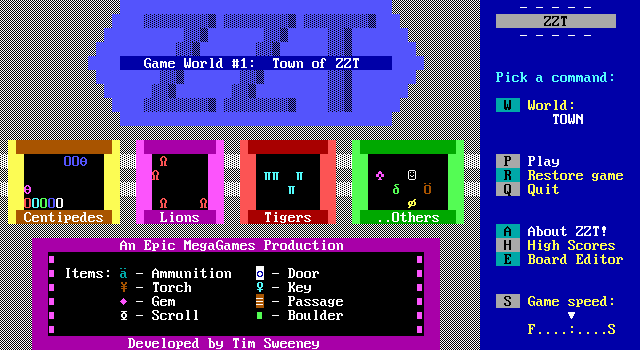
- Epic Games, founded by Tim Sweeney in 1991, initially focused on 2D games like ZZT before shifting to 3D with the 1998 hit "Unreal," which sold 1.5 million units by its fourth anniversary.
- The "Unreal Engine," which powered the game "Unreal," was Epic's primary investment, costing about $3 million ($6 million in 2024 dollars) to produce, rather than the game itself.
- Epic Games successfully built a business around licensing the Unreal Engine starting in 1996, generating $250,000–$350,000 in upfront payments and 5%–7% royalties from licensees.
Why Did (or Didn't) This Week's Steam Launches Take Off?
The analysis examines the performance of recent Steam launches, focusing on the significant divergence between medieval colony sim Norland and high-concept platformer SCHiM.
- High wishlist counts are not reliable predictors of launch performance, as evidenced by Norland reaching over 10,000 concurrent users (CCU) while the similarly hyped SCHiM peaked at only 100.
- Core PC genres characterized by depth and replayability, such as colony builders and strategy games, currently drive significantly higher day-one conversion rates than high-concept, shorter titles.
- Chinese-market titles, particularly satire-heavy games and FMV dating simulators, are achieving high CCU counts on Steam despite lacking comprehensive English localization.

Interviewing Meta CTO Andrew Bosworth: The Metaverse, VR/AR, and AI
Meta’s strategic trajectory centers on the transition from tethered virtual reality to a standalone mixed reality ecosystem, with the ultimate goal of achieving 100 million annual headset sales.
- Meta's investment in Reality Labs began with the Oculus acquisition in 2014, followed by annual spending reaching $5 billion by 2019 and exceeding $10 billion annually by Q4 2020, culminating in the company's rebranding to Meta in 2021.
- Meta's strategy shifted from PC-tethered VR (like Oculus Rift) to standalone devices (like Quest) to avoid being a 'peripheral business' and overcome ecosystem battles with PC platforms like Steam, aiming for mainstream accessibility.
- The launch of Quest 3 has significantly boosted internal momentum, sales, and adoption, leading to a clearer vision for future mixed reality (MR) and virtual reality (VR) device generations and increased software development velocity.