Engine
Company
Documents about Engine

On Fortnite's Travis Scott Concert
The Travis Scott concert within Fortnite serves as a critical case study for understanding the evolution of digital experiences and the strategic trajectory of Epic Games.
- Fortnite’s Travis Scott concert functioned as an interactive, art-centric experience rather than a traditional game, demonstrating Epic Games' strategy of using in-engine events to test new creative and technical capabilities.
- These events serve as R&D for Epic Games to showcase the potential of the Unreal Engine and Fortnite Creative to external businesses and creators, rather than establishing Epic as a permanent event production company.
- The Travis Scott event featured complex, pre-made animations and immersive environmental effects, though it was technically less ambitious than the Star Wars event, which involved live motion capture and voice performances.

Epic Games Worth $15 Billion, Plans to Increase That
Epic Games maintains a strong market position as a major player in the global video game industry, anchored by the success of its flagship title, Fortnite, and the widespread adoption of the Unreal Engine.
- As of April 2020, Epic Games is in talks to raise between $500 million and $1 billion in a new funding round.
- The company is seeking a valuation significantly higher than its previous $15 billion valuation established in 2018.
- In 2018, a group of investors acquired $1.25 billion worth of Epic Games shares, setting the company's valuation at $15 billion at that time.

Scumbag Randy Pitchford Keeps Borderlands 3 Bonuses | Games ReCAP
Gearbox Software, a Texas-based game developer, has faced significant internal backlash following a decision to drastically reduce royalty bonuses for employees who worked on the commercially successful title Borderlands 3.
- Gearbox Software significantly reduced royalty bonuses for Borderlands 3 employees, despite the game achieving billion-dollar status as a global brand.
- The studio historically utilizes a compensation model featuring below-average base salaries supplemented by quarterly revenue-sharing bonuses.
- Leadership attributed the reduced payouts to increased development costs and an expanded headcount, specifically citing a mid-development transition from Unreal Engine 3 to Unreal Engine 4 that necessitated restarting production work.

Epic Games Publishing Deal | Games ReCAP
Epic Games has introduced a transformative publishing model that fundamentally alters the traditional power dynamic between developers and publishers.
- Epic Games fully funds development, including salaries, QA, localization, and marketing, while allowing developers to retain 100% ownership of their intellectual property.
- The revenue-sharing model dictates that after Epic recoups its initial investment, net profits are split 50/50 between the publisher and the developer.
- Developers face no financial liability if a project fails to recoup its budget, shifting the risk entirely to Epic Games.

The End of SEO Should Scare Mobile ASO Devotees
The primary thesis posits that businesses relying heavily on App Store Optimization (ASO) face significant existential risks similar to those currently impacting the Search Engine Optimization (SEO) industry.
- Google is systematically blurring the visual distinction between paid ads and organic search results to drive higher click-through rates for advertisements.
- Data from four diverse companies showed that after Google's mobile search redesign, click-through rates for paid ads increased by 17% to 18% within a one-week period.
- The shift toward prioritizing paid ad real estate has caused significant financial harm to businesses reliant on organic traffic, exemplified by TripAdvisor laying off 5% of its workforce following a decline in organic search performance.

Epic Games & The Quest to Push Boundaries
Epic Games has evolved through several distinct iterations since its founding in 1991, consistently leveraging the intersection of gaming and technology to maintain a competitive advantage.
- Epic Games operates as an iterative entity that leverages its internal successes, such as Fortnite, to build foundational infrastructure like the Unreal Engine that serves both the company and the broader developer ecosystem.
- Fortnite’s success was driven by a combination of social connectivity, cross-game avatar persistence, the Battle Pass monetization model, and high-profile live events featuring partners like Marshmello and Star Wars.
- The Epic Games Store (EGS) aims to challenge industry gatekeepers by offering a competitive 12% revenue cut to developers, attempting to disrupt the market dominance of platforms like Steam.
Unreal Engine and the Epic Ecosystem
The Epic Games ecosystem centers on the philosophy that the company’s success is intrinsically linked to the success of its developers.
- Unreal Engine operates on a royalty-based business model where developers pay a 5% fee only after their projects achieve commercial success, following a shift to free access in 2015.
- The Epic Games Store supports the ecosystem by charging a reduced 12% commission, while the Unreal Marketplace provides a revenue stream for creators through a catalog of over 9,000 products.
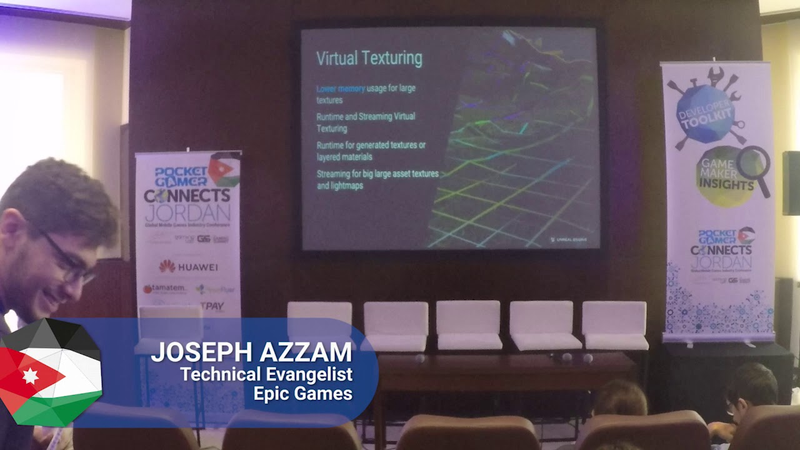
- Epic Games uses Fortnite as a live testing ground to develop and refine engine features like the Chaos physics engine, real-time ray tracing, and virtual texturing.

The Sound of Horror Resident Evil 7: Biohazard
Resident Evil 7: Biohazard establishes a new benchmark for immersive horror through a sophisticated integration of high-fidelity Foley work, automated technical systems, and unconventional musical composition.
- The audio team created a library of 10,000 original organic textures and vocalizations, utilizing musique concrète instead of traditional melodic scores to build a hyper-realistic horror atmosphere.
- Development efficiency was achieved through the proprietary RE Engine and Wwise middleware, which utilized automated audio triggers tied to animation and environmental data to reduce manual implementation labor.
- The audio system employs dynamic sound propagation that reacts to game geometry and an asynchronous, non-blocking architecture to prevent CPU spikes during gameplay.

Ripple Effect: How Women-in-Games Initiatives Make a Difference
Women-in-games initiatives function as essential catalysts for diversifying the gaming industry by providing accessible entry points, professional networks, and leadership development for underrepresented creators.
- Women-in-games initiatives, such as the Difference Engine Initiative, Ladycade, and Game Jam Stockholm, successfully bridge the gap between amateur interest and professional careers by providing structured mentorship and technical skill-building.
- The 'ripple effect' model demonstrates that long-term industry growth is sustained when initial program participants transition into roles as mentors, organizers, and advocates for new talent.
- Effective grassroots programs utilize specific structural supports—including clear codes of conduct and quiet breakout spaces—to create inclusive environments that foster confidence and professional advancement.

Building the Stage for an Immersive Theater VR Experience
This presentation details the artistic and technical development process for an immersive virtual reality theater experience created by Tequila Works.
- Tequila Works maintained a consistent 60 frames per second on PlayStation 4 by prioritizing narrative discovery over traditional gameplay mechanics to manage performance constraints.
- The team utilized a medium-poly modeling workflow with soft bevels instead of high-poly baking to save memory, reduce texture seams, and improve silhouette quality for close-up inspection.
- To mitigate motion sickness, the art direction eliminated texture noise and avoided alpha-tested textures in favor of a clean, physically based lighting and material aesthetic.

The Latest Graphics Technology in Remedy's Northlight Engine
Remedy Entertainment’s Northlight engine represents a significant shift in modern game development by transitioning from traditional screen-space rendering techniques to geometry-aware DirectX Raytracing.
- Remedy's Northlight engine supports ray tracing by building top-level acceleration structures every frame, while handling deforming geometry via a compute shader that updates static buffers on the GPU before the bottom-level builder processes them.
- Ray-traced shadows provide accurate contact points and soft-shadow transitions, but shooting 16 rays per pixel at Full HD resolution incurs a performance cost of approximately 80 milliseconds.
- To optimize material binding for DirectX 12, the engine packs all material parameters into a single buffer and reserves dedicated space in the descriptor heap, allowing for draw calls without additional bindings.

PUBG Corp Burying the Hatchet with Fortnite | Games ReCAP Episode 029
The legal friction between PUBG Corporation and Epic Games has officially concluded, marking the end of a contentious period defined by allegations that Epic leveraged its role as an Unreal Engine provider to replicate the battle royale mechanics of its partner.
- PUBG Corporation has officially ended its legal dispute with Epic Games, which was originally triggered by allegations that Epic misused its position as an Unreal Engine provider to replicate PUBG's battle royale mechanics.
- To combat the current stagnation of the battle royale genre, developers are being urged to move beyond the 'last-man-standing' formula and the reliance on shrinking play zones, which are viewed as design shortcuts that limit innovation.
- Future viability for battle royale titles depends on shifting away from transient, loot-focused gameplay toward persistent, snowball-style mechanics and emergent social systems that foster deeper player engagement.