Diamond
Company
Documents about Diamond
How Toon Blast Became the Best Business in Puzzle
Toon Blast, a nine-year-old blast puzzle game from Peak (owned by Take-Two), has re-accelerated its business even as downloads have fallen more than 90% from peak and competing blast games have declined.
- Toon Blast achieved a massive turnaround by increasing its US ARPDAU from a range of $0.17–$0.38 to $2.00–$3.00, resulting in monthly revenue stabilizing above $35M in 2024 despite a 90% decline in downloads from its peak.
- The integration of the 'Super Light Ball' feature—a mechanic popularized by Royal Match that doubles the effect of special items—acted as a critical revenue driver by increasing difficulty headroom and leveraging loss aversion during out-of-moves prompts.
- The game’s live-ops strategy shifted from short, isolated daily events to longer, overlapping formats that compound player engagement and purchase opportunities, mirroring midcore progression systems.
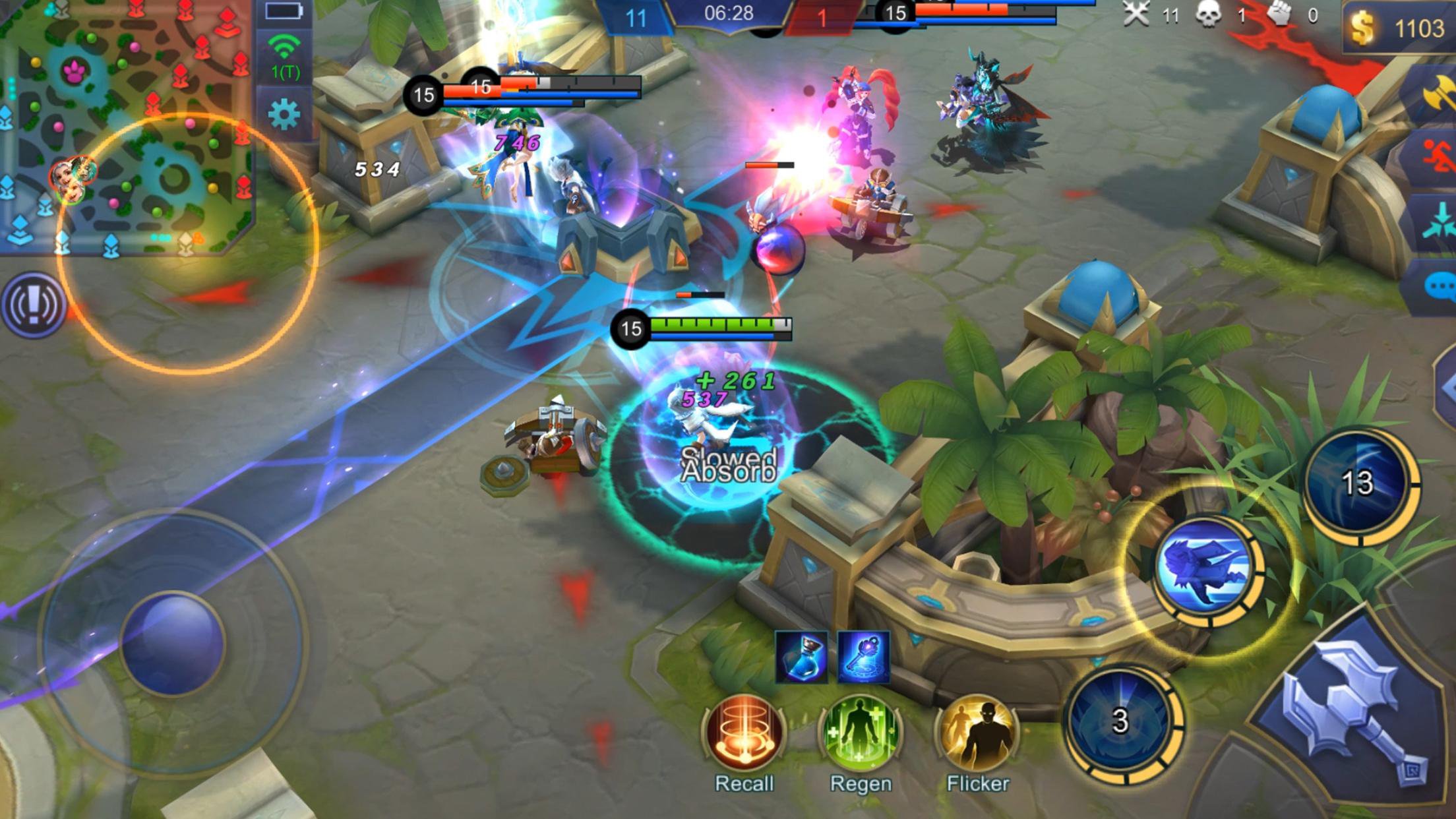
Mobile Legends: Bang Bang Downloads & Player Count
Mobile Legends: Bang Bang, Moonton's free-to-play 5v5 mobile MOBA launched in July 2016, is presented as a mature live-service title that dominates Southeast Asia.
- Mobile Legends: Bang Bang has achieved 781 million lifetime downloads and $1.58 billion in cumulative IAP revenue as of mid-2026.
- The game maintains a stable, mature player base with 85.6 million monthly active users and 24.4 million average daily players.
- Annual revenue has stabilized between $166 million and $189 million following a 2021 peak of $232 million, reflecting a shift from aggressive acquisition to retention-focused live services.
News Round-up: Gunzilla Drama, FAA Recruitment, Sunset Visitor's Next Game
This news summary provides a mid-April 2026 update on various developments within the global video game industry, focusing on corporate shifts, labor disputes, and upcoming software releases.
- Amazon’s Luna platform will terminate support for a la carte game purchases, third-party stores, and external subscriptions effective June 10, 2026.
- Gunzilla Games is under scrutiny for delayed employee payments, which the CEO has officially attributed to cash-flow management strategies.
- The U.S. Federal Aviation Administration is actively recruiting gamers to fill air traffic control roles amid ongoing agency staffing pressures.
Benchmark: How Much Money Can You Make from DLC?
Steam DLC revenue scales with the base game's performance, and the analysis concludes that games expected to earn at least $10,000 should ship minor supporter-style DLC at launch, while games on track for $150,000 or more should definitely plan DLC.
- DLC revenue scales with the base game's performance; games earning $150,000 or more should definitely prepare DLC, and even games earning $10,000+ can benefit from minor supporter-style DLC at launch.
- Despite the potential for additional revenue, a significant number of successful games do not offer DLC: almost a third of Diamond-tier games and over half of Gold-tier games from 2024 lacked even a supporter pack or soundtrack.
- For Diamond-tier games (gross revenue $1M+), the median attach rate for all DLC types is 18% (generating $1,069,000), with expansion packs having a 14% attach rate ($1,250,000 median revenue).
Gnomes: Tower Defense with 10-Month Dev Time Hits $367,484
This case study profiles Gnomes, a pixel-art tower-defense roguelike built by a two-person team in roughly 10 months, which reached $367,484 in gross revenue before Steam's cut by August 2025.
- The tower defense game 'Gnomes' generated $367,484 in gross revenue within approximately 10 months of development, achieved with a total budget of $700 excluding labor.
- The developers secured a spot on the Steam 'New & Trending' list by generating $10,000 in gross revenue within the first 24 hours of their April 4, 2025, launch.
- The game reached 14,510 wishlists at launch, with a critical boost provided by coverage from content creators like Splattercat and Wonderbots, which helped the game surpass the 7,000-wishlist threshold.
Benchmarks: Steam Next Fest
This analysis evaluates the performance of games during the February 2025 Steam Next Fest (SNF) to determine how the event impacts wishlist acquisition and visibility.
- Steam Next Fest does not create momentum for games starting from zero; it functions as a tool to capitalize on existing interest, with minimal visibility lift for games entering with fewer than 2,000 wishlists.
- The tier of success a game enters Steam Next Fest with is highly predictive of its exit tier, as there is little evidence of games 'breaking out' from lower tiers to Diamond status during the event.
- Diamond-tier games (10,000+ wishlists earned) receive nearly triple the impressions by day two compared to lower-performing games, suggesting that Steam's algorithm amplifies games that already demonstrate high user appeal.
Benchmarks: How Many Wishlists Can I Get From Steam Next Fest
This analysis provides benchmarks for Steam Next Fest (SNF) performance based on data from 182 survey responses regarding the February 2026 event.
- Steam Next Fest performance is highly stratified, with top-tier games earning 10,000+ wishlists while underperforming titles are quickly suppressed by the algorithm, resulting in fewer than 1,000 wishlists.
- The Steam algorithm provides a brief baseline of visibility for all games during the first two days, but by day three, it aggressively shifts traffic toward top performers, effectively eliminating a 'middle class' of visibility.
- Total pre-existing wishlists are the strongest predictor of Steam Next Fest success, followed closely by recent wishlist velocity; both metrics serve as proxies for overall game quality.
What Is the Post Launch Discovery Queue
The Steam Discovery Queue (DQ) serves as a critical, often overlooked driver of visibility for games during their initial two-week launch window.
- The Steam Discovery Queue (DQ) accounts for nearly 50% of a game's total page visits during the two-week launch window, making it a critical driver of visibility.
- Steam treats all games roughly equally at launch, providing approximately 25,000 to 35,000 initial impressions, but the algorithm begins to favor or throttle games based on performance by day three.
- Diamond-tier games (earning $1M+) see a significant surge in DQ impressions after day three and a secondary boost around day seven, while lower-performing games see their impressions throttled.

Version1 Open to Merger or Other Options
Version1, the parent organization of the Minnesota RØKKR, is actively exploring strategic alternatives for its future, including potential mergers or acquisitions.
- Version1, the parent company of the Minnesota RØKKR, has officially begun exploring strategic options including a potential merger or acquisition.
- COO Brett Diamond stated that the organization is prioritizing a merger with another esports entity that aligns with their ownership group's vision.
- Despite the search for a partner, Version1 claims to be in good financial health, noting that it has met its financial projections every year.
The Median Indie Game Does Not Earn a Whole Lot
The indie game market on Steam is characterized by extreme revenue disparity, where the vast majority of titles generate minimal income.
- The median indie game released on Steam in 2019 earned only $1,136 in lifetime gross revenue.
- Steam revenue follows a extreme 'hockey stick' distribution, where reaching the top 4% of earners (Diamond tier) requires generating over $1 million in gross revenue.
- A game earning $10,000 in lifetime revenue sits in the 68th percentile, meaning it still outperforms nearly three-quarters of all titles on the platform.
What Is a Good Median Play Time for a Demo? Benchmark
Median play time serves as a critical, objective performance metric for game demos, offering a transparent view of player engagement that cannot be manipulated by marketing assets.
- Median play time is a critical performance metric for demos, with higher engagement strongly correlating to higher revenue tiers: Bronze (7 minutes), Silver (18 minutes), Gold (38 minutes), and Diamond (65 minutes).
- Across all surveyed demos, the average play time is 19.75 minutes, with a median of 14 minutes and a 70th percentile benchmark of 22 minutes.
- Players rarely finish a demo even if it is designed for a 30-minute duration, regardless of whether the game is linear or replayable.
Benchmarks for Selling a Game on Steam
The primary purpose of this analysis is to provide indie game developers with a framework for evaluating commercial performance on Steam.
- Steam revenue tiers for indie games are categorized as Bronze ($0–$10,000), Silver ($10,001–$249,000), Gold ($250,000–$999,000), and Diamond ($1 million+).
- The Steam algorithm begins actively promoting games through its recommendation widgets once they reach the Gold tier of $250,000 in lifetime gross revenue.
- A high-performing conversion rate for Steam wishlists to sales is 20%, with 15% considered a strong benchmark.