Creative
Company
Documents about Creative
Finding Inspiration: Tools for When You're Stuck
Creative block is a common challenge for game developers, particularly when transitioning from structured, well-defined tasks in large studios to the more ambiguous, experimental problem-solving required in smaller, independent teams.
- Treat creativity as a muscle that requires consistent practice and habit rather than viewing it as an innate, static talent.
- Transition from a 'closed mode' of rapid, stressful execution to an 'open mode' that prioritizes playfulness, contemplation, and deliberate problem-solving.
- Use mindfulness meditation to increase comfort with ambiguity, which prevents the tendency to settle for the first, often mediocre, design idea.

Dead by Daylight: When Creative and Business Minds Are Cooking with GAAS
Dead by Daylight serves as a definitive case study for the successful implementation of Games-as-a-Service models, demonstrating that long-term profitability is best achieved by aligning creative vision with player-centric monetization.
- Monetization in Games-as-a-Service (GaaS) should be additive to the player experience rather than subtractive; by focusing on optional cosmetic items, developers can generate revenue while enhancing player engagement and character customization.
- Behaviour Interactive rejected loot boxes in favor of an 'a la carte' store model to maintain player trust, opting for lower immediate revenue in exchange for long-term brand health and player respect.
- Generosity in GaaS, such as allowing players to unlock 60-70% of store content and all original characters using a grindable 'soft currency,' directly correlates with increased average session duration and player retention.
Epic Games Primer (Pt V): Fortnite & How It Built the Epic Flywheel
Fortnite serves as the central engine of the Epic Games ecosystem, functioning not merely as a video game but as a foundational social platform and a critical research and development vehicle.
- Fortnite functions as a social network rather than a traditional game, with users spending significant time 'loitering' in virtual spaces to socialize, fish, or dance rather than engaging in competitive gameplay.
- The platform has three primary modes: Battle Royale (competitive), Party Island (non-violent social space), and Creative Mode (a user-generated content engine similar to Roblox).
- Fortnite generates approximately $2 billion in annual revenue through a free-to-play model that relies exclusively on non-competitive cosmetic purchases, proving the viability of this monetization strategy at scale.
Revisiting the AI of Alien: Isolation
The artificial intelligence systems powering the xenomorph in Alien: Isolation remain a benchmark for non-player character design in the video game industry.
- The Xenomorph’s behavior is governed by a complex tree architecture featuring 36 distinct branches, allowing it to perform actions ranging from hunting and investigating to fleeing from fire.
- An AI-director system manages game pacing by tracking both the player and the Xenomorph, periodically nudging the creature toward the player's general vicinity without revealing their exact location.
- The Xenomorph utilizes four distinct vision cones—normal, focused, peripheral, and close—each with specific range and width parameters to ensure it can detect players even at very close proximity.

What Does an Effective CMO Look Like?
The role of the Chief Marketing Officer (CMO) in mobile-first companies is defined by a critical need for performance-oriented leadership, as evidenced by the high turnover rate of the position, which averages just 43 months at top advertisers.
- The CMO role is characterized by high turnover, with executives at the top 100 American advertisers serving an average of only 43 months.
- Effective marketing in mobile-first companies must be performance-oriented, as all marketing activities should be engineered to drive revenue regardless of the channel used.
- Measurement is the foundational requirement for an effective CMO, encompassing the ownership of growth strategy, optimization metrics, attribution models, and budget allocation.
6 Secrets To Great Game Ideas
Creative professionals often struggle to generate compelling game concepts as they achieve personal and financial stability.
- Creative stagnation often stems from personal and financial comfort, requiring developers to intentionally embrace emotional vulnerability and discomfort to maintain depth in their work.
- Changing your physical environment, such as visiting new locations, forces the brain out of its default state and stimulates new patterns of thinking.
- Authenticity in game concepts is best preserved by abandoning rigid external pressures, such as catering to specific publishers or platforms, in favor of a creator's personal vision.

Surviving the Artist Apocalypse with Kinman Chan | GduX.me
Long-term career sustainability in the entertainment and game art industries depends on a strategic synthesis of technical proficiency, professional adaptability, and interpersonal intelligence.
- Long-term career sustainability requires transitioning from a focus on individual technical output to a broader professional identity centered on adaptability and interpersonal intelligence.
- Artists must treat their craft as a set of fundamental principles rather than static routines to facilitate pivoting across diverse sectors like management, AR, and VR.
- Creative stagnation typically manifests after five to ten years of professional practice, requiring proactive interventions to maintain innovation and prevent burnout.
Timely Truths: The Opportunities and Challenges for Dispersed Creative Teams
The primary purpose of this analysis is to examine the operational realities of dispersed creative teams within the UK games development sector.
- Managing dispersed teams forces leaders to adopt more rigorous management techniques and clearer communication practices, as the assumption that physical proximity equates to team alignment is removed.
- Remote working can improve the quality of life for creative staff, which in turn maximizes their creative potential and output quality.
- Transitioning to a remote model requires an initial adjustment period where teams must accept a learning curve and identify the specific tools and workflows that suit their unique needs.
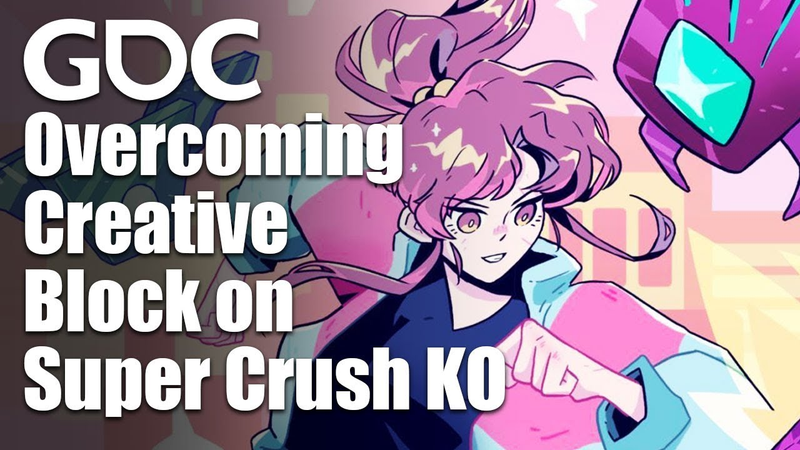
Independent Games Summit: Overcoming Creative Block on Super Crush KO
This presentation explores the psychological challenges of creative block and burnout within the independent game development industry, specifically drawing from the speaker’s experience as an art director on the title Super Crush KO.
- Creative block often stems from a misalignment between a creator's high standards for discernment and their current capacity for execution, rather than a lack of talent.
- The high-stakes environment of indie game development can trigger burnout, as the pressure to replicate past successes often leads to increased anxiety and fear of failure.
- Recovery from severe exhaustion and creative stagnation may require a significant hiatus, such as the month-long break taken by the art director during the 2017–2018 development period.
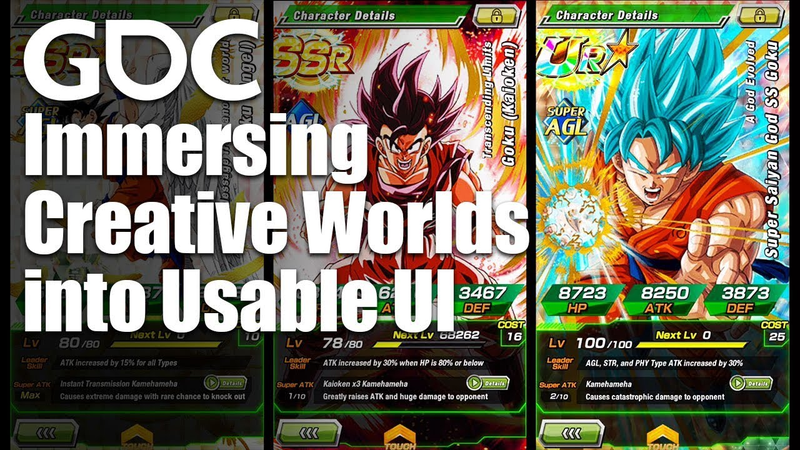
Immersing a Creative World into a Usable UI
Effective user interface design in gaming hinges on the delicate equilibrium between narrative immersion and functional clarity.
- Effective UI design requires balancing narrative immersion with functional clarity by ensuring visual elements like typography and iconography act as extensions of the game world.
- Designers should follow a three-phase process of research, exploration, and iteration to maintain an intuitive interface that reinforces the game's aesthetic identity.
- The choice between diegetic UI, which exists within the game environment, and non-diegetic UI, which is often better for managing high cognitive loads in complex games, is a fundamental strategic decision.

Ad Creative Shouldn’t Be A/B Tested
Traditional A/B testing is fundamentally incompatible with the modern mobile advertising landscape, where algorithmic platforms prioritize real-time, dynamic audience optimization.
- A/B testing ad creatives is ineffective because it relies on rigid, forced audience segments that contradict the fluid, real-time algorithmic optimization used by platforms like Facebook.
- Modern ad platforms automatically distribute traffic to the best-performing creatives, making manual split testing an unnecessary and expensive process that forces impressions on underperforming variants.
- The goal of modern digital advertising is individual-level personalization, whereas A/B testing only seeks to maximize average performance across a group, which is a less precise objective.
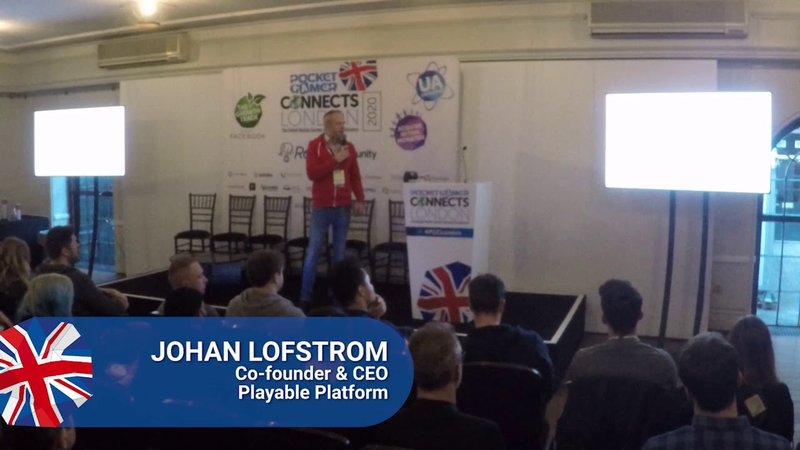
Extract Immense Value from Creative Optimisation
Creative optimization serves as a critical lever for user acquisition managers to improve campaign performance by increasing installs per mille (IPM).
- Creative optimization directly improves campaign performance by increasing installs per mille (IPM), which allows advertisers to win more network auctions or reduce costs while maintaining competitiveness.
- Automated, self-optimizing playable ads use machine learning to conduct real-time iterations of variables like animation speeds, color schemes, and end-cards without manual intervention.
- Shifting from manual A/B testing to automated systems enables rapid performance gains, with some campaigns achieving double-digit percentage increases in click-through rates and IPM within days.