1 free read left. Create a free account for unlimited reading + AI research.
Create free account
Extract Immense Value from Creative Optimisation
Key insights
6 takeaways- 01IPM is a critical performance metric because it is linearly dependent on CPM, meaning higher creative engagement directly dictates an advertisement's ability to compete in auctions.
- 02Creative optimization directly improves campaign performance by increasing installs per mille (IPM), which allows advertisers to win more network auctions or reduce costs while maintaining competitiveness.
- 03Shifting from manual A/B testing to automated systems enables rapid performance gains, with some campaigns achieving double-digit percentage increases in click-through rates and IPM within days.
- 04Automated, self-optimizing playable ads use machine learning to conduct real-time iterations of variables like animation speeds, color schemes, and end-cards without manual intervention.
- 05While playable ad automation is most effective for hyper-casual, idle, and slots genres, the technology is applicable across all game categories to maximize return on advertising spend.
- 06Automated optimization solves the scalability issues of manual testing, which is traditionally labor-intensive and requires extended timeframes to reach statistical significance.
Ask AI about this video
Transcript
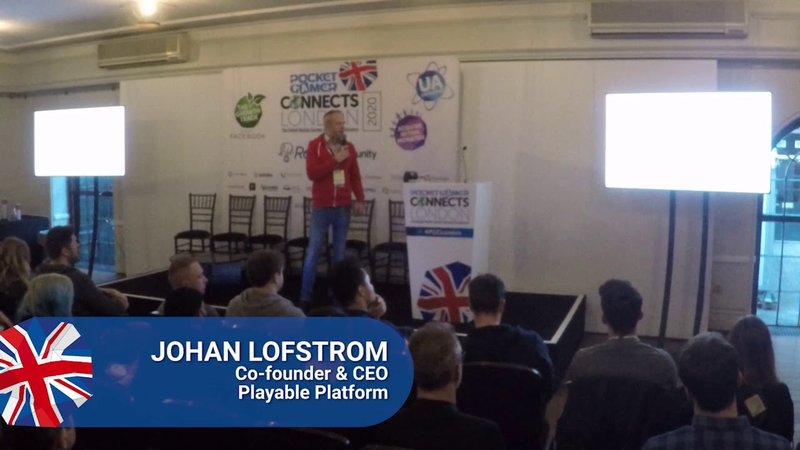
[Music] thanks again I'm gonna talk about trade optimization for actually I'm gonna talk more specifically about self optimizing playable ads who are as one of our partners said this is the the greatest creative innovation since video ads were introduced so basically I wanted to start relatively basic talking about you know how why cradle position is important so just a little bit briefly again but so basically talking about you know quick intro value apparel improvement which is create organization and self optimizing
case started basically so really quickly about us we have done several types of table ads since last year we've been around doing labels for like five six years we worked in this technology for two years but we launched self optimizing playable as last year yeah we're all marketing veterans you know we come from Houston 20 plus people lastly we are networking investor independent which means we are we don't answer to anyone we don't hope to my specific networks but optimized for anything just short of me I've been in this industry for quite a while I worked in play balls for last five years or so so interesting part though so IBM or installed per mil which is basically an a measure on how effective your credits are so install premier means you know installs per thousand impressions this is extremely important actually for any kind of advertising it's also an area that's
quite often overlooked because that's an advertiser so you can you can target obviously targeted you you work on on performance in terms of targeting you talk to write users you open CPI optimization so you don't pay too much for the users that you get but the performance you create is actually determines how many installs you get from the impressions that you get delivered right so a couple of really basic key formulas here just want to start with the first one describes CPI M equals CPI tessai p.m. so CPM being of course then you know the cost per meal so cost per thousand impressions and that's how you compete in networks so you can influence this by the bid CPI and the performance or the creator's and the better you perform sorry the better you compete within a network the higher CPM the more impressions you get right especially how you compete in the auctions that the network's have the second one very basic I want to add it anyway because we get back to it later
another instance you get is the IPM time set of impressions that you have minus a thousand and then lastly robust a return on advertising spend is the revenue generates divided by the cost for an install right again the reason I mention these things very basic is that I want to show really how important I pay off my station is so I'm gonna keep moving to some really basic stuff as you can see type EMS CPM are linearly dependent so if CPI is the same you increase your CPM so you increase your ipm by 50% you CPM increase by 50% right next one same goes with impressions so if you keep the IPM constant double impressions goes up instance go up yeah as much third if your impressions are constant then you increase your IPM the number installs go up right I have a point for this by the way just bear with me so the last second
last of these graphs I want to show is basically how competition within a network works and this is very simplified but in essence has your CPM which is the number you compete on if that's so it's if it's zero obviously gets your impressions but as it increases you win more and more auctions right you get more and more impressions and at some point you reach you know some point of CPM you reach the point where you start winning a lot about auctions which means your your impression count shoots off right this is you know considering or is imagine to have an unlimited budget also but basically it shoots up right so you're always starting you're getting a ton of impressions for the same you know for the same bid and you know you start winning a lot of auctions and then after a while it starts to flatten out a bit as you win more and more and at the end you can't win any more auctions right so you get as many impressions you can now let's say that we instead of looking at CPM here we would look at oh sorry
instead of impressions we look at installs the CPM sorry never installs is equally do you know it has equally effect from CPM as impressions did if the I premise concept but this is I think this is you know considering the idea is held constant as well now imagine if you have an IP m increasing right you have this dynamic and you your IP m is increasing significantly basically you're gonna move to this kind of scenario where you know where not only are you getting an uptake in CPM because IP m is going up but your scanners a lot more installs on the same impressions because your payments go get so the IP so optimizing IP m this is basically my point is that optimizing our p.m. will give you a double whammy basically it would make you look per competitive in the network and for those so you get more impressions and for those impressions you do get you get a lot more installs so basically the opportunity you have again in stores by focusing on a pair of
possession is immense basically so [Music] what we discovered though is that no makeup is focused as much on IPL possession as they should now this is a quote that we got from bit manga when I was working at short post and we led a project here where we optimize speed mangas creatives or playable ads we did this for a while we get great results we had this quote we post on our website we were proud and all that stuff right and we increase the conversion rate to their ad by 40% which is IPM basically which you know great they say the ton of money from this I will get a lot more installed and save the ton of money so you would think then that ok this this is the kind of resource you can get by being you know structured looking at data and working with it it's relatively easy you don't have to be rocket science to this scientists to do this but then
the question sport ok why are not more people doing this then I want companies not focusing a lot on this and the main reason for that is well for us this required 5 people working for four months space with images and I granted in the work full-time but it still took four months to do this or five people's attention so yeah we got great results but we can't we can't do this at launch scale right we don't just still have the resources for that all the time for that matter so the main reason why I pay my physician is not done too much it's basically it's labor intensive and it takes time so and here's my Pantanal presentation but what's the solution to this I penalisation it has the most value but it's not done today the solution to this is self optimizing ads imagine you have an ad that basically does all this work for you it optimized itself in real time you don't have to do anything basically you don't have to change any assets you know change any variables you don't have to change any targeting anything you just let it run and it just automatically adopts itself to the user and this is basically this
is beta what we are developed and this is what we launched in November last year and we are probably obviously very happy that but basically the main reason for this is that it's it's extremely fast requires zero effort it's all data-driven because we measure everything inside and outside of the ad and and then they add itself acts on this and then it has enormous impact and I'll show you in a second so to case started to did one wasn't the number one game in the App Store we took their label that we integrate our technology and we did 15 iterations the ad itself did 15 iterations of itself basically within a week and you know the example I showed before we had a 40 percent increase for bit mango performance we did that for four months right whereas
we did and then that was four iterations now with the 15 iterations in one week and we doubled the CTR and had almost the same impact on IBM action so we had a lot higher impact in significantly lower time and now the run basically 25% of all their all the downloads now comes to this specific this specific ad only and another hyper casual test we did as well we had similar kind of resource table I did 10 iteration in four days and we double the ipam from 25 to 15 and this requires zero human interaction at all this was the ad itself you know optimising itself basically then we had I thank you the two more case studies here we had a low frontier also from congregate this was a two-stage process if they had a very low performing playable ad that is start out with that we fixed and then we took it to reckon on the next level with with the the
optimization so we went from 13 percent of fifty three percent CTR and nowaday I mean the the cipm now this ad unit is significantly better than anything else they have we also ran one for helium where we that's a typo actually sorry about that we had a significant increase in CTR the first one actually the ILA frontier is supposed to go from from 1 to 5 m CTR but anyway the last one for 13 to 53% and with more than double the ipm basically so I think we run this again since November we done a few I think we've done 25 different ads so far these are just four examples but what's nice about this technologies is kind of failed proof because it takes care of everything itself it looks only at data and it works extremely fast that's it any questions thank you very
much do we have any questions yes over there sorry I'll run over and give him a mic hi I just wondered so is the self optimizing tool is that a service that you're offering of what what actually is it yes exactly so it is a service offering it's a technology we've been developing for couple of years that we released in November so in essence it's it's kind of like an SDK that you integrate in the ad and then we run all the optimizations through our technology so that is that is the product table platform offer basically and have you got your details to put up on the screen for us thank you great question do you have any more questions from the audience I have one but I felt no yep please just just
briefly do you have some examples of what you mean by optimizing the ad itself an example is that if one of the so so we saw that some of the ads were several iterations right one of those iterations could have been you test for instance the at the end card so we would test you know let's say five different cards and we see which one has the best performance in other one can be that that in the congregate example they have a court that goes through the the ad basically we test the court speeds so the original speed was five and we tested you know one three five eight seven ten twenty all those against each other and then we saw when we had enough data to be statistically significant at ninety five percent level then we stopped the test based though they had stopped to self stop the test itself and then evaluated okay which one is performing the best and then it kept going with that value so then they would
always always be the court speed I think fifteen one so then it will always continue record speed fifteen today we'll test something else anybody else any questions yeah does this compare it's like I'm going to have three ads for the same campaign does it compare them which one is the best like I have a video 15-second the video of 25 second and a video of 30 if I want to choose which one is the best does it jump from one this is more about the ads so that's that's on a higher level actually this is more about this would optimize each unique ad units basically so he would he would let's say if you have three different ads and they will
perform let's say at an IPM of five six and they just on my dad he would this technology would put make them perform at XA 7 and 10 and 15 so it doesn't compare it compares itself to a previous state so it gradually always improves itself so it so it's it's it's not an a/b test between different ads it's more about the constant involvement of the current ads that you have anything else we have a lot of time for questions so if you've got anything at all I've got a question it's probably really dumb so I was always I've always interested in playable ads because they're like these little bite-sized games and kind of stuff I mean from your perspective what kind of like what kind of those ads what kind of genres are playable ads usually work for developers I know it's quite a broad topic rather than your self it's a great question
great question I mean in generally speaking when you can mimic the gameplay that's when it works the best so hyper cacher is good idle is good slots is good when it comes to match three for instance game play usually doesn't really work so then you want to test with other type of like mini games like let's say memory you would use the game assets but you will use it memory game instead which actually could work really well so it's in in general it's a more straight for the game play is the Perry works but it works it works for any game genre I would say it's just that in some games genres like much three you need to be a lot more creative though so we're not gonna see a full-on multiplayer shooter in a playable add anytime soon so a cool project may be great that'd be awesome 20 minute do we have any more questions anyone yes hi I'm Lisa from say playable we kind of know each other I didn't get why you're
saying that's much three playable don't really work because we are working with small giant and much three successful so far okay so what's your argument for that what what do you mean playable don't work with much three and then move to the fifteen minutes that's the experience we have I mean it's you know it's and working is relative right I mean it's five five my p.m. okay is it not acceptable standard but what we've seen though is that that four match three though when you do something adjacent to it some different type of gameplay but using the assets we usually have much better performance stupid 20 gigs that's the actual site I'm gonna get
like yeah I think you said you change the settings the machine changes the Chester settings and then you use machine learning to work out what's the best settings but how do you choose the settings is it randomly or is it like intelligently that's a mix between machine and humans in the beginning when we set up the test then we choose two little things that we want to test and then we let the Machine kind of decide the priority of those tests but the nice thing is that considering it's it's automatic and it's machine based we can test a ton of different settings right we can do let's say 50 different tests at the same time we test let's say court speed and then maybe an card combination and color and those things but it's a combination basically of human and machine and and a lot of that is done upfront so once it's done upfront it can just run for a very long time right thank you very much can we have a
round of applause for your hand please thank you [Applause] you [Music]
Summary
Creative optimization serves as a critical lever for user acquisition managers to improve campaign performance by increasing installs per mille (IPM). IPM, defined as the number of installs generated per thousand impressions, acts as a primary performance metric that dictates how effectively an advertisement competes within network auctions. Because CPM and IPM are linearly dependent, enhancing creative performance allows advertisers to win more auctions at the same bid or maintain competitiveness while lowering costs. Despite the clear financial benefits, many organizations struggle to implement rigorous creative optimization due to the labor-intensive nature of manual A/B testing, which often requires significant human resources and extended timeframes to achieve statistically significant results.
To address these inefficiencies, automated, self-optimizing playable ads have emerged as a scalable solution. This technology utilizes machine learning to conduct real-time, data-driven iterations within a single ad unit without requiring manual asset changes or constant human intervention. By testing variables such as end-card variations, animation speeds, and color schemes, the system automatically identifies and implements the highest-performing configurations once statistical significance is reached. This approach allows for rapid, continuous improvement, enabling ads to evolve and maintain high engagement levels over time.
Case studies demonstrate the efficacy of this automated approach, with some campaigns achieving double-digit percentage increases in click-through rates and IPM within days rather than months. While playable ads are particularly effective for genres like hyper-casual, idle, and slots—where gameplay can be easily mimicked—the technology remains applicable across various game categories. By shifting the burden of optimization from manual labor to automated systems, developers can achieve superior return on advertising spend and maximize the reach of their creative assets in a highly competitive digital landscape.


















Comments