
Bungie
CompanyUnited States · Founded 1991
Documents about Bungie

TWIG #390: Destiny Ends, Xbox's Biggest Layoff Ever, and Google Play's New Fee Chaos
The global video game industry is currently undergoing a painful period of structural realignment, characterized by the collapse of overly ambitious acquisition strategies and a pivot toward extreme fiscal conservatism.
- Sony’s $3.6 billion acquisition of Bungie has resulted in $766 million in impairment charges and the loss of over 600 jobs, highlighting the failure of the strategy to integrate independent studios into live-service operations.
- Microsoft is pivoting the Xbox division toward a 'fewer, bigger, better' strategy, prioritizing high-performing blockbuster franchises over niche titles to satisfy investor demands for immediate financial sustainability.
- The Xbox Series X has seen its pricing rise to $800, a move that effectively cedes competitive advantage to the PlayStation 5 as Microsoft shifts toward a digital-first, high-margin model.
The News After Sharma's First 100 Days
The recent leadership changes and strategic shifts at Xbox, occurring during Asha Sharma’s first 100 days, signal a fundamental transition for the division.
- Microsoft is restructuring Xbox toward a leaner, more profitable model by prioritizing high-impact intellectual property over smaller, niche projects and reducing its first-party studio profile.
- Leadership is exploring the potential divestiture of the Xbox division into an independent entity supported by private equity or sovereign wealth funds.
- The strategic pivot shifts Xbox from a platform-management approach to a platform-operator model focused specifically on daily active users and long-term financial profitability.
Making Indie Games Is Like Buying A Lottery Ticket
The transition from corporate game development to independent game creation is frequently misunderstood as a viable alternative to industry layoffs.
- The indie game market is hyper-saturated, with over 21,000 games released on Steam in 2025 alone, making commercial viability difficult even for critically acclaimed titles.
- Transitioning to independent development is a high-risk financial endeavor rather than a stable career pivot, as it frequently requires personal savings, grants, or family support to cover years of development costs.
- The 'starving artist' model of indie development is functionally inaccessible to mid-career professionals who have significant financial obligations like mortgages and dependents.
Why did PlayStation buy Bungie in the first place?
The acquisition of Bungie by PlayStation for $3.6 billion in 2022 serves as a case study in the challenges of pivoting toward a live-service business model.
- PlayStation acquired Bungie for $3.6 billion in 2022 to accelerate its transition into the live-service market, but the strategy has resulted in approximately 700 layoffs and underwhelming performance for projects like Marathon.
- The console market is experiencing a period of stagnation, with U.S. hardware unit sales hitting record lows for both PlayStation and Xbox due to rising component costs and repeated price hikes.
- U.S. gaming revenue showed only a marginal 1% year-over-year increase in May, reflecting a broader cooling trend as consumers delay spending while anticipating the next generation of consoles expected in 2028.
Grand Theft Absent, Steam Machine Caught in the RAM racket & Bungie’s Bad Day | Games For Breakfast
The gaming industry is currently navigating a period of significant volatility characterized by aggressive monetization strategies, widespread workforce instability, and hardware market challenges.
- Grand Theft Auto 6 will launch with a $79.99 standard edition price point and lacks physical media, a move that may set an industry precedent for other publishers to follow.
- The $55 billion acquisition of Kadokawa involves $20 billion in loan financing, highlighting the high levels of debt-based leverage currently used in major gaming industry mergers.
- Bungie is facing significant internal challenges, including layoffs and criticism regarding its monetization strategies, such as the implementation of multiple currencies and gated content in Destiny.
🚨📢 BREAKING NEWS: GTA 6 pre-sale, EU regulations looming, Layoffs and Pokemon Champions launch
The current landscape of the gaming industry is defined by high-profile product launches, significant regulatory challenges, and a pervasive trend of studio restructuring and layoffs.
- Take-Two’s stock valuation has risen in anticipation of the upcoming Grand Theft Auto 6 pre-sale.
- Epic Games has set a 2027 target for Unreal Engine 6, focusing on AI-assisted development and live service interoperability.
- Fortnite’s creator ecosystem has surpassed $1 billion in total payouts since 2023, with community-made content now accounting for nearly 50% of total playtime.
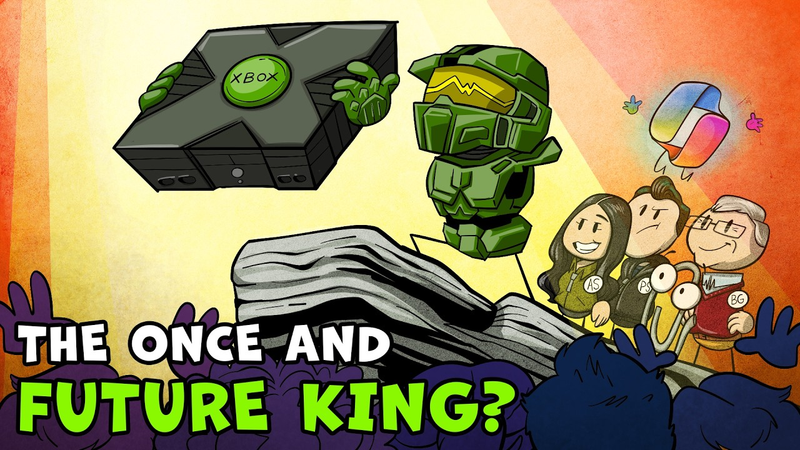
The Rise and Fall of the House of Xbox | Extra Credits Gaming
The history of the Xbox brand reflects a trajectory from a disruptive, innovative newcomer to a struggling platform currently searching for a coherent identity.
- Microsoft entered the console market in 2001 with a vision to place a PC-like multimedia system in every living room, leveraging the DirectX development environment to make the platform more accessible to developers than Sony or Nintendo consoles.
- The original Xbox achieved early success with over 1 million units sold in North America within three weeks of its 2001 launch, bolstered by the acquisition of Bungie and the introduction of the Xbox Live service, which reached 150,000 subscribers in its first week.
- The Xbox 360, released in 2005, became a market leader by selling over 39 million units by 2009, though its early lifecycle was severely damaged by hardware failures known as the 'Red Ring of Death.'

TWIG #386: CoD MW4 Revealed, Sony's State of Play, Bungie's End and 007 First Light
The global gaming industry is currently navigating a period of significant structural transition, marked by a pivot toward current-generation hardware and a reevaluation of long-term profitability strategies.
- The Asia-MENA gaming market is projected to reach a $103 billion valuation by 2030, though Western publishers struggle to compete against local developers who currently command a 90 to 95 percent revenue share in those regions.
- Major publishers are shifting away from legacy console support to prioritize technical performance and modular mechanics, as seen in the upcoming Call of Duty: Modern Warfare 4, even at the cost of immediate unit volume.
- Sony is maintaining profitability despite declining first-party unit sales by successfully leveraging third-party revenue and console exclusivity strategies.

Why Destiny Died (RIP 2014-2026)
The Destiny franchise, which launched in 2014, is effectively concluding its active development cycle as Bungie transitions Destiny 2 into a maintenance-only state following a final update in June 2026.
- Bungie is ending development on Destiny 2 and initiating significant layoffs following the conclusion of the franchise's long-term content roadmap.
- The development of a potential Destiny 3 has been deemed financially unviable due to the exponential rise in AAA game production budgets, which now far exceed the $500 million investment Activision originally committed to the franchise in 2010.
- Bungie’s transition from an independent studio to a Sony subsidiary in 2022 for $3.6 billion occurred during a period of zero-interest rates, but the studio has since struggled to maintain player engagement as the market for live-service games became increasingly saturated.
Destiny 2's Sunset, Pay-Per Click Game Journalism & Star Citizen's Billion $$$ | Games For Breakfast
The gaming industry is currently navigating a period of significant structural instability, characterized by the sunsetting of long-term live-service titles and the erosion of traditional labor standards.
- Star Citizen has officially surpassed $1 billion in total crowdfunding revenue, despite the game remaining in an alpha state and featuring high-cost digital assets like a $5,000 ship designed for large crews.
- Bungie is sunsetting Destiny 2, meaning the game will cease receiving new content updates after June 6, though the servers will remain online for existing players.
- Sony’s acquisition of Bungie for $3.6 billion has faced financial scrutiny, with reports indicating the studio has incurred approximately $766 million in losses since 2022.

Nintendo’s “New” Star Fox, $80 GTA6 says BoA & Mixtape is a Masterpiece | Games For Breakfast
The gaming industry is currently navigating a period of significant structural and economic transition, characterized by shifting pricing models and evolving development strategies.
- Grand Theft Auto VI is expected to spearhead a shift toward an $80 price point for AAA software, potentially establishing a new industry-wide standard.
- Sony reported a $766 million impairment loss related to Bungie, signaling a strategic pivot away from high-risk extraction shooters toward focused, single-player experiences.
- Nintendo is planning a $50 price increase for the upcoming Switch 2 hardware to offset rising manufacturing costs and maintain profitability.
Shooter Monthly #6: RADICAL Marathon Solutions, Deadlock’s Secret Design, & Fortnite Extraction Mode
The modern shooter landscape is undergoing a significant transition as established titles struggle to balance core gameplay integrity with the demands of platform-based growth.
- Valve is prioritizing long-term polish for Deadlock by treating it as an iterative platform rather than a static product, leveraging expertise in both MOBA and shooter design.
- Bungie’s Marathon is currently underperforming in mass-market acquisition compared to competitors like Arc Raiders, despite possessing high-quality mechanics that drive strong player retention.
- Epic Games is facing competitive pressure from platforms like Roblox, forcing a strategic shift toward refining core monetization and gameplay quality rather than pursuing unfocused expansion in Fortnite.


