Transcript
One day back in 2014, 12 years ago, I was in the Kotaku offices down in Soho. Uh, it was September and uh, we got a bunch of discs, game discs from Activision. And Tina Amini, who was an editor at the time, she said to me, "Hey, do you want a copy of this game, Destiny? We have a spare. We have a spare disc over here." I was like, "Sure, I'll check it out. I'll go pop it in for half hour. It's not really my type of game. I don't really play first-person shooters, but I'll go I'll go check it out." And I brought it home and I popped it in. And uh, 2 months later, I had roughly 500 hours in Destiny. It took over my life. It was a very special game to me for a lot of reasons. One is I played it with friends, uh, with my colleagues, with Tina and Kirk and uh, a whole bunch of other people that I wound up becoming great friends with over the years. Um, it was uh, much more fun than I expected
to be blasting Hive and Fallen and hanging out in loot caves and going on raids. And there was something really special about how how bad it was, uh, you might say, how much friction there was. A lot of my time spent playing Destiny was complaining about Destiny. I remember I would uh, I would be playing and I would be on the headset in the couch in in my living room in Manhattan. Um, I shared a very small studio apartment with my wife at the time, which by the way, you want to or she wasn't my wife at the time, my girlfriend at the time, who would then become my wife. And by the way, if you want to see how long our relationship, like if a relationship can truly last, try sharing like uh, 400 square foot apartment with someone. And if you make it make it there a couple of years, then you'll be good. But anyway, she would uh, she would come home and or or she would hear me on the microphone playing Destiny and she would be like, "Jason, why do you play that game? All you do is complain about it." Um but it
was just there was something special about that time, about kind of unifying with your friends to battle against not only the challenges of the game but also the problems that the game had. Um God, I have so many fun memories of that time of of uh having people pull the LAN cable to take down Crota in the Crota's End raid. Of man, that first time going through Vault of Glass, the the first Destiny raid, and just kind of um seeing how different it felt and how cool it was. Uh this is a game that would just signpost everything and be giving you objectives constantly and telling you what was going on until you got to this one raid where it didn't tell you anything and it was kind of quiet. Ghost wasn't talking for the first time and you just had to go through and explore and figure it out with your friends, which was just the coolest thing ever. Um there was Taken King, which really elevated the game to a new level. Um they Bungie was was uh
very I mean, they were very reactive through this game. They would patch out a lot of the friction, which was both a good and a bad thing. Um I kind of fell off a few years later when Destiny 2 came out and there was a hard reset. You had to start a new character and um essentially it was a a reboot for the game and I never never quite got as into it. Uh you And during Destiny 1 I was grinding for spin metal and uh helium fragments and all the other nonsense that you had to
[laughter]
had to go through in that game, but Destiny 2 never gripped me the same way. Um uh there are a lot of reasons for that, I'm sure. One being that I had my first kid in 2019 and when you have a child, it's much harder to uh kind of maintain a Destiny addiction. But I just it it never never quite gripped me as much. But still, I always figured it would be there, just kind of simmering in the background. Just that that kind of friend that you know is always there. If you ever If you ever
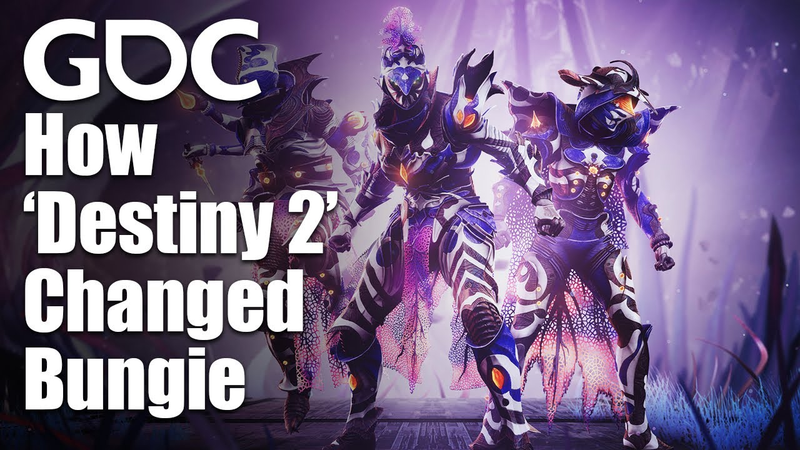
feel the urge to go back, you could always always go back and check out what Destiny is up to. But, alas, that was not to be because last week Bungie announced that it was sunsetting Destiny 2. Destiny 2 will get one final update in early June, and then it will be done. It will be in maintenance mode for the rest of its life. Bungie says that it will still be available to play, so you can still log in and check it out, but there will be no new content. And there's something really sad about that. There's something tragic about that. This is the first time in 12 years that there has not been a living Destiny game. Um the Destiny franchise is just not currently active. It is not currently alive. Um and what what I can share and what I've reported at Bloomberg News is that uh there's no Destiny 3 currently in development. Right now, Bungie is pitching and prototyping. They're trying to figure out what's next, um including future Destiny stuff. I mean, they could very
well wind up working on a new Destiny game at some point, but there's nothing currently in the cards, which is which is really sad. Um and I I thought it might be worth getting a little bit into the history of the franchise and kind of trying to unpack why that's the case and why Bungie is in this position right now, which I think is very unfortunate for the studio and for the franchise. Um I also reported at Bloomberg last week that Bungie is preparing for a pretty significant layoff as a result of all this, which is also just tragic, and it just seems to never end in the video game industry over the last few years, and uh it's a real bummer to be writing about and covering and following. Um so, let's talk a little bit about the history of the franchise. Uh, it started around 2000 or late 2000s, let's say, when Bungie first started preparing what would become Destiny. Um, at the time, for people who might remember, Bungie had been making Halo games for Microsoft.
They wound up spinning out of Microsoft and becoming an independent studio. And shortly after that, they signed a deal with Activision. That was this monumental deal. We know a lot about it because the contract details leaked out as part of of all things, of Call of Duty lawsuit that was completely unrelated to Bungie, but this contract leaked out as part of that. And that contract stipulated a few things. It was one, Activision would pay $500 million over the course of 10 years for this the development of this game, um, these Destiny games. And two is that it wasn't just one game. It was Destiny 1. It was kind of this this cadence of alternating releases. It would be Destiny 1 and then, uh, the first big expansion which they called Comet, and then Destiny 2, and then Comet 2, Destiny 3, Comet 3, Destiny 4, Comet 4. And that was the cadence, right, at the time. Destiny 1 wound up coming out in 2014 after some turbulent development, uh, quite turbulent development that I wrote about at Kotaku about a year later.
Um, and then, uh, Destiny 2 was supposed to come out in 2016, but at the beginning of that year, Bungie announced that they were delaying it. I remember at the time, uh, breaking the news that it was going to be delayed and a lot of people just kind of questioning that and and challenging that and, um, having to eat crow later when Bungie did confirm afterwards that it was going to be delayed. And so that game was delayed. Um, it led to some heads rolling. Harold Ryan, who was president of Bungie at the time, uh, wound up leaving as a result of that. And fun fact, Harold Ryan would then go on to start a company called Probably Monsters that would incubate a, um, studio called Firewalk, uh, that would release a game called Concord under Sony. So, it's all all kind of full circle. Director of Concord, um a man named Ryan Ellis, was actually the original director of Destiny 2. Then, Destiny 2 was kind of uh not hard rebooted, but soft rebooted, and Luke Smith, who was the director of Taken King, took over that project and
wound up shipping Destiny 2 in 2017, in the fall of 2017. So, anyway, so that delay, I mean, obviously did not please the folks at Activision, Bobby Kotick and crew. And uh then Destiny 2 came out, and the plan was to keep going, but at a certain point, there started to be conversations at Dest- at at Bungie about the the logic behind releasing a Destiny 3 and rebooting characters once again, forcing people to start from scratch for a new game. And also, the just kind of the unsustainability of the the pace of creating content and making new things in this world. Because Destiny's tools and engine are actually pretty tough to work with. I've written about that quite a bit, um back at Kotaku and in my first book, Blood, Sweat, and Pixels. Um it's uh it can be a struggle to uh iterate on content, to create content, to move things around, to create stuff. It takes a really long time. That's true in a lot of game development, to be fair, but um proprietary tools, I think, can have all sorts of challenges, um depending where
you are and what you're trying to do. Um so, eventually, there was this big conversation. I mean, there were a lot of meetings. Bungie was trying to decide what to do next. Activision has its own ideas to do. Activision, you have to understand, as a publisher, um before it was acquired by Microsoft, uh it was it it was run by, of course, Bobby Kotick, who believes very strongly in annualizing releases, what he calls exploiting franchises, which is you take a franchise and you release as many games as possible. Um there's this great story that I heard from uh from one guy who was telling me that uh they were they They in a Guitar Hero meeting. I wrote about this in Play Nice. They were in this Guitar Hero meeting and uh uh Bobby was like, "Yeah, that plan is great, but like, you know what? I I want I want a new Guitar Hero game every quarter. And then I want one every month." Uh which I think is is testament to how Bobby Kotick operated. And so they weren't really familiar with this idea of like a service game, a game that you wouldn't annualize, a a game that you wouldn't keep sequelizing, and
instead you would just update that one game. But Bungie, they felt like Destiny 2 could be a really good service game if they just kept adding to that instead of making a sequel right away. So, eventually those conversations led to a divorce and Bungie and Activision split up. Bungie wound up keeping Destiny and they had the rights as uh the publisher to turn They could essentially say, "Hey, we're not going to do a Destiny 3. We're going to turn Destiny 2 into a service game." And at that point they said, "We're not doing Destiny 3." At that point around around that point they were also like incubating other stuff and thinking about all sorts of other projects including what would eventually become Marathon 2. Um 2019 is when that happened, the beginning of 2019. Later that year they actually took Destiny 2 free-to-play, which was another big move in turning it into this kind of forever game, this live service game. Um a couple years later they were purchased by Sony as they're like continuing to release updates for uh for Destiny. They laid out a whole road map um one year. I think it was 2020 they said, "Here are the next three expansions. This is what this is going to look like." Um uh they wound up getting purchased by
Sony um in 2020. Let me look this up to make sure I have it uh correct, 2022. They wound up getting purchased by Sony for 3.6 billion dollars, which seems like an extraordinary amount of money because it is, but some context that you should have here is that this was an era of zero interest rates and free money and uh it was it was more valuable to go and spend your money than it was to keep it in the bank because you weren't making off anything off of it in the bank and you could just take out loans for free, and everything was going crazy. I mean, Zynga was purchased by effort for close to $13 billion at this point by Take-Two. Activision Blizzard was bought, of course, by effort $69 billion. Everyone was just throwing around money all over the place. It was a crazy time. Um so, uh so Sony buys Bungie, and they're all jazzed up. Um but, something happens, which is that Destiny 2 starts to really decline. And um over the next couple of
years, there are some hits and and misses, for sure, with in terms of expansions, but the player base is just not where it needs to be um for for Bungie and for Sony and and for Destiny as a franchise. And they ultimately wind up putting an end to the kind of the 10-year, what they call What is it? The Darkness Saga or the Witness Saga or something like that with this expansion called The Final Shape that really feels like a cap on Destiny 2 and the story that people have been following for a very long time. Um this is very well received. People seem to love it. The Final Shape goes over really well. But, at this point, uh there's we've we've kind of hit this turning point, the post-COVID slump of the games industry. There are some big layoffs, and um Bungie is is uh in a really struggling period at this point. Um I believe it had two big layoffs over the course of a couple of years. Um they wind up canceling this incubation project that they were doing called
Payback um that was a Destiny franchise thing. It was going to be this third-person kind of like Genshin Impact style inspired project that Luke Smith was was helming with um executive producer Mark Noseworthy. That winds up getting canceled. And at this point, I think the big question, or I guess what fans assumed was that after The Final Shape, since Destiny 2 felt like it was at its natural end point, that there would be a Destiny 3 that started to spin up at that point. But, here's the thing. Um here's the thing about doing a Destiny 3. It's extremely expensive. Game The prices of making games, the budgets of making games have gone up so extraordinarily and exponentially over even the last 5 years, let alone the last 15 years since Destiny first started, that like what was a $500 million This is me estimating and pulling numbers out, so like don't don't hold to This is not an exact science or reporting or anything, but like just to kind of put this in context, the $500 million that Activision spent on Destiny
as an entire like 10-year plan um for multiple games and expansions, I think four games and four expansions at the time, that was like supposed to be five or $500 million, that would be what it would take uh to make a Destiny 3 from scratch, essentially. And that's like before marketing. So, this is We're talking about crazy amounts of money, and that is for a very good reason, which is that salaries have to go up because cost of living have gone up. And Bungie is even though Bungie is is a remote-first studio, their office and a lot of their people are based in the Seattle suburbs, which is extremely expensive. Any coastal city is is very expensive to make games in these days, which is why uh we're seeing a larger trend of game developers moving out of the US, out of North America, which maybe I'll talk about in a future video. I'm a I'm a YouTuber now. Um and so, that that's a problem. And I think Sony, especially after the last couple years and not quite uh hitting where they want to hit with some of these games, having to
cancel a lot of projects, lay off a lot of people, they I think don't have the appetite for that kind of expenditure. Um certainly not in 2024, and certainly not now. Uh so, the idea of them spending $500 million again before marketing, which could be who knows some another hundred million, I have no idea, but like that's a crazy amount of money, and the amount The number of copies you would have to sell to make a profit on that is pretty high. It's pretty significant. So, yeah. So, we're talking about a climate where like it wasn't really possible for them to get Destiny 3 off the ground. So, instead they have this loose plan of like, "Okay, we're going to take Destiny 2. We're going to keep doing updates and expansions, like smaller scale expansions than Final Shape. And hopefully we're going to make it more approachable to people." That's kind of the vague like long-term plan is find a way to maybe maybe make it easier for new players to come in cuz that was a really tough That was a big problem in Destiny 2. It still is that if you log in as a new player it is completely overwhelming and intimidating. And and most of the story has been stripped out cuz they actually had to remove content over the years
for I believe they said because it would take too much of space on your hard drive if they like they kept everything in there. So, they removed a bunch of expansions over the years and content that was in the game. So, so at that point I mean and also they were Bungie was putting all of their effort, all their resources into Marathon which would launch a couple years later. So, that point Destiny is in this really weird position where it seems to have ended and most certainly casual fans look at it and say, "Oh, okay, the Final Shape Destiny 2 is over." But, it's still going. And then throughout 2025 it gets a couple more just kind of updates including a Star Wars themed update and none of them really hit the way that Final Shape did. That's for sure. And Destiny 2's player base is dwindling pretty pretty significantly. So, now we're at this point where we are now which is that Bungie decided earlier this year, a few months ago they they knew that this was going to happen that this was going to be the last update in June. So, where are we now? Now, Bungie I think a lot of people there are hoping for the best,
bracing for layoffs. Obviously, they want to keep Marathon going. They just announced Season 2. They just released a trailer I mean for Season 2 earlier this morning. And they're just trying to figure out what's next. They're pitching, they're prototyping Destiny stuff, um at least one other interesting thing they're they're pitching and prototyping. And um I I just don't know what happens from there. It's very hard to imagine, again, Sony being willing to say, "Okay, yes, we will greenlight this $300, $400, $500 million project in this market." And I mean, another piece of context that I didn't even mention, but I think if you follow the games industry, you probably know, is just that um it's so hard for pretty much any game to hit in this market. I mean, we're talking about a a an influx of I mean, just this week as I'm recording this, we have like Cult of the Lamb and 007 First Light, these two killer games, like incredible games, all
coming out just surrounded by an influx of other smaller games that most people have never heard of. I mean, there's so many games, I believe on Steam it was more than 20,000 games were released last year, just to put things in perspective. And then on top of that, a lot of people are just sticking with their old games, Fortnite and Minecraft and Roblox and Call of Duty, games that are just forever. Destiny used to be kind of up there with those, but has lost a lot of players um as a result of the stuff I was talking about. So, it's very difficult to imagine Sony being willing to spend to to greenlight a budget that will take us through the next 5 years or whatever it takes to make a Destiny 3. That said, I mean, I don't think that Sony is planning on shutting down Bungie anytime soon, at least I got to hope not. Um I think there is maybe room for smaller-scale projects, for less risky bets, for games that won't cost that kind of money. Um and maybe they wind up doing what everybody else is doing, what Halo what
their their uh kind of successor Halo Studios is doing, um and doing a lot of outsourcing, a lot of co-dev, a lot of working with cheaper studios to try to save money. Um but this this problem of budget swelling and the market not growing to account for that is something that I think helps explain a lot of the video game industry's current woes. Um, you have this kind of confluence of awful factors, which is just that prices of that games are more expensive to make, games are not selling any much better than they did a few years ago when games were less expensive to make, and at the same time everything is more expensive for consumers and people can barely afford groceries and gas, let alone to spend $70 on a new video game. So, um, there needs to be some big changes and I expect that Bungie will will find a way to navigate this. I certainly hope they do. But yeah, I mean I'm I'm bummed about this. I have been um, for the last week since the news came out. Destiny holds a
special place in my heart. Um, I spent a lot of time with it. I met a lot of great friends through it. And one more story I'll share real quick is that um, uh, uh, Destiny is responsible for me being an author. In 2015 I wrote a big story about Destiny 1's development and why the story was as kind of shattered as and fragmented as it was, why why all the disruptions that that game's development went through. And uh, my now agent reached out to me as a result of that story and was like, "Hey, would you want to do a book about video games?" I think our original thought was like, we called it the kitchen kitchen confidential of video games. Um, and then that wound up turning into Blood, Sweat, and Pixels, which was an anthology of different development stories including Destiny's. And uh, that kind of that did really well and kicked off my career as a an author. So, Destiny is near and dear to my heart. I will miss it. I will be sad that um, it is not continuing to get updates and I
really hope we see more Destiny stuff in the future cuz it's it's really cool and um, I I even though I haven't been like following the the story over the last few years, everything I've heard from people who have is really positive and good. And God, Bungie has so many talented people, so many people who are just have put their all into these games over the last 14 years. So, it will be missed and it's it's quite sad. But, yeah, that's the Destiny story. Thank you for listening and watching my video. I'm a YouTuber now, so um what do you say? Like and subscribe. Follow the hit that smash that like button and subscribe button if you love this content. And yeah, maybe I'll do this again soon. See you next time.
Auto-generated captions from YouTube — names and numbers may be misheard.
Key insights
6 takeaways · ~2 min read- 01Bungie is ending development on Destiny 2 and initiating significant layoffs following the conclusion of the franchise's long-term content roadmap.
- 02The development of a potential Destiny 3 has been deemed financially unviable due to the exponential rise in AAA game production budgets, which now far exceed the $500 million investment Activision originally committed to the franchise in 2010.
- 03Bungie’s transition from an independent studio to a Sony subsidiary in 2022 for $3.6 billion occurred during a period of zero-interest rates, but the studio has since struggled to maintain player engagement as the market for live-service games became increasingly saturated.
- 04Destiny 2 faced significant operational challenges, including a difficult proprietary engine that hindered content iteration and a 'vaulting' strategy that removed older content to manage file sizes, which ultimately alienated new players.
- 05Internal efforts to expand the franchise, such as a third-person project codenamed 'Payback,' were canceled as Bungie shifted resources toward other titles like Marathon.
- 06The broader video game industry is currently facing a crisis where development costs have surged while consumer spending power has declined, making it difficult for high-budget projects to achieve profitability.
Ask AI about this video
Cite this video
Citation
Generating citation…






















Comments