Transcript
Let's talk about Xbox news because there's a lot of them. I'm just going to go quickly through the top lines and then Eric is going to take us off because he's he's fuming. So, Xbox news this week, Double Fine, Compulsion, and Ninja Theory are being spun out as Xbox looks to reduce its first-party studio profile. Treyarch studio head Mark Gordon steps down after 22 years at the helm of the studio. Inside baseball, I had a private tour to Treyarch back in 2013 with crew from Supercell. And here's the takeaway. They have this interactive screen when you enter Treyarch that shows players of Call of Duty around the world playing. That screen you will now see at every Supercell studio because the idea for that was imitated proudly from Treyarch studios. So, anyway, inside baseball. Nadella says YouTube monetizes Xbox better than Microsoft. Ooh.
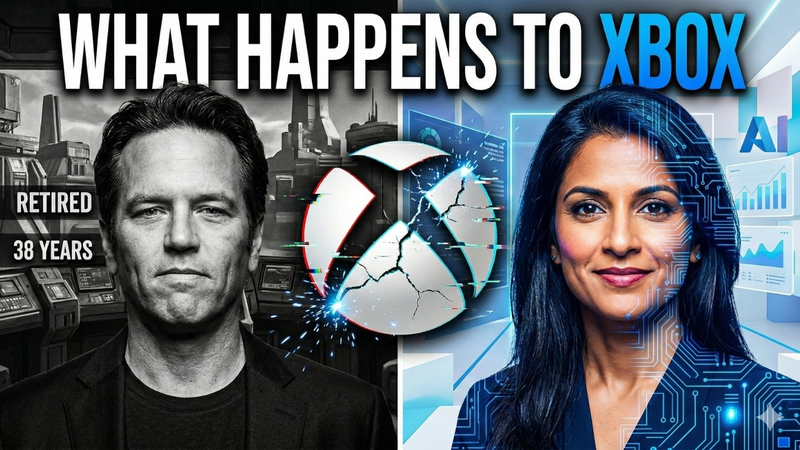
Xbox Studios boss Craig Duncan is leaving only after 18 months. He was definitely a bad luck to join Xbox during the last days of Phil Spencer era. So, and then um Microsoft is considering spinning off Xbox. And I think this is inevitable. This is question is whether it will be more valuable, less valuable after they finally spin it off. So, Mr. Eric Kress, take us to the land of hedge funds and equity and sovereign wealth funds.
Yeah, I think in general people are probably tired of talking about Xbox, but the deluge of news this week was pretty insane. And if you think about it from the perspective of a PR beats, right? So, they went on a positive, positive, positive thing like just what, 2 weeks ago, and now all the negatives are coming out. This is all by design, all like planned ahead of time. Like, you know, let's get all the fluff out there, and now let's go for the jugular, right? Um Duncan was there for 15 years before he
took over this new role, which he was only there for 18 months, and now is leaving. You know, Mark Gordon leaving after 22 years is a huge deal cuz he's in charge of that studio. The Della comments are basically kind of suggesting that they need to stand alone, that Xbox needs to stand alone, they need to be profitable, that YouTube makes more money on them on gaming than they do. And then like the other piece of news was that they want to accelerate the Bethesda IP development, which is kind of a contradiction in terms because all of Bethesda IP takes forever to make, and they have one team, so it's like I That doesn't even make actually even pass the smell test that they know what the [ __ ] they're talking about. So, I guess at a high level cuz I don't want to talk about this too much. The thesis around spinning this thing out and making it an independent entity is starting to materialize from the ether. You know, getting rid of these studios, making it more profitable, like you know, focusing on HD content and the you know, the best content they have. And
then talking about profitability, right? The contradiction in terms of how they approach the profitability issue is that they no longer have to worry about the 30% targets according to Sharma. Then the CEO of Microsoft basically says, well, they're they have to be stand-alone and be profitable. So, there's super contradictions here. But my biggest concern in what these tech bros and Sharma don't understand is that these businesses these creative enterprises are led by leaders, right? Of creative, which I've said a million times is the hardest thing to do in gaming. Actually, the hardest part about it being a CEO is actually the indirect management of creatives, right? So, these type of people that they're losing, Craig Duncan leaving, the head of trick, like this is bad news, you know? They may not be the best, they may have made mistakes, etc. You know, You know, like Serge from Ubisoft, like when he left, that's when the company fell apart, right? Cuz he was in charge of all the studios and the creative design creative movement. So, you cannot replace these people with [ __ ] tech
bros from like who knows what from Facebook or from Google or whatever the [ __ ] they're from, right? And so, like, that's what concerns me the most. Like, you lose that leadership rung, you're [ __ ] [ __ ] okay? Like, long-term, right? But, I don't think this actually even matters for Sharma, right? Again, as my post suggested, she's going to package this thing up, sell it, and bail, and do something else, right? And become a CEO somewhere else or you know, another leadership within Microsoft. I don't think she really gives a [ __ ] right? And so, we're starting to see that kind of manifest itself with these kind of big changes, you know, shutting down studios that just announced the new game, shutting down another studio that had like a really highly rated like award-winning game. Like, she don't give a [ __ ] you know? And so, we'll see. We will see.
But, like, I think she does give a [ __ ] I think she gives a lot of [ __ ] because she put her career online to package this company in a way so she can sell it
for more than it's valued right now. Based on this, do you think the move that she's making, even though they're cold and without any heart, like, do are they increasing the value of Microsoft or not or of Xbox or actually decreasing it?
My point is she doesn't care about Xbox at all. All she cares about is what her career the next level the next stage in her career.
But, next level is based on this company being spun off, being more valuable than when she took over.
Uh not necessarily. If she solves the problem for Satya, the other thing I've heard is that she may not even be looking for a job outside of Microsoft. She may be able to like leverage this and become the heir apparent for the show of Microsoft, right?
She's a CEO in training type thing is what I heard from some of the people.
And it makes sense, but like if this goes well, she's going to be, you know, she's going to be the next CEO of Microsoft.
My point is that her ambitions do not necessarily tie out to what's best for the gamer and what's best for Xbox. That's the whole point, right? Like spitting this thing out and and destroying all the value within it and making that transaction with Goldman, you know, like you know, like that's not necessarily good for Xbox or gamers, right? So
Who buys this? Like who is this that somebody?
It's a consortium of the willing. So Microsoft will maintain ownership, you know, 30% or something like that. Then they'll the Saudis will buy a piece, you know, the Emirates will buy a piece, you know, I don't know. Who knows? Like it's a private equity, you know, [ __ ]
Sovereign wealth fund. [laughter]
I mean there's there's so much money chasing these type of opportunities that they're going to figure it out. Like the Goldman guys, you know, these sovereign wealth funds need to throw money somewhere, right? And I think it's going to be a [ __ ]
train wreck and a disaster, but it's going to look great on paper, you know, until until it doesn't.
Can you at least rewind a little bit for me? Cuz you said managing creatives is the toughest thing to do. And yet it feels like Xbox's value proposition, like it's two most valuable franchises are Halo, acquired from Bungie. So they they didn't buy the creatives, they bought the IP. And Gears of War, which they bought from Epic Games. Do you think it was just rotten at the core going all the way back even before they Game Pass mistaken pivot? You're saying that like the value really comes from the creatives, right? And that's that's where really Xbox lost, I would argue. It feels like we've been in agreement in that. They haven't delivered on Gears, they haven't delivered on Halo, they haven't delivered marquee entries entries in their key franchises. And so they haven't been able to deliver sales in Europe, so they've retreated. Like that to me has been the causal chain of their downfall. But if you're telling me that like look, it's the creatives from the beginning and they've only acquired the IP they are [ __ ] because Gears of War and Halo took a turn when it went to what? 343?
Didn't do well and I don't think was it the Coalition? I don't think they've executed either.
There's a such a long history of failure in this thing. So like, you know, fable that they blew up all their studios basically. Like fundamentally, right? The Halo studio they got blown. The only thing that's delivered for them is really the Forza team on a regular basis, right? Amazing studios, but double A single A like in order to try to expand the catalog, right? And these teams that are getting cut now are those teams that that were acquired then. Then they went after the big ones like Bethesda and Activision Blizzard, right? Because they failed to manage those studios. So there has been a historical mismanagement of studios at Microsoft. This has been their Achilles heel, right? In terms of competing against Sony. They have the teams, they just didn't never executed against the products, right? So yeah, this is not a new story. What I'm trying to say now is that whatever remnants they have left of what's what these studios were, they're losing
all the leadership to help kind of manage them to the next level, right? And so now we're talking about Call of Duty people leaving, right? You know, Bethesda people seem to be relatively secure and Blizzard people leaving, you know, like then they start to losing like real like these huge teams that they've been buying. Like now they're at risk of that because Sharma and her tech bros are in charge and they have no credibility with any of these teams at all, right? Like so it's like, you know, so like this is the risk is like you put people like this in charge, no one wants to work for you then, you know? Yeah, I mean it's it's a long history of poor management on the studio level and this it it you know, it wasn't Sharma, it was your prior management that that really screwed this [ __ ] up, you know.
Rest in peace.
Yeah, no, it's really bad.
Did you guys have a chance to to read Super Joost's a newsletter?
Joost.
Joost Super Joost. It's Super Joost. If I want to say Super Joost, it's going to be Super Joost.
[laughter]
Super Joost. So, Sharma's next 100 days
and it was interesting read. Like in short, he basically made a point that Spencer ran Xbox games as an executive managing a platform versus Sharma as a platform operator running a games business and that basically is the whole story in one line. He reads Sharma's Xbox as a company adopting to the distribution phase, making content cheaper and more accessible rather than chasing the next big blockbuster hit. And he kind of puts in the dividing moment the price cut of Games Pass Ultimate from 30 bucks to about 23 bucks in April as well as pulling out Call of Duty from day one launch. He warned in his newsletter about the price cuts that it's a one-way street essentially. Now, I agree with that because looking at any other streaming platform, everybody's raising prices. Xbox is lowering them. Crazy. He talked about how their new North Star is DAU or daily active players, not units or subscribers, which kind of rebuilds the business around
engagement and I read this as an ad tier incoming. And then his conclusion essentially in the post is that layoffs are inevitable because Xbox spent hundred billion dollars over 5 years while revenue fell nearly half a billion. The subscriber count stalled. They made price cuts to the subscriber tiers. Hardware costs are climbing and the head count essentially is the only lever left to pull in this disaster.
I thought Joost did a reasonably a good job on this one. Right? I think the coverage of all her positive news was almost sycophantic. It was like really weird like people like she's going to be hated. Like I mean, the gamer community is just going to despise her for shutting down these teams that were beloved.
And it didn't make any sense for the first 100 days of this like PR hurrah, how she's on the side of the gamers. And this kind of let me thinking about because like one of the podcast that I got to re-record is with two CEOs. I'm not going to name them because maybe
they will pull the podcast because one is a PE backed CEO and the one is from a public company and both of them became CEOs last year of a companies that they didn't build essentially. So, I talked about like the first 100 days. I thought that was an interesting story and they both had the same key elements like arrive with board alignment and a plan that the board has approved. Like you don't make the plan by listening to others and then shaping it. Like you already know what needs to be done the moment you walk through through the door. Then they talked about changing leadership team immediately. Like you already know which heads are going and it's usually like 90% of that team. And then they also said make the hard closures and restructures inside the first 90 days because you're still sort of an outsider, you're not bound by the existing organization, your relationships, your assumptions. And when I read the Sharma's approach here, it's almost like an inverse playbook because she front-loaded the popular moves, the price cuts, the winning over of the skeptics and then back-loaded all
the painful stuff, the structural work, the studio sales, the layoffs into this sort of a second phase of 100 days. And it could be that this was like strategic way of like let's set your reputation and then as a good person and then become, you know, do a couple of evil things. Or she's just a games industry newcomer and maybe didn't have the fully board-backed plan on day one. And first part was about building credibility and that was kind of necessary. Yeah, what do you think about that, Chris?
Here's my high-level take, right? What she's doing now makes sense to eliminate a lot of the casual smaller double-A single-A teams that are not profitable within their organization, focusing only on the core studios that generate profit, that make the big games like the focus of all major publishers Take-Two, EA, Activision, all of them. If she's trying to compete head-to-head with Sony, this makes sense. And I was a huge critic of when Microsoft was
acquiring a lot of these small studios cuz I thought like these are not the type of games that's going to broaden the audience. These are just too niche, right? And so in essence, what she's doing makes sense if you're going to spin the company out or go after Sony, right? And make a profit more profitable business. So in that sense, I'm relatively positive from the perspective of what's to come of Microsoft. Where I'm negative is like again, as I said earlier, she's losing like these key leadership positions because she's pissing people off because she's just doing this really haphazardly with a bunch of tech bros that don't know [ __ ] all about gaming, right? So that's where it's becomes a disaster is like you can't manage the churn of execs because she's not popular, right? Now, meanwhile, she's pissing off everyone in the ecosystem, IGN and you know, all these like, you know, gaming bros that think these teams are beloved. It's a [ __ ] impossible situation is probably the problem. That's why I just wanted to focus on what the news was and
how bad and good are things that going, but this is the way it's going to continue to go until they figure out exactly what the real strategy is going to be moving forward and and it's going to be a mess. So let let's move on.
[music]
Auto-generated captions from YouTube — names and numbers may be misheard.




















Comments