Transcript
Hello, it's your boy One Take Schreier here with another video. So, in the wake of a whole lot of layoffs at companies like Bungie and soon-to-be Xbox, a lot of people are asking the question, "Hey, why don't all of those people go and make indie games?" Indie games are a lot more creative, a lot more interesting, a lot more fun than a lot of the AAA games we see these days. There are a lot of indie hits, there are a lot of indies that just feel really good and rewarding and satisfying and make you feel good to buy them. So, why doesn't everybody do that? So, today I little I wanted to talk a little bit about why making an indie game is not quite as as easy as people might think it is. It's a little bit more like buying a lottery ticket. Really, it's like spending years of your life to have the opportunity to buy a lottery ticket and not making any money during that time. Then it is a sure-fire
path to success. So, let's back up a little bit. Let's say you are 23. You just graduated from college and you know you want to make games for a living. Maybe you meant majored in in 3D art or in game design or engineering and you know what you know that you want to be a video game developer for a living. You have a couple of options. One is you could apply for a traditional video game company. You could go to Microsoft or PlayStation or uh I don't know, Bethesda or or Activision. I guess those are all part of Microsoft now. Uh EA, etc. etc. Go down the list and apply for a job and if you are lucky and talented enough, you will get a position at one of these companies where they pay you a full-time salary and benefits to make games for a living. If you're a little bit less lucky, you might get a job that is a contract position and it's through maybe it's through an external vendor. Maybe they pay you a little bit
less, maybe the benefits aren't quite as good or non-existent, but you are you are promised that one day you will get full-time employment. And there used to be a time when following this particular career path was not a guarantee of stability, but it would it it offered the kind of the the it offered more stability than an ulterior than an alternate path. That has changed a little bit over the last 3 years especially as the video game industry has gotten more volatile and layoffs have become more ubiquitous. Layoffs were always a big part of the games industry. I wrote a book about it, Press Reset, that was published in 2021 way before any of this started, but it's gotten way worse. Um but you could follow that path, get through your 20s, get you through your 30s, live a kind of traditional white-collar professional life, start a family, raise kids, buy a house,
etc. If you're lucky enough and talented enough to continue on that ladder, you can keep making more money off over time. If you are fortunate enough to be at a company that offers profit sharing, you can make even more money. And so you could have a pretty stable life at least in theory. Maybe not so much anymore, but at least in the past you could do that. But let's say you're in your 20s and you want to follow a different path. Let's say you want to make games yourself. You don't want to kind of follow instructions and have to have to do what other people tell you. You want to make your own things. You have strong visions for what that might look like. That's a little bit of a different sort of career path. So for starters, you have to figure out how are you going to pay for your groceries and your rent while you are working on this game. There are a couple options there. You could get another job and you could get a kind of a traditional day job, maybe one that doesn't require creativity, try to make your game on nights and weekends if you can actually drive yourself and motivate yourself to finish it. Um you could look for funding. You could marry a rich
person. Um you could uh have rich parents. Um uh just find find some of those. Uh if you just walk down the streets of New York City and say you want to find rich parents, I mean chances are high that you'll find someone. Um but uh those are kind of like your options. And then if you That's just if you're by yourself, right? If you are, let's say, an artist, but you don't know how to design games, just draw for them. Or if you are a designer and you have a very strong vision in your head for what a game might look like, but you uh don't know how to program or you don't know how to write music, chances are you're going to have to bring on other people. And that also means paying their salaries. Sometimes you might, if you're kind of a bootstrapping indie project, you might promise them future equity in exchange for their work. That can get a little bit dicey. Um can't guarantee that they're actually going to commit to the project and stick with it. Um if you are doing grassroots and you don't have any money to fund your project, that means that you don't have money to fund people. And remember, I I I did a video
about this a few weeks ago, but I think there's this misconception out there still that like um funding for an indie game means, I don't know, buying computers or equipment or uh licenses. And that is a very small part of it. Funding for an indie game really means paying people salaries while they work on that game.
[snorts]
Um then, let's say you do that. Let's say you find some way to you sacrifice, you eat ramen for a couple of years, and you make your grand creation, and it's amazing, and you are so proud of it. You are releasing into a market that is the most brutal it has ever been. I'm going to pull up a a stat that you might have seen before, but it's still pretty shocking. Last year, in 2025, according to Steam DB stats, 21,407 games were released on Steam, the PC platform. Of those games, um there's kind of there're two buckets that they're going to. One is called games and one is called limited games. The limited games are ones that Valve has decided for whatever reason are not
quite up to the standard of like a proper game. Um so let's say and and as a lot of people know, there's a lot of shovelware and just junk released on Steam every week. So let's say more like 5,000 of the 21,000 are actual games that people are downloading and checking out. That is an incredible an incredible number of games. That is uh close to 15 games a year uh by by my little my little napkin or sorry that is one take try it coming at you. That is close to 15 games a day by my napkin math. So you're competing against that. Um sometimes a great game will stand out, break out from the pack, go viral, become a hit. More often it will not. Um just last week it was revealed that the developers behind the game Mio Memories in Orbit uh had to shut down their studio despite releasing a game that was critically acclaimed and had great word of mouth.
This was a sci-fi Metroidvania. Granted that is a very difficult genre to succeed in. It's an oversaturated genre. It's very hard to release a Metroidvania and find success these days, but still um the fact that that game and in fact let me look up. I'm I want to see how many uh how many like sales and kind of uh uh or what kind of stats it has. We can't see. Steam doesn't show sales, but as a lot of people know, it does show charts for concurrent users. It had a peak of 2,252 concurrent users. And let's see how many reviews does it have. It has more than 4,000 user reviews. So these are not signs of a failed game. But remember, the bigger your team is and the more money you've spent on them, the higher your threshold is for success. So even a game like this can lead to its studio shutting down because it was released in such a crazy market and could not quite hit the way its developers wanted it to. Not everything can be Mecca Chameleon.
So, let's say you are, I don't know, 23, just graduated college, you managed to scrimp and save and maybe your parents help you out, maybe you found someone rich to mooch off, maybe you got a a grant from your government. Those of us who aren't uh those of us who are lucky enough to live in in countries like Canada or Germany can actually apply for funds from those respective governments that can help um support indie games and give you money often times with no strings attached. Sometimes you'll just get a check. Um so so that might be one way to to do this. Let's say you do that for two or three years after you graduate college and then you release your game and nobody plays it. Maybe it's good but not great or maybe it even is great but it hasn't managed to crack the market. Because one thing that I didn't mention here is that you're freaking 23, right? Like how many 23-year-olds out there know how to make a great game, have the experience required to develop a great game, especially without resources, without any sort of support? Maybe it's them,
maybe it's them and a couple of other people. Even if they're lucky enough to have a team of 10 people, that is like that is a tall ask, not to mention the whole management of it all. Not a lot of 23-year-olds know how to direct a team and manage them and keep them all on the same page. So, um chances of a game being great in the first place are pretty slim. Um so, that's I mean, not ideal. You'll probably be looking for another job after a few years if you go the indie route. Unless you hit those lottery numbers and you are lucky enough to release a hit game. And I'll get into a couple of examples of those hit games in in a couple of minutes. Um but I want to talk about the other option because at the beginning of this I was talking about that question of, "Hey, you just got laid off from your job at Bungie. Why don't you go indie?" Well, if you just got laid off after, I don't know, 10 years at Bungie or 10 years in the games industry. Maybe you're in your 30s. Maybe you have a baby to support. Maybe you have house mortgage payments to keep up with. You might have uh you
you built a life expecting a salary of a certain amount every single payday and it is not quite as easy of you to go into ramen scrimp and save mode as it might be when you're 23. So, now you're in this dilemma where like maybe you have a lot more experience. Maybe you could make a much better indie game that you could have 10 years ago. But now you have a life that you've built and it is impossible for you to just give that up and go indie. In theory, I suppose you could go and get another job while moonlighting on the side, but again, how many people out there have the wherewithal, have the um kind of fortitude to be able to make a game during the day or do something else during the day and then make a whole game every single night and every single weekend. And that if you have children, that is impossible. That is an impossible ask. So, for a lot of those people, the only real option is trying to find another job. Um, the industry has been very difficult. Um, I've heard stories from developers
who have been laid off who have spent months if not years looking for new work. I have heard a few horror stories about people who just had had good jobs, had experience in the video game industry, have not been able to find jobs two, three years after being laid off, have had to wound up taking um kind of gig work to make ends meet. Maybe they're working at in retail or for Uber or DoorDash um as they try to scrimp and and save and it's really, really hard if you have a family at that point. Going India at that point is not really an option unless you are lucky enough to find perhaps one of those those golden those those kind of like ideal jobs where you're working for a small studio that is indie but yet has enough money because they've been successful enough to be able to hire people full-time. A super giant, let's call it. So, indie hits. A lot of people are looking around at Claire Obscure and Blueprints
and Animal Well and Silk Song and saying, "Why can't more people do what those people do?" I'll give you guys a few examples. Stardew Valley. I wrote quite a lot about Eric Barone, the creator of Stardew Valley in Blood, Sweat, and Pixels, my first book. Eric Barone was he graduated from college, took a a little bit of a I think he took a job for maybe a few months or something like that. Regardless, he wanted to make an indie game. He had this idea in his head. He spent four or five years working on what would become Stardew Valley, his version of Harvest Moon. The way he was able to do that is that his girlfriend, now I believe his wife, but his girlfriend at the time supported him. He did take a few jobs here and there. He worked as a usher for a little bit at a theater, but for the most part he was supported by his girlfriend. And that is how he was able to make Stardew Valley. And this is not this is not something that he's like hiding. He is he is gives her all the credit when he talks
about that. What about Blueprints? One of my favorite games of the decade, made by made mostly by a guy named Tynan Sylvester. He actually had some help. Eric Barone is one of the rare the rare indie developers who just literally did everything by himself, wrote all the code, wrote all the music, did all the pixels, did all the writing, all the design, all the program everything he did by himself. Tynan Sylvester did a lot of it by himself, but also had a little bit of help. So, how did Tynan Sylvester do it? He spent eight years making blueprints after a previous career as a cinematographer. Well, he did it because he operates a website called Mythic Spoiler that that essentially posts spoilers for upcoming Magic the Gathering cards. And that website makes him enough ad revenue to support himself. He also lives a very austere life. He told me once he sleeps on the floor. Um I guess it's good for your back to sleep on the floor. But he he lives a pretty pretty austere life. All he does is is make games. But that website and the revenue he got from it was able to support him over the course of those 8
years making blueprints. Phenomenal game. So glad it exists. But still, that's just another example of how you can make an indie game. Also, Thunder Lotus does not have children, does not have a family to support.
[snorts]
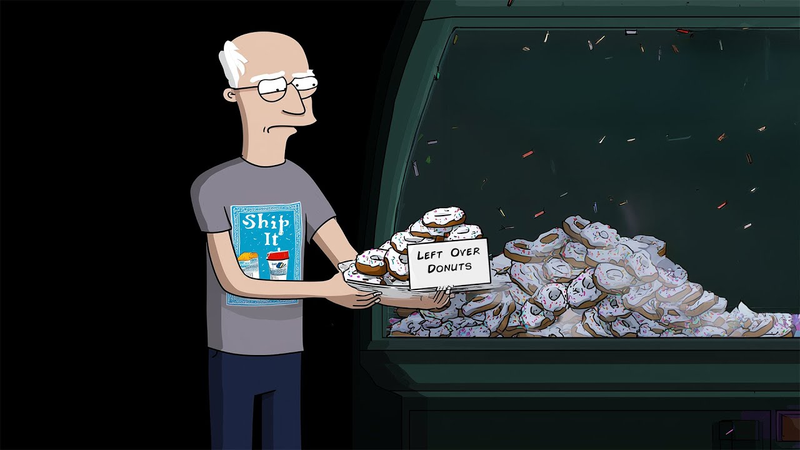
Um Silksong uh well, Silksong came is a sequel to Hollow Knight, of course. Hollow Knight was Kickstarted. Um the people at Team Cherry uh Ari Pellen Pellen and uh sorry, no. Ari Ari Gibson and William Pellen. Uh they uh went into complete and utter like student mode for the making of Hollow Knight, which they made in about, I believe it was two or three years. Um they had their Kickstarter money, which uh could only take them so far. And then they would eat free sandwiches when the the guy who shared an office like the guy in the their office neighbor um brought them in and and offered them the leftovers. Um they uh Ari and and William told me once it was like an exciting day when they got the treat of getting to go and buy a
coffee. Um and that's how they lived. And then Hollow Knight was obviously a massive success. And and that game set them up for life. Now they're multi-millionaires. And then they were able to spend 7 years making Silksong um without having to worry about financial pressure. Uh but they to to make Hollow Knight, they needed to Things were tough for them um working on that game. And they were also younger um when they were doing that. Um, I believe William now has a few kids to support. Um, uh, what else? Expedition 33. Um, I don't know exactly what where all of the money came from behind that game. Um, I we do know, it's been reported that the director, the guy who ran it, uh, came from Ubisoft and also comes from a wealthy family. I don't know, can't say for sure how much support he got or if he did get support. Um, but one thing I will say is that if you do come from a rich family, if you're lucky enough to, um, have that kind of support, one thing you have is a safety net, um, which means that you have more of an
opportunity to go out there and try to do something indie without having to worry about living on the street because you can always call your parents and say, "Hey, can I can I move home for a bit? Hey, can you just help me keep afloat until my next job?" And that safety net, the the value of that cannot be overstated and how many risks it allows you to take both in games and in other media, other form other industries where you might want to be an entrepreneur and do your own thing. Um, Claire Obscur, they also, I mean, that they made that game for pretty cheap. It was less than $10 million, I believe, all things, uh, pretty cheap all things considered. Um, they were small team. Um, I am guessing, this is an assumption, so do not quote me on this. This is this is just a guess, but I am guessing that a lot of them were working for less than they would make at a traditional company like Ubisoft. Um, a lot of them were younger and, uh, hopefully they got, uh, they got paid on the back end of the success of that game. Um, what else?
Uh, I mean, a lot of indie games, a lot of indie hits out there came from people who either were in a position where they were helped, they were supported by someone else. Um, they had funding from somewhere else. Um, some of these games, I mean, CrossCode is one of my other favorite games of the last few years. That game was um, made largely due to the support of the of a fund from the German government, which will pay which will give you a big chunk of change as long as you were agree to keep a certain number of people in Germany like your workforce has to be in Germany and you can apply for this arts grant, which is again something that we are not fortunate enough to have here in the USA. Another component by the way that that you don't have to worry about if you are in many other countries is healthcare and paying for that, which is something that is an extremely significant expense that you have to worry about if you were to quit your job and go independent or get laid off and go independent here in the United
States. But I mean I think the biggest common factor among a lot of successful Indies is that they were young enough and not established enough that they could afford to take the risk. And they are also a perfect example of survivorship bias because the majority of people who take that route to go independent whether it's them going independent just kind of straight away or getting some experience and then going independent, the majority of those people fail. The majority of those people release games that do not break out that are lost among the steam the sea of steam releases that never get attention on Twitch or YouTube that probably don't even get reviews, maybe get a couple of reviews from press sites here and there. Maybe get a a Kotaku article or a Polygon article if they're lucky, but for the most part it is very difficult probably the same chances as winning the lottery to find success as an indie game on Steam. So if you are are someone who was laid off
from a corporate video game position, you probably cannot really do that. It is just not practical to say, you know what? I'm going to go indie now." Um you just won't be able to afford it. You won't be able to pay for your life, and you certainly wouldn't be able to pay for your children. So, unfortunately, uh what a lot of those people will have to do is find new work within the video game industry. I'm guessing that a lot of them will leave the video game industry. The amount of brain drain that we've seen in the games industry over the last uh few years to decade has been, I think, uh pretty pretty impossible to track, I would say, but just anecdotally from the stories I've heard, um I think it's pretty brutal and will just lead to things getting worse over over time. Um Uh so, it's just not an option. And I think that uh if you if you if you're like in that
position or if you're out there and you're saying, "Hey, why don't all these people just go indie? That's where all the cool stuff is. That's where all the success is." It is just not practical for the vast majority of people, and even those who do find it practical, chances are high they're not going to find success. Uh not to be all bleak, but I'm afraid uh the next couple weeks are going to be going to be a bleak time for the video game industry. So, um we're we're going to get a little dark here, and then maybe maybe later in the summer we can uh we can talk about happier things. Talk about [snorts] all the cool games that are coming out in September and other good stuff. All right, I'll see y'all next time.
Auto-generated captions from YouTube — names and numbers may be misheard.
Key insights
Distilling the key insights…
Ask AI about this video
Cite this video
Citation
Generating citation…





















Comments