Halo 2
4 documents in the library are about Halo 2, from writers such as Microsoft and Game Developers Conference, the newest from 2017. Each has a summary and key insights with the page they come from.

Halo 2 is a first-person shooter developed by Bungie and the sequel to Halo: Combat Evolved. The campaign alternates between two playable characters: the human supersoldier Master Chief and the Covenant warrior known as the Arbiter. The game introduced online multiplayer via Xbox Live with an automated matchmaking system, dual-wielding of certain weapons, and vehicle hijacking. It supports both cooperative campaign and competitive multiplayer modes, and was the best-selling game on the original Xbox.
- Released
- Nov 9, 2004
- Developer
- Bungie
- Publisher
- Microsoft Game Studios
- Genres
- Shooter
- Platforms
- Xbox, PC (Microsoft Windows), Xbox One
- Links
- Wikipedia
Game data from IGDB.com
Documents about Halo 2
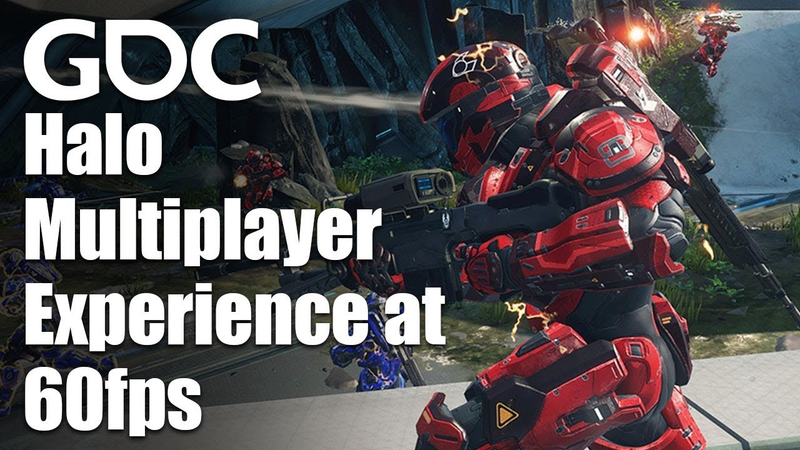
Running the Halo Multiplayer Experience at 60fps: A Technical Art Perspective
Achieving a consistent 60 frames per second for the Halo 2 Anniversary multiplayer experience on Xbox One required a fundamental shift in production philosophy, prioritizing performance as a core design constraint rather than a final optimization step.
- Performance was treated as a foundational design constraint rather than a final optimization step, ensuring a consistent 60fps for Halo 2 Anniversary on Xbox One.
- The development team enforced a strict 16.6ms frame budget, allocating 13.5ms to environments and 2.5ms to sandbox elements.
- Technical artists were embedded directly into map teams to provide real-time oversight, preventing the need to strip visual fidelity during the final production stages.
Microsoft Form 10-Q: Q3 FY2005
Microsoft’s financial performance for the third quarter of fiscal year 2005 reflects a period of strategic capital reallocation and significant legal navigation.
- Microsoft paid $35.25 billion in cash dividends during the first nine months of fiscal 2005, a significant increase from the $1.73 billion paid in the same period of the previous year.
- Operating income for the third quarter of fiscal 2005 was bolstered by reduced legal costs compared to the prior year, despite incurring $768 million in new legal charges, including settlements with Gateway ($150 million) and Burst.com ($60 million).
- Worldwide PC shipments grew approximately 10% and Windows-based server shipments grew about 9% during the third quarter of fiscal 2005 compared to the same period in 2004.
Microsoft Form 10-Q: Q2 FY2005
For the second quarter of fiscal year 2005, ending December 31, 2004, Microsoft demonstrated robust financial performance characterized by strong revenue growth in its Client and Server and Tools segments, alongside a pivotal shift toward profitability for the Home and Entertainment division.
- Microsoft's Home and Entertainment segment achieved profitability in the second quarter of fiscal 2005, driven primarily by strong sales of Halo 2.
- The company paid a special dividend of $3.00 per share, totaling $32.64 billion, on December 2, 2004, following shareholder approval of employee stock plan amendments.
- Operating income for the second quarter of fiscal 2005 benefited from a $2.68 billion decrease in stock-based compensation expense compared to the prior year, alongside revenue growth in the Server and Tools and Client segments.
Microsoft Form 10-Q: Q1 Fiscal Year 2005
Microsoft entered the first quarter of fiscal year 2005 with a robust financial position, characterized by $64.42 billion in cash and short-term investments.
- Microsoft declared a $3.00 per share special dividend totaling approximately $33 billion, payable on December 2, 2004, contingent upon shareholder approval of employee stock plan amendments.
- The company recorded a $960 million contingent liability as of September 30, 2004, to cover ongoing legal and administrative costs related to antitrust litigation.
- Microsoft reached a settlement with Novell, Inc. involving a $536 million payment, in which Novell agreed to drop certain antitrust claims and withdraw from the European Commission’s case against Microsoft.