2015
Company
Documents about 2015
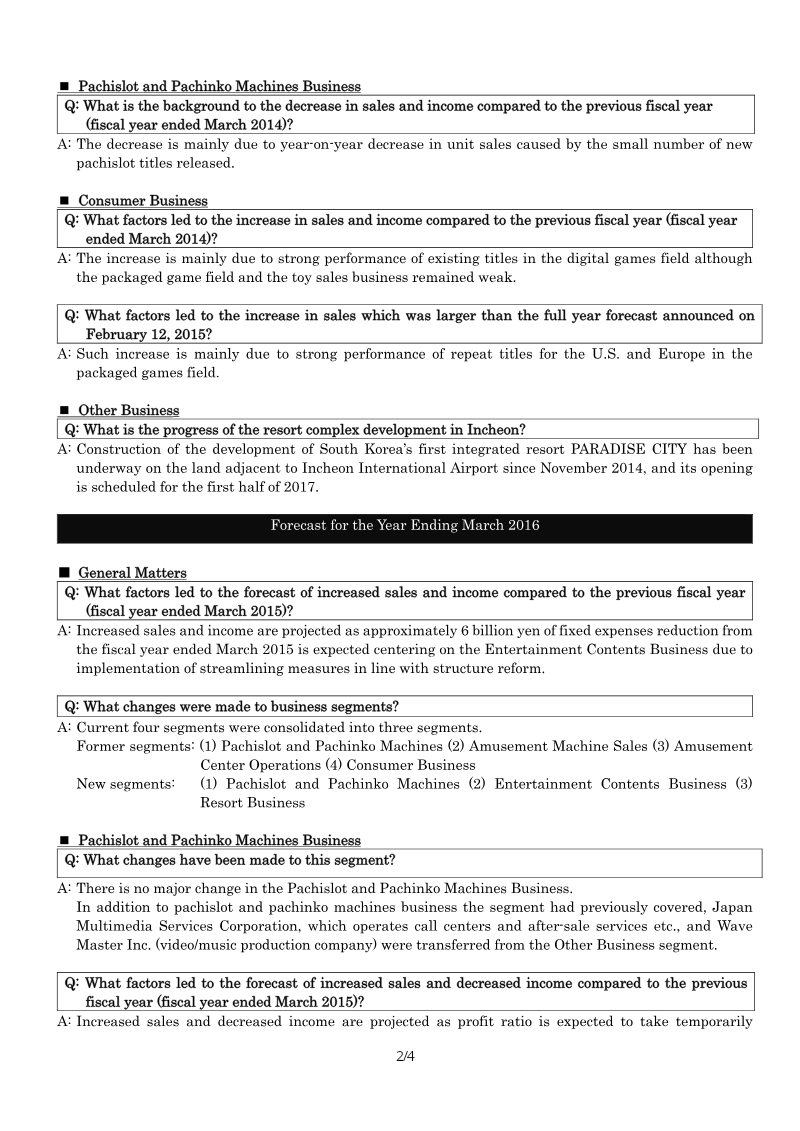
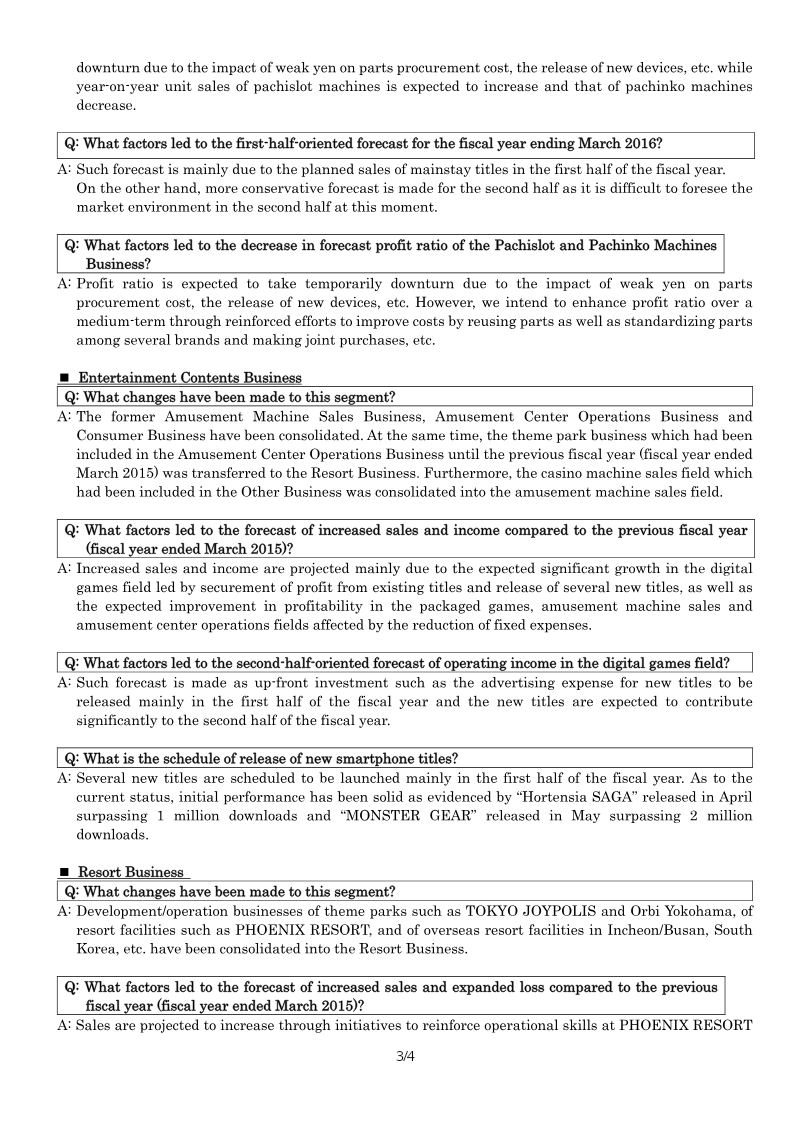
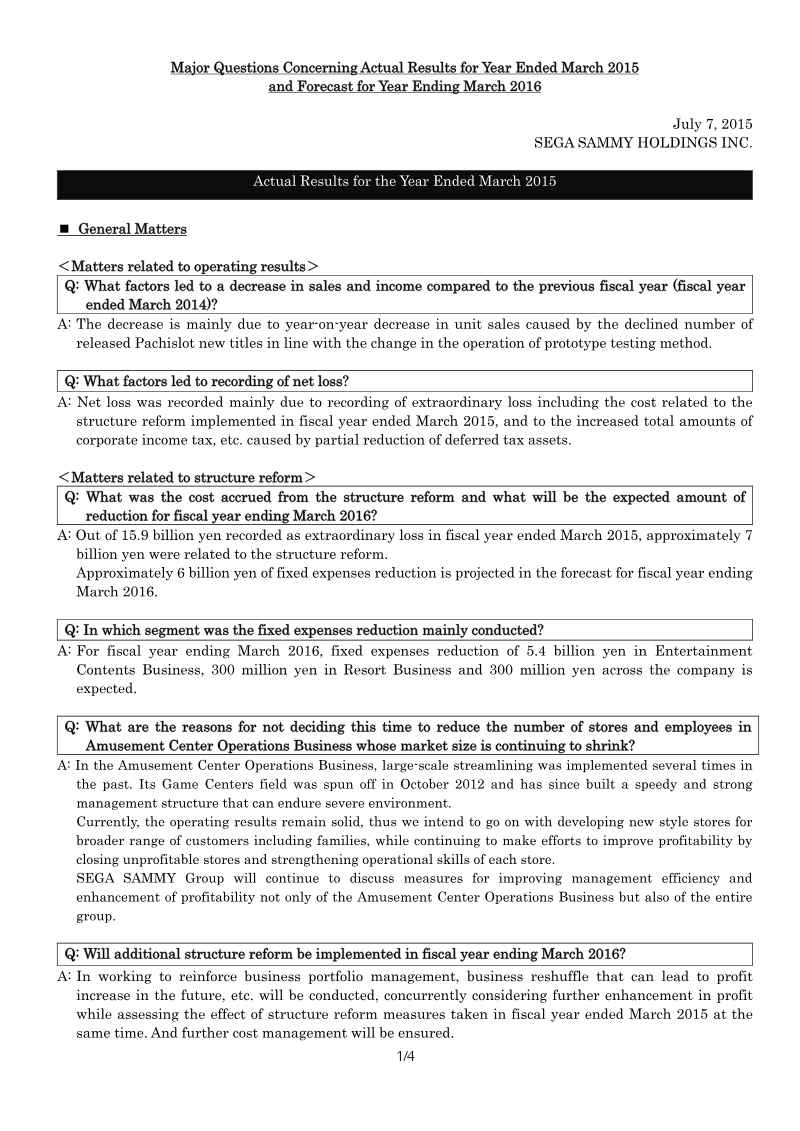
Major Questions Concerning Actual Results for Year Ended March 2015 and Forecast for Year Ending March 2016: Sega Sammy Holdings
Sega Sammy Holdings provides an analytical overview of its financial performance for the fiscal year ended March 2015 and outlines its strategic outlook for the fiscal year ending March 2016.
- Sega Sammy Holdings is targeting a financial recovery for the fiscal year ending March 2016 following a net loss in the fiscal year ended March 2015, which was driven by declining Pachislot sales and restructuring costs.
- The company implemented a structural reform program costing approximately 7 billion yen in fiscal year 2015, which is projected to generate 6 billion yen in fixed expense reductions for fiscal year 2016.
- Operations have been consolidated from four segments into three: Pachislot and Pachinko Machines, Entertainment Contents Business, and Resort Business to improve management efficiency.
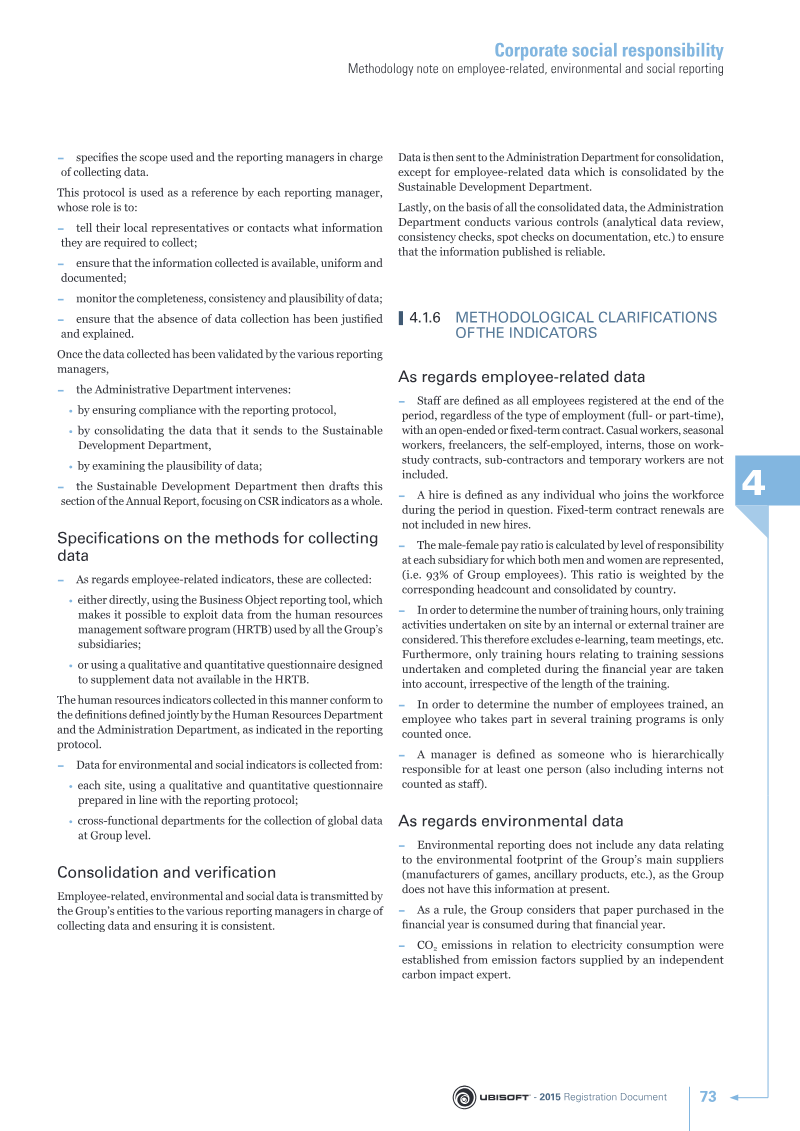
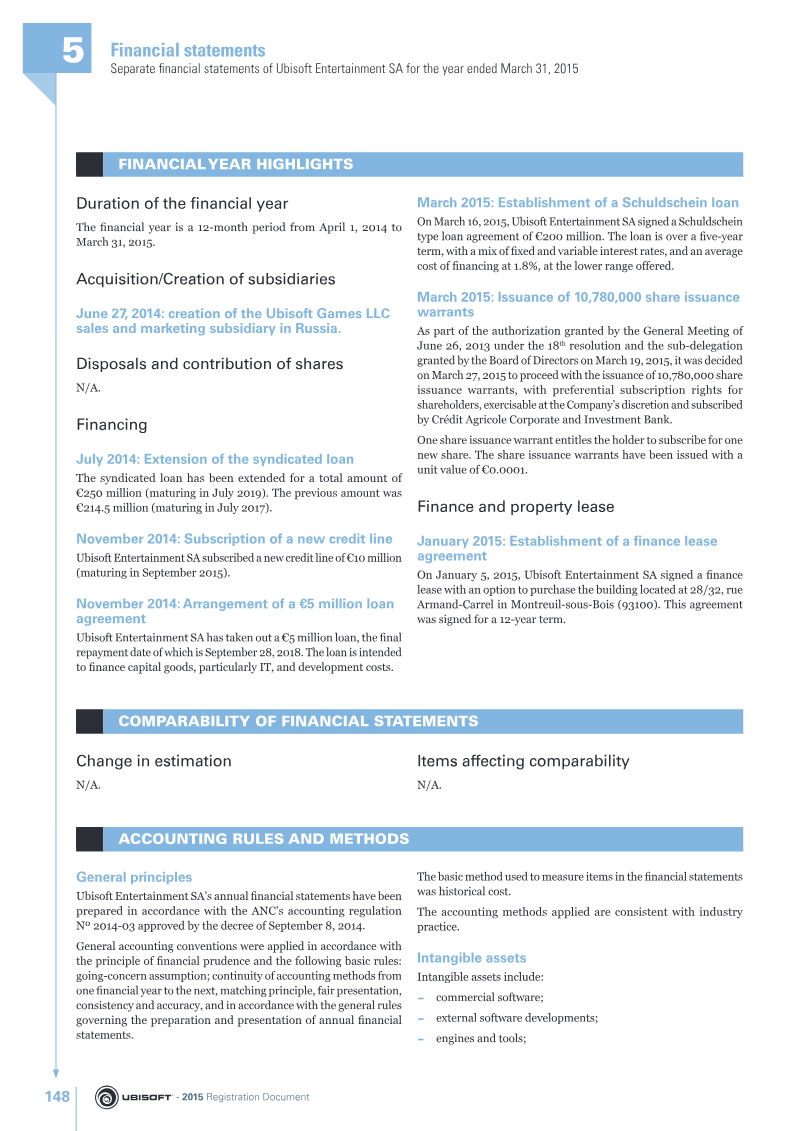
Ubisoft Annual Report 2015
The 2015 Ubisoft Annual Report details a pivotal fiscal year characterized by a significant financial turnaround and a strategic shift toward digital and online-focused gaming.
- Ubisoft posted record sales of €1,464 million in fiscal 2015, up 45% year over year.
- The company swung from a net loss to a net income of €150.7 million, driven by strong open-world franchises and digital expansion.
- Digital revenue grew to 26% of total sales, reflecting a deliberate strategic shift toward digital and online-focused gaming.

Fallout Shelter: Is Its Success Sustainable?
This analysis evaluates the long-term commercial viability of the mobile game Fallout Shelter following its rapid ascent to the top of the iOS US grossing charts in June 2015.
- Fallout Shelter has a Game Power Score of 81, which is above the average of 74 for the top 200 grossing games, but insufficient to reliably sustain a top 10 position.
- Only 8% of mobile games with a Game Power Score similar to Fallout Shelter have successfully maintained a position in the top 10 grossing charts.
- Sustaining a top 10 grossing position typically requires a Game Power Score of 90 or higher, as evidenced by benchmarks like Clash of Clans (94), Candy Crush Saga (91), and Game of War (90).



Nippon Ichi Software: 22nd Term Securities Report
Nippon Ichi Software concluded its 22nd fiscal year ending March 31, 2015, facing a period of significant financial contraction despite maintaining stable top-line revenue.
- Nippon Ichi Software’s operating profit fell by 75.9 percent to 139.7 million yen for the fiscal year ending March 31, 2015, despite net sales remaining flat at approximately 3.67 billion yen.
- Profitability was primarily eroded by rising development costs, increased advertising expenditures, and higher general management expenses.
- The company faces significant market concentration risk, with a single major client accounting for 68.3 percent of total trade receivables.

FY2015 Business Report
The Mixi Group’s fiscal year 2015 business report details a period of transformative financial growth and strategic restructuring for the Japanese technology firm.
- Mixi Group achieved a major financial turnaround in FY2015, reporting ¥112.9 billion in net sales and ¥52.6 billion in operating income.
- The mobile game Monster Strike drove the company's fiscal recovery, reaching over 30 million cumulative unique device downloads by May 2015.
- The company restructured into two core segments: the Entertainment Business, focused on expanding Monster Strike as a global intellectual property, and the Media Platform Business.


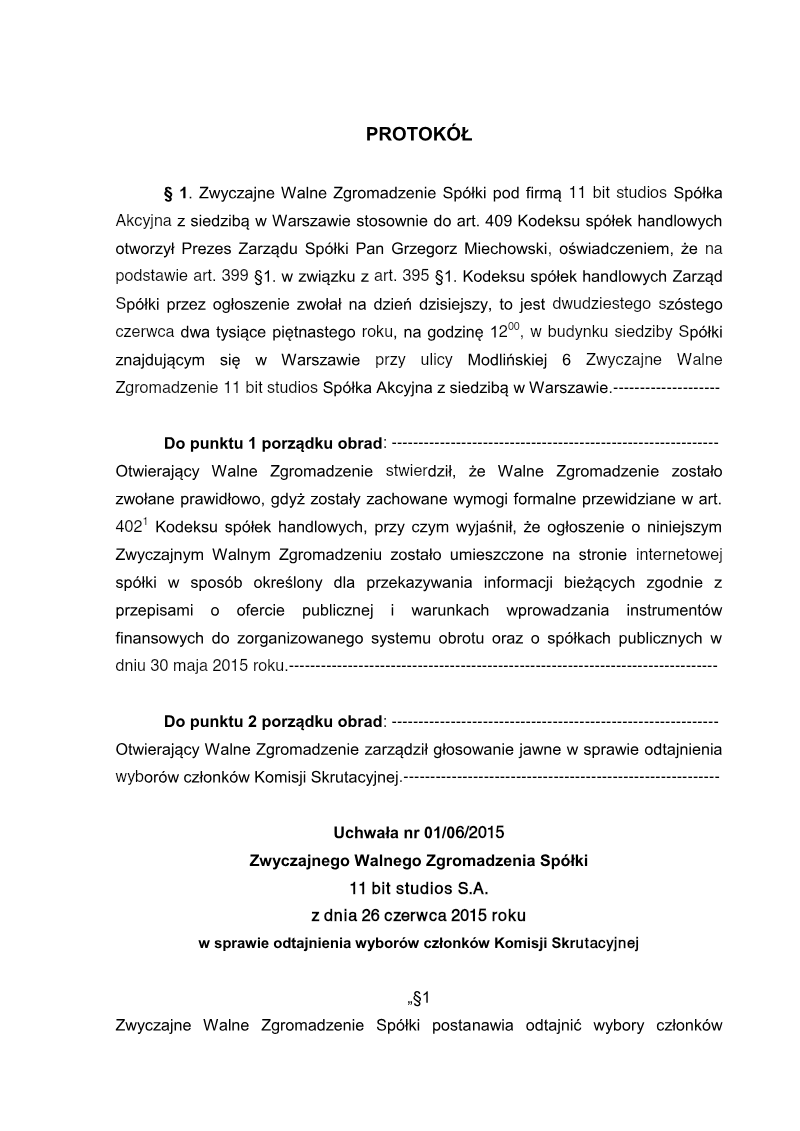
Minutes of the Ordinary General Meeting — 11 bit studios S.A. (June 2015)
The Ordinary General Meeting of 11 bit studios S.A., held on June 26, 2015, established a strategic and financial roadmap for the company following a successful 2014 fiscal year.
- 11 bit studios S.A. reported a 2014 net profit of 9,235,663.36 PLN and a balance sheet total of 21,515,856.70 PLN.
- Shareholders voted to retain the entire 2014 net profit as reserve capital, opting against dividend distribution to strengthen the company's financial position.
- The company initiated a transition to International Financial Reporting Standards (IFRS/IAS) effective January 1, 2015, to facilitate a move to the regulated market of the Warsaw Stock Exchange.


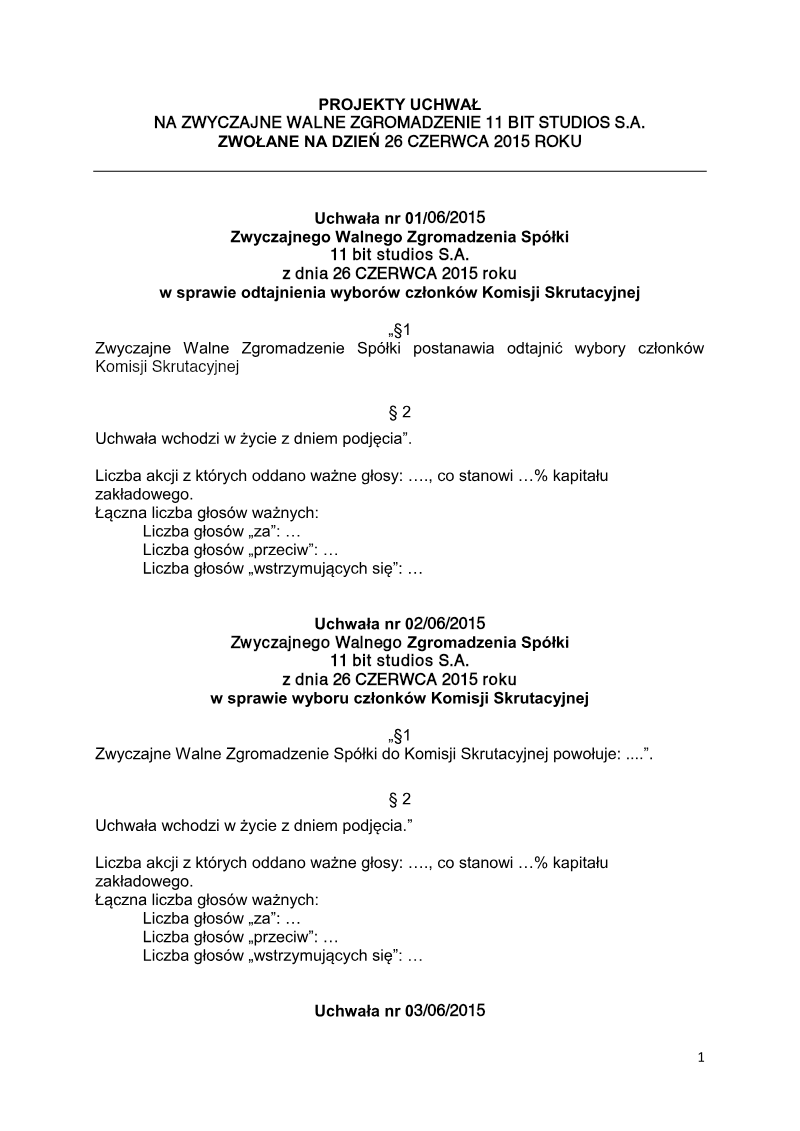
Draft Resolutions for the Ordinary General Meeting — 11 bit studios S.A. (June 2015)
The 2014 fiscal year for 11 bit studios S.A. concluded with a strategic pivot toward institutional growth and enhanced financial transparency.
- 11 bit studios S.A. is transitioning from an alternative trading platform to the main floor of the Warsaw Stock Exchange, requiring the admission of share series A through F to regulated trading.
- The company mandated the adoption of International Financial Reporting Standards (IFRS/IAS) for both the individual company and its capital group, effective January 1, 2015.
- Shareholders approved the allocation of the entire 2014 net profit to reserve capital to strengthen internal funding for future development.
Sony Group Annual Report (Form 20‑F): Fiscal Year Ended March 31, 2015
Sony’s fiscal year ended March 31 2015 was marked by a challenging operating environment, intense competition across consumer electronics and entertainment, and significant restructuring costs.
- Sony reported a net loss of ¥125 billion for the fiscal year ended March 31, 2015, driven by a ¥176 billion goodwill impairment in Mobile Communications and operational deficits in Japan and the U.S.
- Total sales grew 5.8% to ¥8.22 trillion, primarily fueled by strong performance in the PlayStation 4 and image-sensor business segments.
- Operating income recovered to ¥68.5 billion from a loss in the previous year, despite the company incurring ¥98 billion in restructuring charges during the period.

E3 2015 and lessons from Fallout Shelter's success
The release of Fallout Shelter during Bethesda’s E3 2015 press conference serves as a case study for the evolving relationship between traditional console gaming and the mobile market.
- Bethesda's 2015 E3 strategy demonstrated that leveraging established console IP can effectively disrupt Western mobile top-grossing charts.
- The simultaneous announcement of Fallout Shelter alongside Fallout 4 successfully utilized brand equity to drive immediate, high-volume user acquisition on iOS.
- Fallout Shelter achieved top-ten chart performance despite conventional gameplay mechanics, bolstered by strategic promotional support from Apple.

Mobile Games: A Flawed Industry
The mobile gaming industry faces a structural crisis characterized by extreme market saturation and unsustainable economics.
- The mobile gaming industry faces a structural profitability crisis, as average user acquisition costs reached $3 in 2015 while only 2% of users convert to paying customers.
- Successful developers must move beyond pure user acquisition strategies, as the high cost of paid installs often exceeds the lifetime value of a user, which typically ranges between $1 and $1.50 for average products.
- Retention is a critical failure point, with data indicating that only 10% of users remain active in an app after 10 weeks.

Rovio and ZeptoLab talk at PG Connects Bangalore 2015
The mobile gaming industry has reached a scale where top titles generate revenue surpassing traditional entertainment sectors like the Hollywood box office.
- To achieve long-term viability in a competitive market with hundreds of daily releases, developers must transition from simple mechanics to building enduring, character-driven franchises that prioritize brand recognition.
- High brand awareness is the primary strategy for driving organic downloads and reducing dependency on expensive user acquisition costs.
- Leading studios utilize a high-volume prototyping process, filtering hundreds of concepts through iterative soft launches to identify potential hits before global release.
Digital Turbine Annual Report: Fiscal Year 2015
Digital Turbine’s 2015 annual report details a strategic pivot toward mobile media and monetization, characterized by a transition into two primary business segments: Advertising and Content.
- As of March 31, 2015, Digital Turbine reported material weaknesses in internal control over financial reporting, citing a lack of formal accounting policies, manual processes, and an absence of an integrated consolidation module.
- The company’s core products, DT Ignite and DT IQ, are currently compatible only with the Android operating system, creating a dependency on mobile industry developments and carrier relationships that the company cannot control.
- Digital Turbine’s revenue model relies on white-labeled mobile storefronts (DT Marketplace) and direct operator billing (DT Pay), with revenue recognition based on monthly transactional reporting from wireless carriers.