2015
Company
Documents about 2015
Digital Turbine Form 10-Q: Q1 FY2017
Digital Turbine demonstrated notable top-line growth during the first quarter of fiscal year 2017, ending June 30, 2016, with net revenues rising 28.6% to $24.0 million compared to $18.7 million in the prior-year period.
- Digital Turbine reported a net revenue of $24.04 million for the quarter ended June 30, 2016, representing a 28.6% increase compared to $18.69 million in the same period of 2015.
- The company reduced its net loss to $7.41 million for the quarter, an 8.7% improvement over the $8.12 million net loss recorded in the prior-year period.
- Content revenue grew significantly by 58.8% year-over-year to $11.23 million, while advertising revenue increased by 10.3% to $12.81 million.

Square Enix Holdings: Reference Materials for the Three-Month Period Ended June 30, 2016
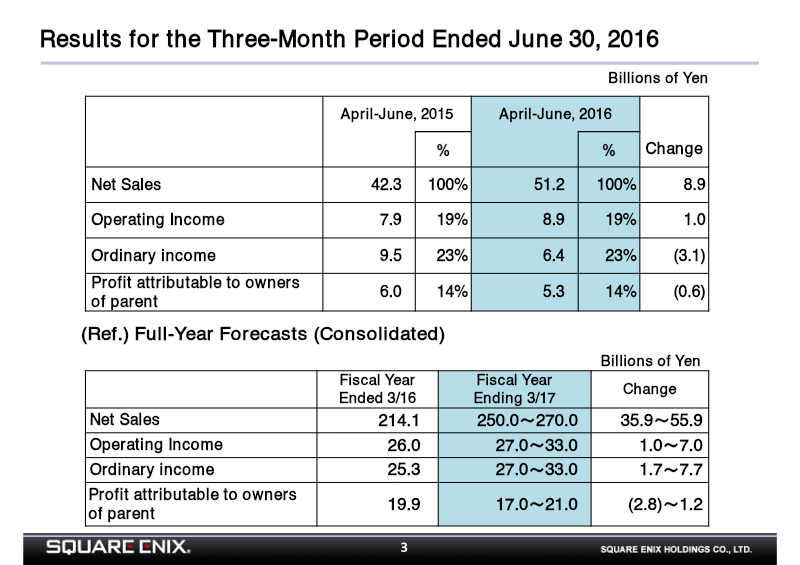
Square Enix Holdings reported its financial performance for the first quarter of the fiscal year ending March 31, 2017, covering the period from April 1, 2016, to June 30, 2016.
- Square Enix reported a strong start to the fiscal year ending March 2017, with net sales increasing by 8.9 billion yen (21%) to 51.2 billion yen for the three-month period ended June 30, 2016.
- Operating income grew to 8.9 billion yen, a 1.0 billion yen increase compared to the same period in 2015, driven primarily by the Digital Entertainment segment.
- The Digital Entertainment segment remains the primary revenue driver, contributing 37.5 billion yen in sales and 9.5 billion yen in operating income, reflecting a 7.2 billion yen increase in sales year-over-year.
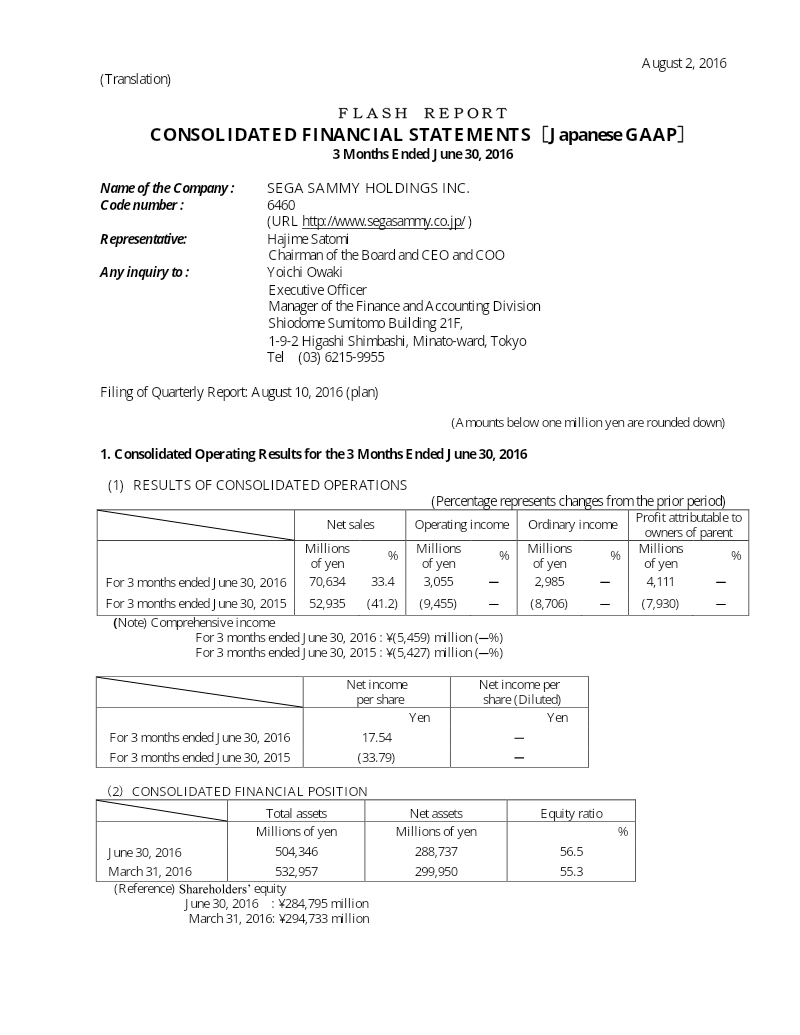
Consolidated Financial Statements: 3 Months Ended June 30, 2016
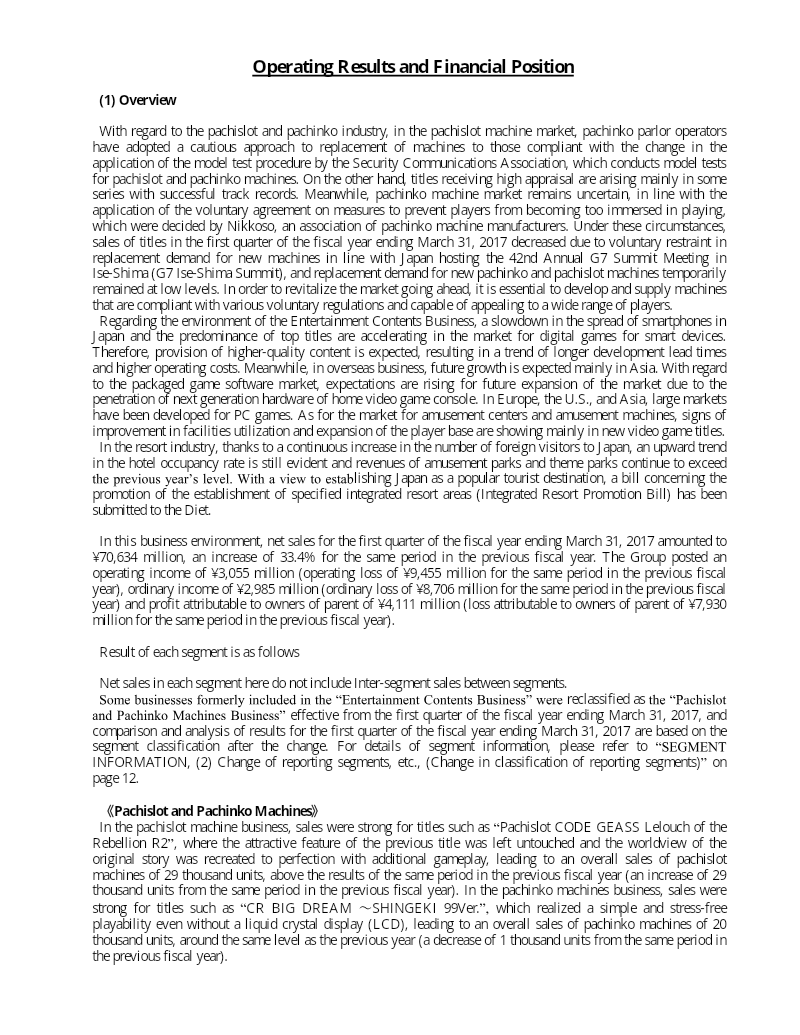
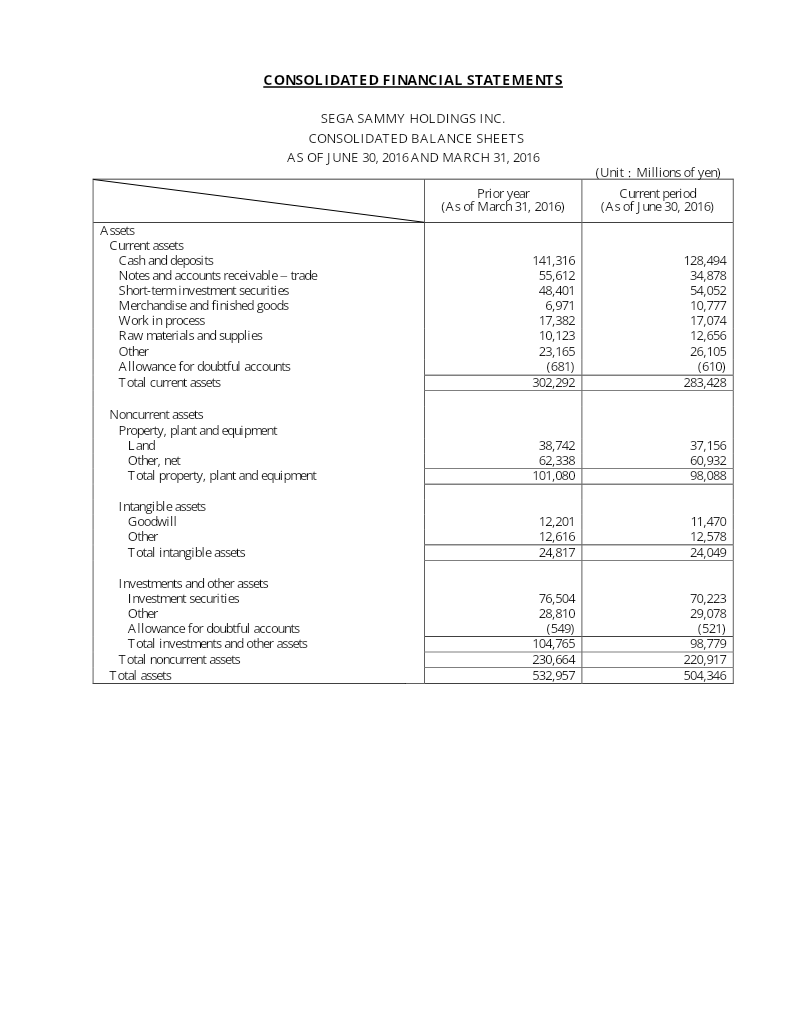
Sega Sammy Holdings Inc. reported a significant financial turnaround for the first quarter of the fiscal year ending March 31, 2017, compared to the same period in the previous year.
- Sega Sammy Holdings achieved a financial turnaround in Q1 2017, reporting 70,634 million yen in net sales—a 33.4% increase over the prior year.
- The company shifted from a 9,455 million yen operating loss in Q1 2015 to an operating income of 3,055 million yen for the quarter ending June 30, 2016.
- The Entertainment Contents segment was the primary profit driver, generating 46,700 million yen in net sales and 4,941 million yen in operating income, largely due to digital titles like Phantasy Star Online 2.


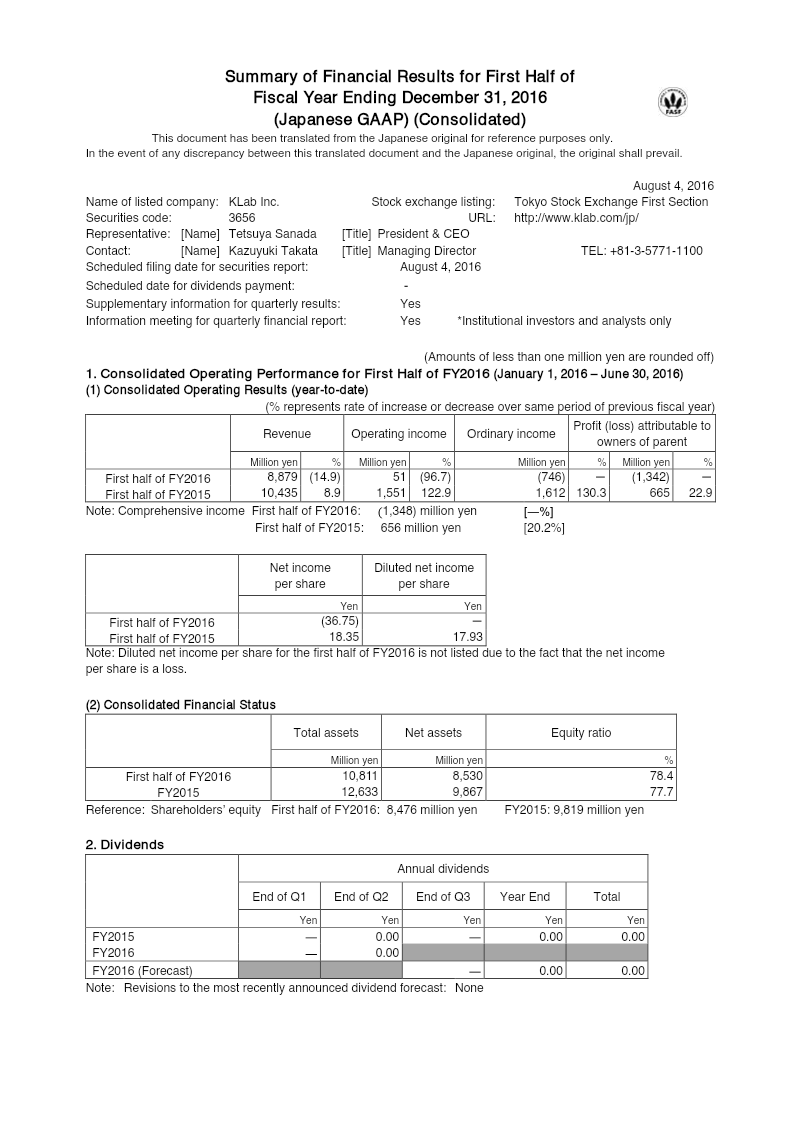
Summary of Financial Results for First Half of Fiscal Year Ending December 31, 2016
KLab Inc. reported a significant downturn in financial performance for the first half of the fiscal year ending December 31, 2016, covering the period from January 1 to June 30, 2016.
- KLab Inc. reported a net loss of 1.34 billion yen for the first half of 2016, a significant reversal from the 665 million yen profit recorded during the same period in 2015.
- Consolidated revenue fell 14.9% year-over-year to 8.88 billion yen, driven primarily by declining performance from the title Love Live! School Idol Festival.
- Operating income plummeted 96.7% to 51 million yen, while the company recorded an ordinary loss of 746 million yen for the period ending June 30, 2016.
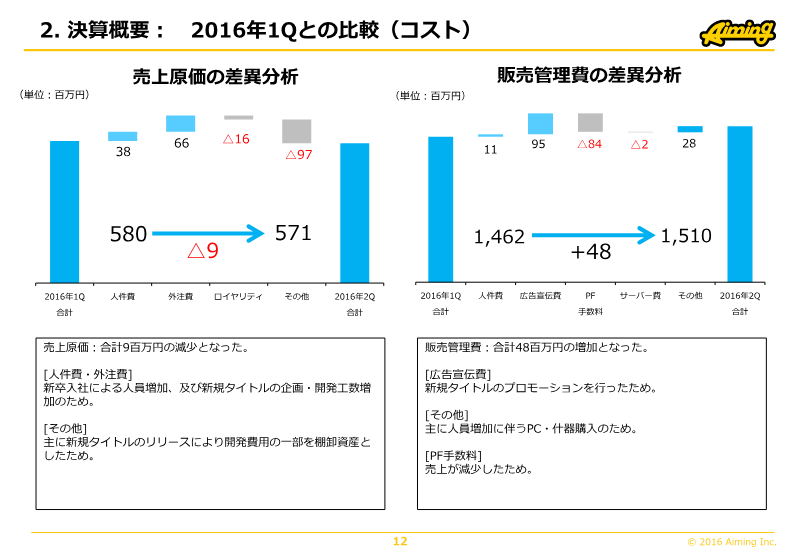

Aiming FY2016 Q2 Financial Results Presentation
Aiming experienced a challenging fiscal period during the second quarter of 2016, characterized by a year-over-year decline in both revenue and operating profit.
- Aiming experienced a year-over-year decline in both revenue and operating profit during FY2016 Q2 due to waning performance of existing titles and concluded contract projects.
- Despite revenue falling short of projections, Aiming outperformed profit expectations in FY2016 Q2 due to lower-than-anticipated advertising expenditures from delayed new title releases.
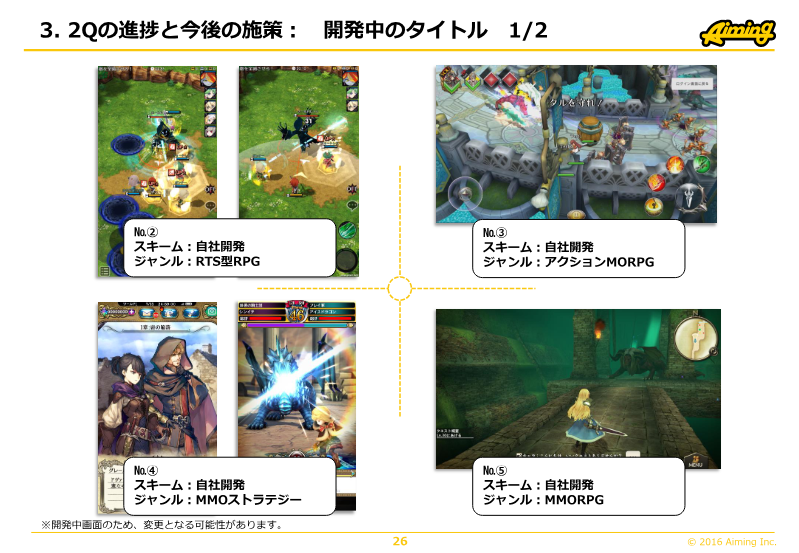
- The company is aggressively expanding its development pipeline with 13 titles, primarily in the massively multiplayer online genre, to secure long-term revenue streams.

Nintendo Consolidated Financial Highlights: Three Months Ended June 2016
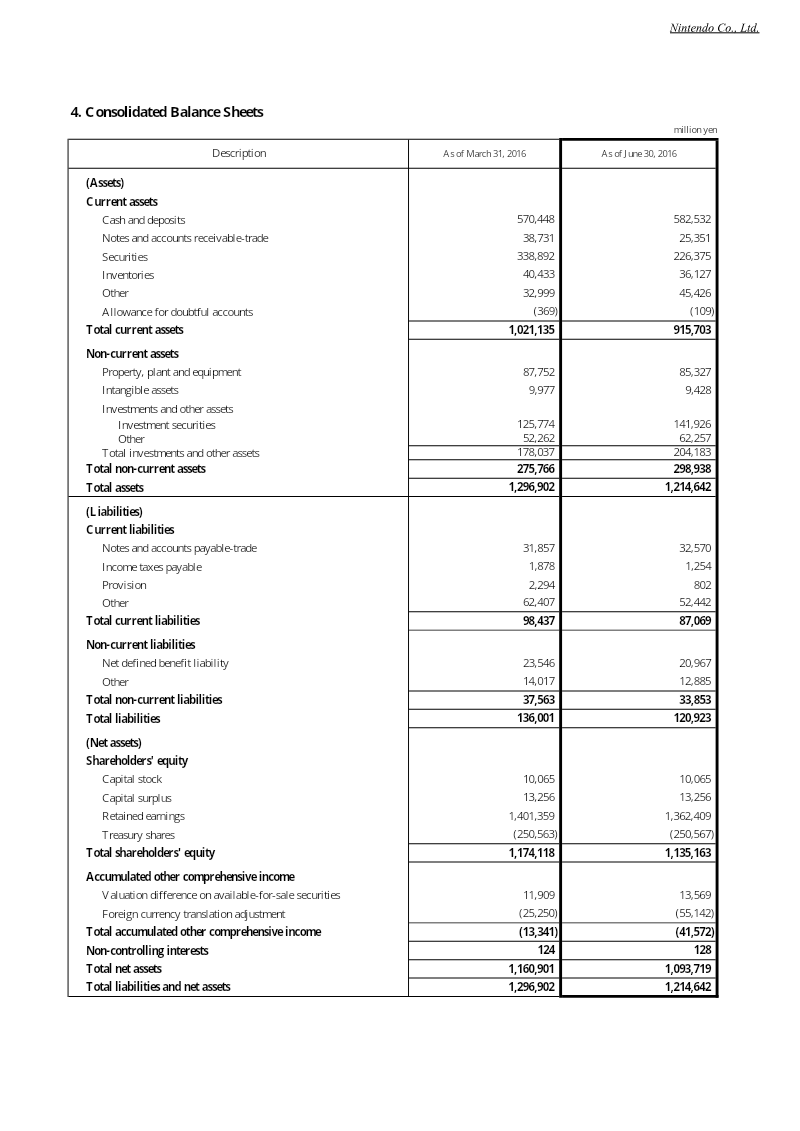
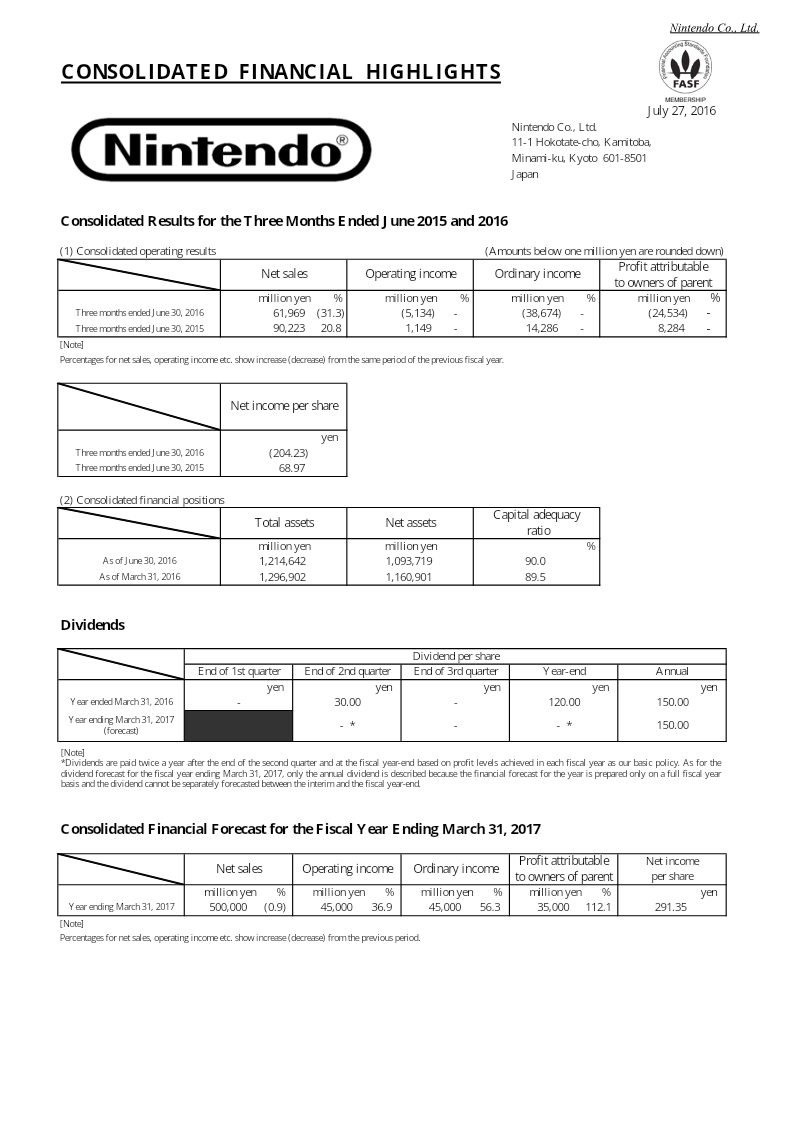
Nintendo’s consolidated financial results for the three months ending June 30, 2016, reflect a period of significant contraction and financial loss, primarily driven by unfavorable foreign exchange fluctuations.
- Nintendo reported a net loss of 24.5 billion yen for the quarter ending June 30, 2016, driven by a 31.3% year-over-year decline in net sales to 61.9 billion yen.
- The company suffered an operating loss of 5.1 billion yen and an ordinary loss of 38.6 billion yen, largely due to 35.0 billion yen in exchange losses caused by the appreciation of the yen.
- Wii U hardware sales dropped 53% to 0.22 million units, while 3DS hardware sales fell 7% to 0.94 million units.

Finnish Game Industry: An Interview with Oleg Paliy
Finnish game industry turnover grew from €1.8 billion in 2014 to €2.4 billion in 2015, according to an interview with Oleg Paliy, Senior Business Advisor at KAATO Gaming, published in July 2016.
- The Finnish game industry experienced significant growth, with annual turnover rising from €1.8 billion in 2014 to €2.4 billion in 2015.
- As of 2016, the Finnish gaming ecosystem comprised approximately 290 companies and 2,700 developers, with women accounting for slightly less than 25% of the workforce.
- State funding agency Tekes is a primary driver of industry growth, having invested in major studios including Supercell, Rovio, Remedy, and Seriously to support R&D and innovative monetization models.

Interview with Ricardo Ruiz from 3Ecologias
3Ecologias, a Brazilian company founded by Ricardo Brazileiro and Ricardo Ruiz, develops open-technology solutions for education, culture, and the environment. Its name draws on Félix Guattari's Three Ecologies.
- 3Ecologias, a Brazilian company founded by Ricardo Brazileiro and Ricardo Ruiz with about fifteen employees, builds open-technology solutions for education, culture, and sustainability, named after Félix Guattari's three ecologies of mind, society, and environment.
- Its flagship game Contos de Ifá, in development since 2010 with the Coco de Umbigada Cultural Center in Olinda, Pernambuco, teaches Afro-Brazilian mythology (especially Candomblé) to counter religious prejudice, organizing play around the xirê order of orisha worship starting with Exú.
- As of the interview, the game offered four playable phases dedicated to individual orishas, with two more in development and a stated goal of 256 stories.

Interview with Shailesh Prabhu, Indian Game Designer
Shailesh Prabhu, an Indian game designer, discusses his in-development title Sky Sutra in this 2016 interview published in the journal gamevironments.
- Shailesh Prabhu runs a loosely organized, multicultural team spread across Sweden, France, India, and Copenhagen, and recently took a full-time game design job in Copenhagen while continuing independent work on his project.
- Sky Sutra is a two-player local multiplayer game with asymmetric design: one player steers a flying carpet that leaves a trail, while the other tries to stun and displace them, and it originated from a physics-inspired concept about players occupying different planes.
- Sky Sutra was shown at the Indie Game Shindig in Kerala in 2015 and at Now Play This in London in 2016, with generally positive audience reception.

Mapping Methods: Visualizing Visual Novels Cultural Production in Japan
Fieldwork conducted in East Ikebukuro, Tokyo between 2009 and 2016 shows that a visual novel "game environment" extends well beyond gameplay into an urban cultural network.
- The study maps Otome and Boys' Love visual novel merchandise (acrylic straps, badges, drama CDs) circulating through Ikebukuro, Tokyo, based on fieldwork conducted between 2009 and 2016.
- The author argues the games' cultural production forms a localized "game environment" in which the collecting logic of the games is mirrored in the goods, treating the games as urban phenomena rather than software to analyze.
- Fans navigate a cyclical, interdependent recycling ecosystem of limited-edition releases, recycle shops, fanzine gatherings, and cafés, forming layered walking routes that followed the district's transformation into "Otome-Road" after 2004.

Launch Round Portfolio Update: UK
The UK Games Fund's July 2016 portfolio update reviews progress among the 24 companies funded in its launch round, roughly nine months after the programme opened in autumn 2015.
- The UK Games Fund has received over 300 applications since its launch in Autumn 2015 and has supported a portfolio of 24 companies in its initial round.
- Tag Games leveraged funding to retain seven staff members and secure interest from publishers including Sega US and Flare Games for its project 'Misfits vs. Monsters'.
- Coatsink utilized grant funding to complete a prototype that led to a full-scale development deal, with a multi-platform release scheduled for 2017.

Apps Aren’t Dying, but Not Everyone Knows How to Make Money on Mobile
Mobile industry analyst Eric Seufert argues in this July 2016 commentary that the "death of the app" narrative is a misreading of the data.
- Global mobile gross revenues are projected to grow 24% year-over-year to $50.9 billion in 2016, with forecasts suggesting this figure will double to $100 billion by 2020.
- The decline in new app installs for established developers is a result of slowing smartphone market penetration rather than a contraction of the overall app economy.
- Monetization capability is the primary driver of success, as evidenced by a 20x difference in revenue generation between average users and paying users.