2015
Company
Documents about 2015
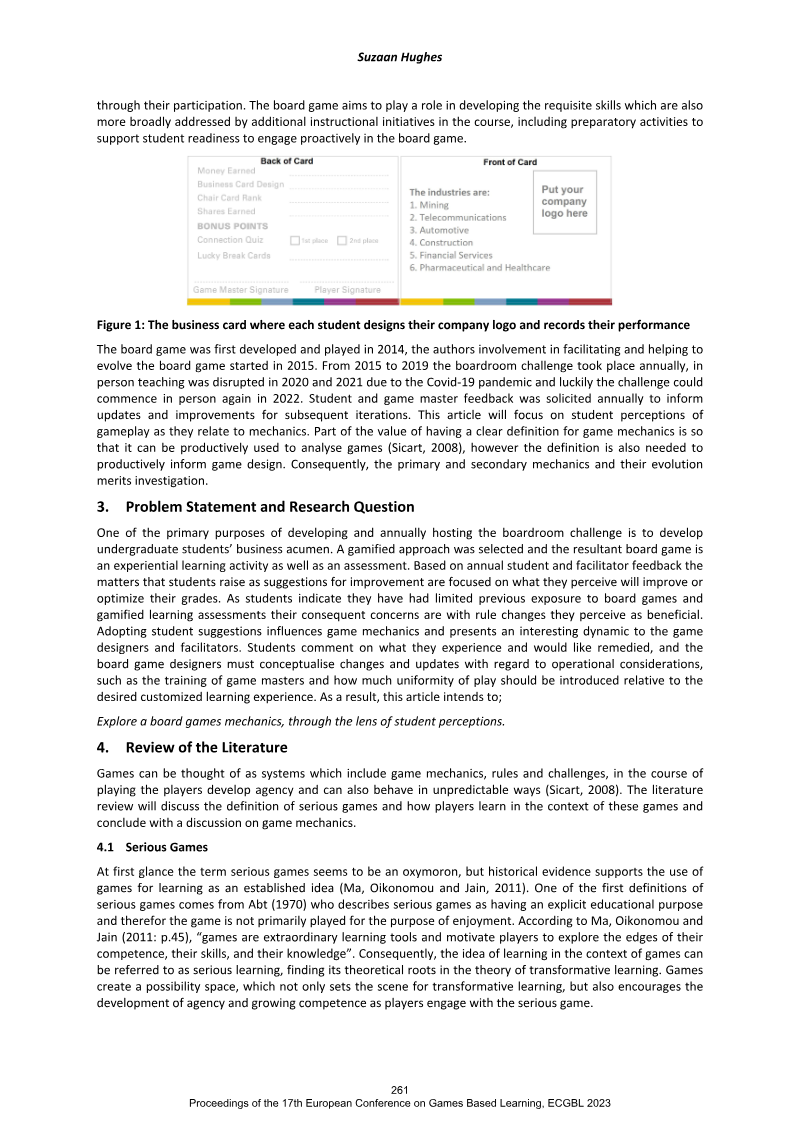
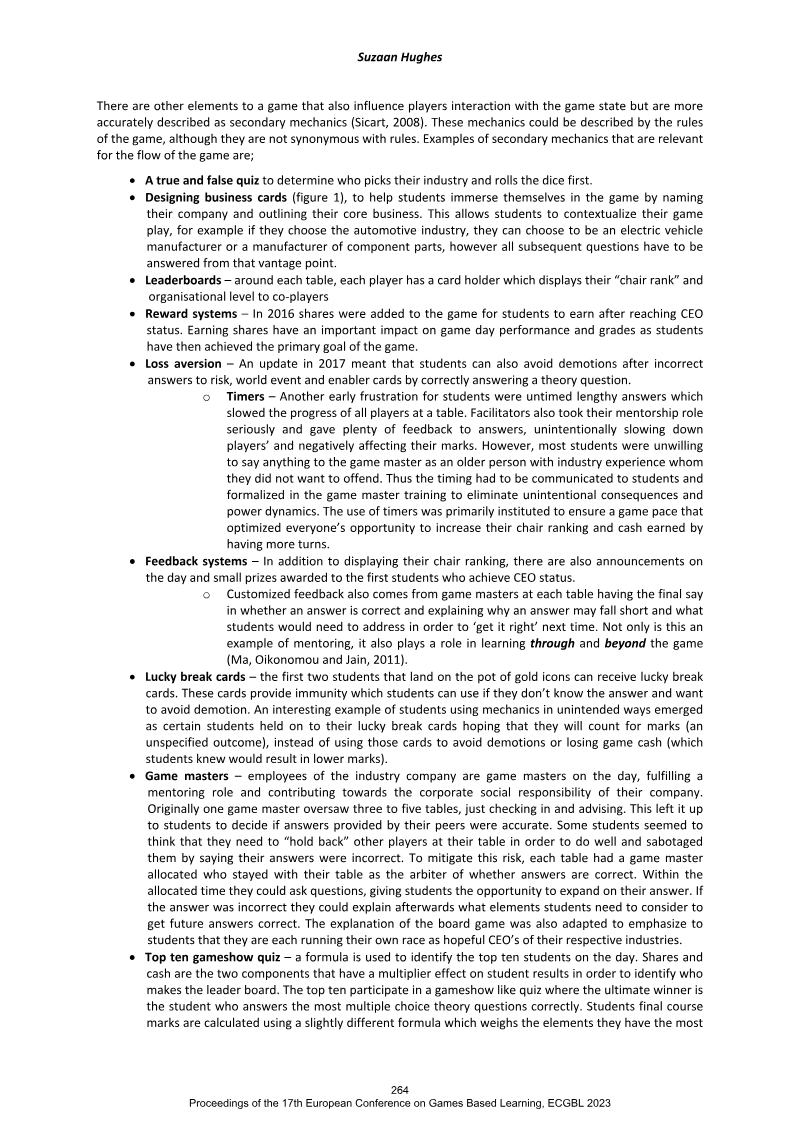
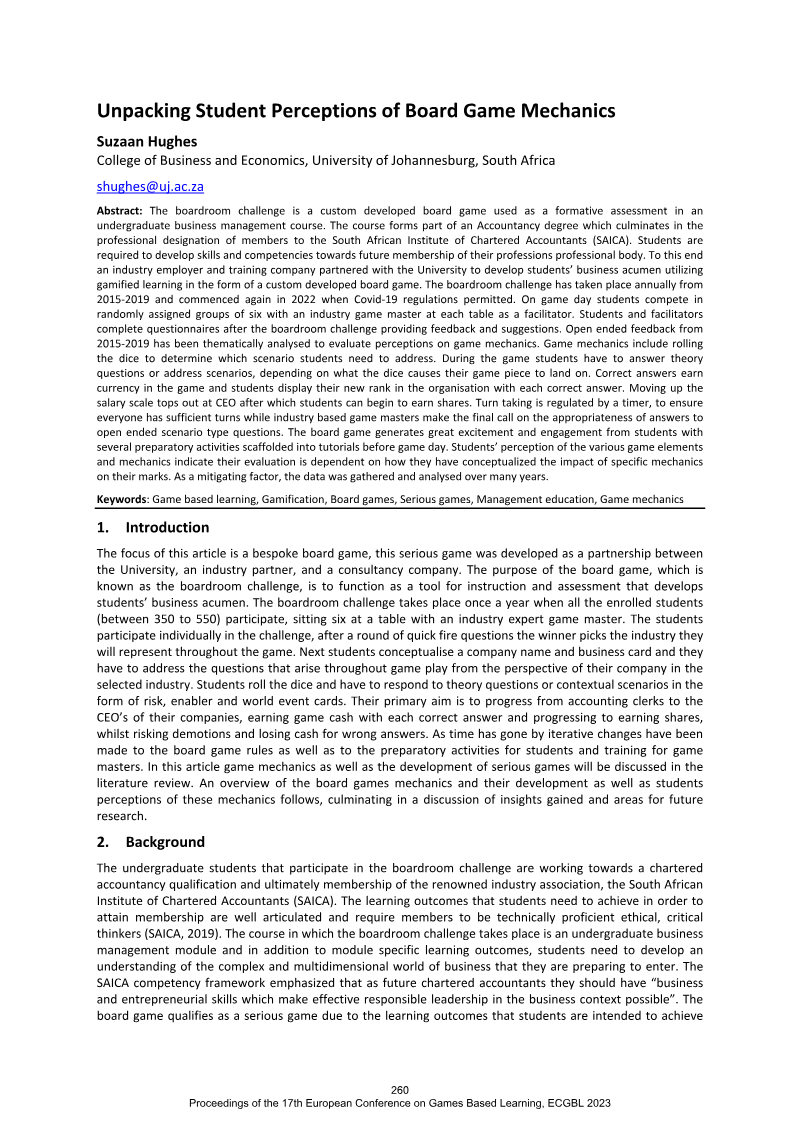
Unpacking Student Perceptions of Board Game Mechanics
"Unpacking Student Perceptions of Board Game Mechanics" examines how undergraduate students at the University of Johannesburg experienced the Boardroom Challenge, a custom board game used as a formative assessment in an accountancy-related business management course.
- The study examines the Boardroom Challenge, a custom board game used as formative assessment in an accountancy-related business management course at the University of Johannesburg, run annually from 2015 to 2019 and resumed in 2022.
- Core mechanics are dice-driven scenario and theory questions, promotion up a corporate ladder to CEO, and game cash gained or lost based on answer accuracy, with secondary mechanics such as timers, lucky break cards, and game master roles added or refined through feedback.
- Thematic analysis of open-ended student feedback, supported by document analysis of rules, revisions, and training materials, surfaced three themes: perceptions of luck and unfairness, student agency in proposing improvements, and reflections on learning's future professional relevance.
A Typology of Videogame Rewards
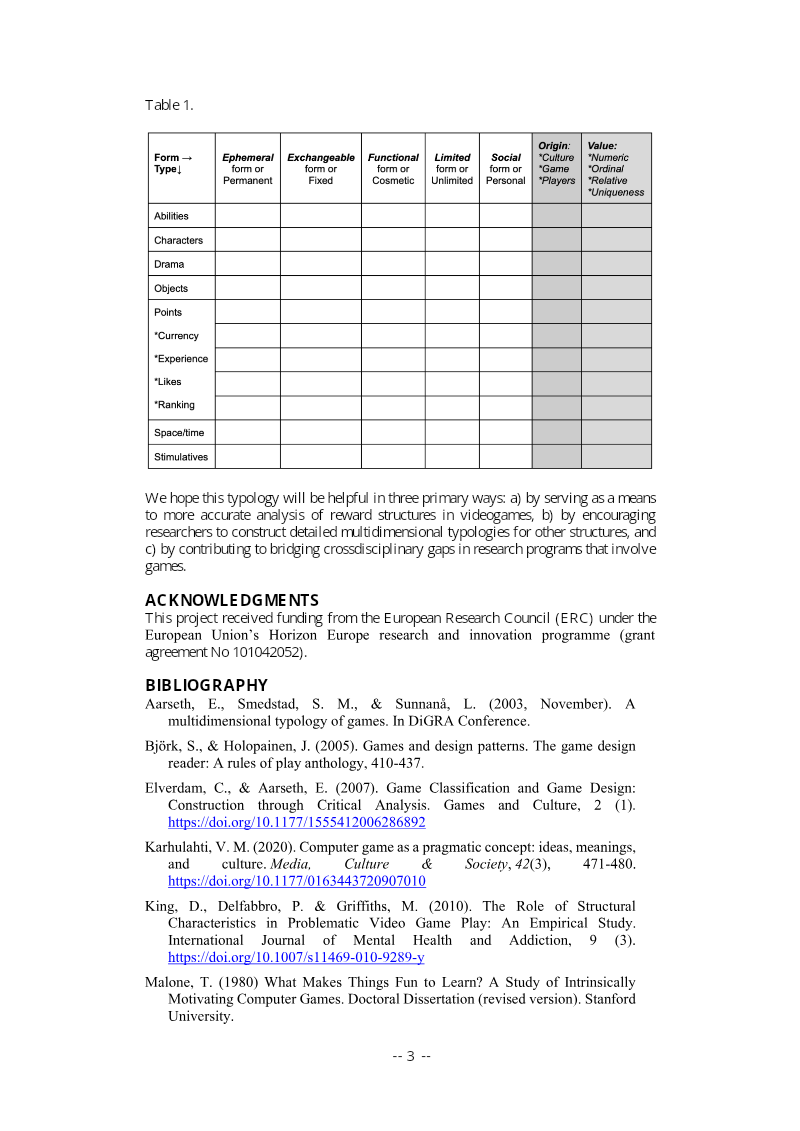
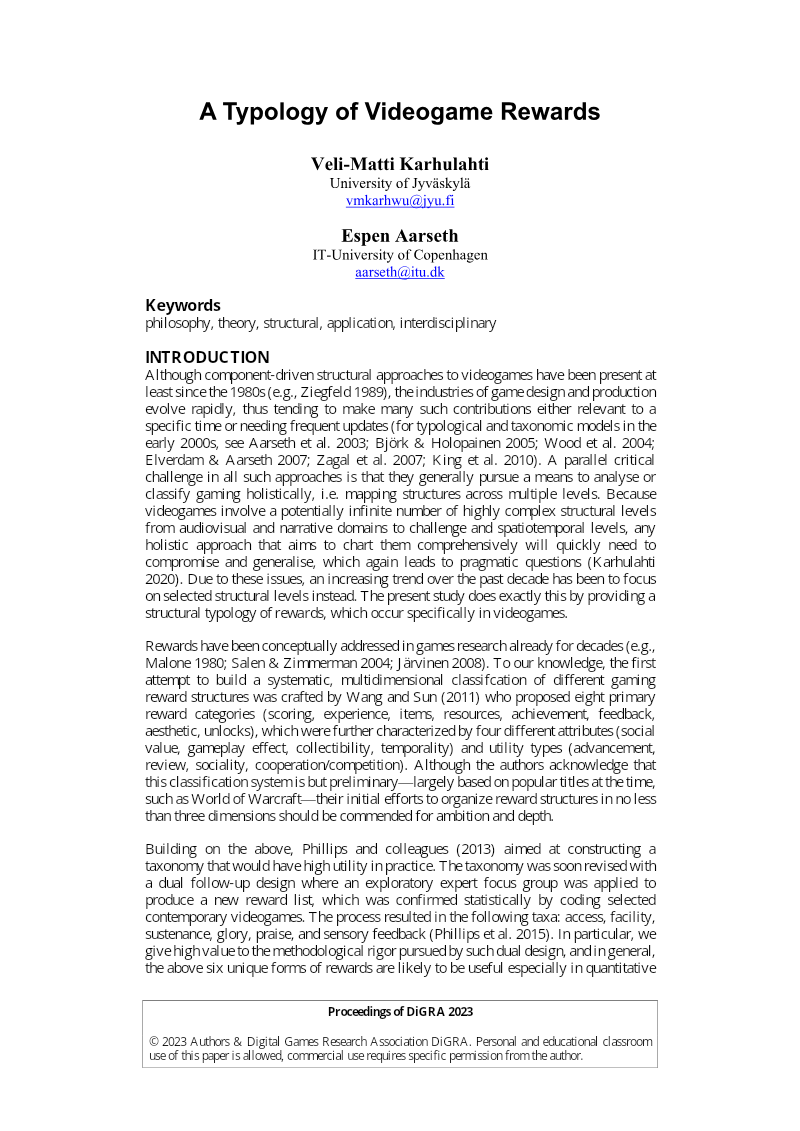
Karhulahti and Aarseth propose a multidimensional typology of rewards in videogames, aiming to provide a more comprehensive structural framework than earlier classifications.
- Karhulahti and Aarseth propose a multidimensional typology of videogame rewards, arguing that holistic game taxonomies become unwieldy, so they focus on the single structural level of rewards.
- The typology rests on four dimensions: seven basic reward types (abilities, characters, drama, objects, points with four subtypes, space/time, and stimulatives), form, origin, and value.
- Form is described through five paired categories (ephemeral or permanent, exchangeable or fixed, functional or cosmetic, limited or unlimited, social or personal), each with further subfeatures.
Super Memory Makers: Livestreaming and/as Videogame Play Archives
This paper examines livestreamed and player-produced gameplay of Super Mario Maker as a source of "incidental archives" of videogame play, using the game's rise and eventual decline as its case study.
- The paper argues that the vast volume of high-performance content in Super Mario Maker, such as speedruns and virtuosic feats, risks obscuring the more exploratory, autotelic forms of play the game encourages, producing a distorted historical record of how the game was actually played.
- Super Mario Maker launched on the Wii U in September 2015, with Nintendo reporting 2.2 million player-created courses within the first month and 7.2 million within eight months.
- Nintendo discontinued the upload features of the original Super Mario Maker in March 2021, while existing courses remained accessible at the time of writing, raising questions about what happens to player-produced content once a service ends.
Polarized Pills vs. Gaming Thrills: Empirical Exploration of r/TheRedPill and r/TheBluePill Users in r/gaming
This study examines how users active in the manosphere subreddits r/TheRedPill and r/TheBluePill participate in the general gaming community r/gaming, with the aim of determining whether this crossover reflects political activism or simply entertainment.
- Users from r/TheRedPill and r/TheBluePill participate in the general gaming community r/gaming at notable rates: roughly a quarter of r/TheRedPill users and nearly a third of r/TheBluePill users also commented there, while only 1,131 users were active in all three communities, which the authors read as evidence of meaningful boundaries between them.
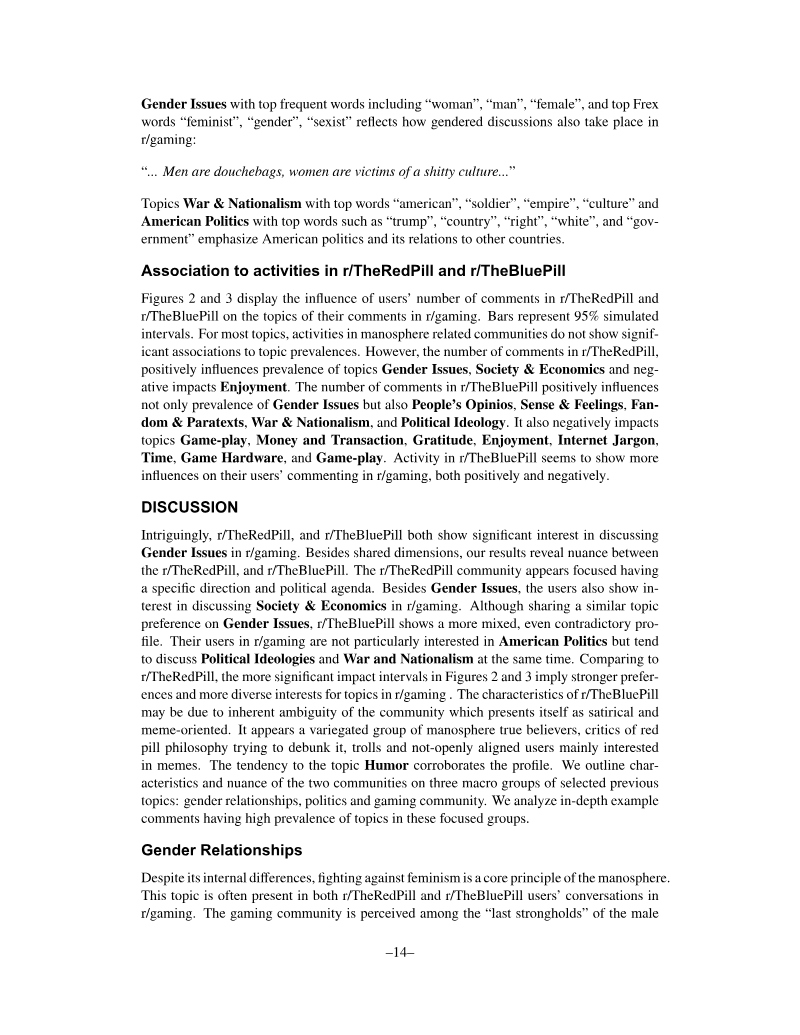
- Gender issues are a shared focus for both manosphere communities, but r/TheRedPill commenters use aggressive, delegitimizing rhetoric and frame gaming mainly as a front in a broader political culture war, linked chiefly to gender and to society and economics.
- r/TheBluePill commenters engage in more ambiguous, meme-oriented discussion with a notably higher tendency toward humor, and their concerns center on perceived injustices in gaming such as monetization and predatory market practices.



First Impressions: Effects of Representation on Video Game Covers
This study examines how representation on digital video game covers shapes players' first impressions and, in turn, their purchasing and consumption decisions.
- Players of color felt significantly less represented by characters on game covers than white participants did (mean 2.06 vs. 3.74 for at least one character; 1.82 vs. 3.40 for many characters), even though both groups rated overall representation adequacy and quality similarly, pointing to a gap in personal identification rather than general fairness judgments.
- Participants of color paid significantly more attention to cover content (p = 0.044) and rated it far more important when characters shared their ethnicity (3.43 vs. 2.23, p < 0.001), suggesting covers carry greater weight for these players.
- Respondents broadly agreed that characters of color are inadequately represented on covers, and the most common open-ended complaint, cited by 57 percent, was a general lack of diverse representation.



Coming Out While Going Fast: Queer Conviviality in Speedrunning Live Streams
Johanna Brewer's study examines how openly queer and transgressive speedrunners who live stream their gameplay cultivate what she terms "queer conviviality," a culture of mutual support that extends into material community action.
- Visibility of queer characters in US games remains very low: an analysis of over 4,000 titles released 2010–2015 found only about 1 percent featured queer or trans characters or non-heterosexual interactions, versus 12 percent of queer characters on television by the 2021 season.
- Queer and trans speedrunners on Twitch often come out for the first time on stream, frequently after harassment elsewhere in gaming culture, and events such as Games Done Quick are described as comparatively welcoming.
- Author Johanna Brewer terms the mutual-support culture among queer speedrunners "queer conviviality" and positions its collaborative, queer-temporal practices as a model for inclusive, communal change in game studies and HCI.
Estudio sobre el Consumo de Videojuegos entre la Población Adulta Española y en Familia
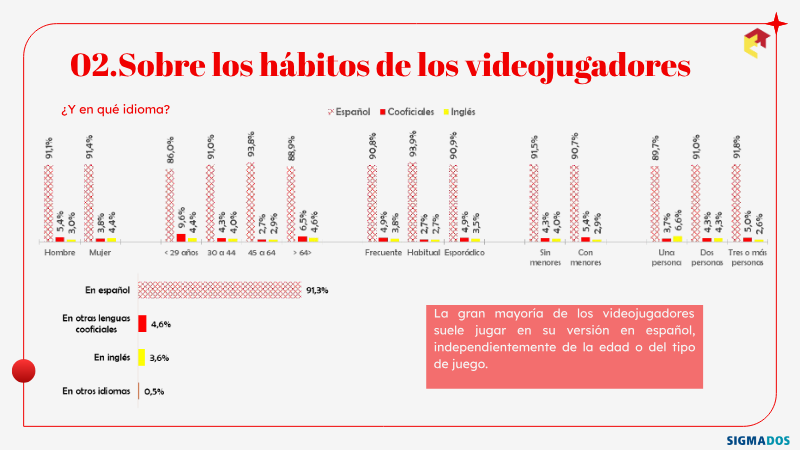
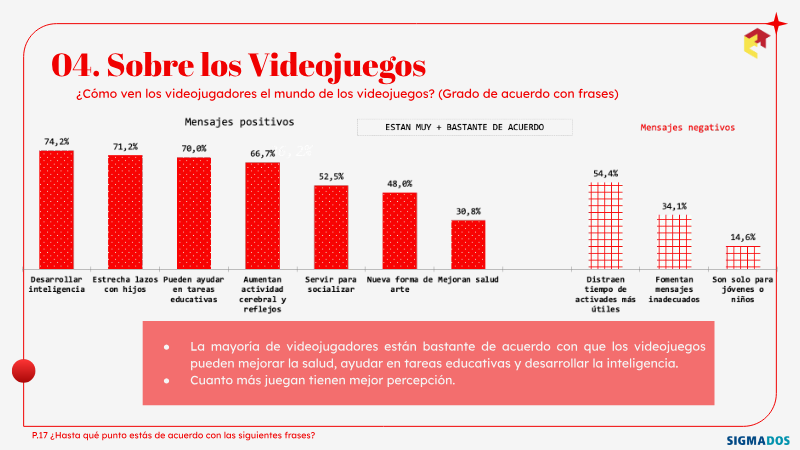
The study investigates how video-games are consumed in Spain, focusing on family interaction, the adoption of parental-control tools, and the impact of streaming personalities on player behaviour.
- Shared family gaming in Spain has surged significantly, with nearly 80% of parents playing with their children in 2022 compared to just over 33% in 2015.
- Parental control adoption remains low, as only 39% of gamers use these tools, with 17.5% using them regularly and 22% occasionally.
- A significant portion of the gaming population is disengaged from safety measures, with over 40% of users never employing parental controls and nearly 20% reporting they are unaware of their existence.

Creative Industries in the UK Report
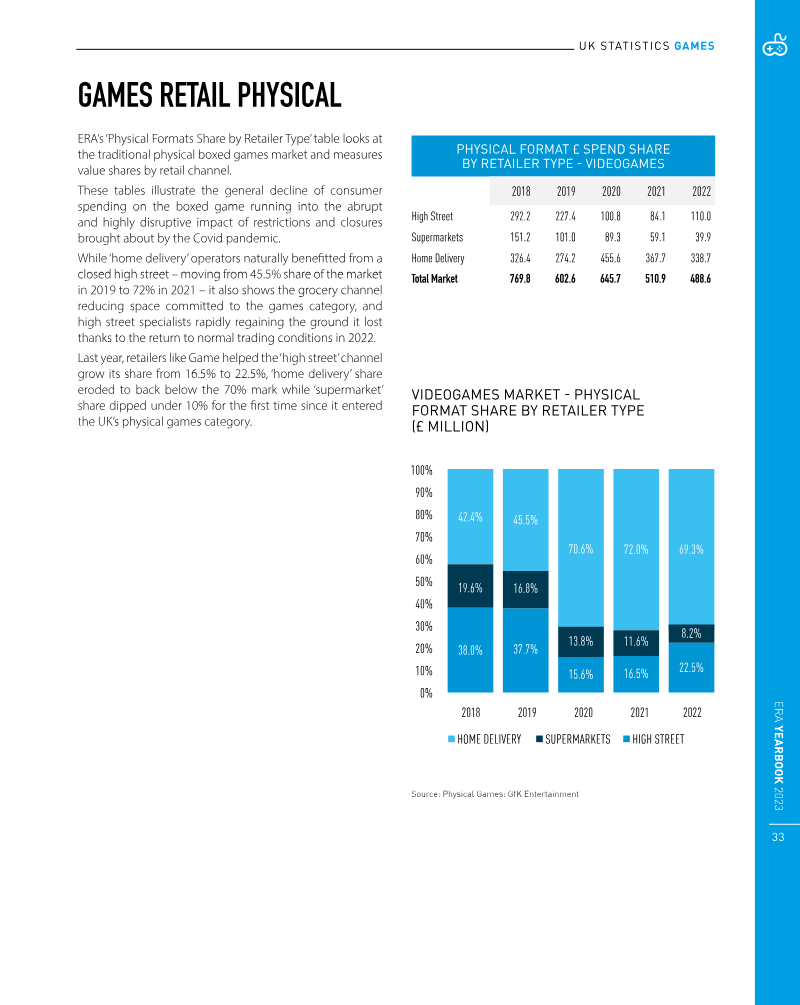
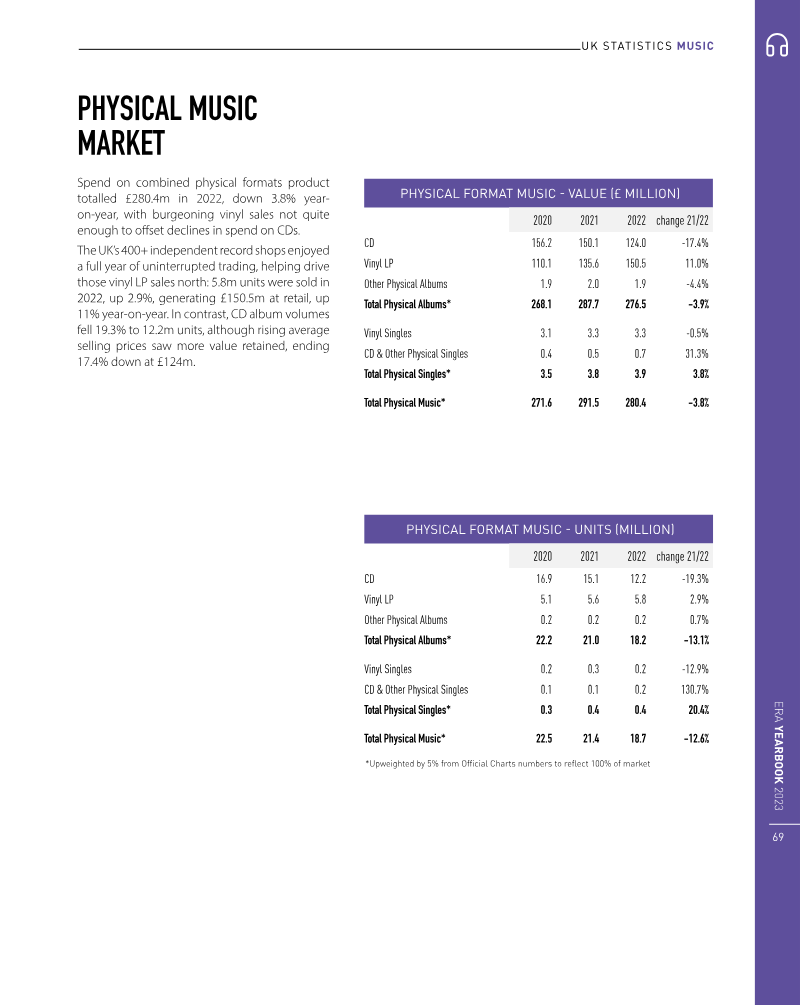
The United Kingdom’s entertainment market reached a historic peak of £11.1 billion in 2022, representing a 6.9% year-on-year increase and nearly doubling its total value since 2015.
- The UK entertainment market reached a record £11.1 billion in 2022, a 6.9% year-on-year increase that nearly doubles its 2015 valuation.
- Digital services now dominate the landscape with a 91% market share across video, music, and gaming sectors.
- The video games sector is the largest segment at £4.66 billion, with digital software sales—driven by mobile and console DLC—accounting for 90% of that total.

I Videogiochi in Italia nel 2016: Dati sul Mercato e sui Consumatori
The 2016 market analysis of the Italian video game industry, published by the trade association AESVI, provides a comprehensive overview of the sector’s economic performance and consumer demographics.
- The Italian video game market generated over 1.03 billion euros in 2016, marking an 8.2% year-over-year growth.
- Software sales reached 636 million euros, accounting for 61.8% of total revenue and growing 11.9% compared to 2015.
- Digital software sales surged by 32.8% in 2016, now representing 45.6% of the total software market as physical sales declined by 1.1%.
Developer Satisfaction Survey 2021: Diversity in the Game Industry Report
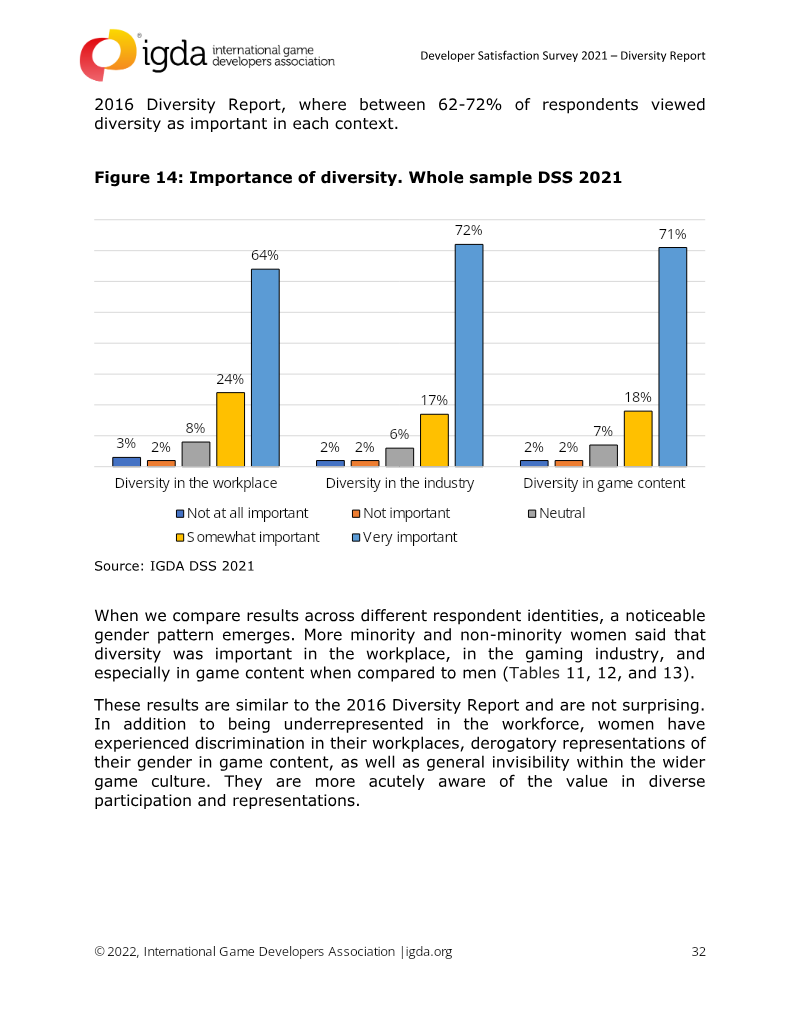
The global game industry faces a persistent disconnect between its stated commitment to diversity and the lived experiences of its workforce.
- While 90% of developers acknowledge that diversity is essential for industry innovation, the sector remains predominantly white and male, particularly in senior management and high-earning technical roles.
- 74% of surveyed developers report a lack of equal opportunity, indicating that current diversity-focused policies are often perceived as ineffective or are unknown to staff.
- Occupational segregation persists, as women and developers of color are disproportionately represented in precarious, freelance, or part-time roles rather than stable, high-level positions.



Prosthetic Metaphors, Rejection, and Representation in Games
This paper proposes that the prosthetic metaphor, long used in game studies to describe how players attach to avatars, can be sharpened by drawing on medical and disability scholarship about prosthetic rejection.
- The paper proposes using the medical concept of prosthetic rejection (non-use or minimal use of a fitted device) as an analytical lens for how players respond when virtual avatars do not fit them, refining the existing prosthetic metaphor in game studies.
- The authors use the survival game Rust as a case study, where a 2015 update randomly and retroactively diversified avatar skin tones, physical traits, and genitalia, provoking backlash from players accustomed to default white male avatars.
- Backlash was documented through press coverage and player reactions, including refund requests, negative reviews, and hostile forum messages, which the authors interpret as rejection in the medical sense.
From Trash to Treasure: Exploring How Video Games Are Moving from Popular Culture to Cultural Heritage
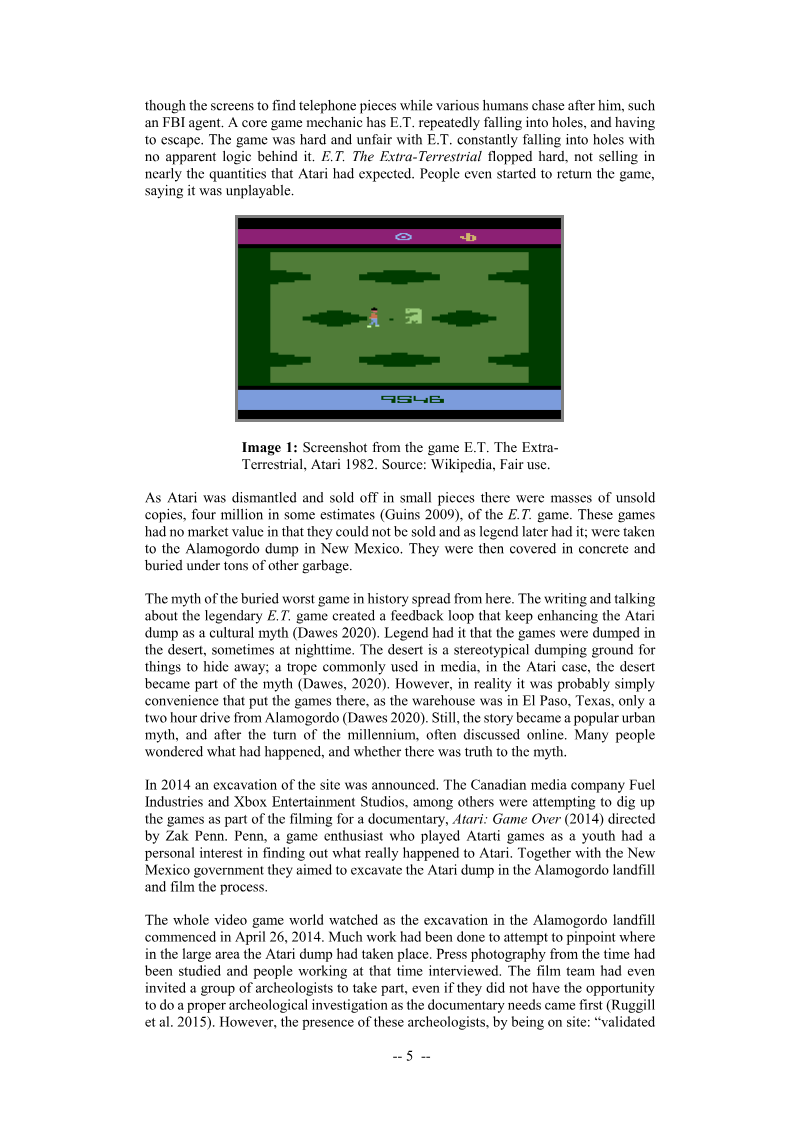
Lina Eklund's study examines how video games are shifting from disposable popular culture into recognized cultural heritage, using the 2014 excavation of Atari E.T. cartridges from an Alamogordo, New Mexico landfill as a central case.
- The 2014 excavation of an Alamogordo, New Mexico landfill recovered roughly 1,300 Atari E.T. cartridges, turning a long-standing cultural myth into tangible artifacts.
- Heritage value is socially constructed rather than inherent in objects; the spectacle and emotional investment surrounding the dig gave the recovered games new meaning.
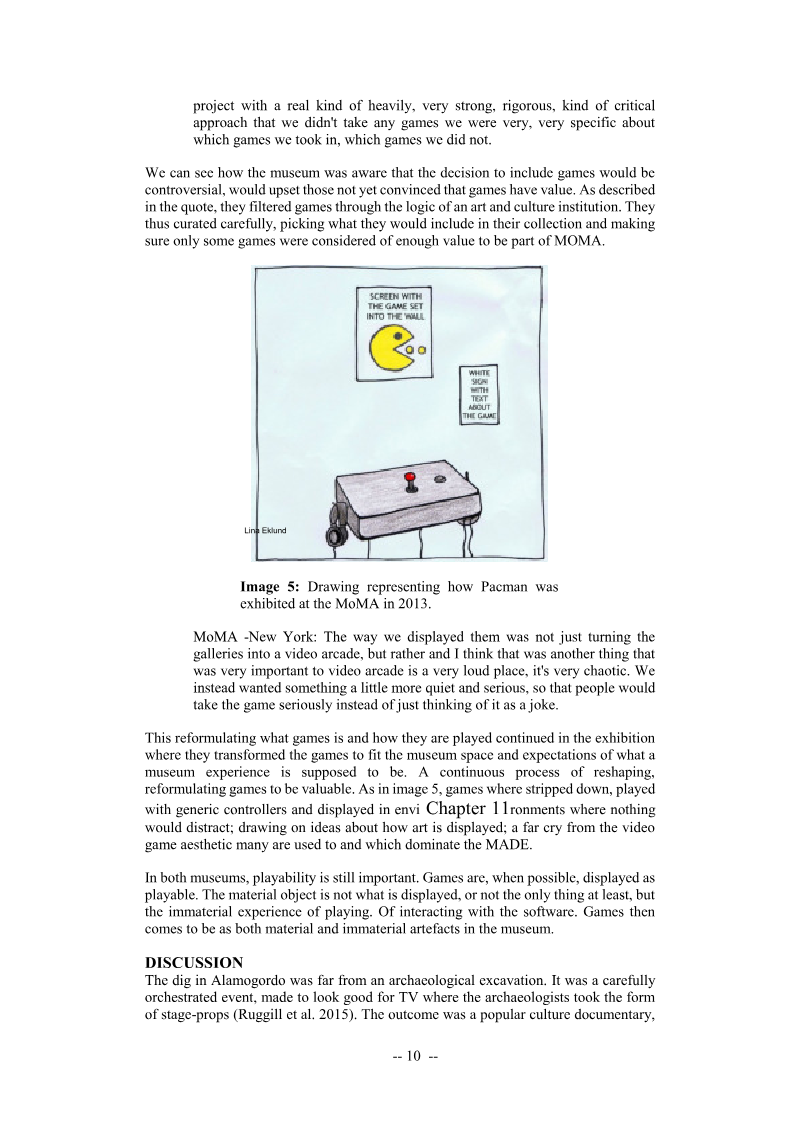
- MoMA pursues a selective, art-focused collecting strategy, while The MADE, a volunteer-run Oakland institution, aims to preserve nearly everything from an enthusiast-driven, bottom-up perspective.