1 free read left. Create a free account for unlimited reading + AI research.
Create free accountReport International Game Developers’ Association
1 free read left. Create a free account for unlimited reading + AI research.
Create free accountReportInternational Game Developers’ Association
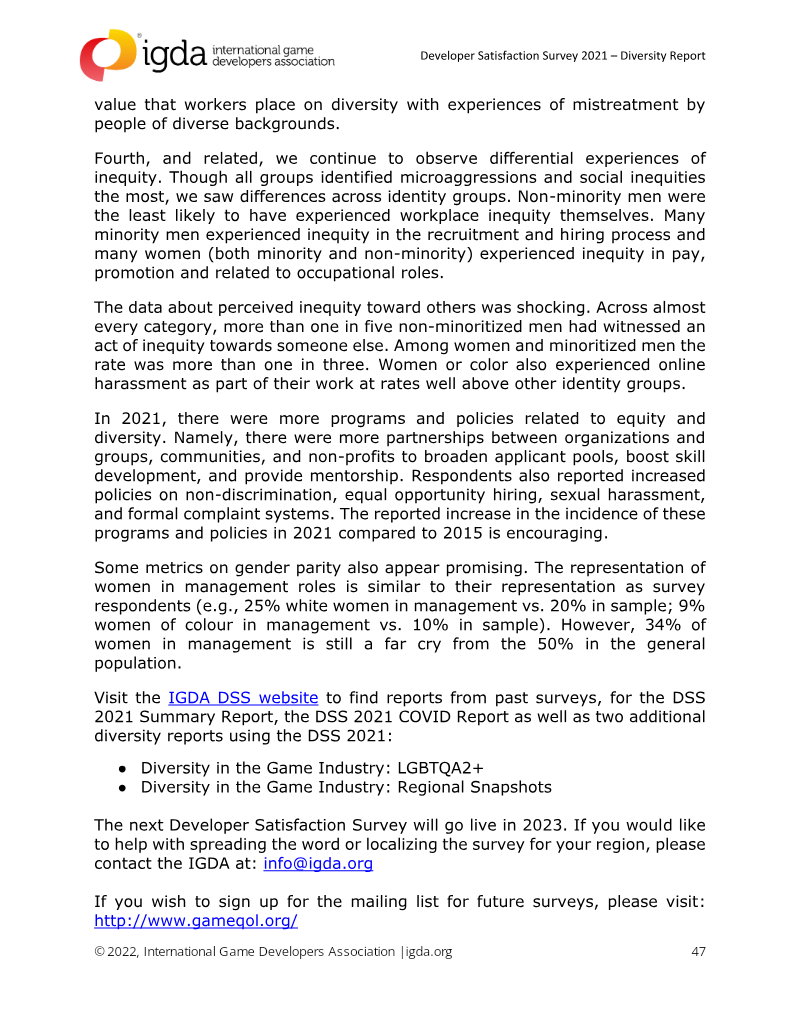
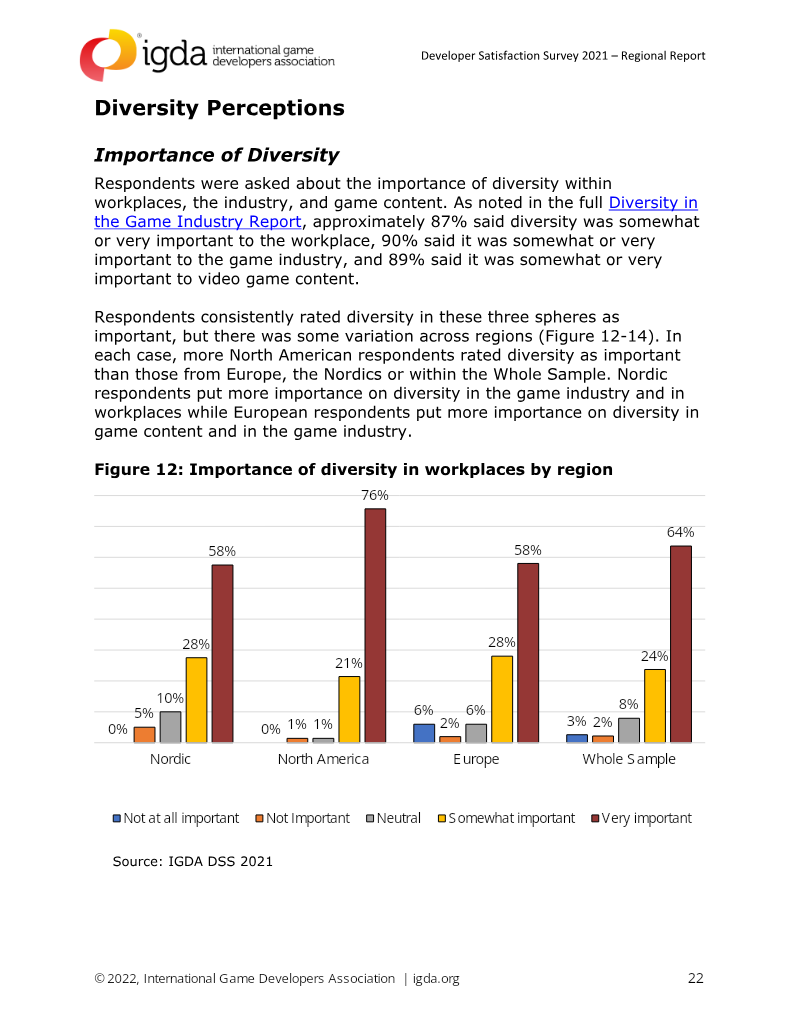
Nearly 90% of developers acknowledge that diversity is essential for the industry's health and innovation.
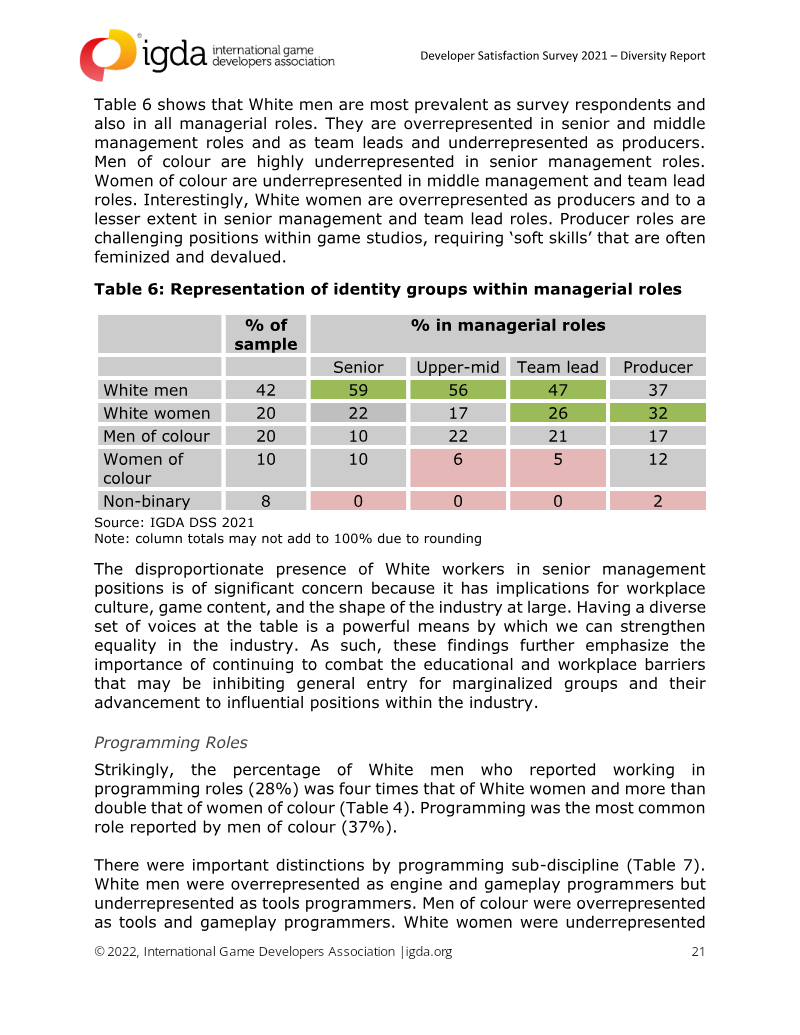
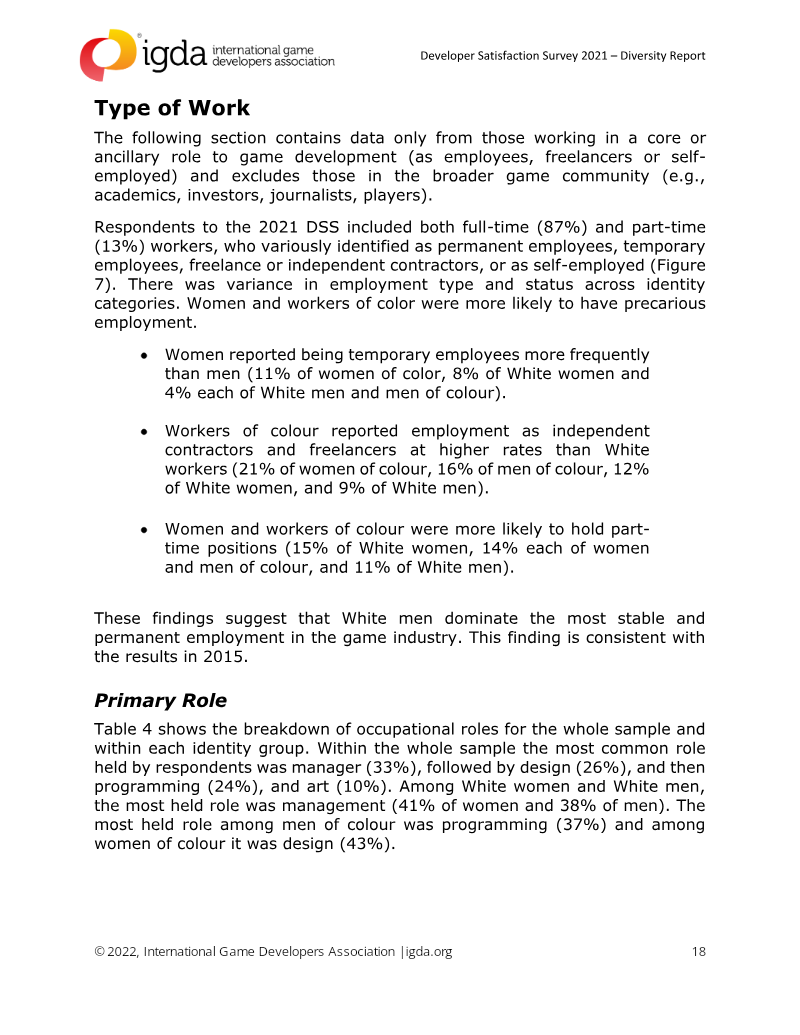
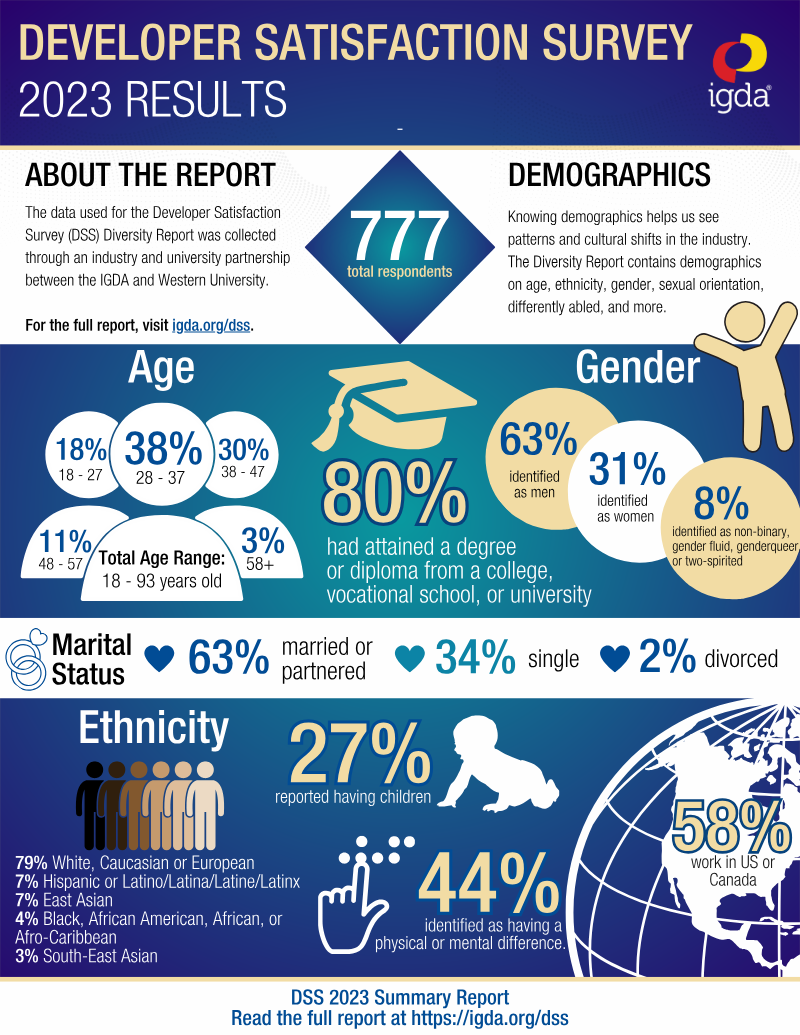
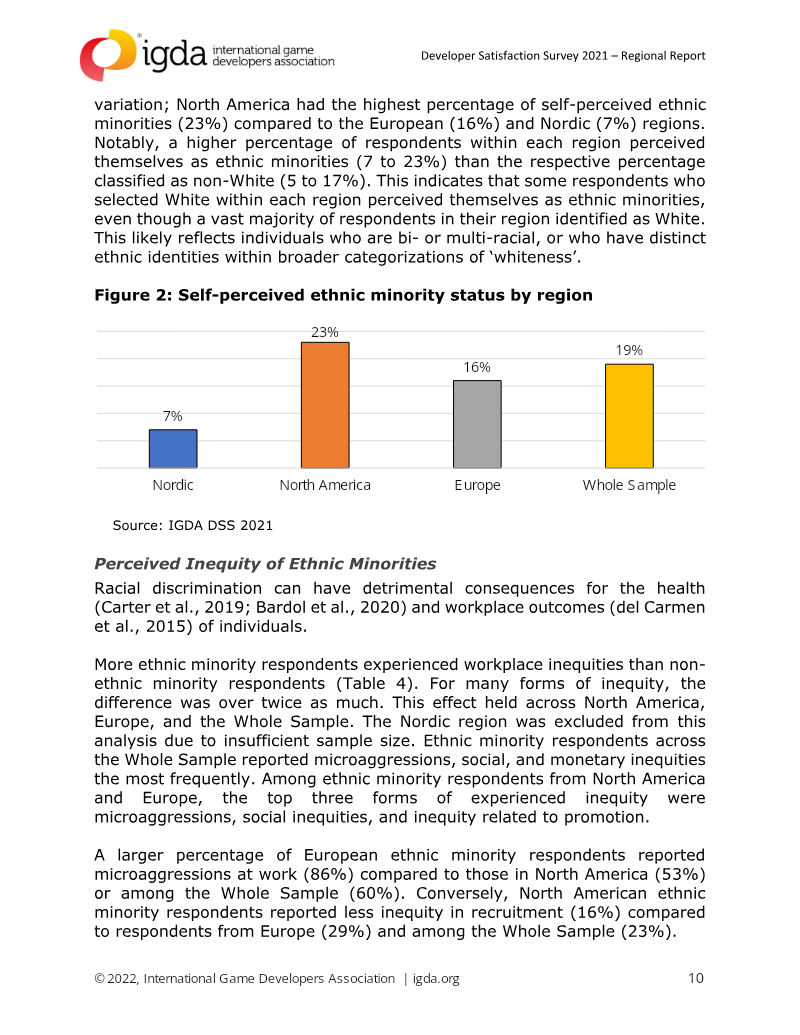
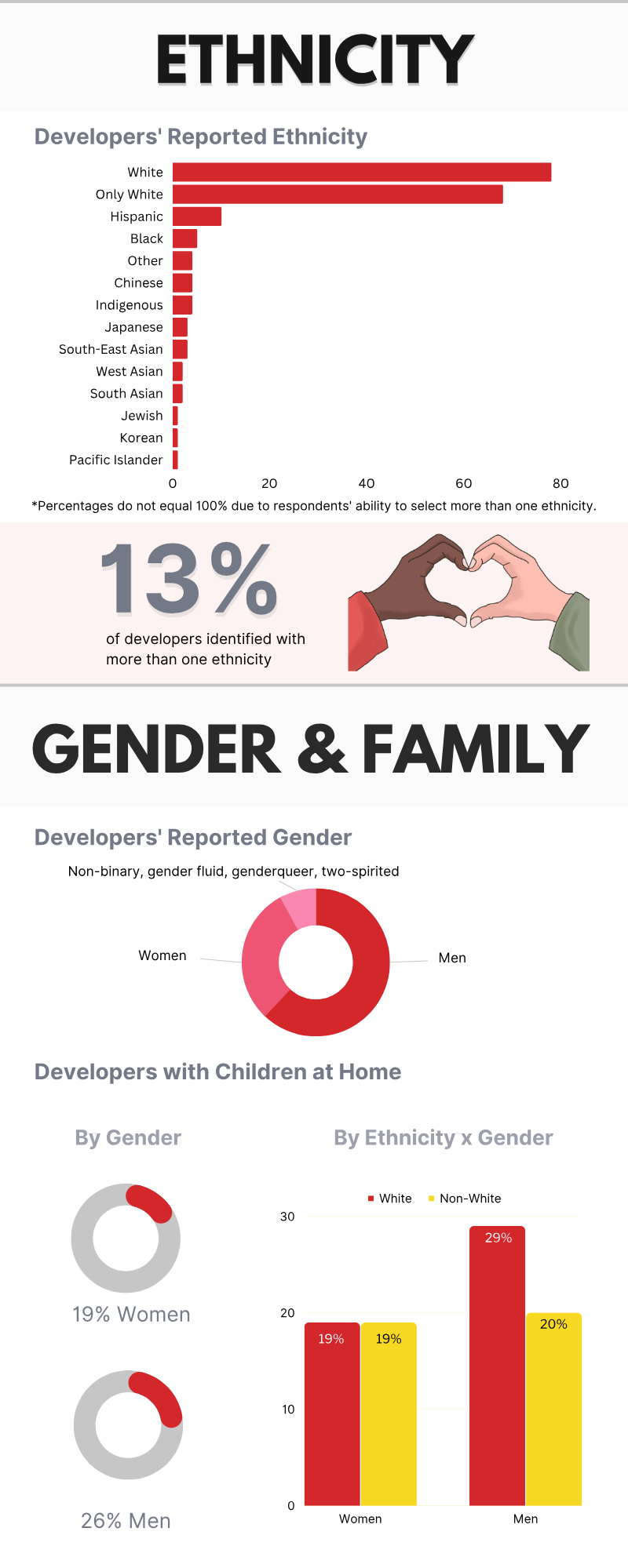
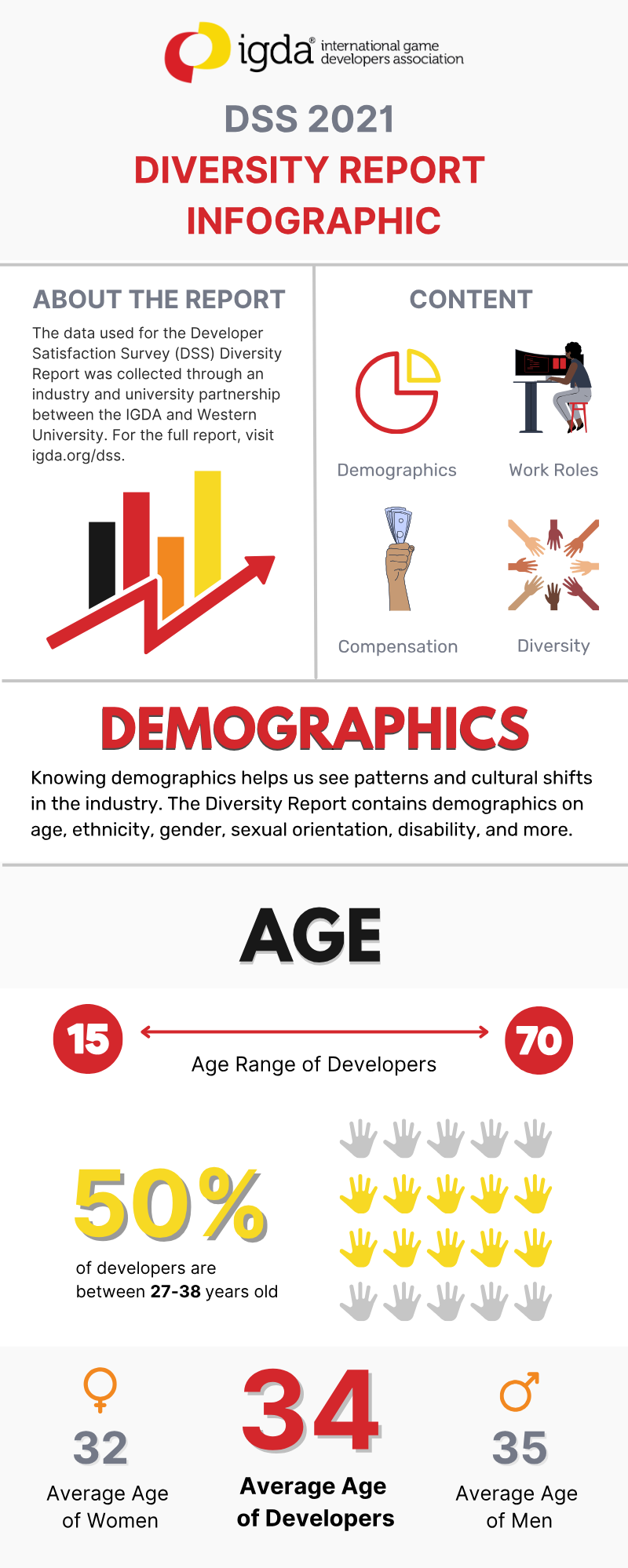
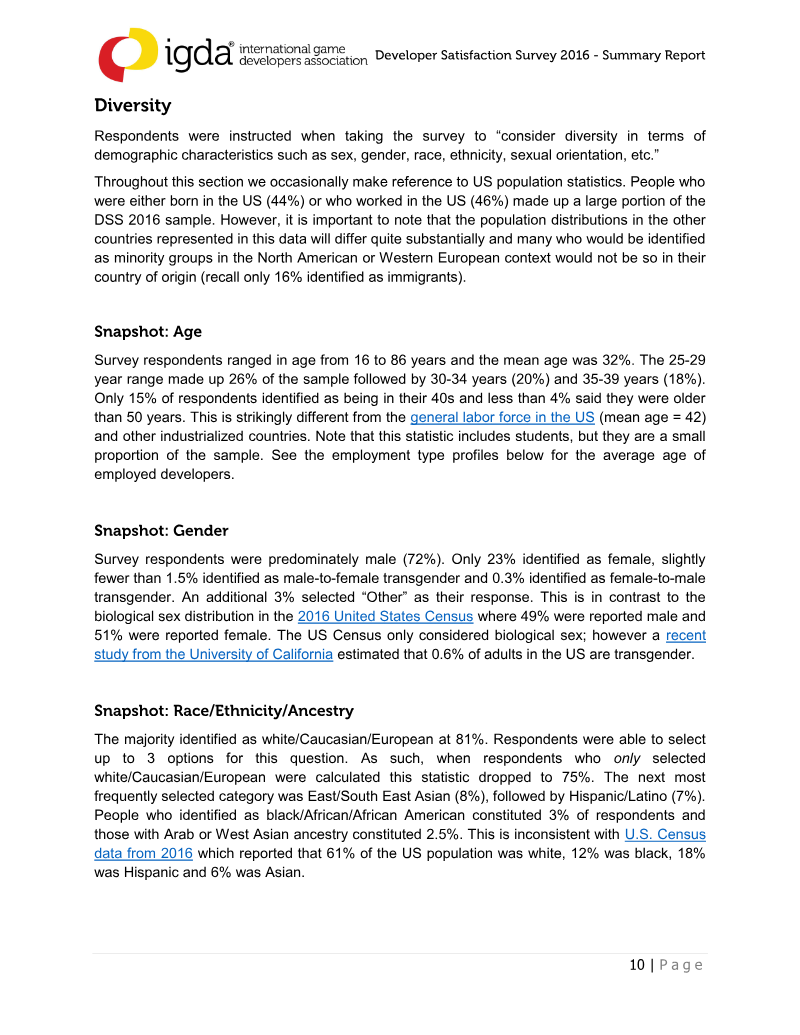
The global game industry faces a persistent disconnect between its stated commitment to diversity and the lived experiences of its workforce. While nearly 90% of developers recognize diversity as vital to the health and innovation of the sector, the industry remains predominantly white and male, particularly within senior management and high-earning technical roles. Although representation of women and developers of color has trended upward since 2015, these groups continue to occupy a disproportionate share of precarious, freelance, or part-time positions. This occupational segregation reinforces systemic income disparities and limits career advancement for marginalized professionals.
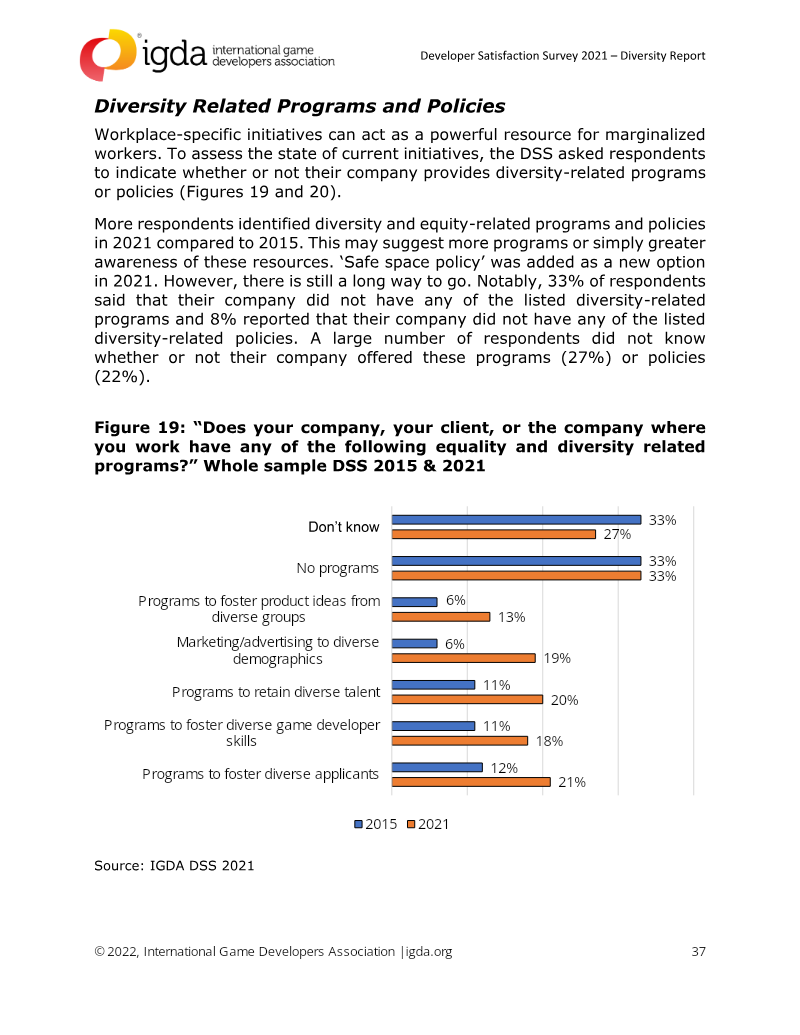
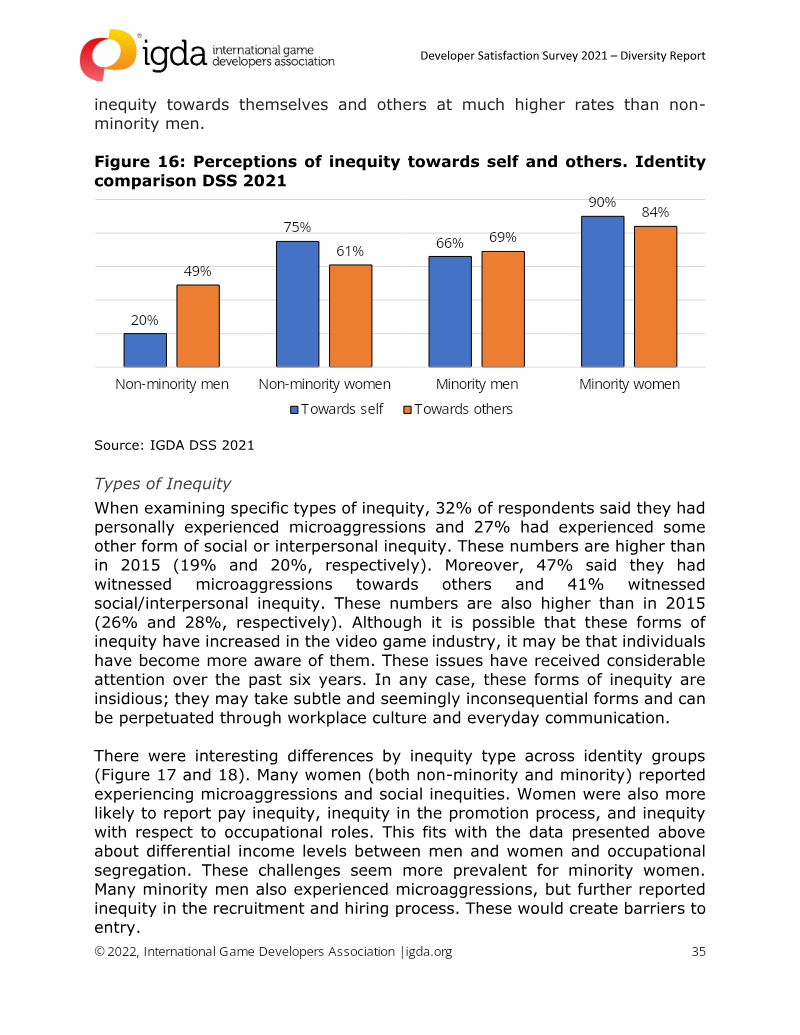
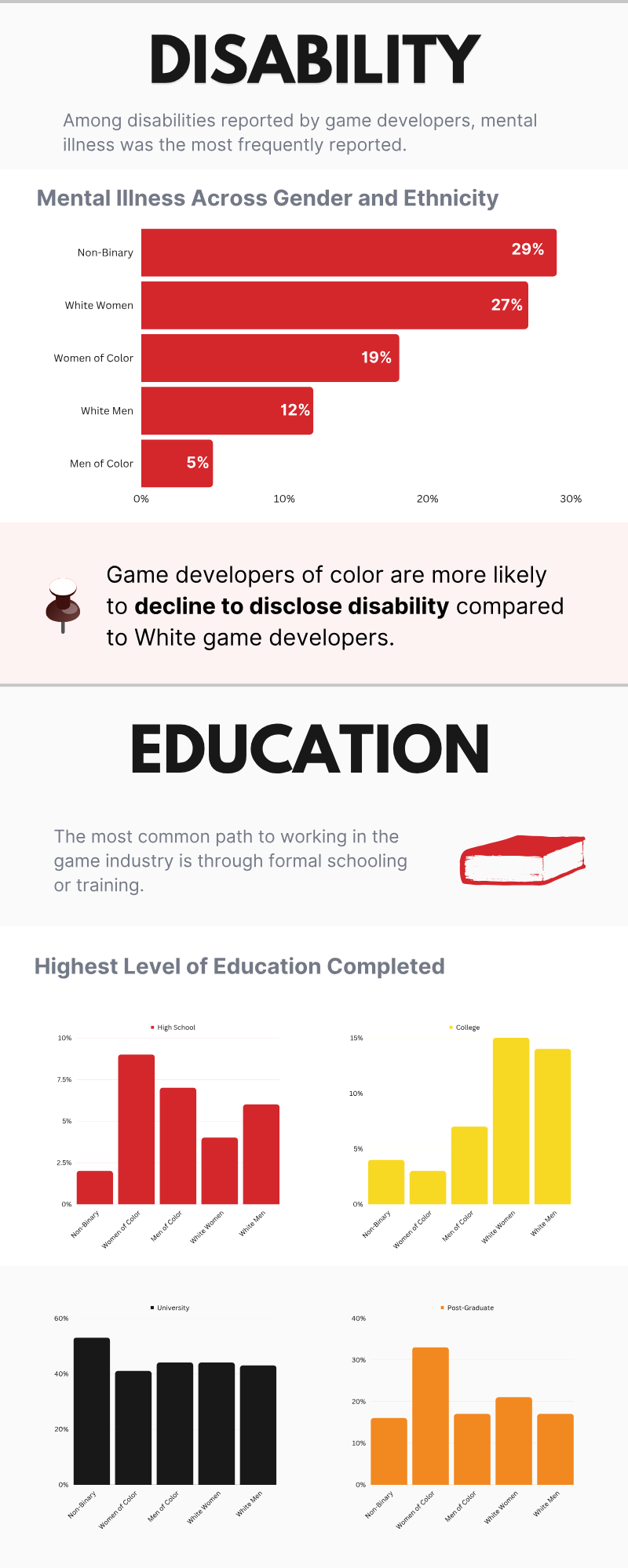
Workplace culture remains a significant point of failure, as 74% of respondents report a lack of equal opportunity. Despite an increase in diversity-focused policies, many employees remain unaware of these initiatives or find them ineffective. Women and non-binary individuals, especially women of color, report higher rates of mental health challenges, microaggressions, and online harassment compared to their male counterparts. Furthermore, data suggests that marginalized groups are often held to higher educational and professional standards, yet they continue to face bias in recruitment and promotion processes.
Ultimately, the industry struggles to translate broad consensus on the value of inclusion into measurable, actionable change. While awareness of systemic inequity has grown, the prevalence of workplace bias and the lack of formal, enforced policies at many studios hinder progress. Addressing these gaps requires moving beyond surface-level initiatives to dismantle the structural barriers that sustain a homogenous workforce. Without concrete efforts to standardize compensation, improve management representation, and enforce anti-harassment protocols, the industry risks stagnating in its efforts to achieve true equity and representation.
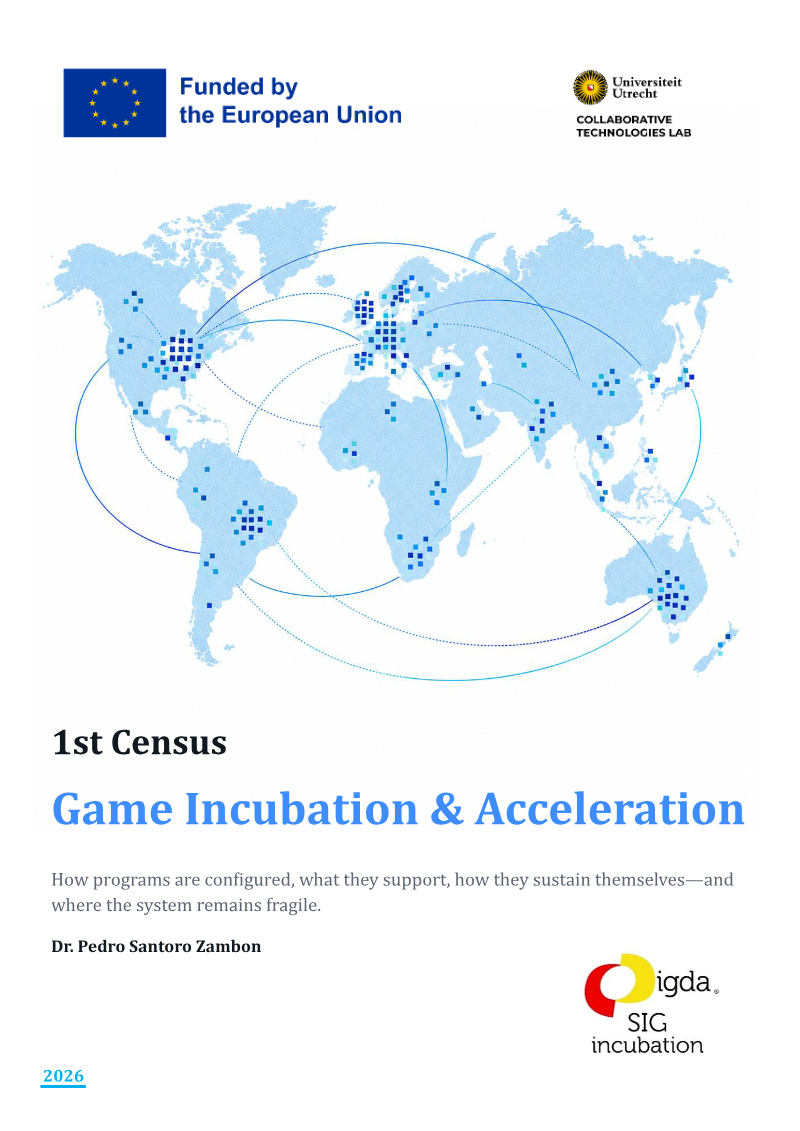
International Game Developers’ Association · 2026


International Game Developers' Association · 2024
International Game Developers’ Association · 2023
International Game Developers’ Association · 2023
International Game Developers’ Association · 2022
International Game Developers’ Association · 2021
International Game Developers’ Association · 2021
International Game Developers’ Association · 2020
International Game Developers’ Association · 2020
International Game Developers’ Association · 2016
International Game Developers’ Association · 2016
International Game Developers’ Association · 2015
Develop:Brighton · 2025