
GameMakers
F2P product management, game design, and monetization strategy by Joseph Kim.
Documents

How India Becomes A World Leader in Games #IndiaF2P
India is currently at a critical inflection point, transitioning from a nascent gaming market into a significant global contender.
- India is transitioning from a service-based cost-arbitrage model to a product-focused ecosystem that prioritizes original intellectual property and commercial viability.
- Long-term industry growth requires the professionalization of studio management to reduce high attrition rates and foster high-performance company cultures.
- The domestic gaming market is being driven by a large, young demographic with increasing discretionary spending power and improved payment infrastructure.
India F2P Games Conference | Aug 26, 2021 (Thurs @10AM - 2PM IST / Aug 25 Wed @9:30PM PST)
The Indian free-to-play (F2P) gaming sector is undergoing a rapid transformation, evolving from a low-cost outsourcing hub into a sophisticated, high-growth market capable of producing original, globally competitive intellectual property.
- The Indian F2P sector is transitioning from an outsourcing hub to a creator of original, globally competitive IP, driven by a mobile-first user base and a shift toward high-monetization midcore genres.
- Successful studios are adopting a 'craftsman' production model that prioritizes the granular deconstruction of global hits to master the mechanics of engagement and retention.
- Developers are increasingly treating games as 'live services' by utilizing backend-as-a-service solutions and CI/CD pipelines to focus resources on core gameplay innovation rather than foundational infrastructure.
The Pregame | India F2P (Before the Conference Talk)
The Indian gaming landscape is currently undergoing a significant evolution, transitioning from a focus on low-risk, iterative projects toward the development of more ambitious, high-quality titles.
- The Indian gaming sector is shifting from low-risk, iterative projects toward high-quality, ambitious titles, leveraging a talent pool characterized by startup-driven agility and high enthusiasm.
- Global market success is increasingly driven by superior execution and emotional connection rather than rigid adherence to data-driven metrics or traditional genre saturation.
- Player preference is moving toward open-world social experiences that prioritize agency and role-playing over established formats like match-three or shooters.

SciPlay's Joe Byrne on Social Casino
The social casino industry is currently navigating a significant strategic shift, driven by the need for granular market intelligence and the operational challenges posed by the deprecation of IDFA.
- Social casino developers are shifting toward a higher volume of spenders with smaller transaction sizes, necessitating a focus on increasing average transaction value and session frequency.
- The deprecation of IDFA has forced companies like SciPlay to rely on granular market intelligence, including detailed taxonomy and competitive performance analysis, to guide product roadmaps and M&A activity.
- Social casino games are increasingly adopting meta-progression systems—such as progression maps, builder mechanics, and narrative-driven live operations—to improve player retention and engagement.

IDFA Loss: Real Data & Real Talk
The deprecation of the Identifier for Advertisers (IDFA) on iOS has fundamentally restructured the mobile gaming industry, resulting in a 15% to 20% decline in revenue across diverse portfolios.
- The deprecation of IDFA has caused a 15% to 20% decline in revenue across mobile gaming portfolios due to the collapse of granular tracking and lookalike audiences.
- Market efficiency has decreased as the loss of deterministic tracking leads to higher costs per mille and lower install quality.
- Niche, whale-dependent genres like social casino and strategy games have experienced the most significant disruptions, whereas broad-market titles remain more resilient.

Is the future of games Instant? (Lars Doucet, Emily Greer)
The rise of instant games—titles accessible via browsers or social media without significant download barriers—represents a strategic effort to bypass traditional app store gatekeepers and capture broader, non-traditional gaming audiences.
- Instant games serve as a strategic tool to bypass app store gatekeepers and reach non-traditional audiences by removing significant download barriers.
- The current distribution landscape is dominated by restrictive platform ecosystems that prioritize short-term rent-seeking over long-term developer sustainability.
- Unlike the decentralized Flash era, modern developers face high levels of platform lock-in, which limits their leverage over their own work and audience relationships.

Tech Infrastructure for Multiplayer PVP - How To Reduce Latency for Competitive Games?
Competitive multiplayer gaming hinges on the mitigation of latency and packet loss, as these technical inefficiencies directly correlate with a three-fold increase in player churn.
- Technical inefficiencies like latency and packet loss are directly linked to a three-fold increase in player churn for competitive multiplayer games.
- Developers should prioritize a server-authoritative networking architecture to effectively mitigate security threats such as DDoS attacks and cheating.
- A common cost-performance strategy is the hybrid model, which utilizes cloud platforms for backend services while hosting game servers on bare metal to avoid high egress bandwidth fees.

Uma Musume Pretty Derby - What is this game? ft. Junde Yu from App Annie
Uma Musume Pretty Derby represents a significant case study in the Japanese mobile gaming market, blending the traditionally male-dominated genre of horse racing simulation with the idol-training mechanics typically favored by female audiences.
- Japan accounts for over 70 percent of global downloads and more than 85 percent of global revenue for the idol-training subgenre, highlighting extreme regional concentration.
- Uma Musume Pretty Derby successfully hybridizes male-dominated horse racing simulation mechanics with female-oriented idol-training systems to broaden its demographic reach.
- The game utilizes high-production-value assets and established anime intellectual property to justify premium pricing within its gacha-based monetization model.
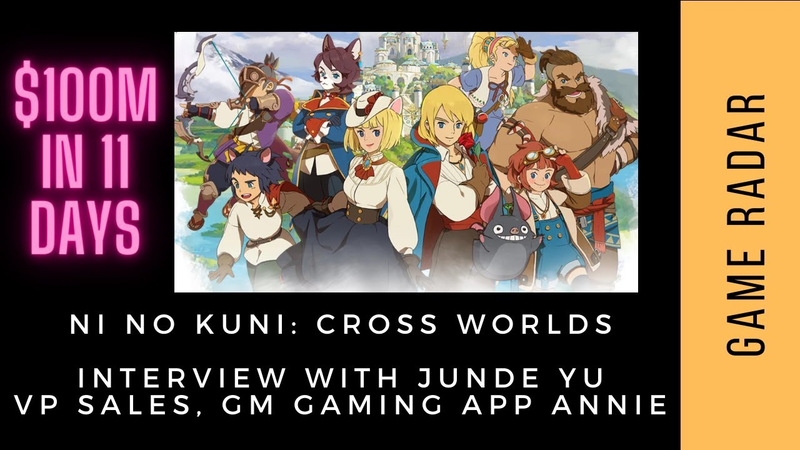
Ni No Kuni Cross Worlds to $100M in 11 Days | Talk with Junde Yu GM Gaming at App Annie
Ni No Kuni: Cross Worlds achieved significant commercial success upon its initial release in select Asian markets, generating $100 million in gross revenue within just 11 days.
- Ni No Kuni: Cross Worlds generated $100 million in gross revenue within 11 days of its initial launch in Japan, South Korea, Taiwan, and a few other Asian markets.
- The game combines kingdom-building mechanics with an action MMORPG structure, featuring a meta-narrative where the player character is a beta tester trapped inside a virtual reality game.
- High production values linked to the established Ni No Kuni IP allow for premium pricing on gacha items, as players are already familiar with the characters, voice acting, and storylines.
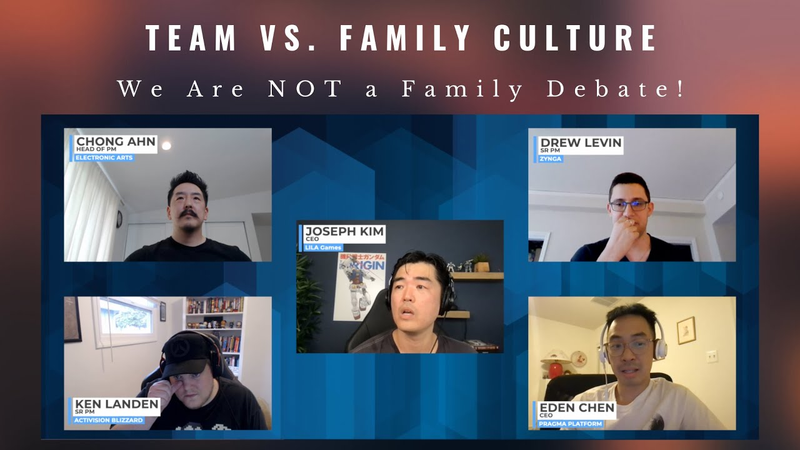
We are "Not a Family"🖕 Companies as Team vs Family DEBATE
The debate over whether organizations should function as high-performance sports teams or families centers on the fundamental tension between meritocratic efficiency and human-centric support.
- The 'sports team' model, utilized by companies like Netflix and Coinbase, prioritizes high talent density, objective performance metrics, and clear accountability to maintain competitive agility.
- The 'family' metaphor, while fostering interpersonal connection and loyalty, carries the risk of masking exploitative labor practices and hindering necessary performance-based feedback.
- Effective organizational culture is defined by consistent leadership actions, transparency, and defined values rather than the adoption of specific labels like 'family' or 'team'.
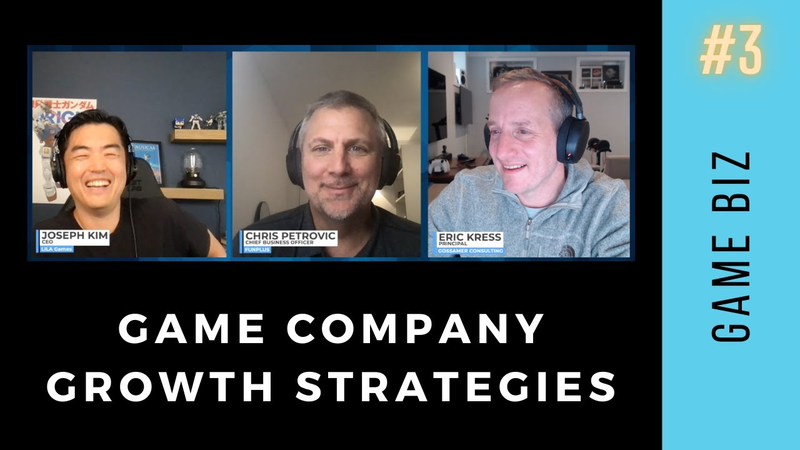
Game Biz #3 | Game Company Growth Strategies ft Chris Petrovic and Eric Kress
The gaming industry is currently undergoing a structural transition as major players shift from a reliance on aggressive mergers and acquisitions toward the more complex challenge of organic growth.
- The gaming industry is shifting from an M&A-heavy growth model to a focus on organic growth, as high-quality independent acquisition targets become scarce and integration challenges persist.
- Investors are increasingly pressuring major firms like EA, Take-Two, and Zynga to demonstrate internal innovation and the ability to launch new franchises rather than relying on capital-intensive consolidation.
- Companies are pursuing vertical integration by acquiring ad-tech capabilities to optimize profitability and mirror the valuation models of firms like AppLovin.

Star Atlas | Metaverse Game on the Solana Blockchain
Star Atlas functions as a AAA-quality, space-themed grand strategy metaverse built upon the Solana blockchain.
- Star Atlas is a AAA-quality space strategy metaverse built on the Solana blockchain, which utilizes a high-throughput architecture capable of processing 50,000 transactions per second.
- The game utilizes a dual-token economic model where ATLAS functions as the primary currency for commerce and POLIS serves as a governance token for the project's Decentralized Autonomous Organization.
- The platform operates on an invest-to-play paradigm, utilizing NFTs for all in-game assets to grant players true ownership and the ability to extract real-world value from their digital investments.