
GameMakers
F2P product management, game design, and monetization strategy by Joseph Kim.
Documents
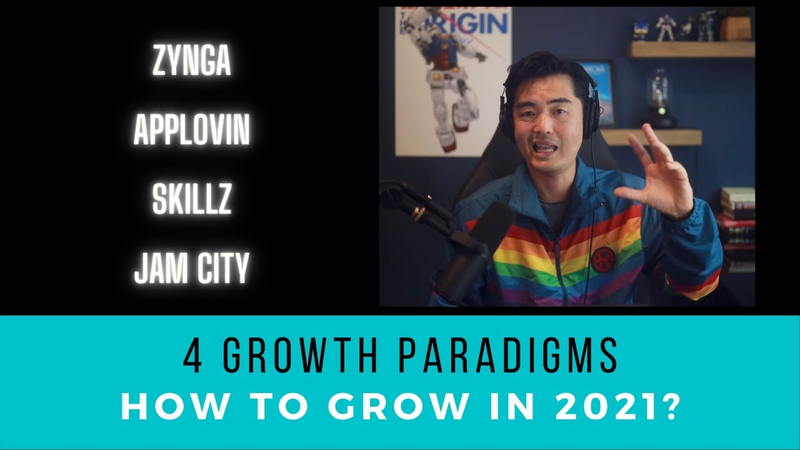
Game Company Growth Strategies in 2021 | Zynga, Applovin, Skillz, and Jam City
The mobile gaming industry is undergoing a fundamental transformation as traditional content-based mergers and acquisitions yield diminishing returns.
- The mobile gaming industry is shifting away from traditional content-based M&A toward vertical integration and cross-platform models to counter the impact of IDFA deprecation on user acquisition.
- AppLovin is attempting to transition from an ad-tech provider to a content-focused powerhouse, risking the alienation of its external client base by creating a potential walled garden.
- Zynga is pursuing ad-tech integration and cross-platform expansion, though its strategy faces significant industry skepticism regarding data privacy and trust.
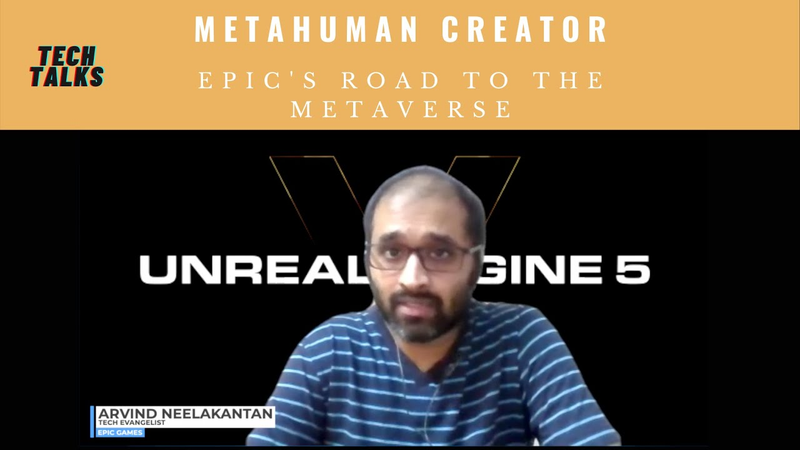
MetaHuman Creator | Epic's Road to the Metaverse ft. Arvind Neelakanan (Epic Tech Evangelist)
MetaHuman Creator serves as a transformative cloud-based solution designed to accelerate the production of high-fidelity, rigged digital characters.
- MetaHuman Creator is a cloud-based platform that reduces the production time for high-fidelity, rigged digital characters from months to hours by automating facial rigging and skin rendering.
- The platform is designed to augment professional artists rather than replace them, keeping creative oversight central to the final production quality.
- The system features a flexible Level of Detail (LOD) architecture, allowing developers to scale visual fidelity to meet performance requirements across different hardware environments.
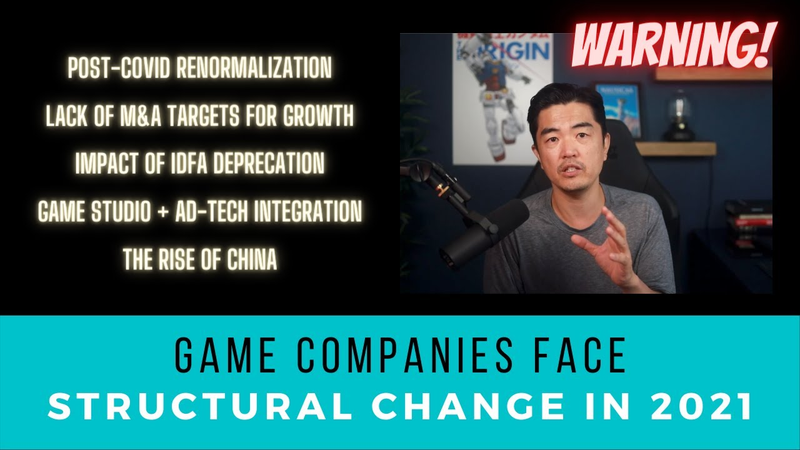
Game Companies Face Structural Change in 2021 | The Warning!
The gaming industry faces a period of significant structural transformation in 2021, driven by five converging factors that threaten to disrupt established business models.
- The gaming industry is transitioning from the 2020 pandemic-driven hyper-growth phase to a more complex, data-constrained environment characterized by normalized user behavior.
- The deprecation of Apple’s Identifier for Advertisers (IDFA) is eroding the efficacy of user acquisition, specifically threatening the monetization models of hyper-casual game developers.
- A scarcity of viable mid-tier M&A targets is forcing major firms to pivot toward riskier, larger public transactions or smaller, pre-revenue acquisitions to maintain growth.

Game Development Best Practices
Game development success depends on aligning organizational structures, engineering workflows, and stakeholder expectations with the specific demands of a project’s genre, scale, and platform.
- Project management should treat task estimates as probabilistic averages rather than fixed commitments to prevent scope creep and task padding.
- Development teams should scale their organizational structure based on project needs, utilizing agile groups of 10 to 15 members for early iteration and expanding to hundreds for AAA content pipelines.
- Technical stability requires implementing continuous integration and automated testing early in the development lifecycle, tailored to the team's specific size and experience level.

Self Actualization Through Video Games
Video games function as essential arenas for sense-making, providing structured environments where players exercise agency, master complex systems, and pursue self-actualization.
- Video games serve as structured environments for self-actualization, allowing players to develop transferable skills in strategic thinking, resilience, and complex system mastery.
- Current industry reliance on quarterly financial targets and short-term engagement metrics often prevents the development of deeper, psychologically meaningful game experiences.
- To capture long-term value, design philosophies must shift from purely mechanical or persona-based models toward frameworks that actively foster personal development.

TWIG 131 | Apex Legends Mobile, Fortnite Leaks and $9B Rev, Activision Q1 Results, JK Final Episode!
The gaming industry is currently navigating a period of significant structural and financial transition, characterized by aggressive investment strategies and shifting platform dynamics.
- Epic Games litigation revealed that Fortnite generated $9 billion in revenue between 2018 and 2019, with the PlayStation ecosystem accounting for 47% of that total.
- Mobile platforms continue to underperform in monetization and retention compared to consoles, casting doubt on the success of new mobile entries like Apex Legends Mobile.
- Apple’s IDFA opt-in prompts have seen a sluggish adoption rate of only 6–10%, creating ongoing challenges for mobile advertising measurement and monetization strategies.

TWIG 130 | EA Battlefield Game, Epic vs. Apple by WSJ, Blizzard Overwatch Leadership
The gaming industry is currently undergoing a structural shift as traditional developers struggle to reconcile legacy quality-focused cultures with the relentless demands of live-service and mobile-first business models.
- The gaming industry is undergoing a structural shift as traditional developers struggle to reconcile legacy quality-focused cultures with the operational demands of live-service and mobile-first business models.
- Epic Games is pursuing a long-term legal strategy against Apple aimed at dismantling platform gatekeeping, signaling a broader industry trend where major players prioritize store ownership and platform control over individual software development.
- Blizzard is experiencing internal instability and operational friction as it attempts to transition premium intellectual properties into free-to-play formats, highlighting the difficulty of adapting traditional development workflows to iterative live operations.

TWIG 129: Applovin Falls 19%, Playstation IP to Mobile, Square Enix Acquisition Rumors, JK Retiring
The gaming industry currently faces significant valuation challenges and strategic pivots as major players attempt to reconcile traditional console strengths with the demands of the mobile market.
- AppLovin shares declined 19% as investors reacted to the company's reliance on its own game portfolio rather than its marketed software-as-a-service business model.
- Sony is attempting to expand its console-based intellectual property into the mobile market, though it currently lacks the institutional expertise required for high-retention, live-service models.
- Analysts suggest that Sony should pursue licensing or strategic partnerships with established mobile developers rather than relying on internal development to mitigate operational risks.

TWIG 128 | Epic Will Lose $300M on Game Store, Epic Raises $1B at $30B, Apple/Google Kill F2P?
The gaming industry is currently navigating a period of significant financial and structural transition, characterized by aggressive platform expansion, shifting monetization models, and evolving regulatory landscapes.
- Epic Games secured $1 billion in new funding at a $30 billion valuation to support its metaverse development, despite the Epic Games Store projecting $600 million in losses by the end of 2021.
- The Epic Games Store struggles with long-term profitability due to a lack of social features and platform stickiness compared to competitors like Steam.
- Mobile gaming faces significant headwinds from Apple’s App Tracking Transparency and the limitations of subscription services like Apple Arcade, which currently fail to incentivize long-term content development.
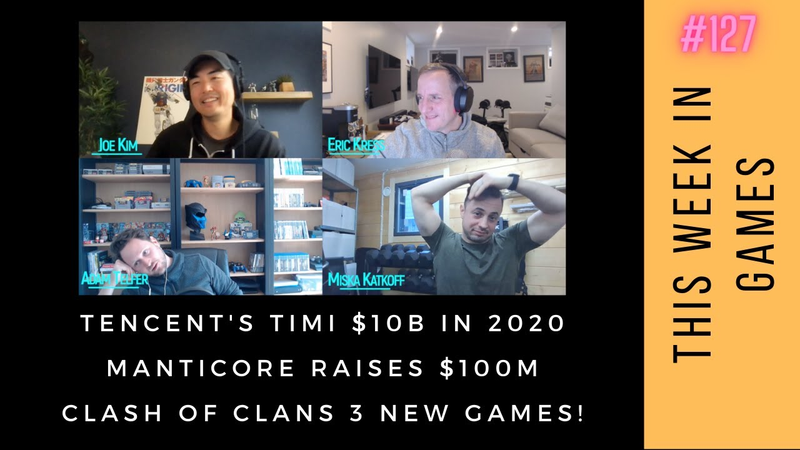
TWIG 127 | 3 New Supercell Clash Games, Tencent Timi $10B in 2020, Manticore $100M for "Multiverse"
Tencent’s TiMi Studio Group has emerged as a dominant global force, generating $10 billion in revenue during 2020.
- Tencent’s TiMi Studio Group generated $10 billion in revenue in 2020 and is leveraging this capital to establish Los Angeles-based studios focused on original, cross-platform, live-service intellectual property.
- Manticore Games secured $100 million in venture capital to scale its user-generated content platform, though it faces significant challenges competing against established incumbents like Roblox and Epic Games.
- Supercell is expanding the Clash brand with three new titles across the puzzle, auto-chess, and action RPG genres, though analysts question the long-term monetization potential of these genres in Western markets.
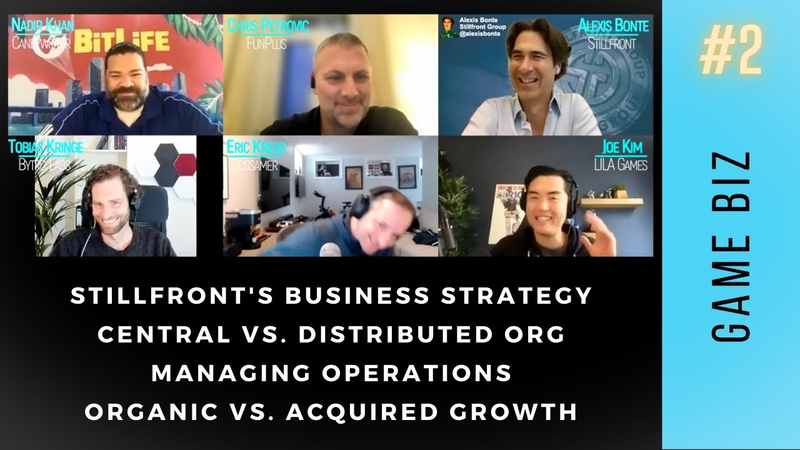
Game Biz #2: Talking Strategy and Synergy with Stillfront Group!
Stillfront Group operates under a distributed operator model that prioritizes studio autonomy while leveraging the collective scale of a 19-studio network.
- Stillfront Group operates a decentralized network of 19 studios that prioritizes local autonomy and founder-led decision-making over top-down corporate mandates.
- The company utilizes a voluntary collaboration model where studios share specialized infrastructure, payment solutions, and expertise in ad monetization and IP licensing.
- Operational strategy focuses on pooling data and collective experimentation to mitigate industry-wide disruptions, such as the deprecation of IDFA.

Game Publishing on Roblox | Gamefam CEO Joe Ferencz
Roblox has evolved from a niche sandbox into a sophisticated, professionalized gaming ecosystem that functions as a primary metaverse for the 7-to-17 demographic.
- Roblox has transitioned from a hobbyist sandbox into a professionalized gaming ecosystem targeting the 7-to-17 demographic, positioning itself as a direct competitor to major console and mobile gaming platforms.
- Success on the platform requires prioritizing social-first, avatar-driven experiences over high-fidelity graphics, as the platform's community-driven culture favors authentic engagement over traditional mobile free-to-play mechanics.
- Developers must leverage the Lua programming language and adapt to the platform's streamed, client-less architecture, which necessitates navigating specific performance limitations while utilizing built-in multiplayer networking.