
GameMakers
F2P product management, game design, and monetization strategy by Joseph Kim.
Documents

UA Creatives Testing | How Traplight Games Optimizes Mobile Ads for Battle Legion
Mobile user acquisition strategies for the title Battle Legion rely on a modular production pipeline that systematically tests creative variables to maximize install-per-mille.
- Creative assets must be tailored to specific placement types: shorter ads perform best in Facebook Feeds, while longer-form content yields higher conversion rates in the Audience Network.
- Performance optimization requires aligning video duration with algorithmic constraints, such as the 15-second unskippable limit for in-stream video placements.
- Traplight Games utilized a modular production pipeline to test 64 distinct ad variations over a three-month period to maximize install-per-mille (IPM).

Employee Feedback and Performance Review Best Practice (Philosophy Friday #5)
Effective performance management relies on shifting away from high-stakes, infrequent reviews toward a model of continuous, immediate feedback.
- Replace infrequent, high-stakes performance reviews with a model of continuous, immediate feedback to facilitate real-time course corrections and reduce organizational attrition.
- Managers should focus feedback strictly on observable work product rather than personality traits, utilizing structured frameworks like skills matrices or start-stop-continue models.
- Limit employee development goals to one or two key areas per quarter to prevent staff from feeling overwhelmed and to ensure actionable progress.

Choosing "Work Life Integration" Over Balance (Philosophy Friday #4)
Work-life integration serves as a superior alternative to the traditional concept of work-life balance, particularly for individuals pursuing ambitious, high-growth objectives.
- Work-life integration is a superior framework for high-growth objectives because it treats professional goals as a core component of a broader life mission rather than a separate, compartmentalized activity.
- Transitioning away from fixed salary models toward performance-based bonuses and equity aligns employee incentives with company success and reduces the resentment caused by valuing hours over output.
- High-impact individuals must adopt a zero-budget approach to scheduling, which involves rigorously distinguishing between shallow administrative tasks and high-value problem solving.

Zero to One vs. 1 to N Product Managers (Philosophy Friday #3)
The distinction between zero-to-one and one-to-n product management defines the fundamental tension between radical innovation and iterative scaling.
- Zero-to-one product management requires a hunter mindset focused on intuition and conviction to create novel offerings, while one-to-n management acts as a gatherer role focused on data-driven optimization of established products.
- Large organizations often fail at innovation by incorrectly applying one-to-n, process-heavy methodologies to zero-to-one projects, which dilutes bold ideas through committee-driven consensus.
- Successful zero-to-one initiatives demand a culture of radical honesty and blunt communication, as prioritizing social harmony over direct feedback frequently leads to mediocre outcomes.

Mobile Ad Revenue 2022 | Future and 2021 Retrospective
The mobile advertising industry has demonstrated remarkable resilience following the deprecation of the Identifier for Advertisers (IDFA), successfully navigating a transition that many initially feared would trigger a market collapse.
- The mobile advertising industry successfully adapted to the deprecation of IDFA by shifting to contextual targeting and on-device signals, avoiding the feared market collapse.
- Facebook’s dominance in the iOS ecosystem significantly declined, with its revenue share dropping from 25–30% to 3–5% following privacy changes.
- Monetization teams have evolved into highly technical, product-focused units that manage complex attribution requirements and act as strategic intermediaries between development and ad partners.

Data Ethics in Gaming (Philosophy Friday #2)
The gaming industry increasingly relies on alternative data providers to bridge information gaps, validate investment strategies, and inform high-stakes decisions regarding development and mergers.
- The SEC imposed a $13 million penalty on App Annie for misusing confidential data to manipulate market estimates, highlighting the severe legal risks associated with relying on non-public information for investment and development decisions.
- Gaming companies are facing increased regulatory scrutiny, with the SEC now utilizing financial disclosure requirements to address internal issues like harassment and discrimination, signaling an end to the industry's historical regulatory exemption.
- The industry is experiencing a shift toward a more virtuous model of data governance, where transparency and explicit user consent are becoming mandatory to maintain sustainable practices and avoid player backlash.

How to Be a Great Product Manager (Philosophy Friday #1)
Product management in the free-to-play gaming industry centers on the synthesis of economic decision-making, product vision, and operational efficiency.
- Product management in free-to-play gaming requires synthesizing economic modeling, product vision, and operational efficiency to drive sustainable, ethical revenue growth.
- Effective product managers must transition from reactive task management to a proactive operating system defined by rigorous processes, root cause analysis, and iterative modeling.
- Success depends on balancing data-driven decision-making with human-centric communication to maintain team morale while ensuring contributions remain objectively measurable.

The Future of Blockchain Gaming
Blockchain gaming represents a fundamental paradigm shift in the digital entertainment landscape, mirroring the early developmental stages of the free-to-play and social gaming eras.
- The integration of non-fungible tokens into high-profile intellectual properties is projected to generate over $1 billion in revenue within the next two years.
- The industry is shifting from speculative token-based models toward a 'play-and-earn' philosophy that prioritizes product quality, community engagement, and long-term retention.
- Blockchain gaming is transitioning from publisher-controlled monetization to player-owned economies where digital assets provide genuine utility and liquidity.

Moonton's Mobile Legends: Bang Bang Secrets to Success! With Chief Designer Skyhook
The success of Mobile Legends: Bang Bang is rooted in a design philosophy that balances the high-stakes strategy of Real-Time Strategy (RTS) games with the immediate, visceral satisfaction of action-oriented gameplay.
- Mobile Legends: Bang Bang achieved success by distilling complex PC-based MOBA mechanics into a mobile-first experience that lowers the barrier to entry while maintaining a high skill ceiling.
- The development team prioritized accessibility by removing high-friction mechanics like last-hit requirements and implementing screen locking to simplify operational complexity.
- Core gameplay design focuses on a hybrid model where visceral action mechanics provide immediate engagement, while deep strategic layers ensure long-term player retention.
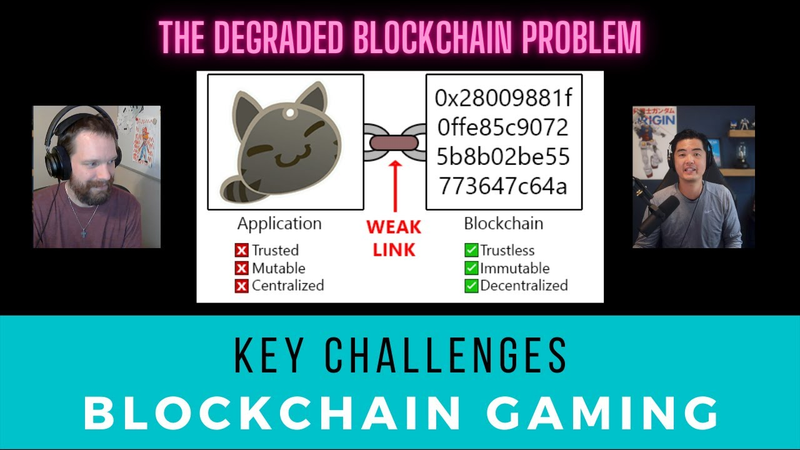
Key Challenges for Blockchain Gaming ft. Lars Doucet
This analysis examines the fundamental challenges facing blockchain technology within the gaming industry, focusing on the disconnect between theoretical promises and practical implementation.
- The 'degraded blockchain' problem occurs when game assets rely on centralized servers, nullifying the benefits of decentralization because a central authority can still arbitrarily alter or remove user assets.
- Play-to-earn models frequently function as unsustainable finance-driven schemes that rely on continuous new investment rather than genuine gameplay value to maintain economic stability.
- Digital land speculation creates artificial scarcity that mirrors real-world housing crises, leading to rent-seeking behaviors that alienate the broader player base.

Apple vs Epic Games Trial: Who Won?
The recent court ruling in the Apple versus Epic Games case represents a complex, split decision that carries significant implications for the mobile gaming industry.
- The court ruled that Apple must allow developers to include external links and buttons that direct users to alternative payment methods, effectively challenging the App Store's long-standing payment monopoly.
- While the court rejected Epic Games' claim that Apple is an illegal monopoly, it ruled in favor of Epic under California’s unfair competition law.
- Transitioning to external payment models could potentially increase revenue for mobile developers by 30% to 40% by bypassing Apple’s 30% commission on in-app purchases.

Doing the Work For a Top Grossing Game | Game Design by Paul Leydon
Achieving sustained success in the top-grossing mobile gaming market requires a shift away from reliance on high-level analytics, expensive talent acquisitions, and industry trends.
- Sustained success in top-grossing mobile gaming is achieved through granular, hands-on product design rather than reliance on high-level analytics, external vendor data, or expensive talent acquisitions.
- Developers should perform exhaustive deconstruction of market leaders like Royal Match, Piggy Go, and PUBG Mobile to understand the fundamental mechanics behind their success.
- Meticulous documentation of UI flows, environmental lighting, economy balancing, and battle pass structures is essential to keep development teams unblocked and efficient.