Word Game
Documents

Inside NYT Games: Why They Don't Play by the Same Rules
The New York Times Games division operates under a distinct philosophy that prioritizes long-term brand integrity and subscriber value over the aggressive monetization tactics common in the mobile gaming industry. Unlike traditional gaming startups that rely on free-to-play mechanics, gacha systems, or battle passes, the Times utilizes a subscription-based model. This structure allows the development team to focus primarily on game design and player enjoyment rather than engineering gameplay to accommodate microtransactions. The division’s mission is to provide high-quality, polished experiences that align with the broader journalistic goals of the 175-year-old institution.
The development process is characterized by a democratic, open-pitch greenlight system that encourages participation from all team members, regardless of their specific role. This approach has led to successful titles like Connections, which originated from a cross-functional collaboration. The pipeline is designed to be agile, utilizing small, iterative prototypes to test concepts before committing significant resources. The team frequently employs Canada as a testing market to gauge performance, requiring at least 60 days of content to analyze retention metrics before a full-scale release.
Audience engagement is driven by psychographics rather than traditional demographics, focusing on the specific motivations—such as mental stimulation, social connection, or relaxation—that lead users to play. Wordle serves as a critical gateway for the portfolio, introducing a broad, global audience to the wider suite of games. By prioritizing fun and retention over short-term revenue extraction, the organization aims to build a sustainable, multi-generational gaming ecosystem that complements its core news offerings. This strategy ensures that the games remain accessible and engaging, fostering a loyal subscriber base that views the puzzles as a daily, meaningful habit.
- The New York Times Games division rejects standard mobile industry monetization tactics like gacha systems and battle passes in favor of a subscription-based model that prioritizes long-term brand integrity.
- The development team utilizes a democratic, open-pitch greenlight system that allows any employee to contribute ideas, which led to the creation of successful titles like Connections.
- The division mandates a 60-day content buffer for new prototypes, using Canada as a primary testing market to analyze retention metrics before committing to a full-scale release.
- Audience engagement strategies are built on psychographics—such as the desire for mental stimulation or social connection—rather than traditional demographic targeting.
- Wordle functions as the primary acquisition funnel for the portfolio, serving as a gateway to introduce a global audience to the broader suite of subscription-based games.

NYT Games' Virality, AI, and the Future
The strategy behind New York Times Games centers on creating highly shareable, human-crafted experiences that foster social connection. The core thesis is that successful games rely on "storytelling" elements—such as the unique narrative arc of a Wordle result or the challenge of solving a specific Connections category—which encourage organic user sharing. By prioritizing human editors over automated systems, the organization maintains a high quality bar, ensuring that puzzles like the daily crossword or Spelling Bee feel curated and artisanal. This commitment to human design is viewed as essential to the brand’s long-term value, with a goal of building a portfolio of games that remain relevant for decades.
While the organization maintains a strict "human-made" policy for core gameplay content, it actively utilizes artificial intelligence for back-of-house operations. AI is successfully deployed to identify customer service trends, summarize user feedback, and assist in technical prototyping. However, the team remains cautious regarding AI in creative workflows; a recent internal game jam revealed that over-reliance on AI for prototyping actually hindered the development process by distracting teams from refining core concepts and engaging in collaborative human dialogue. Consequently, the organization emphasizes that while technology can improve efficiency, it cannot replace the critical human effort required to conceptualize fun and engaging mechanics.
Looking forward, the organization remains focused on internal development and is currently hiring native iOS, Android, and web engineers, explicitly avoiding Unity in favor of proprietary, shared technology. While the team primarily builds games in-house, there is an openness to acquiring successful third-party titles that align with their brand standards. The overarching objective remains the cultivation of social, accessible, and high-quality experiences that strengthen emotional connections between players, whether they are family members or friends.
- New York Times Games prioritizes human-crafted, artisanal puzzle design over automated systems to ensure long-term brand value and high-quality player experiences.
- The core growth strategy relies on creating highly shareable, narrative-driven gameplay, such as Wordle and Connections, which naturally foster social connection and organic user distribution.
- The organization explicitly avoids Unity in favor of proprietary, shared technology and is currently hiring native iOS, Android, and web engineers to support internal development.
- While the company utilizes AI for back-of-house tasks like customer service analysis and technical prototyping, it maintains a strict 'human-made' policy for all core gameplay content.
- Internal testing revealed that over-reliance on AI during creative prototyping hindered development by distracting teams from refining core mechanics and engaging in collaborative human dialogue.
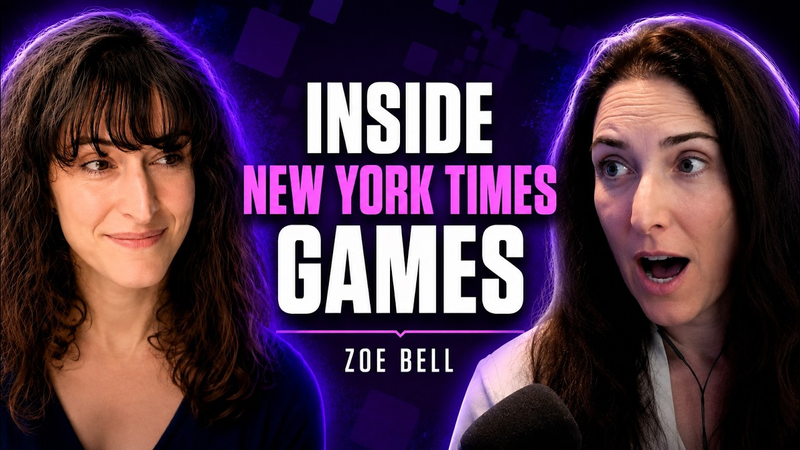
Inside New York Times Games: Why Killing 96% of New Ideas Is the Win
New York Times Games operates on a subscription-based model that prioritizes long-term player engagement and brand integrity over the aggressive monetization tactics prevalent in the broader mobile gaming industry. By eschewing gacha mechanics and in-app purchases, the division focuses on delivering high-quality, artisanal puzzles that provide consistent mental stimulation and social connection. This strategic focus on subscriber value rather than short-term session counts allows for a development philosophy centered on editorial quality and human-led design.
The development process is defined by a rigorous, democratic vetting system that filters out the vast majority of proposed concepts. Only 3% to 4% of initial ideas survive the greenlight process, which evaluates projects based on audience fit, emotional resonance, and long-term viability. New concepts typically undergo soft launches in Canada to validate retention metrics—specifically focusing on D7/D1 and D30/D7 slopes—before a global rollout. This disciplined approach ensures that every addition to the portfolio maintains the high standards expected by the subscriber base, whether the game is developed internally or acquired through strategic opportunities like the integration of Wordle.
While the division leverages technology to support its growth, it maintains a clear boundary regarding the role of artificial intelligence. AI is utilized exclusively for backend operational efficiencies, such as code testing, rapid prototyping, and customer service analysis, rather than for creative content generation. The studio relies on proprietary, shared company technology rather than third-party engines, reflecting a commitment to internal control and long-term sustainability. By fostering a culture that values human curation and social shareability, the organization continues to scale its digital footprint while preserving the unique, puzzle-centric identity that drives its subscription growth.
- New York Times Games maintains a rigorous development filter, greenlighting only 3% to 4% of all proposed game concepts.
- The division prioritizes a subscription-based model over aggressive monetization, explicitly avoiding gacha mechanics and in-app purchases to focus on long-term player engagement.
- New game concepts undergo soft launches in Canada to validate retention metrics, specifically analyzing D7/D1 and D30/D7 slopes before global release.
- The studio restricts the use of artificial intelligence to backend operational efficiencies like code testing and prototyping, strictly prohibiting its use in creative content generation.
- Development strategy relies on proprietary, shared company technology rather than third-party engines to ensure internal control and long-term sustainability.

GoldenEye and TimeSplitters creators return: “Maybe this isn’t what we should be doing”
The modern gaming industry is currently defined by a fundamental tension between the instability of large-scale production and the enduring dominance of legacy content. While well-funded studios frequently face redundancies due to a lack of production discipline and an over-reliance on long-term, unreleased projects, the broader market is increasingly driven by back-catalog titles. Data reveals that over half of all gaming activity involves titles at least six years old, with new releases—excluding annualized sports franchises—struggling to capture even 1% of the active player base. Consequently, major publishers are pivoting toward remakes and established live-service ecosystems to maintain revenue, as consumers prioritize massive backlogs over new, full-priced offerings.
This shift is further complicated by the industry’s evolving global footprint. While traditional markets grapple with the saturation of legacy titles, emerging regions in Southeast Asia, India, and the Middle East are projected to see significant growth through 2029. These markets are not monolithic; they remain highly fragmented, with consumer preferences and platform adoption varying significantly based on local socio-economic factors. This diversity challenges the notion of a singular global gaming trend, suggesting that future growth will require localized strategies rather than broad, universal approaches.
Amidst this landscape, veteran developers like Steve Ellis and David Do are rejecting the resource-heavy demands of modern AAA production. By transitioning to independent development, these creators are prioritizing creative identity and agility over the high-risk, massive-scale models that have led to widespread studio instability. This return to smaller, niche projects reflects a growing sentiment that the industry’s obsession with massive live-service titles may be unsustainable. Instead, focusing on personal, hands-on development offers a viable path forward for creators looking to escape the volatility of the current corporate environment.

LinkedIn's Gaming Strategy: Using Games to Foster Connection and Conversation
LinkedIn is strategically integrating a suite of thinking-oriented puzzles, including Queens, Pinpoint, Crossclimb, and Tango, to serve as catalysts for professional connection and conversation. Rather than pivoting toward becoming a traditional gaming platform, the company utilizes these low-friction, daily activities to mirror the social dynamics of high-performing workplaces. By providing a shared experience that encourages interaction among colleagues, the platform aims to deepen professional bonds and increase overall user engagement, which in turn supports core business lines such as Talent and Marketing Solutions.
The initiative prioritizes accessibility and community-driven interaction over extended screen time, enforcing a strict limit of one game per day to ensure the platform remains focused on networking. This strategy has proven effective, yielding an 80% day-over-day retention rate and demonstrating significant traction among Gen Z users and international markets, including India, Brazil, and Turkey. Engagement is currently split between mobile and web platforms, with a design philosophy that emphasizes a 60–70% first-time win rate to maintain user interest without creating distraction.
Success is measured not by traditional gaming metrics like revenue or session length, but by the ability of these games to function as professional conversation starters. The development team actively monitors emergent user behaviors, such as the creation of informal leaderboards or external tracking tools, and integrates these social dynamics directly into the product. By leveraging professional data like company and university affiliations to foster friendly competition, the platform successfully transforms solitary puzzles into a collaborative networking tool that reinforces its broader mission of creating economic opportunity for its one billion members.

Building a Thriving Casual Word Games Business in a Red Ocean
The casual word game market represents a highly saturated environment where success hinges on rapid iteration, data-driven decision-making, and the strategic deployment of lean operational frameworks. By prioritizing a daily ritual gameplay model, studios can transform titles from initial concepts into high-revenue assets, with successful games reaching daily earnings of $30,000 within a few months of launch. This growth is not achieved through speculative development but through a disciplined process of taking frequent, calculated risks and scaling marketing spend only after rigorous retention and monetization benchmarks are met.
Central to this business model is the mastery of ad monetization and user acquisition, where achieving an ARPDAU of 50 to 70 cents provides the necessary margin to scale monthly marketing budgets into the millions. By utilizing predictive models to track Return on Ad Spend, companies can justify aggressive acquisition strategies. Efficiency is further bolstered by proprietary technical frameworks and modular design systems that allow teams to implement proven mechanics across multiple titles, avoiding the high costs associated with human-curated content models used by larger competitors.
Operating as a lean, remote organization requires a culture of radical transparency and over-communication. By maintaining a small, senior-level team and utilizing contract-based hiring, studios can remain agile and responsive to market shifts. This approach treats personnel turnover as a natural component of the iterative development cycle rather than a structural failure. Ultimately, the ability to thrive in a red ocean depends on the synthesis of creative inspiration from industry peers and a cold, analytical assessment of UI and business viability, ensuring that every development cycle contributes to a sustainable and scalable portfolio.

New York Times Games, From Strength to Strength
The New York Times Games division has successfully established itself as a cornerstone of the company’s broader subscription strategy by transforming casual gaming into a high-engagement lifestyle ecosystem. By prioritizing a "content-first" philosophy, the division leverages viral hits like Wordle and Connections to funnel millions of users into a diverse portfolio of daily puzzles. This approach relies on a hybrid access model that balances free, registration-based features with subscription-only archival access, effectively driving both user acquisition and long-term retention.
The division differentiates itself from the broader mobile gaming market by rejecting aggressive monetization tactics and engagement traps in favor of a "time well spent" ethos. By focusing on human-curated, high-quality content and a clean user interface, the games foster a loyal community that transcends traditional digital play. This strategy emphasizes a board-game aesthetic with multi-generational appeal, which encourages organic social interaction and strengthens the brand’s identity as a premium, non-commoditized entertainment provider.
Operational success is underpinned by a rigorous stage-gate development process that utilizes web-first prototyping to validate retention before scaling. This data-driven methodology has enabled the division to grow from a crossword-centric product into a robust portfolio that recorded 8 billion plays last year. By integrating these games into the wider New York Times ecosystem, the company has created a powerful cross-promotion engine. Users who engage with both news and games demonstrate the highest levels of loyalty, confirming that the games division serves as a vital gateway for deepening subscriber relationships and expanding the reach of the company’s lifestyle and journalistic offerings.

How to Ship Successful Word Games with Michael Martinez, CEO of Funcraft
The strategy for achieving success in the mobile word game market centers on a rapid, iterative development model that prioritizes market validation over prolonged production cycles. By launching multiple titles in quick succession, developers can identify high-retention niches and avoid the existential risk of relying on a single unproven product. This approach, exemplified by the release of six distinct games since 2020, allows for the systematic testing of mechanics and the swift discontinuation of underperforming projects, ensuring that resources remain concentrated on titles with proven engagement potential.
Operational efficiency is maintained through a hybrid development structure that combines internal control over design and live operations with external studio partnerships for technical execution. This lean framework enables the integration of sophisticated social and event-driven systems into simple core gameplay, a strategy that elevates standard word games into more engaging, long-term experiences. Currently, this model is highly effective, with portfolios achieving strong retention rates and generating approximately 90 percent of revenue through ad monetization.
Looking toward future growth, the focus is shifting from individual title development to the creation of a scalable, platform-like ecosystem. By standardizing backend services and core game systems, the organization aims to streamline the production of future titles while maintaining a competitive edge against major industry incumbents. As the company scales its internal team and establishes a physical presence in San Francisco, it continues to emphasize a culture of high ownership and rapid execution. This environment is designed to attract talent seeking the direct impact and agility of a high-growth studio, positioning the firm to challenge established market leaders within the global mobile gaming landscape.
- Funcraft achieves market success by prioritizing rapid iteration and market validation, having launched six distinct word games since 2020 to identify high-retention niches.
- The company maintains a lean operational model by keeping design and live operations internal while outsourcing technical execution to external studio partners.
- Ad monetization is the primary revenue driver for the company's portfolio, accounting for approximately 90 percent of total income.
- To scale, the company is transitioning from individual title development to a platform-like ecosystem by standardizing backend services and core game systems.
- The strategy for increasing player engagement involves layering sophisticated social and event-driven systems onto simple, core word game mechanics.