VideoDeconstructor of Fun
Inside New York Times Games: Why Killing 96% of New Ideas Is the Win
6 Jul 202650 min video
[music]
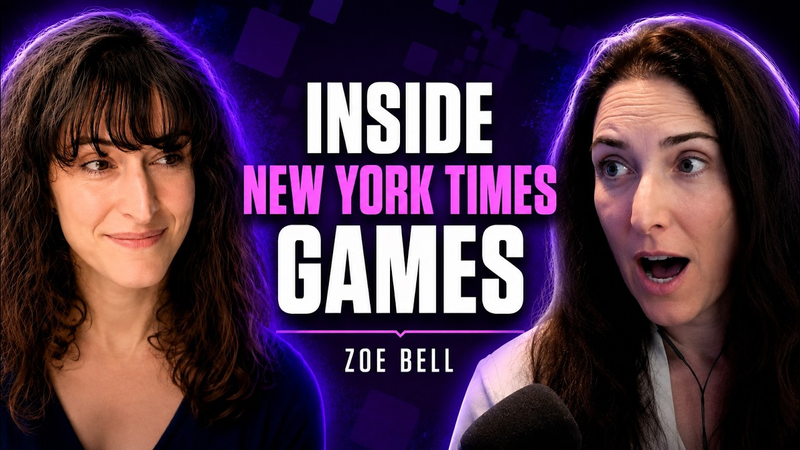
Hello everyone and welcome to Deconstructor of Fun Deep Dives. I'm Jen Donahoe. My guest today is Zoe Bell, executive producer of games at The New York Times. If you've played Wordle, Connections, Spelling Bee, Strands, Letter Box, or The Mini, or Crossword, or I think there's a ton of other pips, I think. You've played something that she helped to build or bring to life. New York Times Games has nearly 13 million subscribers. Some have ads, but there's really no in-app purchases, no battle pass, so a really different monetization system. They just launched Crossplay, a full multiplayer social layer on top of games that are fundamentally solo. And they make every single puzzle by hand in an era where everyone's automating and vibe coding everything. Plus, she's a fellow GamesBeat Boss Mode Woman of the Year nominee. Zoe, welcome to Deconstructor of Fun.
Thank you. Thanks for having me.
All right, let's jump right in. I have so many questions. First, I always like to start a little bit about you and your background. Uh when we talked, it was really interesting that you started off you're actually at Zynga before me, but you spent your the first part of your career in traditional also I'll I'll say traditional uh free-to-play games, also Facebook games, uh then mobile, so Zynga, Kongregate, then you took a job at a 175-year-old newspaper. Walk me through that decision and and you know, how you how you got to where you are now.
I think it goes back even further into like my childhood. Um I don't know about you, but but like most of the people on the games team for sure have some story like this. But my grandmother used to get the New York Times crossword every day in black felt-tipped pen. And yeah, she was from a very hardcore of her. So, I grew up just surrounded by like The New York Times and you know, she would get the paper and I would read articles and I would I would watch her
do the crossword and I always you know, she kind of taught me a little bit but like I I never um I fully understood all the crossword he used until I got got older. And then I just have always loved puzzle games and I remember even as a small child small child like we would play out in the blacktop outside my school and there was this oak tree that would like throw down debris and we would turn the debris into little mazes that then we would have people walk through and there'd be like bombs and other things and it was like little puzzles we would make. So I feel like I've always loved puzzle games and the crossword. Um and then when I worked at Kongregate Kongregate had such a great mission you know, to make development better for everyone and I felt so connected to that mission and and it felt so good to work for a company where the you know, entire goal wasn't just to like make lots of money. It was like to actually make like the world a better place in some in some way. Um so when this job came up I was like great. It's puzzle games. Uh
it has this great mission. In addition to me personally playing the games like my whole family plays the games my in-laws played the game you know, played the games my dad and then I had the subscription model and I was a little bit ready to get out of free to play and so all of that made it perfect place to jump to and to to join about 5 years ago.
Well, that's super interesting. I think you know, I I also love the puzzle member that I remember a felt tip marker. I don't even think they make those things anymore. But that's bold for your grandmother or your your grandmother right to like you're really committed
in her 70s and 80s just doing it. Yeah. Uh-huh.
Well, that's super committed. And so I think the other thing when we talked that was super interesting and you said this on the panel as well that the culture is really different from you know, where we have been in traditional mobile gaming to now being inside the New York Times and I think I think you even joked you can't say [ __ ] Which means you can't curse. Uh so talk a little bit about like the cultural
difference that you have going from, you know, our industry in a sense to that newspaper industry or media industry.
It's very diff- It is diff- very different. Um I mean, you can swear at the Times, but like not with the same vigor maybe as you can in a gaming startup. Everything about the mission and and this 175-year-old company contributes to the to the culture. And it's it's like we're we're doing things that are so important for like the country, the world. We're we're helping people understand more about what's happening in the world. And so that kind of permeates everything that we do. And so I think everything's a little bit more polished and buttoned up certainly than a gaming startup, right? Like I was at Zynga, I was at Kongregate. Kongregate was owned by GameStop, but they were really We're like 60 people in an office in San Francisco. It was just a little different. We had dogs in the office at Zynga. You know, all that stuff. It makes it makes it feel like a different place. And at first it was a
little bit of an adjustment for me because I was used to moving so quickly. I mean, at Zynga everything was changing all the time. I mean, I joined when it was 300 people. And by the time I left there were 3,000 people. We had gone public. Like it was just this like crazy time to be at Zynga. And all the like prim- fundamental premises kept changing upon which like we were building our business. And so I think a little bit less polish was allowed because there was so many things were changing at the same time. But the New York Times, you're really thinking, how can we be around for another 175 years? You know, how We can't make mistakes in the way that Zynga could make a mistake because not only are we reporting on the two stakes. And so if you don't want to be like, you know, also doing that, you know, we want to just continue to to exist and to provide the the journalism and that kind of permeates everything.
So, also on the cultural aspect, so what what did you take and bring in that that you have been able to keep from, you
know, the traditional mobile world? Is there anything that you guys came in and said, "Hey, as game folks, here's here's what we need to do around creativity or game game design?"
Totally. Around game So, it's great to be at The Times. I think I, you know, when I think about even a at when Kongregate cuz you're owned by GameStop, everybody's got a boss too like wants to make games too in the games industry, right? Because that's where they came from and they want they have opinions and they're going to tell you that your art style is bad because of XYZ or change this, you know, the FTUE. Like, how many times have I accused a first-time user experience because some executive didn't like it? The Times really respects the games expertise on our team. We still great. You know, we we say we don't think this game is going to work or we think this game is the one we should pursue. They really respect that, which is great to have that backing. And one of the things I brought in was our games greenlight process. So, we really wanted
to have a way to get new hit games out there, to make decisions the right types of decisions about our game pipeline. And so, I've kind of borrowed a little bit from what we did at Zynga and what we did at Kongregate to think about which games are worth spending, you know, effort on, but also to protect the creative creative people that are working on the those games. We have a, you know, a large process if you're going to release something on like the Games app or on a new existing game. But, we try to keep the the people that are working on new games siloed and able to be really creative.
Actually, walk me through that right now. So, tell me about the apps that are live on the App Store right now. And And by the way, we're only talking about mobile, right? There's no Well, or are there web apps?
Yeah, yeah. So, every every game is also available on the web except for Crossplay. Crossplay is is only in the app app. Um so, we have two apps. We have Crossplay and we have the Games app. And then also you can you can play
our games in the New York Times news app as well. Um so, yeah, those are those are the games that we have.
Okay, so on the web app, so you play through the New York Times when you're logged in to New York Times, you can play the games there as well.
Yep.
Uh okay, got it. As a New York Times subscriber, which uh before I I honestly am before we even talked about this, uh I'm not actually a game player. I I actually use it for the news. And so, I think I've seen Wordle a couple of times on the web, so I didn't actually think about that. Do you Do you talk about the split in like where your DAU is or I don't want to ask you any unpublic information, but are is there Is mobile like the primary focus for you guys?
We don't really talk about the the split. There are a lot of web users, though. Um mobile web, too. People will come in and play Wordle on their phone in a mobile web browser. There's some features we just don't offer on web, like our leaderboards are and you know, our friend system is is
mostly just in in the apps. Um because we have the space like space there to to and visualize it well. Um but and no, you can basically play every game on web, too.
In sickness and in health, in soft launch and in live ops, through every meta shift and every platform policy change, that's the kind of loyalty Vibe has built between your game and your players. AI-powered targeting, a real meta layer, robust optimization that actually compounds, that's what makes Vibs the fastest growing mobile to platform in mobile games. To return to a smart Vibs, v y b s.co.
Using clunky payment systems in your game? That's like fighting a boss with a wooden sword. AppCharge gives you the power up you need. Seamless in-app purchases, global
payments, and analytics that don't require a PhD. Monetize smarter, not harder. AppCharge, because your game deserves better loot.
So, knowing that you're across all of these platforms, can we talk a little bit about the subscription model? So, this is the pri- your primary monetization model. Like I said earlier, there's some ads, but no IAP, no battle passes, no some of like that free-to-play experience. So, how did you have to think about the business model driving how you think about making games? Was that a different process for you?
So, I think with the subscription model, you want to create value. Have a have value. Have a reason for people to subscribe. Then you have to show people what that value is, and then you have to kind of deepen that value over time. So, Spelling Bee is probably a a good example. Spelling Bee is our anagram game. It's seven letters,
find as many words as you can um within those seven letters. You're arranging them. So, right now, the way it works is you can play a little bit of Spelling Bee, and then you'll hit a paywall. And so, you get a taste of what it is, and then you hit that paywall. Then, if you subscribe, you'll be able to finish the game every day, and also, uh you'll get your like stats, long-term stats for Spelling Bee. I mean, you'll you can get some stats without subscribing if you're a registered user, but they're very limited. So, you should you know, if you subscribe, you get that sort of deep end value. But, I think the difference between that and what like a free-to-play mechanic is that we really have to create that value kind of from the very beginning. And so, all of our, you know, friction layers on of the value um versus actually interfering with the game design. So, like for example, at my previous company, the last company I worked at, we had a a weapon system. We started playing with it, and tuning it,
and it was starting to feel good. And the product managers came in and said, "But, this isn't But, this is great. This is good, really. It's a good weapon system, but it's it's too shallow. We can't sell the gotcha for and the right amounts of money because it's too shallow. We needed to have a really deep weapon system where you have to get a lot of little chits or whatever you're saying like for each weapon in order to upgrade it versus having a, you know, it it being a little bit less less deep. You know, you improve your weapon, you want it to feel different, right? So, it did change the tuning and the gameplay was like having to fit in this free-to-play mechanic so that the gotcha would work. We don't have those discussions at the time. So, it's more about is this game fun or not? And I I I like that.
Those damn product managers.
They're so awful trying to make money out of things.
Got it. So, so it sounds like your focus then becomes about like a good early experience that product features can be developed more for the
fun. There's a little bit of like where you put the paywall, I would imagine, is like how much fun can we offer before we have to throw up the subscription paywall?
Yeah, into spelling bee is the only one of our games that kind of works like that where you play part of the way and then we paywall you. There I mean, there's some that work somewhat differently, but like basically right now, mostly we have either it's completely free or it's behind a paywall. And what really transformed our business is with Wordle was people would come in to play Wordle and then they would see all of our other games and be like, "Oh, okay, well, maybe I'll give that a try." And and then they would would subscribe for that. And so, once you're a subscriber, then you can play all the games that are behind the paywall. And and I think that then that's when people really get hooked.
I wonder how much how many new subscribers came in just from Wordle, but when I think about, you know, earlier you said that your in-laws, your parents, your friends, maybe even are your kids old enough to play it. Everyone Everyone plays. Apparently, the
Pope plays. Like, I don't know. I saw
You know, that was like really interesting. You know, both of us worked on FarmVille, and you know, I've worked on many games where, you know, people got married in these games. They form like deep connections. Um so, who is your audience? Who's actually playing New York Times Games? And how does that shape how you think about designing, you know, the range of games that you're building?
We do a lot of research into our audience and who's playing our games. You know, I think fair to say it's a broader audience than any other game that I've ever worked on. Um even I worked on Frontier Ville, it was very large, but it didn't have a very broad audience. You mentioned a little bit that about FarmVille. Like, one difference between just it existing or other games that I've worked on is that people really want to talk about this one. They really want to talk about like, "Hey, I did the Wordle." Like, the Pope wants to tell us that he did the Wordle. And he said like multiple different interviews he's mentioned doing the Wordle. Carol Burnett went on Jimmy Kimmel Live and talked about doing the Wordle. But
before she went on, like, Julia Louis-Dreyfus, Charlize Theron, a bunch of other like famous female actors who were in Carol Burnett's Wordle group went on and told Jimmy Kimmel how much Carol Burnett cheats at Wordle.
[laughter]
That tracks, I think, with the sense of humor.
Carol Burnett says. She's just really, really good at it, which I, you know, I I have to believe her, right? Like, she gets a Wordle in two, apparently, at a very high rate. I think people are really proud of playing our games, which is a different feeling, maybe, from some of the other games that that I've worked on in the past. We do look at demographics a little bit, but mostly we look at like player personas and maybe jobs to be done. So, what are people hiring us to do? Um what do they want to get out of New York Times games? I think some people play for their mind. Like, they're either trying to uh prove to themselves that they have this, you know, that they're smart, that they're intelligent. Some people play because they're trying to stay sharp. Like, they feel like they it's like a good mind mind exercise.
We also see people playing for social reasons, like especially with Wordle players. They want to share how they did in a group chat with their friends. And the the social people are maybe a little bit younger than the some of the other groups.
Mhm.
And then we see people playing cuz they, you know, they they pick up tiles at the end of the day cuz they just want a little they just want to feel good and have like something visual to to play through. So, the different games do satisfy different types of players. Um we definitely see different combinations of play uh where they'll play play, you know, Wordle, Connections, and Spelling Bee or only the crossword. And so, there those people are coming in for for different reasons. When we think about new games, we think about both, would another word game added to our portfolio make our existing users happy, so happy that they would pull their friends back in to play some more, and let's try to do something different that we don't already have. So, some
kind of visual logic puzzle or trivia or something that's just like outside of the box for what we what we normally do. Like, the key thing we're always seeing is just like, is the game going to be fun, which we look at like with retention. Is it going to be something that people come back to every day and just really truly enjoy and that's the main thing that we are looking for when we're thinking about whether or not to add any game to our portfolio.
Yeah, I think with audience as a marketing nerd, I try to shift people away from demographics, which you know, it's a nice to have and it is what it is, more into psychographics, which includes motivations, need states, emotional states. And I've been dealing just digging into a lot of casual games lately and have found that especially in today's world, like the motivations and the need states and the emotional states of playing, especially casual games, is very different and it's even very different across the day. You may wake
up and want to be stimulated to get the day going and maybe later on you're like, "Oh my god, I need to stay awake on my train ride home." and you're playing a game just to stay stimulated and it's the same person over the course of the of the day having different different feelings. So, as you look across new genres, you know, besides it just being fun, how do you think about like appealing to those different kind of motivational states? Do your game designers like really like utilize that kind of information?
Like I said, we have research and we we kind of think about it, but we are a little bit unique in that we don't have game designers that are specifically only working on new game ideas. We actually let anybody on the team pitch new game ideas and we kind of take what comes from that. We schedule game jams, we uh have this whole process where we invite people to give us whatever pitch they want and we we talk through those. And so,
we do try to point people, like in a game jam we would try to point people toward a specific direction, but you know, most of the games that are just somebody's like, "Hey, this is a really cool idea." And then we funnel it down through the views of is this going to be something that that is going to either expand our existing, you know, portfolio or or add to it in a way that feels really innovative. Our um head of user research for games is in our committee that makes the decisions about whether or not games go through and she is the one who's really respon- like in charge of bringing that point of view to it.
Well, that's super interesting. That is a little different than I've seen, maybe you've seen. Is that one of the things that you brought and implemented? Like thinking about, "Hey, anyone can make a game, not just that new game team over there."
Yeah, I mean, so we have on the games team, we have a few game designers and we have the crossword editors who I you know, they are
very puzzly type people who make I would say maybe more like the content, right? Versus I talk like doing the game the game design of of new games. But we don't really have enough people to have them be the only people that come up with the ideas. And I I think at Congregate, we weren't making new ideas because I was on the third-party publishing side of things, so we were pulling in ideas from everywhere else, but it was much more democratic democratic and that felt really good for the team. Um and I think at The New York Times, I did want to have it be open and and we've had great ideas come from a variety of sources. Like uh Connections was an engineer, a producer, and our head of user research. Like it was, you know, just different people from different functions on the team coming together pitching something, which feels really good when that happens.
No, that's awesome. I I like to say that a great idea can come from anyone and it sounds like it came from that that
trifecta, you know, coming in and saying something different. Like that's It's inspiring that the best idea wins. Like a little bit of a democracy in like ideation. I I think that makes a lot of sense. Uh as you you know, we're kind of touching on game development and you mentioned it earlier about like bringing a green light process. Can you walk me through like how a game gets made from idea to launch at New York Times? I mean, it feels a little different than how we do it in traditional game industry land.
Yeah, I mean, I think we have the same kind of steps, but maybe the um we have an advantage, which is we're making these relatively small puzzle games, right? That are relatively quick to make. So, we're not making you know, Grand Theft Auto that's going to take years and years and years and years. And if we, you know, like there's that we need to keep working on Grand Theft Auto to make it the best possible game it can be because that's what's going to come out versus us where we can actually just kill a game
like fairly frequently. That's okay and that's like built into to our green light pipeline. So, we start with a concept pitch. We have a really short six slide template. Anybody on the games team can fill it out. Anybody at the company if they get an executive sponsor from the games team can can do a pitch, too. And so, that we're trying to have like a really wide wide wide funnel of ideas at the very beginning. Then we have this concept committee, which is six people in leadership on the games team who will go through and say, "Okay, is this a concept that I can see us working on? Is it going to be fun? Is it going to fit our audience? Is it going to be something that we can actually do editorially? Um just kind of thinking through all the questions." And we vote. Mostly on all we're voting for is should it get the resources of the next phase, which is uh game designer will pick it up, write a game design document, work with production on a prototype plan, and kind of put together a plan for a prototype. So, we're just voting on that. And so, that's kind of what we try try
keep our minds to is like should we spend even the this amount of resources on the game idea. And then we have a prototype. We build a prototype, we get a game designer, a a UI UX designer, and engineer, and they'll build a prototype. And we play it. Sometimes it gets another chance. Like we'll play it, it's not fun, we'll iterate a little bit, and then if it's still not fun, maybe we'll iterate a little bit more, but we do try not to over invest in in the prototype. [clears throat] And if it's fun, it gets, you know, another vote. And now we're voting on should we put this out to the public. In a Canadian, we've decided Canada is a great proxy for the United States. In a Canadian only test, should should we test it? Um and so, you know, we have to be able to have at least 60 days of content cuz we need to see, you know, day 30 retention, a couple cohorts of day 30 retention. So, we have to to make sure that like that's achievable.
And we have to have all the back end infrastructure that we need. Although usually it's very lightweight, we try not to again put too much investment in. So, we do do another vote. Then we'll put it out. We'll let it run for 60 days, see what the retention looks like. Maybe we'll do an intervention or two with the game, you know, if we can think of like the obvious issues um that might improve retention. The last game we pitched, we were able to actually just pull it down and do some work to get it ready for um a full release,
Mhm.
and then put it up again, and and [clears throat] add it everywhere across the whole portfolio, the web, the new app, all the places.
Got it. And everywhere is in what countries? Because in many cases these are, you know, for the word games. I mean, I worked on Scrabble, and so the challenge is, you know, it's English speaking unless you're doing some localization. Uh are you only in English speaking countries? Just like US and Canada, or do you go anywhere else?
We have like an international audience, and you know, international for us is outside the US. So we do have a fairly
large international audience. Um tends to be in English-speaking countries. There are some games that people can play, you know, that are not like tiles and pips that are not language dependent, but we are yeah, largely I mean it's English speakers that that deep play it. So we're available, but we're not seeing like a huge audience in you know, countries that don't speak English.
Yeah, no, not that makes sense. Uh as like especially like I said given given what I know. So you mentioned the prototyping phase was really interesting. How do you view prototyping and failing fast? Like do you have like a success rate of like hey, we we kill a lot or how does that work?
Yeah, like we're like we only publish like 3 to 4% of our ideas.
Got it. Okay.
Yeah, so we kill most of them. That's really the goal is to kill most of the ideas. And so we like try to celebrate that, right? Like we we just killed um an idea in uh like February. We we had a
a game we were testing in Canada and it just wasn't hitting the metrics that we wanted it to and so we killed it and and the team was kind of down and I was like no, this is great. This is what we want to happen. Like we want it to we want it to go away and we're just going to work on the next thing, right? And so when the prototype team or team that's working on these, like their goal is to get prototypes out and to do it well, but we acknowledge that there are things that they may not know that make it a success or or a failure and and so the real success is just shipping good quality games that we can test.
That's interesting. So I imagine there's a morale component to this when you know, your your hit rate is 3 to 4%. I had the same challenge with like UA creatives. You know, 5 to 10% is the same thing. You only get 5 to 10% of hit rate for UA creatives and you're literally throwing out all of this other hard work that a creative works on. So,
how do you how do you keep the morale up when your your hit rate's kind of low? And by the way, as it as it should be to your point.
it's hard to make games.
I remember us saying that there were some projects that we were working on that was trying when I was working in operations for in the whole FarmVille division and we were trying to figure out like you know, if if we spend a lot of money on on big games and they have like a 25% hit rate or if we spend a little bit of money on lots of little games and they have like a 10% or 5% hit rate, like which is a better model to to do. But the thing, you know, that 3 to 4% like actual release rate most of those don't get prototypes, right? Most of those are concepts and we kind of kill them there. But some I'm going to have to look up the exact percentage. Um you know, some larger percentage get the prototype plans and then most of the prototype plans do get built in you know, built into prototypes. So, I would say though that like
that 3 to 4% release rate, it's not as much when you actually get to the things that like the team is investing a lot of time in. It's much probably much higher percentage there. It's just about setting the goals for the team. Like the the it's frustrating, yeah, when a game doesn't go the way you wanted it to. But it's that's the goal is not to get the games through at all costs. It's not to get them through the greenlight process at all costs. I have worked on teams like that where we you know, we were an independent studio and if we didn't get the game through, they were probably going to shut our studio down. So, let's like then our then our incentive is to get the game through. And that's not here. It's to it's to only release the best games.
Got it. So, you talked about testing kind of soft launch in Canada. Are there any other testing phases like, you know, closed betas or like user testing that you do ahead of that the soft launch test in Canada?
Yeah, absolutely. We do concept testing early on. So, when we have that concept
doc, we'll oftentimes do some kind of concept testing. We might concept test a bunch of different concepts and see which of them would do, you know, do the best. Um we do usability. We do a company-wide play test before we go out. So, we really have a lot of other other things before we're we're out in Canada.
Got it. Got it. Got it. And you said your your KPIs are mainly kind of like day one, 7:30 retention. Any any other kind of KPIs you look at to determine, you know, what's working, what's not working?
On retention, we also look at the um like the slope of the retention curve, too. So, like our D7 over D1 and our D30 over our D7, just to kind of see like we can if we have really great D1 retention, but our D30 is just like absolutely in the pits, like that would be a worry for us, also. Um and then we we do look at like audience and and who's coming in and where they're coming from and how many of our other games are they playing and
are they playing this game first or they playing it like fifth? Where are they Where are they coming and playing all these other like is it is it pulling new people in? We're trying to determine that. Um because we know there is like a, you know, portfolio effect because you're playing on the New York Times site, you probably also play some of our other games.
Yeah.
And so, we we have to kind of tease tease that out. Mostly, it's just like is this going to be a game that's fun and and we want to add it to the portfolio because it feels like it hits our quality bar and and it feels like it will be additive.
I actually don't know this. Do you do any user acquisition for either of the apps?
We do, yeah. We do user acquisition. We also run house ads on the New York Times sites as well.
Oh, okay. Got it. So, you So, you are drawing folks in. That's interesting. Uh I'd never done UA for a subscription app before. So, that would be uh interesting looking at like LTV and like how do you afford that and organic mix?
It's such an interesting problem and um it is different. That's a big difference
for the Times to think about buying for games. It's like a different It's a learning thing for everybody. Yes, and the subscription model I we're not we're kind of looking at like net ads. So, every day how many people cancel their subscription versus how many people start a subscription. The numbers that we look at are different for sure than the numbers that we look at in um in in the traditional Yeah, free to play. Even like so at Kongregate we were always optimizing for uh sessions per day or like, you know, time spent spent per day. Like could we get you up to like six sessions a day or we didn't want to like overwhelm you with spending too much time in the game like coming too often and burning you out, but we did want have more sessions per day. But, we didn't even look at that number at the time. I mean we look at like games per week or like how many, you know, how many two plus games, you know, that kind of thing. But, it's like we're not focusing on the same type of metrics that we were looking at at Kongregate.
Yeah, cuz sessions is I I you that was
an ad-driven business, right? Like if it's an ad-driven business, then you're trying to get your session count up and DAU up because that's how you make revenue. And so, here that's not as important.
Yeah, I I think also with Kongregate we had shown that more sessions with with was also linked to like greater engagement and greater spend for the IAP games as well.
Got it. Okay. Well, that makes sense. Well, interesting how you think about that.
Eiffel Tower, iconic. Tower of London, historic. The Two Towers, simply epic. But, none of them tell you anything about mobile app intelligence, downloads, revenue, active users, and my personal favorite, weekly cohort retention. Get the real story, get the real data, get Sensor Tower today.
Seven years. That's not a sponsorship, that's a marriage. And that's exactly how long we've been partnering with AppFlyer.
[music]
And the reason it has lasted is simple. Every growth team I talk to on this
podcast, every operator who comes and breaks down what is actually working for them, eventually the conversation lands on measurement. And in gaming, we prefer to provide a measurement with a single word,
[music]
AppFlyer. Just think about it. Moloco, Meta, Google, and you name it, all back this platform, too. Which means the people competing hardest [music] with your budget all agree where the single source of truth lies.
[music]
Web stores. You see what good looks like, but have you experienced great? AppCharge is the direct-to-consumer platform that powers over half a billion dollars in transactions each year for top studios. They're not just another vendor, they're backed by Supercell and built by monetization veterans from Moon Active, Playtika, and other industry giants who understand the difference between merely functional and the truly exceptional. What sets them apart?
Deeply personalized web stores with custom design offers, industry-leading monetization features, seamless in-game payment integration, and a robust SDK. While 70% of top-grossing games already have web stores, the ones scaling the fastest are doing it with AppCharge. Ready to transform good into great? Learn more at appcharge.com. How do you think about like virality or wrath, refer-a-friend? Uh I imagine there's so much in especially like you just gave the Wordle example of all these celebrity women who are playing Wordle together, you know, peacocking about how well they do or how much Carol Burnett cheats. How do you think about virality features?
So all of our games have a share like Wordle Wordle's was very successful. We measure the share rate like how many people are sharing in any given day. The thing we think was so great about the
Wordle share is it tells this little story, right? Like oh I I I did really well that first letter guess I got four out of the five letters and then I just completely screwed up and every letter after that I I every word after that I just continued continued to not guess the word, right? That's a story. And so then you can share it and it's something fun to share. Connections is a similar thing, you know, I I am trying to get this guess right or I got purple first and that was really exciting. It's the hardest category so I want to show off that I got that first or I tried to get something right and I just failed failed failed and finally got it and then I got it right again perfect afterwards. You know, there's a story that you tell. Strands work the same way. And so we found that the games that have a story are kind of in their share it's like a little bit more shareable and and interesting. With crossplay, you know, you it's it's more fun with your friends. And so uh we we are just kind of finding ways to remind players to to play with their friends, to invite their friends, but
not in a super super interface way, just in a respectful clean UI uh type of way. It's like yeah, wouldn't this be more fun if you were playing with someone you knew?
Oh, I I mean again, work having worked on Scrabble and I didn't work on Words With Friends when you were also at Zynga during the Words With Friends you know, kind of like up-and-coming craze is the you know, there are so many of my friends I actually really suck at Scr- I feel like I'm Scrabble dyslexic. Like I look at those tiles and I'm like, I just don't even understand how to make a word. But I understand so many of my friends have like like their streak of their connection playing this game with their friend is something it's almost like a Duolingo streak, right? Like they they would hate to break it break it. Have you thought about streaks at all? Do you have streaks as part of your gameplay?
Um I think we have something on the you can look at your opponents and see how many like games that you played. I don't think we have I don't know if we have it as set
up as a streak. I'd have to double-check. But we do want to make it easy for you to like find that person. I do it with my dad. I've been playing my dad in you know, crossplay since uh over a year now because we he was in the friend of the family beta. Um and I think that that's uh so so important. So we we have a lot of ideas like adding to crossplay now and streaks I think on on the list but not necessarily in the game yet.
Okay, very good. Uh that was my my free advice uh for you just having this having seen it be such a you know, a huge thing. And the the other thing that I you know, I I worked on all the Hasbro games at EA and we you know, we're the first to kind of bring it from you know, all of the consoles to mobile and then crossplay Facebook to and you know, a lot of people don't realize that the first cross-platform game was Scrabble and we did it. We brought it from Face- you could play Facebook to iPhone and Android. And you know,
they're like, "Oh, that doesn't count." I'm like, "Well, it counts. That was cross-platform." But I think the thing that I I realized back then is that gameplay can actually bring friends and families together when you're not in the same room. And so it allows you I don't know if you and your dad live in the same place or not, but even if you didn't it it allows you to have that connection that you wouldn't, you know, otherwise have. And I think I don't know. I feel like that's another benefit that you provide is this like unique connection and emotional connection. Have you found, you know, do you get like stories like that from people writing in and saying, "Oh my god, like I
All the time. All the time.
We get so many people writing in talking about um yeah, just how they play with their parents and and their kids or their yeah, their older kids. Um yeah, I my own personal other anecdote is that my rabbi from when I was growing up found me some I don't know if he found me. I think we must have been I don't know.
I don't know how. Um but he found me and now I'm playing with my rabbi.
Oh my god, that's amazing.
He's so good. Like multiple [laughter] seven-letter words in like one game. He's so good.
Oh, that's so funny. All right, I wanted to, you know, go from like connections to the world of technology and AI and you know, we live in this world where everyone in the industry is like, "Oh, how do you how do you incorporate AI?" And so I think of AI in two ways of like front of house and back of house almost like a a restaurant. Front of house being like AI is using it to actually make gameplay and then back of house is like all the systems and services and, you know, even like, you know, marketing that you need to kind of run things. Um you know, where does AI sit with how you think about games for New York Times?
Yeah, first and foremost our puzzles are human-made. We have actual humans that design all the puzzles every day.
[clears throat]
Um and that's so important to us and and I
think to our brand, you know, it matters that that Will Shortz [clears throat] has been the editor of the crossword for 30 years. Like you want to go solve a puzzle that he's had a hand in editing. I don't think everybody realizes this, but we get hundreds of crossword puzzle submissions every week and we pick seven to do it. My favorite meeting at the times is the maybes review where they go through that that like we maybes and we may might publish this puzzle and they look at the fill and they look and then we say is this is this interesting? Is this something that that feels good? Is it a Tuesday? Is it a Thursday? Like like they we spend so much time on like making these puzzles so interesting and I think that's you see that in the quality and and and New York Times crossword puzzle is really really special. And even Wordle Tracy our Wordle editor she she's added new words to the Wordle list. She thinks about the cadence. So you don't want to have like three really hard Wordle words all in a row. You you want to really
have a thought about the cadence of of the puzzle. Especially like what if you were like two that had double Zs in a row? Like that would I mean a fun So she's thinking about it and the curated list of what word can be Wordle answers is really important. Having having that is really important. People love to argue with Sam Ezersky our Spelling Bee editor because like not every possible word is an answer in Spelling Bee. It like only more common words and so doctors will write in and say why isn't this obscure medical term a word in Spelling Bee? And they write into us and they really care about it. So being human made is so important to the puzzles that we make. But for code, you know, if we have a way to do end-to-end testing faster like we're going to investigate doing that or better. Like we want we want to have that. Um our customer service agents right now we can like summarize the um various touchpoints we've had
over the past 7 days and tell us if there's a trend. Like that's so useful. If AI can do that for us and and have alerts that not don't just say like hey this you know we're getting a lot of pings about the crossword in the past 7 days but actually tell us what the issue is and pull together a bunch of different tickets that have the data that we need to maybe solve it. Like those things this that's so useful. So we're definitely all for I guess what you would call the the back of house type of AI usage. Um we're exploring using it for maybe like prototyping new games to like again keep the costs lower.
Yeah. Yeah, like vibe creating-ish or code like code using the code functionality.
Yeah, like um I think one thing that we've been able to do with something like Figma make is so we'll have a a concept and then we can have our designer kind of put it together in Figma make and we can kind of play it really quickly. But it's I wouldn't say
it's a full game. It's just like let's just see how this feels. We did last year for our game jam. It was the first time we were able to kind of say oh yeah we can use AI for the game jam and you can put together a prototype. You don't need an engineer in your team. You can just like put cuz in the past we said engineers you know help me prototypes. But I don't know if it worked. I think actually in our game jam we had fewer ideas get through the process like way fewer than we'd had previously. And I think people put too much time working on the prototypes and not enough time kind of refining the concept and talking about what works and what doesn't work and and really talking through it with the other people on their team. So like that again even that human connection for figuring out what's a fun game is really important. So I think this year I'm going to I'm going to like time box AI AI.
No, I think that's a really interesting insight that help that should help a lot of people is
just because you can doesn't mean you should use AI for prototyping is like don't forget the hard work. And I don't think any of us want to read the 70-page DDD about the concept, but it you know, where I think a lot of people don't realize the hard work is is thinking through how would this actually work. I I do think you mean even back in the day, I mean, I remember playing paper prototypes, you know, for many, you know, like many of my co-workers would do, you know, we would get the paper out, we would do it. In the toy industry, we used to like make models and like test the functionality cuz there is something to be able to say for, "Okay, now that somebody's thought through it and how do I interact with it?" I I do think it's great to hear that you're not completely dismissing AI. And I think we live in a world where in many cases we live on the extremes of everything. It's like, "AI is evil. No, AI is great." And it sounds like you're somewhere in the middle where, you know, from from the content and the heart and
the soul that's that's human-made, but from like, "Hey, you know, the the kind of like the back house to my cooking analogy or my restaurant analogy." Like that's totally okay with you guys.
Yeah, it's it it's if we can make it easier for the editors to to edit it or whatever, but we just it really is very important that it stays Yeah, that it stays human-made, that the puzzles stay human-made. It's I think it's more fun if you know that you're solving a puzzle that a human worked on. More fun, right? I don't know, it feels better.
It is a good feeling to know that it's like a curation. It's a you know, artisanal experience. I think you're right that what people come to the New York Times for is a certain quality bar and an expectation as a marketer again with branding, like you have to live up to a certain brand expectation that people have when they come to you for experience, especially if it's subscription. In a sense, they're, you know, they're they're paying to be let into this experience. They want to know that it's at a quality they expect and
it's always going to be there. I think I even read that you, you know, as you are thinking about one of the the razors of making a decision of what makes it is like is this going to last for the next 175 years?
Yeah. Mhm. Yeah, totally. When we add a game to the portfolio, we want it to feel human-crafted. We want it to feel accessible and social and like it's time well spent. And it has to be all those things because we want it to be in our portfolio for a really long time.
Mhm. So, what's next for you guys? Any any new games testing in Canada we should know about?
Nothing is live in Canada right now. Uh we have a few games or a couple games that we're working on and I don't know if they're going to make it all the way and I don't I don't like to talk about it but if they're, you know, going to make it all the way. They're in our like prototype phase both of them right now. So, uh hopefully one of them or both of them make it. They're different. They're fun. But yeah, I'm I'm we're always
trying to find other games other games as well. So, we have other concepts. Next week we're voting on another concept. So, we are always voting on new things too.
Crazy questions. Would you ever consider outside submissions or is it only internal?
Wouldn't it be great to buy the next Wordle? Wouldn't that be wonderful?
[laughter]
So, if there's a another game that is the next Wordle, I think we would be totally open to buying it. I I we wouldn't we have this internal process. So, we haven't ever like gone to another studio [clears throat] and sent hey, just send develop design and develop a game for us. But if there was a game that existed that was really cool, I think we would look at it.
So, [clears throat] no second party opportunities but maybe uh a third-party purchase.
Do you have the next Wordle? Come talk to me. Yeah.
Well, so just asking for a friend, do you do any licensing or do would you ever like license a brand that would maybe be a fit or is everything has to be kind of like uh homegrown no IP?
I don't I don't know the specifics. I guess we would want to talk and see what the specifics were and and see how it could work out.
Okay, no, fair enough. Fair enough. Just asking for a friend. I'll I'll keep you on after and tell you what it is. Keep everyone in suspense. Uh well, Zoe, anything else before I let you go? This has been awesome to like, you know, peek behind the curtain of how you actually make games for the New York Times, both of the different apps that you have. What did I forget to ask you? Are you hiring? I mean, that's the other big question that people want to know. Where do they Where do folks go if you have any openings?
are hiring a few engineering positions right now in in New York City if anybody wants to. But the thing is they got to be uh Android or iOS or web. So, not we're not in Unity. So.
Oh, that's right. Oh, you're not in Unity. Do you use your own proprietary engine?
Um yeah, I mean, we we kind of use shared tech with the rest of the company and
then um we we've built everything ourselves, yeah.
Okay, got it. Oh, that's that's interesting to know. All right. Well, Zoe, thank you so much for coming on Deconstructor of Fun and uh see you next time.
Great. Thank you.
You did it. You made it to the end of the episode. As a fan of the show, it would help us out if you'd subscribe and leave us a review on the podcast service of your choice. [music] Those stars and likes, while a small action on your part, mean a lot to us and help to grow the show. More importantly, [music] are you a member of the Deconstructor of Fun Slack group? If you have 5 years or more of games industry experience, go to
[music]
deconstructoroffun.com/slack and apply to join. Join the games industry's best professional community filled with peers always willing to lend a hand or subscribe to our newsletter [music] to get all the latest insights from the Deconstructor of Fun content creators. Thanks for listening. [music]
Auto-generated captions from YouTube — names and numbers may be misheard.
New York Times Games operates on a subscription-based model that prioritizes long-term player engagement and brand integrity over the aggressive monetization tactics prevalent in the broader mobile gaming industry. By eschewing gacha mechanics and in-app purchases, the division focuses on delivering high-quality, artisanal puzzles that provide consistent mental stimulation and social connection. This strategic focus on subscriber value rather than short-term session counts allows for a development philosophy centered on editorial quality and human-led design.
The development process is defined by a rigorous, democratic vetting system that filters out the vast majority of proposed concepts. Only 3% to 4% of initial ideas survive the greenlight process, which evaluates projects based on audience fit, emotional resonance, and long-term viability. New concepts typically undergo soft launches in Canada to validate retention metrics—specifically focusing on D7/D1 and D30/D7 slopes—before a global rollout. This disciplined approach ensures that every addition to the portfolio maintains the high standards expected by the subscriber base, whether the game is developed internally or acquired through strategic opportunities like the integration of Wordle.
While the division leverages technology to support its growth, it maintains a clear boundary regarding the role of artificial intelligence. AI is utilized exclusively for backend operational efficiencies, such as code testing, rapid prototyping, and customer service analysis, rather than for creative content generation. The studio relies on proprietary, shared company technology rather than third-party engines, reflecting a commitment to internal control and long-term sustainability. By fostering a culture that values human curation and social shareability, the organization continues to scale its digital footprint while preserving the unique, puzzle-centric identity that drives its subscription growth.

Deconstructor of Fun · 2026

Deconstructor of Fun · 2026

Deconstructor of Fun · 2026

Deconstructor of Fun · 2026

Deconstructor of Fun · 2026

Deconstructor of Fun · 2026

Deconstructor of Fun · 2026

Deconstructor of Fun · 2026

Deconstructor of Fun · 2026

Deconstructor of Fun · 2026

Deconstructor of Fun · 2026

Deconstructor of Fun · 2026

Deconstructor of Fun · 2026
Naavik · 2024

Deconstructor of Fun · 2026

Deconstructor of Fun · 2026
Deconstructor of Fun · 2026
Deconstructor of Fun · 2026
Naavik · 2026

Naavik · 2026
Deconstructor of Fun · 2026
Naavik · 2025
Deconstructor of Fun · 2025
Deconstructor of Fun · 2025
Comments