Transcript
Welcome to the Naavik Gaming podcast, where it is our mission to explore the business and future of video games. We bring together the industry's brightest builders, investors, and thinkers to keep a pulse on current events, dissect emerging trends in games, share lessons learned, and have a great time. This podcast is also part of Naavik's growing ecosystem, which ranges from free and premium research to consulting and advisory services. For more information, visit www.naavik.co. This episode is sponsored by our partners at CleverTap Gaming. CleverTap Gaming is the all-in-one platform that enables game studios and publishers to create personalized player experiences. It's the only solution that provides a real-time understanding of player actions and integrates lifecycle marketing, live ops, and remote configuration into a holistic
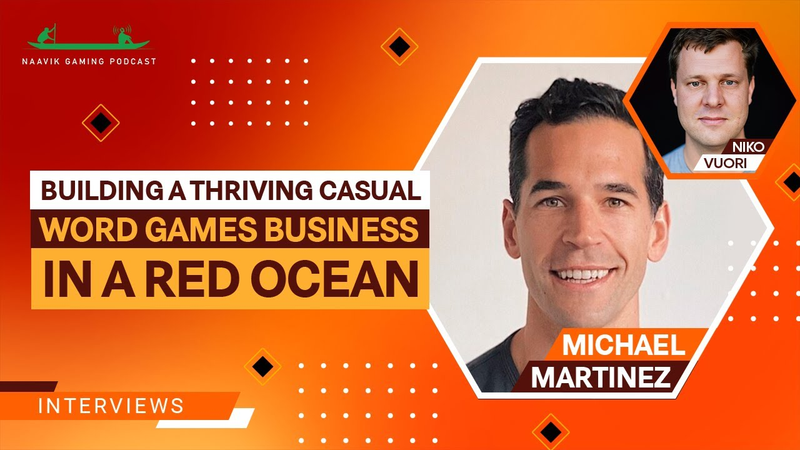
experience. In other words, you can maximize engagement, retention, and monetization through real-time segmentation and targeted offers, and you can run live ops campaigns with AB testing, push notifications, in-app messaging, and much more. To discover how CleverTap Gaming can best serve your games team, simply visit clevertap.com/gaming or check out the details in the show notes. And with that, let's jump into the episode. Hello, and welcome to the Naavik Gaming podcast. I'm your host, Nico Vory. Today, we have a great episode for you. We are talking about casual word games and how to succeed in what is of course a very crowded, very red ocean category that is hard to monetize, and therefore is even harder to do UA for, especially in the post-IDFA apocalyptic hellscape we now live in. And if of course, if you're the New York Times, it's all very well and good. You've got Wordle, you've got Connections, you've got Strands, you've got the ability to deliver instantaneous and massive cross promo on an industrial scale. And of course, if you want to hear how
the Times is growing their business, uh their games business, check out the episode I did with Jonathan Knight very recently, the head of New York Times Games. That was just a couple of weeks ago. Really great conversation. Check it out. Link in the show notes. But, what if you're not the New York Times? What if you are a mere mortal game developer with normal resources and the same handicaps that every other mere mortal game developer faces in the app stores? How do you build, monetize, and scale casual word and puzzle games in a very competitive environment? To find out, I'm very excited to welcome to the pod Michael Martinez, another former Zynga colleague and the founder and CEO of FunCraft, which is a developer of casual word and puzzle games. FunCraft has seen a lot of success with their growing portfolio of games. And to learn how you can still, to this day, build a real business in this category in the app stores, I'm really looking forward to this conversation. So, Michael, without further ado, welcome to the pod. Thanks so much for having me, Nika. Nice to see you. Awesome. Awesome. Yeah, great to see you as well.
Uh with that out of the way, let's get right into the episode. So, Michael, I always like to start with a background on our guest, especially folks like yourself who's been around the block a few times, both, you know, in the industry at big companies like EA and Zynga, and of course as a founder and entrepreneur several times over. So, why don't you tell us a little bit about your background um and uh your journey through the gaming industry? Absolutely. So, I've been in the gaming industry for over 15 years now. Um started at Zynga as a product manager back in 2009. Those were the days. The yes, very early days. Um met Jason McGurk there, who is my uh this is the second company that we've uh started together. And best engineer I've ever worked with. Um so, we worked together there, did 3 years there. Company grew from 150 people to I think 4,000. IPO. Three and a thousand I think. 3 and 1/2 thousand at peak. Yeah, I I I know this very well cuz I was there at It was crazy. It was totally crazy.
Um then we left uh to start Juice Box Games. Did that for 3 and 1/2 years making mobile mid-core games venture-backed. Um and then in 2016 uh we shut down Juice Box. I went to Electronic Arts. Was the general manager of a studio there. Um launched Command & Conquer Rivals with a a great and and quite large 80-person team. And then I left in 2019. Jason and I had been talking for a while and we decided that we were crazy enough to do it again and to try. So we've been doing FunCraft now for almost 5 years, which is my longest stint at a gaming company. Um which is pretty pretty wild. Awesome. Well, and congratulations on that journey and so very similar journey to to mine and you and I share a lot in common and a lot of folks including working with Jason McGurk. Uh he was studio CTO of FrontierVille when I first got going at Zynga and fun fact for those who don't know Jason McGurk. He
really is an amazing engineer, truly amazing. And he's the only person I think I know at Zynga in all of those 3 and 1/2 thousand people who had a verb named after his last name. To McGurk something was legendary. It was basically him hot fixing something at midnight in the middle of the night uh in a way that only he literally only he could do. Uh so good congratulations for landing him as your your co-founder CTO. He is a phenomenal asset to to any team. We're lucky. I'm lucky to work with him for sure. Yeah. All right. Well, let's talk about FunCraft then. Uh we're going to talk about uh many aspects of of what you just uh talked about there your journey, but we're going to start with FunCraft obviously your current company 5 years there. What do you do? What kinds of games are you putting out? So FunCraft I Oh, so FunCraft what we do. We make daily ritual word games. Uh we have uh three games that are working really well right now. Um but it's classic gameplay, really simple gameplay, brings players back. We want to make daily rituals for players. And what kinds of games do you have? I think you've got three that are doing very well at the moment. I'm presuming you've had a lot more that you've either launched or canned or thought about
launching and didn't launch. I know your approach is to kind of take a lot of shots on goal. So talk more about that. Totally. So we have three games that are are how we think about games. We classify things into businesses that are over 25 K a day. Then we have games that are in soft launch that we are testing and trying to turn into businesses. And then we have games that we're working on in development and games that are on the road map, backlog of games that we want to make in the future. So the three games that we have right now, one is Wordgrams, that is our first game, just turned three years old. This unique take on crossword games. It's a turn-based crossword game. And then we have Dice Yahtzee, which is a a unique take, I'm going to say unique a lot. It's a unique take on it's combining anagrams and and Yahtzee-style gameplay where you have to fill up slots. Then we have a third game, Dice Words, that is
some variations on on Word Yahtzee. Fantastic. And any other games that are in soft launch or that you care to mention here in conjunction with those three? We have so many. So we have our first non-game non-word game that is showing some signs of life. This is a game called Dice Yahtzee. That game's doing well. We have two titles right now that are about to begin uh soft launch. One is a trivia game called Trivia Tower. And then we have a yet to be named other word game variants. And I think it's something for our team, it's so confusing because we have all these names. Word Grams, Dice Words, Word Yatzy, Dice Yatzy, just this mix. Just put one of these words wherever you want it, and that'll be the new name of the game. Well, at least it keeps it simple in some ways. So, I guess Some ways, yeah. In some ways confusing and confusing in others. Um at some point you're going to have enough games that you're going to run
out of combinations of those words, by the way. At some point, yeah. You're going to have to beauty of the App Store is you can just keep appending names. So, it could be Dice Words, Word Games, Word Grams, Fun Yatzy, Word Puzzle, Brain Training. Daily ritual. There you go. Love it. All right. Okay. Uh so, joking aside, so you know, this is a real business, right? Uh you know, you've been at this Yeah, you've been at this for for 5 years now. Uh and I want to start Word Grams cuz that's kind of your your kind of breakthrough game. Uh happy birthday, by the way, 3 years old, it sounds like recently. Um I know it's doing real numbers, but it took you a while to get there. Uh so, talk us a little bit about the kind of the Word Grams story and how you went from starting the company 5 years ago, launching the game, sounds like 2 years after that. That's a long time between founding a company and actually, uh you know, getting a a real product out there, so to speak. And then to where you are now, all the lessons that you've learned along the way. Right, right. So, I think um it starts with why we started the company and our
approach to game making, what we wanted to do with FunCraft. Um we knew when we start So, the reason we started it is being at these larger companies, we just continue to think there is opportunity. There's so much opportunity in the game space. There was then, there continues to be now. The most important thing is for a studio to move very, very fast. To and for an effective senior studio to do great work, just unleash that great team and that great work. So, that's what we believed in. We think that we can do it um growing working very quickly and shipping a lot. Um we also thought and think that there is a necessity to grow a game. And I know it's obvious, you grow a game from zero to 10K, then 20K, etc., etc., etc. Um, but you don't start with a hundred million dollar a day game, or a hundred million a year game. It takes you a long time to get there. So, we knew that we were going to grow these games gradually, and they were going to continue to uh to steamroll and
stack. Um, so when we started the company, we wanted to make smaller games and innovate on or bring in more social, more live ops, um, and we were really inspired by two games, Wordscapes and Toon Blast. Those were two games that they're incredibly simple, um, but were able to break through in these crowded markets and and build really outstanding businesses. And sustain, I think, if I may. Because, I mean, Wordscapes to this day is is one of the top word games. My kids play it. Absolutely. I play it. Uh, I've been playing it for years now. Um, so, you know, my kids kids' friends play it. So, it's just it it's a great example of something that's incredibly simple, deceptively simple, and yet it's able to sustain incredibly well over a very long period of time. So, that that's an interesting uh so, great inspiration, I guess. And I'm I'm looking forward to digging into that. It's it's a obvi- like a one of the best games, um, and has some of the longest legs, really well-run team, well-run
game. It's it's uh an inspiration to us, for sure. And that's what we see as in the word space, there is we know we can get bigger because we have several examples of massive businesses that yes, were big and we continue to grow, but we know that we can keep getting uh better and bigger, um, which is exciting for us. So, when we started out, we actually we were more more focused on these smaller games, and one of the things that we wanted to do is have many games out, um, to find that one game that would turn into a business. So, absolutely, the more shots on goals. I really think that a game either works or it doesn't. And you need to find that game and get it out into the marketplace to find out with real players as soon as possible. Um so, we put many games. We explored different development models. Um we did raise money from Play Ventures, uh a seed round and that allowed us to go after this. Um we worked with some outsourced
partners to develop different titles. And we had this game Word Grams that we had made. And at the beginning all these games are pretty small. It's like when you're spending $500 a day on marketing, that feels like a big deal that adds up for a month. Um and we went on to another game. We got some featuring from Google. We made this um merge uh tower defense-style game that actually had great metrics um with the help of featuring from Google. So, we put our attention on that. And then once the free installs went away and we tried to do UA on it, we realized that it wasn't that great of a business. And then we looked back at Word Grams and it was just steadily trucking along with great retention. So, the DAU was growing. We were able to spend more and that's when we thought, "Hey, let's put let's put more attention here." And now that obviously that there's a there's a lesson there. There's probably several lessons there and I think that brings me on to my next question which is and something I really appreciate by
you by the way, Michael, is that you're very transparent and very open on LinkedIn in particular. If you're not following Michael on LinkedIn, you really should. He he writes great stuff. Not too much, not too long, but right to the point. Very metrics-driven, a lot of data, a lot of uh transparency around the business which I really really appreciate. And we're going to talk a lot more about numbers later on this episode. Um but one post that I I saw recently and part of the reason why I wanted to reach out to you and and have you on this uh on the the is that uh you know, you said it took you over two years to get Word Grams to $30,000 a day. And by the way, I really love the fact that you measure revenue on a per day basis, not like the big studios that do quarterly. I'm exactly the same, like you're only as good as your last revenue day, right? You're only as good as yesterday, and who knows what's going to happen today, right? So, 30,000 a day, great, fantastic that you got there. But then what you said is you've got your other two games that you've mentioned, Word Yahtzee and Dice Words, they hit $30,000 a day in 95 days and 30 days, respectively. So, that's huge, that's amazing, obviously. Tell me more about how you were able to do that, and
what did you learn from Word Grams? Like why did some ways rude question here, but what took you so long? Yeah. You know what I mean? It's hard. It was It was a It was a hard long slog to get Word Grams to where it was. So, I think there's a few different ways to answer that. One is it took us a while to build the amazing team that we have that can support Word Grams and multiple games. So, one is team and I can go into that a little bit more depth. And then the second is building out a lot of our processes. So, how we approach growing a game, testing a game, knowing what good looks like, and having that historical information. And then the third is just how FunCraft we us figuring out how we operate the company, that we have different engines that are powering the growth of our game. So, there's the game creation itself. There's all the experimentation with features. There's all the AB testing.
And we're very Jason and I felt very good and comfortable with that from from Zynga and from our prior experience. We can do that, we know all the systems, that's pretty straightforward. The two new pieces that we really had to learn at FunCraft are ad monetization and user acquisition to become really excellent at those. So, on the ad monetization side, we had never made a game that is ad monetized before. Our games now are 80% ad monetization and 15% IP, 5% subscription. But, it took us a while to get good at that and understand how to think about it and improve our ARPDAU numbers. And then the third is user acquisition, which is this whole other beast. Like you said at the beginning about what New York Times is able to do, a huge admirer of them, of course. But, we are in a totally different boat. We have to pay for almost every
single install. If we get an organic install, we're thrilled about it. So, we have to make sure our business work, grind it out and make sure that we are able to grow it in that way. And we we've been able to prove that and continue to able to do that. So, I think that's kind of a that's a bit of the long answer. But, putting all of those pieces together, once we had those in place with Word Grams, and we actually spent at one point, we spent over a year only focused on Word Grams. We decided, "Hey, these other games have have not borne fruit. Let's see what we can do just by really grinding Word Grams." The tricky part is when a game is small and you're making 5, 10K a day, sometimes it takes a while for experiments to bear fruit because the DAU is relatively smaller. As we started growing and growing, we were able to accelerate our learnings quite a bit, which has been so helpful
for us. And there was a certain point where we realized, "Hey, we actually now that the game is $30,000 a day, we can make more improvements by spending 10% more on UA or improving our ad monetization. And our our focus shifted as a company from the game metrics focus. We still improve there, but really getting that much better at ad monetization and user acquisition. Um and that's something it's just like we try and focus on the biggest levers for our company. And once you got to this size, we realized that that those were the bigger levers. As you're growing the game, too, now we have all this historical historical data with Word Grams. We know what good looks like. We know what our metrics are. We do so much competitive analysis and trying to figure out what different games metrics are and what it takes to succeed. What are the benchmarks you need to have. But all of those metrics are so tricky
because retention is so heavily impacted by the types of uh user acquisition campaigns you do. If you want 60% D1 retention or 40% D7, I can give that to you, but I just need to pay a lot more for those users. And maybe it's not profitable, but I can deliver 40% D7 retention. So every number is like you have to take with a grain of salt. Are we talking about US? Are we talking about which users? All of these things. And you can really only rely on your own data. Once we had enough with Word Grams, we were able to pattern match and say, "Okay, when we launched Word Yahtzee, our play time is not yet up to snuff. Um ad seen not yet up to snuff. Retention is better. Okay, cool. We can work with this. So we could massage the numbers, is to do more um focused experiments and and get those to the place where this game has the uh the profile of a winner like Word Grams,
let's invest. And we can be more confident in the paybacks that it will invest or it will pay back in a similar way. So it's really it's it's a chase for data. Like the more data you have, the more and the more comfortable you can be making really big massive decisions in your budgets. Yeah. I mean, this as you speak, it's just so reminiscent of of the experience that I and you know, my equivalent of Jason McGrady Corey Johnson is my long-time co-founder CTO. Very similar experience with with Rocket Games, which are social casino games back in you know, the the mid-2010s. We sold our company in 2016, but it was exactly the same experience. Yeah. I mean, if any entrepreneur out there or gaming entrepreneur out there is listening like this is real. Like this is real stuff. Um You just you have to rely on your own data. You're building up very very slowly. Every day is like a little bit better hopefully than the previous day. Every dollar is like you're only as good as your your yesterday. And then once you see something that's better than what you've had before and
you launch a product that's clearly outperforming the previous ones, you can with confidence start to invest in something that is going to bear fruit further down the line. And I mean, my personal experience was exactly the same. It was like I'd spend 500 like when we finally unlocked paid user acquisition, I spent $500 and I was like, "Oh my god, I'm so scared." Like Like what's going to happen? And then I was like, "Oh like I'm returning that money back in like at least according to Facebook at that time, that's where we were spending most of our money. We're returning that in a day. Like we have really high quality." He's like, "Okay, maybe I'll spend a thousand. Maybe I'll spend five thousand." And before you know it, you're like spending, you know, a couple of million. I think our biggest month was like two and a half million dollars in a month and you're just like, "Okay, I guess this is paying back in like six to nine months, right?" But it is it is really remarkable how you do need to take that. It's not a leap of faith anymore because at that point you've got the data, right? And And then that is exactly what I think any any gaming entrepreneur needs to understand is like you have to have the data in order to actually make real decisions because you're going to have to take that it's not a leap of faith at that point. It's a leap of right data.
Yeah. Like a better phrase. So, really interesting that you had a very similar experience to to us and and I honestly anybody listening really this is this is real stuff and and this is definitely something that you should you listen to. And by the way, again, go follow Michael on LinkedIn. Like he he writes exactly in this vein. Like it's really data-driven stuff and I really appreciate it. Okay, so we're going to dig into the two pieces that you mentioned which I think are really interesting and and the things that you realized you had to to learn to become better at. So, ad monetization and then user acquisition and understanding LTVs from the data like we just mentioned. Let's go into the ad monetization piece. So, post-IDFA like it's hard to monetize it's obviously hard to do UA, but it's even harder if you're mostly ad-driven, right? And you're saying 80% of your revenue is coming from ad revenue. So, what are you doing? How did you get so good at ad monetization? What's your stack? What's your mediation layer? Like the more data, the more information, the better here. Yeah, right. Um well, one thing just on the IDFA one thing for it's like the two major changes that have happened in gaming
over the last I don't know 4 years are probably pandemic and IDFA. And unfortunately for us or fortunately, I don't know. We were so early so we started in 2019 that we didn't really we didn't have a before to compare the post-pandemic bump to. We because we were so early, we were still growing so it was almost sort of normal. And similar with IDFA, we were at the beginning of our journey so we didn't have too much of a uh of a of a crippling effect from that. Um it's more of that's just the world that we'd operated in for FunCraft that it was a challenge that we had to had to solve out. Um one thing I would say and I'll say about how it affects games and we feel like we're fortunate about this. My understanding of the IDFA is it is making it very hard to target specific high-value users. So, if you have a a
generalist game or a generalist category and word is certainly one of those, these evergreen categories, um it makes it a little easier to be able to find users and be able to to grow them. And we've seen that on the ARPDAU side, on the ad monetization side for ourselves. Um we've been steadily growing our ARPDAUs. Uh we in in the US, we are it's like 50 or 60 cents at ARPDAUs. Our team is That's good. really, really good. It's really good. It's incredible. We've been growing that over time. Um we use AppLovin for mediation. We switched to them in January of 2021 or excuse me, the in the fall of 2021 and they've been a a great partner for us. My my presumption is, Michael, that none of that came to happen overnight. Uh this was probably a a journey. Certainly, that was my experience with with Rocket Games. Like we would start with one ad network and then we'd pair
it on another and then we'd try to do our own mediation and then we'd try some partner and that wouldn't work out and then we'd switch to something else and that wouldn't work out and then you've got your waterfall and and then it gets really complicated because then you're not quite sure what's working and what's not. That's part of that layer. So, tell me a little bit about it sounds like you've had something in place now for the better part of 3 years. Um Right. How are you obviously it's working, but how are you confident that that is the right stack for you given that you haven't sounds like you haven't maybe made huge changes for the last 3 years. Like this stuff is very dynamic. Like one network will work and then suddenly it'll stop working, right? And then another one will come online and like, "Oh my god, this is going to be amazing." And then suddenly you can't scale beyond a certain amount, right? So, that's that's kind of how I'm I'm curious to hear how how are you monitoring and measuring and improving the stack with time? Early on, what we were really focused on um is the the basics of it and put it in place. So, this is just the percent of users viewing each type of ad, and then
um interstitials, art rewarded videos, banners, all of those. Um and then improving each one. Um for us in Word Grams, one of the things we saw early on with that game, that the most important metric for us, when we started to focus on that, it really drove the business, was turns played. So, if we get players to play longer, play more turns, they will have more opportunities to watch ads, and that really helped us in terms of, okay, they're very highly correlated, and lots of great metrics. If you improve retention, you're going to have more turns played. Like, all these things are connected, but really just improving turns played allowed us to simplify things and and grow the business, like providing some clarity for us. On the ad side, our team there have been changes in the industry as well over the last few years that changed their ability to uh have some control. So, there's been a move towards bidding.
Um things are things absolutely are always changing. We're on unsteady ground, for sure, and I think it's our team's ability to keep adapting and to always be be trying things. So, that I mean, that's what we that's how we pride ourselves, just always trying. There's always a test running. We have a lot of games that there are ability to test things, and then taking the learnings from one game, if it works somewhere else, um taking it out to the others as quickly as possible. Nice. Uh okay, so that's the ad monetization piece. So, 50 to 70 cents, like ARPDAU, that's that's crazy high. Um that's very impressive. That then obviously allows you to do the UA side of things as well, right? And so, you can start to measure LTV and do your CAC versus LTV calculations. So, let's flip to that then now and say, okay, when was the moment when you realized, let's go back in history here, that you could actually start spending profitably on UA against an ad-based LTV, which is really impressive. One of the things you
mentioned on LinkedIn not that long ago again was that you're actually spending 2 million on UA and I believe that's on a per month basis at the moment. That's on a per month. So, you know, you've unlocked LTV from ad monetization, which is impressive and and somewhat unusual, not unheard of, but somewhat unusual to to be able to do that. So, tell me a little bit about how you how you've kind of when you un when you cracked the nut. When did you crack the nut on UA where you could see, okay, this is going to work. We are going to be able to spend profitably on on ads against an ad-based LTV. Yep. I think I mean, we we first realized this I guess it's three and a half years ago in the or three years ago in the in the early days of Word Grams. And I just looked back and I saw a a January 1st email from 2022 celebrating celebrating it was like 15K a day in
terms of revenue. We were so thrilled about that. And I know when I wrote that, I was so excited like, "Oh my gosh, I can't believe we achieved this. This is great." And now we are just able to we we just have continued to grow it and we've continued to with multiple games, with the improvements of games, getting more and more comfortable and confident. And with all of these improvements and it just takes time to be able to increase the scale of our business and we're seeing this growth accelerate now. So, I think it's something where just like your example with Rocket and I mean, we're going through that right now where when we spent $500 a day, that was terrifying. And then we're spending 5,000, 15. Takes a while to go there. At the same time, you need the game's metrics to support it. So, oftentimes there are uh of course, when you increase your spend, the CPI goes up a bit, and then you need better game performance to be able to merit that
higher CPI to access that higher scale. Um and that's what we've been able to achieve with our games. Um but there are it feels like there are ceilings that we need to break through. And once we do, we unlock these new periods of growth. Um and it's just like looking at our overall revenue from or yeah, our daily revenue from 2021 to now, it's this beautiful curve. It's so nice to look at. Sometimes, as a team, we just check it out. That it's there it's it's going and it's increasing. Like the scale the the pace of its uh growth is is continues to to increase. So, that's what's so comforting to see. And I guess it's just like if like all of that hard all of that grinding is what put us in this position. Yeah. I it's a it's a wonderful feeling when when that, you know, you go from like that pretty flat line and, you know, you're there there's something there there's a little business and then you suddenly start to grow and then you see it accelerate. Uh uh
Right. On on user acquisition, sorry, that the the most important tool and the most important number for us is return on ad spend. Mhm. That is what we care about most. Um not CPI, not LTV, not retention. It is for a specific campaign, when we spend a dollar today or a hundred thousand dollars, are we when are we going to get that money back? Are we going to get that money back? So, we have this really excellent report that um we've put together, and it is the the lifeblood of our team. It's the one we're all checking out, ad monetization, product, data and analysts, um user acquisition team, where we are able to predict at three days and then at seven days what the payback is going to look like. And we're able to slice it all these different ways. It's a um super powerful tool for us and that is the uh the crystal ball that allows us to make decisions and say, "Yes, keep going
here. Slow down on this network there." Um and and so that that's been building that tool, continuing to refine that tool, and it takes a lot of work to be able to do that. Is is what allows us to make these decisions. Yeah, you know, this this tool that measures ROAS, again, very reminiscent of uh the Rocket days. Um I I built the first version of that. Um I'm actually very curious to geek out a little bit on on your your model, but uh the one that I built was based on something that uh Eric Seufert had put together. Uh Mobile Dev Memo, I don't know if you're familiar with his work, but uh he does a lot of writing on um you know, ads and uh the mobile industry and uh you know, games and uh he had built this really cool spreadsheet, which I copied, uh borrowed, shall we say? Uh shout out to Eric if he's listening. Um and modified it to our own use and it was exactly the same kind of model where it's like, "Okay, after 3 days, this is what it looks like. After 7 days, this is what it looks like. After, you know, 14 days, this is what it looks like." Um and and it was pretty pretty It was very powerful uh once we got it refined to a
point where we could be like and we could look at it by different channel. Like, we're spending on Facebook, that's it's got a certain kind of look. If we're spending on Google, it's got a certain kind of look. You know, similar, but you know, like usually different you know, scale up or down depending on the quality uh of the users. So, tell me a little bit more. I I would love to geek out a little bit on how you built this this tool, how you built this model, um what was it based on and kind of what are the core key inputs into this model uh to allow you to make such great uh decisions. So, there definitely are some there's machine learning magic involved. Oh. So, we So, we've been doing that for 3 years. We should We should we'll pitch on that. Um but it's been a We We put in all the all the metrics that you think would matter. Give it retention, play time, turns played, ad seen, all of those things and and many more. Um how it actually works, who knows? The key though is just for us to give it more and more data. Just like Apple 11 and all the networks, they always say,
"Hey, if you just spend a little bit extra, then our algorithm will learn and we can spend it more profitably." Um we need to get more data into from our games to understand how they're going to perform. When we launch a new title, we don't have lengthy predictions for a while specific to that game, but we are able to pattern match against uh the other games that we already have in our portfolio. So, we're pretty comfortable with with what we see early on. Nice. Nice. And uh how big's your UA team? Who's running this um this In fact, how big is your company? Let's talk a little bit about uh how you guys are structured. Right. So, we are a a lean 14 Amazing. Um senior folks around the world. We have uh two on our user acquisition team, two on our ad monetization team. Uh yeah. I mean, that's that's spectacular. 14 and you're you're almost at a 50 million a year revenue run rate. I think you just celebrated a $100,000
day not that long ago. So, I mean, listeners, this is 30 35 million 35 million Yeah. All right. All right. I'm rounding it up a little bit. You got to round up a little bit. Thank you. Don't be Don't be so Don't be so coy about this. Uh you'll be you'll be there in no time at all. But yeah, I mean, listeners, like this is this is why we love gaming, right? Like this is what's possible. It's still possible with a you know, small 14-person lean senior team to be doing something as spectacular as you know, 35, sure. But let's round it up to the 50 again million a year revenue run rate. Um so, yeah, it's it's uh it is remarkable and there's still opportunity uh to this day despite the fact that everybody says it's it's really crowded. Um Right. But uh I do want to talk a little bit about I'm going to change gears just a tiny bit. It's related but it's it's kind of going back in time a little bit. Um Juice Box, um you know, you and Jason McGurk you you founded that company and you very I think in those days you were going after a single product, right? It was a mid-core game. Yes. I know you you tried to pivot out of that at some point once you realized it wasn't working and then you were very
public again on LinkedIn writing about like what worked, what didn't, um you know, the learnings, lessons learned from the failure of Juice Box games. And I really again really appreciate that. We don't do that nearly enough as an industry. Um most games fail, most game companies fail, we know that, it's very hits-driven. And so for you to kind of go out there and talk about that was was highly appreciated and I still remember a lot of the posts you put out there. But it brings me to to a question. You were then going after a higher monetizing genre which is mid-core and then you decided Presumably. learned some lessons there like, okay, yes, it does monetize quite well but it's hard to grow. And then you went after something that monetizes not at all which is like, you know, except for ads which is you know, casual puzzle games. So, you know, make that connection for me. Like how do you go from from that experience with a higher monetizing game and that didn't work out to Yeah. a lower monetizing game um and then succeed. It's remarkable. Yeah. Yeah. So, I think uh two big takeaways from us from for us from Juice
Box. One was just this idea of betting everything on a single game is not something I want to do. Um I did that similarly at Electronic Arts as well with that studio. That was the mandate for for us to make that game. But it is just so challenging because you built this great competence as a team and then if it doesn't work out what's next? Um and I I I also think just looking back on games that have succeeded, we're always looking at these massive franchises now of what they are, but if you look at what they started with, they are so indifferent and and so much smaller in their early days. So, one is we wanted to make sure that we were not betting the game the company on a on a single game. That's number one. Um and that kind of led us to, okay, if we're going to do that, we have to make smaller games. We don't want to be making games that take at least 1 year to launch.
Um so that leads you to simpler gameplay, um taking some design risk out of the game. Uh and that's been really fruitful for us with with FunCraft. The The second learning was let's not go against these super crowded areas. And I I know where games are crowded now, it felt slightly less so then, but if you are going against like when we made um RPGs, that's a you're playing with the big boys there. So, how are you going to be better than them? What are you better at? Is it production values? Probably not. Is it uh marketing capabilities? I doubt it if you're a startup. So, I think you need to have some thought about what what why you think why are you crazy enough to think that you can succeed. What are you going to be doing better than this, folks? At if you if you at EA, we made a game
that was adjacent to Clash Royale. It's like that's that's tough to beat. You're not going to beat Clash Royale gameplay. Um so I think that was really we wanted to make sure that we were doing something where we felt there was a pocket for us to find some business traction, some revenue traction, and be able to to keep growing on top of that. Hm, interesting. I I think that's a great insight. I mean, it's a very similar to our Rocket approach as well. It was like launch launch early, launch often, get the learnings, you know, don't dwell too much. If it doesn't work out, it doesn't work out. You still learn something, don't do that again, kind of thing, right? Um, and and onwards and upwards and it kind of layers on top. I mean, this is not again, this is not you know, no offense intended here, but like this is stuff that has been known for a really long time. I mean, Rovio famously, you know, Angry Birds was one of the first kind of hit games in the App Store like, you know, back in the early day in terms of at least in terms of user traction. And I mean, they famously launched like 36 or 37 versions of, you know, birds flinging at pigs
kind of gameplay until they finally hit on something that that worked. You know, with Rocket, we had a very similar experience. We launched, I think, 20-something, you know, casual slots games until we had Wheel of Slots Vegas, which was our hit game and, you know, head and shoulders above anything else. So, um, you know, great insight, but I think still highly relevant to this day. I think a Totally. do forget that and they're like, "Okay, we're going to bet the company. Like, we have to be so much better than everyone else. We're going to invest 2 years in making this game." And that generally tends not to work. The market moves so so quickly these days still. Um, you know, and and 2 years, if you're waiting a year or 2 years to launch something, um, no matter how polished it is, like the market will have moved and somebody else will have beaten you to the punch or the taste will have changed. So, that I think there's just a lot of risk and and time. Yeah. I think um hyper-casual as a a business model and approach to making games, it's been something that's been ins- I know they get a bad rap, but I I think it's really inspiring what they do and trying to learn what about them has
allowed them to be successful. Uh, and it's this classic There's just I mean, people just want gameplay. And if you can deliver it to them, their how fast they are is astounding to me. And their ability to scale games so quickly, I am absolutely impressed by and and we try and learn from them. So, I think like we we really really really value speed uh and try and be fast, but we know we can be faster. That's what we try try and do. Yeah, I I think, you know, your note about speed is is so so uh important. I think that is probably the one thing that a startup does have that is an advantage over anybody else, any incumbent, whether it be in any genre. And I think that brings me to my next question, which is, you know, you've got a fairly lean team. You mentioned it. Very small team, I would say. More so even than lean. Um how fast are you able to launch games, you know, from concept to finish? Let's talk a little bit about your green light process for
thinking about, "Okay, what might work?" Who decides? How long does it take? Like how long does it spend in various phases um before you actually get it to market and at least to soft launch? I want to hear all about your process because I think, again, that is the one thing that startups have. Like if you've got a really great process for moving quickly and autonomously and not having a lot of layers of management, um pardon my French, you can you can compete, you can succeed, and you can win against the incumbents. Right. Right. I I think one of the challenges of it you were talking earlier about not taking it personally, you need to have really thick skin with these games where and it's this challenge because you want to you need the team to care a lot about it to make the game matter, to have the game be good and polished and beautiful and have it react in a beautiful like in a wonderful way. That matters. Absolutely. Of course it does. At the same time, you need to do it quickly enough that if it doesn't work, you don't keep going down that path. Knowing
when to cut your losses or move on to the next game, and that's okay. Just like most features don't work, most games don't work. Everything is a power law distribution. So, finding a way to find the things that work, like that's that's the the pursuit. So, in terms of how we build games quickly and and how that's evolved for us, it it starts with Jason. So, he's built so many systems so many times. Um he built ExampleCraft for us, and this is something that it has all the great features of our games. Um and it's the framework. So, whenever we start a new game, we start it from ExampleCraft. Mhm. We built uh one of our engineers, Nate, Word Yahtzee in 2 months. Um now, I think we're down to 4 to 5 weeks for a new title with a single engineer. Um and that and feels great. There was one hilarious experience a few months ago where we were having our weekly stand-up, and
someone asked about a title, and I was like, "Oh, that game's done already." I was like, "What? We Where did that game get ready to be spotlighted? I I didn't realize we kicked it off." So, our team is our team is quick. They're able to get games out, and then it starts the process of okay, we need to do some marketing on it, bring users in, make sure it's make sure it's it's okay, tech launch, and then we go from there. Yeah, yeah. Uh what does live ops then look like uh with with relatively small team and now growing portfolio of games that that matter? I mean, at least it sounds like you got three that you definitely are going to be investing in given the revenue levels you're making. How do you support live ops with such a such a a slim team? Yep, and this is also similar to what This is what ExampleCraft powers and allows for us. With our first game, WordGrams, while we were focusing on that game for just 1 year, we um launched over 300 experiments on that
title. That's the last time we counted. I'm sure it's many, many more than that now. But, so we had these 300 experiments, and we had the biggest winners from those. So, now what we're what we did with Word Yahtzee and then Dice Words is we took those highest-performing features first and experimented them with Dice Yahtzee or Word Yahtzee, excuse me. And it worked. Those features worked. It was great to see that, great to see our experimentation framework work. Um now that we know those work, if we have a game that works, we just put them in because we know they are uh we know they're successful. We don't need to spend time experimenting, we know they're good. Sorry, are those the golden mechanics that uh Mark Pincus used to talk about? Did you finally figure out how to how to build the golden mechanic that we searched for so long? Many of the golden mechanics, but again, are no that's not rocket science to figure this out. Every game has them, but to build them in a way that is templateized, and it's it's really straightforward. Like they they work. Um
we have some challenge features that work really well, and they're always effective. Um they they increase turns played, they increase games played. Um and then they are structured, these events, um in a way that we can schedule them over time to have gameplay feel new. What about content? I mean, content is always the the key. It's all very well and good to launch these features, like, you know, challenge features, social features, what have you. Those are I mean, they're not one and done, but you know, they're more one and done than than content. But content is a treadmill, right? We we know that so well. Every game developer knows that. Uh I mean, for word game, I mean, the reason Words With Friends is is still, you know, chugging along after all these years is because they just have an incredible content cadence, and it's quality content. It's not just like they're just not slapping some levels out there, you know, like it's good stuff, right? And they they feels the balance of the difficulty versus the progression feels really good. Uh you must have some version of that internally as well. How do you keep the content going at the same time as doing all this other stuff? So, that's part of the the game kickoff process. Um with Word Grams, that is a
unique Say that word again. That is a How we assembled those puzzles was a challenge at first, and it was a big investment in building all of that content for ourselves. We continue to add to it, but we feel like you we've established the framework for it, and now we can That's almost on on rails for us. And the other games as well, Word Yahtzee, there's a lot of tuning to figure out what is the right letter distribution for proper and satisfying gameplay. Once that's in place, we can we can go with that. I think for us, we don't play the content game, and it's partially because of genre choice, but we don't play the content game in the same way that we did at Zynga with builders and all of these things. We have different events that themed, they are seasonal, and there's art asset changes that go along with that. But we we really try
and set things up in a in a set and forget-it way. That said, certainly if Moon Active started operating our games and put a 150-person team on it, I'm I'm I wouldn't be surprised if they could drive a lot drive more to the business with a 150-person team, just like they've done with Travel Town. So I think it is possible to do that, but we we actively choose to not go down that path. Yeah, yeah. No, that makes sense. Now, that's obviously a very different approach to you know, the the New York Times, which is obviously we both admire. I'm hooked on their games, as I'm I'm sure you are. You know, they Jonathan Knight on the on the pod just a couple of weeks ago, he was talking about it's very human-driven, right? It's everything is curated by a almost like a single human being, right? So and you know them by name. It's Lena Wu for Connections, and Tracy Bennett, yes, is the editor of Wordle, Lena Woo Disconnections. And I think the New York Times' approach is,
you know, per Jonathan Knight, is it's very much a human being does that. It's a connection they make on that day through the editor to the player, and it's a one-day thing only, right? And you only get that one level. Again, very different approach to yours, not a right or wrong approach, but just a very different approach. I'm curious to hear, how do you think about that human connection? Um is it more about the connection between players, the social, the competition? Um having a a system that's on rails is great in that a human doesn't have to touch it very much or or spend a lot of time on it, but you do lose that human connection, at least a part of it. So, curious to hear your thoughts on how you balance those two uh concepts. I think it I think of it more as New York Times is its own special, amazing beast with this uh amazing history and pedigree that allows it to be what it is. And how they And it's unfair, and I think it's great for
them and how they are managing this, I am in awe of. I think it's awesome. I love their games. I love everything about what they're doing. I think it's really impressive. I think they are unique in the way that they can approach it that way. If we were to go down that path of investing in bespoke, highly curated content by master puzzle makers, I think we would have been dead 3 years ago, if not 4 years ago. Yeah, fair enough. So, it's what It's one of necessity. I think you said it better than I could, as well. What is different about our games is that they are turn-based games. And I think what we like about turn-based games is there is this feeling of social obligation and need to come back and a connection with the other player. So, that is something where we feel like that competition and gamesmanship and connection with the other player of
being able to have a a point of contact is is really powerful. Yeah, yeah. That's why we went down that path early on. totally makes sense. And as a startup, you you know, you've you've always got to uh this is the wrong phrase, cut corners, but you got to you got to be lean um in many places in order to actually survive as a company before you can then have the luxury of potentially doing something like the New York Times is doing cuz it is very much a luxury for sure. Uh I mean, I I noted with Jonathan Knight on the episode like you name me another company that is able to bundle a bunch of casual word games that are human curated into a subscription and build that into like a huge business that's almost rivaling the actual news business of the New York Times. Like I struggle to name another company that can do that. Um so, uh okay. Let's um let's talk a little bit about your remote culture. So, you have a fully remote company and you've got your Yep. small team, lean team, but you're spread
out all over the world. Talk to me a little bit about times like we're we're remote as well. It's got its pros and its cons. Yep. Um happy to dive into all the cons and the pros as well. How do you make it work? Why did you embrace the the remote model? I believe the company started pre-pandemic. So, you presumably either went remote after the pandemic or you actually started remote before the pandemic. You know, a lot of the good ideas come from meetings where you're in person and you're bouncing ideas around. That really does get lost in a remote um kind of structure. So, I'm curious to hear how you guys go about that and how do you retain that creative spark through Zoom calls, right? Uh so, we started right before the pandemic. Our first employee hire came into our WeWork for 1 week and then we haven't seen him since in person. No, we haven't seen him since in person, but not in the office. Our office got exploded, and then that put us down the path of remote work. Um it
starting to hire at the beginning of the pandemic. It is something I never would have conceived of before we started FunCraft, but it's been a real strength of ours. Uh we started our our our first major hire internationally was our head of product, uh Gonzalo Schwartz, who's based in Buenos Aires, and he is outstanding. He is so great. Once we hired him, he uh made some recommendations for other great people that he knows and worked with in Buenos Aires. So, we have a bit of a pod there. Um we have user acquisition people in um Spain and in Israel. We have ad monetization in the US and in Brazil. We have an engineer in Canada, um and some others in the US. Um I think it's something that had happened by necessity and it's really been able to work because we are senior. Like people know what they need
to do when we're talking about game creation, and I agree that's where it's most im- important to be able to talk to each other. We have been in the games industry long enough that we have a shared knowledge and language about what we're talking about. So, if we're saying, "Hey, we want to build this feature," we can just say, "We want to build this feature. It's like this from this other game." And that's it. And the game the the feature can begin development. There's it's very different from the early days in Zynga. I know you experienced this, too, where like we had to invent new systems, and you needed to spec them out and wireframe them in these season-long processes. I feel like game making is more modular now that you can say, "Okay, take this, take that, and we're going to put it together, and we know that it'll work or not." Being able to do that allows us to go faster, which again, we've talked about as being is so important. Um we do communicate, we have one standing meeting for the team, everyone together,
um Monday morning to kick off the week and recap what happened. Um that's very important for us to get together, talk about goals, talk about where we are. Um but that's it. I mean, it's a lot of Slack work. Mhm. And we make it work foremost because of trust. That's our core value that is the anchor and the foundation of everything. We know these are great people, we've gotten to know them, they're doing excellent work, and we really do trust them. Um I that independence and responsibility that we give people, that is I think appreciated by our our people. Um but it's also we need that independence and responsibility from them to be able to drive the business during the success that we have. So, we always I mean our our people are so good when they find something that is not working, that is not necessarily in their discipline, and raise their hand and say, "Hey, I think this is an
issue." That's when you know that your company is is working and is on the right path. Um so, I think it's just it's I mean this is something that we've built and emphasized over the last 5 years. Uh but I think it it it probably comes down to what Jason and I value, which is like shipping. Mhm. If we we getting things out the door, that's what matters. Talking about product, data, that's what matters. So, that's where our focus is, and we have selected people who like that approach, um and that's it's been this nice nice wheel for us. No, I mean, when you find great people that you enjoy working with, you know, uh, that's it's it's pretty special, right? Like it's it doesn't feel like work anymore. You know, especially having a great co-founder, you know, like you have in Jason, my co-founder Corey is kind of my version of Jason. Um, you know, when you work together for years and years and you have just enough
overlap in what you collectively do, but not so much overlap that you're stepping on each other's toes. Um, I you know, in this case it would be like you trying to do some engineering stuff would probably not be a great idea. With Jason in charge of that and and you know, maybe he shouldn't be doing uh, some of the the business related stuff or that stuff. Um, but having just that right amount of overlap where you're speaking the same language, you know, you have that shared DNA. Um, in your in both of our cases actually comes from from Zynga, right? We're all like Zynga folks. And so having that shared DNA and that those shared experiences and that that shared value and shipping early, shipping often, you know, moving fast, not letting perfect be the enemy of the good, you know, all that stuff that I'm pretty sure that you and I probably could geek out over for for hours and hours. Um, it's it's really special. So, uh, now the challenge does sometimes become how do you translate that to to, you know, new team members, especially ones that are being on board remotely? Yes, you mentioned that they're senior and that they know what they're doing and that, you know, game development has become more modularized, which I 100% agree with by the way. Like you can say,
I want a leaderboard feature. Okay, well, that's where I take the leaderboard feature from. You don't have to design it from scratch like, you know, we did in Final Fantasy II or or whatever. So, how do how do you do the onboarding piece? Cuz that's something that I still I still struggle with a little bit as a as a remote first company. Um, how do you bring somebody on board? I'll give you an example. We just onboarded three folks. Uh, they happened to be out of New York. Uh, and so me and Corey like hopped on a plane, we flew out there, we spent two days together, we didn't do any work stuff or like very a tiny bit of worky stuff, but mostly it was like, uh you know, our thing was being uh comfortably uncomfortable, which is kind of a startup thing. So, that was a theme. So, we went up to the the very tall tower. I forget the name of it now, and stood on the glass floor and looked down onto the city 100 stories below, and we went to the the Russian in uh bathhouse, you know, the East Village, which is from like the late 19th century. You know, we all had a sauna and freezing cold ice bath together. Like, things that are like you wouldn't normally do. We did that, but that doesn't scale very well. I don't know how many times we can
do that like once we're, you know, 10 people or 20 people or whatever. So, my long preamble here is how do you make that that onboarding piece work for you guys? Um once you've got the the the processes in place, you've got the Slack, you got the Zoom. There's a lot of tools that you can use, and like you say, your your team knows what they're doing. So, that's good. You can trust them. But, getting that initial like buy-in like into the vision of the company, how do you do that onboarding piece? I would say I don't know if we do it well. And this is a pit area where we need to get better at. Um I think we throw people into the deep end of the pool a a lot. Pro- maybe too much. And this is something I've been thinking about, how do we like obviously we bring someone on, we want to set them up for success. Right. Um but, I think it's important too for us to be honest with the way that we work, and we want people who can uh who can
swim in the deep end of the pool by themselves. So, it's a lit it's a bit um not like it's a a challenge for people or we're trying to weed people out, not at all. Like, we want everyone to succeed. Um but, we also need to be a team where people um that we don't change for a person. A person needs to be a fit for FunCraft. Yeah. And we may not be for everyone. Like we we don't do like Zoom drinks and stuff. We're not playing games over Zoom. That's not what we offer Yeah. or what we're interested in. Every I've gotten to know everyone on the team. I think they're all I just visited Argentina. Um met with the team last month. And met five people for the first time after working with them for a year to two years. And it was awesome and it was so nice cuz like I know these people. Of course I know these people. Um but with newer people it is a challenge and
making sure that on the onboarding process we are really clear about who we are so there are no surprises. Um and making sure that there is feedback um on how they're doing and they're providing feedback to us as well. I mean what I'm going to do after this call is I'm going to reach out to our most recent hire and ask him like how is it going? What could we be doing better? Cuz I know there's a lot we could be doing better. Um and I want to hear it from him. So it's it's it's a it's a challenge. Um I think one of the things we emphasize and try to ask for is of course when you are remote you need to communicate that much more. Like um like always err on the side of communication. So we ask for more, try and push people to to communicate more. It's hard because you don't it's not like an office space that you can see a group of three people having a conversation. I don't know if three different people are having those necessary conversations. Um but they are
and it's just a like it goes down to trust again. Um and and more like really emphasizing communication as much as possible. Yeah, it's it's tricky. It is tricky. I mean I had over communication. I mean that's what I say as well. Like I'm I I'm probably over communicate too much. Like I'm a stream of consciousness in some Slack channels. Um so but but I've told the team I said you know you you need to just communicate because that's the only way we're going to stay you know you don't have to read everything you can switch your notifications off if you if you don't want to be pinged all the time but but yeah put it out there like we record every Zoom call you know and then we use like a transcription AI tool that gives you all the points and all that and everybody gets those and so on and so forth. So even if you're not in a meeting you still have access to anything that that happened. So 100% agree with you. Last but one question for you. Any hiring mistakes along the way? I mean have you have you had any kind of regrettable hires that you then had to to let go? I'm always curious this is more for me and I'm sure listeners will appreciate too but I'm I'm always like
it's almost worse to hire the wrong person if you know what I mean than not hire somebody because you have the wrong person it can cause real problems with culture it can cause real problems with trust because people are like well I don't trust these guys to hire properly like everybody can see there's a problem. So obviously the best thing to do in those situations is to you know let them go quickly because it's not a good fit but it can still have especially early on some pretty negative impacts. So curious to hear have you had those situations over these last five years and if so what did you do and how did you learn from them? Just like most games don't work well I have to do a little different because I don't think most people don't work but most games don't work. A lot of features don't work. We shouldn't expect that all of the hires will work. Like of course that would be crazy. I mean it's there's all this research on interviews and there's different ways to research there's so much bias. It's a crap shoot whether someone actually work with the company or not. So I don't I don't think it's bad for
people to leave a company. Um It's totally fine and it's expected and try to do that as maturely and and and painlessly as possible and and to be give a honest feedback about when when it's going. One thing that we've done that has prevented this or or lessened it is sometimes when we bring people on and it doesn't work for all situations, but we begin it as a contract basis or a part-time basis as a test run. And that has been really successful for us that we work with someone we get an mutual to see if it's working both ways. And it helps us define what's working or what's not. I think we've worked with a lot of contractors on different parts of our business early on on product management and music acquisition on the ad monetization. Some of those end up working with us on
a project basis. Some have been long-term. Some it ends up not working or some we thank for your service and that's fine. Um so I think there's we've been okay with that. Um we haven't had to have any any layoffs or or firings or anything like that fortunately. Um but I don't think that's the worst thing in the world when that happens. Okay. Um no, I think that's that's a great answer and and yeah, there's no I don't think there's a there's a right or a wrong answer to that. And it just you know, you just got to move on quickly and uh that Right. I I ask this whenever I talk to somebody else who's who's running a remote, you know, gaming studio. I always ask this question selfishly because um it's something I need to get better at as well and we collectively like our company needs to get better at too. So appreciate the appreciate the answer there. Okay. trust your instincts and then one other hilarious thing just reminds me of we had one person interviewing with us one time and we told him that we would want
some overlap with our hours. He was in the UK and then he goes, well, I can't work these certain hours and I asked why not and he goes, because that's when my other full-time job is. And I was like, wait a little. What? You want to work two jobs? Okay, yeah. I just did not hire that person. Well, you trusted your is You trusted your instinct. Although, I think it's pretty pretty easy to trust your instinct on that one. Yeah. Fair enough. Fair enough. Okay, final question for all of our guests here, which is what three games are you playing at the moment or are you most excited by and you can't name your own. Okay. Um, one game that I I don't know how I found this. It's called Coffee Golf. Hm. And it's this very simple game golf. And I'm inspired of course by Golf Clash is one of the one of the great one of the great games. Seeing if we could play around in that area and Coffee Golf has a has a nice little take on that. So, that's one.
Um, another is Words of Wonder Guru from uh, I think that's from Play Simple and they just added a nice little take on uh, on word games and and I appreciate what they're doing in that space. And then I think that I'm going to say the last two combined because I think they're kind of similar. One is Squad Busters and one is um, Natural Motion Zinga's Star Wars as in Hunters? Uh, I think so, yeah. Yeah, I forget these actually. Yeah. Team-based shooter? Um, excited for both of those games. Squad Busters I'm a little it it unfortunately doesn't have the magic for me as a player. Similar complaints that everyone has. Hard to read. Very similar gameplay. Lack of understanding the troop difference, all of that. Um, but the magical on the UI side and
the experience of rewards. Um, and then Star Wars Hunter really surprised me. It's like it's a a great shooter. I don't know if that's going to be able to be a business for them, but I'm I'm super impressed with the game that they built. Nice. It's okay. You can't You can't take 4 years to make a game. No, you can't take 4 years. I mean, NaturalMotion is kind of even when, you know, pre-Zynga and when acquired by Zynga, like uh what was the car racing Was it CSR Racing? CSR was the money makers, and then Dawn of Titans beautiful game to look at, but not a business. Um in any way, shape, or form. Okay. Well, Michael, um that wraps it up. We're at We're at time here, but thank you so much for coming on the pod. It was really great catching up. Um congratulations on all the success. I mean, $100,000 day um rounded up to $50 million a year revenue run rate. Um super excited for you, and uh yeah, keep posting on LinkedIn. Uh and and listeners, in all seriousness, go follow
Michael. He He writes some really good stuff. If you're interested in in running a gaming studio, being a gaming entrepreneur, he has some absolute amazing words of wisdom, and is extremely data-informed. Uh everything is is led by data, uh which should come as no surprise as an ex-Zynga Zynga PM. Yeah. So, Michael, thank you again for coming on the pod today. Absolutely. Thank you so much. Awesome. And of course, as always, a big thank you to all of our listeners. We'll be back next week with more interviews, more insights, more analysis from the world of gaming. If you enjoyed today's episode, whether on YouTube or your favorite podcast app, make sure to like, subscribe, comment, or give a five-star review. And if you want to reach out or provide feedback, shoot us a note at [email protected], or find us on Twitter and LinkedIn. Plus, if you want to learn more about what Navic has to offer, make sure to check out our website www.navic.co. There, you can sign up for the number one games industry newsletter, Navic Digest, or contact us to learn about our wide-ranging consulting and advisory
services. Again, that is www.novick.co. Thanks for listening and we'll catch you in the next episode.
Auto-generated captions from YouTube — names and numbers may be misheard.

















Comments