Transcript
[Music] welcome to the novic gaming podcast where it is our mission to explore the business and future of video games we bring together the industry's brightest Builders investors and thinkers to keep a pulse on current events dissect emerging Trends and games share Lessons Learned and have a great time this podcast is also part of novic growing ecosystem which ranges from free and premium research to Consulting and AD advisory services for more information visit [Music] www.nic.edu Europe and Asia with its dedicated gaming practice light speed gaming the firm is investing from over $7 billion in early and growth stage Capital making
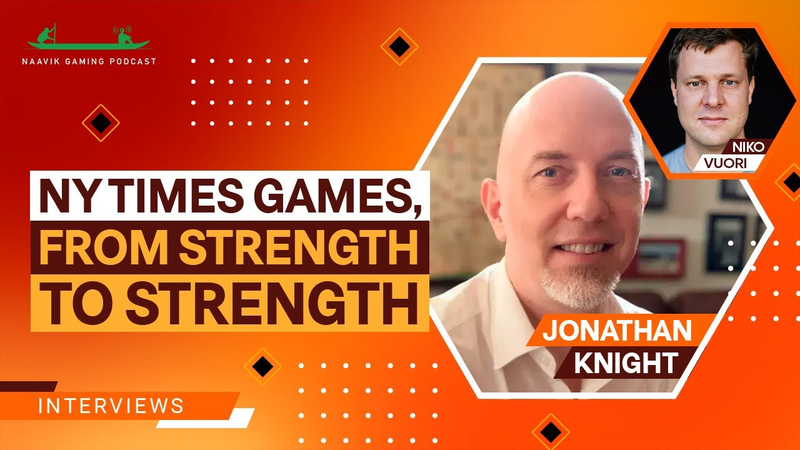
it by far the largest fund focused on gaming and interactive technology Light speed's Team combines deep expertise in gaming with a global multi-stage investment platform and a culture that truly puts Founders first selected Investments include epic games snap and stability AI as well as game designers and producers who led the creation of titles like fortnite Call of Duty League of Legends valerant Starcraft 2 and many more for more information simply go to gaming. lsvp docomo and welcome to the navic gaming podcast I'm your host Nick oori today we have a very special episode on the Pod we have a guest from one of the biggest gaming companies on the planet its games were played over 8 billion times last year and it continues to release games beloved by tens of millions of players every week I talking of course about the New York Times and its head of games Jonathan knight uh but now I'm sure you
all know how significant the games business has become to the times how much they're investing in it and we actually are welcoming Jonathan back after about a year uh when he was last on the show uh not long after the worldle acquisition and obviously a lot has happened since then so I wanted to have him back to tell us how the games business has evolved uh what the new slate of titles coming out looks like uh what does it mean to build a thriving Community around casual games at the times and of course uh I went to vent about the streak mechanic in wle uh and how desperately needs a streak freeze feature it really does um I lost my 390 day streak um when I flew to Amsterdam the time zone messed messed with uh my uh my streak and next thing you know it was gone so anyway I wanted to get that off my chest and get it right to to Jonathan so anyway without further Ado here to discuss the New York Times game strategy I am thrilled to welcome back Jonathan Knight he's a longtime gaming industry veteran former colleague of mine at Zinga and wanted to say welcome back to the show Jonathan thanks for being being in the Pod again thanks for
having me back it's great to see you awesome all right with that out of the way let's get right into today's episode so Jonathan we had you on the show before uh just over a year ago um but it was a while so let's remind our listeners about your background tell us a bit more about your gaming industry career and how you landed at the New York Times driving their gaming strategy well I I've been in computer and video games my whole career I started out as a producer at a company called interplay um I kind of worked my way up to become an executive producer general manager uh UL head of Studios um I worked for big traditional game companies like Electronic Arts and Zinga um where you and I overlapped and um you know I would say just building launching operating big games at scale with you know branded IP or original Ip um and uh yeah I've just had a fortunate career and worked on a lot of incredible properties with Incredible people and um you know a few years ago I was approached by the New York Times it was a little bit of a departure and a way because it's not a
traditional game company but um they were really eager to build out their games business and had a really cool platform for games and an amazing brand and um you know I could see they were on a really good path and um it's been a great move and I've been loving it fantastic uh well you know the joke which I'm sure you're well aware of is the New York Times is now a gaming company with a little side hustle in news um how long before you take over overall leadership of the times given the growing importance of of games well I think you know it's yes it's funny but um the reality is that that it's the strategy working you know it we strategy the company is to be the essential subscription for Curious people seeking to understand and engage with the world we consider news to be at the center of what we do and it is and it always will be um but the deliberate strategy is to have sort of this constellation of Standalone lifestyle products whether it's games cooking wire cutter the athletic um and you know the fact that
games is uh you know kind of a worldclass product in its own right but also plays a major role in the overall bundle strategy for the company um you know for us it's just yeah it's the strategy working and it's great to see yeah I mean I know you don't break the numbers out but I was you know looking at your subscription numbers and digital content I think the games belongs in there um I mean very impressive growth rates uh over the last you know probably a couple of years um when did the times decide that this was something they wanted to invest in heavily uh obviously they've had the cross word forever 1940s I want to say um and a couple of other games as well predate you as you joining the team um what's been driving that subscription Revenue growth what's been driving uh the digital content I.E gaming uh growth for the times is it new titles or is it just more engagement from existing uh subscribers yeah well first of all you're right yeah the the um we've had
this idea since 1942 when we ran the first crossword puzzle in the paper and um I think you know I was looking back over the history recently in 1996 was when the company launched its first website uh NY times.com and at that time we had a digital crossword puzzle and a digital crossword subscription offering at the very same time that the news went digital for um you know with its website so it's sort of been there all along I would say um I think around 2018 with the launch of spelling be um and and seeing that spelling be with its own kind of custom pay wall and its sort of free-to-play model was stacking subscriptions on top of the crossword subscription and you could sort of see the share of subscriptions coming you know from the crossword growing sorry share of of subscriptions coming from spelly me was growing um and the overall subscriptions were growing that's when I think the company felt like okay we we have a
games opportunity here it could be more than just the crossword puzzle and since then um it really has been powered by content and you know it's it's a story as old as time but content's King and when we launch new games um that's sort of like the probably the single biggest lever we have for growth and new audiences and new audiences obviously translates into the subscription funnel for us um you know so with the acquisition of whle in 2022 we just had like a massive propellant to that strategy we were sort of worried how would we follow that up big shoes to fill um we launched connections last year um homegrown game you know and that was thrilling for the team you know following that acquisition world to sort of have a home run out of um out of this you know the team and and we just saw continued growth there we're also seeing like the games app the dark times games app becoming you know a way bigger
funnel for new users than um than it ever was before but again that has been powered by the games themselves Wordle spelling be connections that's what people are searching for that's why they're coming to us and um and then we think we've got a great product which you know I talk forever about you know that keeps people and retains them so but yeah at the end of the day it's the games yeah I mean there's a lot to unpack there uh we actually have planned questions on on most of those things you know the app um in particular that was brand new when we talked to you uh or not brand new but it was fairly new when we talked to you last year and it sounds like it's really been growing quite a lot um but I did want to ask so if I just want to to clarify the strategy really is to have um this is maybe not the the the exact right word but multiple hooks for subscribers to potentially subscribe so they're doing the free content they're doing the free games there's a new game launching they haven't subscribed yet Suddenly It's like oh well this is one that I actually do want to subscribe for now they
subscribe so it's kind of you mentioned it's like kind of layering in the ability to to get people at different moments depending on what they care deeply about is is that fair to say that is fair to say and we have what some people might call a little bit of an unorthodox access model to games it varies from game to game um and and ultimately you know the daily crossword puzzle the full spelling be experience these are our premium um um sort of subscription only games um but I would say that like increasingly what we're seeing is that um the strategy is like use the free games to get people to try um and uh offer like stats and streaks and sort of metagame features as a way to to prompt registration like if you don't create an account with us we're not going to be able to you know store your stats and and show you all that and
then the archives and we're rolling out the world archive as we speak but you know we've seen this with the cross and with the mini and and now with the world archive um that becomes a real strong subscriber value so you know for our subscribers now they've got over 10,000 crossword puzzles on their phone um going back to 1993 um and you can binge those play at your leisure and you know that's just a big part of the value in addition to of course getting a new cross puzzle every day and so that increasingly is becoming the strategy we've got connections archive and development now and I think you know that's what you'll see going forward for all of our major games to more or less the daily puzzle is free you know register to get metagame features and then subscribe to get all of the content you know going back for X number of years um there'll be some like subtleties in there and some differences spelling be I think is a great model where it's it's a little more free to play you get partial
experience you get full experience if you're a subscriber um there's a free trial on the app so there's some different layers to the access model but um we're just finding that subscribers really value content and um you know that's uh not a surprise well content is King we've known that across many Industries for a long time now so uh not not surprising perhaps that that's that's the case um as you recall from zingo we had a very uh in retrospect perhaps not quite as sophisticated as it could have been but we had a a fairly robust cross promotion strategy you know when a new game would launch we would make sure that everybody was coordinated and uh all the different games would would Point towards the new game especially the higher Affinity ones and you know you'd have a big uh pop of of users on day one or whatever day we decided was it was ready you know stable and and had all the features and set um is is there something similar um at the times I I'm Avid like I play Wordle I play Connect NE I'm playing um the new
strands in beta as well I play play all of them pretty much every single day um but I I have yet to really see at least on my end a kind of a concerted push to move me from one product to another or say like if because you like this maybe you'd like this too so curious to hear um how do you think about it internally this Cross promo strategy I is there something similar to what we used to have at Zinga where we push uh players from one product to another especially the higher Affinity ones yeah I mean first thing I'd say is that our scale now is a real competitive advantage that we didn't have even just a few years ago and that has reminded me a lot of Zinga um you know with strands we wanted to do kind of a small quiet open Beta um just to get a read on retention and I would say within a couple of days we you know had seven figure users and um there's just no keeping it quiet um so so you know we can now like safely get get
anything we want to do in front of millions if not tens of millions of users in um very short order and that reminds me a lot of that competitive Advantage we had at zingo we could launch a Facebook game and it would instantly go to number one and instantly have millions of Da because all we had to do is just put a popup in Farmville and that was the end of it um and then you sort of go like okay well that's a powerful weapon we want to use it responsibly and um but I think the stage we're at now is uh when we launch new games what we saw I would say like very specifically with um connections uh the number one referral source for connections was wle I should actually say number two the number one source was search as there's just so much organic demand and and search for our games but the number two referral source was was world with strands the number two referral source was connections um and we're just seeing the new games just kind of build on top of each other that
way as for sort of like moving you from game to game and cross promotion I think you know we're not a traditional game company I think that's why people are really responding to what we're doing we're very respectful of people's time we're we're not trying to get you to spend all day in our app we don't want 247 engagement we don't want to funnel you into things that you don't want to do just so that we can get more engagement um we you know that's why we really like the design of the app it's very clean it's very elevated the games are all there you can choose which ones you want to try and which ones you don't you're you know sort of think users are smart enough to do that you know on different surfaces like on mobile web browser you can be a little bit lost in terms of how did I get here and where am I going next and we want to help those users with navigation and Discovery um and and with the world audience we have found that like showing them spelling be is is a really powerful um kind of pathway and I think you will see us you know methodically experimenting with that
sort of like next action post game um but philosophically speaking uh you know yes two plus game usage is is an important metric for us people that are playing two or more of our puzzles um tend to just get more value and retain better in the long run but um you know we we don't want to like overdo it right I don't want to push you into a game that you don't like um just for the sake of it so um yeah that's kind of where we're at with that yeah I mean it resonates very strongly a lot of what you just said there is I've been playing Wordle so the times cross word is too hard for me the mini is fine I can do that but the time cross is too hard for me it takes too much time and time is the one of you know resource that we don't have any more of than anybody else on the planet we have 24 hours in a day and that's it right so what I really like about Wordle and connections which is part of my morning ritual is I just I can get through Wordle and Connections in just a matter of minutes but it's just a really nice kind of brain stimulant gets me going kind of like a cup of coffee almost right and I've started playing strands but I'm actually
interestingly find finding that umbe we can geek out on the design there but I don't know if you're going to change the design much but uh the the hint feature if I may give you a piece of feedback the hint feature doesn't feel quite right to me um I almost prefer it to be gone entirely so that I have to kind of figure it out for myself well if you hit the hint feature it's so easy to get the the simple words right like you can collect more than you need to do the entire puzzle now you're only cheating yourself of course and it does feel like cheating quite frankly um but yeah when you hit that hint thing and it shows you the word it's like basically that's game over right then and there right what's really nice when I find myself having the most fun with it is when I don't hit the hand feature at all and I figure it all out for myself and that feels really quite satisfying so anyway geeking out on game design a little bit but like that's the one thing where I that's why I don't go back to it as often as I do with Wordle and connections because they feel really pure in terms of how you solve them whereas with the hint feature it feels kind of kind of dirty yourself a little bit you know I know you're only cheating yourself but none unless that's what it feels like so anyway my two
cents there um but but but what I like about all of these games including strand is it's they're quick you know they're easy to do um and uh yeah I you just spoke to that as well it's it's a it's a remarkable feat I think if you think about they're essentially hyper casual games right if you were to describe these games they're casual or hyper casual maybe not quite hyper casual and I don't think there's anybody else on the planet who actually has a subscription business around casual or hyper casual games so it's it's a quite unique position that the times occupies in that sense do you do you often think about that yourselves and say like how on Earth did we manage to build a you know tens of millions of people eight billion plays last year apparently five billion came from wle um a subscription business around this casual type of gameplay it's a it's a really remarkable feed actually um and I don't know if you guys reflect upon it internally um but I'm just calling it out here because I look at it and say wow this is quite special and it's quite unique well uh thank you for saying that and yes we do reflect ref on it if there's one thing
that the New York Times is good at it is reflecting upon things that is that is a big part of our culture and um and you're right and I think the reason for well there's a few reasons uh why it's working and you know number one is that we have human-made puzzle content every single day we've got an incredible team of Constructors and editors and the crossword is sort of you know crowdsourced in a sense of like we get few hundred submissions of crossw puzzles every week and we um sort through them and edit them and and really choose the best of the best and um all of our other puzzles are human-made and there's one puzzle a day and you're sort of in this very interesting relationship between solver and Constructor you can kind of almost as a solver you sort of know there's another person like right behind this puzzle that's trying to trick you and they've decided what the answer is and you're trying to sort of like figure out what's in their head in some ways and that's just like you know yes it's you can call it a hyper casual game or a
puzzle game but but the human-made component is um pretty unique to what we do and it's a big part of our heritage um you know as as a newspaper and sort of like we have writers we have editors and we have a lot of like rigor and and testing that goes behind you know the content that we're putting out every day and it's like our stamp of quality and and and and it's our brand so I think that's in part why it works and and you know and but because of the model you know like hey for the co cost of the Starbucks every month you can get all this incredible human-made content every day a very elevated app experience without a bunch of like around coins and treasure chests and popups and powerups and we're not monetizing the core loop we're not trying to create some sort of like pay to win or pay to get an advantage um it's it's just more elevated than that and and it it is a really kind of like I see it as a as a bit of a slow moving you know innovators dilemma in a way um I would like it to
be faster moving but I'm impatient and want to go faster but it's still this like I see other you know traditional mobile free-to-play apps and studios in the word space and I just I know they're looking at us with great frustration like how are you able to not do any of all any of those those sort of like hated mobile free-to-play tactics that that other Studios have to do to just squeeze every last scent out of their users because they're in this Arbitrage game around user acquisition LTV and um and we're just not doing any of that you know and we're getting incredible amount of organic um you know inflow of users and great subscriber retention great conversion and it's um it's all working but I think it starts with the human-made content it starts with our respect for people's time we sort of talk about it as time well spent um and uh you know and then this kind of clean elevated ux yeah you know this connection between uh puzzlemaker and
solver is actually a really interesting one uh I mean I know it started of course with with you know will and the the crossword originally I mean people he's legendary everybody knows him by name um and uh I think it's Tracy Tracy Bennett does the worldle so I I I've never met her I don't know what she looks like but I you I know she's in your team and I know her her name because I do the whle every day right and uh uh I'm actually embarrassed to say I've forgotten the who who does connection um but she's great w that's right sorry yes woo thank you for reminding me so I recognize her name too and so this idea of having a connection like a humano human connection even if you don't know the person but you you put put a name on it is really interesting and it actually Taps into something that I've I know as I was researching this episode I noticed you've used the word Community quite a few times in interviews media coverage um and in stories and you're kind of I think alluding to some of that here as well so I'm very interested to hear what do you mean by the word community and building this community of players
because your games aren't traditionally social air quotes right there's not Clans there's you know you're not sending invites to other people if there is any kind of playing together it's it's pretty much offline play right like it's just you sitting with your family or friends at the kitchen table you know having breakfast together things like that so there's no overt social and yet it does feel social in an interesting way and you have used this word Community quite a few times especially over this last year so I'm very very interested to hear how do you think about Community how do you talk about it internally with the team and how are you tapping in to essentially social without the features that you typically associate with that in a product in a game uh on mobile or elsewhere yeah I think there's two big um streams there one is our forums which we host um kind of first party forums I obviously there's activity out in uh you know the internets around Reddit and every you know like people
are you know creating Facebook groups or you know there's places where people are gathering that we're that we're not in control of but we have made it central to what we do to have kind of first party hosted forums the spelling before forum is our most popular and that we we see that as a place for like our most dedicated solvers to come for um tips tricks hints ways to get better at solving and to talk to each other about like their solution that day or whatever it might be and so they're coming together in those forums and you know from a business perspective we do see you know we get great ad revenue from those forums we see a lot of strong correlation between visiting forums at playing the game propensity to subscribe we see like great subscriber retention from users that are both playing the game and visiting the Forum so we know that it's driving value and it's also just core to who we are to try to help solvers be better you know and get better at solving our our puzzles so that's one um and that started with wordplay which is the crossword Forum
you know spelling be Forum has been wildly popular we have a world Forum called The World review we have the connections companion I would say they're like all of those things are it's a little bit lumpy in terms of how they're surfaced and the discovery and access to those pages from the games themselves and a lot of people don't know they exist or they find them you know in sort of a circuitous way um but that's one big thrust but the second one is really you know which wle kind of led the way on this but the Wordle connections um we're seeing it with strands spelling be these games are social without having social features built into them but the social is playing out in the group chats um where our our users have sort of like self-organized and anyone out there who's in like a passionate World group like I am knows that like that is the place where you're posting your score every day and you know we're living basically rentree thanks Mark Zuckerberg in that space and not having to build
chat because the chat's happening there we're not having to build a leaderboard because people are you know competing with each other in that space where we don't have to have even for those people don't even have a a push notification or remind that their friend played because like the group chat is that push notification so it's kind of cool and we see that we kind of think of that um that group chat is like literally the other half of the product experience I almost think of that as my Surface even though I'm kind of renting it from WhatsApp so yeah it's surprising those games our games are surprisingly social and they're just playing out in different spaces and then people are ultimately coming back to us the next morning yeah and it's it's really so I've never actually been to the forums and I have to confess I didn't even know you had them um so to your point about entry points like that might be something to consider given that I actually did research this and and I'm an avid player a daily player there I don't know if actually participated in the forums but um nonetheless uh didn't
even know they existed um but for me the social really the most fun social is actually the one that plays out in the real world um you know whether it's at the kitchen table with your kids um them helping you or or uh my kids are a big swimmers so we go to swim meets all the time and everyone's bored there so you know you're you're doing connections you're doing whle and everyone's kind of pitching in and helping out and it's just a it's a really there aren't that many it's it's almost like a board game in many ways I don't know if you ever consider it that as an analogy for you guys but it feels like it's a board game that you can play with you know anywhere from two to eight players almost like that's kind of how it feels like the the in real life component of it and uh in a way that most other games or very few games I can really point to um is that part of the design Phil how do you design games I mean that's where I'm going with this like how do you actually sit down and think about this um from the ground up like how do you how do you create that magic um from a it's a completely blank slate there's a gazillion word game games out there like there's so many word games out there and yet you are
able to put a fresh Twist on it time seemingly time and time again I at least with connections following on W's heels and now strands which I can definitely see becoming bigger coming out of beta again I don't know if you're going to fix that hint feature because that's that's going to be a dealbreaker for me I think long term but um nonetheless uh what's the design process uh at the times that gets you these hits that gets you these games I really do feel part of a family it's a great Insight around board games and I'm glad you mention that because I do I do agree with that and um and you're right like there's a strong tradition with the crossword puzzle going back Generations you know shot across the room like what's a felter word for European Capital starts with a p and you sort of like and and you know it's a little harder for us to kind of quantify that you know in a classic sort of product management sense but um but we do think that's part of the organic nature and part of the multigenerational aspect of our product which you know increasingly we see as like a real strength um and we're
in this for the long haul you know like I'm we're we absolutely think we're building a 100-year product or or a forever product um but you know yes like that that works its way into the Aesthetics you know the idea and we talk about that internally that our games sort of have their tradition and root in in sort of paper products and and sort of printed physical products and there is a kind of a board game um Vibe and so we kind of want that to come through and that's part of why the the UI and ux is in our games is so kind of like 2D and simplistic and um and and the elegate and so I think yeah increasingly we're sort of with the more more games we have the more we want to like really recognize that and internalize that um as far as like our new game I don't want to like give away the whole store there like we do think we have um you know a somewhat repeatable process at this point for creating new games like but as
you well know like game like people are fickle and like Trends come and go and like it's entertainment you can never quite know what's going to work and so we do develop a lot of prototypes a lot of Concepts internally that never see the light of day and we have you know what you might imagine is sort of like a stage gate process green light process of like getting a lot of things into the funnel and then having checkpoints and validation points where we can kill stuff that's not working and making sure that we don't get too married to something that you know I get very passionate about our games and like I believe in them and I get hooked on them and I think everybody in the world's going to love them but you know we're trying to make games that appeal to you know the most amount of people and that are GNA have great retention and and so yeah as you might imagine we sort of like kill a lot of things we get to a stage where we can ultimately get stuff in front of real users we start with you know user testing we start internal then we go external you know we'll do focus groups we you know we use online tools like discout we like interview people
and we we just sort of building a case as we move our games through that through that funnel you know for continued um optimism conviction validation you know ultimately we put things out web web only web first just to see you know if if it takes off and then we're measuring retention um you know on a much bigger scale and then we've got some success metrics and you know we've killed um we killed digits which was our numbers puzzle that I really loved A lot of people love it and a lot of users love it and soort were upset with us when we took it down but it didn't quite meet the bar and then connections came along and and um and exceeded that bar and so did strands so um I think we have a you know a mix of a healthy mix of intuition you know brand values like kind of know what works we have certain filters I've talked about a few of them you know human-made puzzles time well spent um the social aspect of it the sharing
um the sort of board game Vibe and then you know we start putting that through a more data Centric um process you know until we get to something that's working so yeah yeah and we've got a couple things coming up the pipe that I'm excited about you know so we're you know we're not done yet well it's clearly working um I alluded to some of these numbers earlier I think the numbers that you shared um for last year was 8 billion ion plays of which wle was 5 billion um I have to believe connections I mean and again it's games are very subjective so so who knows if I'm you know if if everyone else is as passionate about connections as I am I really like that I almost like it better than than World in some ways um so you know how do you I know you can't share like what the numbers are going to be for 2024 but but you can probably talk about Trends here a little bit about you know you've talked about stacking and layering these games on top of each other um you know 8 billion plays lot like where do you go from here you know
like is it just growth upon growth is it is it rocket ship or is it more of a kind of a steady steady is she goes like growth and it is it's more about the layering and not about the explosive rocket ship um H how are you guys managing growth essentially let's ask that question how do you manage growth at this kind of scale when you're in the billions in terms of play sessions and I think you've shared tens of millions of weekly players um yeah look I mean we want to keep growing we want to keep growing our subscriber base and ultimately contributing profits to the company that help you know secure the independence of our journalism and you know protect the the mission of the company so like that's at at the highest level sort of what gets me out of bed in the morning um and to do that we need to keep growing audience we need to particularly keep growing the sort of the top of the funnel that what we call the non-subscribed W um because that's sort of our convertible audience right so we're we're pretty focused on on that and then we're once we do sort of like get an anonymous user to
register ultimately subscribe we're focused on subscriber retention churn you know starts stops net ads it's basically we're we're kind of managing a a subscription funnel um you know new games is sort of like a big driver of growth app downloads is a Big Driver of growth we have other aspects you know in terms of like paid acquisition um you know brand brand marketing owned and earned media Partnerships like there's a number of things we're pursuing to you know continue to grow and um you know I would say we're considerably bigger than we were um this time last year so we've seen like really significant both audience and subscriber growth um I think we shared recently um Meredith shared you know as part of an earnings release that we had 20 million weekly active users on connections wles considerably bigger so you know these are these are big numbers for sure um and uh you know the the I would say the
number of users that are playing two plus products has tripled year-over-year um I would say that our um you know our our advertising revenue from games tripled year-over year um the uh we don't sort of break out subscriber subscriptions you know we get we're part of the bundle as well and we're increasingly driving a lot of um bundle starts just from games you know people are opting to take the full bundle um even though they're hitting a Games pay wall so you know it's a little bit um you know that's why we kind of roll it all up in the reporting but you know we're I would say subscription revenue from games is is also way way up year-over-year so it's it's really I would say very exciting growth and um you know we're optimistic and ambitious about the coming you know few years yeah well congratulations I mean definitely from the outside looking in it does look like you know it's just almost like success after success um I'm sure it's the sausage when the sausage gets made it's
not quite as simple as that but um but certainly you know seeing connections and I like I said I can see strands probably is gonna be another big one uh based on kind of what I'm seeing at least but um brings me to the app um so tell us more about the app so the app was fairly new I think when we when we last spoke um not brand new but fairly new and it sounds like it's really had a breakout year or breakout 12 months give or take here uh in terms I mean I saw it hitting number one in the store you know the Apple App Store charts on multiple occasions I think and uh you know I've seen people sharing about it not just you um number one word game number two okay all right little humility you got a little work okay fine who who was number one then who do you have to beat to get I think actually we were that week that we hit number two um you know I want to say it wasn't Monopoly go I think it was Call of Duty or something but normally Monopoly goes kind of occupying that spot yes and maybe we'll for for future they seem to be playing the LTV cat game
extremely effectively uh that's a whole other episode right there but um but yeah so talk to us about the app you know the kind of the thinking behind it um the launch when that happened kind of just the timeline and then how whatever you can share on how it's doing and how you think about putting content in there since for lack of a better phrase the games you know you already mentioned that you go web first and then you kind of determine you know where next kind of thing uh so yeah tell us more about the app strategy which I presume is is a a separate strategy to the overall game strategy I I would say it's like increasingly important and and you know um so so sort of like a a deliberate shift and one that's been happening for the last couple of years um to more of an app first strategy for nyt games and you know to clarify the the crossword app launched in 2019 you know it was an early um editor's Choice award-winning uh iOS app um and what you
know it's kind of like what you're remembering is more like our Rebrand of the app like redesigning and and sort of um we started rolling that out to all users we were testing it late last year we rolled it out to all users at the top of this year so it's sort of the completion of um a kind of phased approach to like the full Rebrand from crossword to games which you know we completed on web a while ago we completed it a while ago in terms of like the commercial surface is like what am I subscribing to you're subscribing to games now you're not subscribing to crossword um but with the app um the you know the downloads that we were getting from people searching for crossword on the App Store so important um and we we were really winning you know in terms of like app store search Authority for the word crossw word that you know we were very careful about just rebranding the app changing the name of it you know like right and hurting that um that funnel and so we were very care we
tested our way into that we're very careful and in fact you know um we were we were very successful and and making that transition from crossword to nyt games rebranding changing the icon changing all that store you know the store assets and really fulfilling the vision of like a portfolio of games not just the crossword um the redesign of the homepage um you know was a year-long project that I'm really proud of and it's it's I think it's very beautiful and I'm happy to say that just a couple days ago it was announced that we're we're nominated for an apple design award for 2024 and I'm going to be going to the mother ship and copertino um in about a week um great honor to to sort of be there for wwd um to the worldwide developer conference and and um you know for a special event around apple design Award nominees so like super exciting and and and a big honor and also the metrics have been really strong like we we basically approached and you know from Zinga days and I remember like you
know um hopefully I don't get in trouble for saying this but like I screwed up drop seven when I was there and people who worked with me at that time well remember and I'm sorry Mark Pinkus if you're listening because he was he was right and we were wrong and we we took a beloved game and we thought we were doing something good and we we basically killed the game with a redesign so when you redesign a beloved app it's a very dangerous undertaking and um so we just thought let's just do no harm if we can hold metrics where they were but then Implement a redesign that allowed us to go into the future with additional games and sort of a new platform for for Content but in fact the metrics are like way better and it's it's higher converting and you know obviously better for two plus games and some of the other things we care about so huge success story there along with bringing connections into the app and a bunch of PR we got in the first part of the year uh as well as the thousandth worldle which was a huge celebration um and the app is just like really taken off when I when I took over the team in 2000 our app was ranked about number 425 on the
top free IOS games chart um so to Peak at number two from where we were a few years ago in the 400s was just like an incredible feed and we've been sitting in the top 15 or or usually top 10 free games um on iOS all year long and we're the number one word game so it's just like it's literally been staggering it kind of surprised even me um and we did 10 million downloads of the games app last year uh that was up from five million the year before and um you know I think we're pretty close to 10 million already this year so I you know I think we're looking to kind of double that again um and you know it's just been it's been awesome and we see that users in the games app relative to mobile web desktop web Etc you know they're they're higher engaged um uh they it's higher conver and it's just you know and it's it's a it's a better experience right
you don't you know it's you can find the games more easily um and and and all of that so yeah like I don't know what else to say it's been like success story yeah I mean that's great to hear congratulations on the design award and of course all the success there as well it sounds quite quite an exciting ride um I had a question here that was not planned but it came up to me as as we were talking this many people people downloading the app and of course playing the games I'm presuming the vast majority of them are probably not New York Times News subscribers so I'm wondering and share as much as you can because I'm very interested in this this uh if there's any metrics you can share around this you know if let's say you do 20 million downloads of of the app this year let's let's just say that for argument sake like what percentage of that would you hope to or will you or are you converting into new subscribers um I'm presuming you care about that right I mean New York Times is for all
jokes aside it's still you know the New York Times It's News um so while games obviously it's amazing that it's such a big part now of the business and it's growing so rapidly and and it's it is time well spent uh I I presume there are some internal metrics or some internal conversations at least around how do we get some of these folks who are playing our games to actually become new subscribers too because I think new subscribers are probably the stickiest subscribers on the planet um once you subscribe I I've had my New York time subscription I don't know how many years now like forever um and I think all the new subscriptions that I'm I'm subscribed to uh but for digital newsletters those I do subscribe and then unsubscribe if I'm not getting enough value but but news subscriptions generally people don't drop them so very curious to hear what conversations happen internally are there any metrics you can share how are you tracking success going from games to to news and uh any color around that I will say that um we're exper experimenting a lot right now in this area and learning a lot so
there's probably not too much I can share because it's sort of fluid and dynamic but you're on the right track it's an area of great interest to us and you know with the game's audience having um really grown massively year-over year um especially for the last two years it's increasingly like an opportunity and yes a lot of the people that are downloading the app they're they're coming for the games you know and they're coming in and they may never have had a relationship with the New York Times and we see that as a you know like an awesome opportunity um yeah don't really have any specific numbers to share the color I can provide is that we definitely see that for subscribers that engage with both games and news on any given week have the best long-term subscriber retention um of of any sort of like usage pattern surprise surprise so we know that that combination the news can come and go that you know the new Cycles can be can be lumpy um there's all sorts of factors that go into you know news fatigue news demand but games is daily habit and so the
combination of news and games is really really powerful um you know we definitely think there's there's opportunity um there's so much that the times has to offer that's not just you know the war in Ukraine or the war in Gaza or Trump trial right there's just like an incredible amount of content that's lifestyle that's culture um you know obviously like our cooking product our other Standalone products um you know and and so yeah we do see an opportunity to introduce that kind of content to to our audience who may have come for the games and didn't think themselves as as like you know news readers um so yeah more to come there it's it's definitely an area of of focus and and enthusiasm yeah I mean 20 million download I don't actually know what the current subscriber number for the news product is I you probably know this off the top of your head but I've got got to believe the 20 million significantly dwarfs the number of actual new subscribers the times has in so you must be looking at that and saying hm like we have over 10 million
subscribers um at the Enterprise level got it okay so 20 million DS though that still be twice twice that so uh there's obviously a you know and if you can move that 10 million number by 10% Like that's a pretty huge lift right so um so yeah so I can totally see why why that would be a priority and that's what kind of occurred to me that to to ask the question there um now there is a point um I believe there's a saturation point for how many games you can play now you you say you're tracking the two games a day um I'm sure you track the three and four and five games a day as well um but is there a saturation point for games like this um or is it just a it's a bigger offering and so if I don't want to play strands on a certain day there's a new game coming I'll play that instead you know or or do you uh do you hope to to have players playing in multiple I mean you obviously want them in two because otherwise you wouldn't track that um so is there a world where you're like look we need that two to go to three or not need to but like here and
here's our path for doing it or do you feel like at some point we can't launch five games in a year like that's just too much or even one game this year might be too much or or what so I think that's that's the question I'm getting at here you're you're at a sweet spot right now you have just the right number of games I feel where it's like I'm not gonna play all of them but I'm gonna play most of them and then once you push over the edge a little bit it's like oh God there's too much there like there's too much choice I can't play all these games doesn't mean you're going to unsubscribe but it just I think it means the flywheel maybe starts turning a little bit slower so curious to hear how you guys think about this and uh how are you being deliberate about the product launch strategy the new game strategy yeah I mean such a great question I think for the for the moment um the number of people who are saying uh there's too many games in the games app is like massively dwarfed by the number of people that are saying when is strand's coming to the game app so I don't think we're there right now um and
you know it'd be a great problem to have and I don't think we'll have that problem for a little while yet but yes there's a there's definitely a point at which like our goal is not to have 20 25 30 you know 40 games in the games app like we we we want to be a highly curated human-made offering and uh you know I you know you can go to some of these sites where you just see like you know 10 T of casual games maang and sudokus and soliar and you know it's just like a page of of you know dozens of casual games and that that's not who we want to be you know our our games are not a commodity they're uh again like curated handcrafted very special puzzles and I think you know we have a high bar and we'll have probably an even higher bar going into the future for um a game to sort of you know make it to the major leagues which is like like to to come to the games app so yeah we're thoughtful
about it we think about it we don't think we're there yet um and uh you know but it's it's something we'll be tackling probably not too far down the road yeah yeah fair enough that's yeah like I say a nice problem to have um if you got to a point where you've got so many quality games that people are saying like yeah you know what I'm I'm I'm happy with what we we have here so um okay I have a final question for you uh on on the New York Times and I have a a more fun question then I know you've got a hard stop so I'm going to respect your time here um but one thing I wanted to follow up on is um you had announced some partnership deals um a year plus ago you had Delta Airlines you had Hasbro I think you had some others um in the works as well now obviously your Standalone success clearly is so good that you probably don't need to be doing these Partnerships but uh tell us more about how those went are you doing more what is the strategy around that has that shifted from when we uh last spoke a year plus ago well we continue to be an important partner um with Delta Airlines and you know we're sort of the exclusive puzzle
game offering if you um connect for free Wi-Fi on Delta airplanes and um you know kind of bring up their portal on your phone and and and get that free Wi-Fi and you know we're there alongside a couple of other major brands and we're thrilled with that partnership and you know we're excited to have that captive audience that you know otherwise would you know be able to maybe play the mini archive in offline mode but otherwise a lot of our games require um you know internet access and and then you can also get um The Daily cross word the full spelling be experience um uh essentially you know sort of subscriber entitlement uh if you're flying on a on a Delta plane and connecting there so like we're excited about that we're continuing to um you know to to be a partner to them and they've been a great partner to us I I don't have anything else to announce I mean it's I think we're you know to your point like uh only want to work with like you know the best part ERS um the highest quality you know I think if we if we identify a place where there's
lots of users that we don't think we would otherwise um be able to directly you know get into a relationship with and there's something we can do there that's a win-win um we're always looking at those things and um you know I working on a couple right now just just like nothing to announce um it's an important part of our strategy but there's again a very high bar I would say um to to doing a partnership like that yeah fair enough fair enough um okay well with that I think we're coming towards the end here but I do like to ask all of our guests um what three games are you playing at the moment or are you most excited by and you can't name your own that's that's a rule we've had to come up with because that's the first thing that every guest says well I'm very excited for our upcoming game so no can't do your own games well I've been playing uh word grams from funcraft um and that's uh that's you know Jason mcgurk ex singga um Michael Martinez and incredibly talented team there and um great guys you know they're they're
pretty close to what we do in some ways and they're doing some things really really well um and I like that word grams game it's just like a nice mashup um I would say we're I'm playing a lot of um chess.com but not necessarily competitively I'm not I'm not really a great competitive chess player but I like their chess puzzles um I think the chess.com app is is um excellent I just think it's a really really high quality app and I think in a lot of ways they're kind of an inspiration to us in the sense that um they're one of the few chess.com and us are we're kind of like maybe the only two sort of major game companies that are taking this approach Mission driven subscription model focus on long-term value long-term relationships big focus on community they have a big journalism aspect to what they do and um I really really love that company and I love that app um what else oh I guess I would say which is maybe not fair I don't know what you're looking for but um I'm in a
d and group and that's actually why I have a hard stop because um me and some of the other dads uh are in a regular D and D game and um yeah that's I love it I love that you said no and that counts G any game whether it's tabletop or you know paper pencil um mobile console PC whatever so all right well those were great options and choices and quite different to our our regular guests so I appreciate uh um you you sharing those and uh your your tasting games are quite similar to mine although I have never been a D and D player um so that's something that that to bypass me and my childhood to this day I'm not quite sure uh how to play um so anyway uh all right well listen uh Jonathan it was so good to see you again uh great to hear the insights congratulations with all the success and all the growth and the Design Awards I mean it's just you know seems like a really exciting 12 months which is why I wanted to have you on on the on the Pod today so uh thank you again and uh welcome back anytime awesome thank you great to see you I
really appreciate it that was a lot of fun yep absolutely and always big thanks to our listeners we'll be back next week with more interviews more insights and more analysis from the world of gaming if you enjoyed today's episode whether on YouTube or your favorite podcast app make sure to like subscribe comment or give a festar review and if you want to reach out or provide feedback shoot us a note at podcast nov. or find us on Twitter and Linkedin plus if you want to learn more about what navic has to offer make sure to check out our website www.nic.edu and advisory Services again that is www.nic.edu [Music]
Auto-generated captions from YouTube — names and numbers may be misheard.



















Comments