User Acquisition reports and market data
Documents
Superstar Session: Sustainable Social Growth on Instant Games
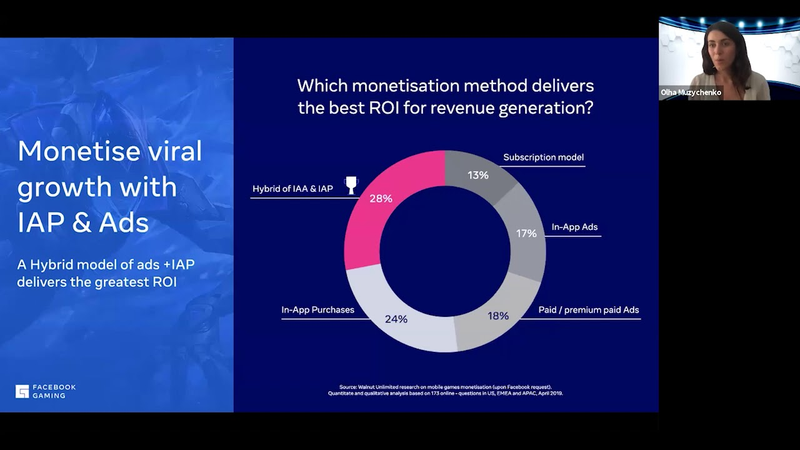
This presentation outlines strategies for achieving sustainable social growth on Facebook’s Instant Games platform, an HTML5-based ecosystem integrated into Facebook and Messenger.
- Hybrid monetization models combining in-app purchases and Audience Network ads (interstitials and rewarded video) consistently outperform single-revenue strategies on the Instant Games platform.
- Rewarded video optimization must be localized, as North American players prioritize virtual currency rewards while German players prefer extended gameplay options.
- Sustainable retention is driven by time-sensitive social features, specifically seven-day leaderboards that create recurring incentives for player engagement.
Speed Panel: Using Preloads as the Ultimate Playable Ad
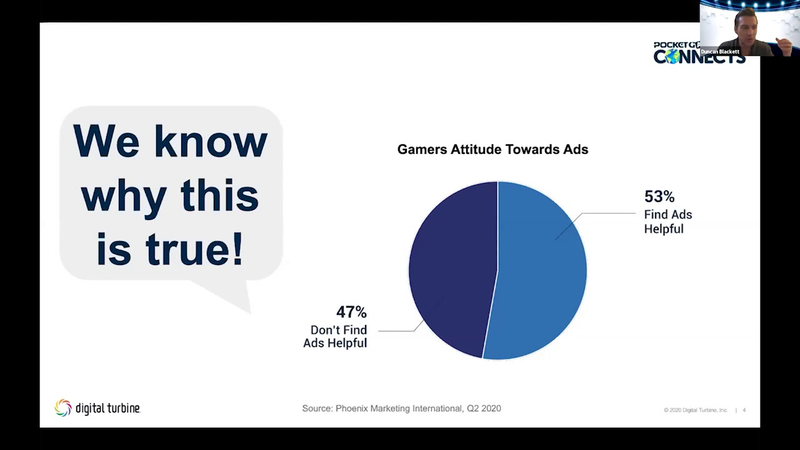
Mobile user acquisition faces significant hurdles as traditional advertising methods increasingly struggle with consumer ad fatigue, misleading creative, and the widespread adoption of ad blockers.
- Approximately 26% of gamers identify pre-loaded games as a more effective discovery method than traditional television or online advertising.
- Preloading bypasses traditional ad funnels and reduces friction by installing games directly onto devices, which results in superior user retention rates compared to standard digital marketing.
- Platforms like Digital Turbine’s Ignite enable fraud-free, high-intent installations by integrating directly into the device lifecycle rather than relying on conventional ad placements.

How Automated App Ads can Help You Achieve More for Less
Automated App Ads represent a fundamental shift in mobile user acquisition, moving the industry away from granular manual targeting toward machine learning-driven optimization.
- Automated App Ads shift user acquisition from manual targeting to machine learning-driven optimization by consolidating campaigns into single ad sets to reduce audience fragmentation.
- To ensure campaign stability and exit the initial learning phase, advertisers must generate a minimum of 50 conversions per week.
- Effective creative strategy requires uploading up to 50 diverse images and videos to provide the algorithm with sufficient data for testing.

Top Lessons to Learn from Monitoring Your Mobile Competitors
Strategic mobile game development relies on a rigorous, multi-layered approach to competitor monitoring that extends beyond simple performance tracking.
- Effective competitive monitoring requires a multi-layered approach that classifies rivals by strategic influence rather than just performance metrics.
- Developers should synthesize diverse data streams—including user sentiment, paid acquisition strategies, and keyword performance—to identify the actual drivers of competitor success.
- Competitive intelligence should be used as a contextual guide to refine unique game mechanics rather than as a blueprint for reflexive imitation.

Frictionless Media: Why Community Is the New Marketing
Traditional game marketing is undergoing a fundamental shift as high-cost, low-conversion strategies like television commercials and web banners lose efficacy against modern ad-blocking technology and evolving consumer habits.
- Traditional interruptive advertising like TV commercials and web banners is declining in efficacy due to ad-blocking technology and shifting consumer habits.
- Modern game marketing is transitioning to a 'frictionless' model that prioritizes content users actively seek out rather than material that disrupts their experience.
- Long-term player retention has become a more critical success metric than initial user acquisition for contemporary service-based games.

Panel: What do Publishers do for Their Money?
Publishers serve as essential partners for game developers by providing critical infrastructure, risk mitigation, and specialized expertise in an increasingly saturated mobile market.
- Publishers provide critical value by managing user acquisition (UA) in an increasingly competitive mobile landscape where costs are high, and by leveraging established IP and large, captive audiences to drive game discovery.
- App Store Optimization (ASO) requires a holistic approach where icons, videos, descriptions, and screenshots are tested and optimized as a single unit, alongside keyword optimization to improve organic rankings.
- Developers should prioritize transparency in publishing agreements, specifically regarding how marketing budgets are spent, and be prepared to walk away from one-sided deals that lack clear communication or fair terms.
Reinventing the Discovery Process
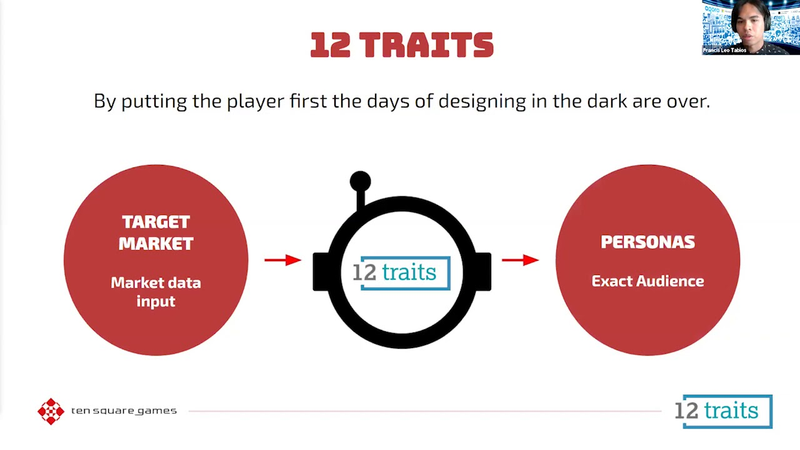
The modern game development landscape requires a shift toward a player-centered discovery process that prioritizes rigorous validation before full-scale production begins.
- Studios must shift to a player-centered discovery process that mandates rigorous validation of game concepts, mechanics, and art styles before full-scale production begins.
- Development teams should utilize detailed, data-backed player personas—developed alongside behavioral research firms—to map psychological traits and motivations directly to monetization and design strategies.
- Integrating big data analytics into the discovery phase allows studios to replace generalized assumptions with targeted experiences that align with specific, sustainable market opportunities.

Superstar Session: How We're Preparing our Customers for iOS 14 Attribution Switch
This session, presented at the Pocket Gamer Connects Helsinki Digital 2020 conference, addresses the mobile gaming industry’s transition to Apple’s iOS 14 privacy framework, specifically focusing on the shift toward SKAdNetwork attribution.
- The transition to Apple’s iOS 14 privacy framework necessitates a shift from deterministic, user-level attribution to probabilistic modeling and SKAdNetwork-based strategies.
- Developers can reconstruct performance metrics and estimate Day 0 lifetime value (LTV) by mapping specific player actions to binary conversion values ranging from 0 to 63 within the SKAdNetwork framework.
- The loss of granular campaign-level and creative-level data significantly disrupts traditional user acquisition workflows, particularly for hypercasual games that rely on precise LTV metrics.

Curated Panel: How to Maximise ARPDAU With a Hybrid Approach
The mobile gaming industry is undergoing a fundamental shift toward hybrid monetization models, which integrate in-app purchases with in-app advertising to stabilize and maximize average revenue per daily active user.
- Hybrid monetization models that integrate in-app purchases with rewarded video are stabilizing revenue, with many studios achieving an even 50/50 split between ad-driven and purchase-driven income.
- Publishers are transitioning from manual waterfall management to automated in-app bidding to eliminate labor-intensive line-item adjustments and improve operational efficiency.
- Automated bidding platforms allow development teams to reallocate resources from ad operations toward user acquisition and core product innovation.

Unlock More than 1 Billion Potential New Users
The Unity Distribution Portal (UDP) serves as a centralized hub designed to simplify the distribution of Android games across multiple third-party app stores.
- The Unity Distribution Portal (UDP) enables developers to reach over one billion potential new users by streamlining distribution across multiple third-party Android app stores.
- The platform eliminates the need for multiple SDKs and individual builds by automatically repacking a single game build with store-specific requirements, such as in-app purchase (IAP) integrations.
- Developers can manage their entire distribution workflow through a centralized hub that supports metadata importation from the Google Play Store and provides unified performance reporting.
UA in iOS 14: Tips for Success in a Post-IDFA World
The transition to Apple’s iOS 14 privacy framework represents a fundamental shift in mobile user acquisition (UA), necessitating a move away from individual-level tracking via the Identifier for Advertisers (IDFA) toward aggregated, privacy-centric measurement.
- The deprecation of IDFA necessitates a shift from individual-level tracking to aggregated, privacy-centric measurement via Apple’s SKAdNetwork (SKAN).
- SKAN limits conversion data to six bits, restricting marketers to a maximum of 64 distinct values that must be strategically encoded to track critical user milestones like revenue or tutorial completion.
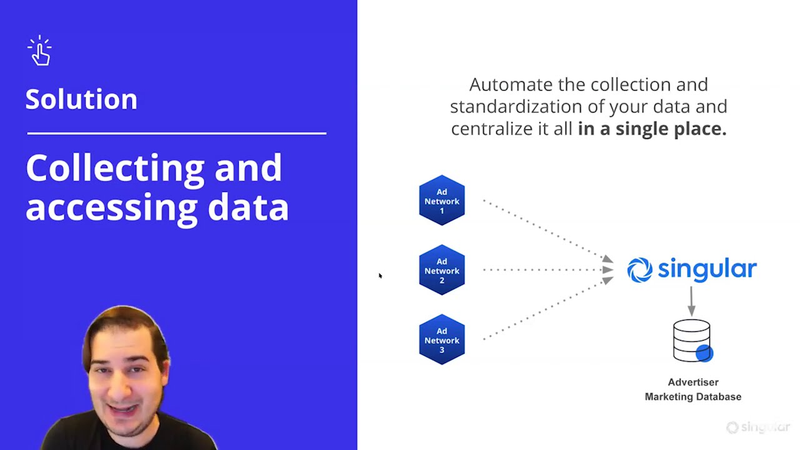
- Because SKAN sends data directly to ad networks rather than MMPs, developers must implement robust internal data aggregation and standardization processes to maintain visibility.

Panel: How to use UA Funding Effectively
Effective user acquisition in the modern gaming landscape requires a departure from simple spending volume in favor of agility, fundamental optimization, and strategic alignment.
- Successful user acquisition now requires prioritizing core fundamentals like app store optimization, retention mechanics, and monetization strategies before scaling any advertising budgets.
- To counter the loss of granular user data due to privacy shifts, studios must transition to predictive lifetime value models, creative-led strategies, and media mix modeling.
- Developers can mitigate post-IDFA constraints by using Android performance data as a proxy and investing in unified SDKs to improve data synthesis.