1 free read left. Create a free account for unlimited reading + AI research.
Create free account
UA in iOS 14: Tips for Success in a Post-IDFA World
Key insights
6 takeaways- 01The deprecation of IDFA necessitates a shift from individual-level tracking to aggregated, privacy-centric measurement via Apple’s SKAdNetwork (SKAN).
- 02Apple’s consent prompt design, featuring a prominent 'Ask App Not to Track' button, creates a challenging environment for obtaining user opt-in for tracking.
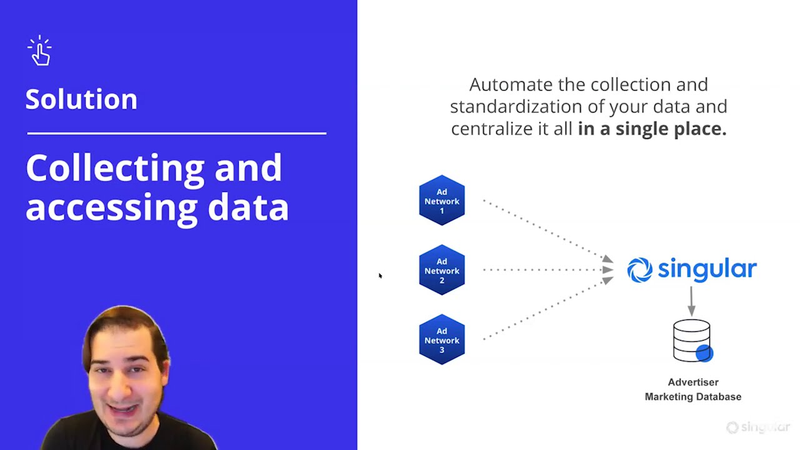
- 03Because SKAN sends data directly to ad networks rather than MMPs, developers must implement robust internal data aggregation and standardization processes to maintain visibility.
- 04The lack of signed data for post-install events creates fraud vulnerabilities, requiring developers to implement server-side verification and audit mechanisms to compare network data against direct device signals.
- 05SKAN limits conversion data to six bits, restricting marketers to a maximum of 64 distinct values that must be strategically encoded to track critical user milestones like revenue or tutorial completion.
- 06Success in the post-IDFA landscape requires building internal user-identification systems and transitioning toward cohort-based modeling and predictive analytics.
Ask AI about this video
Transcript
and next up in a couple minutes here we have gaddy from singular who is going to be discussing discussing ua in ios 14. tips for success in a post idfa world should be a great topic looks like gotti has joined uh getting ready hi welcome how you doing excellent welcome to the digital stage yeah thanks so much pleasure to be here everybody hi um uh it's so weird uh talking to a bunch of people when you can't really see them but we'll give it a go um i'm actually going to be sharing my screen
so you may see my face twice so i'm going to shut down the video and i'm going to share my screen let's see if it works hopefully everybody's going to see that full screen and can you guys see it can cali can you see it yep looks great okay perfect so this is a new app i'm testing it's uh it's pretty cool app um and you can put my face drawing center and say hi to you guys uh so today i'm going to talk about um is 14 i'm sure you guys had already a lot of content that you've read about this a lot of thoughts about the topic you may have even had some talks during this conference already about it but i wanted to give you um sort of my angle as someone who spent a lot of time um in this space um i'm the ceo of singular one of the co-founders singular is the leader in data aggregation and creating that single pane of glass
in the last i would say four years we've also added attribution to our set of capabilities across mobile across web and we have this really interesting viewpoint and we've been having some amazing success with some of the largest gaming companies involved um many of them come in and use singers platform to basically solve all their data needs and from pretty much how to handle data from start to finish in ios 14 is obviously a big topic for us because in many ways our platform you know in some aspects relies on idf and things like that and in general i found that to be fascinating um and you know if i kind of think of the of the timeline i started dealing with with idfa really early on and you know a lot of companies were thinking about it i i tried to do something different so um we set up a group called mobile attribution privacy and i'll talk about that more later but what was interesting is that we actually brought a bunch of really good companies into a room and started talking and it was like a year and a
half ago what would happen if ibf it goes away um that conversation uh quickly evolved into a slack group that kind of exploded in size and a lot of interesting conversations and um i guess if i think of the timeline um then really you know what you kind of what happened is how do i hide myself see maybe that one nope maybe i'll zoom myself out there we go so in in um 2018 you know there's been idfa rumors i mean there's always been a fade rumors right um with uh uh udid uh being replaced and ivf coming there was always a question of you know is this only a matter of time until um apple removes idfa as well um in march apple released uh ska network version one which was when you looked at it was very scary um it was something that um a lot of um a lot of companies are starting to
analyze and and it looked very restrictive um and then in june 2019 the rumors heated up again and um everybody was kind of thinking that uh apple's going to remove the idfa in that wwdc but it didn't happen um and interest levels were still low because you know everybody idfa is so fundamental you can only speak about it so much when nothing's really happening but still we started the mobile attribution privacy group map in august 2019 and we garnered some interest there was um uh it's funny it was about 20 companies in the beginning and that slack group was pretty boring and trust me i would prefer boring over over other things but then in june of 2020 um the rumors were confirmed and essentially everything started exploding since uh i mean apple in their developer conference announced the application of idfa um you'll need to get it free of opt-in you guys know all the changes um i'm sure it's been
discussed to death um and then we've had last three months they were just insane they were insane for me for everybody in the space is a vendor for the advertisers for everybody who's trying to figure out how are things going to look like and i think that the interest has exploded so that tiny slack group became 2 000 participants from every company in the space talking about this in depth and i spent an enormous amount of time people made fun of me for how much content i wrote but it's just such a fascinating topic to understand what happens to this industry when there's such a disruption um and we felt like we were coming from a really good spot um talking about this topic i mean we understand almost every aspect of the marketing advertising and ecosystem tech stack so we had a really good position to talk about these things um and then most recently about a week ago hopefully i'm sure everybody knows apple gave us an extension and i feel like it was sort of you know people were breathing again because we were supposed to be
in the launch date i think this was the estimated date for ios 14 launch um september 14th and um if apple hadn't given that extension there would not be any idf anymore uh and people will be scrambling and the market wasn't ready so i think this extension was good and we spent a lot of time getting ready and i have to tell you that um i think you know out of um out of all vendors like if you guys are following the news um we basically announced escadar to support two days after wwdc we've been working on for a while it was obvious that that's where things are going to go um and and and we did that much sooner than all of our um you know mmp friends and and competitors um and and there was a lot of pushback people are saying you know how you know why you guys give it up and apple will will be convinced because of this and what about fingerprinting and device crafts and and and for us it was very very obvious
the way that apple's talking about it and the way that apple's thinking about it that these things like fingerprinting and device crafts there's no way that these things are going to work at scale there's just no way because it's just it's too good to be true it's there it's essentially goes against everything they're trying to achieve with their privacy changes and so we just need to rethink what does this mean for the industry and it doesn't mean that marketing or performance marketing user acquisition doesn't exist it just means that we need to adapt and so what are the things that we have right now well the idfa deprecation apple pushed it too early next year um and they didn't specify a date and i think everybody's hoping that as you know this essentially by pushing the deadline they're giving all of us a lot of time to prepare for um the switch over to sk network and kind of testing our models and starting to learn how to operate without um without idfa
um in regards to sk network i'm sure most of you in the audience know what it is but if not i'll do a quick recap it's basically apple's provided api for performance attribution it's very minimalistic it's very limited uh it doesn't have a lot of features but it is enabled by default to 100 of the users whether they opt in or opt out so it's just something that companies you know companies cannot um cannot ignore this um the implementation is not easy uh the market's not fully there yet uh even though we were ready um a lot of our partners are not ready uh and so you know overall industry readiness is just not not perfect uh our customers are not fully prepared and so and everybody's every marketer was not fully prepared so i think the apple did a good thing and then opt-in so opt-in is still a highly discussed topic could companies gain enough uh
consent from users so that things will go back to normal um opt-in may still work but you know at first i thought that apple were trying to uh just let the consumer choose um but now it seems to me like apple is actually not um they don't really want companies to succeed in getting a lot of opt-in and the reason i said that is um you see that pop-up on the right it says that um it basically has this scary notification in bold and then there's this text that says tracking consent request custom message that's ours that's our sample app but basically that's the only thing you can control and then in terms of the buttons do you realize that the ask app not to track that's the first button that you see and and throughout ios 14 beta they've done a few iterations at first the buttons uh were inverse so the default the first button people click would be allow
now they put that do not allow as the first button and if you've spent time with ios permissioning you'd find that a bit um weird and let me show you an example so this is the pop-up for location in ios 14. and um as you notice the default is allow um allow and then don't allow right so it starts as a pretty positive thing and also the text says do you allow this app to use login location it doesn't include extra scary text like by using your location this app could spy on you and see you know where you hang out etc like it just doesn't say that it's a pretty minimalist pop-up and the same for push notifications you see that in this case you know allows on the right uh done allows on the left not really sure which one has preference but i tend to think you click yes on or okay on the right side so so that's also sort of a positive
looking pop-up and it doesn't contain any scary text and if you look go back to this this does scare you a bit right it's like tracking it across apps and websites owned by other companies like that's pretty condemning text and also um the the button is inverse so it just seems to be like they don't really want it to succeed um which is fine that's you know that's their that's their stance it's it's a shame uh and i don't know maybe this will change again before ios 14 launches um but then one more thing that's interesting this uh delay that they introduced i don't know if you guys realize but if people actually try and show the pop-up and they get a no then they lose access to the idfa so it's almost like people are better off not asking and the problem is that limits at least for the next four to six months as long as this id phase still around it limits companies from iterating on opt-in right which could
have been a good thing because what if companies were you know they had six months to learn how to get enough opt-in to get used to idfa so i don't know if this is intentional or not but it basically it seems like most people wouldn't even want to try and ask the question because uh it's not worth it maybe we'll change but that's how it works right now so um let's talk a bit about ska network and how do you know how do companies have to adapt when they're doing ua and you know there's a lot of different angles from this some optimize for the consent some talk about how you organize your ua strategy i want to talk a bit about the mechanics of your data um so in ska network what do we know we know that um there's no user level data you get some granularity the app country campaign but that's limited um to 100 campaigns you get publisher unless there's some unclear um privacy thresholds and we could talk about that later in the q a and you can also get creative and why do i say maybe because
this encoding depends on the network for example facebook already notified that they'll use nine campaign ids that's the max you can get as an advertiser but they'll use the remaining campaign ids allowed by apple which is 100 in total they'll use that to test different things including probably creatives i also know other networks that are going to have um allow the advertiser to utilize some of the campaign ids that are provided that are allowed by apple and encode a campaign id into an actual creative id so really you could say i have a hundred options so maybe i'll just use three campaigns and i'll use the rest for creative testing that way you could play with that number um but what are the challenges well as sql network as i said it's not easy to implement and i just wanted to walk you through some challenges that you guys will face and uh and hopefully you know give you a taste of the things you need to think about um and uh and i see there's already some
questions in q a i'll get to that later uh but give you some some things to think about as you're planning your migration and right you know thankfully there's time now to do that but we have to do that fast so the first challenge is um the way that you guys have been accessing the data changes if you're running ua at scale even if you're doing three channels um the conversion data historically used to arrive to the mmp directly but now the the conversion data with this new mechanism sk network is actually sent to the ed networks and that means the marketer is now to figure out how the hell do i get all this data from all these different end networks into my bi um what we do and i'm sure other um uh solutions will probably have their own interpretation but for us it's it's a pretty um obvious thing would be to automate all this data and standardize it into a single place now this is uh something that singer has
been doing for years as we said you know we're exceptionally strong at data aggregation we're leader in that category so this solution will be something that we'll be able to do really well but it's something you have to test you have to make sure that your solution analytics mmp or in-house build whatever you're using make sure you have a way to get this data now why should you even get the scheduling data because it contains your conversions it's actually the only accurate source of installs and post install data and that's we'll talk about that more in a second the second challenge is how do you prevent fraud and i know people you know are sometimes i'm sick of hearing about fraud but but it's a massive topic i mean you guys seen sour mint recently and and you know the chinese sdk doing really really genius things to me honestly because as an engineer myself it's really smart what they did um but but you know the fraud can attack in all sorts of vectors and the the sad part is that with ska
network it's becoming child's play it becomes really easy to manipulate data which is kind of sad so first um i could take this sk network data and just send to you twice as the advertiser and you may pay me so you need to verify that it's not duplicated and apple has a mechanism for that but now someone needs to write that code and verify um i can also send you data that's not even um signed by apple so that i can just fake a record and say hey there was an install and the challenge with sql network is that there's no idea there's nothing in there there's no pii so how could you verify that this is real or not so again apple has a solution for that they sign the data you need to verify it but probably the worst thing is um i mentioned that you could pass the post install data as part of skn network and i know it's it's it's an entire topic on its own we'll talk about it in a second um the problem is this is a value that apple
does not sign maybe they'll change it in the future but today they're not touching it so that means that if i am the end network and i get the sk network postback i get the data about an install and it's signed by apple it looks legit i could change the post install value and then it would still look legit and there's no way to verify that so basically i could control what's my roi as of the campaign this is the network i could do whatever i want and then send it over to the advertiser and the advertiser will have to pay me which is pretty insane right but that's that's what it is right now um so as i said we spent a lot of time talking about skate network i know this is a topic that no vendor is talking about right now it's a bit more advanced but basically we developed the only security solution for sk network and it's pretty simple to implement um but it just it it's something that we verified with all the networks that they will be willing to implement and it's something that um as an advertiser you guys gotta ask
for it because otherwise you'll just hear about it in some press release that there was a lot of fraud found and there's you know you could get ahead of it let's put it this way um the way that it works is um basically um it gets a bit more technical but you can ask the device to send you a replica of the exact same postback that they sent to the network um you need to add them to cooperation with that and you need someone to receive that post back on your behalf it could be your servers we offer it to our customers as a service but you know you could figure out maybe start up your real-time server needs to be very reliable because you don't want to lose this data but it gives you a way to audit and run things in parallel uh to uh to get the data directly from the device and not just rely on what you're getting from the networks now you know 99 of ed networks are awesome super honest etc but there's always you know bad actors like we've seen that in the news it just happens and then there's financial motivation so this
thing will happen you got to protect yourself the next thing is uh post install data this is also a complex topic apple only gives us very limited amount of information we could um that we could use inside their sql network mechanism it's only six bits now let me explain six bits is so small that you can only encode a number between 0 and 63. so that's 64 options that's all you could do so imagine that every customer if you wanted to describe how good they are you had to choose one number to identify them this customer is 17 this customer is 25 your users you have to figure out how to define their quality based on that and that's that's pretty challenging um also what do you do about cohorts right how do we check seven-day roi 30-day roi you know our predicted ltv return on investment all that stuff becomes more challenging uh and probably
the most interesting thing is no one really knows how uh to uh uh how to use the six bits effectively yet they need to test and you couldn't even test because ios 14 wasn't out so everybody who claims to have a magic solution they don't even know you need to test it on your games and every time you change it you now need to push a new app version well here's what we do for our customers again think about it maybe you build it in house maybe use a vendor that does it well maybe you ask your m p to do that you need to figure out uh what works for your app and you need to iterate fast so what we did is we enabled a server side component that could just change this formula in real time based on how you want it so let's say that you want to convert revenue events into the that number to describe that you know a higher number means more revenue you could try it see if it works maybe it doesn't work well for your game maybe you need something else maybe you
want to try tutorial complete is number one um made a first purchase is number two and then you encode retention there's all sorts of way things you can do with these numbers you just have to think about it so i know i'm not giving answers right now this is just a teaser because these things um require careful planning and then lastly ask yourself how am i going to report i mean this idfa hiatus is going to stop at some point but you want to think about um how do i uh make this ska network data actually usable right that's the most important part you want to make decisions and optimize and this is how the sk network data looks like in in um in its raw form right you guys how can i point that direction yeah you see those numbers this is what you're getting this this is this is really bad like you can't really use that to run any campaigns you don't even know what campaign id 73 means so you need some layer of reporting um you know what what we do and again
you'll build in your bi or go to a solution that does that um we basically translate all these numbers into meaningful names so that that number could be a campaign id oh sorry a campaign name or a creative name right so you can actually see the image um or maybe the conversion value that that number that we talked about the 63 options that needs to be translated into some value as well maybe it's revenue right so you can get roi something so this table ask yourself how do um how do i get to produce this table because if you don't have the answer you're not going to be able to run ua so make sure you have the answer so what should you do next uh first uh make sure you have the right scanner setup because it is coming and i don't know how long this um suspension will from apple or this temporary grace period is going to last to make sure
we're ready prep your internal bi just make sure that um your infrastructure is ready for idfa deprecation um maybe you have entire tables built on it maybe you don't have an internal user id or internal player id start building those things uh audit your ad partners and m p just make sure they're ready this is not the basic commoditized mmp tech it's different they need to master aggregation they need to master translation your partners need to do need to know how to do that they need to figure out how to transform from the old world of very accurate post back at the user level to now optimizing on a cohort basis um and you know we're basically advising people to be cautious this is what we're telling our customers be cautious with the pop-up because if you show it and you get a no then you can't uh get the id later but you should experiment with soft consent pop-ups now what is the soft consent someone asked about it basically in the q a and said you know could i trick apple
by showing my own window and not really the real window so i'll be careful answering that one um because um basically the um this is more of a legal interpretation topic and i think that um i've seen someone we had a discussion about it uh in in in our slack group which i'll share in a second and i think someone basically said that you might be tricking the users by doing that because if you if someone clicks no and you're still tracking them you may be deceiving your user so it's almost like if you ask them no matter if it's the apple pop-up or not you're technically are obligated to do what you ask them so that's something you would do with your legal um maybe ask your legal team i don't have the perfect answer for it yet but definitely a topic to talk about it in our slack group and speaking of stock group um this thing has just exploded beyond my expectations i highly encourage if you guys are not invited yet
or not in that group there's over 2 000 uh individuals in that group uh just talking about all these questions so we'll send the link um uh we'll send the link or actually just use that email marketing at singer.net just say hey i want to join the mep you want to join the group we'll send you an invite it's open for everybody and you can ask those follow-up questions there i mean just like these wonderful questions uh so thank you that's that's it for me hopefully this was a good taste i know 20 minutes is not enough to talk about this complex topic but uh kelly do you have time for maybe q a or yeah 20 minutes is never enough time is it we do have a few more questions that have come in i know you've been kind of addressing them as you go i think one question that's come up a couple times today and hasn't yet been answered is if a company has two to three new potential games ready to launch on ios should they launch now and somehow transition the current learning to lit era um yeah so basically um
it's a good question you have it ready to launch yeah the thing is um if you already have games live right now then you may want to test on them if you have nothing then yes maybe um maybe that would be smart to do because essentially you'll have uh four to six months of experimenting with both very granular idea based data as well as um as well as the sql normal data and the probably the best thing you could do is you'll know what is the sql network value that you've assigned to each individual user at the idfa level at least for next four to six months so it will really help you optimize your engine i mean we're working on models that uh utilize predictive signals they utilize uh historical data and as long as we can get the id fade that will be another valuable input because it's almost like the the answer you'll know the real value so you'll be able to tweak your sk network uh data so i would say yes
unless it's really hurting your business at the end of the day even after i you face gone people will launch games they'll just have to figure out how they do that maybe they'll use their past learnings maybe there's going to be a lot of great content about how you can optimize it uh i think it's a matter of time before you will see people start writing about techniques and what works best for games great good answer um another one that has come up a couple times i don't think we've been able to address yet is around um targeting and display ads yeah so and yeah go ahead yeah and i see the question right now um so you know can we do targeting display ads or is it too dependent on idfa so really if you think about it it doesn't matter if it's display ads or video ads or anything essentially before you even show the ad there's a net network that needs to know whether to target an individual or not and let's take facebook for example the
main facebook app um in maybe instagram maybe whatsapp if it has ads at some point um these apps know so much about you they have their facebook profile so inside their app they have no problem targeting you and they can do anything they want display ads video et cetera um but if you're talking about um oh main display ads in mobile web so yeah part of the part of the thing about mobile web as well is the context like which website are you in um and does that website recognize you in today mobile web doesn't even use idfa so whatever targeting you're getting today may be based on some form of fingerprinting which is also going to be a challenge in rs14 uh but depending on the website like if you go to um if you go to a website and you're logged in and they know who you are or maybe they use cookies to track you which is still allowed for a little bit longer depending on the browser safari is actually pretty good at blocking them but technically on mobile web you could still be tracked even if iufa is not there
and you could still be uh you could still see targeted display ads okay all right well i think that's all the questions that we have for today oh the only other one the people did want to know about your cool video zooming tool oh yeah everyone has loved watching that okay cool i like that yeah i send a response the nap it's a funny thing but yeah just searching very very sleek for digital events like this i like it yeah all right well thank you so much for joining today yeah for sharing your insights on ios 14. perfect okay thanks everybody have a good day all right you too you
Summary
The transition to Apple’s iOS 14 privacy framework represents a fundamental shift in mobile user acquisition (UA), necessitating a move away from individual-level tracking via the Identifier for Advertisers (IDFA) toward aggregated, privacy-centric measurement. The primary challenge for developers and marketers is the deprecation of IDFA, which forces reliance on Apple’s SKAdNetwork (SKAN) API. This transition requires a complete reevaluation of how performance data is collected, verified, and utilized to maintain effective marketing operations.
Key findings indicate that SKAdNetwork is inherently restrictive, providing limited granularity and no user-level data. Because SKAN sends conversion data directly to ad networks rather than to mobile measurement partners (MMPs), advertisers must implement robust data aggregation and standardization processes to maintain visibility. Furthermore, the lack of signed data for post-install events creates significant vulnerabilities to fraud, as bad actors can manipulate conversion values to inflate perceived return on investment. To mitigate this, developers are advised to implement server-side verification and audit mechanisms that compare network-provided data against direct device signals.
Methodologically, the industry is shifting toward cohort-based modeling and predictive analytics. Because SKAN limits conversion data to six bits—allowing for only 64 distinct values—marketers must strategically encode these bits to represent the most critical user behaviors, such as revenue milestones or tutorial completion. The current landscape suggests that while opt-in rates for tracking remain uncertain, the design of Apple’s consent prompt—which features a prominent "Ask App Not to Track" button—suggests a challenging environment for obtaining user consent.
Ultimately, success in this post-IDFA environment depends on rapid iteration and technical readiness. Developers should utilize the current grace period to test their SKAN configurations, build internal user-identification systems, and audit their ad partners to ensure they are capable of handling aggregated data. By moving away from reliance on deterministic user-level tracking and embracing probabilistic, privacy-compliant measurement, companies can continue to optimize UA strategies despite the loss of traditional tracking identifiers.



















Comments