User Acquisition reports and market data
Documents

Guest Host Trio Debates Marvel Snap
Marvel Snap represents a significant evolution in the mobile collectible card game genre, successfully translating high-fidelity design principles into a mobile-first experience.
- Marvel Snap achieved 12 million downloads within two months of its global launch, establishing it as a significant evolution in the mobile collectible card game genre.
- The game’s core engagement relies on three-to-four-minute sessions and a 'snap' betting mechanic that introduces poker-style risk-reward dynamics.
- Monetization is currently constrained by artificial spending caps on credits and gold, resulting in a low average daily monetization cap of $3.66 per user.

Building the Web3 Marketing Stack - The Metacast by Naavik
Web3 marketing currently faces a significant infrastructure deficit, as the lack of mature, integrated tools prevents developers from accurately tracking user acquisition or calculating return on ad spend.
- Web3 marketing lacks integrated infrastructure, preventing accurate tracking of user acquisition and return on ad spend due to the inability to bridge off-chain mobile data with on-chain wallet activity.
- The industry is shifting away from ineffective paid acquisition toward free-to-play onboarding models that introduce digital asset ownership only after initial user engagement is established.
- Since 2022, approximately 80 growth-tech companies have emerged to address the infrastructure deficit by developing quest-based systems and affinity-based targeting tools.
How does SKAdNetwork 4.0 work? Q&A with Tenjin’s product manager
SKAdNetwork 4.0 represents a significant evolution in Apple’s privacy-centric mobile attribution framework, introducing several structural changes designed to provide advertisers with more granular data while maintaining user anonymity.
- SKAdNetwork 4.0 introduces three distinct postback windows at two, seven, and 35 days post-install to enable measurement of long-term user engagement.
- The framework utilizes a hierarchical crowd anonymity system with four tiers that determine the level of data granularity provided based on install volume.
- Advertisers now receive both fine-grained and coarse-grained conversion values, with the latter providing low, medium, or high signals for campaigns with lower install volumes.
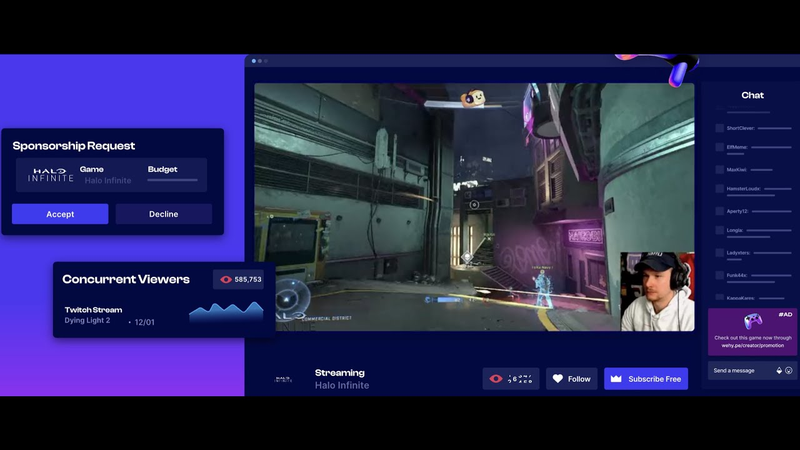
Kress’s Corner #1 Is influencer marketing hype or reality?
Influencer marketing has transitioned from a peripheral awareness tactic into a core pillar of game industry user acquisition.
- Influencer marketing has shifted from a brand awareness tactic to a core performance channel, necessitated by the decline of traditional performance marketing effectiveness following Apple’s IDFA privacy changes.
- Publishers can now treat creator partnerships as measurable performance channels by integrating mobile measurement partners to correlate social share of voice with active player counts, ROAS, and CPI.
- Niche clusters of smaller creators often outperform high-profile influencers in conversion rates and cost-efficiency due to their deeper audience intimacy and engagement.

Panel: Ad Creative Testing for UA – A Look Into the Future
The evolution of user acquisition strategy centers on a transition from speculative creative production to a rigorous, data-driven methodology.
- Authentic content, such as genuine gameplay footage, failed-level scenarios, and voiceovers, consistently outperforms traditional tactics like exaggerated claims or human reaction shots.
- Privacy constraints on iOS have shifted the industry standard toward using Android-based campaigns as the primary foundation for cross-platform user acquisition strategies.
- Teams must move away from manual, fragmented tracking by adopting automated A/B testing tools and standardized data reporting across mobile measurement partners and ad networks.
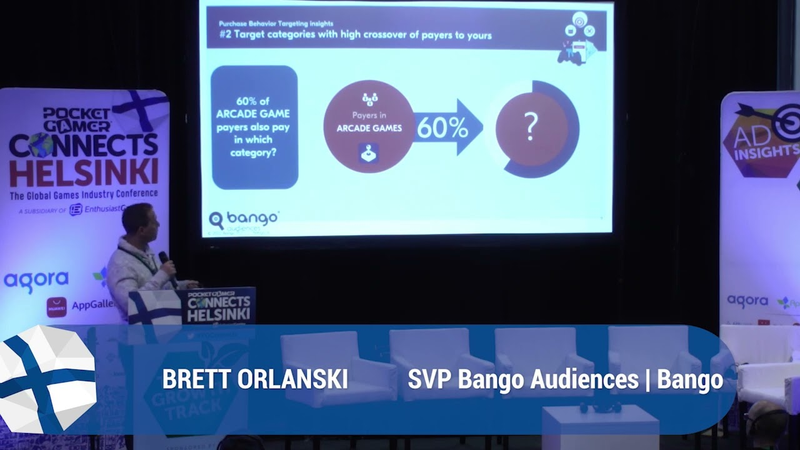
Keynote: Purchase Behaviour Targeting Insights To Scale IAPs in the Age of the App-ocalypse.
The mobile app industry faces significant challenges in user acquisition and monetization due to privacy-centric changes, such as the deprecation of IDFA and increased regulatory scrutiny.
- Purchase behavior targeting serves as a privacy-compliant alternative to IDFA-based tracking by using anonymized transaction data to identify high-value payers without individual user identification.
- Developers can achieve high-precision targeting by moving beyond broad genres to focus on granular sub-niches, such as specific types of casino or blockchain games.
- Cross-category targeting is highly effective, evidenced by a 72% correlation between payers in interactive story games and those in puzzle games.

How To Measure & Compare Financial Returns on UA Spend - MARTIN MACMILLAN, Pollen VC
The primary objective of this analysis is to improve the financial literacy of gaming studios by establishing a standardized framework for measuring and comparing the financial returns of user acquisition (UA) investments.
- Studios should adopt a monthly Return on Investment (mROI) framework, calculated by dividing lifetime profit (LTV minus CAC) by acquisition cost and annualizing based on the time required to reach break-even.
- UA strategies vary significantly by genre, with hyper-casual games achieving break-even within 30 days, while mid-core and merge titles may require 270 to 400 days to recover initial investment.
- Relying on third-party publishers for UA funding is negatively correlated with acquisition potential, making self-publishing a vital milestone for long-term business viability.
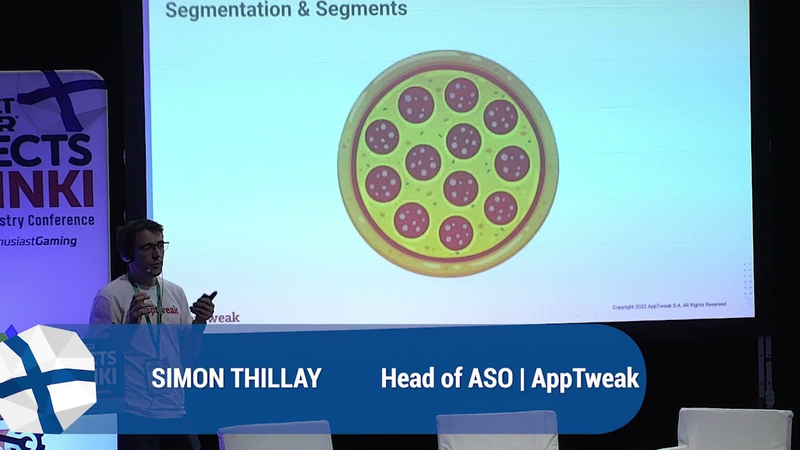
Maximise the Efficiency of Your Custom Store Pages Strategy - SIMON THILL, AppTweak
Custom store pages—referred to as Custom Product Pages (CPP) on iOS and Custom Store Listings (CSL) on Google Play—serve as specialized landing pages designed to align store assets with specific advertising campaigns.
- Custom Product Pages (iOS) and Custom Store Listings (Google Play) allow developers to create tailored landing pages for specific acquisition campaigns, moving beyond the traditional 'one-size-fits-all' store page.
- Meta now supports Custom Product Pages for its ad network, enabling developers to align ad creative directly with specific store page messaging to improve conversion rates.
- Google Play's 'custom store listings via URL' feature allows for deep-linked, personalized store experiences, though direct ad network compatibility is currently limited and expected to favor Google App Campaigns in the future.
ASO + RETENTION = Game Changer - Sergio Martinez, Agatha Bejan, Phiture
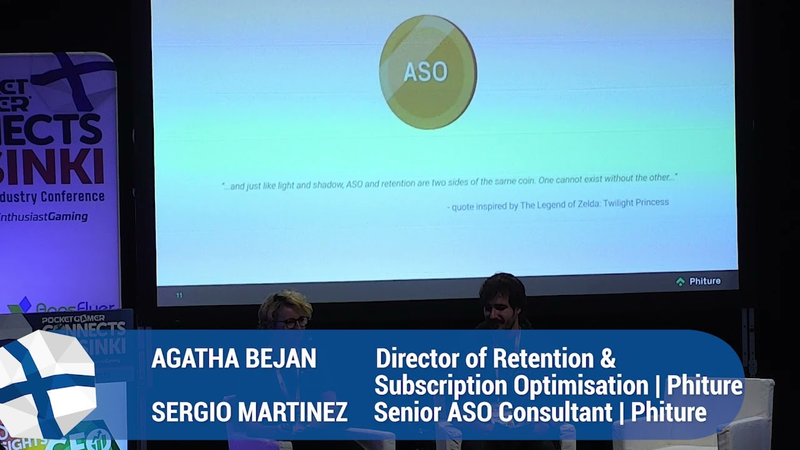
App Store Optimization (ASO) and retention marketing function as interdependent pillars of mobile game success, directly influencing a title's Lifetime Value (LTV).
- ASO and retention marketing must be integrated as interdependent pillars to maximize Lifetime Value (LTV) and signal game quality to platform algorithms.
- ASO success requires a dual-focus strategy: increasing visibility through metadata, localization, and featuring, while simultaneously driving conversion via optimized visual assets like icons and screenshots.
- Retention marketing should be integrated during the pre-production phase of the development lifecycle rather than treated as an afterthought.

Panel: Using In App Events To Power Up Your Mobile Growth Strategy
In-app events on iOS and Google Play have become a standard component of mobile game growth strategies, primarily serving as a mechanism to maintain store page visibility and foster ongoing relationships with platform curators.
- In-App Events (IAEs) serve primarily as a tool to increase store page vibrancy and engagement, though developers struggle to quantify their direct impact on growth due to limited reporting and attribution data from Apple.
- There is no clear evidence that IAE metadata, such as descriptions or titles, significantly boosts organic keyword rankings or search visibility in the App Store.
- The editorial featuring process for IAEs remains opaque, with developers reporting that even with proactive outreach to Apple representatives, there is no guaranteed correlation between submission quality and being featured.
CTV…the Next Big Thing in UA - ARTHUR QUEROU, Vibe
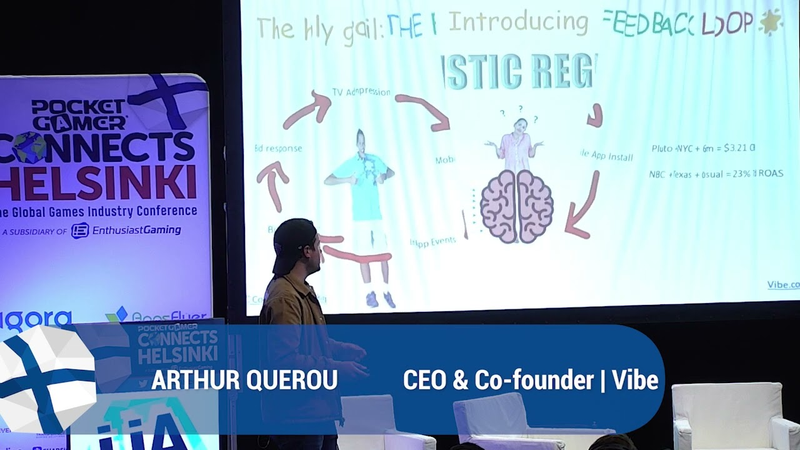
Connected Television (CTV) is emerging as a significant channel for user acquisition (UA), shifting the paradigm of TV advertising from a branding-only tool to a measurable, performance-driven medium.
- Connected Television (CTV) has transitioned from a branding-only tool to a measurable, performance-driven user acquisition channel by utilizing deterministic measurement and household-level targeting.
- Advertisers can link ad exposure to app installs by using static IP addresses to track users on home Wi-Fi networks, allowing for precise audience profiling and re-engagement.
- Attribution is primarily driven by organic search behavior following ad exposure, with Mobile Measurement Partners (MMPs) tracking the user journey from the initial impression to the app store install.

Panel: Are We Over IDFA Tips & Methods To Rebuild Your Data
The mobile gaming industry has undergone a fundamental transformation following the 2021 deprecation of the Identifier for Advertisers (IDFA), necessitating a departure from granular, user-level tracking toward more sophisticated, privacy-centric methodologies.
- The 2021 deprecation of IDFA has forced a shift from deterministic, user-level tracking to privacy-centric methodologies like predictive modeling and cohort-based analysis.
- Developers must prioritize first-party in-app event data to project lifetime value and return on ad spend while remaining compliant with regulations like the UK’s Age-Appropriate Design Code.
- Successful growth strategies now require a cross-functional alignment between data science, product development, and user acquisition teams to interpret anonymized telemetry.