1 free read left. Create a free account for unlimited reading + AI research.
Create free account
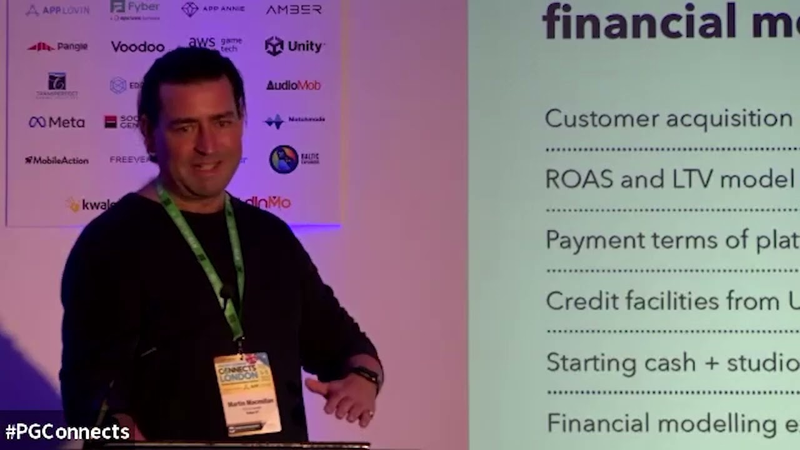
How To Measure & Compare Financial Returns on UA Spend - MARTIN MACMILLAN, Pollen VC

Key insights
5 takeaways- 01UA strategies vary significantly by genre, with hyper-casual games achieving break-even within 30 days, while mid-core and merge titles may require 270 to 400 days to recover initial investment.
- 02Studios should adopt a monthly Return on Investment (mROI) framework, calculated by dividing lifetime profit (LTV minus CAC) by acquisition cost and annualizing based on the time required to reach break-even.
- 03Long-dated, capital-intensive UA models are increasingly risky due to declining venture capital appetite for such cash-flow-heavy strategies.
- 04Treating UA as a 'sausage machine' allows studios to balance short-term, low-risk 'crops' against long-term projects based on their specific liquidity and risk tolerance.
- 05Relying on third-party publishers for UA funding is negatively correlated with acquisition potential, making self-publishing a vital milestone for long-term business viability.
Ask AI about this video
Transcript
[Music] thank you [Music] welcome to track room 3 we are about to start on our CFO Insider track this is sponsored by pollen VC and our first session kicking off at 250 is a 20-minute session uh entitled how to measure and compare Financial Returns on UA spend and this is a session with Martin McMillan the CEO and founder of pollen who is right here okay um so I'm Martin McMillan the founder of Poland VC
as a company we provide debt facilities to companies to scale using paid user acquisition um our sort of wider purpose if you like the reason we do these sorts of sessions is basically to um to try and improve the financial literacy of gaming Studios gaming Studios don't typically appoint CFOs until much later stage and then you know than most other companies so the whole idea here is to provide some Financial education particularly interfacing between UA managers and um uh and uh Finance leads and Founders to engineer better Financial outcomes so I'm going to start off here like the concepts you know everyone's very focused on on the roast Roi but basically it's a meaningless metric unless you give it some context of time so you might hear a UA manager talk about hey my game's got 130 roast you know fantastic congratulations but um that's kind of irrelevant unless you give it the context are you making 130
uh in a week a month a year right so it's unless there's some contextualization around time then the whole thing is a little bit meaningless um so in terms of um like the typical journey of a cohort so UA is just an investment equation how much in when do I break even how much out so what we're doing here is we from a you know a cash p l point of view uh we're investing we break even let's say day 270 and then after two years right this is a much longer LTV game than we get we make our profit so for the first 270 days all you're doing is basically paying Google or Facebook or Tick Tock for the ad your rewards only come after you've broken even so then you think about the whole genre the whole spectrum of LTV Cycles this comes down to what sort of games you actually want to build um so if you think about you know let's just start off you know one end of the spectrum you've got hyper casual super
quick snackable games ltv's done in basically 30 days so this in this example let's say you make a 20 return on a one month um on a one month basis and then right at the other end you've got a Social Casino where you might break even like after a year maybe 400 Days and people will keep playing this game for years and years and years and you're measuring LTV in like a thousand day return and this maybe has a much bigger number so that might be 180 you know it might be 250 whatever it might be um so there's this whole spectrum of games midcore in between like let's say you're breaking even in three months you think of LTV in a one year uh merge even longer so think of it as a whole Spectrum now in order to make informed decisions across different types of genres maybe you're a UA manager with multiple games you're trying to figure out where where am I going to make the best return you've got to give it the context of time and so
um the way we look at it from a financing perspective is the concept of monthly Roi so breaking down this whole journey into something that I can compare against different genres different Games Etc so you get a monthly return on investment monthly row ass return whatever you want to call it let's go back to the existing example of hyper casual where we're looking at a game that's going to break even in day five and then it's going to go on to make you know you invest 20 cents you get your 20 cents back day five and then after 30 days basically everyone stopped playing the game and you've made a total of four cents of profit after you paid the UA that's actually giving you a 20 monthly return but that's across one single shot of the game so we're going to go a little bit longer sorry I need to go back for a second so giving you yeah the terms of a monthly return it's only measured across a month so I'm making a 20 return that month let's go a little bit longer a mid-core game three dollars invested
breaks even day 90 goes on to make a one year LTV of 4.20 so you're making a net profit of 120 uh sorry a dollar twenty which is a forty percent over that um over the course of the year now when you break it down if you just divide it by 12 which we're going to talk about in a second but to look to get on a monthly return on Capital it's a 3.3 so I can invest a dollar and that dollar's worth a dollar 103 at the end of the month right so much much lower return over a longer period and then you've got a really long game so say I invest five dollars into my merge game and breaking even maybe generously day 270 and I go on to make a two-year LTV of of uh eight dollars so I'm making a total of 60 return on my UA but it's taking me two years to do that so by the time I divide it down into a monthly metric for comparison I'm only making two and a half percent per month now that may be a great return for that
uh genre but just again you start to see the differences in um how the different um genres or can be monetized so back to this one with an extra column you've got you know hyper casual you've got like super you know you've got very good returns but it's only one shot um longer you know the longer you get typically uh unless you've got some Stellar returns out of like super long LTV games the monthly returns typically go down I didn't even bother for Social Casino though now without getting like overly technical convexity of the curve the shape of your LTV curve is very important so what we did there just dividing it by 12 or 24 is just a simple linear it assumes a linear calculation which obviously doesn't happen LTV curves can be more convex or less convex but they're generally never linear so the convexity of the LTV curve basically is giving you if you think
about it you're earning more money quicker and then the rate that you're earning slows down over time so this actually plays to your advantage the more convex the LTV curve the quicker you're earning the money then the quicker you can redeploy it so I wasn't going to try and assume convexity it's kind of a bit beyond the scope of here but what I'm saying is when you're building your own models don't forget about it because it matters um so one of the things we do as a company we have a whole Suite of roast LTV and cash flow modeling tools on our website at poland.vc there's a tad called calculators and in that there is a series of tools that for uh for free to play uh games or apps uh we allow you to model retention ARP data acquisition costs and we'll graphically build you know the how the LTV curve looks when you break even uh all of these and then at the top there's another tab around cash flows where you model the scenarios around um how much cash you uh you have how that capital is deployed
um so how to calculate it it's actually just a very simple straight formula think about first of all is your profit your your CAC minus your LTV that's the amount of money that you're making um and then think of that as basically uh you desire divide the The Profit over what you paid for the user over the calculation um and then you look at the you know to to get the um the lifetime Roi and then you take the lifetime Roi and divide it by the number of days it's taken to achieve and multiply it by 30. so if I've got 103 day LTV I divide the number by 103 multiplied by 30 to get um to get the uh the the monthly Roi and then you can take that and you can you can compare that against different genres uh different games different UA maybe Geo opportunities how long it's going to take to recover so it all sounds very simple but back in the real world
in terms of thinking what sorts of games you want to actually make genre is really important so let's go back to your hyper casual Advantage you know the the issue is like these you know these cannonballs that yield a 20 monthly return a few and far between now maybe you're hyper casual publisher with amazing deal flow and you can just keep knocking them out one after another and keep making that 20 return month and month realistically it's very hard to do so so for hyper casual Studios unless you can be assured of just like firing out hit after hit those you know very large very quick returns are very hard to achieve go to the other side where you've got um you know your puzzle merge games much much longer scenarios right the the issue is there it takes a lot of money to scale one of those games if you've got a 270 day or a 300 or 400 you know before a cohort is projected to break even that requires you know a shitload of money to actually get that uh to get any any meaningful form of
scale one of the things we're seeing in the market is whereas maybe last year VCS were happy to Equity Fund long-dated UA because the perception was like there was so much kind of LTV potential in the game I think these these these days are are changing now and there's much less appetite um to do that so basically when you're thinking about what sort of games you want to make it it unfortunately sort of comes down to the Goldilocks so some of them are like super short but it's just very very hard to get any velocity some of them are super long and increasingly we're seeing people who are who want to bet you know they start off in terms of the games that they want to create they're thinking about okay what's a realistic time Horizon so if I can get something to break even in a you know a 90 to 180 day time Horizon that feels like a more palatable game to fund with you know some debt some Equity to actually and to see those returns it's not requiring huge amounts of capital to actually scale it up so when building the models you think about you know how much cash do I
actually need in order to scale a game so what you would do is for the row ass curve look at you know all the different things your ad Network credit lines uh Etc and then ultimately you're focused on one thing how cash negative do I go before I start start to actually generate some profit and then basically that the level of that the trough of that cash flow would be theoretically how much Equity you would need to raise no you don't need to raise it all at once you could raise it in tranches ETC you know based on Milestone but that's basically how negative your bank balance would go that's that's the external funding requirement so the to go back to how much it would cost the sort of the thing thinking about the traditional way to do that so let's say our merge game is going to break even to day 270. and you've got a very ambitious lofty goal of spending a hundred thousand dollars a day that's a sort of you know that's where you need to be to compete with the you know the the the the big guys so what you're really saying is that in order to
the amount of money you're going to need to execute your plan of spending a hundred grand a day and see if you were right on UA you need 27 million dollars for your first cohort is projected to break even and we all know there's a lot of things that can happen along that Journey so this is the thing this is the issue with these longer games that were like you know that was super popular over the last couple of years tons and tons boatloads of venture money pouring into them because they were seen as you know LTV generation cash generation machines over the long term but unfortunately they're very very hard they're very very expensive to fund uh over the shorter term so then you think about okay I've got this trough how am I going to fund it of course you can raise it uh you can raise Venture Capital do so many did you know hundreds or billions of dollars invest into gaming over uh over the last few years but I think it's I think it's fair to say that for most Venture funds the whilst a lot of stuff is happening in the early stage seed and series a um people are really kind of passing on the big hey I need 20 million 50 million
whatever to scale this game because they see it as just going into basically a kind of risky long-term UI investment next one you see uh not so much the factoring side but Revenue based loans it's been a you know a glass of people coming to Market saying hey we'll lend you money you put it into user acquisition and we hope that you're good enough at UA so we can take a skim and get repaid personally I think that's a really bad business because you were taking just a cold bet on something that you expect to happen in the future and as the capital markets Titan you know I know that you know some of the revenue-based lenders in the Ecom numerous space and you know SAS space Have you know had huge layoffs huge default rates and so on as well so you need to really think twice whether whether that that that's a good fit um certain Banks a certain level of scale will offer AR facilities and some Venture debt we've written fairly extensively why those the the bank model is very clunky
the cost of capital may be cheaper but the way they actually verify um you know and it doesn't really work for scaling games the verification periods are very long the covenants are very restrictive and typically the banks won't lend you enough when you need it if you're looking to to scale up UA so of course lots of people okay hopefully less so these days go to Publishers and say hey I've got a great game but I just don't have the means so they're prepared to give up a 50 or 60 or 70 Revenue share for having someone rent their balance sheet and program ads I'm sure there's lots of other value they provide but if you're looking at just the financial lens that's that's really a big part of what the Publishers do so um the the other thing about going with a publisher is that you're very very unlikely to ever sell your business if someone else publishes your games we ran some some data last year where we looked at the primary
business model of all Studios that were sold between I think January 21 and then June uh January 20 and June 21. 83 of the studios that were sold were self-published 15 were Publishers of third-party games and only two percent of the m a activity was someone who relied on a publisher to take their games to Market Ergo if you ever want to sell your business you need to learn to self-publish and then lastly there's what we do as a business uh non-bank revolving credit basically what we do is we look at two things every day we look at the amount of money that's trapped up in the platforms that has been earned but not paid and we allow you to access that Capital next day all of that next day the other thing also that goes into that that calculation is we look at the value that's trapped in your existing cohort so very specifically this is not cohorts that we're going to give you money and you're going to acquire you've already acquired them and they are at some different way of of planning out we look at those two numbers we've got all
sorts of credit models and fancy stuff that that tells us or gives us an indication of what's left in the pot and then this is just an elastic credit line so when your UI is working you double down as much as you can and when it's not you pull it back so it's literally it's very simple calculation what's my monthly return on Capital going back to mroi and what's my cost so if I have a cost of say you know one percent or call it one and a half percent per month uh is my cost of capital but I'm making 15 return on Capital every month my cost versus return of funding it this way is a no-brainer the the uh the cost of funds versus the return is a rounding error so look at your and always compare on the same uh on the same basis you look at a monthly cost as an interest rate and then you a monthly return as an interest rate and that's going to tell you whether this is a good way to scale your business or not Cyprus a couple weeks ago and came up
with this analogy I just kept thinking through in my head which is basically around you're a farmer and you're deciding what sort of crop that you're wanting to take to Market so in this case we decide to farm salad greens call it Cress so we plant our crafts we water it we put it under the Hydroponics it's all there seven days we take the crop to Market and sell it so not much that can go wrong in that time frame not very sexy maybe but and you've got to keep doing this a lot so think hyper casual is like the crest farmer empty crops so sugar cane it's time to harvest it's 360 days so you plant it expense you have extensive watering extensive fertilizer costs and and you know making it making sure that you can actually realize that Harvest and there's lots of stuff that you can't predict your models the best models in the world can't predict if a drought is going to come or a flood or disease on the crop or what very very you know the
longer you leave it the more things there are to go wrong so basically when you when you're thinking about it what kind of games you're creating think about these uh think about these time Horizons particularly as the markets change how much appetite have you got for you know farming sugarcane versus crass and maybe there's a happy medium uh um in between so key things from presentation uh think about this in terms of what you know what crop what what genre are you going to be in and how much risk appetite have you got um definitely be realistic I mean the number of times you've seen like the old golden cohort and then projections done off these Financial models that are simply just totally unrealistic don't fall into the Trap of thinking I mean if you look at industry benchmarks for retention so on uh you know don't don't be too far away from there at least in your initial projections now if you happen to massively outperform great once you have more data get more get
more kind of ballsy with your um your metrics and then think about this mroi monthly return roast whatever you want to call it just think about monthly returns that allow you to work with your Finance teams right because it should be UA and finance coming together and the best outcome is where everyone understands each other's business the UA teams sit down the finance team say hey we've got this machine that we can make a six or seven percent return on Capital uh so my my job as a UA manager is to keep the handle cranking and the job of the finance team is to make sure there's enough meat to put in the sausage machine to keep it keep it cranking um and having that sort of monthly return uh is something that you know people can get their heads around um so Finance teams can understand that UA teams can understand it so um yeah we just want to to uh to put that out there hopefully that's useful in uh factoring in some of your own um thoughts I think we've got it's showing I've got like one maybe two minutes left I don't know if anyone's got any any very quick questions we can just squeeze
in a question or two if uh we want to go with a question but we're we're all good we're all good we're running or on track thank you for that Martin that flew by that's okay fantastic thanks so much [Applause]
Summary
The primary objective of this analysis is to improve the financial literacy of gaming studios by establishing a standardized framework for measuring and comparing the financial returns of user acquisition (UA) investments. The central thesis posits that standard metrics like Return on Ad Spend (ROAS) are insufficient without the context of time. Because different game genres—ranging from hyper-casual to social casino—have vastly different LTV (Lifetime Value) cycles, developers must normalize their returns into a monthly Return on Investment (mROI) to make informed capital allocation decisions.
The analysis highlights that UA is essentially an investment equation involving the timing of break-even points and the velocity of capital. While hyper-casual games may offer quick, high-percentage returns over a 30-day window, mid-core and merge games often require significantly longer periods—sometimes up to 270 or 400 days—to break even. This creates a "trough" in cash flow that necessitates substantial external funding. The analysis warns that relying on long-dated, high-capital UA strategies is increasingly risky as venture capital appetite for such models wanes. Furthermore, data indicates that studios relying on third-party publishers for UA funding are significantly less likely to be acquired, suggesting that self-publishing is a critical milestone for long-term business viability.
To calculate mROI, the analysis recommends determining the lifetime profit (LTV minus CAC), dividing that by the acquisition cost, and then annualizing the return based on the number of days required to achieve it. This methodology allows UA managers and finance teams to speak a common language, comparing the efficiency of different genres and geographic opportunities. By treating UA as a "sausage machine" that requires consistent capital to maintain velocity, studios can better evaluate whether to pursue short-term, low-risk "crops" or long-term, capital-intensive projects, ultimately aligning their financial strategy with their risk appetite and available liquidity.