User Acquisition reports and market data
Documents

Steam Next Fest 2023 Preview MONO
Steam Next Fest functions as a pivotal visibility engine for independent developers, serving as a primary mechanism to drive wishlist velocity and secure placement on Steam’s influential discovery widgets.
- Steam Next Fest participation is a one-time opportunity, making it most effective when scheduled immediately before the game's full commercial launch to convert demo momentum into sales.
- Developers can estimate their total event performance by applying a 4.0x to 5.0x multiplier to their day-one wishlist totals.
- While top-tier titles can secure up to 60,000 wishlists during the event, most participants should realistically expect gains closer to 1,000 wishlists.

Games For Good
The integration of social impact and physical health into mobile gaming represents a burgeoning shift in the industry, where developers are successfully merging mass-market free-to-play mechanics with corporate social responsibility.
- Integrating social impact into core gameplay loops, such as real-world tree planting, has successfully driven the planting of over 550,000 trees.
- Purpose-driven mechanics significantly enhance player loyalty and organic growth, proving that mission-driven games can be commercially viable when high-quality design is prioritized over didactic messaging.
- Studios that adopt a triple bottom line approach—balancing profit, social impact, and sustainability—are more effective at attracting mission-aligned talent.

Top 5 Mobile Game Launches: Honkai Star Rail, Monopoly Go, Survivor!.io, Marvel Snap, Frozen City
The mobile gaming sector remains a robust and evolving landscape, characterized by high production values and sophisticated live-ops strategies that defy narratives of industry decline.
- Future mobile gaming success is increasingly dependent on cross-platform accessibility and the integration of complex progression systems rather than reliance on traditional app store metrics.
- Monopoly Go utilizes an aggressive, high-spend acquisition strategy backed by major intellectual property, though it faces challenges regarding long-term profitability and extended payback periods.
- Survivor!.io has achieved sustainable growth by leveraging AI-driven creative assets and a balanced monetization model that splits revenue between in-app purchases and advertising.

MENA Region Growth / Supercell’s Dueling Betas / SEC Web3 Actions
The mobile gaming industry is currently undergoing a fundamental transition, moving away from a reliance on aggressive performance marketing and user acquisition toward a model centered on organic growth and product innovation.
- The MENA gaming market is projected to reach 85 million gamers and $6 billion in annual revenue by 2027, bolstered by Saudi Arabia’s Vision 2030 and significant Public Investment Fund capital.
- Mobile publishers are shifting from aggressive performance marketing toward organic growth and product innovation due to market saturation and reduced efficacy of traditional user acquisition tactics.
- SEC legal actions classifying various gaming tokens as unregistered securities have created short-term investment uncertainty, forcing a pivot toward sustainable, utility-driven blockchain models.

Keynote: Understanding SKAN 4 0 & Its Implications Mark Menery, Verve Group.
SKAN 4.0 represents a significant evolution in Apple’s privacy-centric attribution framework for mobile app install campaigns.
- SKAN 4.0 replaces rigid privacy thresholds with a tiered 'crowd anonymity' system, allowing advertisers to receive varying levels of data granularity based on install and conversion volume.
- The framework extends LTV tracking capabilities by introducing three distinct postback windows that capture user activity from day zero through day 35.
- Advertisers can now utilize 'lock windows' to trigger postbacks earlier, enabling faster data retrieval for campaign optimization.
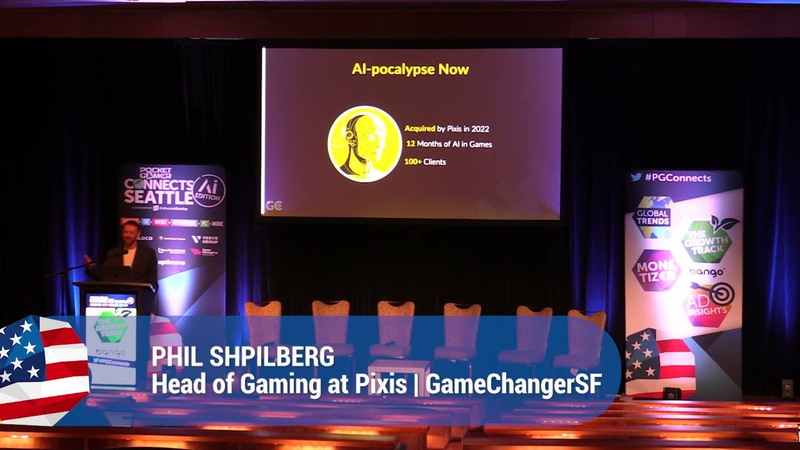
Keynote: AI Trends in Performance Marketing - Phil Shpilberg from GamechangersSF
The integration of artificial intelligence into mobile game user acquisition (UA) represents a significant shift from traditional, human-managed marketing toward automated, data-driven optimization.
- AI integration in mobile user acquisition is shifting performance marketing from manual, rules-based management to autonomous systems for bidding, budget allocation, and audience targeting.
- Current AI implementations in the gaming sector deliver a 10% to 20% improvement in return on ad spend (ROAS) while saving hundreds of hours of manual labor per project.
- AI tools currently optimize performance across major platforms including Facebook, Google, Apple Search, and TikTok, though they remain limited by an inability to execute strategies on non-API channels.
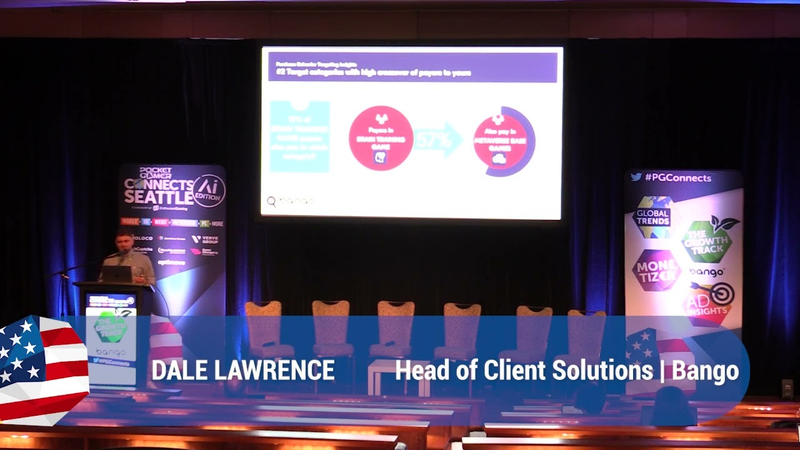
Keynote: Scale Your IAPs With Purchase Behavior Targeting Data Insights, Dale Lawrence, of Bango.
The mobile gaming industry faces a significant challenge in user acquisition due to the deprecation of identifiers like IDFA and third-party cookies.
- In the mobile gaming industry, 95% of users do not make in-app purchases, while the remaining 5% of payers generate over 80% of total revenue.
- The deprecation of IDFA and third-party cookies has forced developers to move away from traditional tracking toward purchase behavior targeting, which utilizes first-party payment data to remain privacy-compliant.
- Purchase behavior targeting allows developers to segment audiences based on actual transaction history, such as payment frequency and volume, rather than relying on demographic assumptions.
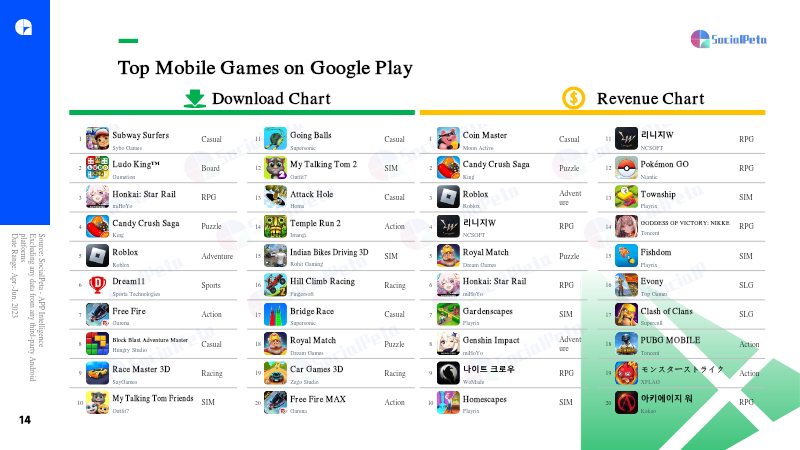
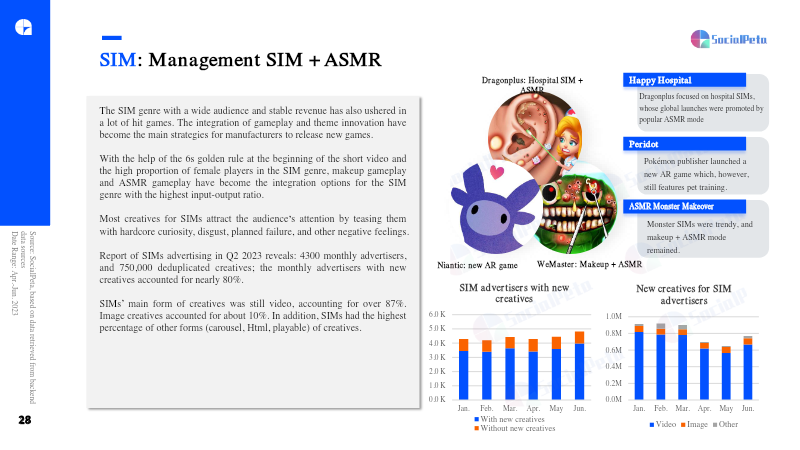

Insights into Marketing Trends of Global Mobile Games
Global mobile game marketing reached a pivotal turning point in the second quarter of 2023, characterized by a record-breaking surge in creative volume.
- In Q2 2023, the mobile gaming industry saw a record surge of 9.3 million new creatives, which accounted for nearly 75% of all active advertisements.
- Market leaders like Honkai: Star Rail and MONOPOLY GO! achieved rapid global growth by maintaining high-frequency creative refreshes, with new assets making up over 60% of their advertising portfolios.
- While iOS casual game installs cost $2.23 compared to $0.63 on Android, both platforms yielded a comparable seven-day return on ad spend of approximately 7.7%.

Mobile Growth: IDFA Deprecation Scapegoat or Reality?
The mobile gaming industry has frequently cited the deprecation of the Identifier for Advertisers (IDFA) as a primary cause for declining marketing performance and the perceived impossibility of successful new game launches.
- The deprecation of IDFA is often used as a scapegoat for internal operational failures, such as poor financial modeling and an inability to adapt to market shifts, rather than being the sole cause of declining performance.
- iOS remains a viable platform for user acquisition, with sophisticated advertisers continuing to achieve scale and profitability despite privacy-related technical constraints.
- The withdrawal of competitors from the iOS ecosystem has created a favorable market environment characterized by lower cost-per-mille (CPM) rates and reduced advertising competition.

MAU live 2023 - Growths Gems, Creative testing processes, UA for apps vs games!
The digital landscape for user acquisition and monetization is defined by a convergence of strategies between gaming and subscription-based applications.
- Creative strategy is the primary driver of sustainable user acquisition, with visual elements consistently outperforming text-based copy in engagement.
- Subscription-based apps should integrate ad revenue only after reaching a daily active user base of 30,000 to 50,000 and ensuring core subscription funnels are fully optimized.
- To mitigate creative fatigue, teams should monitor performance over 14-day cycles and introduce new assets once a frequency threshold of five is reached.

Gameloft's Claudia Trujillo On Tuning-Up The Truth About ASO And UA
App Store Optimization and User Acquisition function as deeply interconnected pillars of mobile game growth rather than independent silos.
- Paid user acquisition (UA) directly impacts organic search visibility because increased download volume signals store algorithms to boost the game's organic ranking.
- Poor conversion rates negatively impact UA costs; store algorithms prioritize games with higher conversion rates, forcing competitors with lower rates to bid higher for the same ad placements.
- Maintaining an average rating of at least 4.1 stars is critical, as store algorithms and editorial teams favor highly-rated games, making it cheaper to secure ad placements and featuring opportunities.
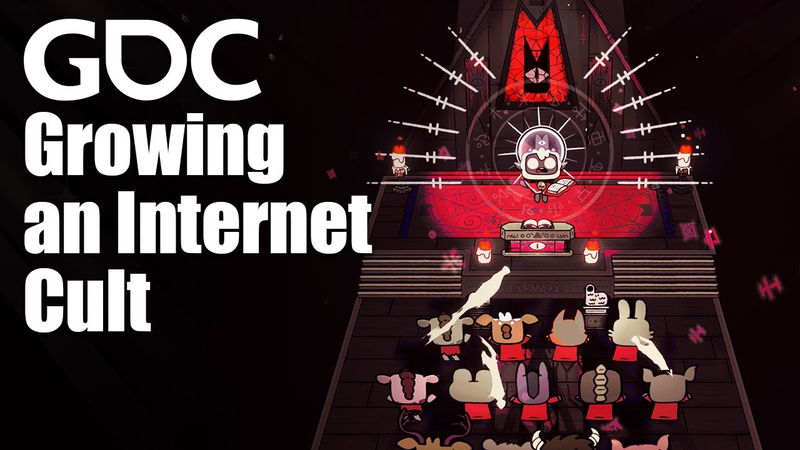
Growing an Internet Cult: 'Cult of the Lamb's' Social Strategy
The success of Cult of the Lamb demonstrates that effective game marketing is fundamentally rooted in the creation of a high-quality, distinct product rather than reliance on traditional advertising.
- Marketing success is driven by a distinct visual identity and core gameplay mechanics that foster organic engagement rather than reliance on traditional advertising or SEO.
- A three-step content strategy—grabbing attention, converting interest, and rewarding emotional responses—is required to maximize visibility and drive commercial metrics like Steam wishlists.
- Platform-native content on TikTok should prioritize likes and favorites, as these metrics are the primary drivers of algorithmic reach.