User Acquisition reports and market data
Documents

Best Advertising Networks for Hyper and Hybrid Games in 2023
The transition from hyper-casual to hybrid-casual gaming represents a strategic evolution in the mobile game industry, driven by the need for sustainable growth and diversified revenue streams.
- The mobile gaming industry is shifting from hyper-casual to hybrid-casual models to combat declining eCPMs, evidenced by a 34% increase in in-app purchase (IAP) revenue.
- Hybrid-casual success requires moving beyond short-term CPI metrics to blended ROAS campaigns that account for both ad revenue and long-term IAP value.
- Developers should utilize mediation platforms like AppLovin or Unity to manage the complex data tracking necessary for optimizing long-term user value.
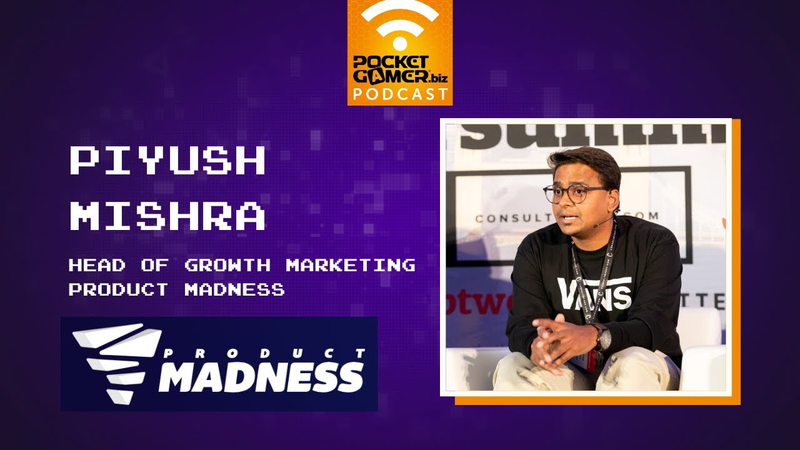
Product Madness’ Piyush Mishra On Smart Approaches And Seismic Shifts In A Privacy-First Market
The mobile gaming industry is undergoing a fundamental transformation as privacy-centric regulations, most notably Apple’s deprecation of the Identifier for Advertisers, dismantle traditional user-level tracking and attribution models.
- The deprecation of Apple’s Identifier for Advertisers (IDFA) has rendered traditional user-level tracking obsolete, forcing a shift from data-obsessed optimization to a creative-first marketing strategy.
- Growth marketers must prioritize high-performing, contextually relevant assets and synchronized landing pages to maintain conversion rates in the absence of granular tracking data.
- Developers should pivot toward brand building to foster user trust and shorten conversion windows, reducing the reliance on precise tracking by cultivating a loyal, direct audience.

Outfit7’s Nina Oblak & Kayzen’s Ryan Goeden On Harnessing Split Testing To Develop Winning Campaigns
Rigorous A/B testing serves as the cornerstone of successful mobile game development and user acquisition, transforming the production cycle from a speculative process into a data-validated strategy.
- Outfit7 utilizes a 'fake store' environment—a non-live landing page equipped with heat maps—to track user behavior, such as screenshot engagement and review reading, before a player reaches the actual app store.
- To ensure A/B test reliability, Outfit7 maintains a strict control environment by ensuring equal traffic splits across variables, including consistent traffic mixes across platforms, countries, and game genres to avoid bias.
- When evaluating A/B test winners, Outfit7 now incorporates market-specific revenue data, ensuring that high-volume install sources from lower-value markets do not disproportionately influence the decision-making process.

Finding Your Voice on TikTok
TikTok serves as a high-conversion marketing channel for game developers, offering a unique opportunity to drive Steam wishlist growth through organic, non-paid content.
- Prioritize low-production, authentic content over polished corporate trailers to bypass audience skepticism and drive organic Steam wishlist growth.
- Optimize for the TikTok algorithm by focusing on watch time and completion rates, utilizing a clear setup-and-payoff narrative structure.
- Keep videos between 15 and 30 seconds long, ensuring an immediate visual hook within the first second to capture viewer attention.

AppQuantum’s Victoria Beliaeva and Alexey Gavrilov On How To Identify And Build A Hit Game
The mobile gaming industry is characterized by increasing competition and rising user acquisition costs, necessitating a structural, data-driven approach to game development.
- Success in the free-to-play market requires integrating marketing and analytics from the earliest stages of production to mitigate risk and ensure alignment with market demand.
- Developers should adopt a 'fail fast and cheap' strategy, using early prototype testing to validate core mechanics before committing significant resources to full-scale development.
- Marketing metrics like cost-per-install are primary indicators for hyper-casual titles, while RPGs and strategy games require a focus on long-term retention and monetization mechanics.

Multiscription’s Teis Anker Mikkelsen On Unleashing Your Game’s Exposure With A Subscription Service
The mobile gaming industry is increasingly adopting subscription models to combat market volatility and improve long-term player retention.
- Multiscription’s Unleashd service utilizes a cross-publisher subscription model to bundle free-to-play mobile games, aiming to stabilize revenue and improve long-term player retention.
- The revenue-sharing model allocates 70 percent of the five-euro monthly subscription fee to publishers, with the remaining 30 percent covering platform fees.
- Publisher payouts consist of a fixed bounty for the initial user conversion—which persists for the duration of the subscription—and a variable component based on time spent within specific titles.

Assetario’s Matej Novak On Using Machine Learning To Predict Player Needs And Make A Profit
Assetario provides machine learning as a service to mobile game publishers, focusing on predictive analytics to optimize monetization, user acquisition, and pricing strategies.
- Assetario’s machine learning platform enables mobile game publishers to increase player lifetime value (LTV) by up to 30%, as demonstrated by clients like Century Games.
- The platform utilizes predictive analytics to identify individual player spending patterns and needs within the first 24 hours of gameplay, allowing for immediate optimization of user acquisition campaigns.
- Assetario automates monetization strategies including personalized in-app purchase offers, global pricing adjustments based on regional economic indicators like GDP per capita, and user acquisition forecasting.

PlayBatch’s Ezra Regev & Isaac Goldenberg On Game Mechanics For An Attribution-Optimized Game
The mobile gaming industry faces significant challenges regarding user acquisition and attribution due to evolving privacy regulations.
- Studios must integrate marketing requirements directly into game architecture to overcome user acquisition and attribution challenges caused by evolving privacy regulations.
- The hybrid-casual model utilizes hyper-casual mini-games to secure low cost-per-install (CPI) metrics while employing casual merge mechanics to drive monetization and retention.
- Developers should use custom product pages and deep-linking for each mini-game to facilitate granular attribution and personalized player journeys.

Smadex’s Philip Gontier On Scaling With SKAN 4.0 And The Benefits Of Privacy-Centric Platforms
The mobile advertising industry is currently undergoing a significant transition as privacy regulations and the deprecation of probabilistic matching force marketers to adopt new attribution and targeting strategies.
- The mobile advertising industry is transitioning away from device-level identifiers and probabilistic matching toward privacy-centric frameworks that prioritize contextual signals, first-party data, and creative optimization.
- SKAdNetwork 4.0 is the essential successor to legacy attribution methods, with significant traffic scaling expected by Q3 and Q4 as publisher adoption increases.
- Advertisers are currently collaborating with mobile measurement partners to integrate new postback structures and build optimization models in preparation for the eventual sunsetting of fingerprinting.

Creadit's Luis Leon On Generating Impressive Creatives Without Breaking The Bank
Creative production in the gaming industry has shifted from high-budget, traditional studio output to a performance-driven model that prioritizes strategic iteration and audience engagement.
- Creative production has shifted from high-budget studio output to a performance-driven model where partners act as strategic advisors to align assets with specific platform requirements.
- Efficiency is maximized through a modular strategy that repurposes a single master asset into multiple variations, allowing for high-volume A/B testing without increasing production costs.
- Raw, mobile-shot, ephemeral content often outperforms highly polished traditional advertisements because it appears more authentic to users on platforms like TikTok.

The days of black box ad networks are gone | Maggie Mesa from Chartboost
The advertising landscape for mobile game developers has shifted toward a model defined by transparency, data-driven iteration, and privacy compliance.
- The mobile advertising industry has shifted away from opaque black-box models toward transparent platforms that provide granular performance data via dashboards and APIs.
- Privacy regulations, specifically Apple’s App Tracking Transparency (ATT) and GDPR, have forced advertising platforms to fundamentally restructure their targeting methodologies.
- Success in user acquisition and monetization now requires a collaborative data-sharing model between developers and their DSP/SSP partners to refine targeting algorithms.

Targeting isn't being used enough in gaming | Ofir Pasternak from Persona.ly
The mobile gaming user acquisition landscape is currently defined by a shift toward contextual targeting and retargeting as the industry adapts to privacy-centric changes like Apple’s App Tracking Transparency (ATT).
- Retargeting is significantly underutilized in gaming compared to e-commerce, offering a cost-effective way to improve return on ad spend (ROAS) by segmenting users based on purchase frequency and activity history.
- Demand-side platforms (DSPs) are compensating for the loss of user-level signals post-ATT by utilizing machine learning models that process millions of auctions per second across 60 distinct data dimensions.
- The current privacy-centric landscape has lowered market prices for ad inventory, creating a strategic opportunity for advertisers who effectively leverage contextual targeting features.