User Acquisition reports and market data
Documents
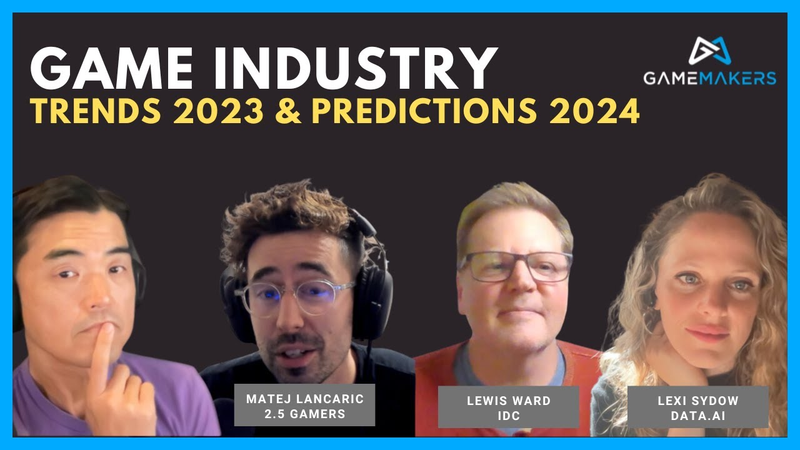
Games Industry: Trends 2023 and Predictions 2024
The global gaming industry is currently undergoing a structural transition from the rapid, acquisition-fueled expansion of the pandemic era toward a disciplined focus on profitability and operational efficiency.
- Mobile gaming experienced a 5% decrease in consumer spending last year, marking a shift from the pandemic-era surge as the market returns to a higher, yet stabilized, post-COVID baseline.
- Developers are increasingly using 'bait-and-switch' onboarding tactics, such as incorporating merge, tower defense, or puzzle mechanics in tutorials to lower CPI, before transitioning players into core 4X strategy gameplay.
- TikTok has emerged as a major competitor for user attention and spending, moving into the top five ad networks for gaming and capturing significant consumer wallet share, with US users accounting for 40% of its total spend.

ConsultMyApp’s Mike Rhodes On 4 Smart Strategies To End Q4 With A Bang
Mobile gaming studios must bridge the critical gap between user acquisition and long-term engagement by shifting from static analysis to a dynamic, data-driven lifecycle management approach.
- Studios can increase monthly organic install volumes by 10-15x by effectively combining acquisition and engagement strategies to build a loyal user base.
- Traditional ASO tools rely on 48-hour lagged data and weighted moving averages, which obscure critical intraday and intra-week keyword variances that impact search traffic.
- Developers should utilize secondary app store categories, as many puzzle games fail to leverage this feature despite its potential to improve search rankings and visibility.
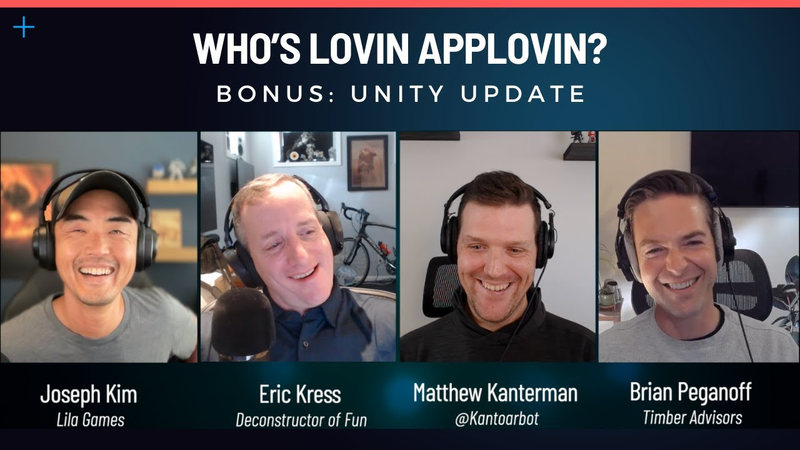
Who's Lovin Applovin (APP) | Plus Unity Update
Unity is currently navigating a period of significant organizational transition following the retirement of CEO John Riccitiello.
- AppLovin’s software segment is currently driving performance with 28% growth and 67% EBITDA margins, largely fueled by controversial fingerprinting techniques for user acquisition.
- AppLovin faces significant regulatory risk as Apple intensifies enforcement against fingerprinting, which could lead to an App Store ban and the disruption of its primary revenue stream.
- Unity is undergoing major organizational restructuring and cost-cutting following the retirement of CEO John Riccitiello, though its dominant market share makes a mass migration to Unreal Engine unlikely in the near term.

Warcraft Rumble: Deep dive into game's complexity, spend depth, systems, vectors, UA, creatives(#84)
Warcraft Rumble represents a strategic evolution of the mobile lane-battler genre, successfully adapting the Clash Royale formula by integrating expansive, scrolling maps and intricate gold-mining mechanics.
- Warcraft Rumble features an aggressive monetization model where fully maxing a single deck costs approximately €4,700, with a full collection completion estimated at €40,000.
- The game generates daily revenues between $250,000 and $600,000, positioning it as a high-engagement niche product for existing Blizzard fans rather than a mass-market mobile title.
- User acquisition is currently limited and conservative, relying on organic reach and repurposed trailer footage rather than performance-driven creatives or aggressive mobile-first strategies.

Building a Roblox Studio
Tiny Comet operates as a specialized studio within the Roblox ecosystem, dedicated to modernizing humanities education through immersive, history-based role-playing games.
- Tiny Comet integrates history-based educational content into popular Roblox genres like Tycoon and Tower Defense to engage players aged 10 to 17.
- The studio prioritizes 'learning-by-doing' and entertainment over didactic instruction to avoid the negative perception of overt academic branding.
- Operational development relies on a high-velocity cycle and a workforce of platform-native creators recruited via Discord and the Roblox Talent Hub.

S-Tier Go-To-Market Insights for PC Games
Effective go-to-market strategies for PC games hinge on a clear distinction between premium, one-time purchase models and long-term, free-to-play live services.
- Marketing must be treated as a dynamic, iterative process rather than a static launch event to ensure long-term viability in crowded digital ecosystems.
- Influencer marketing has transitioned from an experimental PR tactic to a core strategic pillar that requires the same analytical rigor and ROI measurement as traditional paid media.
- Developers should prioritize sustained strategies, such as long-term creator partnerships and consistent wish-listing campaigns, over one-off promotional pushes to raise a title's performance floor.
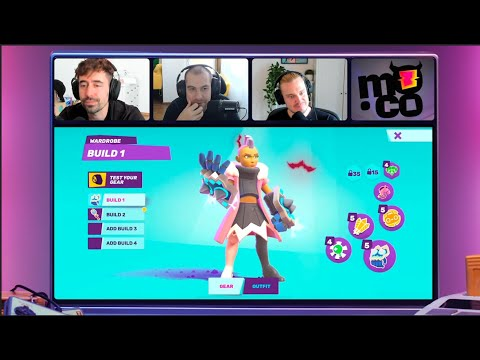
Supercell's Mo.co: First look! New game in closed beta - not even in soft launch yet
Supercell is currently testing Mo.co, an isometric, player-versus-environment action RPG that marks a strategic departure from the company’s traditional focus on competitive, player-versus-player titles.
- Supercell's Mo.co is a PvE-focused action RPG, marking a strategic departure from the company's historically PvP-dominant portfolio.
- The game utilizes a mission-based progression system where XP is gated exclusively by completing specific tasks, preventing players from grinding XP through general gameplay.
- Progression is heavily reliant on a gear-check mechanic where item upgrades are strictly tied to the player's character level, preventing the concentration of resources into a single piece of equipment.
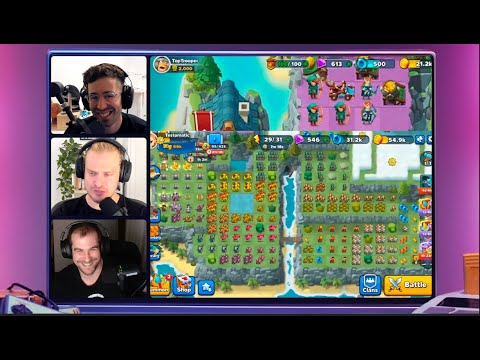
Top Troops Global launch case study: Game design, Ad monetisation & UA review (#82)
Top Troops represents a strategic evolution of the Battle Legion formula, transitioning from a PvP-focused meta to a PvE-centric progression system.
- Top Troops launched globally on October 4th, but experienced a slow start with approximately $6,000 in daily revenue during its first week despite years of development.
- The game utilizes a merge mechanic that lacks strategic depth, as players primarily brute-force progression using legendary units while ignoring a large portion of the available unit roster.
- Top Troops prioritizes IAP-driven revenue and currently generates less than 10% of its total income from ad monetization, significantly lower than comparable titles like Dragon City which reach 30%.
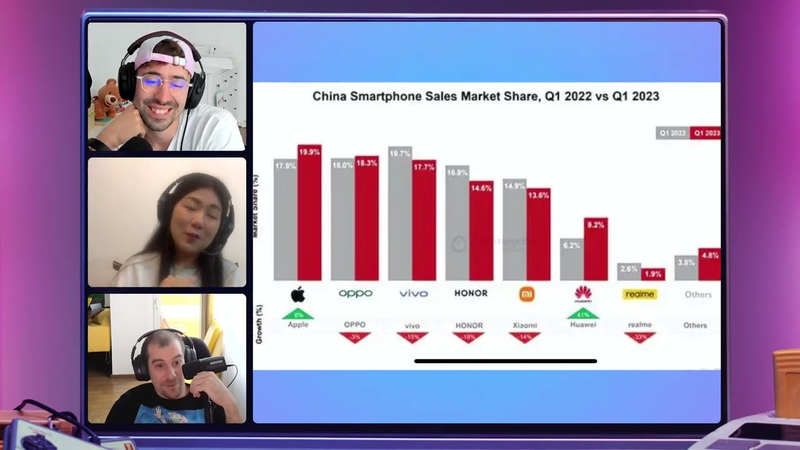
China Special West to East: market situation, cultural adaptation, publishing, UA & creatives
The Chinese mobile gaming market is experiencing a robust post-pandemic recovery, characterized by a significant acceleration in government licensing approvals for foreign titles.
- The Chinese government has increased game approval rates following the post-pandemic recovery, signaling a more favorable regulatory environment for new titles.
- HTML5 (H5) games serve as a strategic entry point for the Chinese market because they are easier to manage and often bypass the mandatory ISBN license requirement.
- User acquisition on Android in China is highly complex and requires working with local agencies, whereas iOS remains the most accessible platform for self-managed publishing.

Xsolla’s Chris Hewish On Creative Commerce Solutions To Take Control Of Your Game
The modern gaming landscape is undergoing a fundamental shift as developers increasingly prioritize direct-to-player commerce models to reclaim control over their business operations.
- Developers are increasingly adopting direct-to-player commerce models to bypass third-party app store fees and reclaim ownership of player data.
- Commerce platforms acting as the merchant of record handle global tax compliance, regulatory requirements, and payment processing, allowing studios to focus on game development.
- Legislative shifts like the Digital Markets Act are accelerating the adoption of alternative distribution channels, including sideloading and web-based storefronts.
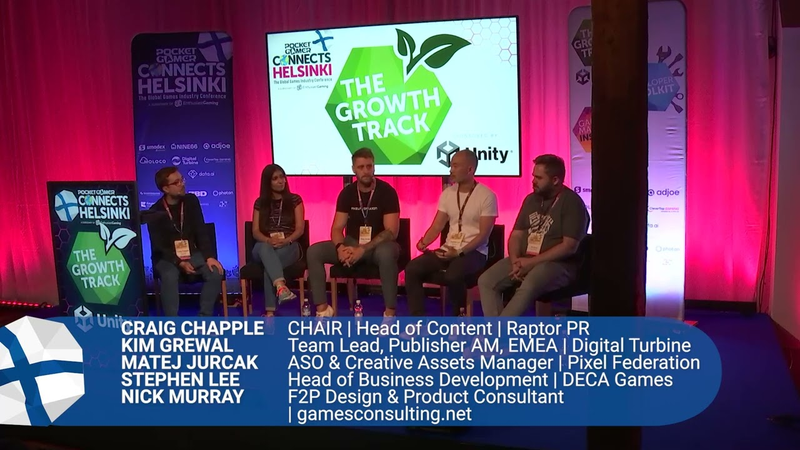
Panel: Beyond Acquisition: Lessons for Better Player Retention.
Long-term player retention in the modern gaming landscape relies on a strategic balance between structured progression and the prevention of player burnout.
- Long-term retention requires balancing structured progression with 'breathing room' to prevent player burnout and churn caused by relentless content treadmills.
- Monetization must prioritize non-intrusive models like season passes over aggressive mechanics or value-inflating economies to maintain player trust and long-term reputation.
- Marketing creatives must accurately reflect the actual gameplay experience to protect app store ratings and ensure positive player sentiment.
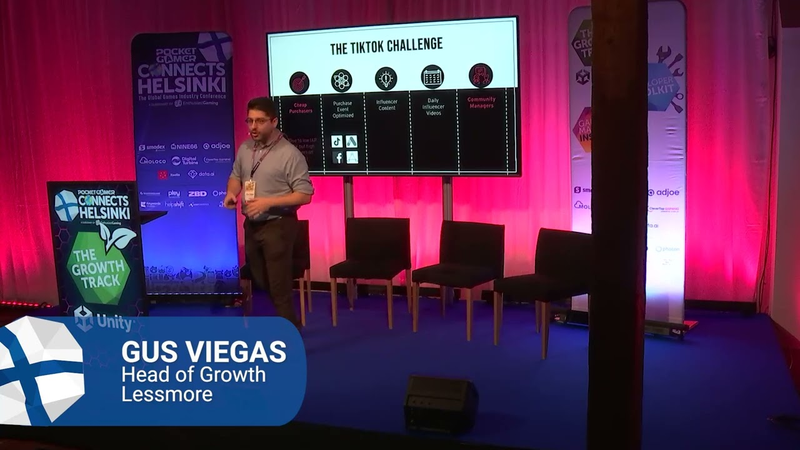
Building Growth Teams Around UA Algorithms Success Case From 2023 - Gus Viegas, Lessmore.
Building growth teams around user acquisition (UA) algorithms requires a strategic alignment between business objectives, technical data pipelines, and specialized human capital.
- Growth teams must align their organizational structure and skill sets directly with the specific requirements of the ad network algorithms they choose to leverage.
- Business objectives—such as maximizing low-cost purchasers, high-retention users, or ad-monetized scale—must dictate the choice of algorithm and the subsequent data signals fed into it.
- Ad networks require proactive input of post-install data, such as revenue events or early-session activity, to compensate for their limited visibility into user behavior.