Transcript
[Music] welcome to the navi gaming podcast where it is our mission to explore the business and future of video games we bring together the industry's brightest Builders investors and thinkers to keep a pulse on current events dissect emerging Trends and games share Lessons Learned and have a great time this podcast is also part of novic growing ecosystem which ranges from free and premium research to Consulting and advice ADV services for more information visit [Music] www.nic.edu built the platforms for some of the largest live service games including League of Legends fortnite Destiny 2 and Plants versus Zombies 2 pragma Powers services like accounts matchmaking and player data for the world's most ambitious live service games the pragma
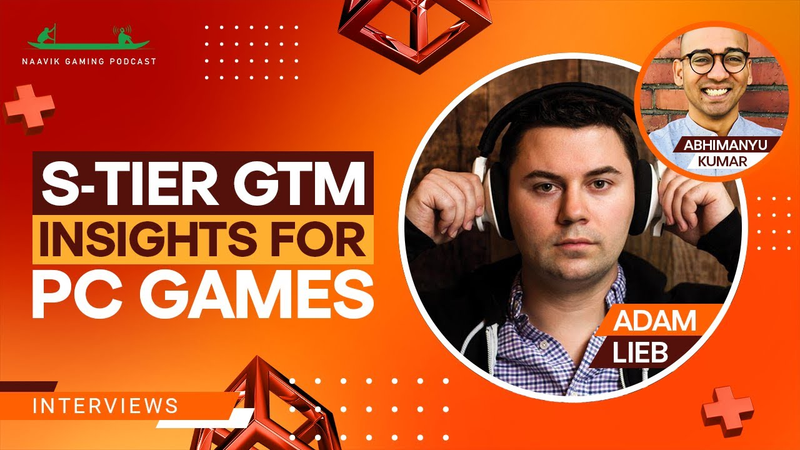
back-end game engine is the only solution that is truly extensible so that game designers aren't blocked by clumsy blackbox designs with pragma Studios no longer need to hire a large backend team and get the ultimate peace of mind that their game will always be ready to scale to learn more simply head to pragma Dogg or check out the link in the show notes and with that let's jump into the episode so welcome everybody uh I'm your host Manu and it's raining here in Cologne today which means it's a good time to have a great conversation and that's exactly what we're here to do because today we have a special guest joining us Adam leeb he is the CEO of gamesite which is a marketing technology company that provides a suite of tools to maximize Performance Marketing Effectiveness across PC console and web 3 so welcome Adam thanks for having me so to kick things off and you know for our listeners who might not be very familiar with you and game site uh could
you give us a brief overview of your background uh and also what game site is all about sure uh so yeah I've been I'd say in in and around games for 20 some odd years which is basically my entire conscious life I started my first Gaming website when I was 11 doing basically reviews and and walkthroughs of of games uh that little website got bought by IGN when I was like 14 and I've basically worked in games ever since so um yeah games is my entire life I've spent the last 10 years building um you know this company now which is gam site and uh you know gam site we connect players to their next favorite game uh we do that by building uh Market leading measurement platform that helps game Publishers around the world make the right marketing decisions um and we through sort of that process have have developed other really interesting Technologies and platforms to help uh games grow including our massive sort of
influencer platform which is used by hundreds of companies to to execute you know content creator uh activations everything from Creator programs to sponsored campaigns to earned and organic stuff so um yeah really anything we can do to help our our PC and console game customers grow uh the the core of the business as you sort of mentioned is is this measurement uh attribution platform uh that we pioneered which is meant to help connect what happens out of the game with what happens in the game uh so all marketing digital marketing activities with all in-game activities from you know sales to in-game purchases and and everything in between and so through that we just have this sort of I guess really unique and interesting lens into how games work how games launch how games grow and yeah hopefully you know excited to chat today about some things that I've learned and many years doing this awesome awesome uh which website was that by the way what was it called was very very very
creative very creatively named in N64 guu.vn we can kind of dive into today's topic of discussion um it's titled stier goto Market insights for PC games and I'd like to give a quick shout out to Nicole Yang who's the CMO of gamesite uh for the awesome title uh now this is a topic that I've been getting very curious about off late especially since I see you know both new mobile games building crossplatform from the get-go and many existing mobile games uh starting to launch their PC skes most recently um you know we kind of saw supercell also
launch Clash of Clans and Clash Royale uh on PC in short the need to understand how the PC platform behaves from a go-to market perspective is becoming increasingly important for developers across gaming verticals and that's why we have Adam here today so let's kind of start off with laying a foundation for the discussion um so Adam when when you know kind of thinking about building a goto Market strategy for for a PC title from scratch how should one structure their thoughts you know what what are the activity buckets one should be thinking about yeah great sort of foundational question I think the first the first step is is usually starting with the you know the goal the outcome in mind and I think that's really important in this context because there is no right answer and there is such a wide spectrum of answers so you know I know PC consoles a whatever roughly $80
billion Market that the difference between what's probably going to work for clash Royale you know popular mobile game now on PC uh free freeo play you know relatively low LTV certainly in the PC console context is going to be massively different than what Elden ring uh you know whatever 60 plus dollar premium skew onetime purchase possibly with DLC type of game is is going to be looking for and so you know kind of thinking about you what are what are the goals and I think for many of our customers or many of PC console games they sell premium products right they're trying to sell a game like I said once maybe there's DLC maybe there's some some sort of like longer term service to the game but the primary goal is still going to be sales in 30 60 90 days um that is just such a different set of tactics one should take than launching a freeo playay service game that you
expect or hope lasts for 10 years right your the way you think about optimization the way you think about you know the efficacy of channels is just super super different than hey can I make this one thing work for me today versus hey I need this thing to work for me for the next 10 years so I think starting with okay well what what what like kind of world are we in and there's a some gradation there's definitely companies um and I actually think it's probably becoming the the most common type of game that we see is a premium product up front there's still some sort of upfront cost 20 40 60 80 bucks uh within some kind of live service component of either DLC seasons pass maybe microtransactions Al that's probably the rarest one um so I think that you know kind of figuring out where where you are there is the first step um and then once you do that then all of a sudden you know a lot of the the channel strategies what you sort of called the activity buckets uh you know start to come more into place there are some channels that are are going to you know
likely make more sense for one type of game than other so I don't know linear TV not the most common tactic but if you're making a AAA firstperson shooter you're making Call of Duty linear TV is almost certainly going to be a part of your GTM strategy uh not the case if you're you know I know scopely and you're you're start you're taking stumble guys from Mobile to to PC probably not doing linear TV commercials although maybe they are so if if they are it's not my fault um so I think that there's some of those channels that that are going to kind of be are going to dictate based on what type of game you are and like I say that kind of outcome you're you're looking for and then once you kind of get into those those channels so you know social search VOD streaming influencer CTV you know these kind of like broad buckets of marketing activities the tactics within each channel are also going to like rrange wildly right what what you're going to do on
um you know I don't know Reddit for example if you're if you're in that like hey I need to push sales in 30 60 90 days is going to look different there's going to be way more spend upfront um before the game's launched there's going to be more efforts around uh wish list campaigns pre-orders uh you really sort of building the the hype and hopefully inevitability of this game before it comes out where again you're in the free-to-play service base World probably not doing that probably not spending money until people can download and play and spend in the game um so the the tactics within each channel are are going to be different but I think the channels are you know they're broadly the same you know there's the you know all the ones I mentioned social search video Etc um so yeah I think I think that they're making sure that those things are clear and I think sometimes obviously everyone knows the type of game they're making but I think sometimes there is a little bit of um you know all games are like you know hey this this your strategy that are working for games but well not all games are created equal and trying to to figure out what what's going to work for your
not just business model but but type of game in genre and that's where I think we see the biggest changes in efficacy when we'll see two games with maybe the same marketing Budget on one channel and one works really well and one doesn't well sure you know there's things like creative and targeting and those things that of course matter um but oftentimes it's it's the type of game there there are certain types of games that work really well on Reddit and there types of games that don't work super well on Reddit uh same thing with twitch and same thing with YouTube uh so starting to figure out on a p ra you know what type of game you're making basis uh make is what's going to probably make the difference between which channels are effective and which ones aren't all right makes sense so so to quickly recap it kind of sounds like a three-step process so goals but heavily kind of contextualized to you know what what genre of game uh you're You're Building uh then there's the channel strategies uh themselves since uh yeah there are multitude of channels uh each of them function differently and each of them might not contextually be relevant for you or the game you're building and finally once the strategy set you know
getting deeper into kind of the channel tactics um great all that makes sense um before like kind of peeling a few more layers uh I'd like to ask maybe one more Baseline setting question would you roughly say that you know PC game marketing is mostly split into Performance Brand and influencer marketing um and if yes like could you quickly go over like okay what each kind of entails yeah I think I would I would probably make a slight tweak to that I think there's Performance Brand in like PR and comms and then I would put influencer if I were like drawing it right then I would sort of put influencer in this this you know bar below it or above it that that can touch all three uh because I I think you know I'll talk about that in a minute so those are the three that I would say is Performance Brand uh PR and comms and then yeah any you know influencer work is probably going to fall into one of those three buckets and they could be really really different right you know celebrity strategy which you know kind of Falls an influencer that's going to
be a PR comms thing that's not a Performance Marketing thing uh big sort of hype launch where maybe you know there's a a commercial or a trailer and it features features an influencer that that's a that's a brand thing right that's not a it's not a performance thing and then you have we would generally call like blocking and tackling but that's like you know sponsored content our streamers streaming my game is there Tik Tok videos for my game are there YouTube videos for my game that that creators influencers have made that I've you sponsored them given them free keys Etc to do that I can measure to sales that that's performance so I think the it influence marketing can fit into all three but they're they're all kind of different tactics yeah that's a that's a good breakdown um we will be kind of hitting on uh Brandon um and the pr and comm's bucket a little bit later uh and influencer marketing too uh but maybe for now uh Adam if you could just go peel a few more layers into the Performance Marketing bucket um and you know what what exactly does that entail
in in the PC games world yeah you know it's really interesting cuz we really got started out I would say there was roughly not a performance marketing industry in PC and console games right that was sort of like the Dominion of of mobile uh you know mobile I think you know Performance Marketing was more native to mobile because you know a games were free to play you know so like no barrier to download other than you know clicking clicking a couple buttons um and be the the efficacy around tracking and ability to do tracking was like super high right idfa before that it was it's called something else but basically you knew for each player that you clicked this button that they downloaded your game and how much that cost you that was that was sort of like a New Concept in games where PC console is a little different in that the vast majority of games are distributed through third party platforms at least third partyy to you as as a game developer steam Xbox and Nintendo PlayStation all of those
storefronts uh you know in some ways obfuscate your relationship in most ways obfuscate your relationship with your your customer and you don't have that that sort of data so that was like really the core founding premise of our business was to solve that problem what I would say most of our customers in those days and people still to some extent do call it like the black boox of steam which is I might spend my marketing dollars to send people to a steam page for my game they go there and I don't know what happens well you know gam site solves that problem by connecting those dots with where when the players actually download play by Etc in the game so you know Performance Marketing really is you know is that simple is it's marketing that you're able to connect to sales and to to revenue uh that is still a newer practice I think when you look at the the channels like the ad networks that are available for PC and console game developers they're well many of them are the same as they are in Mobile they don't work the same so you know Facebook for example like Facebook for most PC
and console Developers for a really long time was not really a performance Channel it really was a brand Channel like they there was just you know what is my CPM and what audience am I reaching there was not a what is my cost per install or or cost per sale that's something that is that is changing now and there is a building more of a practice around it but I think it really is that you know the idea of using data and numbers to make decisions about exactly where you spend your marketing budget not just basing it on uh you know eyeballs and Views and things that are maybe miserable but not really performance cool yeah uh we can actually like maybe peel one more layer into the performance marketing side and you know this is kind of moving more into the recent times so and you kind of mentioned it in the previous answer so we know you know Apple's uh step towards increased privacy and more specifically the rolling out of at and idfa it has rre quite a lot of Havoc across the mobile free to play space but you know PC games also kind of Market on mobile
specific channels um like you explained previously but yeah has has one one discussion that doesn't often occur in the industry is okay how the idfa has maybe impacted the PC uh gaming space uh specifically and also console but you know this is a PC gaming um or a PC games focused episode so so I guess my question is you know has idfa uh impacted PC Performance Marketing efforts at all and by how much uh and also our developers kind of doing anything specific to combat against it uh I think I think the the answer is a little the answer is that has affected a little so the the core ID FAS don't exist or you don't have access to them doesn't matter to PC developers like it just they don't the idfa is not part of the measurement process you can get an idfa from every phone or not every phone but you don't have that when people download the game on Steam so that actual IDE doesn't matter like it is not used you know we do attribution it is not used it's never been used uh for
attribution for PC games I think where so you know directly no impact I think the indirect impact is channels like specifically Facebook's probably the best one their ability to Target optimize do all the sort of like you know I'll call like blackbox magic that Facebook is really good at it's gotten worse right they they players that are opted out they're no longer getting that data for and so you know the same dollar spent on Facebook today is is marginally worse than it was whatever a year and a half ago because of the sort of like Downstream impact um so I I I we we have seen that we have seen Channel efficacy change over time though some of those impacts have been negative and and I think directly attributable to idfa deprecation um so you know no it hasn't it hasn't impacted sort of the ability to do measurement but it's impacted the efficacy of of channels I would say the biggest change that that we have seen in in you alluded to it already is more mobile first maybe
mobile exclusive game developers looking for other ways to grow saying like gez the things we are doing either no longer work don't work as well um or or maybe we're scared that they really will eventually never not work at all and so uh there's been more expansion to other channels PC being probably the first most logical one it's probably technically the easiest to get a game that runs on a phone to run on a PC uh so we've seen you know I bucket those into a couple different groups I think the first is just straight ports where you have a mobile game and you port it to PC and it's the same game and it plays the same way I think that is fine but there's really yet to be an impactful game like that um you know I think it's gone the other way where fortnite was a there's other games too but fortnite probably being the biggest successful PC game that is a straight Port uh to mobile that has been a successful mobile game you know sort of
their ability to distribute on certain platforms not withstanding uh that that hasn't happened and you know I don't know I probably don't expect it to happen games that are fun to play on your phone are typically not overly fun to play on your your PC I think the games that have worked kind of well have been and we'll see you know the clash games just launched this week um but those are games where the PC is more or less an extension if you're a heavy and someone who fits into that I I used to play Clash of Clans through an emulator on my PC because I wanted it on a bigger screen and I wanted to be able to have a little more control with them out so I totally understand that uh but I still think that's a a pretty small subset so I think that's kind of like one bucket I think the next bucket which we're also seeing is is mobile the big big mobile Publishers acquiring Studios or building net new games that are PC first um I think the probably most successful ones I can think of would be like n's uh you
naraka blade point you know massively successful PC game uh you know Studio they acquired to to to build that um and that I think they have uh really good mobile you know sort of user acquisition strategies and live Ops uh abilities and so they're sort of applying that to to a PC game so I think we've seen some of that and I think the last bucket is the the hardest uh which just call it like true crossplatform crossplay you know that's a like fortnite uh again really hard to execute there have been very very very few examples of of people doing that where you build a game that is truly fun to play on any device and you know easily accessible on any device and then you can play with the same the same people across device so those are the kind of three buckets I see from this kind of like you know mobile moving more towards PC land and I I think just timing in our customer growth from that segment has been perfectly timed with idfa deprecation so I can draw a fairly rational conclusion that that's the reason it's happening got it got it yeah
that that that that makes a lot of sense and yeah I also really like the way you bucketed it so yeah makes a lot of sense um yeah actually let's move on from Performance Marketing and maybe touch on uh brand and uh influencer and you know the pr coms bucket uh that you called out so where are kind of these fields uh today for PC games and also you know more uh looking forward where where do you think they're kind of headed yeah I think brand is really sophisticated in in PC gaming right it's it's a thing that they've been doing for a really long time mostly by necessity like mostly mostly by like kind of the nature of the way games have been developed released like physically sold in stores like like there are the constraints that sort of the way the industry was built you you just have to buy discs and then you've got CDs and you know fine we don't maybe some people buy CDs but you know most people buy digitally now but there still is that inertia of this sort of big launch and release thing that has necessitated you know brand marketing where like you
know Performance Marketing you know whether it was technically possible or not wasn't used and wouldn't have really made sense 15 years ago um in in the sort of like PC World you know it does now but that the again like the quality of brand marketing is is so high and I think you know up there with like luxury goods in the world for for types of companies that are great at Brand marketing so um that's still a huge piece of the industry I think it's fairly sophisticated uh but it is also not wildly data driven and certainly not not measured I think that is something that is started to change really recently uh Market Cycles I think have have kind of dictated that and I mean that's a thing across all industries that you know markets tighten up well brand marketing spins also tighten up there's more scrutiny around you know how many Billboards in Time Square did we really need and things like that so um we are starting to see more and more customers ask us for measurement around what are like very clearly traditional
brand marketing strategies that not that you can't measure but they're not you know the the sphere in Las Vegas for $600,000 an hour is probably not going to math out to a positive Roi for like your game launch cool and you know brand awareness and how many you know Impressions they tell you you get or whatever like I mean I'm not to say that those things are are not worth something but you can't really measure that in a in a Performance Marketing fashion but we have had that request so I don't know maybe one day we'll one day we'll uh we'll figure it out um so yeah I think I think brand marketing for PC game super sophisticated um you know super well all the things like that sphere like I drove past it in Vegas many times as they were building it and I was like how many game ads are going to be on here when it launches and like virtually everything I've seen has been a game ad so like I was you could just tell that's like what it was built for uh so yeah I think you know that that's kind of the the state of of brand marketing and you know I I think the future is we'll continue to get maybe a
little more data driven a little more um you know a little more science to to the Arts but it's already really good and really effective and you know I you do see stuff all the time where like w that is really cool and you paid attention and you remember it and kind of all the things that that you want from Rand Marketing you know awareness recall you know brand sentiment like you know just as a casual Observer of that stuff I see it all the time like yeah that was pretty that was good marketing that was cool makes sense uh influencer marketing think a a little different place um the the way that I would frame it is if you use this sort of crawl walk run paradig I think you know games were really early into influencer marketing right twitch you know sort of popped up and you had lots of people streaming video games it was very clear that this was like good for your game and figuring out okay well now what do we do how do we engage with those those content creators how do we you know get more of them how do we get more people making videos on YouTube for a game those are all things that I think gaming was just way ear earlier on than almost any other industry just by the nature of video games are digital and
when people had access to these tools like YouTube and twitch they made game content so um games was early and and sort of like ahead but I think the the sophistication you know it's still a newish medium um I think I think we're sort of we've emerged from the the crawl area into a place where I would say most games are aware that content creators hugely important part of the game's ecosystem I think it's really rare that you see someone you know a sophisticated game Studio making a game where they're not they're not thinking about the game design with that in mind like not just is this game fun to play but it's it fun to watch and not that every game is going to be you know built to be on the front page of twitch but I I think that that is now part of the game development process is thinking about that how do we make the game streamable how do we have highlight moments that are you know great for bite-sized chunks on YouTube shorts or or Tik Tok these are are just now part of of thinking about about building a game and then certainly when
it comes to to to GTM I don't think you see a game launch uh with you know any sophisticated marketer that doesn't have an influencer strategy that isn't you know kind of key to the games launch how big a part of the budget is going to be of course dictated by the specific game and the type of game and all that but but that is it 10 years ago you had maybe 10 to 20% of games that even thought about content creators and maybe their games were still being streamed on Twitch but that that they didn't care it just happened or it didn't that's like totally inverse now it's probably 90% that are actively thinking about it so I think they're sort of in that kind of walk place and then you know the top 10 to 15% maybe of studios are or in what I would consider like the sort of run space which is influencer marketing is no longer like a a PR activity it's no longer this sort of like you know black art of like do we Okay so we send out a bunch of emails or we talk to Talent agents genes and see who wants to play our game and it is
now being treated like any other Performance Marketing Channel where there's data uh being used to determine who you work with how much you pay them how much of your budget should go into it how to optimize you know okay which crators are successful we want to work with more ones like that here's the ones that aren't okay we got to work with fewer ones like that um what creative we apply to each sort of activation like all of that is is getting way way way more sophisticated and I think when you can when you can stack up the companies that can go hey we spent this on influencer marketing here's why here's the tactics we used and sort of here's what we're getting out of it it Stacks up next to search and social and paid CTV and like all these types of things and I think once you're there you're in the kind of run run place where it now is is a a practice not just a like I don't know experimental Channel um but I would say say that's still probably like said 10 maybe 15% of of studios are that far the meat is still in that walk that are kind of moving towards towards run and I guess yeah game site definitely
helps with measuring a lot of that uh kind of helping a lot of the yeah the meat get into the 10 to 15% uh range so so that's great well that's the that's the hope you know it's kind of funny it's kind of a funny thing when we actually first started out building our influencer tooling really this is the way they came out is we we had we measured like it was like the first hundred million of marketing that ran through the platform uh we we at kind of the end of the year we stocked it all every single campaign every single ad unit and we're just trying to find Trends like what what should we be building what is working what's not working and what we found is of the top 100 AD units like individual links basically of the top 100 like 90 some of them of the most effective from an Roi basis 90 something of them were influencers and we're like huh that's weird you know 0 90% of the most effective Channel or most effective ads were influencer ads like wow it's the most effective Channel what we then did is we kind of clicked out if you take one you know one influencer and then say
okay well what campaign were they a part of then we went and looked at all those campaigns and those campaigns were not all Roi positive they were not all really successful uh because the variance within that campaign was so high right you know game with launch they would work with let's say 20 twitch streamers one of them you know in our top 100 was great investment massively profitable like you know 10 out of 10 you'd get maybe two or three others that were sort of Roi positive good um you know good to great and then you'd get uh the vast majority that were a bad investment negative return and then you get a few that were like a zero like you know I remember looking at one that was like 25 $30,000 campaign or $30,000 contract with one creater you know and it sold like six six copies of a of a game and we're like oh this is like really really bad um so either way like you know we saw all this and our conclusion was well that's because this was years ago companies were were not really using data to make those decisions they were maybe going to a talent agent who said
hey I represent you know X XYZ streamer maybe X streamer was like a perfect fit they were that one out of 20 that was amazing and they go I also represent you know these 15 others and like you know give me a million dollars and you know all 20 of them will stream your game that happened and the results were the results um so we we built out you know data pipelines to help make those decisions and and and let people be smarter about who they worked with and who they didn't and how much that they should spend and optimizing the performance and what game targeting matters and all these sort of like more advanced uh decision-making Frameworks that you know again like Facebook would have Facebook has all of their targeting tools all just in a dashboard easy to do but with content creators it's a a different set of data that you need to look at um so yeah not either way longer longer derail on on that kind of run running piece great I I guess we can maybe shift focus a little bit now to maybe the more distribution side uh of things so there are many aspects here you know such as uh self-publishing versus you know working with the publisher steam versus the epic game
store uh and many more uh but I guess yeah maybe my first question is um you know what matters most when it comes to maximizing distribution so I back to like what we talked about a little earlier which is I think the type of game matters so much free you know freeo play versus versus premium and types of game genres there there are definitely different answers depending on that so I I can't give the generic advice that will work for everyone um would say the probably the thing that the conversation I have seen the most where I think developers are I guess tend to be wrong when they when they when they start out is the the thought that we should self-distribute right we we don't want to give up 25% 30% whatever the the number ends up being to a third party platform for uh for publishing you know work spending our own marketing dollars to drive people to our game we should send them to our website not to steam uh we want to have own the relationship and like all perfectly logical things that make a ton of sense I think what what we have
seen is that very very rarely is at the right decision from like a purely math perspective right from a how much am I spending in marketing to how many players buy my game download my game play my game Etc the conversion rate drop off from Steam to your own website or your own launcher is really massive and I think often times there's this thought of like oh well you know we're really well known people will trust us and therefore like we shouldn't have a lower conversion rate many many massive Publishers who've been in PC gaming for a very long time have tried this and you know very few have have had success I think some of them take that kind of like drop off hit for the long-term investment of we want email addresses and we want to know our customers and and we we sort of want to be able to to have that relationship which again makes perfect sense but but from a I'm launching a game where should it launch very very very rarely is self-distribution the the right answer
uh the the power of steam is so great the number of players that have it on their computer that trust steam that like to download games through Steam uh is so high I think the the best example I can give is a game game we worked with uh super popular game and around for a really long time was on PC console and on PC both on Steam and then they did self-distribution so the story is they implemented game sit you know they wanted to measure their their their marketing performance across all these channels they had a all of their ads were pointed at a landing page that was like their their games landing page and said you know come play our game download today which was through them through their own distribution or play on playstation um that's I think where the game was I don't think it was on Xbox at the time so it's like you know either go to go to PlayStation to play on Console or download from us nowhere did it say the game was available on Steam so they're you know they start working with us they're running marketing budget uh when day I get a call from the the head of marketing who says Hey like we're we're noticing what
we think is like some bugs in in gamit reporting it's telling us that like 20% of the TR the traffic from our ads is installing our game on Steam but that's impossible because our website doesn't say that you can download the game on Steam and you know so doesn't it doesn't work of course we mild investigation only to learn that like of course that's not wrong that is exactly what's happening 20% of players that they were spending their paid media on were you know either backing out Google goling it game available on steam or they were launching Steam on their desktop and searching to see if the game was there um that that players were finding the game on Steam regardless of the fact that they weren't told the game was on Steam and in fact specifically told to download it somewhere else um and that I think that that story often just helps me remember just how powerful that steam distribution is uh even when you don't want it to be um so you know it's funny they ended up changing their their tactics and what they actually found was they were getting a better return when they were actually just any players directly to steam sure it cost them money you know that they they had to pay
their percent to steam but the conversion rate increase was just so much higher on Steam than it was through their own um portal so uh yeah long long long story short that you know Ste steam is a really really powerful tool yes it is is expensive I think almost always worth it you know maybe we are examples where it's where it's not great yeah that's that's definitely a very interesting story and also kind of showcases some of the differences uh you know challenges and differences between self-publishing and you know distribution wise platforms like steam or epic game store um but yeah maybe now we can get into you know the specific game genres uh themselves um in your in your perspective are there like certain PC game genres that are you know particularly ripe uh for marketing driven growth and which are kind of the more red versus blue oceans over here what are you kind of seeing uh in the data yeah I I think I I broadly put it into two buckets one is Callum Main stream genres that are massively competitive so like I don't know first
person shooter would be you know one of the biggest ones type of game basically everyone's heard of there are massive players that that dominate the the market and then there's Niche genres and I think you know kind of knowing where you are is important because I think that the strategies and then the tactics end up being widely different I think when you're in the hyperco competitive genre like your whole strategy is how do we steal players away from something that they're already doing right like you know we're making a you know first-person shooter in the you know that competes with Call of Duty well your whole strategy is how do we get people to stop playing Call of Duty and start playing our game and you know there's a bunch of things that one would do to do that but that that is a really specific um you know thought around how you're going to go to market I think the other is you know Niche and Niche doesn't necessarily mean small Niche could be really big I think the the the niche that probably most interested right now in is like Souls board games where uh maybe you know a year and a half ago when when Elden ring
launched like there were not there weren't 50 games like that on the market in fact most of the games on the market were old years old and so that game launched it was huge widely successful basically people who play those games played that game and then they were able to to kind of expand that pie that's great what's been most interesting is like since then the number of games that have launched that have you know competed if you will in that Niche have mostly all been successful and I think part of it is they they you're not stealing so Liza p is probably the most recent example I don't know launched maybe a month ago uh they've sold over a million units you know was really the first Western Game launch from um from from neoz and you know they didn't really have like a lot of like you know brand equity and credibility to launch a game like this but they were massively successful doing it you think you know a bunch of the the tactics we could probably talk about but I think that you know strategically they're not stealing players from Elden ring right people bought Elden ring they play played Elden ring they liked Elden ring and they were able to Now launch a
game that hit that same market and said hey if you like this game you should you should try try our game that they weren't having to fight for that attention in the same way as again if you're competing with with with Call of Duty U obviously the risks and rewards are really different that you know if you're able to build the biggest FPS in the world like it's a much larger audience and a much larger game and you know the the outcome could be much higher but the the risk is obviously really different when you're you're build for a n audience that that likes a certain type of game and is actively looking for new games like that so I think you know the question for a game like like Li of P so much of that is going to come down to like really early user reviews is do do people is it a you know is it a good game which is you know whatever some subjective measure but hey there's a new there's a new game kind of like Elden ring and people seem to really like it like that kind of is all they really needed um to get the momentum going and then then it's kind of pushing the the boulder you know down the hill at that point um so yeah I think that you know I think of those two you know red ocean versus Blue Ocean
I guess um I don't know that I maybe I guess I wouldn't use that cuz I don't know that that Souls like games are necessarily a blue ocean it's just like a it's more like a lake right I don't know it's like you know hey this is a lake that we can fish in because we know how big it is we know that there are fish that grow in this that live in this Lake perfect um so I I think that might be maybe a better body of water analogy if we're going to sort of stick with that one so um yeah and then I think you know when you get into the you know the T iCal side of it they're also really different uh you know timing is it's one of the toughest things about I think PC gaming is like timing is so important and it's so hard to do right you know I don't know how long they spent building Liza P probably three four years you know it's a multi-year process I don't know that they knew exactly when Elden ring was going to come out they knew exactly how popular it was going to be and they they knew that you know kind of now is like a logical uh quiet time for Souls like games where they're able to just sort of say hey we've got a game like this for people who love Del ring but haven't played it in a while and are excited for a new one that worked out super super
well but but timing is is really really challenging where I think when you're competing in those hyper competitive uh game genres oftentimes the the timing comes down to like single- digit weeks like I can remember um you know a game that I spent a decent amount of time with is um 1047 uh splitgate which is an arena shooter you know sort of like a Halo competitor free to play Halo competitor and they they were able to to to sort of have this big launch moment on Console in the time when people were really excited for a new Halo game but the new Halo game was like a couple months away and so the they small team small budget certainly compared to to to Microsoft and they they were able to to have a lot of success by by kind of timing that just right where you know had they got it just wrong and all of a sudden you know the you know Halo did a did a a beta and then all of a sudden all the players want to play Halo because the game they' played before so the the the timing and how you you strategically sort of compete in one of those red ocean
markets is is also like super super critical so I guess yeah up until now like most of the discussion has uh you know um very much focused on the first bucket that you laid out uh you know the goals and kind of in that context uh you know kind of setting your contextual goals uh well um so it I guess yeah we can kind of move on to the second bucket you know and uh this would be more on the advertising channels uh side of it um maybe you could start with this telling us what were kind of the Key Advertising channels uh over uh or what are kind of the Key Advertising channels over 2023 uh and also um you know why why were some of them uh so important so I we are gamesite publishes a yearly report on this you know ad Network Effectiveness report and it has a super detailed breakdown that comes out in a month or so so I would say that you know I can give high level thoughts but those details will all be in a really great report soon um I think I
think at a at a high level for PC it's you Facebook and Google are are the biggest channels because they are the biggest channels in the world they the specific ad units and you know channels within a channel are definitely going to be different than what probably mobile developers are are are used to um but there're still you know know Instagram for example probably a smaller Channel relative on PC than it is on um on mobile but doesn't mean it you know it's not not effective uh then there there so there's like those big big ones I think the next bucket would be more gaming native so like you know Reddit well obviously Reddit isn't a gaming channel specifically it it is a very heavy people spend a lot of time talking about games on Reddit and in Reddit community so you have like Reddit and twitch and and those types of of still big companies with with large audiences but but have like more gaming
native stuff where you're really like advertising on on and around gaming content and then there's all sorts of you know longtail maybe maybe is is is a bit know diminishing but like there's lots of gaming focused um ad networks that are built specifically for for PC uh so that's that's things like you know fandom or IGN and Gamespot like you have all these websites or series of websites that cater to gamers that do you know tons of different ad units um those those are all different kind of buckets they all require different strategies I think in the last year Tik Tok has been the biggest growth channel in games marketing you it's like more dollars flowing there than anywhere like kind of net new uh some of that is is Tik Tok you know growth as a platform some of it is their growth as like a company and and basically having better products that that make sense and more focus on gaming which has definitely been a big Focus for them uh I think we've
[Music] seen Twitter kind of go the opposite direction um maybe that's true for everyone else but it's definitely been been true in in gaming um and then I think yeah there are few few others like Reddit that also I would say have invested more in gaming and I think that's something that has been you know from our Vantage Point as someone that integrates with all these companies and works with all these companies when we see the the kind of investment in everything from like product and data and marketing and sales focus on PC gaming like they all have more success it's like maybe not a surprising thing um but that has happened and you know maybe it's similar to the idfa deprecation problem we had as well where maybe their you know their mobile games stuff is drying up and they like oh what else can we do and then they focus more on PC but they companies like Reddit have made great strides from a like really like a product standpoint in in having better more attractive products for for PC games that work better and perform better and then
they're going to get more budgets and it goes great so uh th those would be some of the the kind of like you know Network side of things and then you know the other other couple things that I would say that we've we probably seen this year is CTV continues to grow and I think it will you know grow even more next year I that's both you know kind of macro and micro Trends you know macro there's just more cord cutters more people that that watch stuff on connected TV more of those connected TV companies are are doing ad supported models which means that you can advertise on them and I that is also just you know this a sort of macro Trend and then I think on micro they're also investing more in games investing more in like kind of AD products that work well for games you know for PC games one of the things one of the reasons I think they've been successful is so many of them have high fidelity trailers and assets right they spend lots and lots of money making some really beautiful 30
second trailer that you know is meant for either an award show you know they're announcing their game launch at the game awards or some of them they are for linear TV but you have these really really high fidelity assets and those can run on CTV pretty natively and feel good where um I think there's you know if you're watching you know you're watching a show on you know that ad supported Netflix and all of a sudden you get like you know kind of a a small mobile game Match 3 ad and like the formatting isn't quite right you're like oh this doesn't like this doesn't feel like a TV experience or whatever and I think that stuff kind of breaks immersion a little bit where when you get a trailer for a you know New Destiny 2 DLC you're like oh wow it feels like a you know TV commercial because it probably literally was one so that's another Channel that I think that that we've seen growing and both growing in in sort of size and efficacy and then maybe the the last one uh that that I'll mention is just like short form content both Tik Tok uh and YouTube shorts are
probably the biggest but almost every platform now is is doing more with that that kind of short fir video that one I would call much more of the macro Trend like that's just people in the world are consuming more of that content and gaming is some percent of that content and so games ads will be some percent of that content as well I wouldn't say there's anything more nuan to it than that yep make makes total sense uh maybe as a quick followup do you do you see any thing being different in 2024 um we know with with the with kind of the efficacy or the uh the ground that's been gained by uh some of the channels working over 2023 yeah I I think that most of those Trends are just new enough that I would expect them to roughly continue like I I think C you know CTV is going to continue to grow I think short form video is going to continue to grow um I think you know vtuber content is going to continue to grow like some of these things that are are like Trends now are not I don't think they're at the end of the trend I I think they're they're still at the beginning um and then I think the the biggest I don't know I would say like
more of a prediction where I don't know that I have good data to support it but I think it's likely to happen is I think Facebook and Google are both I think losing some ground due to some of the the sort of restrictions and the way they built their platforms to operate in a certain world and that world has changed they are really smart companies with lots of smart people and lots of great resources I don't think they're like oh well they're just going to you know Fade Into Oblivion think that's like impossible so I expect to see both of those companies have Innovations in terms of in terms of products uh you know potentially in terms of targeting I think both of those companies are are doing a whole lot right now around measurement and aggregate measurement in ways to prove their efficacy that maybe is just different than what people were used to in in the sort of idfa world so um I would expect to see I know bounce back feels too strong of a statement because they're both you know still very successful companies but I do think you know kind of in the day-to-day weeds of it I think
marketers have you know we've seen you know PC gam that they're not spining as much as they once were the efficacy is not as high as it once was mean it's bad and mean they're not spending but that that trend has been not positive and I would expect it to go back to positive um you know in the next couple years all right makes sense so yeah maybe maybe speaking since we're speaking about Trends um we can look a little bit more into the crystal ball um I mean you've talked about know uh Trends on the advertising Channel side of it Facebook and Google a little bit of uh Tik Tok but there are other topics like you know content creator programs vtubers maybe there there are more so in terms of like kind of key marketing related Trends in 2024 what what are you kind of keeping an eye on which one which one should we should we as an industry also kind of keep keep an eye on and also which one is kind of uh that which which is the one that you're particularly excited about uh yeah well there's I think there's a there's a bunch I would say probably my first thought would be
creater programs and that's something that you know is still I would say small and new not there's not a lot of companies that that do it I also think there's a lot of companies that maybe use that term incorrectly to mean something different than I guess what what I mean uh but I would say the the idea that there is a long-term relationship with a cohort of content creators that are Advocates of your you know your your game or or games or or brand is something that I think we're just going to see a lot more of uh for for a while I I I would say there most of these sort of like Creator programs were just companies trying to like basically get free media like hey like you know let's put up some some program and we'll give people you know a free copy of our game and hope you know hope they they stream it and then we'll we'll kind of take credit for it and well you can obviously get people free copies of your game and maybe they will stream it think the idea that there's this longer term relationship um I think makes sense as the industry broadly shifts towards
you know service based games again even if it's not a free toplay game most games now have some reason to to have players thinking about talking about playing their game over longer periods of time even if it's just like a DLC model um so I think that that like sort of authentic crater program where there is value for Content creators to sort of be part of this this community of in and around a game I think makes um not just makes a lot of sense I think it makes a lot of like economic sense I think it's you know they can be expensive to run I mean you're often talking about inperson events you're talking about you know physical merchandise like you're talking about things that are not just like hey let me send a an email with a free key to someone um but you know as a company that calculates Roi the the ROI on those can be exceedingly high and I would say like kind of the one simple stat that that we've looked to calculate the the value of a lot of these is when you when you you look at how most games launch you know they
they look like this right you know the game launches lot of hype and you know then they then they go down and that's that's both like number of people playing it every day that's number of people streaming it number of YouTube videos like all of those stats for like kind of how relevant your game is that's true of every game right they go up and they go down even successful games that's what that's what happens and what we see with with well-run Creator programs is that it it sort of like raises the floor so you know the big happens and then instead of crashing to the bottom it like kind of hits a much higher you know kind of homeostasis until the next you know the next launch the next DLC the next patch like whatever the thing is and so I think from a you know an Roi standpoint they can be widely valuable but they're really hard to do and I think that's also like you know they they're still we then we're probably in the crawl maybe moving towards walk phase of of creative programs as a marketing channel we're we're really far from kind of that that run so I think that's one that that I've seen work really well um you know that I'm really excited excited about uh the ne the next one is vtubers barely alluded to it but I think
vtubers [Music] are both both a growing Channel like there more YouTubers tomorrow than there were today by a lot and the sort of efficacy especially of the the the larger ones as they get bigger they they have more influence and they have more impact um and you know they sell more games basically so um that's something that that I I see continuing to grow I think both you know kind of like broader macro societal Trends towards I don't want to say tolerance quite the word but like acceptance of AI generated and artificial you know looking characters like those are all things that I think 10 years ago if you would have asked me like that I don't think people are going to be interested in watching a cartoon character stream a video game I would have just been wrong like that's now uh becoming more commonplace I think that as it gets more becomes more commonplace the the size of and impact of those those specific
groups of creators will grow so that's that's another one that uh no doubt and then the last one I just briefly uh would is is that short form content we already already talked about like that that just does not seem to be slowing down and I think that for a lot of developers who um I talk some about this actually just I think it was yesterday where as they're developing the game they spent so much time thinking about how to make the game like streamable and watchable on Twitch for like an hour at a time right like how do we have these fun engaging matches that people want to sit and ins spectate for an hour great and important and I think that was sort of like the goal post they were shooting at I think there's just this like new goal post that well how do you make a game that has funny or terrifying or whatever 10 12 15 second moments that people want to post on Tik Tok yeah and I mean the number one most the best the best genre if you if they were if this was the outcome if you're like hey Adam let's make a game and let's make it huge on Tik Tok the genre would be horror the the games that perform the best in short
form are horror content people like watching other people freak out for lack of a better term and like ah and like that is a that is the the moments that that work the best on short form vide so those games perform the best you know does that mean you should just add like random shock horor elements to your mobile probably not but um I think you know what is the other version of doing that for your game I think it's just a new is a new thought that you know vir veloping game i' be like you know how do we do this how do we have these these like moments really that that people want to watch either get played and I think maybe the underappreciated pieces want to watch other people play and that's that like it's the reaction it's not the horror moment people don't to watch the you know whatever the Monster jump out of the closet that that they don't care so much about they want to watch you watch some a monster jop out of the closet and I think that's just a it's just a new enough phenomenon that I'm not sure we've all figure out what how how to build games that that are specifically tailored to that yeah nice yeah I can um I can definitely kind of confirm uh everything that you said because I'm one of those people who
likes to watch other people getting scared on you know Tik Tok and such and during the horror moment itself uh you would definitely find me you know reducing the volume or maybe looking away from the screen but but uh but yeah I do enjoy the reaction to it so yep that's great no too too scary for me I I avoid all that scary stuff all right great um yeah that's that's like great some great insights into you know kind of the future in 2024 uh but yeah I think we're kind of running up on time so you know a good time to also close up with the final question since this is uh goto Market uh you know strategy insights related podcast for PC games if there's one game GTM strategy that you'd recommend everyone to study you know which one would it be and why uh well I will I won't answer it perfectly because I'm going to say I I don't I think they're they can't be just one because games are so different so I I guess I could give you two I can give you one that I think you know for a I'll call Premium game
versus free to play because I just think that they're they're so different so I I think for premium I think Li of P that it's very recent just launched is probably one that that I would you know Point people to as they they did a lot of things well um some of the things that they they really focused on was they were really they really focus on wish list and basically the the the hype before the game launch uh they did that in a couple ways they did that uh one through uh access to the game early right like they had you know beta beta weekend basically to to allow lots of people to play the game but I think specifically content creators you know can we get a bunch of content creators to play this game in advance of it launching to show how good it was uh and get people excited in in the the call at the call Action on all of it was like go wish this the game um that has a lot of really positive Downstream impacts the the wish listing right it it is the game is more likely to be featured on Steam when it launches uh it's more likely to be at the top of people's feeds uh once know the the very very broad industry
number is like 10% of wish list convert to sales within like I can't remember it's 48 hours or or 36 hours or something like that but you know within the first day or two you end up getting a huge number of those wish listers that like quickly buy the game uh which you need in order to have the game have momentum and and all of those type of things so um I think that that really focusing on wish listing and getting people ready for the game especially game that didn't you know didn't come from Bethesda where a lot of that stuff was already built in right like they came from a publisher that people in the west Broadley have never heard of so that that was a hugely important part and then definitely focusing on content creators I mean they were I think the number two game on Twitch the day they launched I'm pretty sure that was like that was a ea the new soccer game the new FIFA game was softball T FC thank you e AFC like that that also launched that day so I think they were number two to that but you know that's the biggest in the world so so like still an impressive number to to get the game in front of that many people so I think that that would be one
that I would point to and then you know it's it's a studio that now is you know they probably going to launch DLC I don't know if they've announced they will or not but that's a type of game that very likely they'll be DLC there'll be future sort of installments and they'll be able to like kind of reuse a lot of those tactics um to make it more effective over time so I think that's a that's definitely one and then the second one uh maybe I'm I'm I'm uh you know sort of biased because it's probably my favorite game uh would be magic the Gathering Arena it's like the digital version of of magic card game and I think what what I would kind of give them the most credit for is like that that game launched five years ago I think maybe six years ago now it's like it's not like it's a new game um I happened to work with him when it launched so I I can remember back then but I think what they've done as well as really anyone in PC is try new things measure new things get smarter about those things and so while I would say you know not everything they did when they went to Market worked they figured out what didn't and what was going to
going to work for them in a way that was you know I don't know um intellectually honest right and I think that can be really hard especially at big companies where you have a lot of people with opinions and a lot of people with their own pet projects and like you know people invested in those things and I think they've been really really great at going hey this is what works for us and this is what doesn't and I think the the best tactically of a game that you know marketing strategy is really successful is you know how often do you see ads for their game and they five six years after launch I still see their ads everywhere because they you know they don't spend that money if it doesn't work and so I think you can always tell whose games working by how much they're still they're still marketing and that s a game that is you know widely widely marketed and and still growing so um yeah I think the the the the tactic should be different between Liza p and and Magic being a you know free to play versus a a PC game or sorry free to play versus a premium game but both were
really successful and I would definitely look at either of those if I was launching a free to player great I think I think that's a great place to end our discussion today uh for today uh so thanks again Adam uh for sharing your knowledge with us uh it's really been a pleasure to have you on um if listeners want to connect with you uh or learn more about game site or even check out the the report the advertising channels report uh I hope I'm getting the name right uh that's dropping in a month um you know how how can how can they do so where can they find you sure so uh I'm easiest to find either Twitter uh it's adamle or on LinkedIn I'm sure my name is somewhere you can find and you just find me on LinkedIn I you know if you say that you listen to a podcast that I was on and you want to chat I happy to to take the connect uh for the company just go to the you go to the website gamesite doio and certainly have easy ways to get in touch with us there uh the the ad Network report which actually think that Nicole is retitling I think she's as you mentioned really good at naming stuff so I think she's coming up
with some other name for it this year so I I don't know what it's going to be called uh you know that'll be that'll come out it'll be in the it'll be in the press and then you know eventually it'll be on our on our website uh under report and it's it's free it's always free it's you know meant to be informative so um yeah that'll be I think broadly available in the next month or so all right perfect sounds good and to our listeners uh thank you for tuning in uh don't don't forget to subscribe and we'll catch you in the next episode in a couple of weeks for some more insightful conversations until then all the best with navigating your next PC game launch if you enjoyed today's episode whether on YouTube or your favorite podcast app make sure to like subscribe comment or give a five-star review and if you want to reach out or provide feedback shoot us a note at podcast nov. or find us on Twitter and Linkedin Plus plus if you want to learn more about what navic has to offer make sure to check out our website
www.nic.edu and advisory Services again that is www.nic.edu [Music]
Auto-generated captions from YouTube — names and numbers may be misheard.


















Comments