User Acquisition reports and market data
Documents
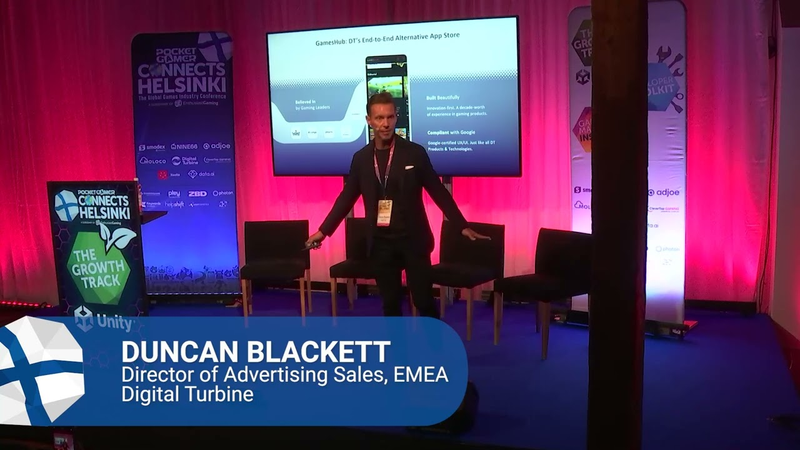
Looking for Alternatives - Duncan Blackett, Digital Turbine.
The mobile app economy is currently facing significant headwinds, characterized by a 30% year-on-year decline in advertising spend and a notable decrease in user monetization.
- The mobile app economy is experiencing a 30% year-on-year decline in advertising spend, forcing developers to seek alternatives to saturated and restricted traditional user acquisition channels.
- Alternative Android app stores represent a significant market opportunity, having generated $36 billion in revenue in 2021 while Apple and Google account for only 49% of global app installs.
- Direct-to-device marketing, facilitated by partnerships with carriers and original equipment manufacturers, allows developers to bypass the app store duopoly and secure more favorable revenue-share agreements.
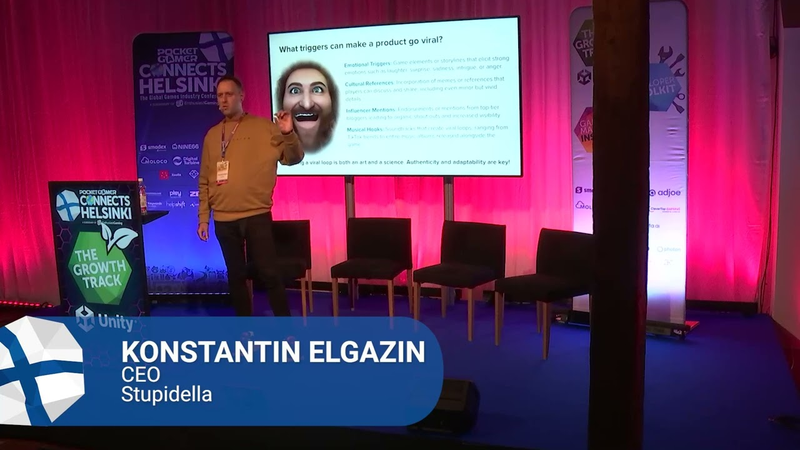
Viral Loops in Games Marketing - Konstantin Elgazin, Stupidella
Viral marketing serves as a primary, cost-effective growth strategy for mobile game developers, enabling organic user acquisition without reliance on traditional paid advertising or meta-campaigns.
- Viral loops function as a cost-effective alternative to paid user acquisition by embedding shareable, emotionally resonant content directly into a game's core design.
- Successful viral content relies on humor, surprise, or indignation to trigger organic sharing, rather than relying on artificial incentives or traditional paid advertising.
- Developers can drive organic growth by incorporating cultural references, memes, and Easter eggs tailored to specific regional audiences.

Panel: The Rise of Real Attribution in PC & Console Gaming.
The PC and console gaming sectors are undergoing a fundamental transformation, moving away from traditional brand-centric marketing toward data-driven performance strategies long utilized in the mobile industry.
- PC and console developers are shifting from brand-centric marketing to mobile-style performance strategies to combat market saturation and declining organic discoverability on platforms like Steam.
- Developers are adopting granular attribution tactics, including IP-based analysis and cross-platform tracking, to accurately forecast lifetime value and optimize return on ad spend.
- The industry is pivoting toward privacy-compliant advertising models, replacing traditional cookie-based tracking with aggregated, anonymized data and contextual targeting.

Superstar Session: Performance Marketing on PC & Console - Adam Smart, AppsFlyer
Performance marketing on PC and console is currently undergoing a significant evolution, mirroring the data-driven maturity mobile gaming achieved years ago.
- PC and console gaming are shifting from traditional brand-focused marketing toward data-driven performance models, mirroring the maturity previously established in the mobile sector.
- The industry is currently managing three distinct monetization models—legacy one-time purchases, free-to-play live services, and hybrid models—each requiring specific measurement strategies ranging from simple install tracking to complex ROAS analysis.
- Technological infrastructure is evolving to support PC and console attribution through server-to-server integrations and specialized SDKs, enabling more granular measurement of user acquisition.
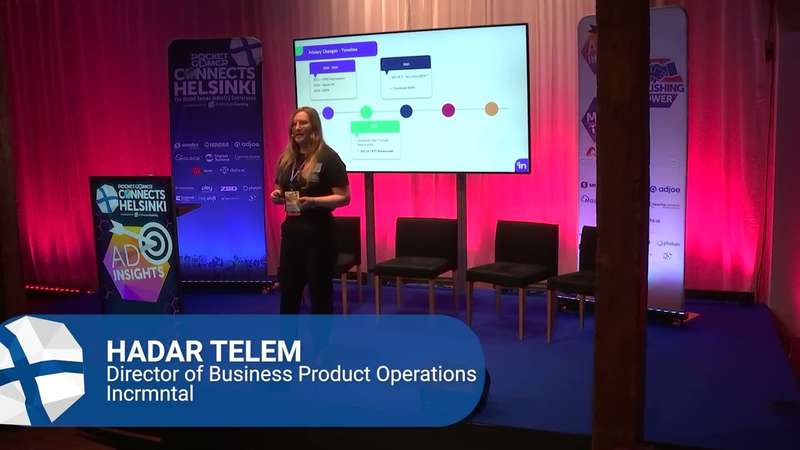
Measurement in a Post Privacy Era - Hadar Telem, INCRMNTAL
The mobile advertising industry is currently navigating a significant transition from user-level tracking to privacy-centric measurement.
- The mobile advertising industry has shifted from granular, device-level tracking to a privacy-centric model following the deprecation of the IDFA and the introduction of Apple’s iOS 14 ATT.
- Marketers must adopt a hybrid measurement framework that integrates last-touch attribution, incrementality testing, and media mix modeling (MMM) to compensate for the loss of user-level data.
- Last-touch attribution should be reserved for real-time tactical optimizations, such as refining creative assets and audience targeting.

Questions you Should be Asking Your DSP - Ben Jeger, Moloco.
The primary objective of this analysis is to shift the perspective of mobile game and app developers regarding their interactions with Demand-Side Platforms (DSPs).
- Shift the focus of DSP partnerships from manual, granular control—such as managing specific publisher lists—to long-term ROAS and scalable investment strategies.
- Stop attempting to 'outsmart' machine learning algorithms by restricting placements, as modern DSPs optimize for high-value user behavior across all available exchanges.
- Prioritize business-critical KPIs like day-30 ROAS over superficial benchmarks or simple attribution metrics to better measure true growth.
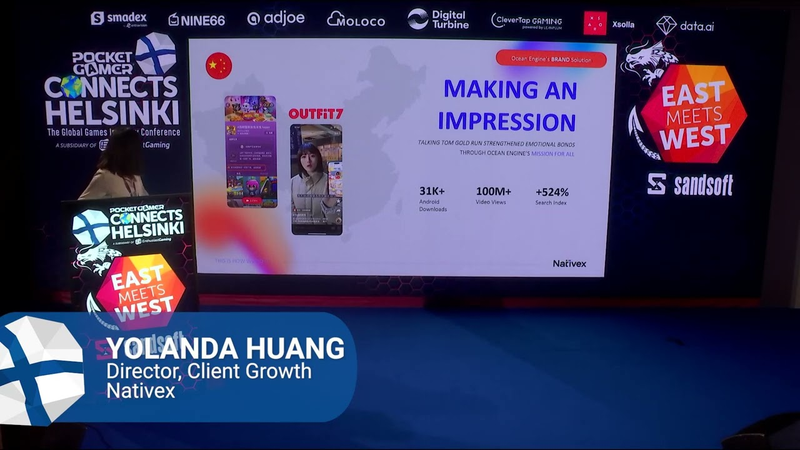
Exploring APAC: How to Market in a Flourishing Region - Yolanda Huang, Nativex
The Asia-Pacific (APAC) region represents 46 percent of global gaming revenue, yet it remains a complex landscape requiring highly localized marketing strategies.
- The APAC region accounts for 46 percent of global gaming revenue, necessitating highly localized strategies rather than standardized global approaches.
- Market entry in Japan is most effective when leveraging the country's anime and manga culture through offline-to-online marketing, such as physical events featuring influencers and cosplayers.
- Success in China requires utilizing the Ocean Engine ecosystem and implementing high-frequency creative testing, where thousands of assets are iterated to optimize performance.


Insights into Marketing Trends of Global Mobile Games: Q3 2023
The analysis focuses on contemporary marketing dynamics within the global mobile gaming sector, emphasizing how creative diversification and platform targeting shape user acquisition performance.
- Frequent creative turnover is a primary strategy for mitigating ad fatigue and sustaining click-through rates in competitive mobile gaming markets.
- Deploying fresh creative assets can improve cost-per-install (CPI) benchmarks by up to 12% compared to static creative pools.
- High-volume creative production is a critical growth lever, evidenced by a major publisher launching 6,500 distinct ad assets for a single strategy-lite title in Q3 2023.

Strategic Cross-Promo for Mobile Publishers - A HyperBeard Case Study
HyperBeard, a prominent Mexico-based mobile game developer and publisher, has successfully optimized its user acquisition and monetization strategies by leveraging advanced data analytics tools.
- HyperBeard achieved a 35% increase in portfolio lifetime value (LTV) and a 15% to 20% improvement in return on ad spend (ROAS) by shifting to cross-portfolio performance tracking.
- The publisher increased total ad spend by approximately 300% in a single quarter by justifying higher cost-per-install (CPI) bids based on a user's total contribution to the entire game ecosystem.
- By integrating Tenjin and Growth FullStack, HyperBeard centralized data to bypass privacy-centric measurement limitations and track user migration between their 30+ titles.

Mobile UA Landscape Impact on Gaming Companies (Pixels & Profits #7) ft. Matej Lancaric
The mobile gaming industry is undergoing a fundamental transformation in user acquisition strategies, moving away from traditional interest-based targeting toward sophisticated, event-based optimization.
- Mobile user acquisition is shifting from interest-based targeting to event-based optimization and modeled conversions due to the deprecation of IDFA and the end of fingerprinting.
- Developers are prioritizing financial discipline by shortening payback periods to between 30 and 90 days to ensure immediate profitability.
- Successful studios are increasingly utilizing web shops to circumvent platform fees and adopting genre-bending mechanics inspired by Asian market trends to improve monetization.

The best influencer marketing practices and the most common mistakes you can make
Influencer marketing has evolved into a cornerstone of modern game promotion, with industry spending now reaching $16.4 billion and many developers allocating over 40 percent of their budgets to this channel.
- Influencer marketing has become a primary promotional channel, with industry spending reaching $16.4 billion and many developers dedicating over 40 percent of their total budgets to this area.
- Success relies on moving away from vanity metrics like follower counts in favor of data-driven analysis using tools such as TwitchTracker and SullyGnome to evaluate concurrent viewership and historical gameplay.
- Developers should prioritize authentic, long-term partnerships over transactional relationships by engaging directly with creator communities through channels like Discord.

How to increase wishlists & game sales from China? Growth marketing tactics & case study
Entering the Chinese PC gaming market requires a sophisticated, localized strategy to overcome significant barriers, including strict regulatory requirements like the ISBN license and a unique digital ecosystem.
- Prioritize organic growth through indigenous platforms like Bilibili, Douyin, and Heybox, as traditional paid advertising is often restricted or ineffective without an ISBN license.
- Establish a dedicated role for a coordinator who possesses both cultural fluency and marketing expertise to manage regional branding and community engagement.
- Build long-term, non-transactional relationships with local content creators rather than relying on aggressive, paid sales tactics to drive discovery.