User Acquisition reports and market data
Documents

The 4 Generations of Rewarded Ads: Personalization + LiveOps = The Future of Offerwalls
The evolution of rewarded advertising has transitioned through four distinct stages, moving from rudimentary rank-boosting installs and simple level-based rewards to the sophisticated, playtime-centric models popularized by platforms like Mistplay.
- Rewarded monetization has evolved into a fourth generation characterized by hyper-personalization, data-driven targeting, and LiveOps-powered engagement.
- Offerwalls can contribute between 5% and 30% of a game's total revenue, serving as a critical alternative monetization channel for non-payers and 'dolphins'.
- Modern offerwall solutions must integrate media source data from platforms like AppLovin, Unity, and Google to dynamically match game offers to specific user acquisition sources and behaviors.
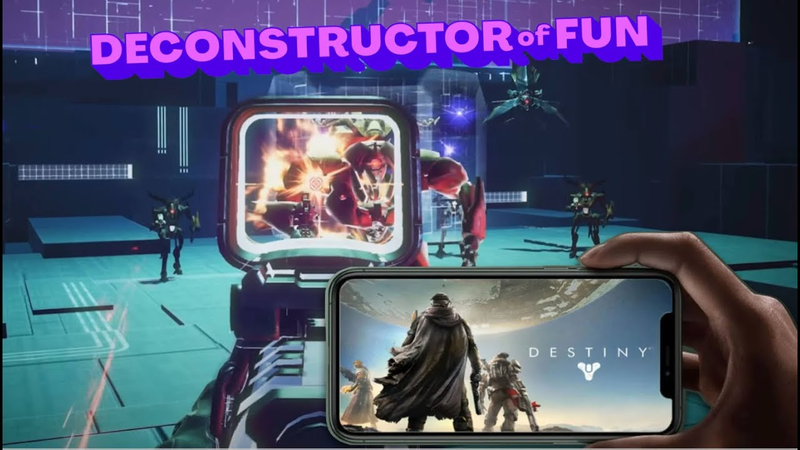
Destiny Rising Is Here, But Where Are the Downloads?
The global launch of Destiny Rising, a mobile spin-off developed by NetEase based on the Destiny franchise, has been marked by underwhelming download figures, raising questions regarding its product-market fit and the current state of the mobile shooter segment.
- Destiny Rising underperformed at launch with approximately 900,000 downloads and $2.3 million in revenue over its first four days.
- The game's initial download volume is considered lackluster compared to industry benchmarks, such as Call of Duty Mobile, which secured 80 million iOS downloads in its first month in China.
- The title faces significant product-market fit challenges in the Western mobile shooter segment, which remains heavily dominated by established competitors like Call of Duty Mobile.
The Founder’s Dilemma: Equity vs. User Acquisition Financing
User acquisition financing has emerged as a vital strategic alternative to traditional equity and debt, enabling gaming and digital app companies to scale growth without diluting ownership.
- Founders should adopt a bifurcated capital structure, using equity for high-risk product development and revenue-based financing for predictable user acquisition to avoid ownership dilution.
- Treating customer acquisition costs as capital expenditures rather than operating expenses allows companies to accurately assess profitability and leverage non-dilutive financing to increase enterprise value.
- Firms like General Catalyst and PVX Partners provide capital that aligns repayment directly with the lifetime value of specific user cohorts, decoupling growth spending from balance sheet constraints.
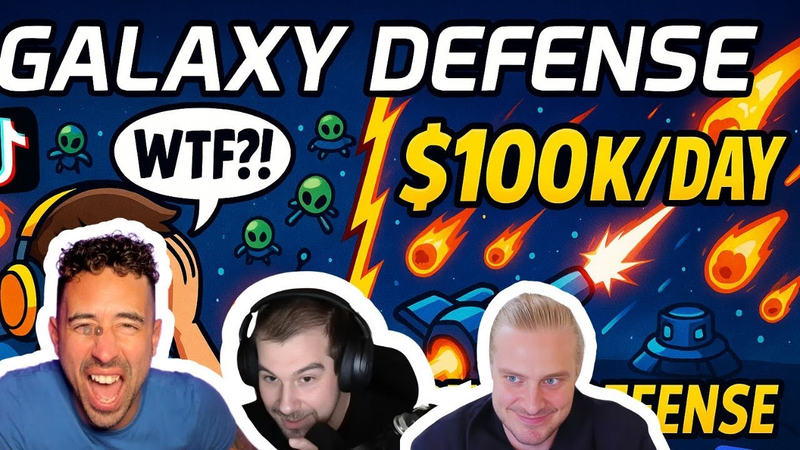
Galaxy Defense Review: Bang Bang Survivor in space. Jakub’s Prophecy Still Unfulfilled!
Galaxy Defense functions as a sci-fi iteration of the popular roguelite tower defense genre, mirroring the core gameplay loops found in titles like Bang Bang Survivor and Doodle Magic.
- Galaxy Defense generates $220,000 in daily revenue with 135,000 daily active users, demonstrating the immediate financial viability of the roguelite tower defense genre.
- Customer acquisition costs for the title in Tier 1 markets are prohibitively high, frequently ranging between $50 and $100 per user.
- The game relies on derivative marketing tactics, including AI-generated 'fake interview' advertisements, to sustain its user base despite a lack of original conceptual depth.

🤯 Creative trends July 2025: Jonas Brothers, LEGO + Gucci in Mobile Ads? Yes, Really.
The mobile gaming industry in July 2025 is defined by a hyper-aggressive, scale-at-all-costs approach to user acquisition.
- Major publishers like iKame are achieving annual run rates exceeding $200 million by prioritizing high-volume, AI-driven creative experimentation over traditional production standards.
- The mobile gaming industry is shifting toward a model where success is defined by the ability to scale aggressive, high-frequency ad formats rather than original intellectual property or technical polish.
- Publishers are increasingly utilizing controversial and bizarre hooks—such as 'childhood trauma' tests, bait-and-switch tactics, and ASMR puzzles—to maximize immediate user engagement.
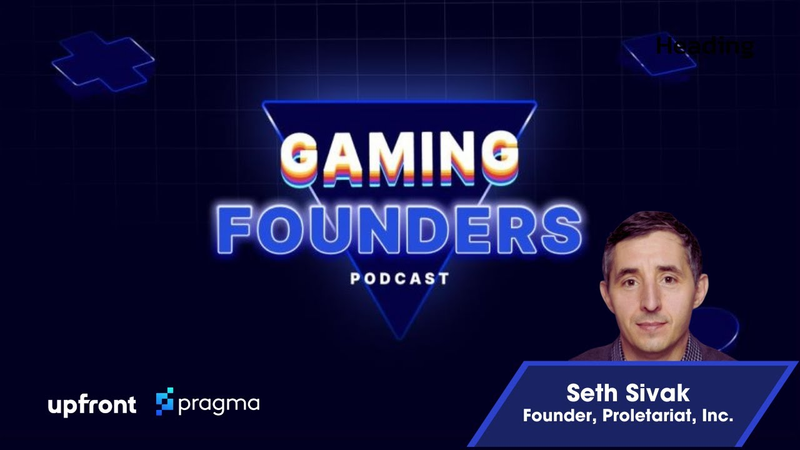
Discord Community Building: Seth Sivak on How Spellbreak Built a Fortnite Sized Community
Proletariat’s evolution from a small startup to an acquisition by Blizzard underscores the critical necessity of team cohesion, transparency, and strategic adaptability in the volatile gaming industry.
- Proletariat survived multiple near-death experiences by maintaining transparency with investors and employees, including a period where they operated with less than two months of runway for years.
- When building community, prioritize experimental growth over maintenance; Sivak advises against spending limited resources on standard social media posting until the game has proven sustainable.
- Large tech partnerships carry significant execution risk, as evidenced by an Amazon store integration that yielded only 16,000 installs—less than 5% of the projected 500,000 target—before Amazon shut down the platform.
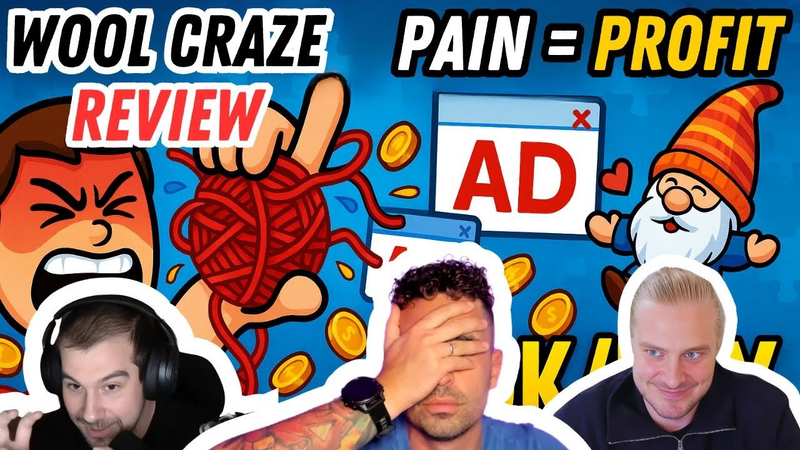
Wool Craze Story: The most annoying yet money printing game of 2025
Wool Craze represents a highly profitable evolution in the mobile puzzle market, demonstrating how aggressive monetization strategies can yield significant financial returns despite a polarizing user experience.
- Wool Craze is generating approximately $100,000–$120,000 in daily revenue from a daily active user (DAU) base of roughly 140,000.
- The revenue split is estimated at $60,000/day from in-app purchases (IAP) and $30,000–$40,000/day from aggressive ad placements, including up to eight rewarded ads and three interstitials per level.
- The game’s monetization strategy relies on 'Fail Packs' and a grind-heavy design that leverages sunk-cost fallacy, forcing players to endure long 20–30 minute levels.

Marketing Your Game Under the New Steam Rules
Steam visibility is fundamentally driven by the strategic deployment of high-quality demos, which function as the primary catalyst for wishlists, streamer interest, and algorithmic exposure.
- Demos are the primary driver of Steam visibility, with successful developers using them to trigger significant spikes in wishlists and unlock access to content creators and festivals.
- Steam's 2024 algorithm changes prioritize games that perform well in the Discovery Queue, where high engagement—measured by clicks, wishlist additions, and purchases—can scale a game's impressions from a base of 25,000 to over 70,000.
- Developers should utilize the 'Playtest' feature to iterate on their game and build momentum before a formal demo launch, as playtests can generate visibility spikes comparable to official demo releases.

🚗 Car Match Review: A 9/10 Product With with 3/10 UA Strategy = Heartbreaking 💔
Car Match represents a highly polished puzzle title that successfully utilizes a proven meta-game template to achieve significant commercial success.
- Car Match is generating approximately $120,000 to $130,000 in daily revenue by utilizing a highly polished, proven puzzle game template similar to Royal Match and Match Factory.
- The game's monetization is highly efficient, with roughly 30% of total revenue derived from ad placements and a well-structured system of layered bundles and level-gated interstitials.
- Despite strong product performance, the game's user acquisition (UA) strategy is considered a scaling risk because the studio is currently running only 5–7 active creative concepts.

Game Dev Recap: Making Viral Games
Designing games specifically for content creators serves as a primary strategy for achieving viral success in the indie game market.
- Designing for virality requires prioritizing the viewer experience over the player experience by focusing on instant conflict, clear readability, and structured tension curves with distinct relief periods.
- To maximize content creator interest, developers should avoid 'flow breakers' and incorporate long-form story arcs, boss fights, or chase sequences that prevent viewer drop-off.
- Effective viral game design builds upon human instincts like survival and fight-or-flight responses, layering unique brand identity over familiar, recognizable concepts to ensure mass appeal.
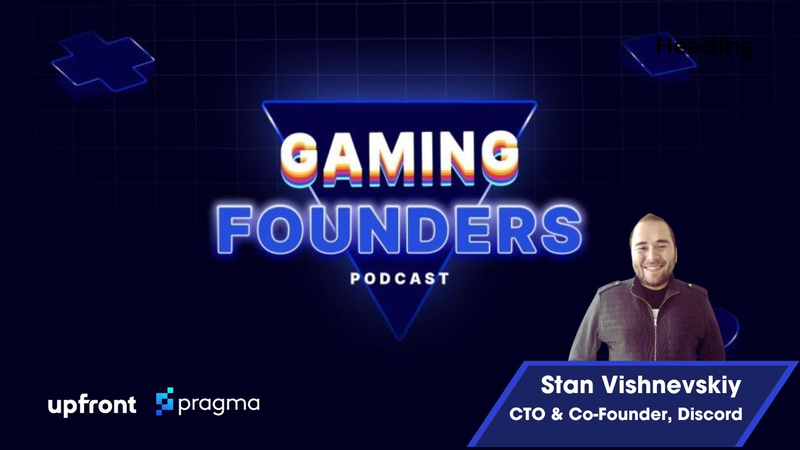
Pivoting To Survive: Stan Vishnevskiy's Journey on Founding Discord
Discord emerged from the strategic pivot of Hammer and Chisel, a game studio that transitioned from developing a mobile MOBA to building a dedicated communication platform.
- Discord achieved initial traction by manually convincing users on Reddit to try the platform, resulting in a steady growth of over 100 new users per day during the early launch phase.
- The company successfully pivoted from a failed game studio model to a social communication platform by ruthlessly prioritizing product-market fit, even when it required difficult personnel decisions.
- Discord maintains technical agility by distinguishing between 'one-way' and 'two-way' architectural doors, allowing the team to make temporary compromises that can be refactored later as the platform scales.

💸 UA financing Secrets: Scale your game without selling your soul
User acquisition financing serves as a vital, non-dilutive mechanism for mobile game studios to scale proven titles without sacrificing equity or operational control.
- User acquisition (UA) financing is a non-dilutive alternative to venture capital that allows studios to scale titles while retaining equity, with the market projected to reach $2.5 billion by 2027.
- To qualify for UA financing, studios typically need a minimum monthly marketing spend of $100,000 and at least six months of verified performance data.
- Developers should prioritize unsecured loans that limit lender recourse to specific revenue streams, avoiding agreements that allow for the seizure of broader company assets during periods of cohort underperformance.