VideoDeconstructor of Fun
The Founder’s Dilemma: Equity vs. User Acquisition Financing
8 Sept 202574 min video

Transcript
For most founders, scaling a successful game or app portfolio comes with a painful trade-off. Either you raise more equity to fuel growth and give away a permanent slice of your company just when you found that elusive product market fit, or you slow down, reduce your UI span, and watch competitors catch up. Now, user acquisition financing breaks that stalemate by funding the predictable, measurable engine that turns $1 into $3. If your user acquisition is functioning correctly, it lets you scale proven titles. You can launch new ones, expand your portfolio without handing over more of your cap table. Now, personally, I've never used UA financing myself. I don't think we had the uh the right instruments at that time, but there are companies today like Superplay who scaled into billiondoll exit who did use UA financing. This podcast is a deep dive into UA financing with the best in the business, General Catalyst and PVX
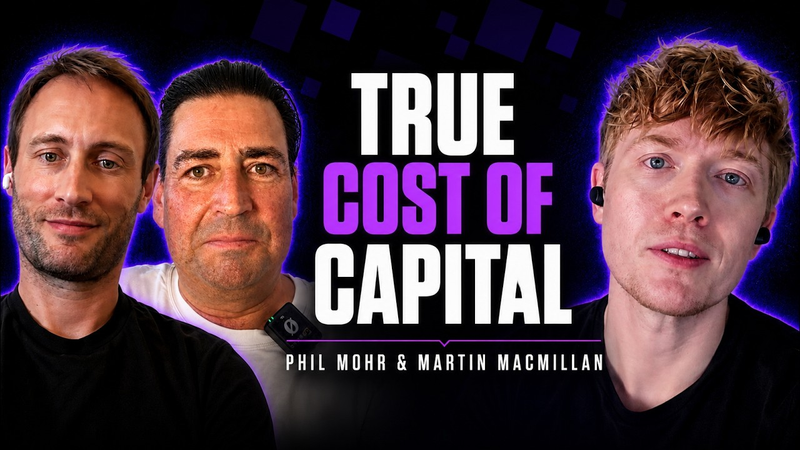
partners. [Music] All right, welcome everybody to the Deconstructor of Fun podcast. I'm your host, Mishka Katco, and today I got two guests, one with a very difficult last name and one with much easier. So, let's start with the uh with the OG returning guest, Joe Vad Catalico, CEO and co-founder of PBX Partners. Welcome back to the podcast.
Thank you, Mishka. Great to great to be here. Looking forward to the discussion today.
Yeah. And dialing in from beautiful city of Singapore. I can see it on the back, right? Yeah.
Late at night late at night.
And then uh onto the second guest from not as beautiful city, San Francisco.
Hey, it's getting more beautiful. It's getting more beautiful.
Yeah. Yeah. Yeah. Yeah. I was there in March. Uh pron pronouncing me is joining the podcast. So prrenav is co-founder and managing director of customer value fund at general of general catalyst and it's a customer acquisition financing.
Prennav tell me a little bit about what you do, why you do it, and why do you work with PBX partners.
Yeah, absolutely. There's a lot of questions in there, so I'll just get started with a bit of the background in history and then uh uh if I miss any of them, just uh uh just feel free to ask me as well. So um I've been at General Catalyst now almost 6 and 1/2 years uh coming on seven um and co-founded this fund uh based on a pretty simple insight that I gleaned when I was at my last company is prior to this I was at a company called Palunteer technologies where I spent 5 years as well and uh the core insight behind what led to the customer value fund was uh was on the simple observation that if you look at technology companies once they reach a certain size and scale their main use of capital is to constantly invest invested in sales and marketing, some form of customer acquisition cost. Different companies call it different things. In the B2B SAS world, you just call it go to market or sales and marketing. In the gaming world, you call it UA. Uh, you know, DTOC brands just call it CAC or
customer acquisition cost. But ultimately, what you're doing is you've reached a certain size and scale. You have product market fit. And your main use of capital is to pour more fuel on the fire, which is investing more dollars in in some form of sales and marketing to generate a fairly structured rate of return in the form of lifetime value. Now the thing that I found really really bizarre is technology companies at large once they found product market fit they were using um the way they were financing this activity was predominantly using their own balance sheet which is uh their own cash which is largely equity capital you know often equity capital that they've raised historically over the multiple um uh rounds and alphabet game that you tend to see technology companies play. Um, and it was really bizarre because you're giving up your company forever to acquire a customer once that pays you two to three times your money based on your lifetime value unit economics. That doesn't sound like a very good economic trade. Um, uh, and and it was always confounding to me that this is actually the way that uh, most of these companies uh, finance their growth. And so the big
question originally was why are companies engaging in this uneconomical activity? Um we spent a lot of time initially with many of our founders here at General Catalyst uh and otherwise as well asking them the question hey we all agree that this is an uneconomic trade why are you engaging in this uh in this activity uh and when you double click into the problem you actually re realize there's a very rational reason for that. uh and the very rational reason is well if you think about the alternatives whether it's traditional corporate debt uh in the form of a revolving credit line a term loan or any other variation of traditional products that exist um the issue with those products is if you raise those forms of capital and invested in growth the payback on your debt and the payback on your sales and marketing are completely misaligned they have nothing to do with each other um and in essence if you raise debt to invest in growth at some point invariably the payback on your CAC is going to be outside the maturity window of your debt. So, you'll have to pay your debt back ahead of when you pay back on your CAC. And that encumbers the
company with a ton of risk. It adds a ton of risk to the company's balance sheet and downside. In fact, the better you do, the more risk you're adding because the better you're doing, the more you want to spend on growth, often extending paybacks even further, adding risk even more. So, this is actually the rational reason why companies don't use traditional debt at scale. It doesn't mean companies don't use debt at all, however, they don't use it at scale to fund growth. And that is what made the light bulb go off uh in my mind where I said well gosh this is a very well-known problem in finance. The finance word for it is an asset liability mismatch. You have a liability that has to be paid back in a manner that has nothing to do with the cohort of customers you're acquiring. And so this problem we got inspired by uh other solutions that have existed in not the tech world outside of the tech world where you go to a company and say we will finance your ongoing growth your sales and marketing specifically and uh get paid back just from the lifetime value of the cohorts of customers created from what we funded until we hit a target return multiple. Once we're done the full lifetime value acrews back to the company but if it doesn't work we own the full downside
risk and this is very important. uh there is no mismatch with this product which is uh if we go to a company and we fund their growth uh we own the full risk in the event that investment in growth doesn't work out. So that's basically in a nutshell what what uh what got us going. We've scaled up quite a bit. Uh this is a um um separate fund within general catalyst. We manage about 10 figures in aum. We're deploying about nine figures per month across 50-ish companies and uh uh and that's a bit of the history behind how this all uh came about to be. So Joe, uh, tell me a little bit about PVX partners because what Pernava is explaining sounds like PVX partners on stero uh, so yeah, PVX partners on steroids, right?
Yeah. So great question. So look, we're we're we're doing something similar, but I would say our scope is very different. Whereas, you know, General Callus is a is a fund management business, right? they're they're purely in the fund management game where we're structured more like a company and so you know we
have uh lending as as part of our business and we work very closely with with Prennav and and uh the CVF fund you know um with our balance sheet together to to to make those loans. Um but you know where I think and Prrenav correct me if I'm wrong but you know Prenav's focus on anything that has LTV like any business that has good LTV and using CAC against it he's able to fund that whereas we are very focused on mobile gaming and you know I think also consumer apps but just generally given our background my background and the background of most of our team you know we're all you know uh ex gaming operators really so mobile gaming is is our core focus. But more importantly, we're actually trying to also use the insights that we get in aggregate to deliver a lot more than just um financing, right? So, so our kind of bigger picture is that we think the
current publisher stack for most mobile gaming companies just it doesn't really work. We don't think the economics work for the best, you know, best studios out there. If you go with a traditional mobile gaming publisher, the economics are not that attractive. And so one way to think about PVX is, you know, at the same time those publishers do provide a lot of value, right? They provide they provided financing, they provided product enhancements, they provided marketing optimization, but it was always in one package. So what we're trying to do at PVX is disagregate that and make it a buffet, right? So, hey, if you just need the financing piece, we can work on that. If you don't want the financing piece, but you want UA optimization, we'll give you that. Um, we don't do this right now, but eventually, you know, if you want product advice or product optimizations, um, we can deliver that as well, right? And so, we can put all these together or we can offer them all cart. Um, but but
that's really that's really what we're trying to build out, right? It's not just
it's not just a like we're not just a financing business and and we're much more
I guess focused on on a specific category.
Today's podcast is brought to you by Absly, inviting you to dive into their new firstofits-kind report, the state of creative optimization 2025 edition. It's not about how to make creatives. It's about understanding what makes users actually stop scrolling and what emotional and psychological triggers drive performance. Based on over a million creative variations and nearly $2.5 billion dollar in ads spend, the insights in the report will help you develop a winning creative strategy. Check out the link in the podcast description below or go to appslier.com and search the state of creative optimization. That's appslire.com. You've heard of Heroic Labs by now and
we keep talking about them because you need every edge to be successful in today's market. Heroic Labs gamestack is built like a brick house. You got the Nakama their backend game server, Hero, their game development framework, Satatori, their live op service, and last but not least, Heroic Cloud to provide massive scalability. Heroic Labs is a battle tested partner and their tech enables you to be flexible, creative, and scale for success. Focus on your game, avoid tech risks, grow your product with scalable live ops, and save a big chunk of cheese all with heroic labs. [Music]
Yeah. So,
the story with how we met is Sorry, Go ahead.
Yeah. I'll just summarize like the differences between the two of you and then let's talk about how you guys met because
Yeah. Yeah, that's a good story.
We we we worked uh we worked with uh with with PVX on on one of the one of the company that was consulting and if I
understand correctly like when we work with PVX, you guys came up with a such a great analysis that really allowed the company to understand what they need to do on the UA front to improve it in order to be eligible to get PVX's financing at the same time you're willing to uh fund their other portfolio. So you did a real deep deep dive into their UA and into their operations. Uh that was quite actionable actually really really actionable. And then on your side you're operating at scale. So you're basically just looking at companies that are already deploying capital and they're looking to deploy more instead of them going to the VC route or the debt route. you're able to give them a lot of capital like tens of millions in order to scale their customer acquisition and uh hit the uh the hyperrowth. Correct.
That's that's pretty much an accurate summary. And look, the the fundamental underwriting infrastructure um uh is required regardless. Um the kinds of scale of companies we typically tend to
work with are much more focused and and have a sense for how to go acquire their customers and and then how to retain them over time. Uh, and so our focus is really about scale and scaling the companies that are that are already at somewhat of a scale but really want to get to the next level.
And and so yeah, let's go back to how did you guys met? Like how come you're working together?
Yeah. So this is a fun story and Joe, you should fill in the pieces that that I I I don't remember perfectly. Yeah, exactly.
My take.
So So uh interestingly, I met Joe uh when he was when he was a potential customer. So uh this was now what three years ago? I forget exactly when, but four years ago.
Maybe four years ago.
2021, 2022, that sort of time frame.
Yeah. And uh uh and and Joe's prior company, which was at MPL. I had basically talked to Joe about potentially doing a deal with MPL. Uh and we had talked through what it would look like. We actually, you know, uh did a lot of back and forth and and I think Joe had the went in pretty deep and and how this actually worked uh and truly understood it. And um it's pretty rare
how much uh depth of work that he did uh when we were going back and forth on it just given um his understanding of finance as well which was honestly great. Um we we we typically really appreciate that. Uh and I think that specific deal for for a variety of reasons did not pan out. However, I think we both developed a great relationship through that journey and uh and it was one of those things that I I don't know Joe if you felt this but I definitely felt this that I knew we were going to work together at some point. I didn't know how, what, or why, but like it was very clear to me that uh we had a built enough of a relationship that at some point there's going to be some uh some opportunity to work together. Uh and then I think when Joe decided to transition um uh from from NPL and was thinking about what is next, we were talking of uh we were talking about ways of uh uh potentially working together and uh you know, one thing led to another and I think what Joe had laid out to to us was like look, I think there is a very interesting opportunity with what you're doing focused on mobile gaming. um especially for companies that are call it sub 2 million a month of spend. There is a massive category and opportunity there which in reality today
for us would be probably on the smaller end and and and would just not um make sense for us to engage with. Typically we work with companies that are above that. Um and uh and and and we talked through what working together could look like and so we said look that makes a ton of sense. The analogy that I often use is well PVX is not technically a publisher. We kind of think of them as like a holding company of apps that we provide a dedicated balance sheet to. And uh like Joe pointed out on the PVX side, they used uh uh our balance sheet to provide the financing to the underlying companies in addition to a lot of the other insights and product work that they do to help that specific category of companies which uh uh ends up being a very very uh synergistic relationship. But that's kind of uh the background and the history. Joe. Yeah, I mean, look, I think um uh I don't know if I've ever told you this actually directly, Fernov, but you know, when when we when so the first time I heard about this, um I I just I I
couldn't believe that it existed, right? The idea of someone actually taking the downside risk on on our cohorts
cohorts. Yeah. um you know and this was me with the MPL hat on and and sort of thinking as a capital allocator there. It it just blew my mind, right? Because there have been revenue-based financing folks in the market before. And to give you a bit of context, before we actually talked to um Prrenav, we had talked to another uh another player. I don't even remember who it was, but they're doing traditional revenue based financing. And this was, you know, this was like, okay, hey, we're going to take a rev share on your UA, but if it doesn't work out, you know, you're going to have to owe us the money anyway, and we're going to take a, you know, full security pledge over your entire company. And so I was just like, this didn't make any sense because it was it was just too risky because, you know, at MPL, we were we were basically a business that was all about spending
on UA, right? Like because real money cohorts last forever. Um, as as Miss I don't know if you know, but Prenav and I for sure know this, right? Real money cohorts are are beautiful cohorts. They last forever.
And so you're really in the game of trying to spend as much as you can on UA as long as you're meeting a certain threshold.
And I remember telling my team, this is such a no-brainer because PNAV is taking an asymmetric bet in the wrong direction. And so we should we should just do this all day. Um and and and yeah, so I think I actually understood it immediately. Um or maybe not immediately, but once I got it, it became immediately apparent to me that this was just the future. And I started to build so much conviction around it. And actually it was throughout my time at MPL I was always thinking like oh this would be such an interesting if I wasn't doing MPL I would love to work with Prennav
and like do something like this right and so you know as I was trying to you know coming up with as I was deciding to kind of move on and and trying new things it was very like I just had a lot of conviction um and as an entrepreneur it's that you know it's actually rare I think to have that kind of conviction early, but I knew just from being in the market that this was a product that the market really needed. And there was also space for someone to be very very focused um because you are having different conversations um with you know gaming founders. They're they're actually very very sophisticated with respect to UA. They all understand that that is the lifeblood of their business. And so it's it's a different kind of conversation. Um and so I thought there was a lot of value in and being very focused on that space.
I wanted to ask you so Pernov you are I mean General Catalyst is a VC fund and
it's also private equity at the same time kind of
it's a venture capital fund uh and you know general catalyst has been around for 25 years started out in early stage venture capital over time scaled with the founders that it had invested in and does a lot of growth stage investing. We also have a creation fund where we actually invest in companies to buy companies as well. Uh that's a lot of that is driven by a lot of the um the transformation that's happening uh via AI now especially um in specific categories that lend themselves really well to LLMs. Uh and you can think of General Catalyst as a family of funds that really is in the business of trying to figure out solutions for founders as it relates to capital. Uh, and so in some sense like pretty much anything General Catalyst does is just in the service of solving a problem for a founder. And that's part of the reason we're at General Catalyst, me and my co-founder KV, is because Himant, who's the guy who runs General Catalyst, has that problem solving mindset, uh, that builder mindset of of really building solutions for founders at scale.
I wanted to I wanted to ask that that
point of view from General Catalyst because how should founders think about if the VCs want to offer them capital to scale? Is that uh of course that's a good sign that means your business is doing really well but should you think about twice and maybe go through UA financing or customer acquisition financing route rather than than equity or maybe a combination of both like what's the uh what's the thinking behind that because I'm just give an example often times you get to series A when you need to scale your your company your product and that's when you're going for that$10 to20 million round if you are running a gaming startup and majority of that will be used essentially to launch or launch the game into global markets after test marketing. So uh what's what's your take kind of being on both on the VC side and UI financing side of things?
So look ultimately the way to think about this is just aligning your sources of capital with your uses of capital, right? All these products have different uh sources and they have different risk spectrums and different co different
costs associated with it and similarly the way you use it uh you use them in different ways. So my view is look if you're launching a product like a you know there's basically no historical data uh and you just need to build something and there's no historical data associated with it equity is the fundamentally right product for it. That could be in the context of a a completely new company. It could be context in the context of a an existing company that is building new product lines, new geographies or or you know acquiring maybe an entirely new business line. When risk is unstructured in nature, equity is the perfect capital for that. Right. Um, at some point in your in your life cycle as a business, parts of your business are become a lot more consistent and predictable in nature. You spend a dollar, it turns into something more than a dollar and it's highly underwritable. That's when it makes sense to actually think about other sources of capital. Something like the customer value fund or or or PVX is when you feel like you're at the point where a part of your business has that level of structure. Um, and it makes sense for for for somebody to come and
finance that for you. So ultimately the go the goal isn't oh whether you know you should not use venture capital at all or use uh use u uh something else uh the entire time. It's actually just about about thinking through how are you going to structure your capital in a way where the sources and uses are completely aligned. Uh, and basically if you're if the example you gave, if somebody's raising a $20 million round, well, maybe five or seven of that is for product investments and maybe the remaining 10 or 15 is for um a customer acquisition cost. Well, maybe for the 10 to 15 you should actually use a different source of capital and for the five you should go still go raise that equity and you can sort of decide what is the appropriate levels across the board. And so your your capital structure should just reflect what your plan is of how you want to use the capital is just kind of how we uh we think about it for our companies.
Yeah. Yeah. And I would just add that you know I think ultimately as as a CEO of a company whether you are aware of it or not your job is capital
allocation right that that is your job and and I think obviously as as you become a huge company if you talk to CEOs of really large multi-billion dollar companies they they understand that that they're ultimately capital allocators. Um, but the reality is even when you're a early stage startup, the most important job is is capital allocation. And that's all about saying how can I get the cheapest cost of capital for my business over its lifetime that also carries the least amount of risk, right? And and so that's the way to think about it. And and that doesn't mean like there is a there is a place for equity. Um there are other benefits for you know to having to doing an equity round. I as a as a former operator myself you know I would say you know there are reasons other reasons beyond just capital of of why you might want to do around whether that's tied to things like hiring you
know uh having a certain mark on your assets because you know people like to kind of feel wealthier and people like to feel kind of their value in that startup increase. There are other reasons but that doesn't mean that you know if you have a hund00 million capital need you should fill it all with equity right I think and and we see actually when we talk to companies uh we we are speaking to a lot of secondtime founders um we see a lot of interest in this type of instrument um from you know people who have this is not their first rodeo it's sort of their second company and they are much more cognizant of the real cost of of equity capital because they've sold their companies
and they've seen how much, you know, they've given up um and and what what that's cost them.
That's a that's a very valid point. Like I wouldn't have thought about this if I had don't if I wouldn't have the experience that I do now. And the way I'm thinking about UA financing, correct me if I'm wrong. If I'm able to get UA
financing, I'm trying to get to a stage where, you know, my cohorts are predictable. I'm getting the UA financing. What I could do with that is I can scale the uh the product with it. At the same time, my return is not as good because I have to pay, you know, typically what it's 50% of everything that you earn on top of um on on the the uh the cohort that has been paid with UA financing. So let's say you know you invest 100K, it comes back at 120K in let's say 6 months. I'm getting 10k from that and 10k goes to the uh the financer, right?
It would be a lot lower than that. It would be a lot lower than that is my sense.
Yeah, it's a lot lower than that and actually returns look a lot better. So you know and and um and you know Prennav jump in if you if you have a different view but at least from from the PVX perspective right we're looking at companies like like Prrenav said
generally spending less than $2 million uh a month in in UA and there are many of these businesses out there and if you're you know currently at a stage where let's say you're spending a million dollars a month you know the companies that we're looking at are really hungry to spend spend more, right? They're they're saying, "Hey, I'm spending a million. I'm like pushing my balance sheet as much as I can. I really I I really want to get to 2 million in 6 months, but I can't right now. You know, it's going to take me 18 months to do that." And so, we don't come in and say, "Great, you know, here's we're going to take over 80% of what you're already spending, right? We we may do that in some we may take over some of their spend but generally the capital we're providing is incremental and so if you think about it they're spending the same amount but getting a much higher return because once we meet our hurdle then all of that upside goes back to to them on on the back of what they were initially spending. They're
not having to ramp up their spends at all. So their effective return on on their ad spend can like 3x, you know, for for really good cohorts.
Um,
with no downside risk
and with no downside risk, which is
which is
which is the thing that that really matters, right? Like, you know, generally for us, if we look at a company that says, "Hey, we're spending 1.5, but we can't really grow and we want you to go come in and fund 80% of it." that that's not really exciting for us because um generally those aren't companies that can scale. I mean by definition they can't scale if if they they they're only asking us to leverage their existing um capital and so or their existing spends and and so we can't invest as much if if that makes sense, right? Um, so we are really focused on the companies that are growing, that are scaling up and are
looking for the right capital partner where if for whatever reason that doesn't work out, we're going to share that downside risk with them,
right? But if it does work out, it's it's incredibly high high return. add to that further na if you take a look at uh this is very true in gaming it's true broader across the entire technology ecosystem is the level of spend you can have on your growth UA in this case is always been a function of how much balance sheet you can acrew like how much equity capital you can go raise because really the decisions made uh around what is the appropriate level of spend is not a function of what is the appropriate level of spend based on a marginal CAC to marginal LTV equation which which is really how you should be driving your business. It's actually driven more based on how much cash I have on my balance sheet. And even though I can spend a dollar and get back three, I don't want to triple my spend because I'll bankrupt my company purely because of the ga cash flow gap between CAC and LTV. The whole point of this product is to decouple that decision.
You want to decouple the decision to to think about what is the appropriate level of spend on growth from a balance sheet constraint. And the reason that is very important um is along what Joe said which is the entire set of decisions you make completely changes there's an entirely new dimension in the way you can build a business to give you a very like tactical example of this you know in the gaming world uh as I understand it typically it's like you know said you should not have paybacks longer than 12 to 15 months or something like that right let's just use that as a heristic well why like who made up that number like what if you have cohorts that have long lifetime values Why not have 24-month paybacks? Why not have 36-month paybacks? Like, if the lifetime value supports it, shouldn't the payback be an output of of the fact that you should be spending until your marginal CAC equals marginal LTV, which is marginal cost equals marginal revenue, which is how you maximize the enterprise value of a company. And the reason nobody even thinks in that dimension is because the constraint is the balance sheet, which is like I'll go bankrupt if my paybacks are long to 12 to 15 months, even if the
ROI is fantastic, right? The ROI could be very good at a 24-month payback because you have the lifetime value to support it, but you can't do it. And that is very very important. And this completely changes the value of a company because all of a sudden when your mindset is what is the appropriate level of spend uh to to optimize for the enterprise value maximization function versus a balance sheet constraint mechanism, uh you just build significantly bigger businesses. And I think this is even more acute in gaming than any other category that uh that that that we work with. Um but it is something that that completely changes the value of a company over time.
And so basically what you guys are offering is something that only more mature companies or well-off companies can do and that is pushing back your payback times.
It's ultimately you have data to support the fact that you can spend more on growth. Um whether that is there are companies that have a ton of data at a million a month, right? That that for
instance PVX partners with and you know those make a ton of sense for us purely from an overall business standpoint. It makes sense to engage with companies that are spending at least say call it 2 million a month. uh and and so that putting that part aside, the question is not the level of spend as much as it's also about like do you have the data to support the ability to grow your grow your spend and a lot of companies that are spending at a million a month they could be spending a lot more but they they today don't purely because of the balance sheet constraint that I spoke about earlier their unit economics totally support it so in short yes the company needs historical data um uh but the size of the company will be a function of you know how much capital they've raised right
yeah Yeah. And
yeah, I just wanted to kind of like get into like when is the right time to use it? Like of course I understand Prenab works with uh with scaleups essentially that are going to be even bigger, but like Joe, how early can PVX jump in? Because you I understand you need to have a data.
Yeah. So generally if if a company's
spending less than two 300k a month, you know, they're generally a little too small for us. And the reason for that is, you know, we've seen companies that, you know, we've looked at companies who who've asked us to evaluate them that are spending like 50k or 100k. And the thing is, you know, for a lot of these companies, the the cores look great, right? They look great at 50k. And there's something definitely going on from the channel side around this is is our sort of internal hypothesis. But a lot of these companies spending 50k a month look fantastic. But the moment they go to 300k a month, you know, things change quite dramatically. And so generally for us, we're looking for, you know, call it 9 to 12 months of solid data at a few hundred,000 a month of of scale, you know, even two 300k. Like ideally, we'd want to see something at 4 or 500k, you know, 9 months or 12 months
of that. um and see some consistency. Um and then you know the the the thing about like so that's the bare minimum right that that's what we would look at but the thing that we are very much focused on is the incremental rorowass right so if you're spending you know um 500k a month but your cohorts are tapping out at 120% rorowass net rorowass in 12 months let's say that's probably not a great candidate because generally rorowass curves will degrade as as you spend more. Um that's what we've seen at least in gaming and you know there's just not a lot of room there, right? Um but we see plenty of companies that are getting you know 180% net rorowass in 12 months and then keep adding 5 10% rorowass per month every month after that. That's a great
candidate for UA financing where you can say like hey there's a clear path here where you can at least double this spend and then obviously if the ro doesn't degrade too much you can keep going. I want to flag one thing which is it sort of relates to what Prenav said earlier is that we're always advising companies to think about total dollars right what is the and this is how we thought about it at MPL right it's like like think about your net net new dollars like can you make net new dollars using this UA financing instrument yes or no right and if it's a no then don't don't use it like it's a clear no-brainer don't use it. But if you can, and most of the companies we're talking to, we believe we can. We give them the modeling tools to show them. Um, you know, it it it's just it makes a ton of sense. Um, the other thing is that in gaming, you can track your performance daily, right? Like you will
have a D0 rorowass target or a D1 rorowass target. Mhm.
So no no no company is spending 20k a day and then suddenly spending 100k a day like nobody I know like no UA manager will do that right a UA manager is going to spend 20k a day and then they'll ramp to 22 and then they'll go to 24 and then they'll go to you know so you're you can actually track this in real time and as long as your early thresholds your D1 D3 D5 D7 if these rass numbers are not degrading too dramatically you know, you can get that confidence to keep keep ramping up.
So, so essentially when I'm looking at an LTV curve, it's the shape of the curve that matters. So, meaning that typically when you look at an LTV curve, it kind of goes up in the early and then it stalls. And the stalls means that the payers are leaving or there's some kind of an issue with retention or maybe the uh the people are just not paying making
repeat purchases and that goes back to the product side and you have to fix it. But then in certain games, no matter how, you know, expensive the customer acquisition cost might be like a puzzle game or a Forex game, it's or a casino game, the monetization is so proven. And what happens is as players stick, they just end up paying month over month over month. And so it's not per se of what is the customer acquisition cost, meaning like, oh, you had to pay back in 45 days or in 60 days. Like that's not as important as the shape of the curve that shows that you are consistently generating revenue from those cohorts over a longer period of time. Because as you said in the beginning referring to channel strategies and so forth, what can happen is is as as you begin scaling um the customer acquisition cost is the one that's going to be more flexible. that's going to move along whether it's going to go down or most likely going to go up and suddenly your payback is
pushed back further as you scale. But if you are consistently, you know, creating LTV through those cohorts, that doesn't matter as much. It just pushes the payback, but you know it's going to return more than you've paid in a specific time. Web stores. You've seen what good looks like, but have you seen great? App charge is the direct to consumer platform backed by the likes of Supercell and built by monization pros from Moon Active, Platika, Huge Games, and others. People who know the difference. App charge powers over half a billion dollars in transaction a year for top studios, optimizing every detail. Deeply personalized web store offers, custommade design, industry-leading monetization features, in-game payments SDK, and more. 70% of top grossing games already have a web store, but the one scaling fastest, they're doing it with app charge. Learn more at appcharge.com.
Attention app and game developers. Are you ready to unlock the secrets behind the world's top performing apps and games? With Sensor Tower, you get the ultimate competitive edge. Whether it's breaking into new markets, fine-tuning your UA strategies, or boosting monetization, dive into data like never before, track global trends across app stores, analyze market leading inapp purchase and inapp ad strategies, and benchmark your performance with realtime insight. The best part, Sensor Tower doesn't just deliver data. It helps you turn it into action with intuitive tools and expert analysis. It's everything you need to make smarter, faster decisions. Thousands of app and game studios, from indie creators to global giants, trust Sensor Tower to help them win. So why not you? Start your free trial today at
sensortowwer.com. that is sensortow.com.
Yeah, I think that's I think that's right.
One other thing that's worthwhile mentioning and now we've talking about this in the context the way Joe framed it around the net new dollars and growth aspects which I think is the right way to think about it as a growth business is as you're scaling. The other thing that's important to think about and this is more relevant for later stage companies that we see very often again going along the dimension of how you think about building businesses and think about capital allocation over the long term is there is a version of the world where you are using your own cash to fund growth but if somebody else finances that for you have excess cash sitting on your balance sheet now that you can do other things with. The first thing to do is keep increasing more growth which may make sense to a certain point. You know there'll be and there will be um uh different mechanisms to think about that uh and and based on how
you scale your business but there are many companies that can use that excess cash in many other more productive ways that have much better longerterm ROI. That could be initial investments in product engineering maybe over time buying companies as well. And we have many companies now that are doing buybacks, right? You can just go buy back your shares. Ultimately going back to the whole capital allocation mindset, uh the difference between a good and a great entrepreneur is capital allocation. I mean we at GC have seen this over the last 25 years of history uh um again and again and again. And ultimately the capital allocation framework is quite simple, right? You have sources of capital, you have uses of capital. Uh your uses are COGS, SNM, GNA, R&D, uh M&A and buybacks. Like these are going to be roughly your main uses. How do you find the right sources of capital to maximize your return on equity while minimizing your risk to equity? And as long as you're within that algorithm throughout as you scale up as a business from the beginning to the end, your outcome is going to be an entirely function of how you think about optimizing that function.
Uh can you talk about some of the uh the success cases of companies that are known that used UA financing? Like usually usually what happens is companies don't talk about it. Uh I think I've heard just recently on on one like Super Play this is public. Super Play has been already acquired so that's fine but uh but I remember somebody saying this is like thank god we we got the UI financing like I'm literally quoting that but uh but apparently they were able to scale quite efficiently to a position where they became an acquisition target.
So so uh so we were the backers behind Superplay um at the customer value fund and we worked with them for five years. Gillad. I love Gillad who's the CEO co-founder. Um I kind of view him as an honorary co-founder of CVF. He he taught us a lot. I learned a lot from him. I still learned a lot from him. Uh but I definitely uh in the early days learned a lot from him. Uh and it was an incredible incredible uh um journey with them. I had a lot of fun and and like I mentioned learn a lot. But to your point
um that's a company that got bought by Platea. These numbers are public. I think the specific numbers were like $2 billion. uh the company raised uh in the tens of millions of equity dollars. So like if you think of that outcome and and I think the the transaction happened like 6 months ago or roughly speaking uh you know what the liquidity environment was 6 months ago. This is a category that's in mobile gaming which is a very tough category and you have an outcome where companies raised tens of millions of equity and sold for $2 billion. That's like kind of unheard of and and and that happened because of two reasons. The number one is the most obvious thing we've been talking about here, which is, you know, obviously the company saved quite a bit on dilution and and all that. And number two, which is the point I alluded to earlier, uh, having a balance sheet to fund growth gave them the ability to invest until a marginal CAC equals marginal LTE, right? They could actually spend to having courts and their courts were fantastic. Uh, and historically they were underinvesting in growth because of the constraints of how folks have thought about financing the business. Not only
did that give them the ability to scale very very quickly, all the excess cash they generated, they reallocated in building new games. So the first game was dice, the second game was domino, they were working on game three and game four. So as a business you could sort of build this incredible business and in my opinion a lot of the outcome of this transaction uh happened in a big big way driven by the fact that in some sense the founder and the company didn't need it to happen. I mean it's obviously a great outcome and and uh Platik is a great company and all that but like Gillad had the option to compound the business for a long long time because his balance sheet was sorted. He could fund growth. He could provide liquidity to employees and shareholders because he could go do buybacks. He could invest in new products. Uh and in essence outcomes are driven when you don't need them. Like you know you want to go public when you don't need to. You want to get acquired when you don't need to. You want to go raise when you don't need to. That's just how these outcomes get driven. and and you have the the the most leverage in those outcomes. And so I do think that's a a great story of of one that um uh that we partner with very
closely and and I'm and I'm deeply grateful and thankful uh to Gilad for the partnership with them as well.
Joe, can and you Joe, you work a lot with uh with early stage companies uh where financing has given them a lift they needed to reach maybe a product market fit and and uh you know their hit their growth targets. Can you talk about those? Yeah. So, look, we I mean, all the companies we're working with are are private, so there's there's there's not that much information that we can share on those businesses, but, you know, today we're we're working with actually we just closed a deal last night. So, it's I think 13 companies that we've sort of signed up and
I think nine, eight or nine that we're actively funding right now and it'll be 13 by next month. Um, you know, some of these businesses we've seen them go from, you know, 250k of spend all the way up to, you know, the low million uh of of spend, right? So, like sort of one 1 millionish, 1.1 million. Um, we have two cases like
that. We have one company in particular um that is is a casual game um business actually surprisingly uh a good amount of uh ad monetization but very long lived cohorts um you know this is one where I think when we started with them they were in the low single like 1 million and now they're up to like three million in in terms of their actual monthly spend. So you know couple of good good examples there. Um, but unfortunately I can't name the companies and tell you who they are. Um, and and you know, we've only been doing this for for 12 months. Um, but but I would say, you know, it it's certainly not the case where, you know, you take this financing and you can sort of, you know, double or triple. I would say out of out of the nine that we're working with, we have two examples of that where where they're doubling or tripling within months of us working with them. In most cases it's
actually a more steady growth right so so companies spending say 3 400k then they ramp to you know 500 then they ramp to 600 like that is most of the companies that we're that we're actually working with um they're not it's still fairly rare in a game I would say where you know you have the kind of game that can really massively scale um uh like in in a short short period right most of these guys as you know in gaming right you you need to keep you need to optimize the product that creates an LTV gap then you want to spend against that but in gaming that's going to get copied 6 months later you know you have competitive pressure and then you know your tax increase then you have to find another thing and so it sort of goes in in in that cycle um but of course like because of the hit-based
nature of some of these games is like you know you will find 10 20% of the companies you're working with who who can really massively scale up but most of them are just sort of the steady growers.
Yeah. How do you avoid becoming a cautionary tale with UA financing? Meaning like what's the oversight you have over the over the way the company uses the financing that they get from you because you are occurring the risk the downside of of the of the investment. So
yeah. So maybe Pernov you want to go first. I I mean we both have slightly different structures around this but but
look so big the big way we think about it I is philosophically we always want to be on the same side of the table as the company and so we make sure the company has skin in the game right so we will typically fund between call it 50 to 80% of a company's investment in CAC but the company's putting up 20 to 50% as well right so we want to make sure that the companies has skin in the game and that I would say solves like 95% of any misalignment that you can have with the company is making sure the company has some skin in the game as well now
but outside of that the company themselves are internally targeting a certain uh uh uh way of investing in growth. It could be a payback curve like uh whether it's D1, D2, D3 or like M0, M1, M2, which is as a percentage of your investment in sales and marketing, how much is being recouped each month, some sort of like a minimum payback curve that they want to spend to. And as long as we're in alignment on what that is, uh we basically tend to basically make sure the company has skin in the game and we agree very clearly on what is a good rate of return on cohorts. And as long as we agree on those things, we typically tend to be quite aligned with a company uh from a risk standpoint. To me, the big thing philosophically that is very very important when we work with companies is ensuring there's no mismatch of when money is due back to us and when cohorts have paid them. The more of a mismatch there is there, the more risk the company's encumbering. And so this is actually the philosophically why we created this product is to make sure that if we're investing in in in your growth, we want to make sure that this is risk capital in a way where we only get paid if and when your cohorts
pay you. Uh and so those two things are very important if and when and and in the event that doesn't happen, we are incurring that risk. But the way we manage for that is in the two ways that I that that I that I described to you. And if we feel that we can't take on that risk because we don't think it's good risk, we just pass on the company, right? We just say, "Hey guys, let's we need 6 months more more of data. Let's actually work with you when you get there." Uh, and this is meant to be risk capital for companies, right? So, in the event that cohorts don't pan out um for the cohort that we invested in, like the idea is always to make sure we're aligned with the company is the way we think about it. I don't know Joe, if you had anything else.
Yeah, look, I think I think I agree with everything that Prrenav said. Um, but I would say we're we're probably we try to be a little bit more hands-on because generally the companies that we're working with, you know, if if you're talking to a company spending $10 million a month in UA, they have a level of sophistication in their UA team that a company spending a million and a half just doesn't, right? And so I'd say we
are quite hands-on in the sense of giving them feedback um with respect to how things because Prrenav and I I mean the way that we're set up is we're we're we're very tech enabled, right? As as as businesses like um probably one of the only like we're we're the only I think like the only funds out there that it's really a technology platform that we also we do investing out of, right? And so um
we call ourselves low frequency traders. You know, you have high frequency trading. We're like low frequency traders.
Exactly. And and so and so the thing is like we can see, you know, on a daily basis what what the rorowass is looking like as a company ramps. I mean we've had a situation where a company was was spending 20k 30k a day then went to 80k for like 4 days and we saw that we got alerted. We picked up the phone and called the company right and said hey what's going on? um you know the the the like D0 rorowass when these don't look
great is this going to continue like you know and sort of got that feedback
um so I'd say we are we are much more hands-on um with some of these companies and then the other thing that we face is because we are also looking at earlier stage businesses we also have to factor in the overall credit risk of these businesses because they are generally less well capitalized than you know a much larger business and so we of course we look at uh cohort risk but we don't ever want to be in a situation where you know the company has great cohorts but is maybe stretched on in in in other ways and it sort of affects the overall credit. So we also pay attention on that um to make sure that you know if if we do participate in these courts and these courts to perform well, you know, we're we're still able to, you know, the company's still around to kind of benefit from from all of that, right? So I would say that's probably the the the biggest difference. Um, in some cases we will be even more prescriptive in terms
of, okay, this is how much, you know, we're comfortable with in terms of month-on-month growth in terms of marketing spend. Um, but yeah, I mean, our our dream scenario is to be working with more and more companies that are like what Prenav described, right? Where it's where where it's pretty much autopilot and you're going to be like, "Hey, here's the capital. We know you're going to do great. Go for it." there a lot of these even the the later stage companies that are quite sophisticated in the way they do their go to market right like
in some sense like we're all the things that Joe described we're monitoring ourselves the difference is you know we in in in some sense uh Joe has an expertise that he's built specifically in mobile gaming the thing that's very clear to me is look I don't know how to acquire customers and I don't know how to retain them that's not the business I'm in that's the business that the companies that we work with are in uh and we provide a balance sheet for them to fund their growth what we provide them is the infrastructure to show them what is their return on incremental invested capital. And that is something we understand. We understand data. We understand how to price risk. And we we think about that all day long. The
actual tactics of what is the appropriate way to go acquire customers is not the business that we're in. And so we uh we we sort of focus uh focus on what what we do because we think the companies are are are much better than us at at acquiring customer than retaining them.
So basically uh I mean let's put it this way. A lot of the time now companies are looking to get IP or celebrities to support their customer acquisition. That's not part of the financing that you would be getting from you. Like I can't pron you know start taking money from you and and signing you know Lisa Kudros and all the all the other type of celebrities to advertise
but you'll be just supporting the cohorts.
So it actually depends right. Um and when I say when it depends is what you're describing is more like brand marketing. So typically brand marketing is not easily attributable and brand is often more like a product investment. Now there will be some cases where it may make sense like you know depending on like if you do influencer marketing campaigns those could be more attributable. So there is a nuance there uh in general and depends on the specific nature like we work with many companies that do influencer marketing
at scale and it's very very successful and that's actually their main channel of acquiring customers right you'll see a lot of the products that that we've invested in will be on podcasts uh uh and and and we may be you know you may be beneficiaries of our financing m I don't know if you run uh run those I don't know if you if you do some of that but either way the the the point being um it depends ultimately the goal is We define the definition of customer acquisition cost in alignment with how the company thinks about it. If the company believes that that activity will drive ROI and and they think about their courts and in the definition that we agree to then that is fully loaded CAC that we want to be financing. If it is much more unclear that what the ROI is to us that's more like a product investment right it's much longer term perhaps there's value to it it's just not easily attributable in the near term and that should be funded in a different manner that's really what equity capital is designed for
got it and talking about like the future is there if if UA financing is is this
the beginning like do you will there be in the future different type of financial products evolving that that are helping performance-driven companies I mean like I hope so. I mean look why I don't know why we've accepted there are only two types of financial products equity and debt. I mean you know like it's just it's a it's a I think it's an archaic way to think. And not just that those products were created in a different time. They were created for businesses that had hard assets right uh like manufacturing companies you know and so on and so forth. We've not innovated on how to think about the appropriate uh capital products for companies that are much more cohorts, right? If you think of the atomic unit of the cohort as an asset, all of a sudden you're you open up many different potential things that one can be doing. Now, the reality is I mean, you guys keep me honest here and and and I know this the case for most technology companies, but anywhere from 40 to 80% of the gross profit of a company goes into CAC. It's the biggest use of capital. Right? Now that doesn't mean there can't you can't use cohorts for
other uses of capital but the focus is you know the the big white space ahead of us is just sales and marketing and customer acquisition cost but I do think over time when people start thinking of the cohort as the atomic unit as an asset uh in the same vein you know there's this little industry called asset back financing and I joke it's not little it's gigantic and it exists because uh because people realize the machine you buy the the consumer loan you originate the mortgage you originate as a company these are all assets and they can be financed in a completely different way. I actually believe the cohort is going to be an asset class and we are at the very very beginning of that. I mean we have barely scratched the surface. I know we're deploying like nine figures a month and manage 10 figures in AUM but man like just to give you some sense like just take the top one cloud 100 companies and I know this is not relevant for gaming but it is actually a very easy data point. My conservative estimates say that the top 100 cloud companies, which are private SAS companies, on average spend 10 million a month on sales and marketing. That's a billion dollars a month. That's
$12 billion a year. And I'm just talking about SAS companies that are private that are 100. I've not talked about public companies, not talked about longtail SAS, not talked about DTOC companies, not talked about consumer subscription apps. We haven't even talked about mobile gaming companies. And mobile gaming is way way bigger. Uh and and and and then all these categories combined. I mean, I I heard a stat, and I don't know if this is true, like I think like 10 to 15% of apps on the app store are mobile games, but they drive like 60 70% of the revenue or some ridiculous uh number like that. Um I mean, you guys may know the the the actual stats better than I do.
It's a big It's a big number. Yeah.
Yeah.
Yeah. So from my perspective, treating the cohort as an asset is going to unlock not just un an unbelievable set of dimensions for founders on what they can do with their companies. Uh it's actually going to open up a a huge source of capital markets like real capital markets are not open to technology companies today. I mean raising equity capital and like a fund credit line that's not capital markets. Like capital markets is when the assets
are rated and you have the Japanese insurer that needs a 3% rate of return. How do you get that capital to the next gilead? Right? That's basically what you want to unlock, right? And that's the mission we're on, right? Uh is is really how we think about it.
Yeah. I mean, I couldn't agree more. You know, like I I I always give this example where, you know, for a traditional business, if you wanted to grow, you built a new factory. And if you want to get lending against that factory, someone will be like, "Yeah, I'll give you 60% of the value of the factory. You put 40%." And if it doesn't work out, I'll take the factory because I know I can sell everything in there and make 70%. Right. And that covers my 60
and no recourse to the company. It's only to the factory.
Yeah. And that's been around for a hundred years, right? Like it's been around for a long time. The thing is in in consumer apps um so everything that Prrenav has said like we agree with in particular for consumer apps because in consumer apps the factory is actually
user acquisition spend. And so even this idea you know around um covenants right like and and prrenav you've talked about this I think you wrote an article about about how to think about you know ibitta less kac right
yes
um
ibac is what we call it
ibac is what you call it right and and you know we we say the same thing which is look an ibitta covenant on a gaming company makes no sense
zero sense zero sense
sense because because you're basically that's like saying that's the equivalent of an IBITA minus capex covenant for another company right and and that wouldn't make any sense so you know there is going to be a paradigm of financing based on rorowass where the the covenant paradigm shifts from IBITA to rorowass curves or decay curves of existing cohorts that's where at least on the you know you talked about um
other products. You know, we we are firmly of the view that UA financing is is one um use case or one interpretation of this, but certainly like we are at PVX thinking about okay what are other you know maybe more traditional looking debt instruments because they do have a place um but where it's based on a rorowass curve and not based on a um uh you like like a like an ibita uh metric, right? And so yeah, I think and and to Pronab's point, I think we're at the very early stages of that, right? like that that infra there is going to be there are going to be massive financial firms that are going to be built just around real curves
like kak is the new capex right and that's why ibid da should be the new uh ibid cak should be the new ibida and that's actually the title of the piece that I had written and that is a very true statement it's funny right we take
we say these things like oh technology companies are asset light but that's an incomplete statement they're expenseheavy right what they're doing is instead of capitalizing the cac They're expensing the CAC. So they look asset light, but they look expense heavy. So that's why Ibida makes no sense. Ibida's anti-growth. Quite literally, if you spend more on UA, your IBIDA will go down. That's just like And so how why would you create a covenant that's anti-growth? It literally makes no sense. And so the profitability yard stick for these technology companies, and this is, by the way, applicable across all tech, right? If you spend dollars today and you generate lifetime value, you got to be taking the discretionary component of growth and adding that back to earnings. Just like if you look at the history of IBA, John Malone created IBA because he added the DNA back, right? Which is the depreciation and amortization because he was investing in cable companies that had a lot of capex and the cash expense uh the cash profits of those companies was a lot better but it looked unprofitable because of the depreciation. So he created DNA in a there is an analogy to be drawn here to that that doesn't look the exact same
but has different quirks associated with it because it's a very specific thing but in sense like all these companies on a P&L basis just look unprofitable purely because of a peculiarity of accounting they're fundamentally very very profitable uh and that's just like a pure accounting thing and uh and look we see this we've seen this I kind of viewed Superplay as profitable throughout their P&L may have looked negative but from our perspective play through our entire journey was a very profitable based on cohorts essentially.
Exactly. Based on cohorts or if you added UA back if you add UA back to your P&L, are your existing cohorts of customers enough to fund your nonSNM opex and if that's a true statement, you're fundamentally a profitable company. Like you just turn off you and become profitable, right? Like you're making the discretionary decision to invest in growth. In the equivalent in the old world, the equivalent of that would be I don't build a new factory or I don't buy a new machine, right? And if I don't buy a new machine, great. Like back in the day, thankfully you would capitalize the machine and depreciate it. So your P&L would still look pretty good. Uh but imagine we had
this genius idea of expensing machines uh for manufacturing companies. Any growth manufacturing company would look extremely unprofitable purely because of the accounting uh the accounting shift, right? It's the same thing that's happening with these companies. And that's unfortunate to see because then it puts the founder in a tough place. But we believe the unlock is not just at the level of spend but the enterprise value of these companies. I mean I I I I really fundamentally believe a lot of these companies are even undervalued uh given how massively profitable they can be long term. If they finance themselves well the return on equity on these companies is spectacular. And don't believe me just look at Superplay's return on equity right a tens of millions raised $2 billion outcome.
Yeah. I mean just on that like there are bunch of public companies out there that I don't that are truly cohort-based that
no one understands because it's not reflected in the P&L you know.
Yeah. Because everyone's looking at IBA everyone's looking at IBA and
Exactly. And it's and it's the wrong
totally wrong metric.
Well well Pernav I I love how you like how energized you are by this like like you're this is this is your craft. Like you really feel like
Yeah. I uh this is a topic I can talk about forever.
I will not stop talking about this. That's why people don't invite me to parties anymore because this is all I want to talk about.
Yeah. You'd be like, "Oh, let me talk about the CAC and then you'd be done." Um so let's let's take this home with uh with your advice both of you. It's like what would be your advice to founders considering the path of UA financing especially in gaming and and apps?
You can take that first Joe.
Yeah. Um, look, I I I think the key question is, you know, are you at a place where at least Okay, so at least from a from a from a, you know, a gaming founder perspective, I say, is the product actually built, right? Is it is it at a level of polish where you know
when you're thinking about your um your sprints are you making foundational changes to really fix your sort of LTV or are these incremental changes right because if if you are making foundational changes to the product every kind of sort of 6 weeks or 8 weeks or whatever your sprint cycle is then then you know what what that's going to look like is your curves are going to be all over the place right because if if the product is changing meaningfully, every new batch of users that's coming in is getting a different experience and their LTV is by definition then going to look a little bit different. So are you at a place where the product is actually you know basically like you know 90 95% of the way there you will continue to make tweaks and and change things and and run optimizations as you should but the guts of it are is there and it's built. Okay, that's phase one, right? Now, second part is, have you then tested against that? Have you started to
spend a bit of money against that? And are you at a level now where you've spent a few hundredk a month, you have a track record, you're seeing fairly predictable returns here, and you're generating good incremental rorowass, but also you have the type of business where um you know, even after you're generating, let's say, let's say you generate 150% in sort of 9 months and then it tapers, but is there still sort of continuous month-on-month incremental rorowass here, right? you you want to see cohorts that the the rate of growth may slow down but it's still sort of growing month over month. That is a sort of great cohort to to to finance with UA because you know even if CAC increases because you know that that cohort will just keep generating cash even if it's you know 3 four 5% rorowass every single month that means that you have a bit of CAC flexibility like if your CACs you know increase by 50%. you're still going to make money on that court. It's just
going to take you a little bit longer, right? And so that's the that that's that's sort of what I would say at a high level is is is is the check that I would I would I would tell a founder. Um and and if you're there, then I think, you know, if you want to ramp that up, then then UA financing is is is a great option.
Yeah. Yeah, I mean, look, I was going to actually say a variation of what Joe said. So, I'm going to try and say something different now, maybe a bit higher level. Um, which is, uh, look, the ultimate value of your company is going to be driven based on two factors. Growth, and that's because growth leads to long-term earnings or free cash flow, and two, the number of outstanding shares you have. Basically, free cash flow per share. Long-term free cash flow per share is the value of your company ultimately. And uh all these like things that people tell you iba da and all these like metrics they're I would encourage people to think about everything from first principles right they were designed for a different type of company that may not be the kind of
company you're running and so ultimately from first principles how can you design your capital stack and also your business to maximize growth uh while reducing the number of shares you have outstanding. these are going to be the only two factors that drive the long-term value of your company. And so, um, I would encourage people to think about those two things very deeply from first principles and and, uh, and if they want to talk about all things capital structure, I know me and Joe like to talk about this all day long.
Totally.
Net new dollars, honestly, like that is the thing. It's just like your job is to make
as many net new dollars as you can as fast as you can with with as little with as little risk as possible.
Correct. And I would even go ahead and say if you have a good business, it's your moral imperative to right.
Yeah. It's anti- capitalism not to do it. It's funny, you know, Prrenav, you know, Prrenav and I, we we we catch up pretty much every two weeks or so, like because we're always trading notes and half of it is basically like therapy
sessions where we're like, "How come people don't get it?" You know, like it's it's like a therapy session for us. We're like, "Oh man, we saw this."
It used to be it used to be Joe used to provide me therapy. Now I provide Joe therapy as he's been building PBX.
Yeah. Because honestly sometimes you see these companies and especially me as an operator I'm like man I wish I could just buy your company because like I would just buy your company and I would spend like I would triple your spend tomorrow you know cuz cuz you're just like leaving money on the table and and that's you know I think that's the main thing is that especially in gaming these windows of opportunity to capture excss TV don't come like it's so ruthlessly competitive right it's not like B2B SAS where much harder for these companies to pivot. Like if you have a great feature, you know, we're talking to a lot of companies based out of China. Like the teams there are insane. They're very very very good. And like if you have a
great feature that's going to get copied, you know,
you have it for three months, maybe in an AI world for three days maybe.
And so and so the thing is if you have this LTV gap, you want to capture that, right? And the way to cap and that's how you build share. You capture that, you push other people out, you grow the business, and then you tinker, build up more LTV, scale fast, and capture that. Like that's how you can build a billion-dollar business today. Like that's the playbook um in gaming in my opinion.
Yeah. Because in in the current market when you grow that growth is away from others because the market is not growing at such a high pace. So essentially by investing in that excess LTV that you have compared to your competition, you're able to gain the market share and the others are losing. And so if you keep that up, then it will be much more expensive for them to catch up to you.
Yes. Yes.
And then as you build on the cohorts
because you have the existing cohort base now, you use that excess cash flow to fund and improve your product at a much faster rate. It's a vicious cycle, right? The more cohorts you stack on, the more profitable you become over the long term, right? And and you see this across any any anyone who has CAC and LTV dynamics, you see the same dynamic. The deeper you go in the J curve by investing in growth, the faster you whipsaw out on the other side of of of the of the growth trajectory basically for these companies and that gives you a massive massive advantage as a business.
Got it. So as an operator, basically the takeaways from this is um UA financing makes sense when you have enough data when your product is ready for it. So you are already in the global market. You're investing hundreds of thousands in your customer acquisition and you have an option to either raise so sell your own equity to in order to raise more funds and use those funds to fund your growth further or you can do that through UA financing or you can do a combination of both which is more likely
because UA financing will allow you to grow faster than you're growing right now and that will probably give you better terms on the equity financing that you can get to further invest back into your product and then again raise more equity financing to continue growing just as uh Super Play and Candyore and some other companies have been go doing throughout the years. Um but it's not something that you would use very early on. Uh it's not there to essentially um take away seed funding or preed funding or anything like that. You need to have the data.
Uh you need to have the spend in order to use this tool. But this is this is for companies to scale and and possibly a way for founders to keep more of their equity while increasing the shareholder value.
Yep.
Yeah. Absolutely.
100%.
Well,
and actually on that uh MSA on that sort of timing
like we actually wrote a piece on that um sort of the right capital for the right phase. I'll send that to you.
It's in link in the description of this podcast.
Yeah. Yeah. I'll send that and also we can send the EBIT CAC article as well.
Yeah, I can send that to you as well. I'll email it to you. The the CAC is the new capex piece. I'll send it to you.
All right. Well, well, perfect.
Well, thank you so much for for educating me and educating the audience. Uh I think this is I can't say this is exciting. I know you guys are excited. I think this is a fantastic tool to to use. I'm not like I'm not as financial engineer that I'd be tremendously exciting about this, but it's a
You would be excited. You'd be excited as a founder. Trust me.
Yes. As a founder, as as somebody who understands after one round what it means to sell off your your equity. Uh I understand that that when VCs give you advice or they want to fund you right now, uh that means that you're in a good position and there might be other routes to to look at the financing. So, you know, again, there there's there's other routes than VCs, and it's a it's an
important route, but it's a combination that can be used with with other means of financing to grow. So, I think that's the uh that's the one of the takeaways.
So, thank you so so much for for the insights and on that note, uh we're out.
All right, thanks.
Thank you. Take care.
Bye, guys.
Bye.
Thanks for listening to the full episode. Now, did you know that Deconstructor of Fun isn't just your favorite industry podcast? We're also a bit of a consulting powerhouse. Now, whether you're launching your next hit, scaling your live ops, or betting your next acquisition, we've got you covered. From market research and go to market strategy to live operations tuning and due diligence, our team of experts works with top names as well as the rising stars of the industry. So, if you are building, publishing, or buying, don't do it alone. Do it with us. Email consulting deconstructorof.com and let's build smarter together.
Auto-generated captions from YouTube — names and numbers may be misheard.






















Comments