Serious Games reports and market data
Documents

Formative Evaluation of an Adaptive Game for Engaging Learners of Programming Concepts in K-12
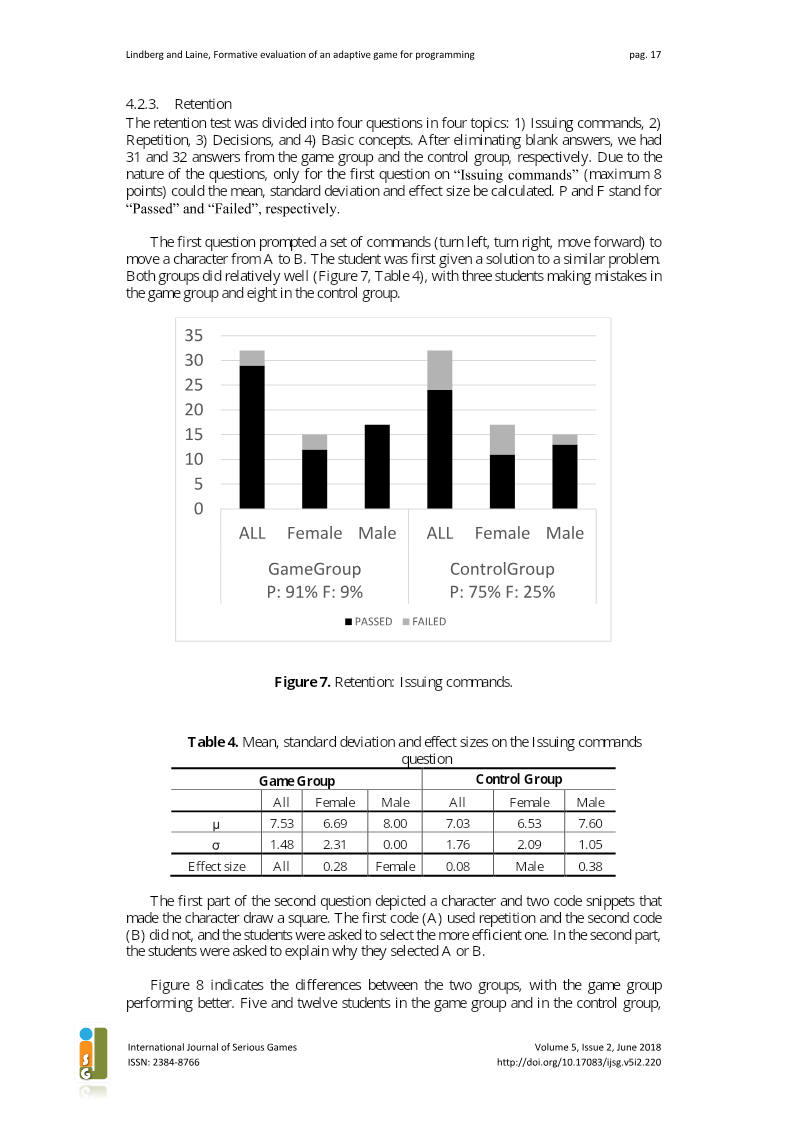
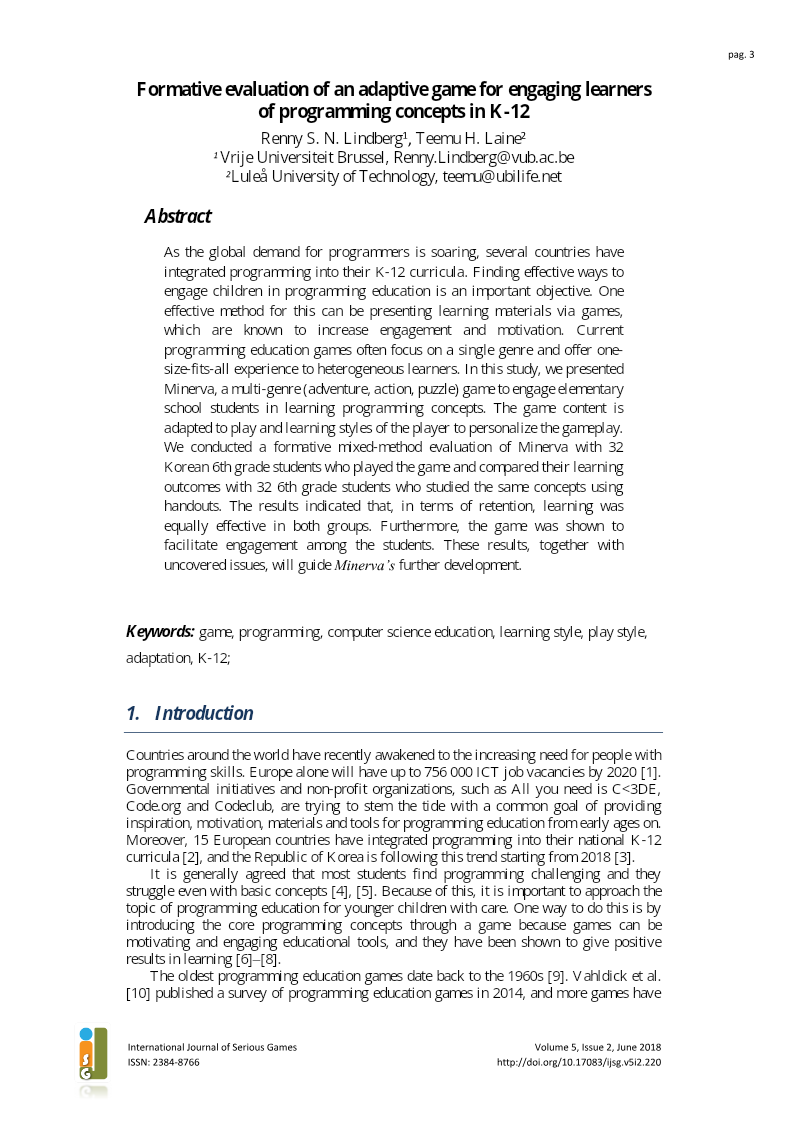
Minerva functions as a multi-genre, adaptive educational platform designed to teach fundamental programming concepts such as repetition and decision-making to K-12 students.
- Minerva, an adaptive multi-genre game for K-12 programming, achieved learning outcomes for 64 sixth-grade students that were comparable to traditional paper-based instruction.
- The platform successfully increased engagement among students who typically remain unmotivated by conventional classroom pedagogical methods.
- Usability barriers, including unclear instructions and complex tutorials, created significant student frustration and hindered the user experience.



Gamified In-Home Rehabilitation for Stroke Survivors: Analytical Review
Gamified in-home rehabilitation systems for stroke survivors represent a critical intersection of low-cost consumer technology and clinical motor recovery.
- Current gamified rehabilitation systems rely heavily on basic engagement mechanics, with fewer than 25% of existing designs incorporating essential features like automated difficulty adjustment, range-of-motion tracking, or safety-focused alerts.
- While the industry has successfully utilized low-cost consumer hardware and natural user interfaces to improve accessibility, most solutions remain tethered to therapist supervision and lack validation for autonomous, real-world use.
- Future development must prioritize the integration of real-time kinematic data analysis to transition from simple gamification to sophisticated, autonomous platforms that function effectively without constant clinical oversight.



Data Analytics of Mobile Serious Games: Applying Bayesian Data Analysis Methods
The mobile serious game Held functions as a highly effective pedagogical tool for teaching resuscitation theory and practical skills to secondary school students.
- Mobile serious games like 'Held' achieve knowledge transfer outcomes equivalent to traditional classroom instruction for teaching resuscitation skills.
- Bayesian data analysis, specifically using Beta distribution models, provides a more accurate assessment of student performance than frequentist methods by isolating metrics from subjective variables like motivation.
- Objective game-log data reveals that female students consistently outperform male students, despite a systematic bias against female participants found in expert observer ratings.

Set-theoretical and Combinatorial Instruments for Problem Space Analysis in Adaptive Serious Games
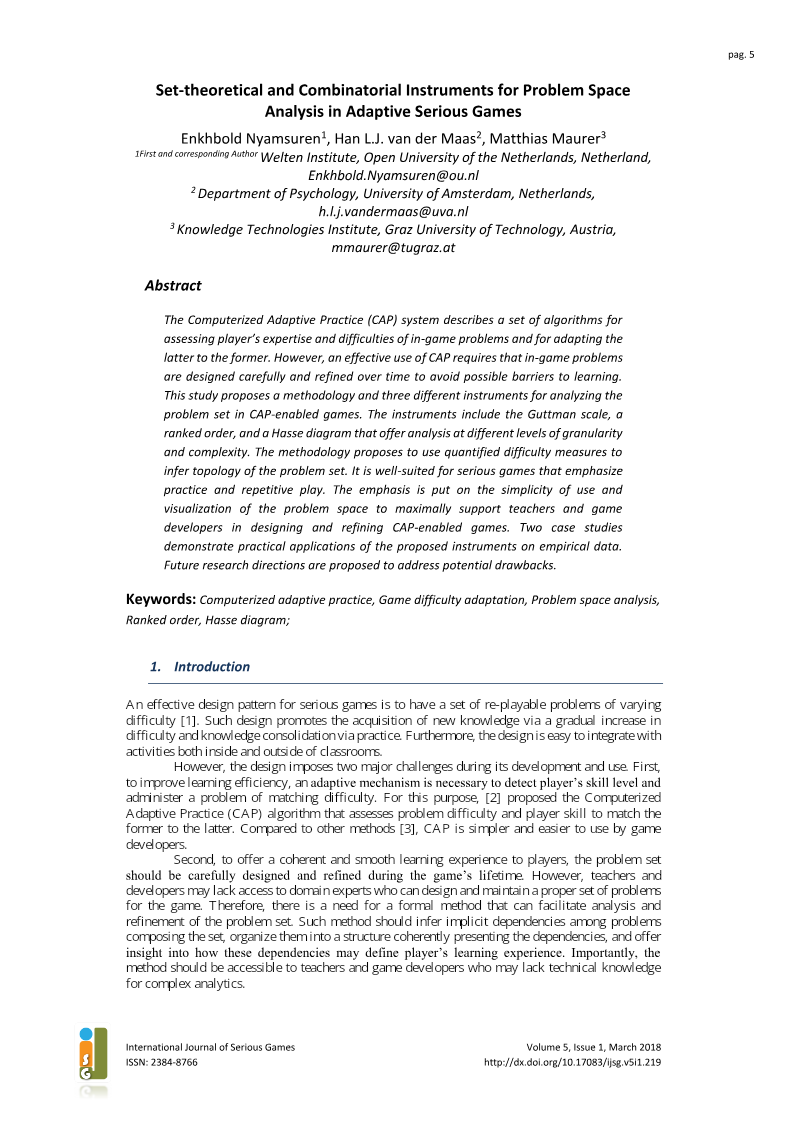
Computerized adaptive practice systems require rigorous structural analysis to ensure that learning paths remain effective and engaging for users.
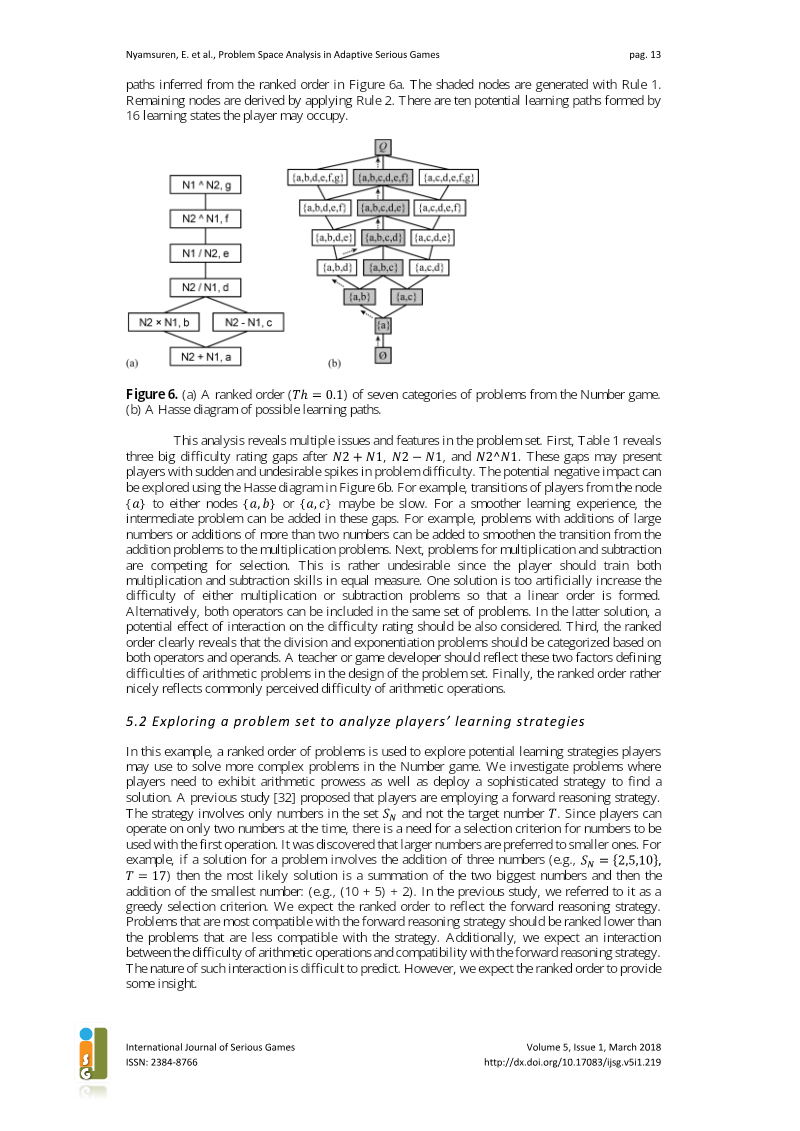
- Developers can use set-theoretical and combinatorial tools like Guttman scales, ranked orders, and Hasse diagrams to map problem spaces and identify structural inefficiencies in adaptive learning systems.
- This graph-based methodology serves as a more efficient alternative to traditional Knowledge Space Theory for optimizing curricula and balancing difficulty distributions.
- Visualizing progression patterns through these mathematical instruments allows for the immediate detection of undesirable difficulty spikes and suboptimal learning states.


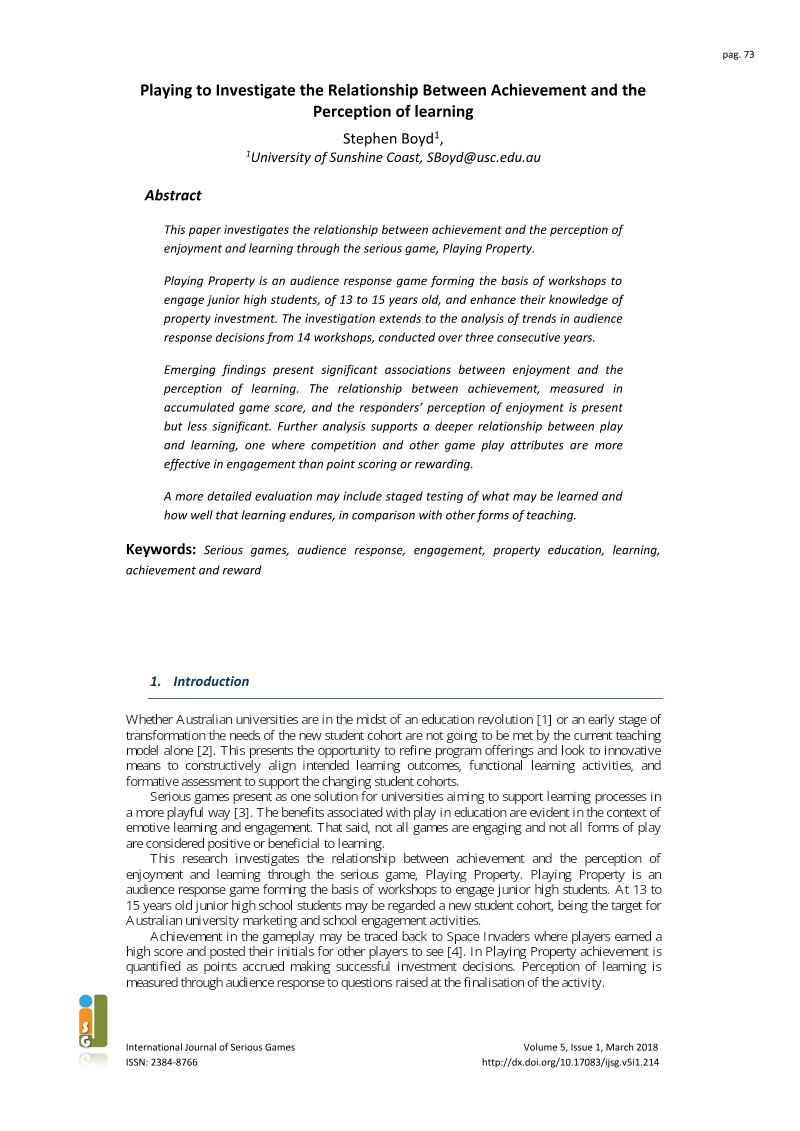
Playing to Investigate the Relationship Between Achievement and the Perception of Learning
This research examines the relationship between gameplay achievement, student enjoyment, and the perceived effectiveness of learning within the context of serious games.
- Student enjoyment is the primary driver of perceived learning effectiveness in serious games, showing a strong, statistically significant correlation.
- There is no statistically significant link between a student’s final point scores and their perception of having learned the subject matter.
- While game achievement correlates with enjoyment, the relationship is notably weaker than the link between enjoyment and perceived learning.
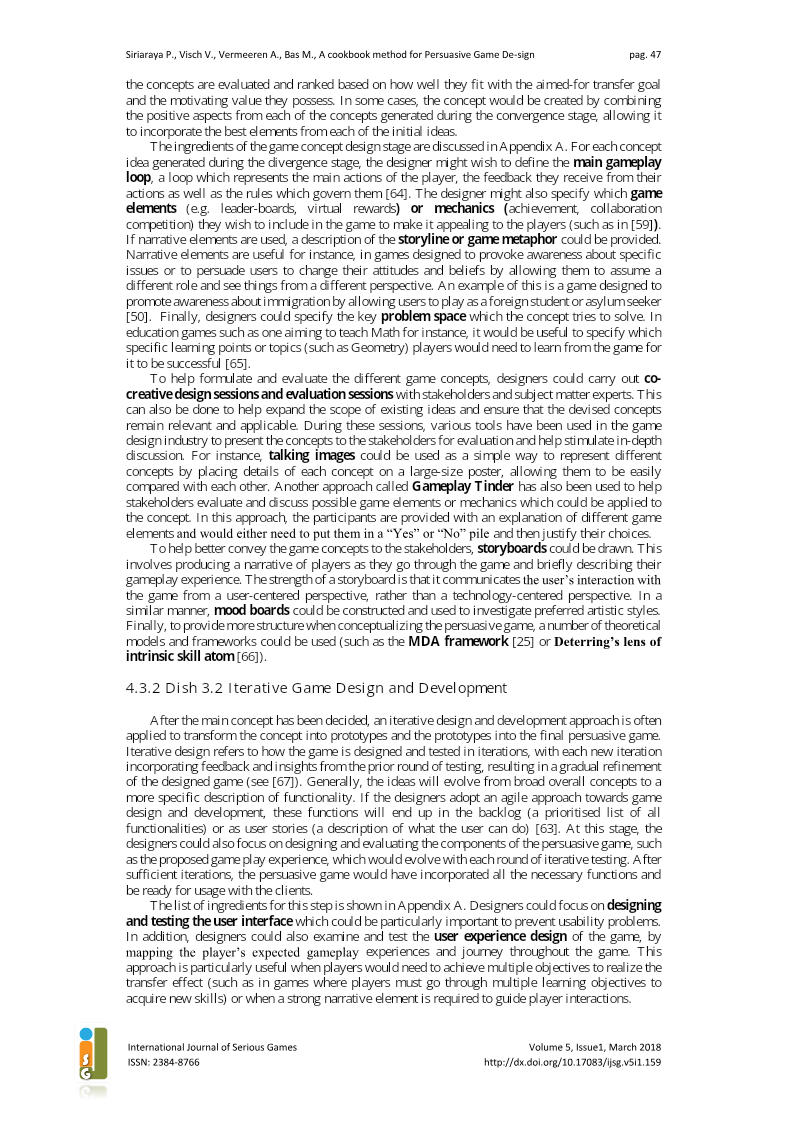

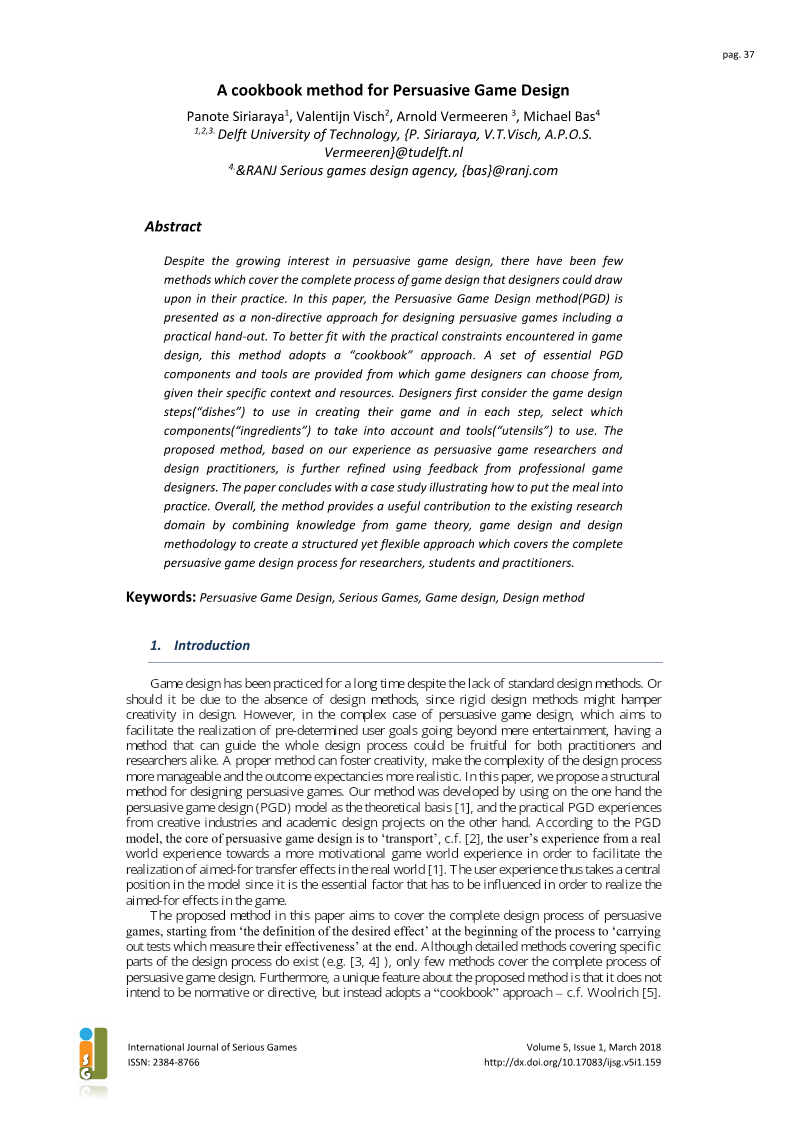
A Cookbook Method for Persuasive Game Design
The Persuasive Game Design (PGD) method offers a structured yet adaptable framework for developing serious games intended to foster real-world behavioral or attitudinal change.
- The Persuasive Game Design (PGD) method organizes development into four distinct phases: defining transfer effects, investigating user context, game design, and rigorous evaluation.
- The 'transfer effect' is the central pillar of the framework, requiring designers to define specific, measurable real-world behavioral or attitudinal outcomes before development begins.
- Effective design requires an iterative cycle of conceptualization and stakeholder engagement to ensure game mechanics remain aligned with the target audience's specific motivations.



When to Use a First-Person Shooter as a Historical Tool: Ludic Site Preservation in Hong Kong
This paper argues that the playable space of the first-person shooter should be treated as an active medium of historical representation rather than a neutral container for 3D reconstructions, particularly when game engines are used in virtual archaeology.
- The paper argues that the first-person shooter's playable space should be treated as an active medium of historical representation, not a neutral container for 3D reconstructions in virtual archaeology.
- Its central case is Autosave: Redoubt, a CS:GO mod built on the Valve Source Engine that recreates the WWII-era British Shing Mun Redoubt in Hong Kong's Kowloon mountains.
- The author frames the FPS's 'camera-gun' perspective and 'tunnel vision' spatiality as shaping what a historical site can communicate, and warns these affordances risk the 'institutional amnesia' flagged by Gareth Beale and Paul Reilly.



Save the Park, Punish the Traitors: Games as Historical Documents
The paper argues that video games produced during periods of social and political turmoil can serve as historical documents, much as political cartoons and opinion pieces do.
- Video games made during periods of social and political turmoil can be treated as historical documents in their own right, similar to political cartoons and opinion pieces, rather than only as later depictions of past events.
- Timely games capture the perceptions, emotions, and political climate of the moment they were made, and they often disappear from circulation quickly, making them easy to lose as records.
- The study is a qualitative, illustrative case study comparing short reactive games from two Turkish episodes: the 2013 Gezi Park protests and the aftermath of the July 15, 2016 coup attempt, based on close readings rather than large samples or survey data.



Debris: Exploring Video Game Messages and Values Through Gameplay
"Debris" is a single-player and co-op adventure game developed by Moonray Studios that uses experiential learning to portray psychosis, placing players inside the perceptual distortions of a character who gradually loses contact with reality.
- Debris, developed by Moonray Studios, is a single-player and co-op adventure game that uses experiential learning to place players inside the perceptual distortions of psychosis, including hallucinations, disorganized speech, and delusions that respond to player choices.
- The game was co-designed over eight months with five youths aged 17 to 19 with lived experience of mental illness, working alongside developers and clinicians, with their discussions recorded, transcribed, and analyzed to build a model linking gamer values (autonomy, connectedness) to mental health values (empathy, dignity, compassion).
- The authors argue the game can reduce stereotypes and fear of mental illness and encourage willingness to help someone in crisis, and they frame psychosis as a collective experience affecting family, friends, and colleagues, not just the individual.



Metrics Feedback Cycle: Measuring and Improving User Engagement in Gamified eLearning Systems
The Metrics Feedback Cycle serves as a formal, iterative architecture designed to optimize user engagement within gamified eLearning environments.
- The Metrics Feedback Cycle is an iterative framework that optimizes gamified eLearning by combining quantitative performance metrics with qualitative user feedback.
- Proactive gamification features, specifically real-time error messages and instructional tips, are empirically proven to significantly enhance user experience.
- The framework utilizes standard engagement metrics, such as dropout and bounce rates, to calibrate specific game elements like Fibonacci-based leveling, health bars, and trophy systems.



Overview and Comparative Analysis of Game Engines for Desktop and Mobile Devices
Selecting an appropriate game engine for cross-platform development requires a nuanced understanding of the trade-offs between technical complexity, graphical fidelity, and ease of use.
- Unity and Unreal Engine 4 are the industry-standard solutions for high-fidelity, cross-platform development across desktop, Android, and iOS.
- Unity is the optimal choice for projects requiring rapid iteration, user-friendly workflows, and optimized mobile compression.
- Unreal Engine 4 is the preferred platform for projects prioritizing advanced graphical performance and sophisticated visual scripting, despite a steeper technical learning curve.


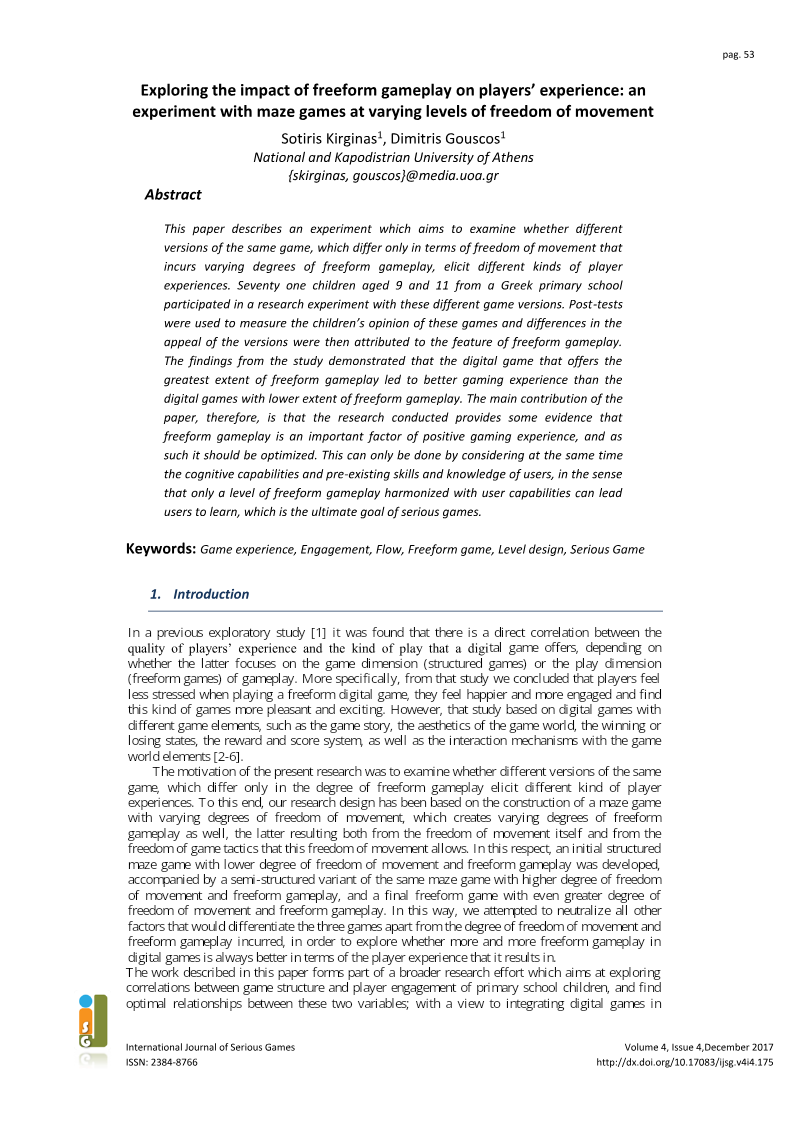
Exploring the Impact of Freeform Gameplay on Players' Experience: An Experiment with Maze Games at Varying Levels of Freedom of Movement
Digital gameplay exists on a spectrum ranging from rigid, rule-bound structures to open-ended, freeform environments.
- Player satisfaction and replay intent are directly correlated with the level of movement autonomy provided in digital games.
- An experiment with 71 primary school children confirms that maximizing freeform elements significantly increases user engagement.
- Total lack of structure can lead to aimless play and reduced efficiency, necessitating an intermediate balance between agency and constraints.