Retention reports and market data
Documents
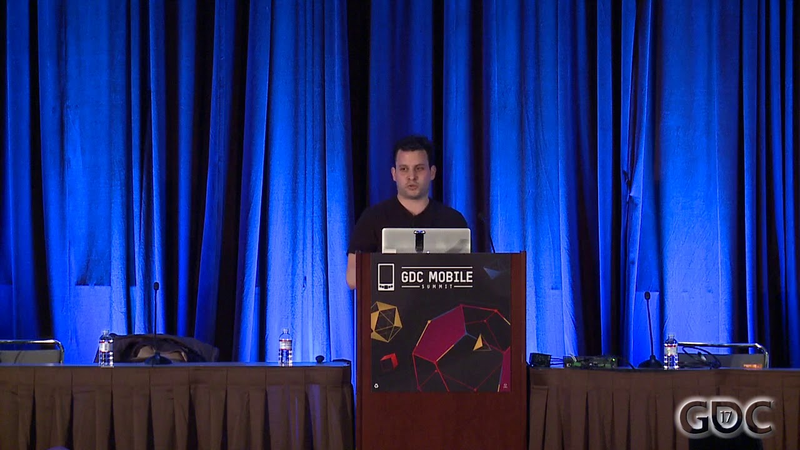
Legendary: GoH 5 Lessons from 12 Months of LiveOps Growth
Legendary: Game of Heroes demonstrates that sustained growth in the mobile free-to-play sector relies on a disciplined, data-driven approach to LiveOps.
- Legendary: Game of Heroes achieved a 652% increase in average revenue per daily active user and a 136% rise in daily engagement time over a 16-month period through disciplined LiveOps.
- A compact, cross-functional team of approximately 16 people drove growth by prioritizing high-impact features such as competitive leaderboards, guild systems, and time-sensitive events.
- Long-term success requires a rigorous, data-driven approach that aligns development capacity with measurable business outcomes rather than relying on accidental discovery.
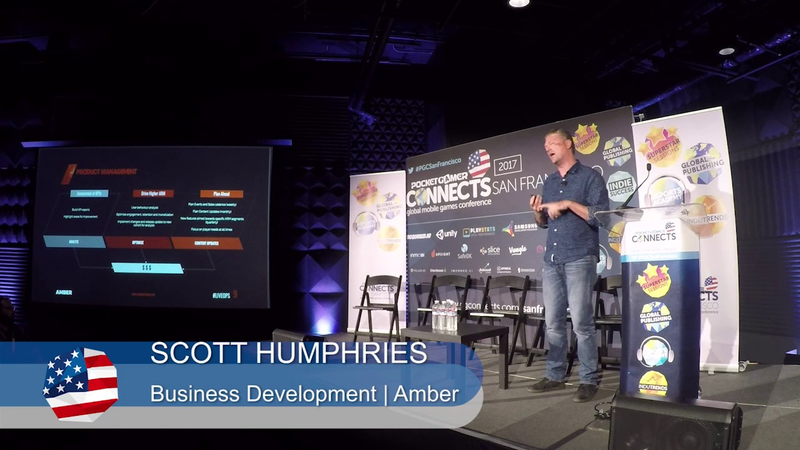
Secrets to optimising your mobile game live ops
Effective live operations for free-to-play mobile games require a balanced approach across three core pillars: acquisition, retention, and monetization.
- Limited-time events can drive massive revenue spikes; for example, introducing a limited-time event in the puzzle game 'Inside Out Thought Bubbles' resulted in a 200% revenue increase over its first weekend.
- Live ops success relies on balancing three core pillars: acquisition, retention, and monetization; failing to optimize any one of these will prevent a service from reaching its full potential.
- Introducing new gameplay mechanics in every update—rather than recycling existing ones—keeps the user experience fresh and encourages long-term player retention.
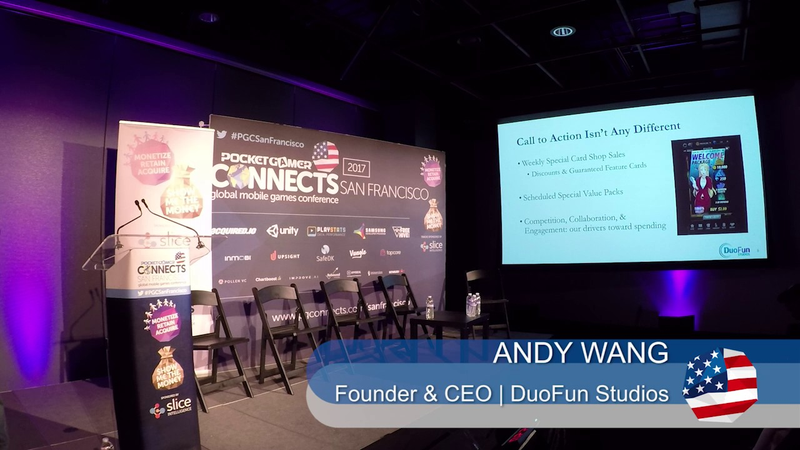
Uncovering DuoFun’s approach to mid-market IAPs
DuoFun Studios is shifting its monetization strategy away from the industry-standard reliance on high-spending "whales" toward a model centered on moderate, recurring spenders.
- DuoFun Studios is pivoting its monetization strategy away from high-spending 'whales' to target a mid-market cohort of players willing to spend between $20 and $60.
- The studio aims to mitigate high churn and 'regret spending' by replacing predatory mechanics like 'rage-pulling' with transparent value propositions for in-app purchases.
- DuoFun’s model prioritizes long-term retention and community engagement to build a sustainable revenue base that reduces reliance on aggressive, high-cost user acquisition.
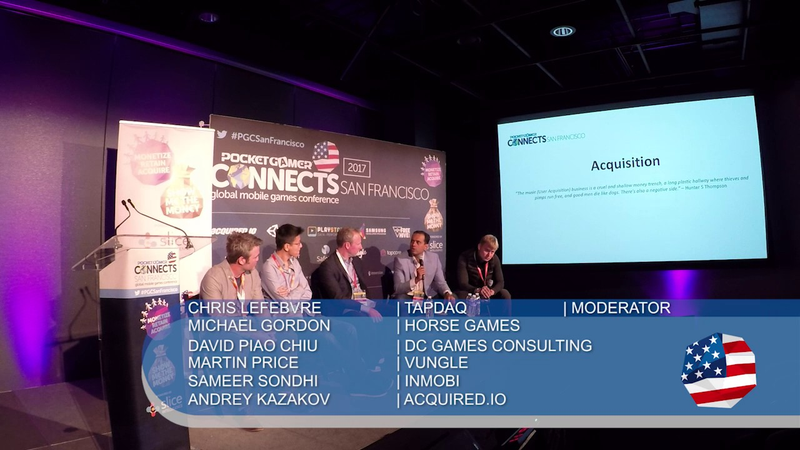
Don't go it alone – How choosing the right partner is key to success
Achieving sustainable growth in the mobile gaming industry requires a strategic alignment between a game’s core design and its user acquisition framework.
- Developers should implement a waterfall bidding strategy for game launches, setting specific deadlines for partners to submit bids to maximize revenue during the high-traffic opening weekend.
- To optimize monetization, developers should use placement segmentation to show ads to specific user groups, such as serving high-CPM ads to non-paying users while limiting ad exposure for those already engaged in in-app purchases.
- When selecting user acquisition partners, developers should define clear goals and budgets based on their game's genre and target geography rather than relying on a generic number of partners.
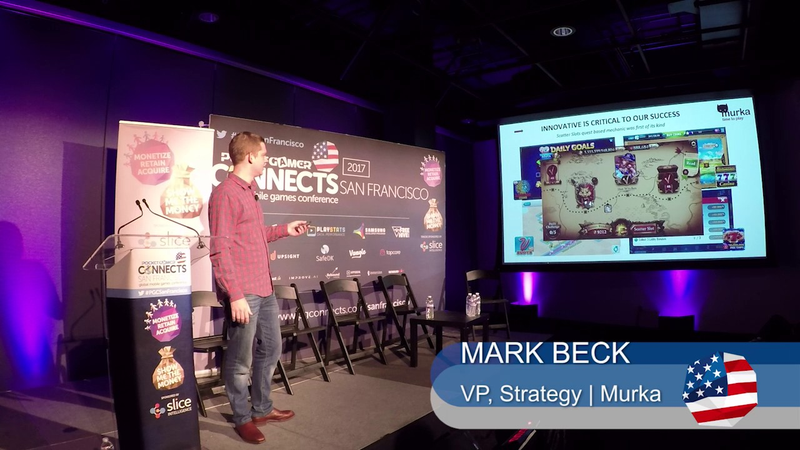
Learn the key fundamentals to social casino game design, monetisation and marketing
The social casino industry represents a significant mobile gaming sector, estimated at approximately $4.5 to $5 billion in total value.
- The social casino industry is a $4.5 to $5 billion mobile gaming market driven primarily by high-spending 'whale' players rather than mass-market user volume.
- Success in this mature sector requires prioritizing high lifetime value (LTV) and sophisticated retention strategies over broad user acquisition.
- Developers are increasingly differentiating their products by targeting underserved demographics, such as younger or male-oriented players, through quest-based systems and mission-driven progression.
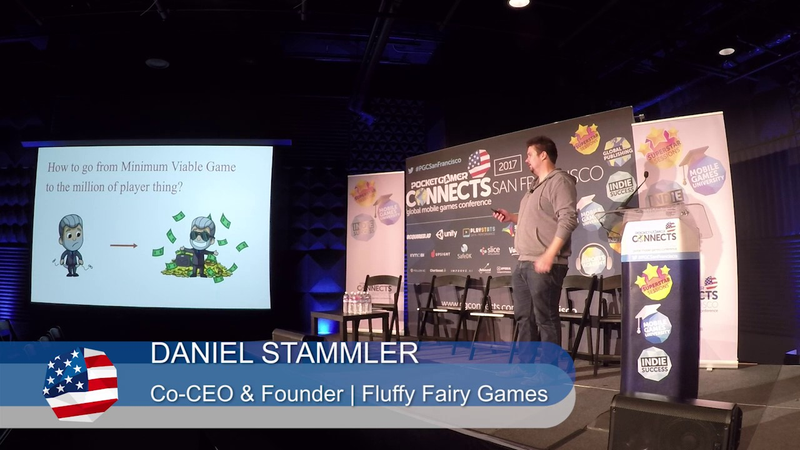
Lean game development – MVP in eight weeks, true player-centric iterations forever
The core thesis of this approach to mobile game development is that success is best achieved through lean, iterative processes that prioritize player feedback and rapid deployment over feature-heavy, long-term production cycles.
- Prioritize day-one retention as the primary metric for early-stage success, as it serves as the most critical indicator of a game's viability.
- Develop a Minimum Viable Product (MVP) within an eight-week timeframe to validate core mechanics and minimize financial risk before committing to long-term production.
- Strip away non-essential features like 3D graphics and complex social systems in the initial release to focus exclusively on refining the core gameplay loop.
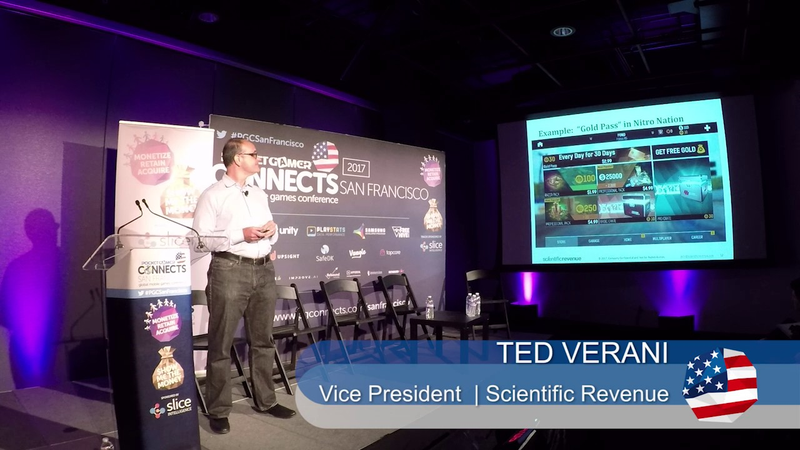
How to design annuities for your mobile game
Annuities serve as a strategic monetization tool in mobile gaming, designed to increase conversion, retention, and overall player satisfaction by targeting "planner" behavior rather than impulse purchasing.
- Annuities convert non-paying, highly engaged users by offering a large lump sum of virtual currency at a steep discount, delivered in daily increments to target 'planner' rather than impulse-driven behavior.
- To build player habits without cannibalizing full-price revenue, annuities should be structured for a duration of 14 to 28 days.
- Daily reward values must be calibrated by setting a minimum based on existing login bonuses and a maximum derived from the average daily spend of the player base.
AI growth hacking
The integration of artificial intelligence into game design serves as a powerful tool for optimizing the player journey, transforming the development process into a systematic, data-driven endeavor.
- AI functions as a 'prosthetic' for game developers, automating tactical optimization to allow human creators to focus exclusively on high-level narrative, character, and aesthetic design.
- Game development is increasingly treated as a meta-game, where the primary objective is to use machine learning to systematically maximize player engagement, retention, and revenue.
- The pirate metrics model (acquisition, activation, retention, revenue, and referral) serves as the core framework for AI integration, with machine learning used to tailor experiences to individual player behavior.
An indie survival guide to self-publishing in the mobile free-to-play world
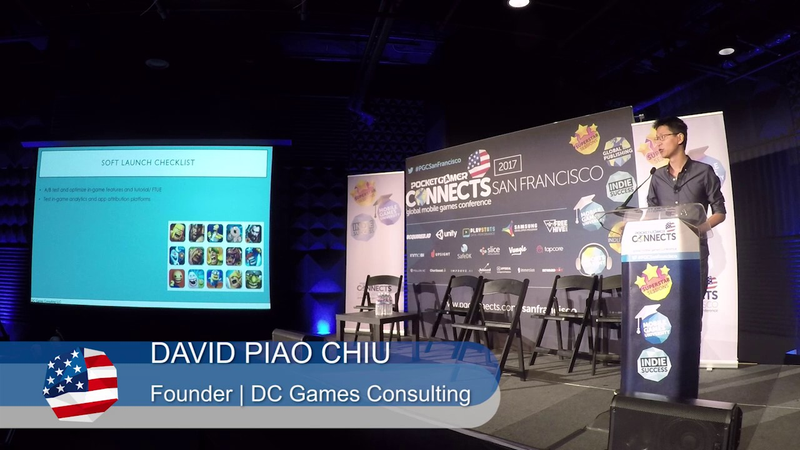
The mobile free-to-play (F2P) landscape is characterized by high market saturation, with over 800,000 games on the iOS App Store and thousands of new titles launching weekly.
- The mobile F2P market is highly saturated, with over 800,000 games on the iOS App Store and thousands of new titles launching weekly, driving user acquisition costs to record highs.
- Developers must choose between self-publishing and partnering with a publisher based on their internal capacity for managing UA, ASO, and community engagement versus the trade-off of revenue sharing and creative control.
- When selecting a publisher, developers should prioritize alignment on monetization strategies—specifically the use of offer walls—and verify the partner's track record and portfolio fit for their specific genre.
Why indie game developers should look at analytics in different phases
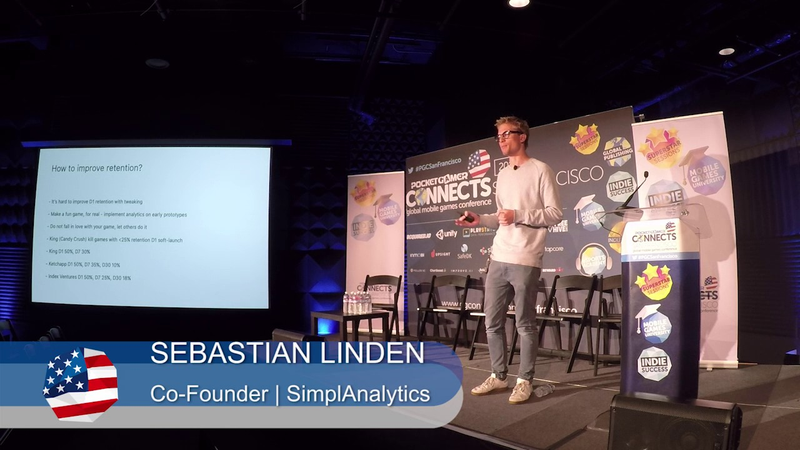
Indie game developers should prioritize data-driven decision-making by integrating analytics early in the development process to validate core gameplay and improve long-term viability.
- Day 1 retention is the most critical metric for indie developers, serving as the essential foundation for all future monetization and scalability.
- Indie developers should validate core gameplay mechanics within a two-week window using a Minimum Viable Product (MVP) to avoid over-investing in projects that lack player stickiness.
- Maintaining engagement through Day 7 and Day 30 remains a significant challenge for indie studios, even when initial Day 1 retention targets are met.
The Design of Time: Understanding Human Attention and Economies of Engagement
Human attention serves as the primary currency in the modern digital landscape, necessitating a fundamental shift in how developers approach game design.
- Game designers must shift from aggressive engagement tactics to models prioritizing player autonomy and long-term psychological well-being to avoid the diminishing returns caused by player normalization of repetitive stimuli.
- Sustainable engagement is achieved by engineering social ecosystems that foster community interaction and collective investment rather than relying on superficial retention metrics.
- Designers should implement varied temporal rhythms, such as daily rituals and multi-year objectives, to cultivate anticipation and habituation that feels rewarding rather than coercive.
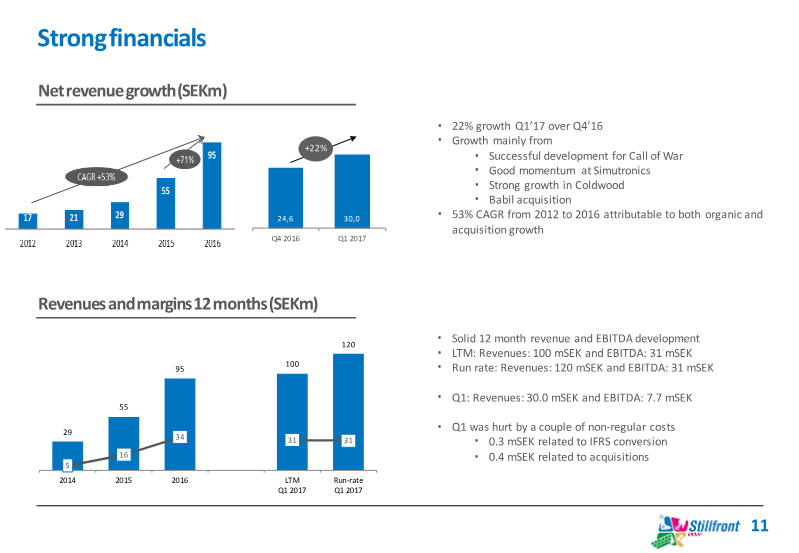

Stillfront Group Presentation: Q1 2017 Report
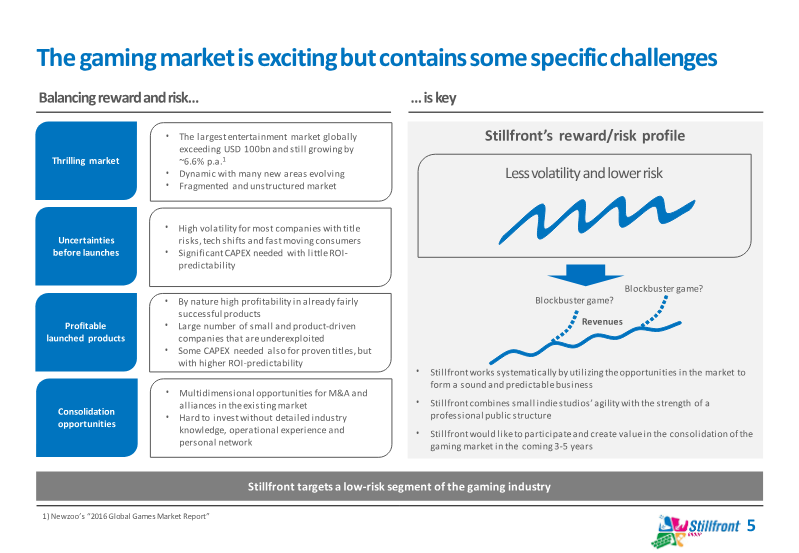
Stillfront Group’s Q1 2017 report outlines a business model centered on acquiring and managing a portfolio of small, independent gaming studios to achieve high-growth, low-risk profitability.
- Stillfront Group achieved a 53% compound annual growth rate between 2012 and 2016, maintaining EBITDA margins between 25% and 35% since listing.
- Q1 2017 net revenues reached 30 million SEK, marking a 22% increase over the previous quarter driven by acquisitions and existing title performance.
- The business model focuses on acquiring independent studios to manage a portfolio of long-lived, free-to-play strategy games, mitigating the volatility of blockbuster-driven development.