1 free read left. Create a free account for unlimited reading + AI research.
Create free accountPresentation Stillfront
1 free read left. Create a free account for unlimited reading + AI research.
Create free accountPresentationStillfront
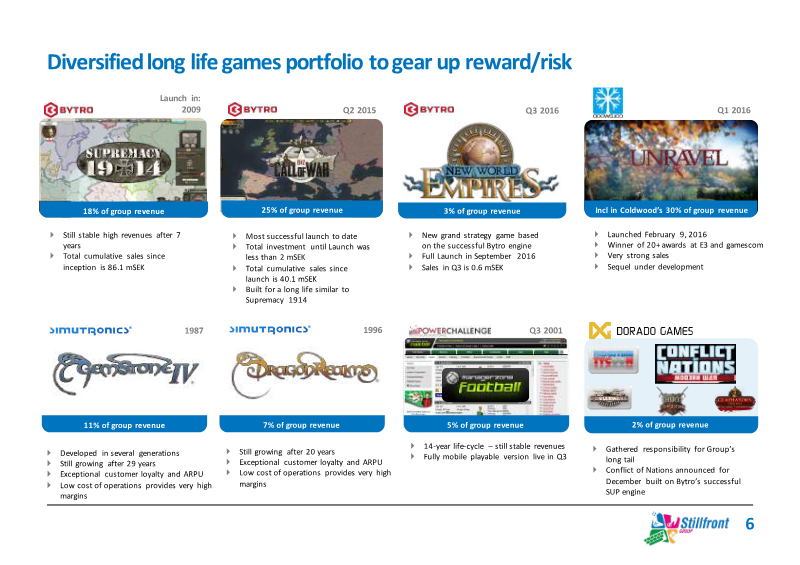
The focus is on established user bases.
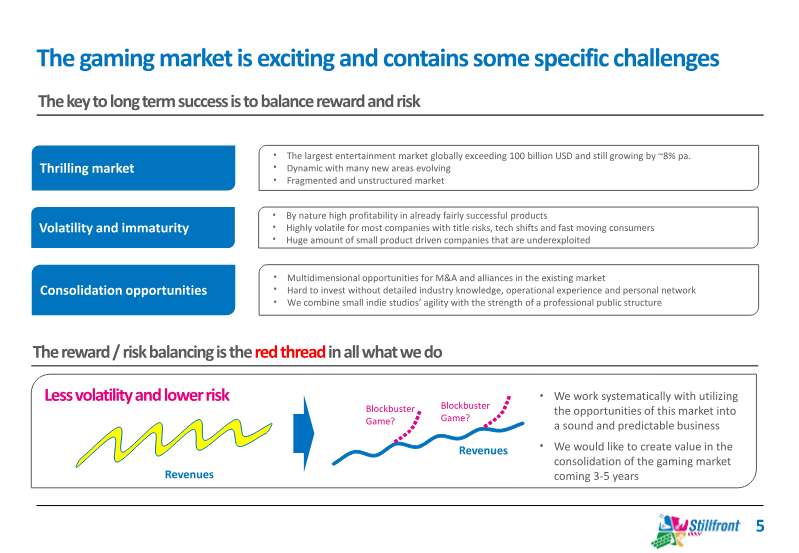
Like a diversified investment fund, the strategy spreads risk across multiple stable assets rather than betting on a single big hit.
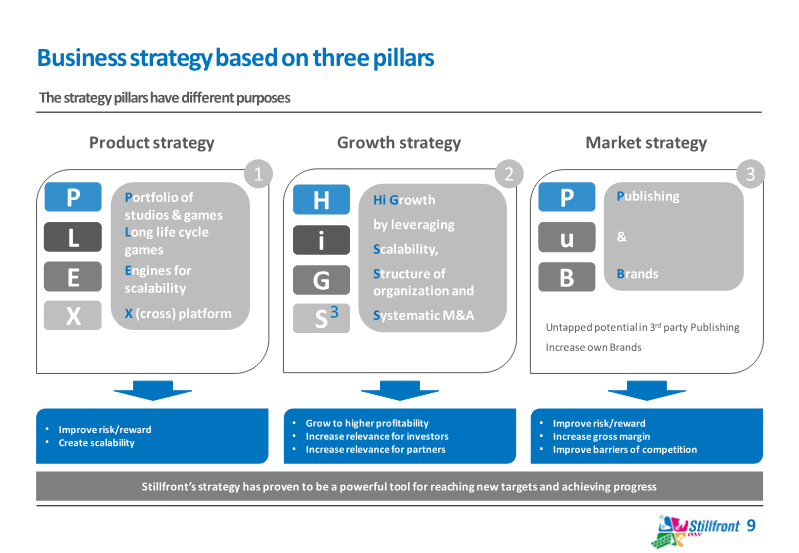
Business Model. The business model focuses on acquiring independent studios to manage a portfolio of long-lived, free-to-play strategy games.
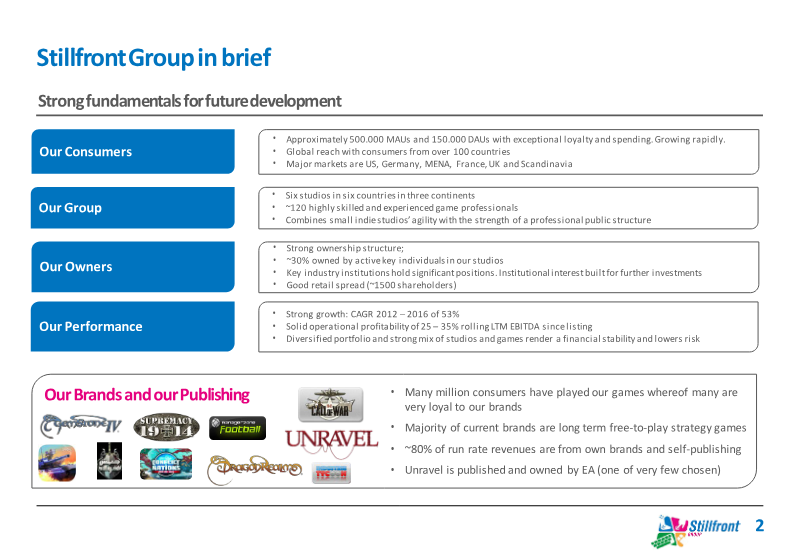
Stillfront Group’s Q1 2017 report outlines a business model centered on acquiring and managing a portfolio of small, independent gaming studios to achieve high-growth, low-risk profitability. By combining the agility of indie developers with the structural support of a public company, the group aims to capitalize on a fragmented gaming market. The core thesis posits that by focusing on long-lived, free-to-play strategy games with established user bases, the company can mitigate the volatility typically associated with blockbuster-driven game development.
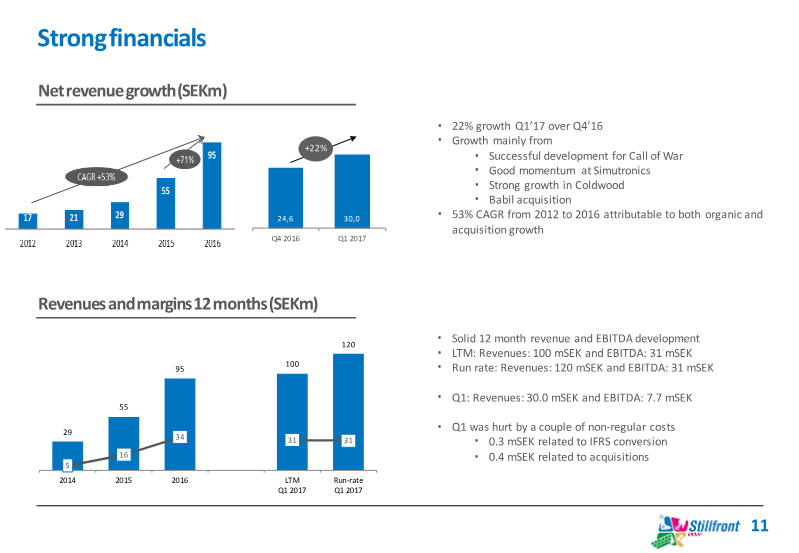
Financial performance remains strong, characterized by a 53% compound annual growth rate between 2012 and 2016 and consistent operational profitability, with EBITDA margins ranging between 25% and 35% since listing. In Q1 2017, the company reported net revenues of 30 million SEK, representing a 22% increase over the previous quarter. This growth was driven by successful product development, momentum in existing titles, and strategic acquisitions. The company maintains a global footprint, with consumers across 100 countries and a portfolio of six studios operating across three continents.
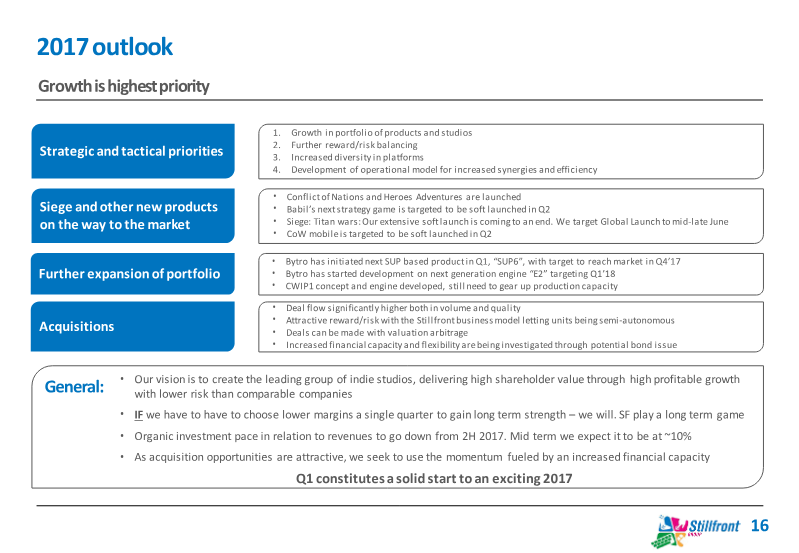
The company’s strategic outlook for 2017 prioritizes aggressive growth through both organic product development and systematic mergers and acquisitions. Management is actively investigating the issuance of bonds on the Nordic corporate bond market to accelerate M&A activities and leverage equity. Future operational focus includes diversifying platform reach, particularly in mobile, and refining the operational model to capture synergies between studios. While the company maintains a long-term perspective—willing to accept temporary margin fluctuations to ensure future strength—it expects the pace of organic investment relative to revenue to decrease starting in the second half of 2017.
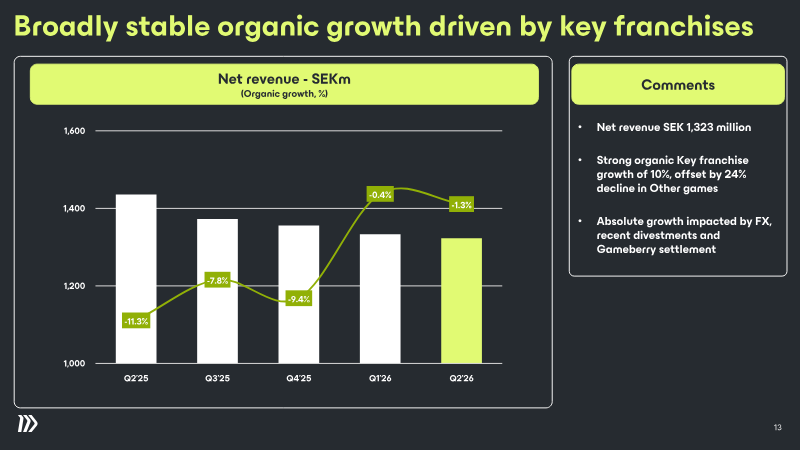

Stillfront · 2026
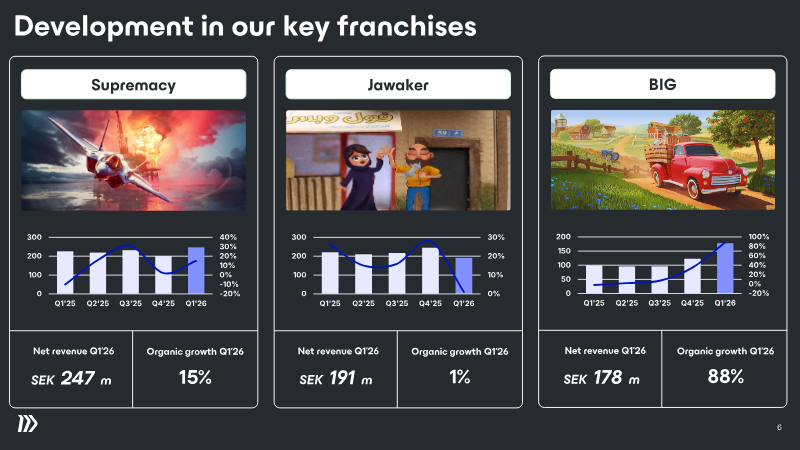
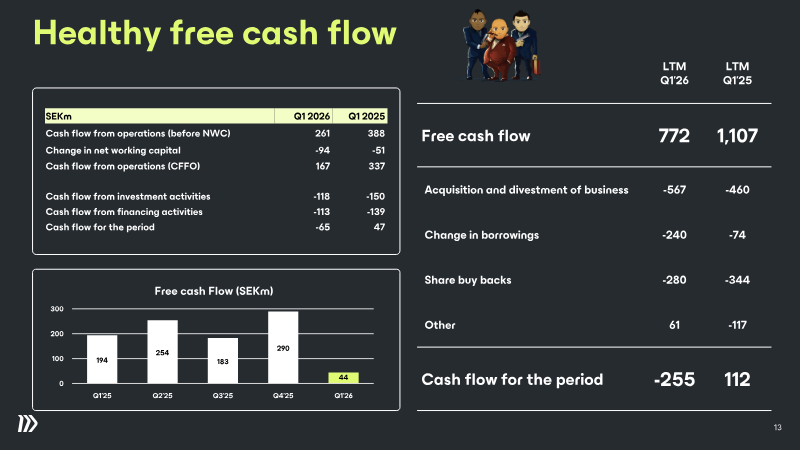

Stillfront · 2026
Stillfront · 2026

Stillfront · 2026
Stillfront · 2025
Stillfront · 2025
Stillfront · 2025
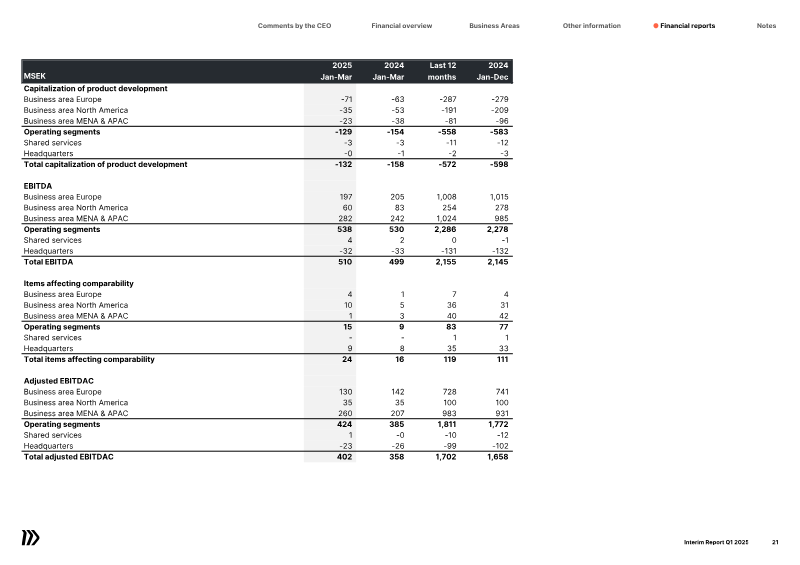
Stillfront · 2025
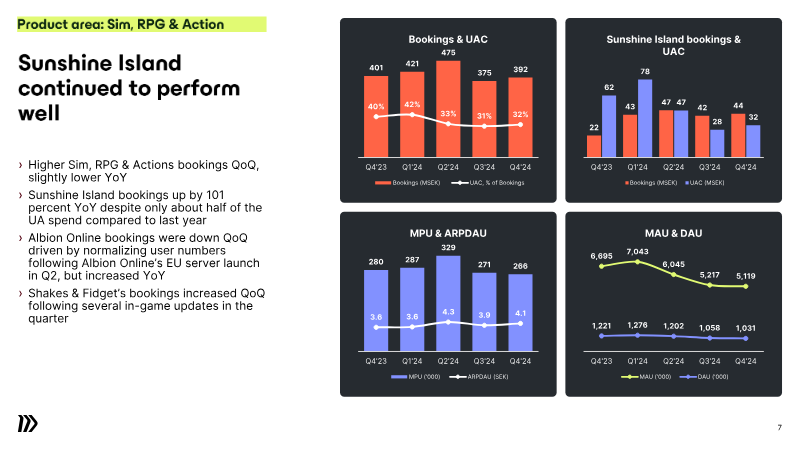
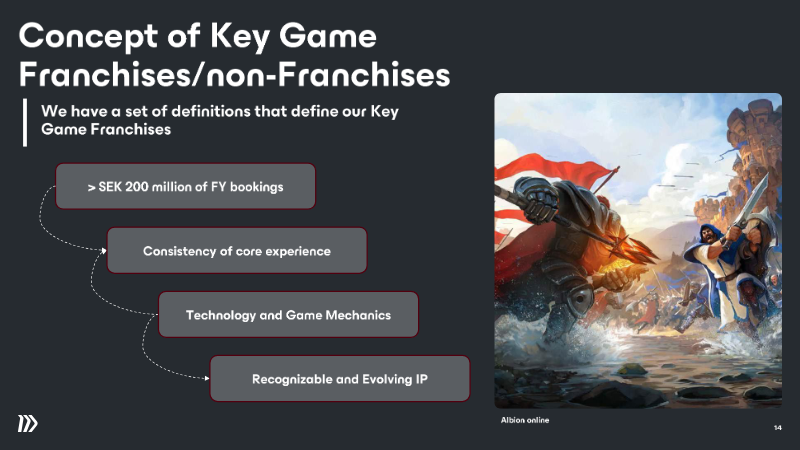
Stillfront · 2025
Stillfront · 2024
Stillfront · 2024
Stillfront · 2024
Extra Credits · 2026