1 free read left. Create a free account for unlimited reading + AI research.
Create free account
Secrets to optimising your mobile game live ops
Key insights
7 takeaways- 01Live ops success relies on balancing three core pillars: acquisition, retention, and monetization; failing to optimize any one of these will prevent a service from reaching its full potential.
- 02Optimizing non-IAP revenue through rewarded video SDKs is an underutilized strategy that can significantly increase income without requiring major development overhauls.
- 03Introducing new gameplay mechanics in every update—rather than recycling existing ones—keeps the user experience fresh and encourages long-term player retention.
- 04Offering 'durable' items, such as seasonal maps that can be purchased for a one-time fee, can unlock new cohorts of payers who previously avoided consumable in-app purchases.
- 05Limited-time events can drive massive revenue spikes; for example, introducing a limited-time event in the puzzle game 'Inside Out Thought Bubbles' resulted in a 200% revenue increase over its first weekend.
- 06Dynamic difficulty adjustment is critical; by analyzing the gap between intended and actual level difficulty via KPIs, developers can use data to rebalance gameplay and improve progression.
- 07Automating level balancing through machine learning and data-driven toolsets can reduce operational costs by minimizing the need for manual human intervention in the live ops process.
Ask AI about this video
Transcript
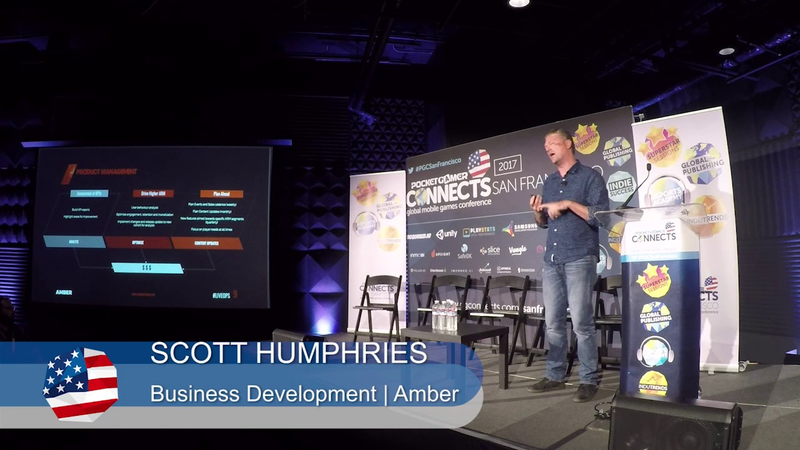
[Music] hello everybody thank you for coming to my talk I'm going to talk about live ops and I work for a team called amber amber is a game development on studio services agency we've worked with many partners over the years doing development Co development Quality Assurance dev services and and one of the things that we found is that there is a need these days for teams that have existing free-to-play products to give those free-to-play products to other teams in order to support through through live ops so we are attacking basically service-based live ops very aggressively
we've got a few products that we're managing now and we're looking for always looking for new products to take over as part of our service offerings so what I'm going to go over for you today is some of our perspective in how we approach these games when we are when we were taking them over we're going to go over some basics in free to play in live ops just to make sure we're on the same page and then we're going to go through two case studies of products that have some strategy towards live ops that I think you might be able to learn something from from our live ops playbook which is a document a methodology that we use when we look at taking over existing products to optimize them so amber has worked with a bunch of different mobile publishers in the past some of these teams have used us for live off some of these teams I've used this for other things but we've been around since 2013 we have offices in San Francisco Los Angeles and our
core execution team is based in Bucharest we're about 280 people strong so we have a pretty big team tied to servicing some of the some of the top publishers in the world the way we really look at offering value to our partners when we engage them on our on our live ops initiative is to achieve maximum user engagement while lowering the operating costs so for a lot of these teams they're live off scene games with like you know 20 30 50 people in San Francisco Los Angeles other expensive parts of the world that can be very that could be very cost consuming for them especially as games enter the longtail part of their life lifecycle which is usually you know it's a successful product could be like two years maybe three years out and what we do is we'll step in and we'll say well
these games are still making money and they're still very profitable for you guys but let us take them over at a lower operating cost and while we do that let us also add value by optimising them because you know these teams may have been great at live off seeing the games and their time but they may have run out ideas because they've been doing it for so long we can come in with fresh set of eyes look at a product and maybe figure out some new strategies to to help optimize the user base the other the other thing we'll do is maybe we'll come in at a product that's early in its life cycle that never really had the chance to to drive value for the service because maybe the team didn't really know how to tackle it maybe they were making the wrong choices so the other thing we could do is come in at a product that's maybe been out for a few months and hasn't really been optimized to help drive more value with a new product our experience started with Divi in regards to taking over some live ops
products we built a product from scratch for Disney called Cinderella freefall and that product has been live operated for over two years and because we did such a good job at operating that product Disney came to us with two products that weren't ours because they either wanted the internal team to move on something more strategic or in one of these cases that the existing developer got purchased by another publisher and they came to us to take over the games so our live ops business really started at Disney because they came to us to help manage some games that they already had up and running and we've been running all these games for fur for well over a year now inside-out thought bubbles we've been running since July and Disney Dream treats are about the same time and the other experience we bring to bear when we're doing live ops is some of our Co development experience so we worked with Kixeye on war commander rogue assault
for two years basically developing components like features AI campaign maps etc okay so that's the background of who we are and why we're sort of this business and why I'm up here talking to you about live ops now when we look at live ops what is that what is what is at the end of the day I think it's very simple you think about it is running a games the service is giving your user base something to do every single day and that doesn't have to be like releasing new content every single day or you know driving new features every single day but what what it does mean is that you need to bring your user back every single day in order to minimize churn keep them engaged in the product which will ultimately hopefully drive conversion in your product and drive monetization so the gentleman that was up here earlier I'm sorry I didn't catch
the name was taught you know talking about watching stuff right and you I think clash Royale does a fantastic job of not only driving game content every day but driving stuff in the product that you can watch or you know outside the product so the service itself just means you have to be engaged in in that game every day to drive optimum value some of the basics to get out of the way as we start to move into some of the case studies acquisition retention and monetization these are the three legs of the stool that we stand on in regards to live ops and I'm sure you guys are very familiar with these terms but the way we think about them is you have to you have to be considering all three of these pillars in order to optimize product no product can exist I think with with only one or two of these working I think they all have to have all three of them working in order for you to have a successful service and acquisition isn't
just spending money to bring users in on Facebook or other channels but it's also looking at your organic users right the people that just come in by searching on the App Store or who knows where they come in unknown to understand who those users are with what their demographic what are their interests right because if you don't understand your user base and you don't understand the people that you're getting into your product you're not really going to understand what sort of content or features to develop for them so I think that's a really important thing to consider in regards to acquisition retention is obviously driving engagement not just short-term engagement but long-term engagement making sure that your user base is in sticking around and that that's giving them something to do every day is really important to drive to drive retention and then monetization if everything goes well you're converting your user base they're spending in your product at some percentage probably usually around one to two percent and you know we use our
conversion average revenue per paying user as key stats to to monitor those KPIs if you're running a product management a pipeline I think it's you can think of it in sort of these three basic pillars the first pillar is the assessment of the KPI so let's say you release a game component or a couple of game features through a/b testing you would look at that cohort of users that group of users when you release that feature and you would grab game events from that feature right so let's say it's a new game through soft launch let's say you're in geo beta in Australia and you want to track your your first time user experience you would track that first cohort you would track all the game events to the first time user experience you would track the drop-off and then you would start to evaluate where
they're dropping off and start to see like how they're going through and the patooie as an example after you evaluate those KPIs the next step is to have your designers and product managers step in to start doing Kuban analysis because telemetry is going to tell you usually where the problem is or sometimes what the problem is it's never going to tell you how to fix it and the best the best optimization and live offs i've seen has has come from really smart designers and product managers looking at KPIs and understanding their user base understanding the audience to basically interpolate that drop-off must be because this thing is frustrating them or that drop-off must be because this thing isn't clear enough or they're not converting here because our merchandising sucks so I think that's the next part of it is taking the KPIs
and understanding that you have to analyze your user base in order to optimize it and then sort of rinse and repeat that cycle and then outside of that cycle I think there's another pillar which is more long-term which is thinking about the new components and features that you need to implement into your product in order to drive longer-term value and these would be things like you know new events or new features or new gamemodes things that that you're going to bet on and maybe put into an a/b testing round to try and drive further value outside of the current stuff that you're just engaged in that loop day to day loop of analyzing when we enter when we enter the equation there's usually a few things that we'll pull from our playbook that we cannot immediately start to look at we already talked about acquisition retention monetization and sort of just starting to take an early look at that through the KPIs the other thing a lot of teams
don't necessarily get is dynamic difficulty and how to track that one of our case studies we're going to go over today we'll talk about that in a little bit more depth at our approach to to tracking dynamic difficulty another one that I think is incredibly valuable that a lot of teams don't implement our special events or limited time events that's another case study that we're going to talk about and then you know I think the value that we bring is also because we have a team Bucharest were able to keep our operating cost lower and we're able to maximize income through other ways like maybe a game isn't making smart use of rewarded video putting a rewarded video SDK in your application and thinking about a way that the user would be incentivized to engage with that rewarded video it is a pretty easy thing that a lot of teams just don't get and don't do so don't underestimate the way you know the possibilities of optimizing your income through non IEP methods and you know advertising specifically alright so
frozen freefall my experience before coming to amber was I worked at Disney for four years I ran there there co-development division we also have two other leaders from Disney to have come over to Amber to help drive success in our laughs business so when the case studies I'm going to talk about is our experience and frozen freefall and some of the things that we did on title to drive success for you guys that are familiar with frozen freefall is to this day the top grossing Disney published mobile game of all time it's it's made about 150 million dollars probably more at this point you know at peak it had about four million da you it's it's retention was off the charts for us like I think at you know it was just one of the most amazing experiences of seeing people to stick around in the service we're going to talk about some of the things that we did to drive value in this service specifically so one of the
things that we did to drive retention was and this is may sound elemental but it's not you'd be surprised how many people don't do this is adding new mechanics every time you did an update so what at the time a lot of these puzzle games were doing were just taking existing mechanics and sort of recycling them to create emergent gameplay out of like now before where it was just blockers now it's blockers and you got eliminated background and that worked for a while but what we found was that when you introduce new mechanics into new updates the audience came back and was experiencing something fresh and new and that got them to want to come back for every update because they knew just like if you're watching a TV show when you a new episode comes out that you're going to get something fresh and new that you hadn't gotten before so I think that was a learning that we had that was really pushed forward from our designers you know whether was the wolves that were moving around to replace the tiles
or whether it was mop date where we had marshmallow and he would come out and he would freeze or whether was we added a collection in one update where we never had collections before and that drove a lot of interest so when you're thinking about retention think about ways that you can drive surprise and delight for your user base when they come back for new updates in regards to conversion there was a really interesting thing that we did which started out as the test became a staple which was implementing durables into a consumable economy so free for those of you that are familiar with puzzle games they are a primarily consumable based economy and I think to this day most of them still are and the consumable economy is basically energy power-ups anything that you can buy and continue to buy more of you know ad nauseam one thing that we did was we introduced a durable map so if you had finished the core 200 levels of our game you could play durable
seasonable season of seasonal map for free if you hadn't finished the first 200 levels of our game and you still wanted to play that Christmas map or Valentine's Day map you could do so but you had to buy it for $1.99 and one thing that we thought that was very interesting is we had unlost a couple extra percentage points in conversion when we did this because there were users that had never ever wanted to purchase consumables because you know our theories of the philosophical outlook of some users where they don't see the value in consumables because they know you're going to buy them and you're going to use them but there was a user base that was really interested in buying durables so we unlocked a whole different new cohort of payers that we hadn't had before we introduced this feature and what started the test became a standard the final winner frozen is is limited time events so we implemented our first limit limited time event around April 2016 and it was billed alphas ice castle
and this was this was the feature that we were testing it was something that we borrowed from RPGs and strategy games we wanted to test it in a puzzle game and it ended up driving a an increasing 200% revenue in the first weekend that we ran it and if you look at the decline this is a penny if you look at the decline of revenue up to the point where we released that first limited time event that is a spike right there in a penny didn't even get the revenue right they don't always estimate correctly but you can still see the spike and then you can see that the team was able to you know pretty much every other weekend drive value in those limited time events for the fur to continue the service and they continued view to this day and I think to to this day it's still one of Disney's top grossing games daily alright so the second case study I want to talk about is inside out thought bubbles and inside out thought bubbles is the game that we that we took over from Disney as amber and this case study
is all about rational game design so for those of you that don't know what rational game design is rational game design is a theory of game design that's been around for a while it was made popular within Ubisoft in sort of the early 2000s and was sort of disseminate Ubisoft but you know since then there's been a ton of articles on it recommend you search if you're interested search on you know gamasutra there's there's a couple of really good articles on rational game design but basically the idea is that you can take a scientific and data-driven approach to game design and where typically design was was thought to be a very subject subjective experience you've got the creative director stepping in and making these choices based on his gut rational game design attempts to take a very objective approach to game design which is to say like if you can balance components like difficulty and mechanics in a
spreadsheet to drive map maximum differentiation and scaling difficulty you can create a really compelling progression through your game so we employ this theory when we're developing LiveOps games and the content that we release for those games after we make an initial bet on what we think the mechanics should be we sort of tweak those you know like the soundboard or like a DJ to get to where we want it to be from a perfect standpoint and then we'll design the levels around those ideas right so over like okay well this game needs to have a low difficulty then we'll make it you know easy in regards to the amount of colors that you have to pop the bubbles per se we'll put the colors together and this will be most of it this will be mostly a human driven success scenario which means if you're really good at an easy level you'll
mostly be able to overcome it any time the second example to make it level harder you maybe add more colors you had more differentiation in sort of the spacing of the colors you'll add some other components may be like blockers or more complex pieces and that becomes more of a statistic game design implementation which means that it's not so much human oriented in your ability to beat it there's going to be a randomization involved so there's a little more chance and generally when you're playing public and they're harder it's because there's usually more chance involved in your ability to succeed at a level after we do that we'll release them to the marketplace like I said in the product management slide we'll get back to data and then we'll start to evaluate the data so you know orange was intended difficulty and blue is actual difficulty that we got back through the KPIs so if there was a level an example one that
was too too hard because we want it to be easier level we're going to start to see users turn out because they're getting frustrated so we're going to go ahead and make the changes with that level to optimize it make it easier to keep users around longer an example to the level is actually easier to easy we actually want it to be a hard level to spike difficulty a little bit maybe drive some more conversion in power-ups that's not happening so we're going to go back into that level balance that level and make it a little harder in example three sometimes what we find is that we may have an intended difficulty and it ends up being a little bit harder but that's actually good because when we look at the stats we don't see users churning out on that level which means okay we thought it might be too hard but it's actually not too hard they're sticking around and they're converting so we'll keep that the way it is this becomes really interesting and you think about the applications that you can use to take this this approach to game design and level balancing and difficulty balancing win matched with
automation and machine learning you could conceivably develop a tool set that allows you to balance and redesign levels based on the KPIs that you get back almost autonomously and that's some of the technology that we're looking at is actually you know when we optimize our operational costs is how do we remove the human element tend to be very expensive to be able to add more automated solution auda mated solutions in order to drive value so those are two case studies from our live awfully you got the value from those and thank you for coming my session you are struck your path [Music]
Summary
Effective live operations for free-to-play mobile games require a balanced approach across three core pillars: acquisition, retention, and monetization. By treating games as a service, developers must ensure daily engagement to minimize user churn and maximize conversion. A successful strategy involves a continuous cycle of assessing key performance indicators (KPIs), conducting qualitative analysis to identify friction points, and implementing iterative design changes. This process is often most efficient when outsourced to specialized teams that can lower operating costs while applying fresh, data-driven perspectives to long-tail products.
Methodologies such as rational game design provide a scientific framework for balancing difficulty and mechanics. By mapping intended difficulty against actual player performance data, developers can adjust level design to either reduce frustration-based churn or increase difficulty to drive power-up conversion. Advanced implementations of this approach leverage automation and machine learning to adjust game balance autonomously based on real-time telemetry, significantly reducing the need for manual intervention.
Case studies from titles like Frozen Freefall and Inside Out Thought Bubbles demonstrate the efficacy of these strategies. Introducing new mechanics with every update creates a sense of novelty that sustains long-term retention, while the introduction of durable items—as opposed to strictly consumable economies—can unlock new cohorts of paying users. Furthermore, the integration of limited-time events, a concept borrowed from RPGs and strategy games, has proven highly effective in driving significant revenue spikes in puzzle-based titles. Ultimately, optimizing non-IAP revenue streams, such as rewarded video advertising, alongside these design-led strategies, ensures that games remain profitable throughout their lifecycle.