Retention reports and market data
Documents
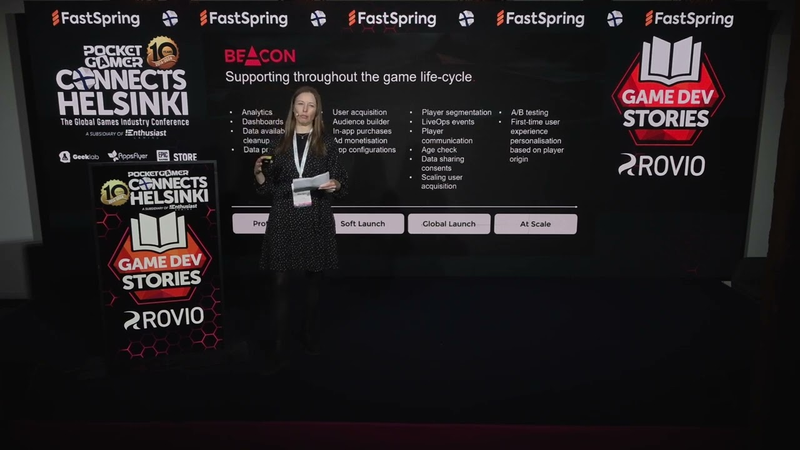
Session: How to run Mobile Games as a Service for Decades? Introducing Beacon, Niina Ojala, Rovio.
Rovio’s Beacon platform serves as a comprehensive, internal technology suite designed to manage the full lifecycle of mobile games as a service.
- Rovio’s internal technology platform, Beacon, is a comprehensive game-as-a-service (GaaS) suite developed over 10 years to manage the entire lifecycle of mobile titles, from prototyping and soft launch to global scaling.
- Beacon enables remote configuration of game settings and live operations, allowing teams to update player experiences and run A/B tests without requiring new client-side app updates.
- The platform utilizes machine learning models to optimize player experiences by predicting lifetime value (LTV) and personalizing content, such as adjusting ad frequency or event difficulty based on individual player segments.

Metagame Mastery: Growing Games Beyond Core Loops
Modern live-service games increasingly rely on standardized metagame features to drive player retention and habitual engagement.
- Social features like guild-based competitions and gifting mechanics can increase player engagement by up to 300% during live events.
- Studios are shifting toward using off-the-shelf infrastructure for metagame systems to accelerate development and focus resources on tailoring player experiences.
- Centralized tooling is essential for managing live-service economies, enabling remote configuration, A/B testing, and machine learning models to predict churn and lifetime value.

Cup Heroes: Voodoo's new hybridcasual hit making $160k/day! Steady growth w/ adplacement excellence
Cup Heroes, a hybrid-casual title published by Voodoo, has emerged as a significant revenue driver since its February 2024 soft launch.
- Voodoo's hybrid-casual title Cup Heroes is generating approximately $160,000 per day in combined revenue, with a significant portion driven by ad monetization.
- The game utilizes a unique bulk-sale monetization mechanic where each purchase provides a 10% discount on the next item, incentivizing players through a sunk-cost fallacy loop.
- Cup Heroes deviates from standard survivor-genre mechanics by removing traditional XP leveling in favor of a skill-selection system between waves that requires currency or ad engagement.

Turning Metrics Into Mobile Wins with Safia Dawood
The mobile gaming industry has transitioned from a period of rapid expansion to a more challenging landscape defined by declining download volumes.
- Top-performing games are defying the industry-wide decline in downloads by prioritizing high player retention and repeat purchase rates rather than relying on broad, one-size-fits-all acquisition strategies.
- Successful mobile games are increasingly shifting toward hybrid monetization models that integrate both In-App Purchases (IAP) and ad-based revenue to maximize lifetime value.
- Market leaders differentiate themselves by focusing on small, incremental gains across the entire user journey—from tutorial completion to monetization—rather than seeking singular, large-scale breakthroughs.
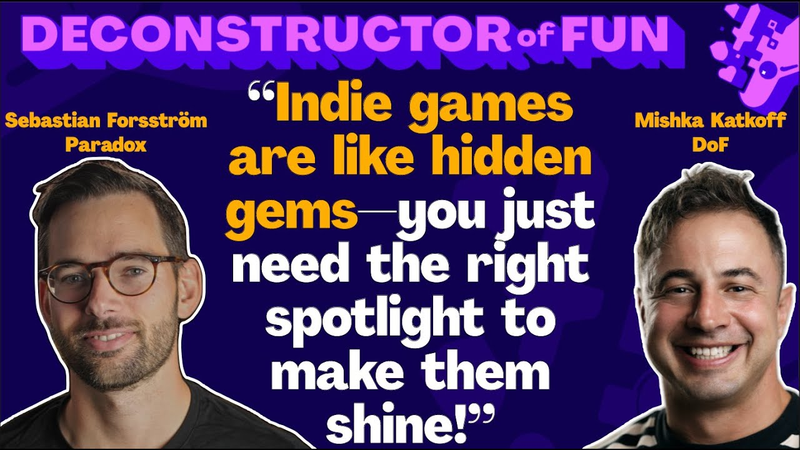
Indie Publishing and Growth Strategies with Sebastian Forsström, Head of Paradox ARC
Paradox ARC functions as a specialized publishing division designed to recapture the agility of early-stage game development by supporting high-potential indie projects that fall outside the scope of larger, franchise-driven titles.
- Paradox ARC prioritizes 'endlessly replayable' titles based on the ALICE pillars: emergent narrative, living worlds, inviting gameplay, cerebral challenges, and long-term engagement.
- The publishing model utilizes two tracks: a prototype track where the publisher retains IP ownership, and a co-publishing track based on revenue sharing and minimum guarantees.
- Success is measured by qualitative metrics such as community growth and responsiveness to iterative updates rather than rigid milestone schedules or short-term sales spikes.

Google Lead Shines A Light On The Top Trends In Gaming Today
The global gaming industry is undergoing a structural transformation characterized by a pivot from traditional mobile-centric growth toward diversified, cross-platform strategies.
- Hybridization of business models is a critical growth strategy, as in-app advertising revenue is currently growing faster than in-app purchase revenue.
- Growth in the iOS market is shifting away from the US toward regions like the UK and Germany, while emerging markets such as Brazil, Saudi Arabia, and Malaysia offer significant new opportunities.
- For developers focusing on ad-based monetization, the ratio of user acquisition costs to eCPM in emerging markets like Nigeria can often outperform traditional tier-one markets.

Game Design For Engagement & Retention: How to keep your players playing
Sustainable player engagement and retention depend on the strategic integration of three interconnected frameworks: the core loop of rapid actions, the context loop of progression and narrative, and the cultural loop of social identity and lifestyle.
- Retention is primarily driven by the first-time user experience (FTUE), which is the root cause of failure in 99% of games requiring design intervention.
- Effective game design requires balancing the core loop (start, challenge, resolution, reward) with context and cultural loops to move players from initial engagement to long-term fandom.
- Designers should intentionally create 'imbalance' in game economies—such as the 'hot dog and bun' principle—to ensure players always have an unfulfilled goal that motivates them to return.

Game Economy Design: How to ensure player satisfaction and commitment, with Oscar Clark
Game economy design functions as a dynamic, mathematical system of sinks and sources rather than a static progression model.
- Game economy design relies on balancing 'sinks and sources' to maintain player momentum, ensuring that the flow of resources creates a dynamic equilibrium between progression and grind.
- Power progression should follow an S-curve model, where power grows rapidly to provide immediate excitement but tapers off to prevent power creep and maintain long-term balance.
- Retention is driven by providing players with meaningful choices, which requires a design loop of mastery, introduced challenge, potential for failure, and foreshadowing of future rewards.

TapNation’s Secrets to 1 Billion Downloads in Under 5 Years
TapNation has achieved significant industry scale, surpassing one billion downloads in four years by transitioning from a traditional hyper-casual model to a hybrid-casual strategy.
- TapNation surpassed one billion downloads in four years by shifting from a hyper-casual model to a hybrid-casual strategy.
- The company scaled to 90 employees by prioritizing sustainable long-term retention over immediate profit margins.
- Operational efficiency is driven by the 'PEACE' philosophy, which emphasizes lean management, transparency, and data-driven decision-making.

Holistic marketing and re-engaging old users | Will Meltzer from Moloco
Moloco, a performance marketing company specializing in user acquisition and retention, continues to leverage deep neural networks and machine learning to drive growth for game developers.
- Moloco is pivoting its 2024 strategy to prioritize hybrid-casual and in-app advertising (IAA) monetized titles, following significant growth in these sectors during the previous year.
- The company has launched an SDK-based, independent demand-side platform (DSP) model designed to pass efficiencies directly to advertisers and provide a competitive alternative to traditional ad networks.
- Moloco’s core business relies on deep neural networks and machine learning to predict user value and identify patterns, explicitly distinguishing this predictive modeling from generative AI.
Retention for Mobile Games 101
Mobile game success relies on a dual-pronged strategy that balances offensive engagement tactics with defensive churn mitigation.
- Retention is an offensive strategy focused on player motivation and progression, while churn management is a defensive strategy focused on identifying and removing friction points in UI, UX, and SDK integrations.
- Effective retention analysis requires moving beyond simple level-to-level funnels by tracking granular events to understand player behavior between progression milestones.
- To identify churn, analyze the time spent on specific events by measuring the deviation in player progression speeds across cohorts, which can be constructed using standard tools like Excel or Google Sheets.
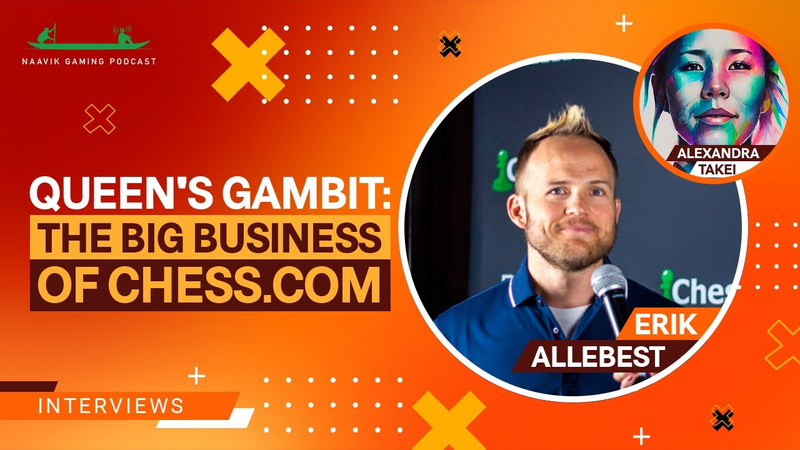
Queen’s Gambit: The Big Business of Chess.com
Chess.com has transformed from a modest 2005 domain acquisition into a dominant global digital ecosystem, currently serving 175 million registered users and 50 million monthly active participants.
- Chess.com has scaled to 175 million registered users and 50 million monthly active participants by building a value-added ecosystem around a public-domain game.
- The company maintains operational independence and avoids venture capital by utilizing a self-funded, profitable growth model that reinvests cash flow into the business.
- Strategic consolidation of the professional chess market was achieved through key acquisitions, most notably the purchase of the Play Magnus Group.