Transcript
Welcome to the Naavik Gaming Podcast, where it is our mission to explore the business and future of video games. We bring together the industry's brightest builders, investors, and thinkers to keep a pulse on current events, dissect emerging trends in games, share lessons learned, and have a great time. This podcast is also part of Naavik's growing ecosystem, which ranges from free and premium research to consulting and advisory services. For more information, visit www.naavik.co. This episode is brought to you by Zebedee, which welcomes you to a new era of monetization and user retention. Zebedee provides a plug-and-play API and SDK for seamless integration of instant, borderless, and low-fee payments using the Bitcoin Lightning Network. With fees less than 1 cent, Zebedee powers over 4,000 developers across sectors,
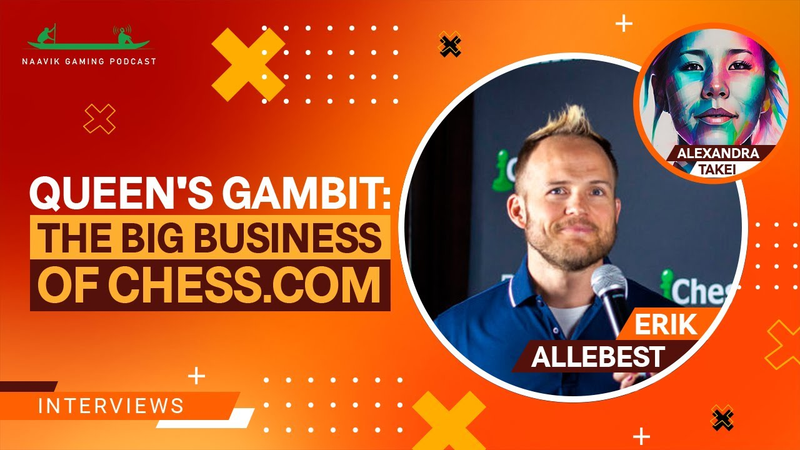
processing millions of transactions monthly. You too can unlock the potential of borderless transactions to better engage and monetize your global user base, including the unbanked, and simplify the way you handle payments. Start for free at zebedee.io, integrate with just a few steps, and monetize your experiences. Again, that's zebedee.io, or check out the link in the show notes. And with that, let's jump into the episode. What's up, everyone, and welcome to the Naavik Gaming Podcast. I'm your host, Alex Takei, and this is, of course, Interview and Insights. Today, we're diving deep into the world of web browsers and the most OG of games, chess. Chess has its origination date back in the 1400s and is one of the most tactically complex two-person games in the world. Called the mind sport, chess is one of the world's most popular games. In 1956, 13-year-old Bobby Fischer beat an international master by the name of Donald Byrne, which kick-started a huge influx of memberships to the US Chess Federation.
Chess, due to its mind sportedness, is also played a huge role during the Cold War as symbolic mental landscape of warfare clashing between the Soviets as anybody who has has known if you've watched Queen's Gambit Gambit featuring Beth Harmon. But although in-person physical chess is on the rise, we're here to talk about its online companion. Online chess has been absolutely booming since COVID and one of the most popular websites of arrival is chess.com. Last year chess.com reported that 12.5 billion games were played on the platform, roughly 35 million games per day. In February, chess.com reported 150 million members with 100 million plus in revenue. Chess.com is played on either your mobile phone or web browser, a classic HTML5 game. And today we're going to talk a bit about about what it's like to build a chess empire, the monetization, engagement, and growth of online chess, and some of the challenges associated with building a business around historical IP that you do not in fact own, and many more things, of course. I'm also very lucky. I have the perfect
person to talk about this with me on air. Eric Allabastro, the CEO of chess.com, is joining us today. Eric has been the CEO of chess.com for almost 19 years. Holy cow. And I'm going to let him tell us all about his journey with chess.com, but I'm very excited to host him. Welcome to the pod, Eric. Thanks so much for having me. Um you know, I'm excited to talk about any and all these topics and uh wow, you reminded me just how long this has felt. So I was uh yeah, I was like, "Dang, he's been he's been running this he's been running chess for 20 years." Um and uh so that's that's terrific. And and also for those who don't know, I I I said HTML5, but I think HTML5 games have never really been written in HTML5. They're just mostly written in Java or JavaScript, but for some reason HTML5 games sticks. So here we are. Here we are. Um but okay, so I have been trying to find a time to get you on air for a while ever since we talked during that media entertainment class. And I know
that you shared your story about becoming the CEO of chess.com then, but I would love if you could share with your audience, you know, how this all came to be for you. Yeah, happy to do it. Just want to thank my mom for teaching me chess at age eight. I still remember that green green carpet we we laid down on and played our first game of chess together in Southern California. Taught me how to play. She said I won the first game and like we didn't play a lot after that. It's probably just mom lore, not sure you know how much is true there, but I did pick the game back up again in high school a little bit with friends and with my grandpa. And then when I went to college freshman year, I was just you know, playing chess and uh I met this guy walked by he just happened to live on my floor and he was like, I want next game. And you know, his name was Jay. He kicked my ass and I was like, there's something to this game I got to learn and we became friends and he taught me chess and then we went on to do business together including founding chess.com. That was actually my third chess business. My first chess business was in
1998. I started doing chess clubs in schools all around the university and that was my first chess business. And then my second chess business was starting a couple of years later to do e-commerce and I was importing chess equipment from you know, all around the world and selling it online long before Amazon was selling everything. So that was my second and then chess.com started kind of in 2005 as an idea. You know, bought the domain name then and then worked on it while it's at Stanford Business School in 2006. Turned down a couple of jobs at hindsight, you know, maybe financially weren't the best decisions, but um, you know, then in 2007 as I graduated in in May of 2007, we launched chess.com out into the world and then thought, is anybody going to show up? And people did. And uh, basically ever since then, uh, been been mostly focused on this.
There was a short detour in uh, 2010 to 2012, I was running chess.com and exercise.com. Crazy story. I'm not sure I want to get into that. Uh, but it was short-lived and I was like, ah, I didn't I don't really love this business. I'm going to go back to doing chess, but I did pick up exercise as a wonderful habit in my life. Um, and basically been doing that. We started out really small. Um, we were self-funded. All the venture capitalists told us it was a dumb idea. Um, and so basically self-funded, a little bit of a loan from a friend's mom and, you know, um, we just went after it and and then, you know, worked to get profitable as soon as we could and basically been self-sustaining and profitable ever since, you know, 2009. Um, and, you know, have grown basically at the speed of cash. Every time we get money, we just hire more people, invest in the product, hire more people, invest in content, invest in people, product, content, and that's been what we've done until now. Um, and you know, we we went
from two people working at chess.com to, you know, over 600. Um, we actually just had our first company kind of layoffs. That was really painful. Uh, really hard to say goodbye to some people on our team. Um, and, you know, So, anyway, I basically I went from like a solo entrepreneur to like building this company and I'm just This is like my first job and so I'm kind of making this up as I go. I'm learning a lot. It's ups and downs. It's painful. It's beautiful. It's uh, it's it's a lot and uh, I'm just grateful that I have an opportunity to do this and an amazing team to work with. That's That's awesome. Well, it's amazing that you're still at your first job. I think that not a lot of people can say that. Um, and I love want to bring this back to chess club. Before we talk a little bit and double click into this aspect of, you know, building this chess empire that you've done over the past 20 years. Um, I noticed that you wrote on your LinkedIn, um, with regards to Stanford GSB, uh, had a great time, 10 out of 10 would recommend, uh, turned down several
offers in big tech to do this chess thing. Um, you also started the GSB chess club, but you were the sole attendee, so you had to cancel the club. Um, having gone to GSB myself, I don't find that surprising, but can you walk us through a little bit of your mindset of how you had the fortitude to come out of school like that and just pursue chess. Um, I think for a lot of people that's a very scary and daunting task and you've obviously been incredibly lucky and fortunate to be doing this thing for 20 years, but kind of rewind the clock and tell us a little bit about like what were you what were you precisely thinking? Good question. Um, I'm rewinding in my mind as I as I look up. I guess that's where people look when they're going back in time. Um, That's what Beth Harmon does in the show, too. So, she looks at the ceiling and all the chess pieces move around, so. my history is up there. Um, so, I it wasn't my first job, but it was but it coming out of business school it was my only job. Um, but I had done a couple
of ventures before that. Um, and I had also had one job for a very short time coming out of undergrad. Um, and I think I the company like downsized and I got laid off within like 6 months. And first of all, I hated that job. And then while I was at Stanford Business School, I did a bunch of of kind of mini internships at a couple of different places. Venture capital, you know, big tech this, big tech that. And it And then I you know, I knew what kind of the consulting and banking route. I'm like, "I'm not really cut out for like any of this." It just didn't resonate to me. Um like everybody in the big tech that I went and met with, I was in Stanford Business School. I'm like, "Oh, I'm going to go to this big tech company and I'm going to meet with a GSB, you know, alum who's working there as like a manager or whatever." And I would go there and I would talk with them and
they're like, "Wait, you've done entrepreneurial stuff? Tell me about that." And I'm like, "Well, I'm kind of here to see what you're doing." And they did not want to talk It was like they didn't seem happy is all I can say. Um and I'm like, "Okay, I'm not destined for that." And so, you know, coming out of business school, I'd been working on chess.com as kind of a side project. And I did a lot of side projects while I was at school. And there there there there were a lot. I I think the time that other people were spending maybe socializing more or doing, you know, other types of events, I was just like side project, side project. I was like I did like a little project for like Eventbrite. And then I did this thing on uniforms.com. And then I was over at this venture firm looking at deals. And then I was creating these SEO sites on my side. And then I was like I was just like busy doing work stuff. And I also had kids at the time. I had two kids. My third was was born while I was at business school. So, I was like dad at home doing business stuff, some social stuff, but I was like
very much, you know, cutting my teeth on doing things. And that's just kind of my mode is like I'm just hyperactive and I do things. And so, my mom taught me how to play chess, but my dad taught me how to like get stuff done. He's got 20 different things going at any given time, even now in his mid-70s. Um and so, it was kind of those things drove me together. And I have all my classmates who are like big tech job, consulting job, you know, maybe like two people who were like, "Oh, I'm to go do my own thing." Maybe more than two. Maybe there's like four or five. Um and I was like, "I'm going to go do that, too." And then I asked all my uh some classmates, too. I'm like, "Hey, anyone want to do it with me?" And it was like crickets. And I'm like, "All right, fine. I guess I'm going to go do this uh all by myself and and with my co-founder Jay. And, you know, Jay wasn't Stanford's, you know, engineering or, you know, Berkeley this or MIT. He was San Jose State. And I'm like, "Awesome." Like, he's a doer. He's a
grinder. And we just like we're like, "All right, the two of us, we're going to go do this." And our wives were like, "All right, we trust you. Like, good luck." And we saw positive signs early. So, it was kind of, you know, easy to stick with it. Got it. That's incredible. Um and I think that's actually a perfect segue to start talking about the empire that you and I guess Jay built together. Um so, we talked a little bit about where you started. And it's time to catch up the audience as to like where you are today. Um we're going to address how you built this chess building empire in two ways. One from the internal side of building a team from scratch with your co-founder um slash the domain buyer um Jay. And from the external side, you've also been buying up a lot of rival chess sites. And I'm curious as to, you know, whether or not you've done actually any external financing. Though, I think it sounds like you haven't. But, let's start with the internal side. Um you bought chess.com uh the domain for 55K in 2005. It seems like you're really into .coms, exercise.com, uh whatever else you said. There's something There's another .com in there. Um chess.com, etc. Um so, you're sitting
there. You've got You've got the domain name. You bought it for 55K. What is the first thing that you guys did? We uh we made some wireframes. And we had a vision for what we wanted to do. And our first vision was we wanted to be the MySpace of chess. Um so, that was kind of that. So, profiles and forums and, you know, just identity. And this was kind of be, you know, there were more niche micro communities online back in this time. It wasn't like everything was a Facebook group or an app or a feed or or something like that, you know, it was more communities. Um And so, that's what we wanted it to be. And and we started I would kind of build wireframes in Microsoft Word of all places. There was no Figma back then. Come on. Uh so, you know, I'm just making wireframes and then Jay's like coding it out and we just started to build some stuff. And that's that's kind
of how it started. Got it. And then can you tell me about how you grew that team, right? And so, I think obviously the difference is that, you know, chess.com HTML5 game is a lot different than maybe some of the other founders that we have on air from the mobile business, AAA console, VR, etc. What was the breakdown, especially in the early days, uh between engineers, business, and design? I think the other thing is that you don't have to design the game of chess. The the rules of chess are known. So, tell me a little bit about how you started staffing the team uh maybe in the first like two to five years. Yeah, so first of all, I don't think we made a business hire for like five years. And then we had like one and he did everything. Like books and marketing and we're just like that doesn't that's not important. Like what really matters is like product. And it was just all that was all that mattered. Now we have a larger business department, but like I think it was literally like five years like there was nothing like that.
Uh I was like literally reconciling QuickBooks and bank accounts myself for five years. Um So, we we knew we wanted to build chess and the game and and and it was going to be JavaScript cuz we were going to do it in the browser. Um and so, we had this active site where people were coming and creating profiles and then chatting in forums. And we're like, we just put up job posts there. Like, hey, does anyone do JavaScript and wants to make a chessboard and kind of help us on this game and like this guy named Matias from Argentina was like, hey, I've always wanted to do that. Let me join your team. Um and then we also saw this guy from Poland who had built something like it online. His name was Piotr and I reached out to him and I'm like, hey, you guys build let's build some chess stuff. And they're like, great. And so basically Piotr and Matias and Matias still works for us um to this day and Piotr is a close friend and he worked with us up to a
couple years ago and now he's focused on doing some other fun stuff and we're still close friends. Um but we had we recruited them out of the forums from our community and said, let's build some fun stuff together and they did. And then we added like a customer service kind of community person and then we added like but it was basically me and Jay and couple engineers and like one community person. That was it for a pretty long time and then we oh, we need another engineer. Oh, we need another engineer. Oh, now we need a designer. And we had like one designer at our company for eight years or something and it was So, we just went slow. I think that's something that maybe really different is like now you get like these teams that like how they like they already know how to do this. They're like, we need four PMs and we need eight artists and you know, nine data people and this business thing and we're going to do this game loop with this microtransaction attached to the
you can do this stuff now with a playbook and there's new playbooks being written and new chapters, but it's kind of more clear as to like, I'm going to do a game and I'm going to do it this way and this is our UA plan and this is all all Like, there are playbooks for that. But, we were just two chess dorks just trying to build something, and it was just all organic as to how we did it. We didn't have this playbook. Like, the only gaming sites out there was like Pogo and Yahoo. And then there was And that was kind of, you know, it. And then for chess, there was like the Internet Chess Club. But, it None of this None of this infrastructure None of these playbooks existed. Mhm. And okay, got it. So, very, very scrappy early team. How big is the team today? Like 600 people. 600 people. All right, got it. So, that's huge. Um so, uh when was that explain. It's It's very like So, first of all, like how do you get to 600 people? Well, first of all, you get a couple of hundred engineers because now
you're building systems that have to underlie all of this stuff. And now you've got separate mobile game development teams because we don't use Unity or, you know, a cross-platform. So, we're building for web, for native iOS, for native Android. Then you have customer support cuz we got, you know, tens of millions of of members. Um now we've got 25 designers. We've got 10 project managers. We also do content. We're a media company now, too, because we trade content and socials. And we also do that in multiple languages. You add that all up, you can get to 600 people. Yeah, I know I I believe it. Yeah, for sure. Plus, you also have, I think, one of the big uh I guess artifacts. I mean, this is typical in a lot of video games, but in chess, my understanding that there's a lot of like cheating bots and stuff like that. So, you need a lot of management to make sure that, you know, people aren't using bots to cheat and predict moves and and stuff like that. So, I totally But, it's that's a that's an incredible journey to grow from like, you know, a squad of 20 to a squad of 600, you know, 20 years later. Um and
and in reality, it's probably like, you know, felt felt felt wild and chaotic, but it's it is 20 years, so it kind of does make a lot of sense. Um but so, we talked a little bit about this on internal side and I also know that you guys have bought a bunch of companies as well. In 2009 you bought Chess Park, in 2013 you bought Chess Vibes, and 2022 you bought Play Magnus. What are what are all of those and why did you buy them and what was the positioning? Yeah. Uh, the acquisition of Chess Park was stupid. Um, it was another chess site that had started to come up. They got some users, they created a platform and then they kind of died off and it's to this day still don't really remember why we bought them. Um, it was basically buying like a user list of of people and it was horrible. It was like the dumbest thing. I I like looking back, it was really very little value add and just a waste of money.
Um, Chess Vibes was basically a blog and an author and it was more of a talent acquisition like, "Hey, you're creating all this chess news on your site. Why don't you just bring all your content over and do your content on chess.com now?" And so it was less of like a big acquisition and more of like paying someone a big retention or a big signing bonus to kind of come work for us is kind of more what that was. Now, Play Magnus is a different story. Play Magnus is interesting because we we had a relationship with Magnus Carlsen before Play Magnus had it was a separate company. And we had a a relationship where you know, he's a big name and he, you know, wants to use that name to like build things and he they made a company that built an app that was playing with Magnus around his name and they built up an app and it had some users um, and some
revenue but was mostly losing money and they came to us and said, "Hey, we want like Magnus Carlsen plus this app and the team will join your company and we'll take a a third of the new company. And we're like, "Um you're losing money, we're making money, we are 10 times bigger than you. Like this math doesn't pan out." And they're like, "Well, if you don't do this, we're going to compete." And we're like, "Well, I guess you're going to do whatever you're going to do." And so, they then you started that they raised more money, they went out and then they went on the acquisition spree. They bought Chess24, which was a chess kind of viewing and education platform. Then they bought Chessable, which was a chess um education platform. They bought, you know, Silver Knights, which was like kids in schools learning chess. And they bought publishers so they could then do the rights for the digital. And then they had their apps, and they made more apps, and they bought other apps, and
they bought another like marketing kind of uh they they They put like 13 companies together in a basket called the Play Magnus Group. And then they created a chess tour where Magnus was playing and they had sponsor dollars. And they like had a vision to to put all the other It was like chess.com and then like the nonprofit Lichess and then like all the other companies they were going to put into one basket. And then that's how they were going to play and they were going to figure it out. Are they going to try to merge with chess.com? Are they going to partner with Lichess? Or what are they going to do? And basically they were unsustainable. They were in a constant fundraising cycle. And they were no one was using their core product, which was the play stuff. But they did have Chessable and they did have Magnus Carlsen and they did have the tour, but their play server was never going to be anywhere. Anyway, they cobbled together this revenue, and I
don't mean that in a in a negative way, but it really was like $500,000 here, you know, $800,000 here, a couple million here, a couple million there, and they had a viable company, but they were still losing money. And then eventually we came together and we said, "Look, like sorry, this is a deep explanation, but I'm just going into it. Like it it was like we wanted to just stop fighting in some ways on this and like unite the the the professional community to not have people playing in different places. And like we have the biggest platform. Let's get your content in front of the platform. And so it kind of made sense for us to do. Was it the best probably financial outcome for us? Probably not. Was it, you know, probably and we don't know the future. Maybe they would have raised more money. Maybe they would have turned profitable. We don't know, but for everybody who was involved in that and how we've come together, like it's been very positive internally for all the people who joined. Now, again, some people did lose their jobs. It was a
hard transition. And acquisitions are always really tricky, especially inside the community who feels like, "Oh, no, we have fewer options." And I get that perspective. But really what you had was more resources trying to build great stuff for the community. That's my take on it and I and I stand by that. Awesome. Yeah, okay. Well, Play Magnus was a competitor, but now now turned now turned friend. And I think that's a great opportunity to talk about the platform. Let's talk about the engagement and monetization of chess. And so chess obviously is one of the most replayable games in the world. And now you seems like you've combined and turned in all of this other content from Play Magnus and you know, a bunch of other sites, Chess Park or sorry, Chess Vibes and you said Chess Park was kind of a a doozy, but here you here you are. But chess is one of the most replayable games in the world. It's truly a system that probably any game designer would be insanely envious of. I mean, we've had like 600 to 700 years of retention here. Um, like League, World of Warcraft, Fortnite, Apex are absolutely toddlers
in the wake of chess. Um, however, chess has also been rather indigent. Um, the players are usually playing at a pecuniary loss just for the love of the game. There's no big prize money. And when it comes to your site, um, you know, being online chess, um, you know, the monetization of chess is still nothing compared to something like a Fortnite, right? Um, and so I want to talk a little bit about, you know, the business model around how you guys have been operating. Um, and I read online that when you guys first launched, you guys were at free to play, you were a subscription model. And now you're a free to play today. So, kind of walk me through the shifting from being a premium sub to being free to play. When did you make that switch and why? First of all, just to be to be factually correct, we've actually always been free to play. Okay. And still are free to play. But we are then pay to learn and improve. And so we kind of have multiple products. And this is also different in gaming. I mean, most games you monetize the play
and education is not quite the thing about it. But chess has a has a depth to it that's different. And so we combine those those tools and it's really the tools for improving your game where we try to innovate and then charge money while the playing remains free always. Got it. Okay, got it. So, it's the coaching tools that are that are paid. So, okay. Um, and is that Okay, got it. Keep going. And and so it it it is challenging though. Like not only do we not own chess, but it's free to play. You can play anywhere. There's, you know, thousands of places you can actually play chess and apps and all the different things, but you know, what people really want is a good clean experience um, where they can get matched with someone quickly and play really, you know, whatever time control they want and feel like it's a fair game. And so we work hard to deliver that service best we can. It's challenging to make a global game with like one user base where, you know, two people on opposite sides of the planet
can play a game in real time and like, you know, do that. So you know, we put a lot of resources into that and into into keeping it fair. You know, we have a large fair play department that works on algorithms and analysis to just make sure that, you know, it's all it's all fair there. Um and and then the you know, the other side is we're we're constantly trying to evolve the education game. Because chess is a different There's a lot of games that are like very much set up for like you actually don't get better, but you just get more access to like power-ups or something, right? Like take a game like Royal Match or whatever. Like, you know, you're just matching stuff together, Candy Crush. You're just matching, but you get these power-ups and if I get money and this coins and cards, I unlock more. So levels get harder, but you're actually not necessarily getting better or you might a little bit, but who knows, who cares? It's more about the powers. But chess is freaking brutal. Chess is the most brutal game out there because there's no luck.
You lose. You're expected to lose about half the time. It's absolutely brutal. And I think that is the beauty of it and why keep people keep coming back. Because it is truly a test of how well you do and what you can see. There's no luck, there's no power-ups. You are toe-to-toe with somebody at your level. And when you and because the pain of loss can be so great, the joy of winning is so great also. There's nothing like getting winning chess in like a really great move in a really great sequence. And that's really what keeps people coming back is there's that little you just It's like golf in some ways that like golf is such a hard game, but that really great shot keeps you coming back. Um and so there's a bit about that around chess as well. And other games might look at that and say, "Oh, that negativity or that, you know, not winning every game and all these things like it's not a good game. You won't
have people coming back." But I think people are in some ways are a little bit tired of like, you know, or or at least there's a segment of the population that's a little bit tired of mindless games or constantly winning through power-ups and really want a truly like skill and effort-based game. Yeah. And I think like, you know, that's a that's a huge component and a core pillar of game design is just mastery, but I think in chess you obviously flex that a little bit more. Um and so what you're telling me is that the way that you monetize mastery right now is through like a subscription that you pay for coaching. Do you do anything else to monetize your chess platform? Um like do you sell chess cosmetics or different chess sets or um you know, what it what are kind of like the are there is there any kind of that like MTX cosmetic system that you might find in a free-to-play mobile game or a free-to-play PC game? This is like the most commonly kind of like postulated thing. Either you have it or or should you or all these things. When you're playing a shooter game or
something else where you've got cosmetics like you have your own character and then you have the other person is an independent character and maybe their gun is gold or maybe they're they're wearing a bunny suit or whatever, it doesn't impact your gameplay and you kind of can do that. In chess, chess is so much about visual recognition about the pieces and your comfort with what's just purely going on. You could never really do it where like someone could just randomly choose their chess pieces, right? Like you need a set that's consistent for your pieces and my pieces and then I should get to choose the chess set that I want. I don't I to see you have the board looks like your set, half of it looks like mine. And so, it's never really made sense. However, we have an interesting thing we're testing now, which is before the game, there's the two players, I'm on the bottom, you're on the top, and for the right at the beginning of the game for
like a second, you show me what chess board you're using, I show you which one I'm using, then it goes back, and then we play the game, and then whoever wins, the board gets taken over by the winner's theme. Ah. We don't know if people will care about this. Some people we're testing it, and some people are like, "Turn this off. I don't want to see this." So, we're like, "Fine, there's a setting over here." And other people are like, "Ooh, I get to show what cool chess set I'm using." So, we may edge into that. I don't think we will ever get to the point where we're like, "Well, for $20, you can own this exclusive set." As a consumer, it feels yucky to me. Mhm. But, we might say, "If you achieve this level of thing through this action or this learning tool, then you unlock this thing that you can then use in your thing." So, we're trying to get to cosmetics in a little bit of a roundabout different way. Mhm. That's pretty interesting as I
never really thought about, you know, in chess there's so much focus. So, having different cosmetic pieces or, you know, my horse actually looks like this kind of horse and your horse looks like something else. And I mean, I've actually, you know, physical chess sets are sometimes they look different. Yeah. I thought that would be distracting from the tactics of the game because there's so much of that like background calculation of what you're doing. You need to have that instant visual recognition. Um but at the same time, I feel like there's so many great opportunities for like IP integrations. Like I could totally see you making a Harry Potter chess set like from the Sorcerer's Stone, and like that being kind of a vibe. Um but I guess I'm just curious cuz it sounds like you're testing it now, but I I would have thought that there would have been a lot of opportunity to monetize different boards and different chess sets. I think you're right. We're going to test it, but chess players are a little funny. Like if you ever walked into someone's house and you see a chessboard, I'll just tell you the more the simpler the board, the probably the more sincere they are as a player. The more ornate the board,
probably the less they actually play chess. very, very, very bad chess player, so this is all lining up so far But, yeah, I guess but you know your core demo, right? And I think like that's what you're talking about is your core demo doesn't appreciate those things. I think one of my other question was that I presume that your players have very different expectations from a mobile free-to-play player or a PC gamer. And it sounds like there are tons of lines that you guys at chess.com don't really want to cross because that's your core player is somebody else. Yeah, I mean yes and no. We're trying to grow the game. We don't want to just have a core player. We want to serve the core audience, but we want to grow the audience as well. So, there's opportunities for us to do IP deals and we have done these before. For example, we don't want to do it when you're playing against another human. You need maximum focus. But, we also have a lot of people who play versus computer and the bots. And so, we did an activation with like an NBA star, for example. And
when you go to play against that AI version of an NBA player, we made the chessboard look like a basketball court and the pieces look like basketball-y things. And it's like, "Hey, you can kind of opt in to playing in this weird way with this other environment because it's kind of a unique thing that you're doing, but it's not like where you go to hardcore play chess to do it." So, we are trying to push and learn and grow and do all these different things, but chess does present constraints. It is an 8 by 8 board with dark pieces and light pieces, and you and the rules are set, and you can't monkey with any of that. And so, you got to get really creative around how you do it. Got it. And I guess you just talked about this was another question that I had, which was what game modes are people mostly playing on chess.com? Are they playing PvP against each other, against the computer? Um are there any other kinds of chess game modes that
you guys have come up with that are like blitz chess or smaller board chess or yeah, tell me a little bit more about that. So, most common is just like you know, two people PvP five or 10 minutes per side kind of is like what people like to play. Mhm. And that's the default. On mobile, a lot of people play daily chess, which is more like Words With Friends, where like there's not really a clock. You make your move. Come back. do your homework. They might make their move tomorrow, and it's kind of an asynchronous correspondence daily we call it daily chess. It's really popular among friends and family because you don't have to be online at the same time, but you stay connected and you chat and you do that stuff. Right. That's very popular as well. Then there's a lot of people who like to play against the bots because there's not a clock as well. If you make a mistake, you can take it back, and you
can kind of do it differently. It's a little more open and a little more free, and you don't have the pressure of like am I going to lose to this human, and does it hit hit my ego, and you know, it doesn't Yeah, it's just a computer, it doesn't matter. But mano e mano feels different, so playing computer is different. There's also other modes. Puzzles are super popular because it's always a winning position. You're always set up with like move to win. Oh, that feels great. Then we invented something called puzzle rush on top of that where it's like it goes from super easy to harder and harder as you go. And a lot of people enjoy playing puzzle rush because you're just solving puzzles that get harder and harder as you go. We've tried some other things like solo chess where you kind of play against yourself on a board. We've tried We've tried a bunch of different things, but these are really the game modes that people like the most. Um, there's also a ton of variations on chess. I should say that. If you go to chess.com/variants, it's like you could play four-player
chess. You can play fog of war chess where you can't see the other board cuz there's clouds. You can play fairy chess. You can play mixed-up chess. You can play like atomic chess, losers chess, 960, king of the hill. It's just crazy how many different plays that people can variate on the rules, but it's not that popular compared to regular chess. It's a bit of a novelty or really niche. I see. Makes sense. Um, okay, that's awesome. Yeah, I guess and I figured there were so many game modes and I think that question was edging towards kind of like what are the pillars of growth and like what is the expansion strategy, right? Cuz you can expand horizontally or you can expand vertically or, you know, new geos, etc. Um, and I think I remember you saying that there's 150 million members or maybe I said that. Are those raw accounts, MAU, daily active users? Um, Raw accounts is like, I don't know, maybe 175 million or something now. Got it. Got it. Monthly actives,
we could say somewhere around 50 million. Daily actives, 5 to 7 million depending on week time, you know, day of the week, etc. You just need to get some ARPDAU in there. That's a lot of people to You're selling cosmetics. You got to sell cosmetics. If you If you just added two-cent ARPDAU, like I'm sorry. That's me going back to like my gaming PM background like Um, But that's all Okay, so got it. So you have a lot of people playing and like I guess that's another question. There's a lot of people playing chess already. Um and you said that a lot of people are playing on their phone, they're playing daily chess. Is it evenly split between web browser and Android and iOS or is there is it more skewed towards mobile? It it it's more skewed toward mobile. I remember the shift when it happened. I mean you know, it was 90% web. You well, you know, it was 100% web when we launched and then eventually, you know, the iPhone came out and then it was, you know, you know, 10% and then it was 20 and then Android and then you're, you know, and now it's about 30%
web and about 35% iOS and 35% Android. It's pretty pretty closely split. Interestingly, our monetization because we're a subscription product, our monetization actually is closer to, you know, the opposite, about 2/3 web. Um so it it's kind of interesting in that way. That is also changing though over time. Um but one thing I would say is like what's our when we started, we're like, "Look, there's a certain number of chess players in the world. We're going to try and capture as many of those people as possible to come play on our service by serving the community with the best product and content possible." So how do we how do we serve the community? That was really our core mission. Well, then COVID came along and then Queen's Gambit from Netflix came along and expanded the the market. We were like, "Wait, we thought that the market was already there and we couldn't grow it." But they said
they showed us that you can grow the market. So then we changed our focus and we said, "We can grow the market of chess." And we did that. We did it through content. We did it through media. We did it through getting sued for $500 dollars in a very public lawsuit. We did it in a lot of different ways. Um but we've grown the market that the TAM for chess is just getting bigger and bigger because the be through media and word of mouth, which are our primary drivers, more and more people are like, "Yeah, I want to get into chess." So, it's really fascinating. That's awesome. Yeah, and I guess that was the other thing is like where does most of your UA come from? Um you know, how are you mostly finding your users and who are your users? And it sounds like you started with this very core hardcore chess demo and now it's like every single person that's ever watched Queen's Gambit will play chess.com. Um and so, where do you mostly uh like what channels are you mostly using to find find users?
Um like where do you do advertise? Um where how do you do UA? We don't advertise. Word of mouth. Word of mouth, product, memes, media. Okay, no, no, no, that's that's advertising. Okay, so you've got a you've got a social media memes game strategy. We're we are good at the memes. We are good at the YouTube and Twitch. We are good at the short-form content, the TikToks, the Reels, and and and the Shorts. We are good at the word of mouth, um you know, invite friends and and do that. We're getting better at that actually, too, right now. Um and so, that's really our playbook is invest in the content and in the product. And we, again, the first wave of chess came and then PogChamps and the media. The second wave of chess in 2023 came from the media, the lawsuit, which was
media, um the memes and the short forms, which was across all of our channels and our partner channels. Kids in schools, word of mouth, every kid in high school and junior high was playing chess. Um and and a ton of stuff uh around the product that we did to to flywheel that. So, 2021 big, 2022 flat, 2023 bigger than 2021, 2024 flat, 2025 is going to be bonkers. It's It's going to be No, I don't know about the moon, but the reason it's big is there are the number of projects in the media that we know of right now that are associated with chess is massive. There are multiple books, there are multiple movies, there are multiple TV series, and there's multiple the streaming content providers who are investing right now in chess media that is coming out in 2025. And we have there it it is actually pretty crazy how many
projects are going on. That's really interesting. I think there's such a big debate, I think, right now in video games about whether or not transmedia, TV shows, movies, et cetera, if there's something like Fallout, right, is actually contribution margin positive to the to the product, right? And like, should you invest in it? So, like, is it should it be part of your gaming strategy? And it's a little bit kind of like up in the air. There are some people who are like, oh, I I we you know, you know, Dow went up, we shipped a couple million units that we wouldn't have, but this is like such a glaring like, you know, IP is supercharging your business um in a way that you actually aren't even paying for at all, which is amazing. Um and I actually wanted to ask a little bit of a broader question about what was the atmosphere like at chess.com when Queen's Gambit came out? Um I noticed that you guys were ready for the launch with Beth Harmon bots um that folks could compete with. No, we were not ready for that. That was 100% reactive, and we actually got We got legally
threatened and had a very uncomfortable conversation with Netflix when that happened. So, um that's another story. Well, I was about to ask, walk me through that partnership. Was it coordinated? And so, I guess it wasn't. All right, but like what was the atmosphere? Were you like it sounds like at the company you're like incredibly excited, you know, all of these people are sudden Was it was it like all of a sudden all of a sudden people are just like Dow spikes, lots of people are logging in? Like Yeah. Dow spikes, team is going crazy, servers are crashing, like all chaos. Um white knuckles all day, every day trying to keep up with it. Uh, exciting, terrifying, Netflix lawyers emailing us, like you know, server alert text messages flying into my phone. Like it was total total chaos. Um, I can't believe I stayed stayed with it all. Um, but we came out the other side stronger and bigger and having
learned a lot and upscaled our our capacity and our team and and and what we were doing and and came out of it with some with some new ideas around what what we could do to change the game. Um, so absolute like going through that as a person, going through a hyper growth stage, there's really nothing you know, it's such a unique and and rare experience and and I'm grateful for it and traumatized by it to some ways. Um, okay. Well, uh, you know, so okay, so the chess is growing. Um, a lot of it's driven by the popularity of chess as a game that's been supercharged by linear media. Um, do you have any uh, avenues of growth that are like geographically oriented? Um, maybe for a new platforms, console? Um, are you guys thinking about any of that? Yeah, so let me let me take each one. Platform, like chess isn't great to play on a console. That's just straight up. It's just like awkward. It's
It's perfect for playing Madden and for driving and, you know, console's good for adventure games. PC is good for shooters and it's good, you know, but we don't need to be in the Steam store, right? We don't need to do it. We can just go to chess.com. We And so, we don't need to be in those places. Um we toyed around with the idea for a little while, but we just don't need to be there. It's so good on your phone. It's so good on on on uh web. So, that's that. In terms of geographies, you know, we are pretty agnostic product-wise. Like, chess can just be played in any language. And so, it's really more of the content and the instructional tools that we have in like 10 to 15 languages. Um so, you know, all all the core languages you could imagine that are most popular in the world. Interestingly, like somewhere like India, 95% of people who come to chess.com, either mobile or web, from India have English as their language. And so, they're already prepared for that. And so, even
there, we're like, "Well, we don't need to do a lot of Hindi content. We do on socials, but we don't need to do it, you know, and India has like a ton of languages, you know, India's just one of them." And so, the only There are two countries that are weird for us. I mean, obviously, there's some sanction stuff with Iran and North Korea and there, you know, where they have trouble getting online. But, Russia's not a problem for us. Uh we People can play, but we can't take payments. And the government has banned chess.com because we came out against the war. Um and so, we were public about that. So, they tried to ban chess.com. Everyone uses VPNs anyway, mostly inside of Russia. Um it did result in a death threat against me, which was pretty uncomfortable when the FBI called, but that's a separate story. Um but, China is the weird one because the current world champion of chess is Chinese. But, China as a country just doesn't pay attention to chess that much. Mhm. And their great firewall makes it really
hard for us to do chess there. You know, it's really slow and it's it's a thing and I've tried like five different avenues and everyone I've talked to like, "Hey, I'll help you get in China." And like talking to people there and lawyers and companies and then they all like they never get back to me. I'm like, "I don't know what's going on. Maybe there's something political there." But we can't break into China. It's just very weird and they, you know, the restrictions that they have too of like, "Well, if you're going to have a gaming service in China, you have to use store your user data here. We need full access to it." And it's like, "Hey, we're not into that. We're not into that. So, I'm sorry. We we're not doing chess in China." Mhm. Okay, got it. So, you're very very very similar to a lot of video games, you know, you can't get the behind the license and it's it's it's difficult. Okay, makes sense. Um I want to spend the last, uh you know, 10 to 15 minutes of our chat here talking a little bit about the challenges of chess.com. In the beginning of the episode, we mentioned that we would talk
about building a game around a historical IP that you don't own. But before we get there, I kind of want to ask like, who does own chess? Nobody. It's just It's just game rules and game rules can't be Game rules cannot be owned. That's actually, you know, you can own artwork. You can own naming. You can own a board design. But you can't own rules to a game. It's like a well-established that that is not copyrightable. Mhm. So, game mechanics can't be copyrighted. Mhm. They Interesting. That is really interesting because it's the systems that can create game mechanics can be copyrighted. Um but I guess you're just saying like the rule itself cannot be copyrighted. Oh, wow. That's that's really interesting. Okay, so now Like Settlers of Catan, for example, you can't copyright uh you know, a hexagon. You can't copyright the idea of building a settlement at the corner of a hexagon. You can't Right. Right. Right. Right. Interesting.
Um okay, so given that, um I was going to ask what it was like working with a group or abiding by some of the bowling lanes of someone who owns I this IP, but it sounds like nobody does. Um and so, how So, you can't stop anybody from creating copycat chess modes because nobody owns chess. Um What is Tell me a little bit about like some of the challenges of not owning this IP that It sounds like you don't have anybody telling you that you can't do things, which is convenient. Um Is there anything that you haven't been able to do because you don't own the IP of chess? Nothing that we've wanted to do that we can't do. I mean, so I don't know. Like it's it's not really been something that we think of just cuz it's not a constraint that you can you can relax because not only does nobody know own it, but it's just not also not really a changeable game in that way. Like people have expectations of what it means to play chess. So, sure, we can make some variants and it can be fun, but
there's really nothing to do there other than try to create the best possible service. And so, we're we're our we have to be the best stewards we can of the game to make it fast and pure and good fair play and all the things we talked about with a good internet connection and a product that people like and it feels good and looks good and they can connect and the sounds are good and the haptics feel right. But none of that is related to the to the IP whatsoever. You know, you tomorrow you you could launch We had a We've had tons of competitors come out. I mean, Chess 24 was tried to do a you know, a competitor. There was a site called Immortal Game. It was like the next level of chess with crypto and all the achievements in the world and like Oh, yeah. There's probably three people playing right now on immortal game. It's based in Paris, right? Founders of Paris? Yeah. And I'm sorry, but like, it's very hard to do. You don't own the game, and people are pretty happy using chess.com
or the number two site out there, lichess. People are happy. They're not looking for something else. So, it's a very hard to get into it. Um and you know, but people will try. But, I think they're going to have a really hard time because the market is already really well served. And, you know, our site and lichess were very good yin and yang, and we keep, you know, they keep us in in in check because they're they're there, and they're open source, and they're their own community, and they, you know, try to offer everything that they can with their resources, and we try to offer everything we can with our resources, and, you know, it creates an ecosystem that is kind of in balance. Um and I'm I'm I'm very happy with that. Hm, interesting. Yeah, so it sounds like there's actually there's a ton of upside to not owning the IP. You know, you're not dealing with a lot of that governance hurdles. Like, you can change it any way you kind of want to. But, at the same time, you can't the what you get to compete on is no longer the core game design. It's no longer like, I'd be
able to create this world that I own the IP to. So, there's nothing to stop a new entrant except for the fact that you already have entrance market power. Um and so, The one challenge for us though is that we don't own the championship. So, okay. Riot can own the championships and the leagues and all of that stuff. But, we don't own the FIDE World Chess Championship. It's like FIFA soccer, but it's chess. Mhm. And we don't own that, and they own that title and that thing, and we've tried to kind of do deals together, and we have a bit of a dance that we do together, but they own the professional title in the professional over-the-board in real life rating systems. Mhm. And we don't we don't and so we kind of stick to our online lane and they kind of stick to their lane. Although I think they're trying to stick less to their lane. I don't know. We'll see. Um
but that is the part of the game that we could never we we we can't we have to partner with them cuz they own the name of like world champion. Got it. Okay, makes sense. Um I see. Um and then for a competitor like Lichess, which it seems like it's open sourced. Uh what do you think are the main differentiating factors if it's not obviously the game of chess, but it's what else? I mean, we compete on product stuff. Um you know, we compete on technology. We compete in in different areas. You know, they um they try to make chess as free and open as possible. That's their goal. And they do it through, you know, some donations and they do it through their community and through their technology and stuff. Um and you know, they do a great job at what they do. Um we try to innovate on product. They then try to take our innovations and put it into their systems. Um
you know, and we just kind of coexist in that way. And there's, you know, people who use both services for different reasons. You know, some things just cost money. Like making content, putting on events, um doing R&D for products, building things out cost money. And they don't have money. And so we do a lot of that and but then they have their kind of core things that they do well that they can within their sphere. And it And look, if you're a chess fan, that's awesome. You kind of get to choose what you want to do in this ecosystem and you win like because you can you can play this kind of game there you can do this learning tool here you can do this content there. If you're a chess fan, it is so great. You get all the things you want in any way you want to enjoy it. You can learn on YouTube, you can play on chess.com, you can do a thing on lichess, you can do whatever you want and it's just like
there's so much chess content and so many chess services. All right. Well, we're almost at the end of our time, but since you are from the GSB, I'm going to conclude our episode with a view from the top lightning round. And the first question that I'm going to ask you is if there was one thing that you could have right now that would make your life as CEO of chess.com easier, what would it be and why? I think that if the if the world of ads and advertising would get its together and actually provide quality ads with privacy and not scammy spammy like fake button and they actually provided ads that consumers thought were of some value to them or at least not super negative, I would be so grateful. Because the ad business is like a constant pain. Because some consumers
don't want to subscribe and I respect that. But to then put them into this other thing where they then get ads from what is just like you know it's a problem. There's just it's bad creative. It can be obnoxious. Always advertisers, you know, or people trying to sneak stuff in. So if you if someone would clean up the ad industry, it would be so positive for businesses and consumers alike. Fantastic. Very much noted. Everybody on this podcast that's that works in ads, take notes. Um all right, favorite chess piece? The pawn. It's our logo. It's the everyman. It's ultimate potential. Excellent. It could be anybody. Um That's right. All right, favorite historical chess player? Um historical? I mean can be alive. They can be alive. I I I mean, I'm just a huge fan of Hikaru Nakamura. Can I just say that? Magnus, if you're listening, don't be mad. I'm
just a huge Hikaru fan. I love his play. I love I I know him personally and I've loved like watching him and his career that went up and then down and now back up and like I'm just a huge Hikaru fan. That's it. Excellent. All right, favorite spot on GSB campus? Oh man, you were going to make me cry, but the courtyard over there at the um you know, the married family the married housing um over on Homestead Court where I lived. That's where my kids grew up and I watched them and um that's that's my soft spot. Fantastic. And then finally, one word to describe how you're feeling about the future of chess.com today. Overwhelmed. There's so much to do and next year's going to be so busy. Uh so, I'm overwhelmed. That's the truth. Yeah. What? It's going to be exciting and uh chess is, like we said,
going to the moon. Um all right, everybody. Uh Eric, it was such a pleasure. Um that's our show. Um there's clearly so much opportunity in chess. I'm super excited to have had you on to talk all things uh chess monetization, chess engagement, chess growth, um and kind of, you know, what it's like not owning the IP for for a game that you fundamentally build on top of. Um if there's anybody in the audience that wants to reach out to you for any reason um or obviously visit chess.com chess.com uh how can they get in touch? Yeah, I mean I'm on LinkedIn pretty easy to message. Um it's not hard to find my email address [email protected] feel free to shoot me a message. Um so yeah. Awesome. All right, as always friends um if you have feedback or ideas, please hit me up at [email protected]. I'm always open and with that that's our episode. See you next time. Thank you. If you enjoyed today's episode whether on YouTube or your favorite podcast app,
make sure to like, subscribe, comment, or give a five-star review. And if you want to reach out or provide feedback, shoot us a note at [email protected] or find us on Twitter and LinkedIn. Plus, if you want to learn more about what Novic has to offer, make sure to check out our website www.novic.co. There, you can sign up for the number one games industry newsletter Novic Digest or contact us to learn about our wide-ranging consulting and advisory services. Again, that is www.novic.co. Thanks for listening and we'll catch you in the next episode.
Auto-generated captions from YouTube — names and numbers may be misheard.

















Comments