Retention reports and market data
Documents

Solo Leveling: Arise - Depth of Content & Progression Layers Exploring the Predatory Monetization
Solo Leveling: Arise represents a strategic expansion of Korean-developed RPGs into the Western market, capitalizing on the global surge in anime popularity.
- Solo Leveling: Arise targets a competitive segment of 25 to 35 million active players by leveraging high-fidelity, IP-driven content to bridge mobile and PC gaming markets.
- The gacha system utilizes a low 0.6% base pull rate, which is balanced by pity timers, wish-list mechanics, and a 'Special Summon' feature that lets players preview results before spending.
- Progression is intentionally gated through energy systems, daily limits, and a dual-requirement structure that mandates investment in both the main protagonist and a secondary roster of support hunters.

TWIG #287 Trouble in Paradise: Squad Busters and Netflix Games
The mobile gaming industry is currently navigating a period of stagnation and strategic recalibration, characterized by flat inflation-adjusted spending and a shift in how companies manage growth and valuation.
- Mobile gaming is experiencing a period of stagnation with flat inflation-adjusted spending, forcing companies to pivot toward social network valuations to escape lower gaming-sector multiples.
- Voodoo’s acquisition of BeReal for $100–$120 million fell significantly below initial market expectations, illustrating the difficulty of achieving high-valuation exits in the current climate.
- Supercell’s Squad Busters is failing to convert high download volumes into sustainable long-term retention and monetization, highlighting a broader industry struggle with 'leaky bucket' user acquisition.
Why Pakistani Mobile Gaming Studios need to start using an MMP
The Pakistani mobile gaming industry is experiencing significant growth, currently comprising over 200 studios and a 20,000-person workforce that generates approximately $500 million in annual revenue with a 30% year-over-year growth rate.
- The Pakistani mobile gaming industry currently comprises over 200 studios and 20,000 employees, generating $500 million in annual revenue with a 30% year-over-year growth rate.
- Relying exclusively on Google Ads is a bottleneck for scaling, as the industry shift toward video creatives and playable ads requires diversifying user acquisition across multiple networks.
- Integrating a Mobile Measurement Partner (MMP) is essential for normalizing cross-network data, allowing studios to gain granular insights into user retention and return on investment.

AppLovin’s Daniel Tchernahovsky On The Hot Gaming Trends Worth Tracking
The mobile gaming industry is currently undergoing a fundamental transition toward hybrid monetization models, which integrate both in-app purchases and advertising revenue.
- Hybrid monetization, which combines in-app purchases (IAP) and ad-driven revenue, is now the fastest-growing user acquisition strategy for mobile games.
- Developers should design games to accommodate different player behaviors, such as 'power users' who spend on IAP and 'slow and steady' players who engage with rewarded ads.
- Advanced user acquisition now involves running multiple campaigns with vastly different CPIs—ranging from $4 to $40—to target distinct player segments within the same title.

two & a half gamers session #49 - How to leverage User Churn Prediction? Why is it important?
User churn prediction serves as a vital data science strategy for maximizing player lifetime value and long-term retention within the mobile gaming industry.
- User churn prediction models should aim for high accuracy, as relying on generic rules—such as assuming a user is lost after seven days of inactivity—can cause studios to miss high-value whales who exhibit unique engagement patterns.
- Data science models for churn should be evaluated using the Area Under the Curve (AUC/AUROC) metric rather than simple accuracy to ensure the model effectively distinguishes between at-risk and retained users.
- After seven days of inactivity, the probability of a mobile game user returning drops below 5%, whereas a two-day inactivity window typically leaves a 25% chance of return.

two & a half gamers session #5 - Surprise crypto comments & How to tackle soft launch stages?
The mobile gaming industry relies on a disciplined, three-phased soft launch strategy to ensure long-term viability before global expansion.
- A disciplined soft launch requires three distinct phases: technical validation of data integrity, retention milestone testing (Day 1, Day 7, and Day 30), and monetization validation in tier-one markets like the UK and Germany.
- Statistical significance for soft launch data requires a minimum of 400 to 500 daily installs to accurately determine if lifetime value exceeds customer acquisition costs.
- Long-term mobile game success relies on core gameplay mechanics and live operations rather than blockchain-based speculative financial layers, which often suffer from inflationary pressures that undermine sustainability.
Multiscription's Teis Anker Mikkelsen On Scaling Subscription Models Across Gaming Platforms
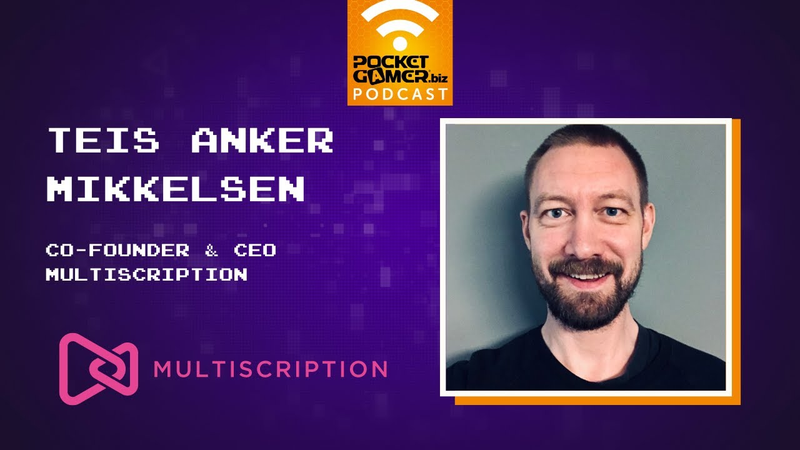
Subscription models represent a transformative approach to player retention and long-term engagement within the gaming industry.
- Subscription models should be deployed as part of a hybrid monetization strategy that includes ad-supported play and one-time unlocks to accommodate diverse player preferences.
- To ensure retention, subscriptions must offer persistent benefits like experience boosts and exclusive content rather than ephemeral consumables that lose value quickly.
- Subscription models can increase overall revenue by driving higher in-app purchase activity, as subscribers are incentivized to maximize the utility of their recurring investment.

Paying players to play
Integrating Bitcoin rewards via the Lightning Network serves as a transformative strategy for mobile game developers aiming to enhance player retention and lifetime value.
- Players who successfully withdraw Bitcoin rewards are seven times more valuable than those who do not, significantly increasing lifetime value and long-term return on ad spend.
- Developers can enhance player retention by distributing a portion of ad revenue directly to users via the Lightning Network, creating a psychological revenue share model.
- To mitigate cryptocurrency volatility, studios use a regional distribution strategy that pegs rewards to fixed fiat values, allowing for dynamic adjustments to Satoshi payouts.

Mobile publishers: Boost retention & revenue while saving the planet
Integrating environmental sustainability initiatives into mobile games serves as a dual-purpose strategy for publishers, simultaneously fostering positive global impact and driving significant improvements in key performance indicators.
- Integrating environmental impact rewards into in-game offers can drive significant revenue growth, as demonstrated by Belka Games, which saw an 18% revenue uplift compared to standard offers.
- Gamified eco-initiatives generate high user engagement and social sharing, resulting in an average 20% share rate for impact certificates.
- Social sharing of eco-milestone certificates drives organic growth, translating into a 6% to 7% increase in new organic downloads.

DoubleDown Interactive’s Faith Price On Lifecycle Marketing Tips To Extend Your App’s Lifespan
Lifecycle marketing serves as a critical strategy for extending the longevity of established mobile applications, particularly for mature titles like DoubleDown Interactive’s 13-year-old social casino app.
- Long-term profitability for mature apps, such as DoubleDown Interactive’s 13-year-old social casino title, depends on integrating user acquisition, retention, and engagement into a unified feedback loop.
- Features that drive initial user acquisition often differ from those that sustain long-term engagement, with new players prioritizing core value propositions while veterans prefer mini-engagements and community content.
- Rigorous testing of communication timing, specifically for onboarding flows and push notification requests, is essential to prevent user alienation and ensure seamless access to the game.

Tactical Advice for Building Healthy Player Relationships
Modern game development is shifting away from broad user acquisition toward a retention-first strategy that prioritizes personalized, ritualized engagement.
- Studios are shifting from broad user acquisition to a retention-first model that uses AI and machine learning to automate player segmentation and personalize in-game offers.
- Rising user acquisition costs due to privacy shifts are forcing developers to prioritize first-party data to deepen engagement and sustain long-term player relationships.
- AI-driven moderation tools and automated guardrails are now essential for managing user-generated content and maintaining game integrity at scale.

Insights on Live Event Frameworks, Ivy Zhou, GameRefinery (A Liftoff Company).
The live event landscape in the mobile and HD gaming industry has evolved into a highly competitive environment where player engagement is driven by sophisticated, data-informed frameworks rather than sheer development volume.
- Live operations success now depends on data-informed, recurring event frameworks rather than high-volume content production, as players increasingly abandon games that lack active engagement schedules.
- Puzzle games optimize retention by aligning with gender-based preferences, specifically utilizing a weekly cadence that alternates weekday one-on-one competition with weekend guild-based cooperative tasks.
- Mid-core titles, such as Call of Duty: Mobile, drive monetization by leveraging intense competition and character progression, effectively positioning the game as a high-fashion platform through interconnected cosmetic reward cycles.