Player Behavior reports and market data
Documents
Universals vs. Differentiators: A Tale of Two Motivations
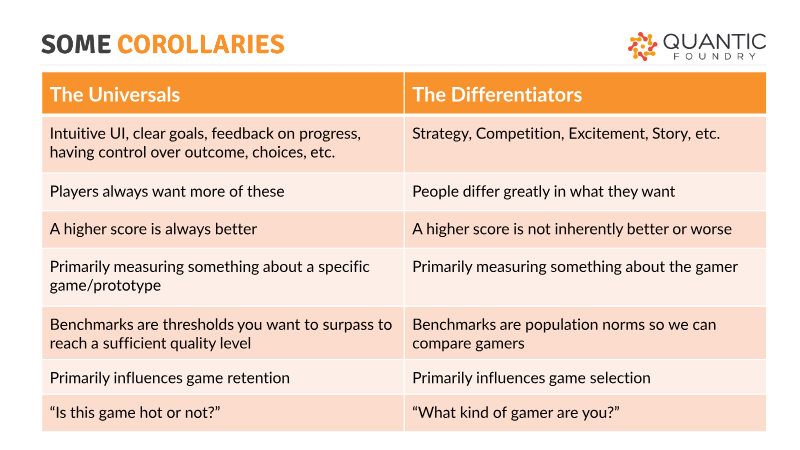
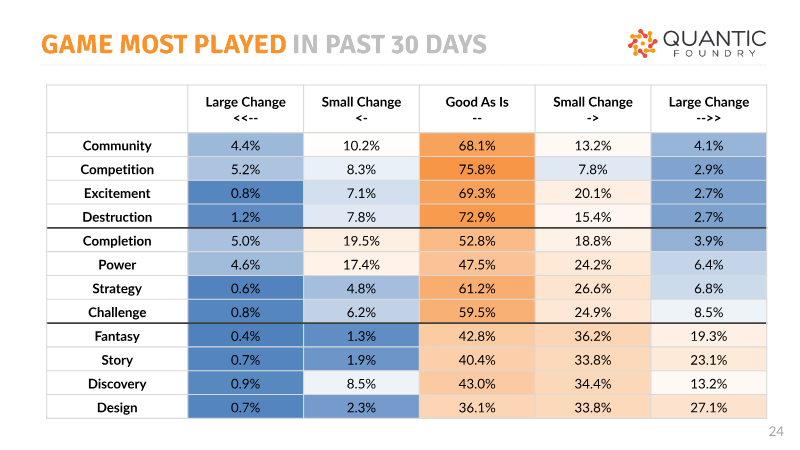
Understanding player behavior requires distinguishing between universal needs and individual differentiators.
- Player behavior is driven by two distinct categories: universals, which dictate baseline retention and quality, and differentiators, which determine game selection and audience targeting.
- The underlying motivation model is built on data from over 500,000 video gamers, categorizing drives into six primary pairs: Action, Social, Mastery, Achievement, Immersion, and Creativity.
- Universal requirements—such as intuitive UI, clear goals, and consistent feedback—are objective metrics where higher performance is universally preferred for all titles.


India: Mobile Market Spotlight: A Booming Mobile Economy
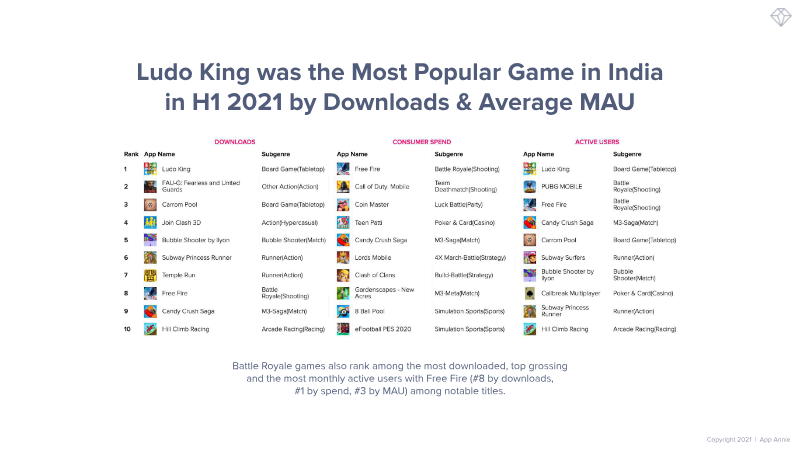
India has solidified its position as a global mobile powerhouse, currently ranking second worldwide in total app downloads.
- India is a global mobile-first leader, ranking second in total app downloads with 24 billion installs in 2020, a 28% year-over-year increase.
- India became the world's largest market for game downloads in the first half of 2021, accounting for nearly 20% of global installs.
- Daily mobile usage per user surged from 3.3 hours in 2019 to 4.8 hours by Q3 2021, fueled by pandemic-driven engagement.

Nature vs. Nurture: Unpacking Player Spending in F2P Games
Free-to-play monetization relies on a consistent industry reality where only one to five percent of the total player base generates revenue.
- Only one to five percent of a free-to-play player base generates revenue, making these individuals a distinct behavioral segment with a high propensity to spend across multiple titles.
- Developers should shift from vanity metrics to correlation analysis to identify specific KPIs that directly impact average revenue per user (ARPU) and lifetime value (LTV).
- Pricing entry points should typically range between five and twenty-five dollars, as setting prices too low conditions players to expect lower costs and limits long-term revenue potential.

Data Informed Decisions with the Champions of League of Legends
Riot Games employs a sophisticated, data-informed strategy to manage the character roster of League of Legends, balancing quantitative engagement metrics with qualitative sentiment research.
- Riot Games utilizes a 'breadth versus depth' framework to measure champion engagement, where breadth tracks the number of unique players and depth tracks the frequency of play per user.
- Champion updates, such as the rework of Akali, create significant spikes in play rate driven by both existing players and new users attracted by updated visuals and gameplay kits.
- Mass champion surveys are used to collect sentiment data on non-gameplay attributes like personality, voice, and visuals, allowing developers to understand player affinity beyond raw telemetry.

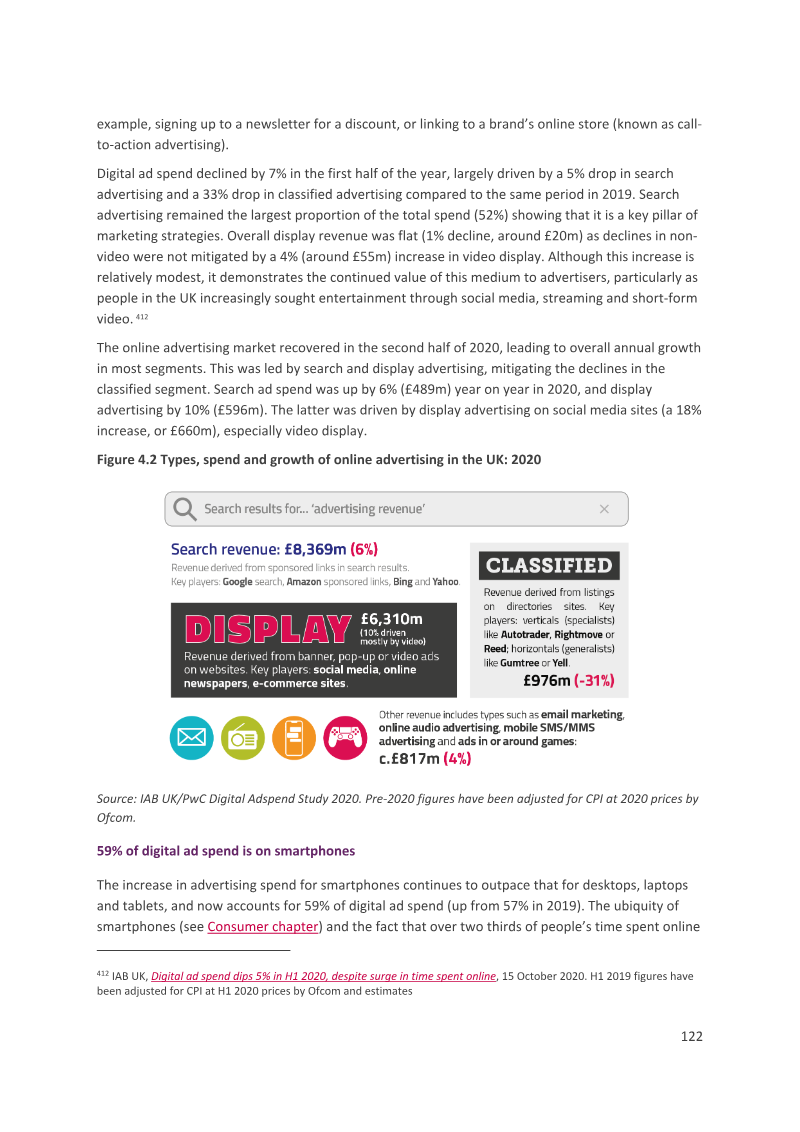

Online Nation 2021 Report
The Online Nation 2021 report provides a comprehensive analysis of the United Kingdom’s digital landscape during the 2020 pandemic, documenting a profound acceleration in internet dependency and digital transformation.
- Adults spent significantly more time online in 2020 compared to 2019, with the 18-24 age group showing the largest increase, particularly during lockdown periods.
- Despite a potential decrease, 6% of UK households (approximately 1.5 million) still lacked internet access in March 2021, though direct comparability with previous years is limited due to methodology changes.
- Social video platforms are actively launching new features to maintain and build engagement, exemplified by Snapchat's 'Spotlight' which gained 100 million users by January 2021 and offers creators a share of $1 million daily.

Self Actualization Through Video Games
Video games function as essential arenas for sense-making, providing structured environments where players exercise agency, master complex systems, and pursue self-actualization.
- Video games serve as structured environments for self-actualization, allowing players to develop transferable skills in strategic thinking, resilience, and complex system mastery.
- Current industry reliance on quarterly financial targets and short-term engagement metrics often prevents the development of deeper, psychologically meaningful game experiences.
- To capture long-term value, design philosophies must shift from purely mechanical or persona-based models toward frameworks that actively foster personal development.

Panel: Is it Still About the Whales? Getting the Most of Your Users
The gaming industry is undergoing a fundamental shift in how it identifies and monetizes high-value players, moving away from an exclusive focus on traditional whales toward a more nuanced, hybrid revenue model.
- High-spending player cohorts continue to generate approximately 80% of total game revenue.
- The deprecation of Apple’s IDFA has forced a shift away from traditional acquisition strategies toward RFM (recency, frequency, and monetary) models to track player behavior.
- Studios are increasingly using contextual signals, such as session depth and device data, to predict and identify potential high-value users in a privacy-restricted environment.

Superstar Session: Seize the Moment-Seasonal Changes in the Asian Market -The Best Times to Monetise
The Asian mobile gaming market operates on a distinct seasonal rhythm, where revenue and user acquisition are heavily influenced by cultural festivals, regional shopping events, and academic calendars.
- Align live-ops and advertising spend with peak regional windows, specifically Chinese New Year, Japan’s Golden Week, Korea’s monthly pay cycles, Ramadan, and Songkran.
- Avoid launching new titles during intensive academic periods, as these times consistently correlate with reduced player engagement.
- During high-traffic e-commerce periods when advertising inventory costs spike, shift focus from user acquisition bidding wars to retention and in-game content to capture spillover traffic.

Easy Modes Aren't Easy - Designing Dynamic Difficulty - Extra Credits
The design of difficulty settings in AAA action-adventure games is evolving from simple health and damage adjustments toward nuanced, accessible, and customizable experiences.
- The industry is shifting from binary difficulty tiers to granular, customizable gameplay settings that allow a broader audience—including casual players and those with disabilities—to engage with AAA action-adventure titles.
- The Last of Us Part II serves as the current industry benchmark by offering a comprehensive suite of accessibility features, including combat modifiers, motor-skill assistance, and puzzle-bypass options.
- Modern design strategies prioritize adjusting mechanics like enemy aggressiveness and reaction windows rather than relying solely on traditional health and damage scaling.
Fandom-Ready: Creating Fiction in the Age of Fan Consumption
Modern game development thrives by transitioning casual users into deeply invested participants through the creation of multi-layered, identity-driven fiction.
- The primary objective for modern game development is to convert casual users into long-term, invested participants by fostering a sense of belonging and identity-driven engagement.
- The 'first big choice' marketing technique uses identity-based decisions—such as elemental or zodiac-inspired archetypes—to allow players to project their personal identities onto the game immediately.
- Grounding complex or fantastic narratives in mundane, relatable environments like schools or workplaces reduces initial consumer apathy and increases emotional investment.

World Design for Different Player Types
World design requires a strategic, audience-centered approach that prioritizes specific player motivations over the attempt to satisfy every possible demographic.
- Designers should utilize the Gamer Motivation Model to categorize players into specific clusters—such as immersion, social, or mastery—to avoid feature creep and over-scoping.
- Immersion-driven players respond better to cohesive, narrative-linked zones rather than the disconnected, excessive content that caused fatigue in titles like Dragon Age: Inquisition.
- Multiplayer world design must balance activity friction, utilizing low-barrier mechanics for public spaces while reserving high-coordination, trust-based tasks for self-organized groups like raids.

Designing Games for Female Audiences | Renata Caldani, Maryna Iaremenko, & Joana Marques
The female gaming demographic represents a significant and rapidly expanding segment of the global market, currently comprising over 50 percent of mobile players across a broad age range of 10 to 65.
- Women now represent over 50 percent of the global mobile gaming market, spanning a broad age range from 10 to 65.
- Female players are increasingly moving away from simplistic casual titles in favor of mid-core and hardcore gaming experiences, such as Genshin Impact and Minecraft.
- To effectively capture this demographic, developers must abandon gendered marketing tropes and one-size-fits-all design philosophies in favor of data-driven, inclusive strategies.