Player Behavior reports and market data
Documents

Essential Video Game News: French Market Report 2020
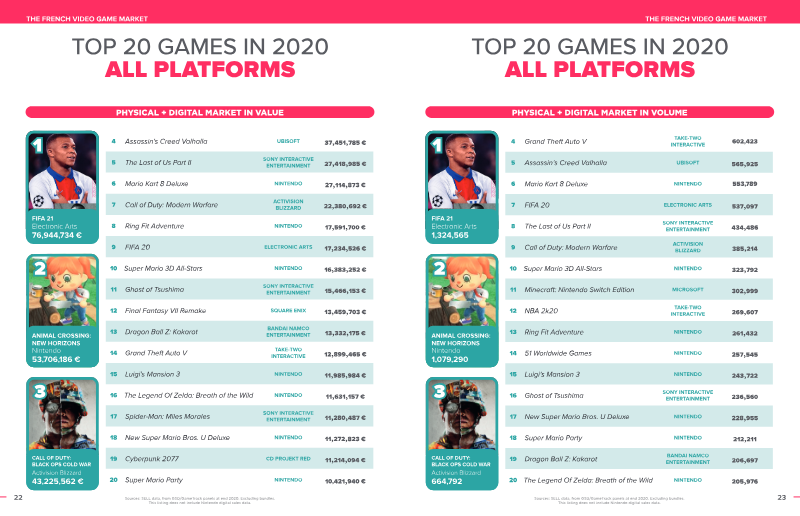
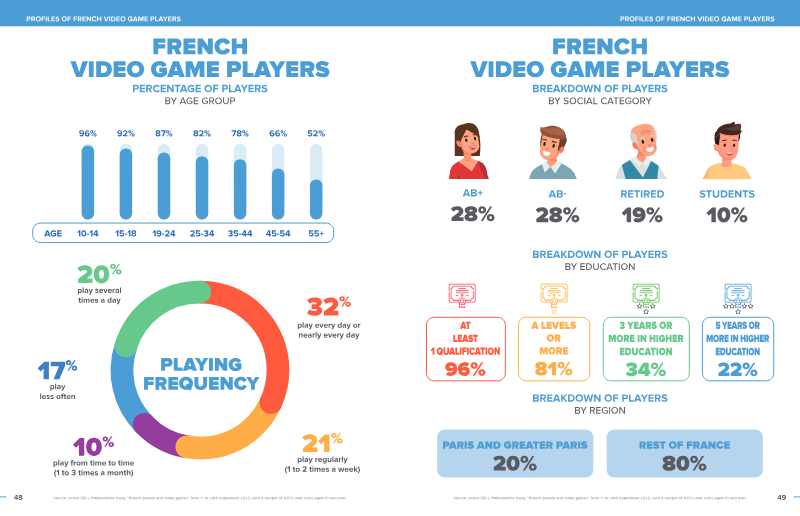
The French video game market reached a historic milestone in 2020, generating €5.3 billion in revenue.
- The French video game market reached €5.3 billion in 2020, representing an 11.3% year-over-year revenue increase driven by pandemic-related engagement.
- Mobile gaming led sector growth at 16%, followed by console at 10% and PC at 9%, while physical retail sales showed resilience with only a 3.2% decline.
- Hardware demand surged significantly, highlighted by a 20% increase in the PC segment.

Whose Game Is It, Anyway? How Community Relationships Shape Games: Lessons from Warframe
The long-term success of the free-to-play title Warframe is rooted in a development philosophy that prioritizes radical transparency and a collaborative partnership with its player base.
- Digital Extremes maintains community trust by consistently communicating the status of updates, even when delays occur, ensuring players always have a reliable source of information regarding the game's development routine.
- The studio avoids 'pay-to-win' pitfalls by strictly separating monetization from gameplay mechanics, such as their 2013 decision to remove stats from cosmetic items to ensure fair play.
- When community feedback indicates a feature is failing—such as the 2016 console-friendly navigation system that negatively impacted retention—the team prioritizes player preference by reverting to more effective, nostalgic designs like the original star chart.

How the Speed Cubing Community Turned Rubik's Cube into a Competitive Genre
Speed cubing has successfully transitioned from a niche hobby into a structured global competitive sport by prioritizing community-driven governance and standardized performance metrics.
- The speed cubing community transformed the Rubik's Cube from a stagnant 1980s toy into a competitive sport by establishing the World Cube Association (WCA) to standardize regulations and event formats.
- Competitive speed cubing utilizes an 'average of five' scoring system, which discards the fastest and slowest times to mitigate the impact of luck-based scrambles and ensure fair performance comparisons.
- The sport is categorized as a 'low-trust' game with parallel play, meaning participants solve puzzles independently without direct interference, fostering a collegiate and friendly environment.

Character Creators & Cyberpunk - Player Freedom in Expression - Extra Credits
Effective character creators serve as a critical bridge between a game’s thematic identity and player self-expression.
- Developers should decouple customization levers—such as voice, hair, and body type—to ensure independent variables are not artificially linked, thereby maximizing player agency.
- Rigid design frameworks, rather than technical limitations, are the primary cause of restrictive character creators that prevent non-binary or gender-nonconforming expression.
- Cyberpunk 2077 failed to deliver on marketing promises of radical inclusivity because it locked hair styles to body types and tied voice options to gender, contradicting its own themes of human malleability.

The Science of Desirability
Desirability functions as the critical intersection between sensory anticipation and emotional appraisal, serving as the primary metric for whether a digital experience meets or exceeds user expectations.
- Desirability is defined as the anticipation and expectation that an experience will meet or exceed a user's hopes, a metric that varies significantly between novices and experts.
- Experts possess a specialized vocabulary—such as tempo or time signatures in music—that allows them to articulate why they like or dislike an experience, whereas novices often struggle to move beyond vague, unhelpful feedback.
- Developers can bridge the communication gap with users by providing them with specific terminology or worksheets during playtesting to help them translate general feelings into actionable design feedback.

Cultural and Creative Sectors in Post-COVID-19 Europe: Crisis Effects and Policy Recommendations
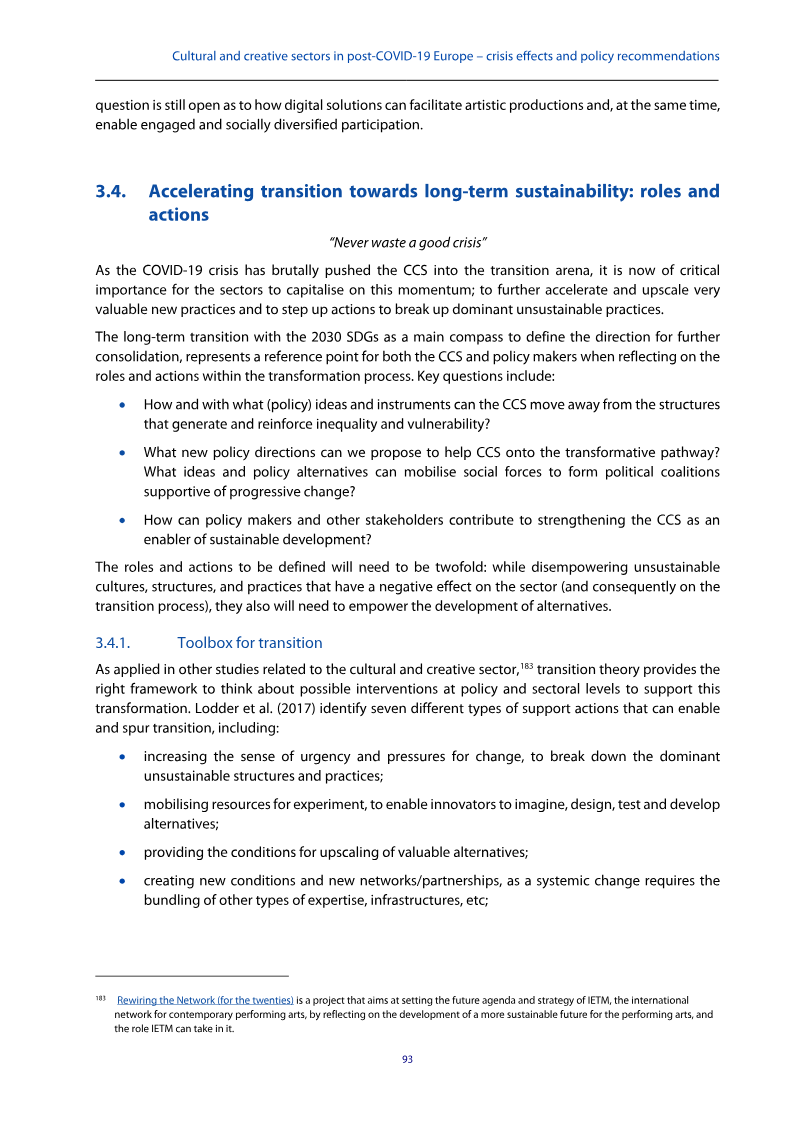
The COVID-19 pandemic served as a profound stress test for Europe’s cultural and creative sectors (CCS), exposing deep-seated structural vulnerabilities that existed long before the crisis.
- The Cultural and Creative Sectors (CCS) in the EU-27 were economically fragile before COVID-19, characterized by over 1.1 million enterprises (5% of non-financial businesses) generating EUR 145 billion (2.3% of the non-financial business economy) in 2017, with growth rates slightly above the overall non-financial business economy (1.5% vs 1.4% annually between 2012-2017).
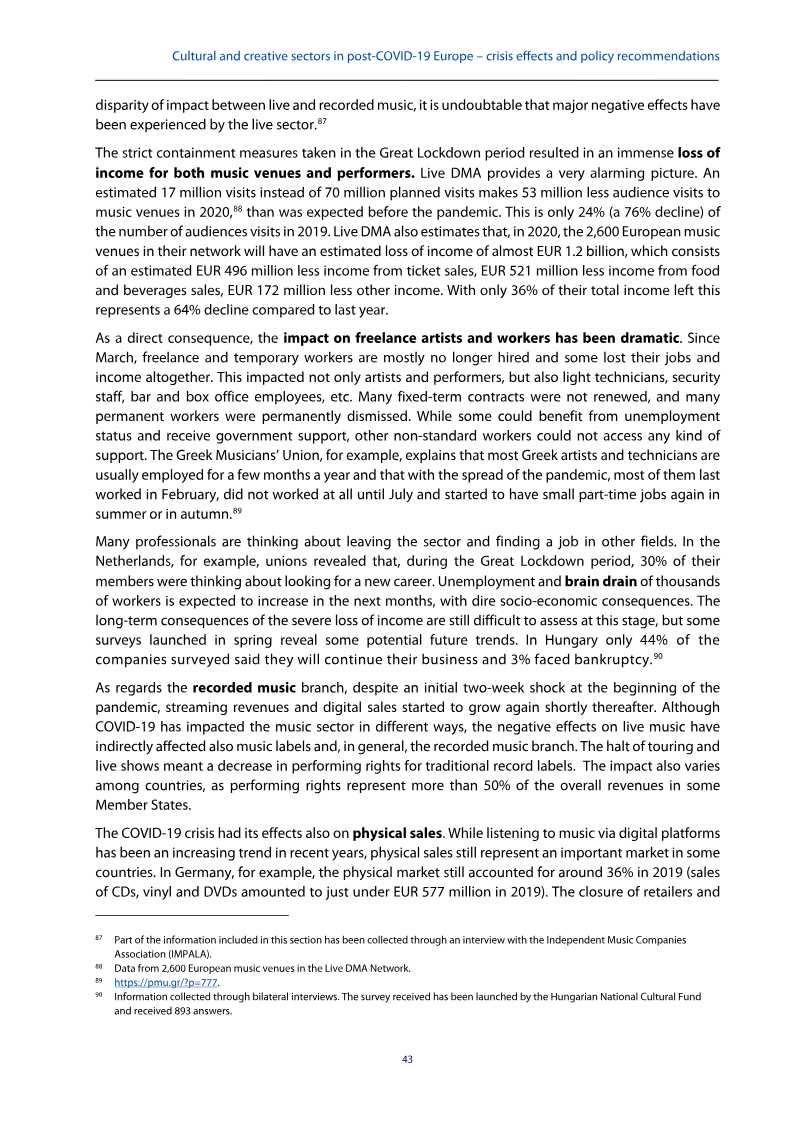
- The COVID-19 pandemic severely impacted the CCS through measures like halting non-essential business, banning public events, and restricting movement, leading to significant income loss for suppliers (e.g., sound/lighting, caterers) and local economies dependent on festivals and events.
- Freelance performing artists, who often rely on multiple income streams and networking at events, were particularly hard hit by movement bans and social distancing, with many unable to access public support.
Don't Call Them Whales: F2P Spenders and Virtual Value
The free-to-play gaming industry is defined by a consistent revenue model where approximately 2% of the user base generates between 75% and 85% of total income.
- Approximately 2% of a free-to-play game's user base generates between 75% and 85% of total revenue.
- High-spending players are typically older, affluent professionals who view their in-game purchases as rational investments in a hobby rather than impulsive or compulsive behavior.
- Spending patterns among top users are consistent and long-term, mirroring the financial habits of enthusiasts in traditional hobbies like golf or music collecting.



Q1 2021: Store Intelligence Data Digest
Global mobile app downloads reached 36.6 billion in the first quarter of 2021, representing an 8.7% year-over-year increase.
- Global mobile app downloads rose 8.7% year-over-year to 36.6 billion in Q1 2021, driven by a 15.3% surge on Google Play that offset an 8.6% decline on the App Store.
- Hypercasual games dominated the U.S. market, accounting for 80% of the top 20 titles, with Join Clash 3D ranking as the most downloaded game globally.
- Finance category downloads in the U.S. and Europe grew by 34%, fueled by retail investing and cryptocurrency platforms like Robinhood, Coinbase, and Binance.
Newzoo Trends to Watch 2021
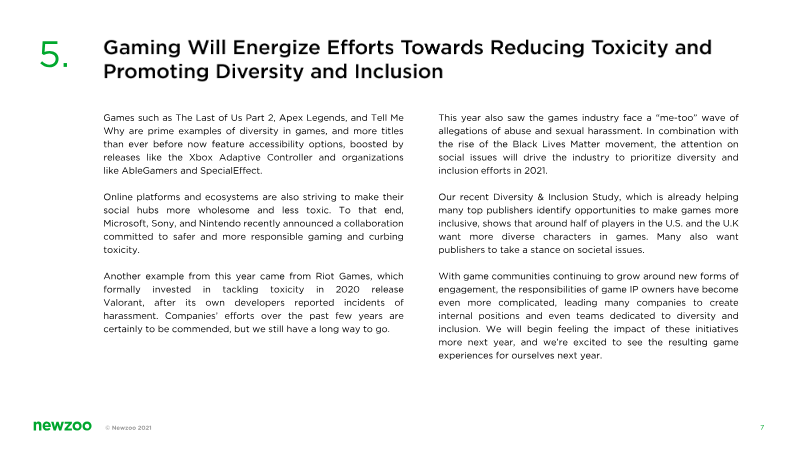
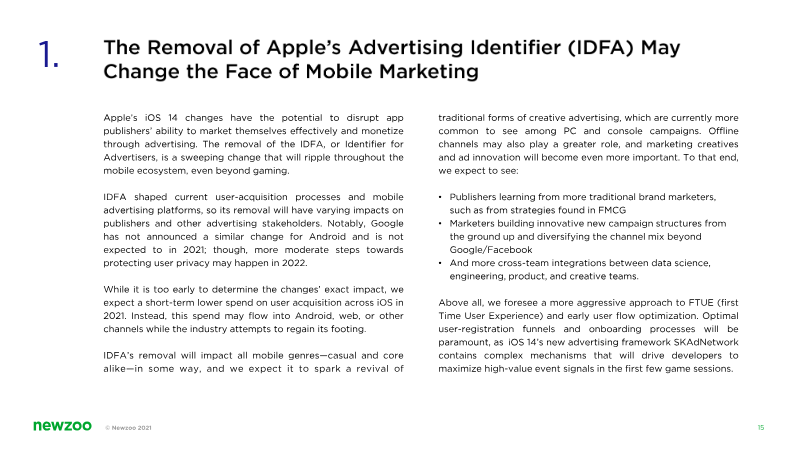
This analysis outlines the primary trends shaping the global games, esports, and mobile markets for 2021.
- The global games market is projected to reach $189.3 billion in revenue by the end of 2021, supported by a permanent shift in consumer spending habits and a total player base of 2.8 billion people.
- Cloud gaming is expected to surpass $1 billion in annual revenue for the first time in 2021, while 5G-ready active smartphones are forecasted to grow from 5% in 2020 to 16% (700 million units) by year-end.
- Mobile titles such as PUBG Mobile and Garena Free Fire are increasingly challenging traditional PC giants in esports viewership, marking a significant shift toward mobile-first competitive gaming.

Survey on Games and Daily Life: Japan
The survey was launched to deepen understanding of how gaming activities intersect with everyday life in Japan and to inform strategies for mitigating “gaming disorder,” a condition recently classified by the World Health Organization.
- The study, conducted in February 2021, aimed to analyze the intersection of gaming and daily life to inform strategies for mitigating gaming disorder.
- Research was led by Professor Akira Sakamoto of the Social Psychology Laboratory at Ochanomizu University with endorsement from the Japan eSports Union (JeSU).
- The survey targeted three distinct demographics: active professional gamers, students in specialized esports academies, and the general gaming public.


Beyond 2021: Where Does Gaming Go Next?
The global games market experienced unprecedented acceleration between February 2020 and May 2021, driven by the unique social and economic conditions of the COVID-19 pandemic.
- The global games market reached $175.8 billion in 2021 and is projected to exceed $218 billion by 2024, representing a compound annual growth rate of 8.7%.
- Mobile gaming remains the dominant sector, accounting for 52% of total industry revenue.
- The pandemic-driven surge added 173 million new or returning players, 53% of whom are female, bringing the global player base to nearly 3 billion.
Games Marketing Insights 2021
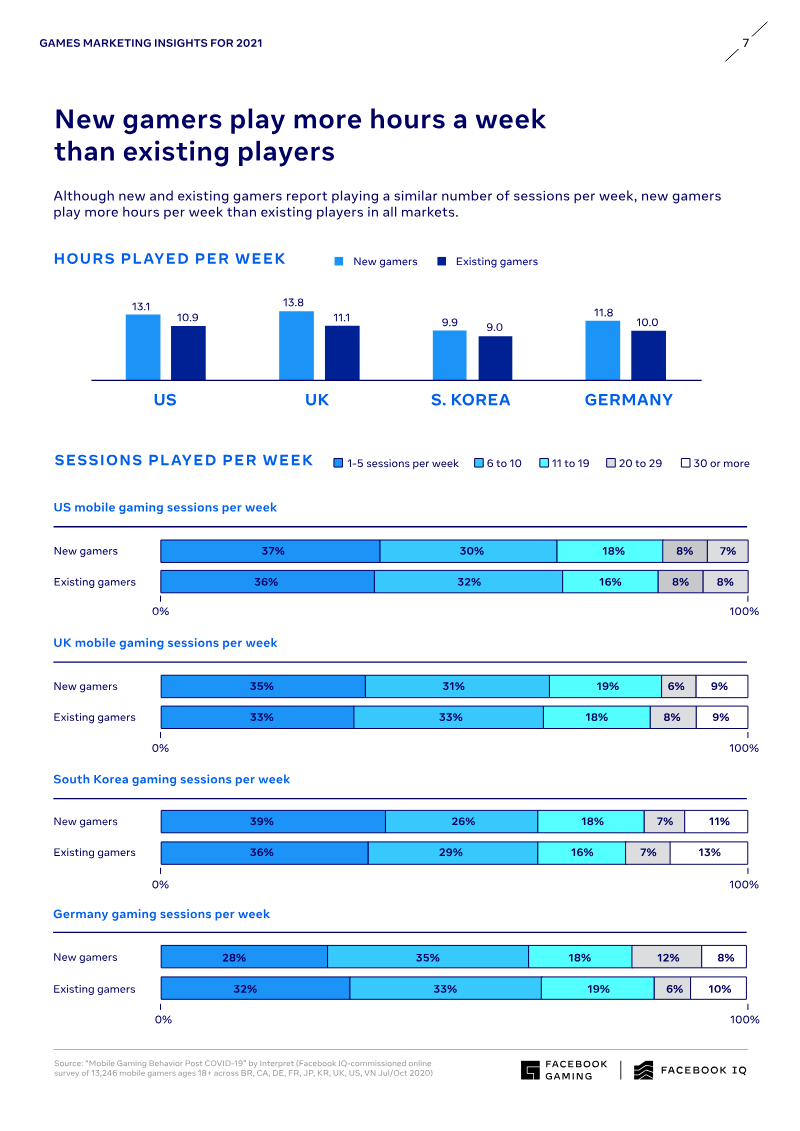
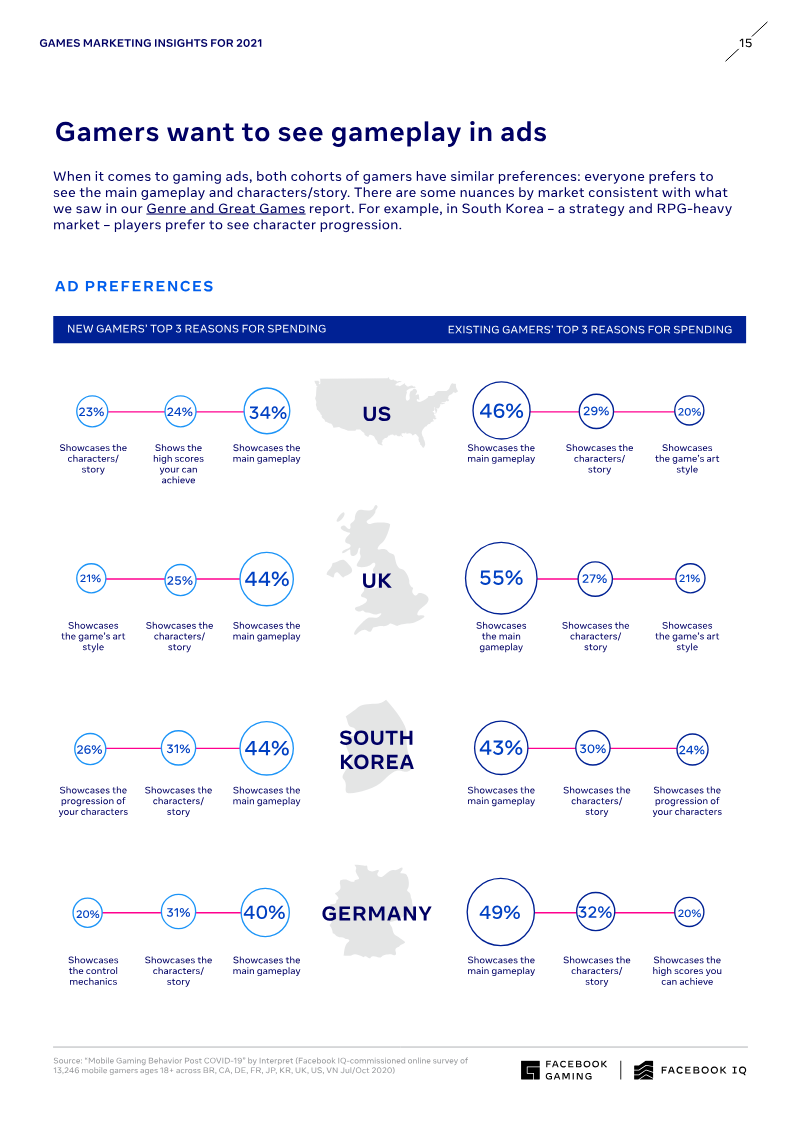
This analysis examines the profound shifts in the global gaming landscape triggered by the COVID-19 pandemic, focusing on the emergence of a massive new player demographic.
- New gamers who entered the market after the COVID-19 outbreak are spending more on in-game purchases monthly than veteran players, who have actually reduced their spending despite increased engagement.
- Mobile marketing is increasingly reliant on brand familiarity, as less than 25% of players in Western markets are willing to try games they have not heard of before.
- Live-streaming platforms experienced record growth during the pandemic, with Facebook Gaming reaching over one billion hours watched in Q3 2020.