1 free read left. Create a free account for unlimited reading + AI research.
Create free accountPresentation Quantic Foundry
1 free read left. Create a free account for unlimited reading + AI research.
Create free accountPresentationQuantic Foundry
Universals dictate baseline retention and quality, while differentiators determine game selection and audience targeting.
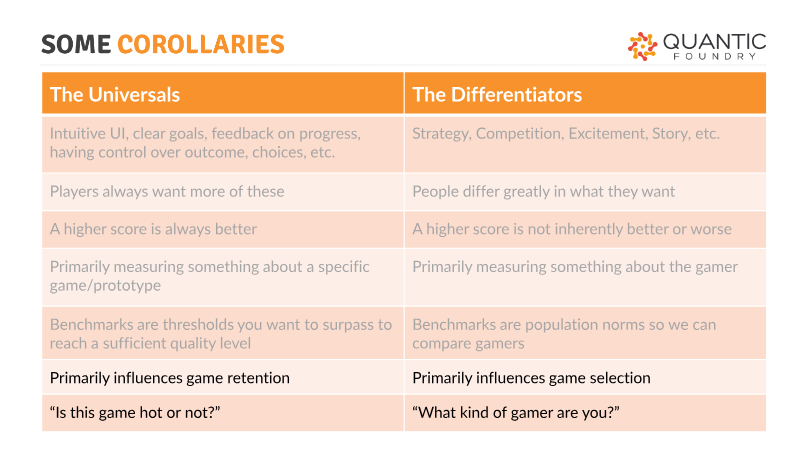
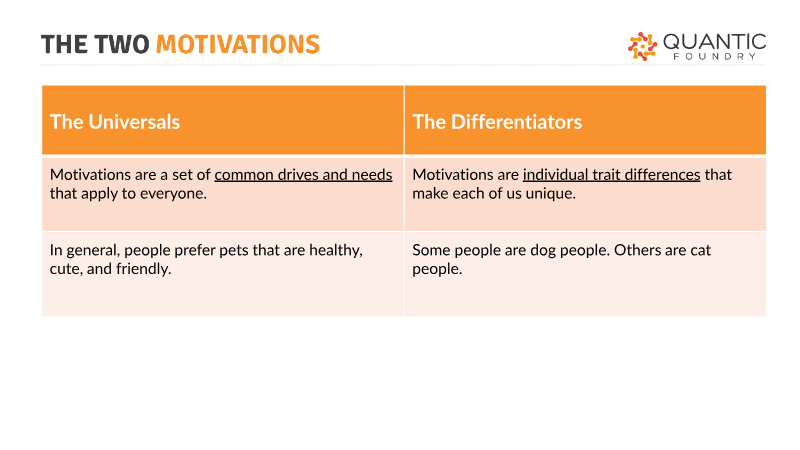
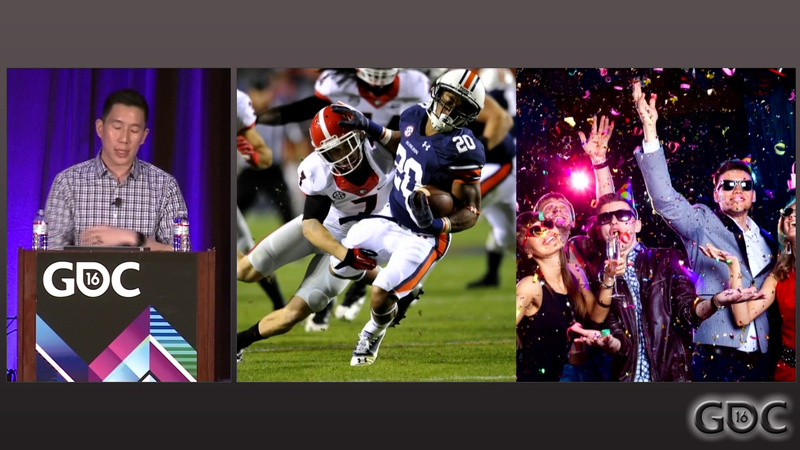
Understanding player behavior requires distinguishing between universal needs and individual differentiators. Universals represent fundamental requirements that all players desire, such as intuitive user interfaces, clear goals, and consistent feedback. These elements are essential for game retention and quality, where higher performance metrics are universally preferred. Conversely, differentiators reflect the unique psychological traits that define individual gamer profiles, such as preferences for strategy, competition, or storytelling. Unlike universals, these motivations are subjective; there is no inherently superior score, as these factors primarily influence game selection and identify the specific audience a title attracts.
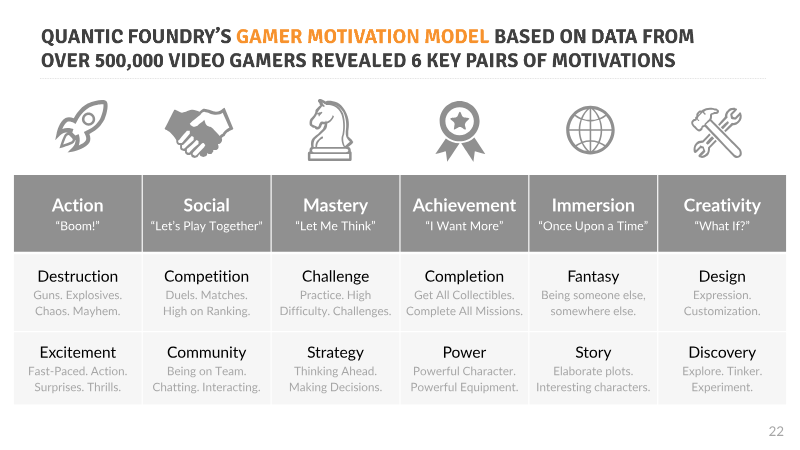
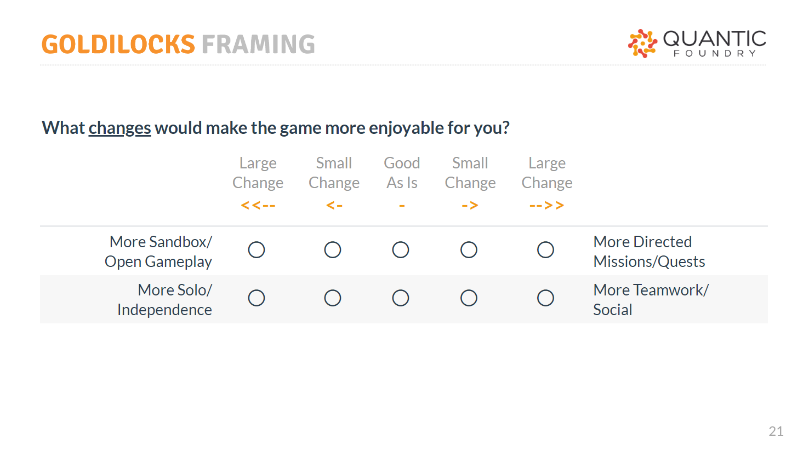
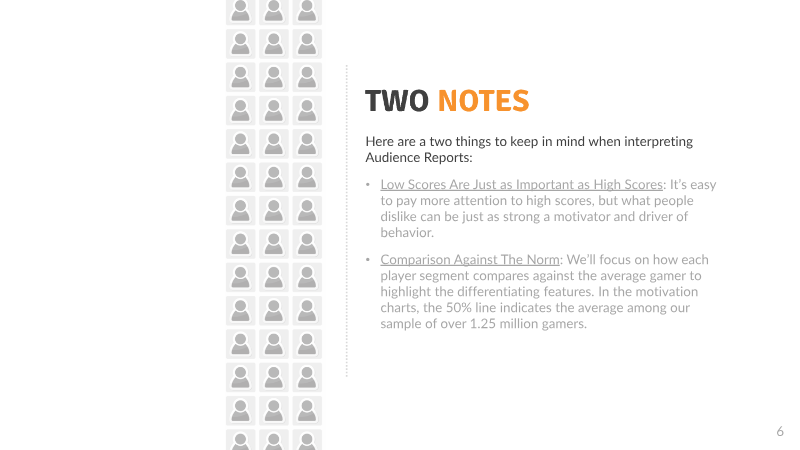
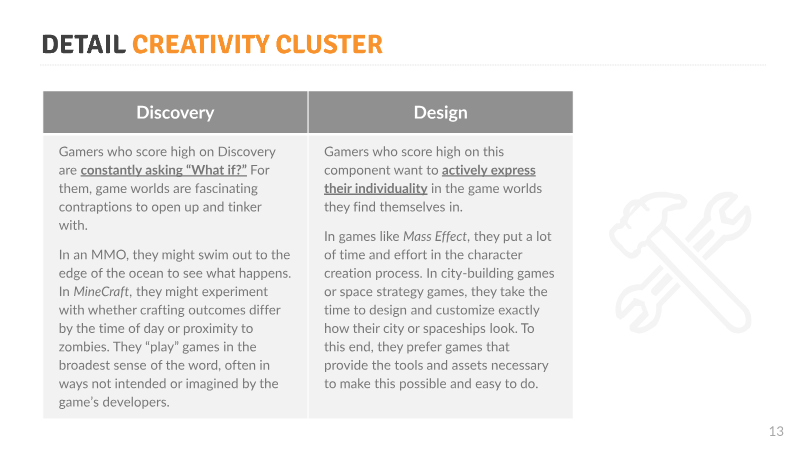
The underlying motivation model, derived from data encompassing over 500,000 video gamers, categorizes these drives into six primary pairs: Action, Social, Mastery, Achievement, Immersion, and Creativity. Each pair contains specific sub-motivations, such as destruction, competition, challenge, completion, fantasy, and design. By mapping these motivations, developers and marketers can better align game features with player expectations. The research utilizes a Goldilocks framing approach to measure player satisfaction, identifying whether specific game elements require large or small adjustments to meet the needs of the target demographic.
This analytical framework serves as a tool for both game design and market positioning. While universal benchmarks help developers ensure a product meets a baseline quality threshold, differentiator benchmarks allow for the comparison of gamers against population norms. By balancing these two categories, studios can optimize for both long-term retention and effective audience targeting, ensuring that a game provides the necessary functional polish while appealing to the specific psychological motivations of its intended player base.
Quantic Foundry · 2026
Quantic Foundry · 2025
Quantic Foundry · 2025
Quantic Foundry · 2025
Quantic Foundry · 2025
Quantic Foundry · 2024
Quantic Foundry · 2023
Quantic Foundry · 2023
Quantic Foundry · 2023
Quantic Foundry · 2021
Quantic Foundry · 2021
Quantic Foundry · 2020