1 free read left. Create a free account for unlimited reading + AI research.
Create free account
Self Actualization Through Video Games
Key insights
6 takeaways- 01Video games serve as structured environments for self-actualization, allowing players to develop transferable skills in strategic thinking, resilience, and complex system mastery.
- 02To capture long-term value, design philosophies must shift from purely mechanical or persona-based models toward frameworks that actively foster personal development.
- 03Current industry reliance on quarterly financial targets and short-term engagement metrics often prevents the development of deeper, psychologically meaningful game experiences.
- 04A global convergence in monetization and player behavior is emerging, as younger demographics increasingly prioritize interoperable social experiences over regional preferences.
- 05Developers must transition from traditional content delivery to empowering communities, treating players as active co-creators of their digital environments.
- 06The rise of user-generated content and creator-led ecosystems is a primary driver of industry transformation, making robust modding tools essential for game longevity.
Ask AI about this video
Transcript
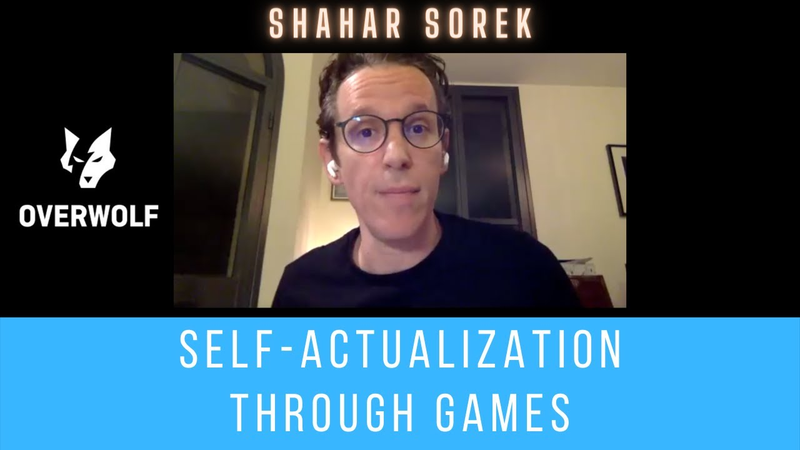
hello everyone and welcome today i'm here with shahar sorek to answer a core and fundamental question behind what all of us do as game developers and we will discuss the question why do people play video games and joining me today is shahar sorak who is the cmo of overwolf jar has over 12 years of experience in the games and technology industry including as founder and ceo of cell 7 element studios game studio specializing in massively multiplayer online strategy games and even further in his past shahar worked as a creative producer and actor in hollywood and israel and is a former five-time israeli national champion in taekwondo welcome shahar welcome pleasure so shahar today we're going to talk about the topic of self actualization through gaming so can you speak about what do you mean by self actualization and gaming what does that mean so so i think that each and every one of us through life
goes through a process of self-actualization whether it's consciously done or unconsciously done but there's a an attraction an organic pull to level up as you wish and i think that it's very tough and we'll talk about that maybe later in today's world to sense make this process of leveling up and i think that in games games allow for a very understandable arena to develop an agency and then take that agency and sense making of games into real life and i think that that as we move into what might be today the age of games as you know the next uh decade and one would say the rest of the human experience games are going to be profoundly uh impactful and and some of us are going to spend most of our lives with them and and in them uh it's going to be crucial for us to
understand how to navigate between real world game world and how to use some of the wonderful layout in games to sense make real life um i i think that the core dynamic is that because it's so and it's getting harder and harder to sense make and find a sense of meaning and purpose in real life because of the amount of data and and all sorts of things when you move into a game arena um i mostly mean aaa games um you you can identify immediately who you are what your goal is what you need to do you have a sense of awe and wonder of how to navigate the world and even if you don't know anything you're just a noob uh there's an organic kind of call to adventure um that that you can identify within in a pleasant way you don't take things too seriously you're not
afraid to make mistakes and you start experimenting and sense making in a way that ideally uh uh could be applied in in a way that could be applied in an attitude that could be applied to in real life um in in that sense the the the the sense of of identity that is a bit separated from real world and the sense of adventure and the joy in it puts you in a good state to kind of sense make who you are in the game okay and what do you mean when you talk about sense making what does that mean specifically i think that i think that in particular in today when there's so much information out there for people when they're bombarded by a lot of information that they have no control over politics big problems like climate change and multiple problems that we hear but we have no direct interaction on i think that's a very new human dynamic so because you don't have a sense of
okay what can i do to affect this thing you are in a in a you are in a certain crisis some of it whether it's consciously you're aware of or not there's a certain sense of what the hell is going on and what can i do to do within it in the past you know not so long ago we were in a very small confined environment i was the blacksmith of the village i know exactly what i'm doing who i'm affecting had a very immediate or a very close cause and effect relationship with the environment today it's not so there's a lot of unknowns in how to navigate the world games is an arena that has a lot of clarity so in a way we see people in particular little children yearn and develop sense making in that arena because it's the easiest it's geared it's designed to slowly take you hand by hand level you up and it's comfortable for you to take risks and all sorts of things that are really good to developing in a sense
outside the world how you transpose that outside as a whole thing but just to understand that you can do these things and apply these attitudes as something that gains at the core of a really deep immersive experience kind of helps you figure out how to do that no other arena allows for this kind of playground right so to some degree you're saying that for a lot of people who may not understand what their purpose is in the world why why are we here on this on this earth that games to some degree fulfill a user need to actually understand have purpose be clear about what your role is and i think the one interesting thing and i know we've talked about this before in terms of your approach and the way that you're thinking about games is that it really reminds me a lot of when i speak to japanese game designers because at least in the you know the japanese think about game design
and the objective of video games in a different way from western philosophy so a lot of western game designers really are rooted in terms of okay what's the mechanic what is the specific what are the features what are the mechanics things of that nature whereas when you talk to japanese game designers they talk about what is the user need that in the japanese philosophy they believe that games actually help to the to to this word that we're calling self-actualization fulfill some user desire for something i want to be known i want to sense make i want to feel powerful and so for some people who don't feel powerful in the real world but you play this game and you're able to blast hundreds of enemies away and you're able to feel powerful that there is some inner desire some user need that is fulfilled through a game and i think we also saw this play
out pretty powerfully this over this past year during the the corona virus right that this desire for socialization that you couldn't meet with other people and so how did that manifest that user need been manifested in games like among us and fall guys and games like that where in roblox where that need to meet with other people to have social experiences together manifested pretty powerfully in video games right so right and and yeah i want to double click you said you said among us um i think that i think it's all the time about the meta conversation the meta need and then there's mechanics on top of it and and ways to sharpen that but for instance among us is a game that that that simulates real life in a real way you have people on board a ship that are entrusted with constant tasks they constantly have to do to fix things and figure out how to navigate like very
much like how how do i make a living what do i need to do so you have these tasks okay i go to school i do this i do that i need to level up here whilst there's somebody that is trying to kill you while you're doing it meaning you can't be complacent with these tasks there's something bigger at risk here this is a meta process of life while we are sold on a certain operating system in which we need to behave in there is something that is trying to all the the biggest philosophers and and and spiritual leaders of all times are trying to tell you there's something else going on the matrix there's something you're not you're you're you're playing by the rules and when you're playing by the rules you are going to be killed this this is the literal example and among us i think people when people play the game they don't know that but that's what it's playing on it's such a deep coded social infrastructure and operating system that that in times of corona stack up now
stack up the externalities that blend and and and and and break your sense making in real world you're gonna have people run over there and have some sort of a intrinsic connection to the game that they won't be able to explain but it comes from the meta conversation in that sense i think that when you talk about the the japanese game makers there's nothing bigger than i mean you that's the ultimate experience and also the game teaches you okay you need to be more alert you need to be more alert you're going to have that effect in real life to what extent already that's a whole other conversation but the basic muscle these these small like when you start to run and when you start to practice something that's where you get them today in games in that sense i think that conscious ultimate level self-actualization is is mirrored in reaching a legendary rank or reputation or a level in a game
um so you know in in let's say let's take league of legends there's a climb from iron to challenger so you hitting challenger and then levels within that that puts you as a solo player as a team player on a legendary now you're you're playing like if you come down and play the lower ranks you're just killing everybody like they're gonna see things that they can't even respond to your your legendary gameplay and i think that that in games generally speaking there are three tiers in which one can express or reach a legendary level there's a tier of the the solo gameplay where you become you master the game arena you master your character you experience with a few characters so forth you develop you know the game mechanics and at some point and that's kind of the core property that makes somebody legendary at large is is to be able to play with the rules of the game to be able to repurpose and redefine
their rules in a different way they manifest the character they play with a character you know you could be a support a supporting character playing you know a a bruiser in league of legends or you can you can do something with a character nobody else can do because you've mastered the dynamic of the game as a solo player and and and that requires a lot of sense making for you and for your character very much like in real life if you want to master a solo you want to be a great musician or be a great gift whatever it is you need to practice and practice and practice practice and at some point you could do things that are unimaginable that other people cannot do and that's kind of the solo legendary level on top of that sits a team legendary level that's where that's where a group of people comes together you know you could take a world of warcraft raid or tap challenger in league and any other game you practically want and they manage to coalesce
in a way that just their skill level is legendary that's a whole other whole other dynamic the legendary because you're playing with other people so you need to be great at what you do but you also need to read the other legendary people that you're working with it's it's a very intricate and complex that's a that's a whole other muscle the third tier and the final tier is creations where we see somebody reaches such a great level and they either for instance modders or what we deal with in overwolf right we we deal with a lot of people that mod a game or they write a new experience for the game and they manage to change the experience for all the other players while they're participating with with the experience itself so this climb from solo to team to creation each one of them within its own is a huge a huge accomplishment to read legendary and then when you go to real life you know you could be you could be a great musician a solo musician you could be a great band you know like a pink floyd or whatnot you could be a great
composer for bands and solo players like beethoven or you could do some up you could do it all as well which are very rare individuals so the game and the leveling up to legendary within game is an extracted take that subset of qualities that got you there and you can apply that in real life and i think that's what's so great and i don't know of another environment from my experience at least that can that can be loaded with so much motivation passion curiosity uh it calibrates a few core properties like you know your attitude your joy joy towards experience your your resilience and failure it teaches you all these these very personal skill sets that that there isn't yet room for them outside the world and in that sense that's where i think at least some of the big game developers like roblox and what can can harness that power to educate people and to really turn
this into a program and just so i better understand your framework and your concept around sense making i i do think that a game like league of legends people really don't understand the complexity and the nuance involved but to your point there's there's one aspect of the game which is around mastery right so you're for a specific champion you're getting better at that champion you're able to go up in terms of competitive tiers of ranking up to you legendary to your point there's also the sense of a role as far as okay are you a support are you mid are you a carry are you there's different it's part of a team you have to fulfill a certain role in in that game and then there's also i mean we don't have to go into too much but there's also this the aspect of the strategic elements of early mid and late game play but as far as the sense making part what is would you would you consider the levels of mastery part of is the sense making part just understanding
your objectives and your role or i'm just trying to understand your framework a little bit better the sense making just like in real life comes comes in two main verticals one is since making the arena which is knowing which lane to play in league of l if we take as an example how do how does the jungle look and versus the lanes when certain events happen so there's the arena the map what happens everywhere there's the you know early gameplay late gameplay and then there's the characters the individual characters and your gameplay with them these are two things in life i can understand very well that i need for instance maybe you know to i have a i have a passion to do something i want to open my own band but if i haven't level up my my vocal or whatever instrument i'm playing i'm not going to be able to execute on it so it's two things so you know it's it's like when you have somebody who who can criticize a piece of art and there's somebody who's actually
making the piece of art who has the capacity to also criticize but he's making it so he's he's entrenched he's in in he's in he's in synergy with the experience and the synergy brings about emergence emergence of unique properties in a legendary state that are whoa i didn't know these moves can be done and what you see in the real real cutting edge games in any sport not only league you'll see you know basketball and league for instance you'll see players suddenly come up and do things and you go like oh my god and this is what sells the ticket because there's an emergent behavior nobody did what they did now how did that come to be well it came to be because the sense making of the arena and the sense making of self and the leveling up of that in and brought to a legendary level of orientation yeah and if you could do that in real life where you can have the discernment and the perception of everything around this is this is this is east this is mindfulness
i can see reality not i know i'm lacking in seeing reality i have the skill set to expand my reality and i've developed it and then i have the skill set to move in reality and correspond with it and manipulate it sometimes in a way that i choose this is this is mastery right this is where you see people moving really slow in a battle or moving really fast and changing they have a bigger they they've trained themselves to see time in a different way right if you play league sometimes you know as you level up you go like wow this i mean like you can't even respond but some of the guys are so fast they're seeing six levels ahead they know exactly where the bullets are they know exactly what's coming when and you could do that in real life i mean that once we had movies we had the ancient you know we have some philosophers we're talking about some real deep deep deep studies of how you manifest that in real life you can't hear that conversation too much in the space you can hear it through gaming
in in a certain sense you know games today moving forward allow for a new allow for us to cohere in a new way about metaphysics and how to how to handle reality and i think that's going to be more and more because they're going to be so prevalent should the game makers decide to put an emphasis on that and then actually go through it but i think the experience is already there at least from my experience of games yeah and just just so i i better understand what you're saying so you're one of the things that you're talking about is that in in games like like a league of legends type of game if you add elements in the games in terms of variability and these other elements so that you can show mastery where you have like a really special masterful moment kind of like a like a lebron james master dunk in the real world but that kind of experience in game whether it's like the the the player that pulls off a penta
kill and just and just like amazes people like having that kind of experience helps improve the quality and experience of the game is if i'm hearing you correctly it proves your ability to replicate it somewhere else whether you do that or not is is a whole other question and how do you transpose that to real life yeah but you've practiced it and you manifested it at the high level everybody that viewed that also participated in this experience right that's why it's so strong you all emerge together as many interconnected entities that's what's so wonderful about esports and to live that moment and now if you so wish you've done it in one place you can call it into another place granted there you need to level up other skills you need to learn certain things but you've already done that you've already made the high jump now you need to make it into just a different country right and so i guess what you're talking
about would apply to a lot of games that require skill in where you can gain mastery but what about other types of games like you know the the games that that have been successful since the beginning which are the narrative based god of war type of linear narrative based experience does your sense-making framework apply to those types of games as well so so that's why i i talked about the three tiers of legendary you can have and each one of them is very hard you could level up to be a legendary god of war player you you it it's it's just an in and playing god of war is going to imbue in you certain muscles which will allow you later to level up in real life that needs to be taught the transition needs to be taught but the you know the playing does that you know when i was playing the early quest games when i was sitting in front and typing you know in in equestria glory and in the first
quest for glory you end up in front of a tree fairly early on in the game and you type endlessly climb tree climb tree you there's no indication you're gaining experience you don't know when you're gonna level up at some point you do and the whole game is very rigorous that way the game mechanic doesn't give any indication of when something happens like in real life you need to practice and practice backs and then something happens now while playing these games i didn't know what was happening to me only later on in life after you know many years of not knowing what is the produce of that type of behavior i kind of made the connection where did i learn where did i first learn to do something to grind something so rigorously and then not expect the result like where did i learn that separation of that at immediate gratification where did i learn to be patient and it was these types of games that taught me to be patient these were solo experiences but they laid foundations and later
you know you expand on them so so i think that each game has a different type of an experience to give you you know league of legends is by buy large and far more of a social experience it's it's a solo experience in the beginning but then you need both first and second tier legendary you need to level up your solo you need to level up your legendary it's a very complex game to master yet alone be legendary at um some solo games are not and the game the the fact that the game gives you one layer of like a space be between you and your identification with it so the matrix the movie kind of the the the the metaphor of how we live we we find everything very salem in real life but in games there's a separation i can i'm a bystander i can abstract better i learn how to abstract better i can take risks better there's certain things that i start to play with
and that can be transposed right and so if you were to give advice to game developers designers out there trying to apply this notion of sense making to a game like what advice would you give them or how would you advise them to think about whether it's a specific concept or a way in which to design such that they can improve some of their games that they're working on well i think you gave a very good example in the beginning of the conversation with the japanese players i mean sometimes the game maker doesn't have the faculties to design the meta of the game they just are tied into an experience and they know how to create a mechanism around that experience i i would urge uh the game maker to take a deeper dive and also responsibility for the meta conversation of the game because i think that's where the also also long-term roi on the big ones
is in that field because because there is a dynamic that happens in the world because of the way we set up this type of civilization we're living now with a very predatorial type of the game theory uh economy that that people are just gonna lose it in real life they're not add corona add some wars i mean civilization is in a very iffy place for a human being today and games games build a very very closed environment in terms of me sense making in it so if the game maker knows that and he's not just happy from the money he's making and uh and the doubling down on whatever gets the dopamine and oxytocin and all the neurochemicals going he also knows that that's a tool he can lead a educational or a self-growth revolution with or just subscribe to it i think that's a huge opportunity that's and that's where i think that the gaming world
at some point will get to it's it's kind of the era of games the game will be the entire ecosystem uh there's no major movement in any game developer now so who knows when that's going to happen but i think that's the way it should go yeah and i know that from from my perspective i really hadn't thought about your concept around sense making but it does yeah it to me it does make sense uh as far as how complex the world is and you're trying to going back to user needs right for me the way that we look at games is we actually think about it in two ways at our company which is one what is the user need that we're trying to fulfill and so we're working on a shooter game today and our chief creative officer you know he's actually you know he's not a japanese game designer but he's always had this natural feeling about social desires and social mechanics and so the user need that he's he's focused on is how do i make somebody famous right and then the second thing that we
focus on not in addition to the username would be what is the feeling like how do we want players to feel so in a game you know so we believe that different games imbue a different kind of feeling and working in shooters that the feeling that you play that you have when you play a game like valorent is actually different from the feeling you get when you're playing a game like call of duty like call of duty is about fast action feeling powerful and like killing people and showing your masteries so like that's kind of the feeling and the user need is like i maybe in real life i'm not that powerful but i want to feel powerful and so whether it's you want to be famous you want to feel powerful or to your point you want to make sense of the world and you want to have this smaller virtual environment where you understand your place in it and your role in it and it's very clear
that i i do think that just kind of thinking about this more and just you know thinking through uh both your frameworks and and how we think about game game design is that you know i would say one thing that i would recommend a lot more western game designers to do is to shift their model from not just like that's one one you know sort of lens to think about games sure mechanics sure you know uh different features that's one one way and i know there's people thinking about personas and you know i i think that's kind of you sure it's useful but nobody besides the japanese is thinking in kind of this way what you're suggesting as well you know thinking in terms of like whether sense making or user needs and how people actually feel so i i personally believe that's very very not well understood at least from western game designers and and i think that you know game
makers are very busy with creating the core experience of what they're doing and it's a very uh a very tiring costly adventure the bigger the game it's just people don't have and and you know the dynamics of the financials behind it and you need to show what is happening every quarter you need to show you're on the up and you're spending this amount of money and everybody's expecting you to do this and that there's a tremendous amount of pressure on a game maker that hit anything and i think that the very much like the rules the rules of making business of making a game studio work or any type of business are going to push it towards the bottom line which pushes the focus of the game maker and it doesn't matter how much money they're making to increase certain type of mechanisms so you're going to borrow from the free to play world and some of the more iffy questionable dynamics to increase revenue you're going to play with all sorts of things to show
your shareholders your maximizing value and that's that's the rules of the game so within the creation world somebody needs to come and be that legendary gamer that says you know what i'm going to play it differently i'm saying there's an roi on that yeah and i do think that to your point there are different approaches by different game makers as far as the you know like some people call it the player experience relative to the payment optimization and that balance i do think that speaking about league of legends what riot has shown is that you can actually be incredibly friendly on the payment side right probably one of the friendliest forms of monetizing players that that you can have and still make a ton of money i i think it's all a matter of player right we see in the east that you can have small pay to win games that have very small community that monetize wonderfully like you know they have 10 000 people but they're all or the majority of them are like mega whales and the game makers
making a lot of money that's fine because those individuals are in control that's how they like the game i mean with a caveat of course it's not fine there might be problems there as well but that crowd is more geared to that towards the form of gameplay versus the western free-to-play audience that you know i i think there's there's a lot of problem i think that we call gaming gaming at large we put their casino games social casino games games that are casino but aren't being introduced as casino i mean there's there's the riots and blizzards and and you know the aaa experiences and then there's a lot of people that try to look that are very predictorial in the way they're working and that's the company they're you are the product right and shahara if you were to think about so we mentioned league of legends as an example but if you were to think of other games that have this notion are good examples of games that have this concept around sense making what other games would you
describe as as being a good example well you know all the games that we played when we were young almost the solo experience were non-intrusive and very complex compelling it's you know it's it's it's just it's a narrative skill it's if you know how to tell a good compelling story almost any type of pc based game probably is i won't say every but probably every or the majority of them are are games that can help yourself or learn self-actualization one way or another um most of my first initial experiences there wasn't multiplayer you know it was a late 80s or 90s i mean until everquest and some of the more some of the multiplayer came in it was uh it was me in front of uh in front of my computer sometimes talking with my friends or in the early days some of the age of vampires that you can connect by land or whatnot but but solo experiences are great a great
place to start um but i think that in terms of where the world is at and particularly the younger generations like social hits them right away roblox you know every second child in the u.s plays roblox today and they're in a social environment you've got tiktak you got all these social uh platforms in in a sense uh you know perhaps you could get that on playstation the solo experience a good solo experience or where you've grown up you can do pc but a lot of our youth and generations are are planned and geared to social um but as far as it's not or it's a it's a valid free-to-play sub game you know riot being kind of the category leader in how to monetize i think that it it probably has some value if you can experiment and grind with failure in a in a non-intrusive way where not like you know like in in in a match
three game where you're just they call it they dynamically price your level of skill to just that last stone and you gotta ah and you're done and you know what i'm gonna do the 4.99 and just get it i'm i'm smarter than this game as long as it's not that i think that you're good um yeah and maybe the one last question i could ask you is really around when you think about different geographies right so we've we've seen for example different types of games being more popular in different regions so shooters have always been number one in the west rpgs have always been number one in the east things like that and you know free-to-play and like monetization like the west cares a lot more about fair to play than the east the east is like okay if i pay i i don't want to get my money you better make me a lot more powerful right
does your concept of sense making like if you were to think about geographical or regional differences in terms of different cultures and things like that how would you think about that i think that in the next decade we're going to see a merge between east and west i think that the younger generations are much more similar in the way that they behave there are massive differences but i think we're going to be we're going to start seeing some interoperability between games some people you know say metaverse or whatnot i think it's more of a adjacent verse than a metaverse but um maybe in 20 years or whatnot but i think we are going to see some meshing of these crowds and some of them in particular like with league and some of the more popular games that are going to be like you know they're going to be worldwide and esports is going to get way way bigger there's going to be more games coming in and i think that what we're going to see also and we're seeing that in in overwolf is games that equip
their creator community with more tools to create unique experiences within them and create micro communities within a game that game a certain mod um or a certain a certain variation of the game comes i think i i think we're going to see more of the cross between those cool and so maybe just like maybe we could end in terms of just getting update you know i had an opportunity to interview uri ceo of overwolf before but as far as the overwolf business and how things are going and i know you've you've kind of joined and are taking a more active role at overwolf could you speak to that and kind of what the current business update on overwolf is yeah sure um overwolf uh phenomenal company and team uh i've been you know i've been advisor advising a bunch of startups here in israel and i've had my own and i've been a part of a few companies um they're a really great bunch uh
i'm i'm humbled to be part of this team i was advising worry on on go to market whether it's uh sculpting the new brand of overwolf that's gonna come out that i did with the guys whether it's uh how to tell the overwolf story when we raised funds now and they had a remarkable year they paid out in 2020 10 million dollars to creators which is uh modders and in-game apps game overlays applications that overwolf has the unique business model to facilitate monetization on those we're going to we're trajected to pay 29 million dollars this year i mean it's a huge growth yeah this is becoming a a legit profession you know like once there were streamers and youtubers now they're in-game creators that's how we call them people who come and modify a game or build something on top of it um and it's it's a big spike in you know we have north of 20 million
monthly active users uh we have over 30 000 creators on the platform um we recently in march raised 52 million dollars from insight griffin ubisoft and a bunch of other companies in our existing intel market it's very very happening and we we hope to our vision is that this next era of gaming is going to be a lot around user generated content and and creators who are passionate about games big studios up till now have been very reluctant for legitimate reasons to open up their games for modifications we've seen also roblox did a big service here to show what the potential is when you let gamers participate in creating in the ecosystem so basically with last year we bought curse forge from amazon from twitch and and we we are in the process
of uh building what we call cursed curseforge core which is a tool for game developers which will allow them to develop or give tools to their gamers to develop and mod their own game the game of the studio and we are already running and creating this with some major studios some nothing i can talk about at the moment but i'm sure you're going to hear about it later on in a year some big big developers are signed on on this and some big motions we see a future where you know creators or gamers that are passionate about the game and want to create something new whether it's league of legends or just a small modification or the game developer actually facilitates and helps them make that at large for the whole industry we believe that the gamers or the game developers that are not going to have that are going to be priced out of the market because these small creator communities we see what what happens to a game like minecraft when the modding community plays more than the game itself it's
just the longevity and the interaction and there's a lot to do here in terms of economy and it's a whole other layer of uh of of creation and passion and interaction that seeing forward what what's happening in the industry is going to be a must it's going to be a standard and and overwolf currently is leading the market on that and we're super excited and also humble to be facilitating all these things and seeing them as as they're being created all right well shahar thank you very much for that update on overwolf as well as for telling us all about your concept around self-actualization and sense making i thought that was very interesting definitely aligns with uh you know in a slightly different way but but definitely aligns with the way that that we think about game design and just self-actualization and i thought it was very interesting and hopefully helpful to the audience so thanks very much and for the audience
until next time catch y'all later thanks thank you very much [Applause] bye [Music] [Music] me [Music]
Summary
Video games function as essential arenas for sense-making, providing structured environments where players exercise agency, master complex systems, and pursue self-actualization. By navigating challenges that require strategic thinking, resilience, and coordination, individuals cultivate transferable skills that extend well beyond the digital interface. These immersive spaces offer a unique playground for practicing high-level decision-making and emergent behavior, effectively mirroring the human drive for personal growth and competence in an increasingly data-saturated world.
Despite this potential, the industry faces significant structural hurdles. Current commercial pressures, characterized by a heavy reliance on quarterly financial targets and short-term engagement metrics, frequently discourage developers from prioritizing deep, psychological, or meta-level experiences. A shift in design philosophy—moving away from purely mechanical or persona-based models toward frameworks that foster genuine personal development—is necessary to unlock the long-term value inherent in interactive media. By embracing these deeper psychological frameworks, designers can better align their products with the evolving needs of their audiences.
The industry is currently undergoing a global transformation driven by the rise of user-generated content and creator-led ecosystems. Platforms that provide robust modding tools are becoming critical for maintaining game longevity and fostering community-driven innovation. While regional monetization preferences have historically diverged between Eastern and Western markets, a global convergence is emerging, fueled by younger generations who prioritize interoperable social experiences. To remain competitive and facilitate meaningful player growth, developers must increasingly empower their communities, treating players as active participants in the creation of their own digital environments.