PC reports and market data
Documents

Future of PC Gaming | David Brevik, Sean Haran, Tim Morten
The PC gaming industry is currently defined by a hyper-competitive, globalized landscape where success hinges on the adoption of games-as-a-service models and the strategic use of modern, cross-platform development engines.
- The industry is shifting from multi-year development cycles to continuous, iterative content delivery, necessitating that live-service elements be integrated into core game design from the start.
- The democratization of development tools like Unreal and Unity has lowered barriers to entry, resulting in a saturated global market that demands high-quality production and effective marketing to achieve viability.
- Publishing models are evolving toward developer-led structures that prioritize transparency and favorable economic terms over traditional legacy agreements.

Top 5 Ways to Break Unity (Fun Glitches)
The Unity game engine offers significant potential for creative experimentation by manipulating core rendering processes.
- Render textures allow developers to project camera outputs onto in-game surfaces, enabling the creation of recursive loops and complex geometric illusions.
- Disabling the screen-clearing process prevents the engine from wiping previous frames, resulting in persistent, painterly visual trails.
- Manipulating the Z-buffer by overlapping multiple cameras enables the simultaneous rendering of a single object from multiple perspectives.

Fast, Cheap and Flashy An Indie Art Direction Adventure
Effective art direction in independent game development requires balancing aesthetic ambition with the pragmatic constraints of production timelines and technical readability.
- Effective art direction must prioritize functional visual communication and clarity over individual asset complexity to ensure the game remains readable during gameplay.
- When facing a critical visual overhaul ten months before its 2015 launch, Tooth and Tail successfully pivoted to a 90s-inspired pixel art style to simplify animation workflows and unify its design language.
- Development teams can increase efficiency by using 3D models to generate pixel-art assets and testing small, incremental changes directly within the game engine to avoid labor-intensive manual processes.
The Pull of Half Life - Guns & Gravity - Extra Credits
This analysis explores the scientific plausibility of the Zero Point Energy Field Manipulator, commonly known as the gravity gun, from the Half-Life video game series.
- The Zero Point Energy Field Manipulator functions as a theoretical bridge between quantum field theory and general relativity within the Half-Life universe.
- Quantum field theory suggests the device could theoretically manipulate gravity by interacting with the graviton, a hypothetical particle responsible for mediating gravitational force.
- Under the framework of general relativity, the gravity gun would need to generate an immense concentration of energy to create a localized gravitational well capable of warping space-time.
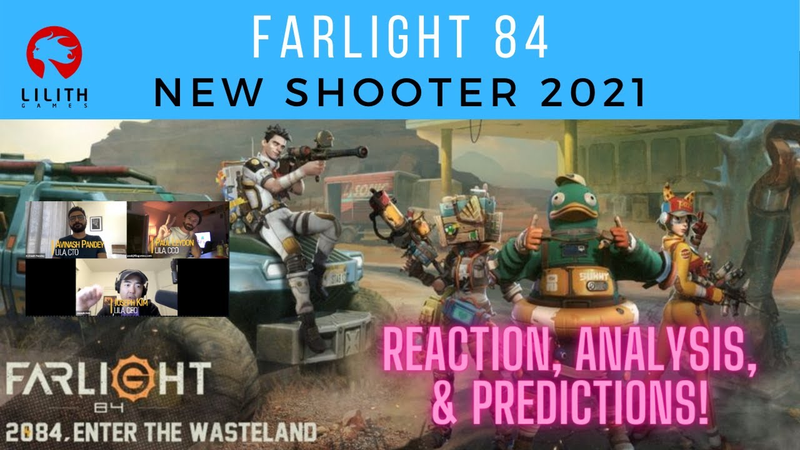
Farlight 84 - New FPS Shooter in 2021 | Reaction & Analysis
Farlight 84 represents a strategic entry into the competitive battle royale market, aiming to capture the mobile and cross-platform audience through a blend of high-fidelity aesthetics and fast-paced, class-based combat.
- Farlight 84 targets the mobile and cross-platform battle royale market by combining class-based combat with unique movement mechanics like jetpacks and legged vehicles.
- The game utilizes Unreal Engine to support a 40-player map structure, specifically optimized for mobile hardware performance.
- The core gameplay loop integrates squad-based tactical objectives with a persistent social hub model similar to Fortnite to drive player engagement.
Cold, Hard Cache Insomniacs Cache Simulator
Modern game development requires extreme precision in memory management, as inefficient access patterns frequently create performance bottlenecks that standard profiling tools fail to diagnose.
- The cache simulator uses CPU trap flags and vectored exception handling to trace memory behavior at the instruction level without the overhead of traditional sampling profilers or binary instrumentation.
- The tool identifies performance bottlenecks by calculating a 'badness factor,' which correlates L2 cache misses with specific execution frequencies to isolate high-impact code paths.
- By modeling specific architectures like the Jaguar CPU, the simulator allows developers to analyze cache performance on target hardware regardless of the host machine's specifications.

I MADE & RELEASED a game in 60 minutes
Rapid game development is achievable through a disciplined workflow that prioritizes core mechanics and iterative refinement within a strict one-hour timeframe.
- Rapid game development is achievable within a 60-minute timeframe by prioritizing core mechanics and iterative refinement over complex feature sets.
- Technical implementation should focus on foundational systems like raycasting for input control and kinematic physics for immediate gameplay feedback.
- Modular design allows for the sequential integration of essential features, such as ball movement, score tracking, and audio feedback, to maintain development speed.

How much MONEY did my STEAM/SWITCH game make?
The primary objective is to illustrate the financial realities of independent game development by analyzing the performance of the title Never Song.
- Long-term financial sustainability in indie game development requires a diversified revenue model that combines storefront sales with crowdfunding, publisher advances, and personal brand cultivation.
- The game Never Song generated $90,000 in gross revenue from over 12,000 units on Steam and $30,000 from nearly 3,000 units on the Nintendo Switch within its first five months of release in May 2020.
- Relying solely on organic discovery within storefronts is insufficient due to high market competition, making a proactive marketing system essential for consistent visibility.
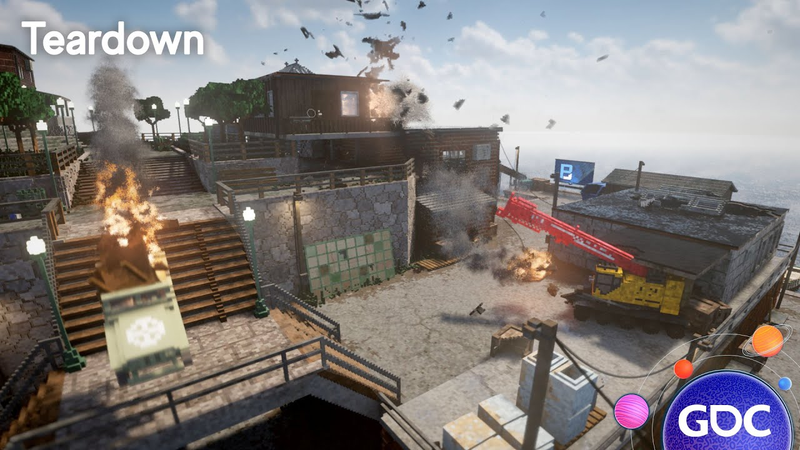
GDC Plays Teardown with Dennis Gustafsson
Teardown represents a significant technical achievement in the gaming industry, originating as an experimental project focused on ray tracing and voxel-based destruction.
- Tuxedo Labs developed a custom engine that replaces traditional polygons with volumetric voxel data, enabling deep integration between physics simulation and ray-traced rendering.
- The engine utilizes ray marching in fragment shaders to achieve high-fidelity lighting and complex environmental interactions, such as advanced fluid dynamics.
- Core gameplay logic was transitioned to Lua scripting to lower the barrier for modding, which facilitated significant community-driven growth and content expansion.
SWATTING Around with Ubisoft | Roundtable News | Episode 242
The gaming industry is currently navigating a period of significant technological and structural transition, defined by the launch of next-generation hardware and evolving monetization strategies.
- The gaming industry faces a significant technical bottleneck as high-fidelity game file sizes frequently exceed 200 GB, creating friction between next-gen hardware storage capacities and consumer performance expectations.
- Consumer preference has shifted toward 60 FPS performance over ray-tracing, forcing developers to prioritize frame rate stability to meet modern user experience standards.
- Premium titles, particularly in the sports genre, are increasingly integrating free-to-play monetization mechanics like microtransactions and in-game currencies despite maintaining a $70 retail price point.

Netcode for Multiplayer Games | Glenn Fiedler, Avinash Pandey, and Chris Wegman
Successful multiplayer game development hinges on the strategic selection of networking architectures that align with specific genre requirements and technical constraints.
- Multiplayer architecture must be chosen based on genre needs: deterministic lockstep is efficient for low player counts, while server-authoritative models are required for large-scale environments like battle royales to ensure state integrity.
- Developers should avoid building custom networking solutions from scratch, as it is a high-risk, multi-year endeavor that should only be pursued if networking is a core pillar of the studio's long-term engine strategy.
- Industry standards are shifting toward modular frameworks and genre-specific templates within engines like Unity and Unreal to allow teams to prioritize gameplay over commodity infrastructure.

GDC Plays Bugsnax with Young Horses
The development of Bugsnax represents a successful synthesis of iterative prototyping and systemic design, evolving from disparate concepts like on-rails photography and summer camp narratives into a cohesive, observational puzzle experience.
- Young Horses transitioned Bugsnax from an on-rails, physics-based capture game to an open-ended experience by layering complex creature behaviors and narrative-driven puzzles over the core mechanics.
- The development team utilized a modular logic system that allowed specific behaviors, such as hiding in bushes, to be applied broadly across different creature types rather than hard-coding actions for individual bugs.
- To address player confusion regarding character motivations and the protagonist's role, the team implemented an interview mechanic and a narrative framing device that establishes the player as a journalist.