PC reports and market data
Documents

how I made & played a game with PEWDIEPIE in 14 days
The account details a 14-day game development challenge undertaken by indie developer Thomas Brush, who successfully leveraged a social media dare to collaborate with high-profile content creator PewDiePie.
- Strategic collaboration with high-profile influencers can serve as a primary catalyst for rapid career growth and audience acquisition for indie developers.
- Executing a high-pressure, 14-day development challenge demonstrates that professional-grade projects can be completed under strict time constraints through iterative design.
- Live-streaming the entire development process functions as a powerful marketing tool, directly contributing to a substantial increase in the developer's subscriber base.
I Got Beaten Up by my Producer (Devlog)
Independent game development is characterized by a deceptive pace where significant effort often results in subtle, incremental progress.
- Solo indie development often requires a significant 'invisible' phase, as demonstrated by the developer spending 12 months on localization, accessibility, UI, and optimization after core gameplay was already finished.
- The project timeline for 'Will You Snail' extended to two and a half years due to the compounding effect of minor bug fixes, polish tasks, and the psychological pressure to achieve a high-quality final product.
- Workflow efficiency was improved by externalizing color palettes into text files, allowing for real-time visual adjustments without the need to restart the game engine.
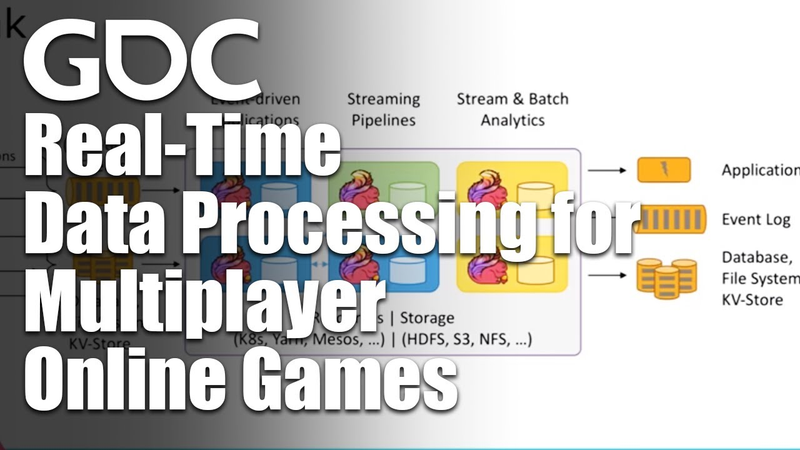
Real-Time Data Processing for Multiplayer Online Games
The primary objective of real-time data processing in multiplayer online games is to provide immediate insights into player behavior, revenue streams, and system integrity.
- A robust real-time data pipeline for MMORPGs relies on a three-tier architecture: Logstash for collection, Kafka as a high-throughput distributed transfer station, and Flink for real-time computation.
- Kafka serves as the central message broker capable of processing millions of messages simultaneously, offering fault tolerance and easy horizontal scaling without server downtime.
- Apache Flink is preferred for streaming analytics due to its 'exactly-once' processing guarantee, which prevents data loss or duplicate calculations, and its checkpointing mechanism for recovery to specific time points.

Don't follow your dreams (it's a scam)!
The pursuit of professional dreams in the indie game industry is often mischaracterized as a linear path toward a singular, life-changing outcome.
- Shift the entrepreneurial focus from chasing a singular, life-changing financial windfall to building a sustainable system that generates long-term professional freedom.
- Treat every project as a foundational asset rather than a final destination, ensuring that even failed ventures contribute to your future credibility, experience, and reputation.
- Adopt an iterative mindset where each output serves as a building block, allowing for exponential increases in productivity and capability over time.
Character Control with Neural Networks and Machine Learning
Modern AAA game development faces significant challenges as traditional hierarchical state machines become increasingly unmanageable due to the sheer volume of states and animations required for complex character movement.
- Modern game development, exemplified by the growth from Assassin's Creed Syndicate (2015) to Origins (2017), requires managing massive animation libraries, with Origins utilizing approximately 15,000 individual animation clips.
- Traditional animation systems rely on complex, hierarchical state machines and blend trees that become increasingly difficult to scale and maintain as project scope grows.
- Motion matching replaces rigid state machines by treating animation as a database retrieval problem, using nearest-neighbor regression to find the best-fitting animation clip based on current gameplay variables.
Creating a Development Culture that Embraces Change
Fostering a resilient development culture requires viewing organizational change as an iterative, behavioral practice rather than a static implementation.
- Jagex transitioned RuneScape from a waterfall development model to an agile scrum framework by piloting changes in small, isolated teams before scaling successful processes to the wider organization.
- To foster a culture of transparency, Jagex makes all individual performance objectives and product data—including conversion, retention, and monetization metrics—accessible to every employee in the company.
- The studio empowers teams by delegating full ownership of feature development, including visual identity, marketing, and release planning, while maintaining control through four core constraints: budget, expected return, quality standards, and player satisfaction.

YOUR ART redrawn by PROFESSIONAL GAME ARTIST
High-quality digital game art is achievable through methodical layering and fundamental design principles rather than reliance on expensive hardware or innate artistic talent.
- High-quality game art is primarily driven by methodical layering, iterative refinement, and disciplined composition rather than expensive hardware or innate talent.
- Establishing a consistent light source, such as a moon or lantern, is the foundational step for logically placing shadows and highlights to unify a composition.
- Visual depth and scale are achieved by applying motion blurs to atmospheric elements like clouds and reflections while incorporating foreground details such as vines or grass.
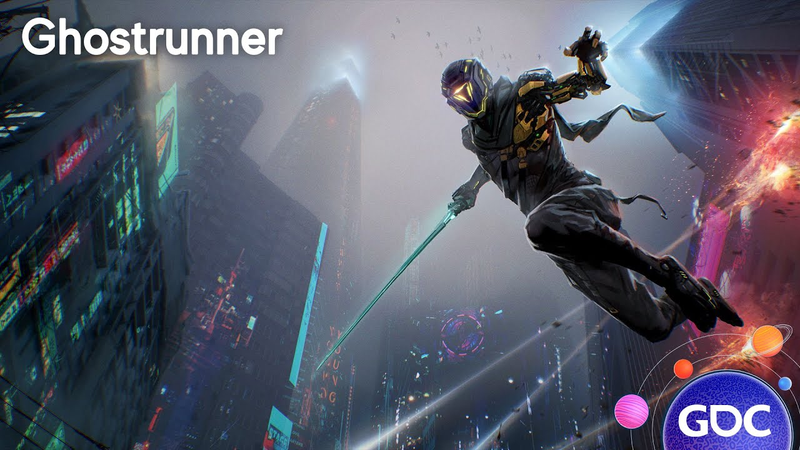
GDC Plays Ghostrunner with One More Level
The development of Ghostrunner represents a strategic shift toward high-fidelity, first-person action, moving away from the studio’s previous top-down design roots.
- Ghostrunner centers on a 'one-hit, one-kill' mechanic, which the developers adapted into a first-person perspective to differentiate the title from traditional action games.
- To maintain gameplay momentum, the developers designed levels to be 'waterproofed'—ensuring fluid movement and navigation while allowing for multiple player-chosen routes without stopping the action.
- Narrative exposition is delivered primarily through in-game dialogue rather than face-to-face interactions, utilizing quieter, non-combat platforming sections to ensure players can absorb the story without interrupting the game's pace.

Was GLaDOS Wrong About Science? - Momentum & Physics in Portal - Extra Credits
The core gameplay of the puzzle shooter Portal relies heavily on the intuitive application of momentum and energy conservation to navigate test chambers.
- Portal’s core gameplay relies on the player's intuitive understanding of Newton’s laws of motion, specifically the conversion of potential energy into kinetic energy.
- The portal gun mechanic fundamentally violates the first law of thermodynamics by creating potential energy out of nothing when objects are moved between portals at different elevations.
- The game ignores the physical constraints of energy transfer by allowing for the instantaneous redirection of momentum without accounting for the work required to change an object's state.

Beta test my next major game project?
The platform Full-Time Game Dev serves as a comprehensive educational resource designed to transition aspiring developers into full-time careers within the independent game industry.
- The 'Full-Time Game Dev' platform posits that technical coding skills are secondary to mastering marketing, business operations, and funding strategies for a sustainable indie career.
- The curriculum is built on the creator's decade of experience launching titles such as 'Pinstripe' and 'NeverSong'.
- Core modules integrate technical instruction in 2D illustration, C# programming, and Unity with business-focused training on social media growth, game design bibles, and Steam launch execution.

Crunching with CD Projekt Red on Cyberpunk 2077 | Roundtable News | Episode 239
The video game industry remains deeply entrenched in a cycle of mandatory overtime, commonly referred to as crunch, which persists despite significant public backlash and documented health consequences for developers.
- The gaming industry continues to rely on mandatory overtime, with developers at studios like CD Projekt Red reporting 12-to-15-hour workdays despite public backlash regarding health consequences.
- Management frequently ties performance reviews and discretionary bonuses to overtime participation, effectively penalizing staff who prioritize efficiency over total hours logged.
- Financial incentives like profit-sharing bonuses are insufficient to address systemic burnout and the long-term erosion of developer well-being caused by the current labor model.

My son was born
This reflection explores the intersection of professional ambition and parenthood, specifically addressing the concerns of independent game developers who fear that starting a family will hinder their career growth.
- Parenthood acts as a catalyst for professional success by shifting the developer's focus from self-serving artistic pursuits to the creation of long-term financial security and a lasting legacy.
- The perceived conflict between family life and career growth is often a result of personal discipline and time-management choices rather than the presence of children.
- Successful integration of a demanding indie game development career and parenthood requires intentional scheduling and a supportive partner.