PC reports and market data
Documents
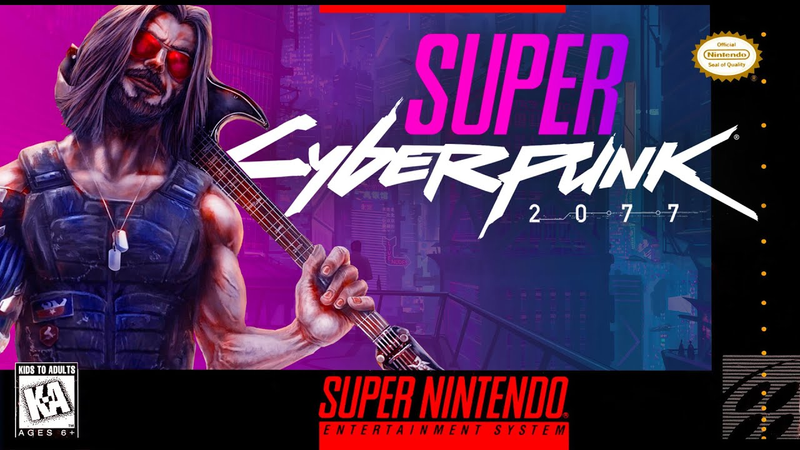
I made Cyberpunk 2077... BUT IT'S 2D
This analysis examines the technical and creative process of adapting a complex 3D AAA title into a 2D platformer.
- The project successfully distilled a complex 3D AAA title into a 2D Metroidvania-style prototype using the Unity engine within a one-week development cycle.
- 2D development requires more intensive character animation and rigging than 3D, as the entire character model must be visible and responsive to cursor movement at all times.
- Dynamic lighting, fog, rain, and post-processing glow effects are the primary drivers for replicating a high-fidelity 'cyberpunk' atmosphere in a 2D environment.
From Designer to Programmer with Scott Lagrasta | Game Dev Unchained Episode 251
The game development industry is currently undergoing a significant shift, driven by the need for greater professional adaptability and a move away from the high-stress, high-turnover models prevalent in major AAA studios.
- Designers are increasingly acquiring programming skills to bridge the gap between creative vision and engineering, creating a cross-functional skillset that enhances job security during industry instability.
- Practical competency and self-taught technical problem-solving are becoming more valuable to employers than traditional academic credentials.
- Developers are strategically migrating from high-cost U.S. hubs like the Bay Area to regions like Sweden to access better social safety nets and sustainable work-life balance.

I Made a Mind Controlled Game
The integration of brain-computer interface (BCI) technology into gaming presents a fascinating but currently impractical frontier for developers.
- Current BCI technology for gaming relies on a nine-electrode sensor that monitors the visual cortex to detect neural impulses triggered by flickering light patterns.
- The technology functions as a high-latency input method with a two-second delay, making it significantly less responsive than traditional controllers.
- Input requires constant calibration, precise electrode placement, and high-contrast visual cues to function, limiting its practical application in standard gameplay.
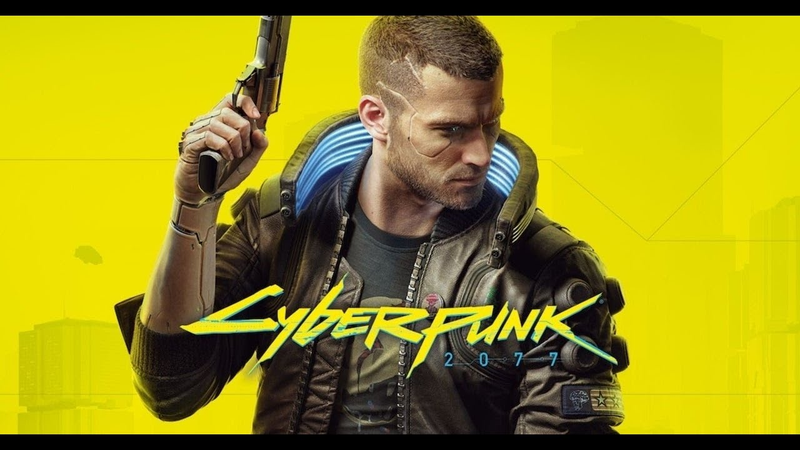
WTF Happened with Cyberpunk 2077?! | Games ReCAP
The launch of Cyberpunk 2077 serves as a cautionary case study in the consequences of mismanaged development cycles, toxic workplace culture, and misleading corporate communication.
- Cyberpunk 2077’s launch was defined by severe technical failures on last-generation consoles, leading to mass refund requests and the temporary removal of the game from the PlayStation Store.
- CD Projekt Red faced a class-action lawsuit from investors alleging that the studio misled stakeholders regarding the game's technical readiness and state of completion.
- Despite a $121 million development budget and eight years of anticipation, the company’s stock price plummeted by 30 percent following the game's release.
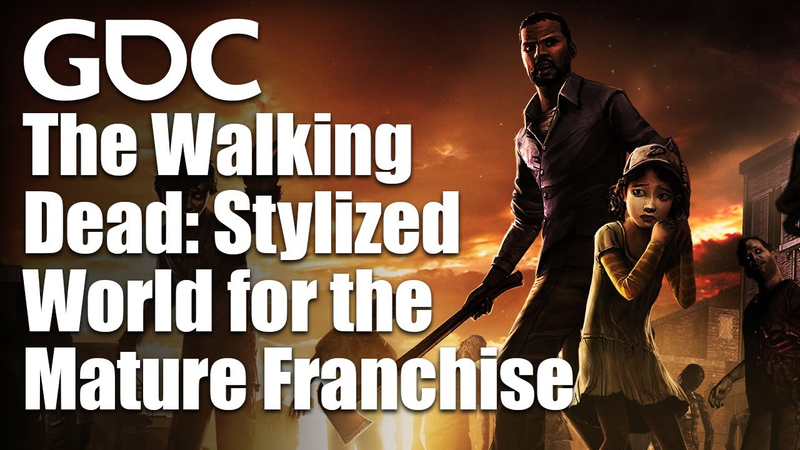
The Walking Dead: Crafting a Stylized World for the Mature Franchise
Telltale Games developed a distinct, stylized visual language for the 2013 release of The Walking Dead to differentiate the title from the saturated market of gritty, realistic zombie games.
- Telltale Games achieved a unique visual identity for The Walking Dead by rejecting the industry-standard gritty, desaturated aesthetic in favor of handcrafted, comic-inspired art that utilized bold silhouettes and high-contrast lighting.
- The production team successfully maintained visual cohesion across 78 environments and 45 characters by creating 2,316 textures that featured 'crafted imperfection' to reflect the series' mature, flawed narrative themes.
- To ensure the game could run on a wide range of platforms, the team imposed strict technical constraints, including a 30,000-vertex limit per environment and the use of vertex lighting instead of per-pixel lighting.

Can I make a bouncy ball game DEEP & EMOTIONAL?
The primary objective of this development project is to determine if a simple, mechanics-driven game centered on a bouncy ball can effectively convey a profound, emotional narrative.
- Minimalist mechanics, such as a bouncy ball physics loop, can effectively serve as a vessel for complex emotional themes like grief and parental regret.
- Emotional resonance is achieved by aligning atmospheric storytelling with gameplay milestones, using voice-acted segments triggered by specific player actions.
- The project utilizes the Unity engine to build a 2D environment, employing a custom parallax script to create depth and immersion within a summer-themed setting.
Indie MMO Development with Jason Lee | Game Dev Unchained Episode 245
The transition from AAA studios to independent development represents a strategic shift toward holistic production, where the hyper-specialization of large-scale firms is replaced by agile, cross-functional workflows.
- Indie MMO development prioritizes agile, cross-functional workflows over the hyper-specialization and risk-averse, feature-heavy cycles typical of AAA studios.
- Procedural generation and systemic design allow small teams to scale expansive, persistent universes without the overhead of massive, bloated development staffs.
- Studios are shifting from traditional crowdfunding toward equity-based fundraising, which aligns long-term project success with community investors rather than simple digital asset sales.

Crash Course in Online Features for Programmers
Game developers should prioritize the integration of existing platform APIs and middleware to implement online features rather than building custom, resource-intensive solutions from scratch.
- Prioritize the use of existing platform APIs and middleware for features like leaderboards and persistent storage to avoid the high resource costs of building custom backend solutions.
- Optimize network performance by minimizing memory allocation, utilizing domain-specific data compression, and strictly managing traffic to prevent inefficient object replication.
- Implement robust networking mechanics such as state verification, host migration, and 'rewind and replay' to maintain stability in peer-to-peer architectures.
Creative Vision for Our Games: Remedy Capital Markets Day 2020
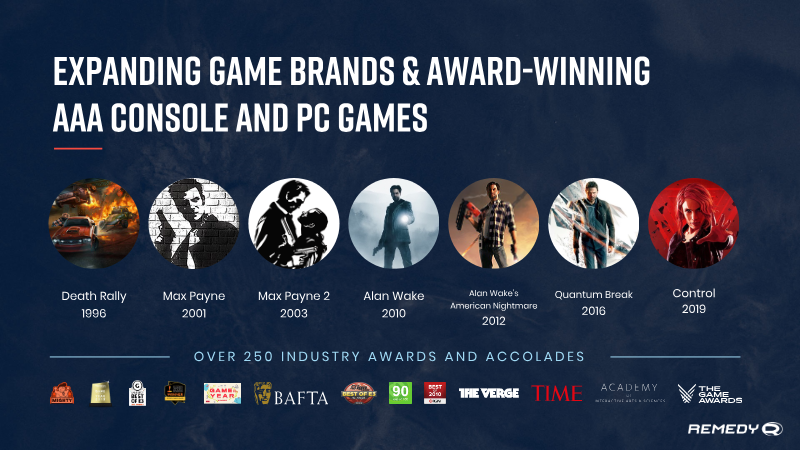
Remedy Entertainment’s 2020 Capital Markets Day presentation establishes a creative framework centered on the development of immersive, atmospheric game worlds.
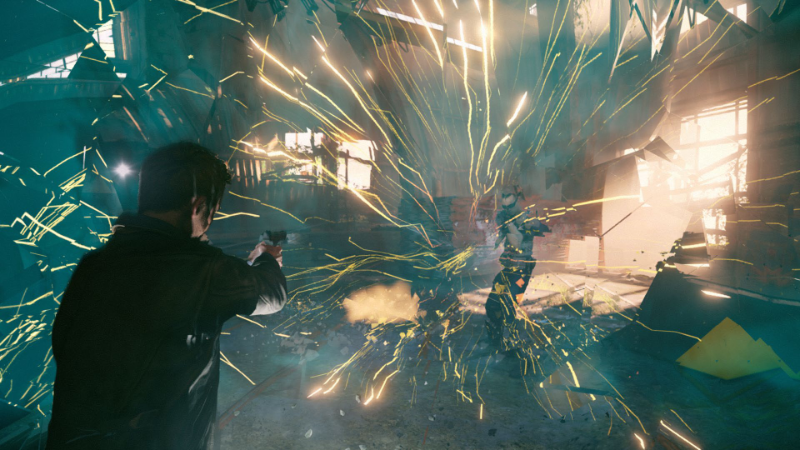
- Remedy Entertainment’s 2020 strategy centers on developing immersive, atmospheric game worlds where environmental storytelling is integrated directly with specialized mechanical systems.
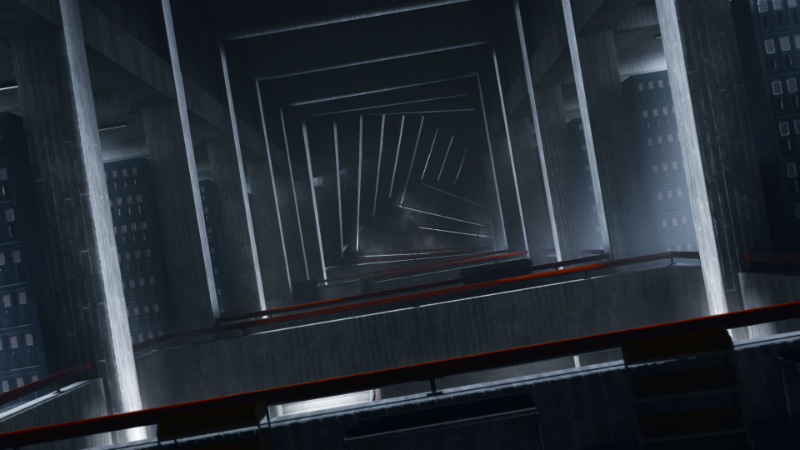
- The studio prioritizes high-concept fiction by creating cohesive, surreal settings like the Oldest House and the Astral Plane that function as both narrative backdrops and interactive playgrounds.
- Technical design philosophy emphasizes functional depth, exemplified by the Service Weapon’s architecture, which integrates specific components like barrels, triggers, and power sources into the broader world-building.

Remedy Capital Markets Day 2020: Our Next Growth Phase
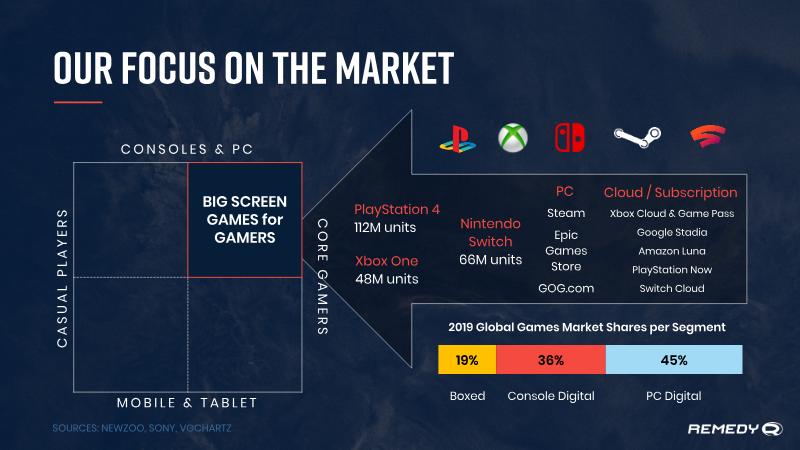
Remedy Entertainment outlines a strategic transition from a single-project studio to a scalable, multi-project developer focused on creating long-term, category-defining gaming franchises.
- Remedy is transitioning from a single-project studio to a multi-project developer, aiming to manage at least three expanding game brands and achieve one major global hit.
- The studio has scaled its operations to 274 employees and established four concurrent development teams to support simultaneous production of multiple AAA titles.
- The company is shifting its business model away from subcontracting toward greater brand ownership and flexible commercial partnerships to capture more value in the $159.3 billion global gaming market.
Future of PC Gaming | David Brevik, Sean Haran, Tim Morten
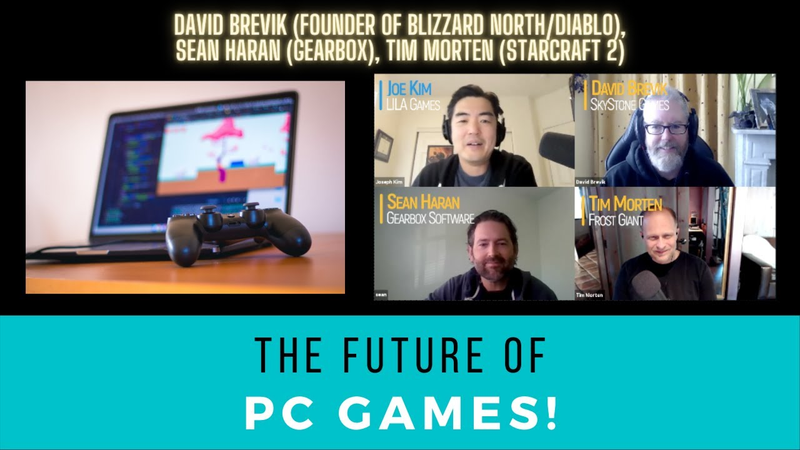
The PC gaming industry is currently defined by a hyper-competitive, globalized landscape where success hinges on the adoption of games-as-a-service models and the strategic use of modern, cross-platform development engines.
- The industry is shifting from multi-year development cycles to continuous, iterative content delivery, necessitating that live-service elements be integrated into core game design from the start.
- The democratization of development tools like Unreal and Unity has lowered barriers to entry, resulting in a saturated global market that demands high-quality production and effective marketing to achieve viability.
- Publishing models are evolving toward developer-led structures that prioritize transparency and favorable economic terms over traditional legacy agreements.
Top 5 Ways to Break Unity (Fun Glitches)
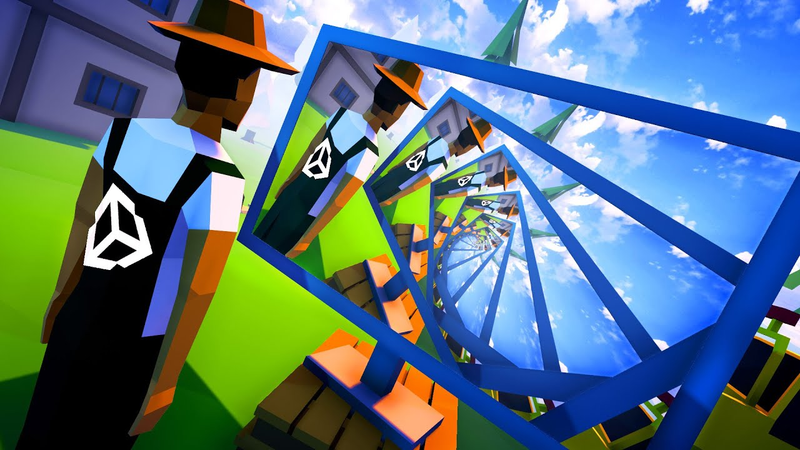
The Unity game engine offers significant potential for creative experimentation by manipulating core rendering processes.
- Render textures allow developers to project camera outputs onto in-game surfaces, enabling the creation of recursive loops and complex geometric illusions.
- Disabling the screen-clearing process prevents the engine from wiping previous frames, resulting in persistent, painterly visual trails.
- Manipulating the Z-buffer by overlapping multiple cameras enables the simultaneous rendering of a single object from multiple perspectives.