PC reports and market data
Documents
Why None of Us Saw Cyberpunk Coming Apart I Michal Nowakowski. joint CEO, CD PROJEKT RED
CD Projekt Red’s evolution from a regional distributor to a global AAA powerhouse is rooted in a strategy of intellectual property ownership and creative independence.
- CD Projekt Red restructured its development operations by abandoning proprietary technology in favor of Unreal Engine 5 to mitigate technical risks and streamline production.
- The studio transitioned from a siloed, waterfall production model to a unified, multi-platform approach that utilizes rigorous gating milestones to prevent future launch failures.
- Despite a 75% decline in stock value following the technical failures of Cyberpunk 2077, the studio achieved long-term commercial recovery with 35 million base game units sold and 10 million expansion units sold.

Sony Fumbles Kojima, Zelda’s Ocarina of Load Times & Skyrim LOVES Ikea | Games For Breakfast
The gaming industry is currently navigating a period of significant strategic volatility, characterized by shifting publisher priorities and evolving consumer expectations.
- IKEA has released a playable Skyrim mod featuring actor Matt Barry as part of a marketing campaign to promote a new shelving system.
- Sony and Kojima Productions have experienced a public disconnect regarding the developer's departure from the PlayStation ecosystem, with Xbox actively courting the studio.
- Nintendo has confirmed it will not provide refunds to customers for costs associated with past illegal tariffs, instead opting to host a customer appreciation sale to discount products.
Xbox and PlayStation Go Back To Their Old Ways?
The gaming industry is currently navigating a period of strategic retrenchment as hardware costs rise and the limitations of high-budget development models become increasingly apparent.
- The PC hardware market is facing a shift where rising component costs are challenging the platform's historical value proposition, potentially pushing users toward the secondhand market due to the modular nature of PCs compared to consoles.
- Console manufacturers are signaling a retreat from multiplatform strategies, with PlayStation prioritizing platform-exclusive titles like 'Wolverine' and 'Until Dawn 2' to incentivize hardware upgrades and prevent users from migrating to PC.
- Xbox faces a competitive disadvantage due to a lack of 'killer' exclusive franchises, leading to a reliance on multiplatform releases and cloud gaming, which may be cannibalizing traditional console hardware sales.
Steam Platform 2026: How Valve is Helping Game Developers Succeed on PC Gaming
Steam has solidified its position as the dominant PC gaming storefront by 2026, achieving a massive scale with 42 million peak concurrent users and 13.9 million in-game concurrent users.
- Developer revenue from Steam Daily Deal placements increased by 274% year-over-year following the implementation of a self-service scheduling system that allows developers to claim slots directly via Steamworks.
- Steam now categorizes user reviews by language to provide context for players and developers, addressing concerns about review bombing and regional-specific issues without removing content.
- Controller usage on Steam is significant, with nearly 5 billion gameplay sessions involving gamepads in 2025; developers are encouraged to use the Steam Input API to ensure compatibility across various hardware, including Xbox, PlayStation, and Nintendo controllers.

🚨📢BREAKING NEWS: Mobile Gaming Hits $121B + Makers Fund's $250M + AppsFlyer's $400M Loan
The global games market is projected to reach $213.9 billion by 2026, representing a 6.1% year-over-year increase.
- The global games market is projected to reach $213.9 billion by 2026, with mobile gaming serving as the primary driver at $121.1 billion, representing a 6.8% year-over-year increase.
- Industry growth is shifting from player acquisition to monetization and retention, as annual player base growth is expected to decelerate to 3.2% by 2029 with market penetration stabilizing at 62%.
- AppsFlyer has secured a $400 million credit line from Bank Leumi to support operational flexibility and growth initiatives, following a June valuation of $2.7 billion.
Shooter Monthly #9: Battlefield's Hot Streak, Gears Goes Helldiving, and the Battle Pass Plateau
The shooter genre is currently defined by a divergence in performance between established franchises, with Battlefield experiencing a resurgence by prioritizing focused seasonal updates and ranked play over the rapid, fragmented release cycles that have hampered Call of Duty.
- Western AAA studios are experiencing monetization stagnation due to a risk-averse reliance on battle passes that fail to adequately fund long-term live-service operations.
- Battlefield is seeing a resurgence by shifting away from rapid, fragmented release cycles in favor of focused seasonal updates and ranked play.
- Player preference is shifting toward sandbox-style battle royale and extraction modes, which offer lower-pressure environments and higher engagement than traditional zero-sum arena shooters.
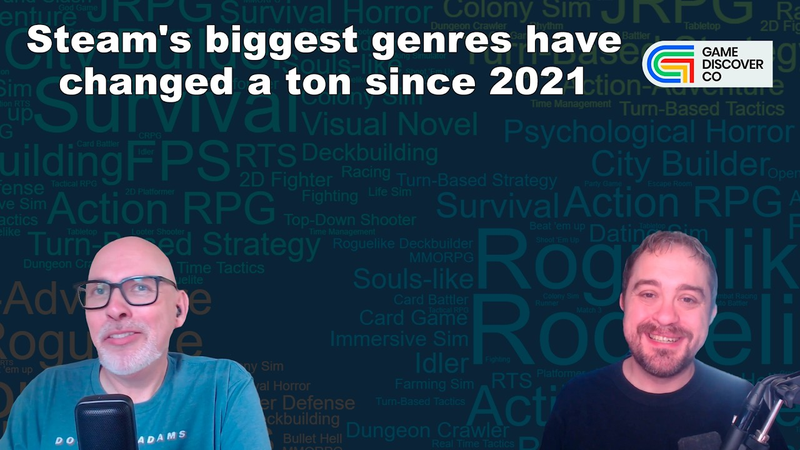
Steam's biggest genres have changed a ton since 2021
Valve maintains a dominant position in the PC gaming market by prioritizing a holistic, independent strategy that emphasizes long-term stability over aggressive, infinite expansion.
- Rogue-like and Rogue-lite tags have surged to become the number one and number two most prevalent genres for successful new Steam games (those selling at least 50,000 copies) as of 2025.
- Steam is shifting its storefront strategy toward algorithmic personalization, moving away from monolithic charts in favor of tailored recommendations based on individual user data and play history.
- Steam is currently testing a new personalized approach for its midweek deal slots, which have historically been curated, front-page features.
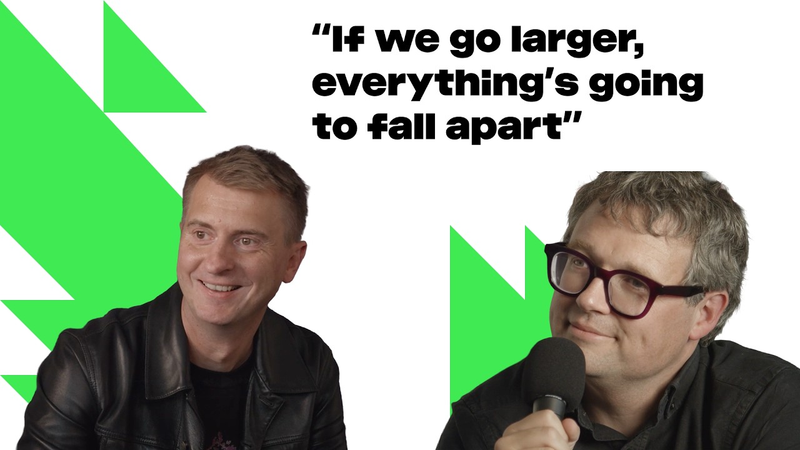
CD Projekt Red: If you want a cost-driven development, you cannot make The Witcher 4
CD Projekt Red is undergoing a fundamental structural evolution to support the simultaneous development of multiple high-end titles, including the next installment in The Witcher franchise, a sequel to Cyberpunk, and the original intellectual property Project Hadar.
- CD Projekt Red has rejected cost-driven development models, asserting that premium, narrative-heavy games like the next Witcher title require prioritizing creative quality over rapid release cycles.
- The studio is transitioning to a multi-project development strategy, simultaneously working on the next Witcher installment, a Cyberpunk sequel, and a new IP titled Project Hadar.
- To improve operational efficiency and support simultaneous development, the studio has abandoned its proprietary engine in favor of Unreal Engine 5.


Global Games Market Report: 2026
The global games market is projected to reach $213.9 billion in 2026, representing a 6.1% year-over-year increase.
- The global games market is projected to reach $213.9 billion in 2026, a 6.1% year-over-year increase, driven by deeper monetization of existing players rather than new user acquisition as market penetration nears saturation.
- Mobile gaming will remain the largest segment, generating $121.1 billion (56.6% of total revenue), despite a decline in download volume.
- Console revenue is forecast to hit $46.9 billion, boosted by the launch of Grand Theft Auto VI and maturing hardware, while PC gaming will generate $45.9 billion with a 55% conversion rate.
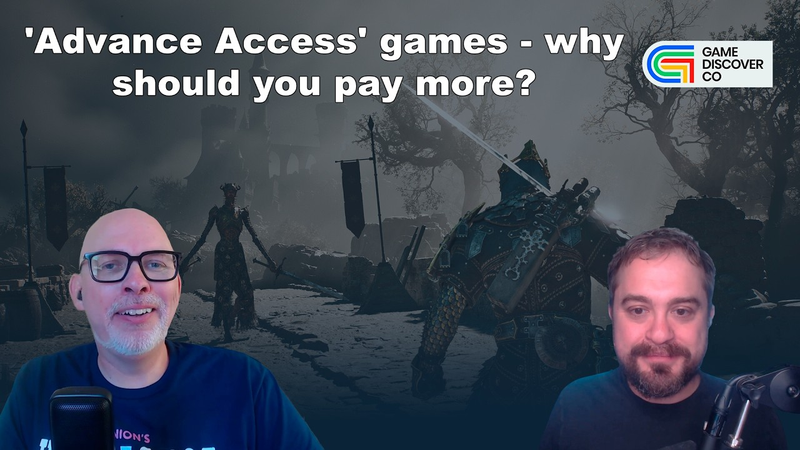
'Advance Access' games - why should you pay more?
Publishers are increasingly monetizing early entry to highly anticipated titles through formal advance access programs, typically charging a premium of ten to fifteen dollars.
- GDC 2027 has restructured its format to a Monday–Friday schedule, moving the festival hall to Tuesday–Thursday and introducing a new Business Hall at Moscone West to centralize networking and mitigate the logistical challenges of the San Francisco venue.
- Advance Access for games like 'Mortal Shell II'—which achieved 23,000 concurrent users—is increasingly being monetized through premium editions that charge a $10–$15 surcharge for early play, effectively creating a market for artificial scarcity and FOMO.
- PlayStation has begun de-listing publishers associated with 'shovelware' or low-effort games designed primarily for easy Platinum trophy farming, though the platform's enforcement remains inconsistent and subject to reversal.

The Game Server Hosting Company Private Equity Couldn't Buy
BisectHosting serves as a primary case study for sustainable, founder-led growth within the game server hosting industry.
- BisectHosting has scaled to nearly 100 employees and hundreds of thousands of customers across 140+ countries over 15 years without raising any outside capital.
- The company maintains a remote-first, independent structure and has repeatedly rejected acquisition offers from private equity firms to preserve its operational culture and focus on customer support.
- BisectHosting provides 24/7 support coverage by leveraging a distributed team structure, originally established through a US and UK split.
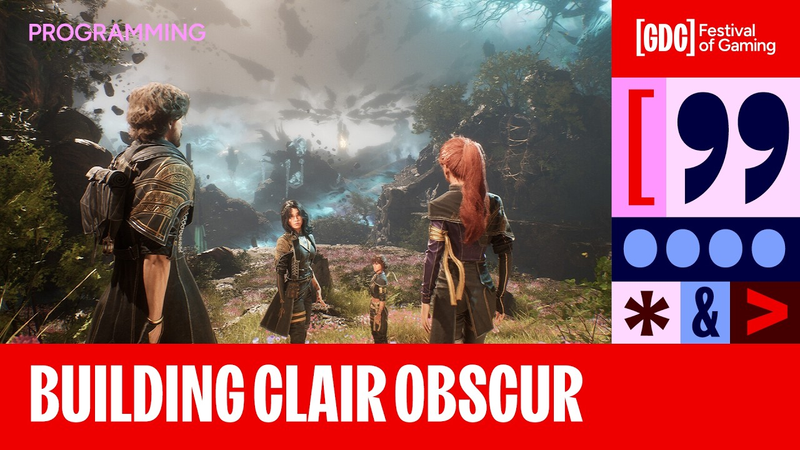
Clair Obscur Expedition 33: Small Team, Massive Game | Technical Secrets Behind Making Hit RPG
Sandfall Interactive achieves the ambitious scope of the role-playing game Clair Obscur: Expedition 33 by utilizing a lean, four-person programming team that prioritizes a vanilla-first development philosophy.
- Sandfall Interactive developed the 30+ hour RPG 'Clair Obscur: Expedition 33' using a core programming team of only four people by offloading 95% of gameplay logic to Unreal Engine Blueprints.
- The studio utilized a build farm to optimize development efficiency, reducing the total game packaging time from 2.5 hours to 50 minutes.
- To empower designers, the programming team created a comprehensive Blueprint API that allows non-programmers to access complex systems like quest status, inventory, and battle logic without writing C++ code.